Politics

Mob violence must be abandoned to build a democratic system: Fakhrul
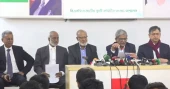
BNP Secretary General Mirza Fakhrul Islam Alamgir on Wednesday said “mob violence” must be abandoned to build a truly democratic system in the country.
“The foremost principle of democracy is that you must tolerate others’ opinions. But here we see, I will speak, yet I will not tolerate your speech. I will beat you, create mob violence, gather a few people and say, ‘Break it, smash it, beat him to death’… this is not democracy,” he said.
The BNP leader made the remarks while unveiling the cover of a book titled “Chobbisher Gono-Obbhutthane BNP (BNP's Role in the Mass Uprising of 2024)”, edited by photojournalist Babul Talukder.
Fakhrul expressed concern over what he described as attempts by a certain quarter to divert attention from the recent verdict against Sheikh Hasina for crimes against humanity by creating mob violence in Dhanmondi.
“Sometimes I feel a bit frustrated. I feel frustrated when I look around Bangladesh. On one side, we see a court delivering a verdict against fascist Hasina for crimes against humanity, and on the other side, we see mobocracy and mob violence. I do not know what sign this is,” he said.
The BNP leader feared that some quarters tried to reduce the importance of that verdict and shift global attention elsewhere by triggering mob violence.
“We must pay attention to these matters… We must remain alert as to whether a certain quarter is, with tricks and cunning, trying to divert this in a different direction. We must also see whether they are trying to create divisions,” he added.
Fakhrul said the country cannot afford to turn into a failed state and must strengthen its democratic institutions.
“The essence of democracy is that I may not agree with you, but I will still defend your freedom to express your opinion, even at the cost of my life. That is democracy. Unfortunately, we do not want to tolerate others’ views here — we want to silence them. We must move away from this mindset,” he said.
Bangladesh facing a state of instability, warns Fakhrul
Fakhrul said if Bangladesh truly wants to build a sustainable system, it must uphold democracy.
The BNP leader said it does not matter who wins or loses an election. “What matters is whether the judiciary is independent, the media is independent, the parliament is effective, and whether the rule of law, good governance, social dignity and human rights are being upheld.”
Calling for a united democratic front ahead of the upcoming election, he said the responsibility on his party is now greater than ever. “BNP must build a platform that has fought for democracy in the past and will continue to fight to institutionalise it.”
Fakhrul recalled the sacrifices of BNP Chairperson Khaleda Zia, saying she had endured imprisonment, repression and illness for the cause of democracy.
Even after that, he said Khaleda issued a message on 5 August last year calling for no revenge and urging everyone to work together to establish democracy. “We must work and move ahead holding this spirit.”
Jamaat, allies drop ‘Jamuna agitation’ to focus on election: Salahuddin
The BNP leader also praised BNP Acting Chairman Tarique Rahman, saying he motivated the nation in favour of democracy despite enduring persecution and attacks. “You saw in the documentary how he tried to awaken people for democracy.”
Clarifying BNP’s political stance, Fakhrul said, “BNP is not a revolutionary party. We are a liberal democratic party. We believe in democracy, and Bangladeshis have fought for democratic rights for centuries.”
He said BNP envisions a “rainbow state” where people of all religions, ethnicities, opinions and backgrounds live together, and reaffirmed the party’s commitment to political and institutional reforms. “If anyone tries to portray us otherwise, we will not accept it.”
BNP Standing Committee Member Abdul Moyeen Khan presided over the event. Another Standing Committee Member Begum Selima Rahman, party leader Shahid Uddin Chowdhury Anne, Revolutionary Workers Party General Secretary Saiful Haque, National People’s Party Chairman Fariduzzaman Farhad, Jubo Dal President Abdul Monayem Munna, book editor Babul Talukder and publisher Prof BM Nagib Hossain also spoke at the programme.
11 months ago

Tarique hails Bangladesh’s win, sees fresh optimism
BNP Acting Chairman Tarique Rahman on Tuesday said Bangladesh’s long-awaited football victory over India has rekindled a renewed sense of hope and unity across the nation.
In a post on his verified Facebook page, he wrote, “After 22 years, Bangladesh's victory against India today (Tuesday) on the football pitch reminded us all what we can achieve with discipline, unity, and belief.”
Tarique said Morsalin’s early goal and the team’s relentless spirit have reignited hope in millions of hearts about the future of sports for the country.
He described the footballers as inspirations for the youth and ambassadors of Bangladesh’s sporting culture.
The BNP leader said the victory signals a brighter future for sports in the country, where talent must be nurtured and dreams supported.
Morsalin’s goal ends Bangladesh’s 22-year wait for a win over India
“A brighter future for Bangladeshi sporting success awaits the nation, where talent is nurtured, dreams are supported, and our flag continues to rise higher,” he wrote.
Bangladesh defeated India 1-0 at the National Stadium today in their AFC Asian Cup qualifier, with Morsalin netting the decisive goal.
11 months ago

'Postal Vote BD’ App launched to include expats in 2026 election
Chief Election Commissioner (CEC) AMM Nasir Uddin on Tuesday said that introducing the postal balloting system for expatriates and other eligible voters will strengthen Bangladesh’s democracy and reinforce the bond between the state and its citizens abroad.
“We firmly believe that this initiative will make the democracy of Bangladesh stronger and deepen the bonding of our expatriate citizens with the state,” he said while inaugurating a new mobile application designed to allow expatriate voters and other specific categories of voters to register for postal balloting in the 13th parliamentary election.
The ‘Postal Vote BD’ mobile app was unveiled through a ceremony at the Nirbachan Bhaban auditorium in the capital.
Expatriate Bangladeshis, persons on election duty, government staff who are serving outside their respective election areas, and those who are behind bars are being allowed to register through the mobile app to vote by postal ballot in the next general election to be held in early February 2026.
In his remarks, the CEC said that expatriates contribute significantly to the nation’s economic citizenship and must also be included in its democratic citizenship.
“Through their votes, the foundation of democracy will become broader, more representative, and stronger,” he said.
He said the EC began working last year to ensure overseas voting in the election, addressing a longstanding deprivation of expatriate citizens who were unable to vote in the past.
“Today’s initiative will make an end to this deprivation,” he added.
He said the commission has brought a hybrid solution to end this deprivation with this IT-supported Postal Balloting system – combining digital registration with manual balloting, to overcome the structural challenges of implementing the balloting abroad.
“We’ve tried to plug in all human conceivable gaps that might exist” said Nasir Uddin, noting that expatriates have effectively been unable to vote for the past 54 years. “This time they can vote. It is a huge challenge to create confidence in the system.”
He emphasised that Bangladesh’s democratic rights should no longer be confined to geographical borders.
“We believe that the postal balloting will play a significant role in achieving this goal. We’re not launching just an app but also introducing a new chapter where the Bangladeshi citizenship is not confined in any geographical location, rather it is a global (the citizen rights can be exercised from throughout the world). The postal vote opens the door of our democracy globally,” said the CEC.
Election Commissioner Brig Gen (retd) Abul Fazal Md Sanaullah said the commission has developed a hybrid solution to enable expatriates to cast their votes through the postal system.
Sanaullah said that since every envelope is personalised and uniquely identifiable, each postal ballot can always be traced. “We will be able to easily identify every postal ballot,” he said.
Mentioning that no postal ballot system is challenge-free in the world, the commissioner said their newly developed IT-supported postal balloting system is not completely free of challenges either.
Explaining the challenges, he said the global registration rate for postal balloting is less than three percent.
“Exactly, the registration rate is only 2.7 percent,” he said.
Besides, the wastage rate of postal ballots is high. “The wastage rate is 24 percent, which means one-fourth of the ballots are wasted,” said Sanaullah.
He said cyber security is another challenge for the postal balloting system. “So, to have some glitches here is not unusual,” said the Election Commissioner.
He said voters who intend to vote through postal ballot will have to make a pledge that they must maintain the secrecy of their vote.
Election commissioners Tahmida Ahmad and Md Anwarul Islam Saker were present.
EC Senior Secretary Akhtar Ahmed delivered the welcome speech at the function attended by stakeholders in person and also by expatriates and Bangladeshi diplomats working in various missions around the world through a virtual platform.
Speaking at the function virtually, Bangladesh Ambassador to Saudi Arabia Md Delwar Hossain said some 35 lakh expatriate Bangladeshis are living in Saudi Arabia and expressed optimism that many voters will exercise their franchise in the upcoming national election from the country.
According to EC officials, 7-8 percent of the country’s voters are staying abroad.
The Election Commission has targeted some 50 lakh expatriate voters from 143 countries.
The EC has a plan to start sending postal ballots with all listed symbols to different destinations soon after the announcement of the election schedule.
Expatriate voters can cast their vote after the allocation of electoral symbols and drop their ballot at their nearby post office to send it back to the returning officer concerned by election day.
11 months ago

Bangladesh Election: Mobile registration app opened for postal balloting
Chief Election Commissioner AMM Nasir Uddin on Tuesday launched a mobile app, ‘Postal Vote BD’, for a particular section of voters, including expatriates, to register for postal balloting in the 13th parliamentary election.
The ‘Postal Vote BD’ mobile app was unveiled through a ceremony at the Nirbachan Bhaban auditorium in the capital.
Expatriate Bangladeshis, persons on election duty, government staff who are serving outside their respective election areas and those who are behind bars are being allowed to register through the mobile app to vote by postal ballot in the next general election to be held in early February 2026.
Election Commissioner Brig Gen (retd) Abul Fazal Md Sanaullah said the commission has developed a hybrid solution to enable expatriates to cast their votes through the postal system.
Sanaullah said that since every envelope is personalised and uniquely identifiable, each postal ballot can always be traced. “We will be able to easily identify every postal ballot,” he said.
Mentioning that no postal ballot system is challenge-free in the world, the commissioner said their newly developed IT-supported postal balloting system is not completely free of challenges either.
Explaining the challenges, he said the global registration rate for postal balloting is less than three percent. “Exactly, the registration rate is only 2.7 percent,” he said.
Besides, the wastage rate of postal ballots is high. “The wastage rate is 24 percent, which means one-fourth of the ballots are wasted,” said Sanaullah.
He said cyber security is another challenge for the postal balloting system. “So, to have some glitches here is not unusual,” said the Election Commissioner.
He said voters who intend to vote through postal ballot will have to make a pledge that they must maintain the secrecy of their vote.
Election commissioners Tahmida Ahmad and Md Anwarul Islam Saker were present.
EC Senior Secretary Akhtar Ahmed delivered the welcome speech at the function attended by stakeholders in person and also by expatriates and Bangladeshi diplomats working in various missions around the world through a virtual platform.
Speaking at the function virtually, Bangladesh Ambassador to Saudi Arabia Md Delwar Hossain said some 35 lakh expatriate Bangladeshis are living in Saudi Arabia and expressed optimism that many voters will exercise their franchise in the upcoming national election from the country.
According to EC officials, 7-8 percent of the country’s voters are staying abroad.
The Election Commission has targeted some 50 lakh expatriate voters from 143 countries.
The EC has a plan to start sending postal ballots with all listed symbols to different destinations soon after the announcement of the election schedule.
Expatriate voters can cast their vote after the allocation of electoral symbols and drop their ballot at their nearby post office to send it back to the returning officer concerned by election day.
On Monday, the CEC said although postal ballots for expatriates have always existed in the law, no Election Commission in the past worked with this complex issue.
“Postal balloting has always been in the law, but it was never practised. We have taken up this work,” he said.
The Election Commission is going to introduce the IT-supported postal balloting system to ensure that expatriates can vote in the election.
11 months ago

BNP urges leaders to skip celebrations for Tarique’s birthday
BNP has instructed its leaders and activists not to hold any event or festival this year to celebrate the 60th birthday of party Acting Chairman Tarique Rahman, which falls on November 20.
BNP Senior Joint Secretary General Ruhul Kabir Rizvi issued the instruction in a press release on Tuesday.
“The birthday of the BNP's Acting Chairman, Tarique Rahman, is on November 20 (Thursday). On this occasion, no lavish events or festivals, including cake cutting, putting up posters and banners, or discussion meetings, may be held,” the media release reads.
It also called upon the leaders and activists of all party units across the country, including Dhaka, not to violate this party directive.
Tarique, the eldest son of BNP founder Ziaur Rahman and its Chairperson Khaleda Zia, was born on November 20, 1965, in Bogura.
He has been serving as the party's acting chairman from the United Kingdom since party Chairperson Khaleda Zia was imprisoned on February 8, 2018.
Tarique is currently living in exile in London with his wife, Zubaida Rahman, and daughter, Zaima Rahman.
From the UK, he continuously participates in various party programmes virtually, giving guidance to leaders and activists and leading the party.
11 months ago

Bangladesh facing a state of instability, warns Fakhrul
BNP Secretary General Mirza Fakhrul Islam Alamgir on Tuesday (November 18) bemoaned that Bangladesh is currently experiencing a state of instability.
"At this moment, we truly needed people like Barrister Moudud Ahmed. Because, we are living in a state of instability. Barrister Moudud was undoubtedly one of the people who could have shown us the way out, could have guided us out of this instability,” he said.
The BNP leader made the remarks while addressing the publication ceremony for the book “Demise of Democracy”, written by the late BNP leader Barrister Moudud Ahmed, at a city hotel.
Fakhrul also lamented that Moudud Ahmed had not been able to witness the fall of fascist Hasina, which he had sincerely wanted to see.
The BNP Secretary General recalled his time in jail with Barrister Moudud Ahmed in 2012, highlighting the late leader's absolute dedication to his writing.
“I remember in 2012 when we were first jailed together... almost 17 of us went to the old central jail on Nazimuddin Road... immediately upon entry, Barrister Moudud swiftly headed towards a specific room, intending to dedicate his entire time in prison to writing,” he said.
Fakhrul observed that Barrister Moudud would wake up very early and immediately start writing. “His wife would send him necessary papers, documents, and books from outside. I saw how meticulously and sincerely he practised this study of history.”
He appreciated Moudud as an objective writer of history, saying, "I feel that while there may be some criticism or controversy surrounding Moudud as a politician, I do not think there is much opportunity to criticise his work in writing history."
Fakhrul also shared a personal anecdote illustrating Barrister Moudud's fundamental commitment to democratic principles, even in the country's early days.
Read more: Fakhrul calls Hasina verdict ‘end of all dictatorships’ in Bangladesh
He mentioned that after independence, during the time of Sheikh Mujibur Rahman, a form of misrule and a one-party system was being established, marked by the formation of the Rakkhi Bahini.
The BNP leader recounted how, during that period, the Rakkhi Bahini arrested a communist leader from Khulna, Shanti Sen, along with his wife, sister-in-law, and another communist worker, Hanufa Begum. They were subjected to extreme torture for 21 days before being transferred to Dhaka Central Jail.
“Barrister Moudud Ahmed, then a young lawyer, filed a Habeas Corpus petition, and with Justice Debesh Bhattacharya presiding, he had them presented in court and secured their release,” he said.
Fakhrul stressed that such incidents proved Barrister Moudud Ahmed was, at heart, a sincere democratic leader and a democratic soul.
"Undoubtedly, both in this book and in his other writings, we will find this—that Barrister Moudud Ahmed was a thoroughly democratic political leader. Although he took various positions at different times for various reasons, if we look closely, we will see that he went there to find a way back to democracy. And I believe that this is probably the best way to evaluate him," he said.
He urged people, especially the younger generation, to read “Demise of Democracy,” believing it is highly necessary for those who have fought for freedom from "fascist rule."
Read more: BNP hails Hasina’s death sentence verdict, says justice served
11 months ago

World Bank delegation meets Jamaat Ameer
A World Bank delegation held a meeting with Bangladesh Jamaat-e-Islami Ameer Dr Shafiqur Rahman on Tuesday.
The meeting was held at the Jamaat chief’s office in Bashundhara, Dhaka.
The delegation was led by Jean-Denis Pesme, Country Director of the World Bank’s Dhaka Regional Office.
He was joined by Mehreen A Mahbub, Senior Economist at the WB Dhaka office, and MS Gaëlle Martin, Operations Manager.
From Jamaat, economist Dr Mizanur Rahman, former senior secretary Muhammad Safiullah, and the party chief’s adviser on foreign affairs Prof Dr Mahmudul Hasan were also present.
During the discussion, the two sides exchanged views on reforms and development of Bangladesh’s financial sector infrastructure, sustainable economic pathways, taxation issues and matters concerning the country’s social sectors.
11 months ago

Govt approves proposal to launch festive polls campaign with LED caravans
The government has moved to produce and disseminate promotional content to create a festive and participatory atmosphere ahead of the national election, with plans for a countrywide awareness campaign through an LED Activation Caravan.
Officials said the initiative includes producing TV commercials, video documentaries and other visual materials that will be showcased in 64 districts and 300 upazilas using mobile LED units.
The proposal received in-principle approval at a meeting of the Advisers Council Committee on Economic Affairs and the Advisers Council Committee on Government Purchase at the Secretariat on Tuesday with Finance Adviser Dr Salehuddin Ahmed in the chair.
Speaking to reporters after the meetings, the adviser said the campaign will feature a documentary aimed at encouraging voters to view the election as a celebration and to take part enthusiastically.
He said the documentary’s production will go through a competitive process as it is a professional assignment.
Meeting sources said preparations must begin in the fourth week of November.
The estimated cost of the project is Tk 25 crore.
Dr Salehuddin declined to share budget details during the briefing, saying it would be inappropriate to disclose figures before the formal procurement process is completed.
11 months ago
Home Adviser signals zero tolerance on unrest as election in February
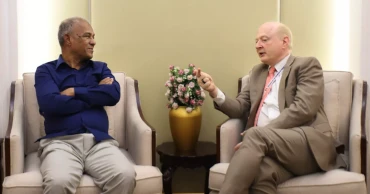
Home Affairs Adviser Lt Gen (retd) Md Jahangir Alam Chowdhury on Tuesday (November 18) said law-enforcement agencies are fully prepared to act against any attempt to destabilise the country, as the next national election is going to be held in the first half of February.
He made the remarks at a meeting with German Ambassador to Bangladesh Dr Rudiger Loltz at the Ministry of Home Affairs, where the overall law-and-order situation dominated the discussions.
The Adviser said law and order across the country remains normal, except a few isolated incidents reported following the verdict against Sheikh Hasina.
He warned that strict action will be taken against anyone attempting to disrupt public security in the coming days.
Read more: Fakhrul calls for resistance against ‘vested quarter’ ahead of Hasina verdict
Jahangir Alam said that the responsibility for announcing the specific polling date lies with the Election Commission, but emphasised that security agencies are ready to support the electoral process whenever required.
The meeting also focused on public reactions to the verdict, preparations surrounding the national election timeline, prisoner extradition, cybercrime, and other areas of cooperation.
Germany and Bangladesh are ‘tested friends’, the Adviser said, adding that he hopes bilateral relations will continue to strengthen.
Additional Secretary (Political) of the Home Ministry Khandaker Md Mahabubur Rahman and Anja Kersten, Deputy Head of Mission at the German Embassy, also attended the meeting.
Read more: Working with a clear commitment to create fair election atmosphere: CEC
11 months ago
BNP hails Hasina’s death sentence verdict, says justice served
BNP on Monday night (November 17) said it believes justice has been served through the International Crimes Tribunal’s verdict sentencing deposed Prime Minister Sheikh Hasina to death for crimes against humanity committed during the July-August Uprising.
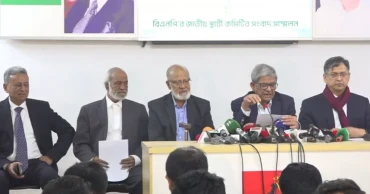
“After a long judicial process, following international standards, the International Crimes Tribunal has delivered its verdict against Awami fascist Sheikh Hasina and her two accomplices. This verdict has ensured justice,” said BNP Secretary General Mirza Fakhrul Islam Alamgir.
He shared the party’s formal reaction at a press briefing after a meeting of the BNP Standing Committee at the party chairperson’s Gulshan office.
Fakhrul said people at home and abroad had long called for accountability for the crimes committed under the previous regime.
“The people of Bangladesh and the international community have been waiting for justice for the brutal acts of murder, torture and genocide carried out by the fallen dictator and her associates,” he said.
Fakhrul said the tribunal handed down the maximum punishment under the law to Sheikh Hasina and former Home Minister Asaduzzaman Khan Kamal, while former Inspector General of Police Chowdhury Abdullah Al-Mamun, who cooperated with the court, received a reduced sentence of five years’ imprisonment.
Read more: UN rights body regrets Hasina’s death sentence, calls verdict important for victims
He said the BNP is firmly committed to the rule of law and urged the country’s people to stay alert in this regard.
Fakhrul said their party also demanded fair trials for all other accused persons in other cases.
“With this verdict, we believe the souls of those who were victims of enforced disappearances, killings and extrajudicial executions over the past sixteen years — and the thousands who were killed during the 2024 student uprising — will find some peace. The anger of their families will ease to some extent,” the BNP leader said.
The BNP Standing Committee meeting, chaired virtually by Acting Chairman Tarique Rahman from London, began at 8:30pm and continued for two hours.
BNP Standing Committee members Khandaker Mosharraf Hossain, Abdul Moyeen Khan, Amir Khosru Mahmud Chowdhury and Salahuddin Ahmed were also present at the press briefing.
Earlier in the day, the tribunal convicted Sheikh Hasina and two others in a case related to crimes against humanity committed during last year’s July–August uprising, in which more than 1,000 people were killed.
The ICT-1 sentenced Sheikh Hasina to death, while former Home Minister Asaduzzaman Kamal also received the death penalty. Former Inspector General of Police Chowdhury Abdullah Al-Mamun, who gave testimony as a state witness, was sentenced to five years’ imprisonment.
The court further ordered the confiscation of the properties of Sheikh Hasina and Asaduzzaman Kamal in favour of the state.
Read more: Awami League using looted money for acts of sabotage: Rizvi
11 months ago