Business

Gold price slashed again within 24 hours
The Bangladesh Jewellers Association (BAJUS) on Tuesday cut the price of gold for the second time in 24 hours, slashing the rate of 22-karat gold by Tk 2,158 per bhori to set the new price at Tk 219,808, inclusive of VAT.
In a notice issued in the morning, BAJUS said the fresh price cut reflects a decline in the price of pure gold in the local market. The revised rates came into effect from 10 am on Tuesday.
According to the new pricing, each bhori (11.664 grams) of 21-karat gold will now cost Tk 209,894, while 18-karat gold has been priced at Tk 180,267 per bhori. Traditional gold will sell at Tk 147,316 per bhori.
BAJUS said the new prices will remain in effect until further notice, though making charges will continue to apply depending on jewellery design. Since VAT is already included in the sale price of gold and silver ornaments, jewellers cannot charge VAT separately from customers.
The association's existing rules for ornament exchange and purchase excluding specified VAT, making charges and stone costs will remain unchanged.
The previous price adjustment came on the morning of July 13, when BAJUS cut the rate by Tk 2,216 per bhori, setting 22-karat gold at Tk 221,966 including VAT.
With Tuesday's revision, the price of gold has been adjusted 91 times in the local market so far in 2026 - increased on 44 occasions, decreased on 46, and adjusted once for VAT.
Silver prices, meanwhile, remained unchanged. Each bhori of 22-karat silver is currently selling at Tk 4,607, while 21-karat, 18-karat and traditional silver are priced at Tk 4,374, Tk 3,791 and Tk 2,858 per bhori, respectively.
Silver prices have been adjusted 56 times so far this year, with 28 increases and 28 decreases.
20 days ago
Oil rises on escalating Middle East tensions as Asian markets trade mixed
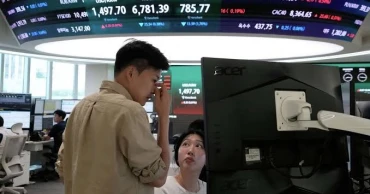
Oil prices extended gains early Tuesday as renewed fighting in the Middle East heightened concerns over global energy supplies, while Asian stock markets posted mixed performances with Tokyo and Seoul recovering from initial declines.
Brent crude advanced more than 2.3% to $85.18 a barrel after surging nearly 10% in the previous session. U.S. benchmark West Texas Intermediate crude also gained 2.5% to $80.15 a barrel.
Although crude prices remain well below their wartime high of almost $120 per barrel, concerns over supply disruptions have intensified amid competing claims by the United States and Iran over control of the Strait of Hormuz.
U.S. stock futures were mixed after Washington carried out additional strikes on Iran, following President Donald Trump's announcement that the United States was "reinstating" a blockade on Iran in the strategic waterway.
The ongoing conflict has disrupted the movement of oil tankers through the Strait of Hormuz, a key shipping route for crude exports from the Persian Gulf, pushing fuel prices higher worldwide.
In regional trading, Japan's Nikkei 225 gained 0.7% to 67,743.50, while South Korea's Kospi also rose 0.7% to 6,856.83.
Shares of SoftBank Group climbed 2.3% after Chairman Masayoshi Son dismissed concerns about an investment bubble in artificial intelligence infrastructure during a company event in Tokyo.
China's Shanghai Composite Index added 1.1% to 3,958.54 after official data showed exports surged 27% year-on-year in June, driven by robust global demand for semiconductors and other technology products linked to AI. Investors are now awaiting China's quarterly economic data, due Wednesday.
Hong Kong's Hang Seng Index edged up 0.3% to 24,301.71, while Australia's S&P/ASX 200 slipped marginally by less than 0.1% to 8,804.70.
On Wall Street, U.S. stocks closed lower Monday. The S&P 500 fell 0.8%, the Dow Jones Industrial Average lost 0.3%, and the Nasdaq Composite dropped 1.6%.
Technology shares, particularly chipmakers, led the declines. Micron Technology fell 4.4%, trimming part of its strong gains this year, while Nvidia lost 3.5%, weighing heavily on the broader market due to its large market value.
Investors remain concerned that enthusiasm surrounding artificial intelligence may have driven stock valuations too high, especially if AI-related investments fail to generate the expected profits and productivity gains.
Market attention is also focused on the latest corporate earnings reports, with Bank of America, Citigroup, JPMorgan Chase, Goldman Sachs and Wells Fargo scheduled to release quarterly results on Tuesday.
According to FactSet, analysts expect companies in the S&P 500 to post average earnings growth of 23.6% compared with a year earlier, marking a second consecutive quarter of growth exceeding 20% if forecasts prove accurate.
Analysts say strong corporate earnings will be crucial to supporting elevated stock valuations, particularly as major indexes continue to hover near record highs despite increased volatility linked to AI-related stocks.
Higher oil prices could add to inflationary pressures, potentially prompting the U.S. Federal Reserve and other central banks to keep interest rates elevated or raise them further. While higher rates help contain inflation, they can also slow economic growth and weigh on financial markets.
In early currency trading, the U.S. dollar slipped to 162.35 Japanese yen from 162.46 yen, while the euro strengthened slightly to $1.1387 from $1.1382.
20 days ago
City Bank-bKash digital loan disbursement crosses Tk 10,000 crore
The total disbursement of the joint digital loan service by City Bank and bKash has crossed the milestone of Tk 10,000 crore, marking a significant breakthrough in the digital financial inclusion.
Since its commercial launch in December 2021, around 35 lakh bKash app users have availed of this digital loan facility across a total of 3.19 crore loan accounts.
According to City Bank’s data, each customer has taken this short-term loan an average of nine or more times, reflecting strong reuse of the service and a growing public demand for hassle-free, small-scale credit. Currently, the loan facility is accessible to more than 1.20 crore eligible bKash users.
The service has successfully reached segments of the population who previously had little to no access to formal banking infrastructure or institutional credit. Under this facility, bKash users can secure loans in less than a minute through the app without visiting any physical bank branch or submitting physical paperwork.
On average, nearly 1.0 lakh customers avail of this City Bank loan daily via the bKash app. The average loan size stands at approximately Tk 3,000, while the monthly loan disbursement volume has reached Tk 900 crore. These instant loans are primarily used to meet immediate short-term needs, including business operating capital, emergency medical expenses, family costs, and education.
The most remarkable aspect of this digital credit model is its exceptional repayment rate. Out of the Tk 10,000 crore disbursed so far, the combined amount of defaulted and written-off loans stands at only Tk 53 crore, or a mere 0.5 percent. This means 99.5 percent of the disbursed loans have been regularly repaid.
Highlighting the success, City Bank Managing Director and CEO Mashrur Arefin noted that at a time when default loans remain a massive concern for the country's traditional banking sector, the exemplary recovery rate of these small-scale digital loans offers valuable lessons and inspiration for the entire financial industry.
21 days ago

Islami Bank Shariah Supervisory Committee holds meeting
The Shariah Supervisory Committee of Islami Bank Bangladesh PLC held a meeting at the bank's head office, Islami Bank Tower, in the capital on Monday.
The meeting was chaired by Mufti Shamsuddin Zia, chairman of the committee, according to a press release.
Committee members Prof Dr Md Shamsul Alam, Prof Dr Zubair Mohammad Ehsanul Hoque and Dr Md Nurullah attended the meeting.
Acting Managing Director of the bank Md Altaf Hossain was also present at the meeting.
21 days ago
DSE benchmark index climbs to year’s peak
Dhaka Stock Exchange's benchmark index, DSEX, climbed to its highest point of 2026 on Monday, gaining a combined 62 points over two consecutive sessions of trading.
The index rose 17 points on Monday, the second trading day of the week, following a 45-point gain on Sunday, pushing DSEX to 5,866 points, the year's peak so far.
DSE's other indices also advanced. The Shariah-based index DSES gained 4 points, while the blue-chip index DS30 rose 2 points.
Turnover, however, declined compared to Sunday, falling by more than Tk 200 crore. Shares and units worth Tk 1,419 crore changed hands on Monday, down from Tk 1,669 crore in the previous session.
Gainers outnumbered losers on the DSE, with 181 companies posting price increases against 165 that declined, while 48 remained unchanged.
Desh Garments Limited led the gainers, rising nearly 10 percent, while Fareast Finance & Investment Limited was the day's worst performer, losing close to 9 percent.
The Chittagong Stock Exchange (CSE) also saw a strong rally, with its all-share index CASPI advancing 118 points.
Advancers outpaced decliners there as well, with 122 companies gaining, 91 declining, and 31 unchanged.
Turnover at CSE rose by Tk 20 crore, with shares and units worth Tk 30 crore traded on Monday compared to Tk 10 crore the previous day.
Power Grid Company of Bangladesh topped the CSE gainers' list, while Fareast Finance & Investment Limited was the biggest loser, shedding nearly 8 percent.
21 days ago
Rupali Bank's auditor flags Tk 14,014cr provision shortfall
The auditor of Rupali Bank PLC has issued a qualified opinion along with an emphasis of matters paragraph in its report for the year ending on December 31, 2025, flagging a massive shortfall in required provisions and multiple regulatory non-compliances, according to a disclosure made by the state-owned bank to the Dhaka Stock Exchange (DSE) on Monday.
Rupali Bank’s operation to remain suspended for 5 days
The auditor said the bank failed to recognise required provisions amounting to Tk 14,014.48 crore as of December 31, 2025, with the shortfall spread across loans, advances and off-balance sheet items (Tk 11,216.62 crore), the employees' pension fund (Tk 1,886.99 crore), investments (Tk 493.49 crore), other assets and inter-branch accounts (Tk 467.49 crore), and balances with Bangladesh Bank and other banks and financial institutions.
The auditor noted that non-recognition of this shortfall has a consequential impact on the bank's disclosed net profits, liabilities and shareholders' equity.
Bangladesh Bank, through a letter dated April 30, 2026, authorised Rupali Bank to prepare its financial statements without recognising the provision shortfall in the absence of sufficient profit, a move the auditor said is not consistent with relevant IFRS accounting standards.
In the emphasis of matters section, the auditor pointed to several other compliance gaps. The bank's Share Money Deposit of Tk 679.99 crore has not been converted into share capital within the six-month window required by an FRC circular. Its paid-up capital stood at Tk 487.93 crore against a minimum regulatory requirement of Tk 500 crore under a BRPD circular.
The auditor also flagged that the bank's Capital to Risk-Weighted Assets Ratio stood well below the required 12.50 percent threshold, at 2.88 percent on a solo basis and 2.94 percent on a consolidated basis, against the mandated minimum total capital plus capital conservation buffer.
Additional observations covered lease liabilities and right-of-use assets recognised under IFRS 16, a need to retranslate foreign currency balances held with Bangladesh Bank in line with IAS 21, unreconciled suspense account balances, and an unresolved rationale for manual interventions in the bank's loan classification (CL) reporting under a Bangladesh Bank circular.
21 days ago

Gold prices fall again as Bajus cuts rates for 2nd time this week
The Bangladesh Jewellers Association (Bajus) on Monday cut the price of gold for another time, slashing the rate of 22-carat gold by Tk 2,216 per bhori to set the new price including VAT at Tk 221,966.
In a notification, Bajus said the price of pure gold has fallen in the local market, prompting the revision.
The new rates came into effect from 10am on Monday.
Gold prices fall again as Bajus slashes rates
According to the updated price chart, a bhori (11.664 grams) of 21-carat gold will now cost Tk 211,993, while 18-carat gold has been set at Tk 182,075 per bhori.
The price of traditional gold has been fixed at Tk 148,774 per bhori.
Bajus said the new prices will remain effective at all jewellery outlets until further notice, though making charges will vary depending on ornament design.
Since VAT is already included in the sale price of gold and silver ornaments, it cannot be collected separately from customers.
The association also said its existing rules for exchange and purchase of ornaments excluding specified VAT, making charges and stone costs will remain unchanged.
Bajus last adjusted gold prices on the morning of July 10, when the price of 22-carat gold, including VAT, was raised by Tk 2,216 to Tk 224,182 per bhori.
So far in 2026, gold prices have been revised 90 times in the local market, increased on 44 occasions, decreased on 45, and adjusted once for VAT.
Alongside gold, the price of silver has also been reduced. The price of 22-carat silver was cut by Tk 117 per bhori to Tk 4,607.
The prices of 21-carat, 18-carat and traditional silver have been set at Tk 4,374, Tk 3,791 and Tk 2,858 per bhori, respectively.
Silver prices have been adjusted 56 times so far in 2026, raised on 28 occasions and lowered on the remaining 28.
21 days ago
Oil rises, Asian stocks retreat as US-Iran conflict intensifies
Oil prices jumped and Asian shares were mostly lower Monday after the U.S. carried out airstrikes and Iran retaliated.
The price of Brent crude, the international standard, gained 3.6% to $78.76 per barrel, while U.S. benchmark crude added 3.5% to $73.97 per barrel.
Prices for both types of crude oil recently had slipped back to around the levels they were at before the war with Iran began after the two sides set an interim agreement on ending the conflict and ships resumed transporting oil through the Strait of Hormuz.
However, the United States launched several waves of strikes on Iran into Monday morning over an Iranian attack on a container ship in the strait that set it ablaze and left a crew member missing over the weekend. Iran retaliated by targeting countries across the Middle East.
U.S. stock futures fell, with the contract for the S&P 500 down 0.4% and that for the Dow nearly unchanged. The Nasdaq composite future lost 1.2%.
In Asian trading, Tokyo's Nikkei 225 index lost 1.9% to 67,242.73, while in Seoul, the Kospi declined 9% to 6,806.93. It's now at its lowest level since April.
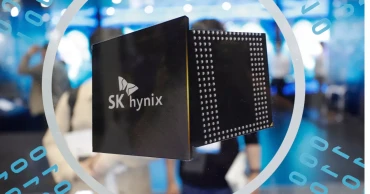
Shares in South Korean memory chipmaker SK Hynix, which soared 13% in their debut Friday on Wall Street, slumped 15.4% in Seoul. Its bigger rival Samsung Electronics sank 10.7%.
Elsewhere in Asia, Hong Kong's Hang Seng edged 0.2% higher, to 24,212.36, and the Shanghai Composite index shed 2.1% to 3,913.79.
In Australia, the S&P/ASX 200 was nearly unchanged at 8,808.50.
U.S. stocks ticked higher Friday after investors showed sustained appetite for winners of the artificial-intelligence boom. The S&P 500 rose 0.4% and the Dow Jones Industrial Average added 0.3%. The Nasdaq composite climbed 0.3%.
SK Hynix's shares jumped immediately after trading began in the midday hours after it raised roughly $26.5 billion by selling American depositary shares at a price of $149 each.
SK Hynix’s stock in Seoul had already surged more than 600% over the last year thanks to euphoria around AI. The boom has created real profits due to surging demand for computer memory. But it has also raised worries that AI stock prices have shot have too high and that all the world’s spending on chips and data centers won’t be able to produce enough productivity and profit growth to make it worth it.
“The reason why this stock, along with other memory chipmakers, has gone parabolic is that AI demand has somehow created the perception that a sector historically defined by boom-and-bust cycles could remain permanently in the boom phase,” Ipek Ozkardeskaya of Swissquote said in a commentary.
SK Hynix plans to double its production capacity, or possibly more, to keep up with demand. However, “Technological breakthroughs, more efficient AI models or simply a slowdown in AI infrastructure investment could quickly turn the market into one of oversupply,” she said.
Similar concerns apply to many AI stocks as they've grown into some of Wall Street’s most influential because of their huge valuations. Nvidia was the strongest single force lifting the S&P 500 Friday after rising 4%.
Beyond the uncertainty about AI, the focus on Wall Street is shifting to the upcoming reporting season for companies’ profits during the spring.
Companies across industries will need to produce big growth in profits to justify the big moves for their stock prices, which are broadly near records. Next week will feature earnings reports from many of the biggest U.S. banks, including Bank of America, Citigroup, JPMorgan Chase, Goldman Sachs and Wells Fargo on Tuesday alone.
Worries about how continued fighting with Iran will affect the global flow of crude are clouding the outlook both for energy costs and overall inflation.
High bond yields have been weighing on financial markets worldwide since more expensive oil and high inflation could push the Federal Reserve and other central banks to raise interest rates.
Higher rates can keep a lid on inflation, but they also slow the economy and hurt prices for all kinds of investments.
In other dealings early Monday, the U.S. dollar rose to 162.15 Japanese yen from 161.72 yen. The euro rose to $1.1409 from $1.1408.
21 days ago

Bajus warns against unauthorised gold price lists, threatens action
The Bangladesh Jewellers Association (Bajus) has issued a stern warning against the publication and circulation of unauthorised gold price lists, cautioning that any organisation found violating the directive will face strict disciplinary action.
In a notice issued on Sunday, Bajus said the price list determined by its ‘Standing Committee on Pricing and Price Monitoring’ applies uniformly to all jewellery businesses across the country.
The association said it has observed that some district and upazila units, cooperative societies, and market associations have been circulating separate price lists under their own names instead of following the official Bajus rate, deviating from the centrally fixed prices.
Such unauthorised price lists are causing losses to genuine jewellery traders and creating confusion among consumers, undermining the discipline and reputation of Bajus, the notice said.
Bajus clarified that publishing or circulating any price list other than the one fixed by its pricing committee is strictly prohibited.
Only the official price list and notices signed by the chairman of the Standing Committee on Pricing and Price Monitoring may be issued and displayed at the district and upazila level, it said.
The association warned that any organisation, district or upazila unit found publishing or circulating a different price list, or a notice bearing an unauthorised signature, after this warning will face strict organisational measures.
22 days ago

BGMEA, HSBC join forces to expand global RMG footprint, set to launch Hong Kong apparel roadshow
In a major strategic move to weather global macroeconomic challenges, the Bangladesh Garment Manufacturers and Exporters Association (BGMEA) and the Hongkong and Shanghai Banking Corporation (HSBC) Limited have forged a powerful partnership to expand the country's apparel export footprint into new, untapped international markets.
A Memorandum of Understanding (MoU) was signed between the two organizations on Sunday at the BGMEA complex in Uttara. BGMEA President Mahmud Hasan Khan and HSBC Bangladesh Chief Executive Officer (CEO) Md. Mahbub-Ur Rahman signed the agreement on behalf of their respective institutions.
Under this strategic collaboration, a large-scale "Apparel Roadshow" will be launched in Hong Kong—one of Asia's premier business hubs—to directly connect Bangladeshi RMG exporters with global brands, top-tier buyers, and international partners. The initiative aims to diversify Bangladesh's export destinations beyond traditional markets, specifically targeting the broader Asian region.
Furthermore, the upcoming Bangladesh Textile Exhibition (BATEXPO) will be leveraged as a key domestic and international market expansion platform.
Speaking at the signing ceremony, BGMEA President Mahmud Hasan Khan highlighted that HSBC’s vast global banking network gives it unparalleled access and institutional credibility among major international buyers.
"Global buyers heavily value HSBC’s assessments. We want to leverage this unique connection to specifically invite major international buyers to the Hong Kong Roadshow who are currently not sourcing significantly from Bangladesh. This will open up fresh avenues for our apparel sector," the BGMEA chief stated.
Call for Data-Driven Strategy and Clear Priorities:
Emphasizing that the RMG sector remains the ultimate engine of Bangladesh's economy, HSBC Bangladesh CEO Md. Mahbub ur Rahman said the bank wants to anchor itself as a long-term growth partner for the industry.
Observing the ongoing shifting dynamics in global sourcing destinations, the HSBC CEO stressed the urgent need for comprehensive research on evolving buyer behaviors. He urged the BGMEA leadership to isolate three to five specific priority areas focusing on market expansion, supply chain efficiency, and global market share growth. He assured that HSBC would work shoulder-to-shoulder with BGMEA from policy formulation to international executions to implement these target areas.
Core Objectives of the Partnership:
Earlier in the welcome address, BGMEA Director Shah Rayed Chowdhury explained that the joint venture builds a strong platform to brand Bangladesh globally. The core objectives of this collaboration include:
Exploring New Markets: Driving export momentum and establishing meaningful dialogues with global stakeholders through the Hong Kong Roadshow.
Enhancing Sourcing Value Chains: Conducting strategic discussions to strengthen Bangladesh’s positioning in the global supply chain and capture new business leads.
Highlighting Sustainable Growth: Showcasing the technological modernization, capability, and sustainable transformation achieved by Bangladesh's RMG factories to the global community.
Senior Vice President of BGMEA Inamul Haq Khan, key board directors, and Md. Ashfakur Rahman, Head of Global Supply Chain, Corporate and Institutional Banking at HSBC Bangladesh, among other top officials, was present at the event.
22 days ago