Business

Poultry farmers demand 6-point reform to curb corporate monopoly
The Bangladesh Marginal Poultry Industry Protection Association has urged the government to implement a 6-point demand to rescue marginal poultry farmers from soaring production costs and corporate market manipulation.
At a roundtable discussion held in Jatiya Press Club on Wednesday, the association's Founding Chairman, Md. Mofijul Islam (Mollik), warned of countrywide protests—including a sit-in program in the capital's Shahbagh wearing shrouds—if their demands are not implemented by August 17.
Speakers at the seminar alleged that despite six years of continuous advocacy, marginal farmers are facing extinction due to the unbridled prices of poultry feed, day-old chicks, and veterinary medicine, compounded by corporate syndication.
"While marginal farmers are failing to secure fair prices for eggs and broiler chickens, intermediaries and syndicates are manipulating the market, causing financial distress for both producers and general consumers," Mofijul Islam stated.
He criticized the continuous involvement of large corporate entities in direct egg and chicken production, which he argued undercuts small-scale farm operations.
The Association's 6-Point Demands:
1. Cap Feed Prices: Reduce and fix the price of 50-kg broiler feed bags between Tk 2,000 and Tk 2,100, and layer/Sonali feed between Tk 1,700 and Tk 1,800, while ensuring feed quality.
2. Regulate Chick Prices: Standardize day-old broiler and layer chick prices between Tk 20 and Tk 25 throughout the year.
3. Ban Corporate Commercial Farming: Restrict feed and chick manufacturing corporate companies from directly producing commercial eggs and ready chickens.
4. Low-Interest Bank Loans: Provide easy-term, low-interest bank loans to small and marginal poultry farmers.
5. Production Cap: Impose a maximum limit of 10,000 birds per individual commercial farmer to prevent market monopolization.
6. State-Run Hatchery Support: Produce and supply broiler, layer, and Sonali chicks through government-run hatcheries at fair prices.
The association announced plans to send a 7-member delegation to meet with government officials at the Bangladesh Secretariat by August 7 to negotiate solutions.
If the discussions yield no results or the demands remain unfulfilled by August 17, marginal farmers from across the country will gather at Dhaka's Shahbagh intersection on August 29 to launch a hunger strike and road blockade.
Among others, central leaders of the association Imran Ali, Yousul Ali, Kahol Mia, Babla Mia, Mostafa Kamal, and Asraful Islam spoke at the event.
5 days ago

Bapex begins drilling new gas well in Noakhali
Bangladesh Petroleum Exploration and Production Company Limited (Bapex) has initiated drilling works at a new gas well in Boro Charigaon village under Nabipur Union of Senbagh upazila in Noakhali district.
If the drilling and subsequent Drill Stem Test (DST) are successfully completed, an estimated 7 million cubic feet of natural gas per day (mmcfd) could be added to the national grid, according to preliminary assessments by Bapex.
Bapex inaugurated the drilling operations for the project, titled "Sundalpur-4 Evaluation-cum-Development Well Drilling Project," on Tuesday afternoon and full-scale drilling operations commenced on Wednesday.
Zakir Hossain Khan, Drilling In-Charge of the Sundalpur-4 project, said the reserve volume will be confirmed following 45 days of continuous drilling and a subsequent 15-day DST testing period.
Bapex has set a primary drilling depth target of 1,550 meters underground. Natural gas deposits are expected across two potential zones situated at depths of 1,361 meters and 1,450 meters.
The drilling is being conducted using the directional well method alongside Measurement While Drilling (MWD) technology.
Historical data from Bapex shows that gas exploration in the region dates back to 1976 when the first well was discovered in Begumganj.
A second well was discovered in 1978, though subsequent drilling in both wells yielded no gas. In 2013, a third well was successfully drilled and brought into production, which, following a workover in 2018, currently supplies 8 mmcfd to the national grid.
In addition, Bapex previously drilled three wells in Noakhali designated as Sundalpur-1, Sundalpur-2, and Sundalpur-3. While production at Sundalpur-1 and Sundalpur-3 is currently suspended, Sundalpur-2 continues to supply gas to the national grid.
Production at Sundalpur-3 is expected to resume once ongoing workover activities are completed.
The development comes amid a widespread gas shortage across various regions, including Dhaka, over the past week following a fire at a floating Liquefied Natural Gas (LNG) terminal in Cox's Bazar.
The supply drop has disrupted domestic cooking, halted industrial production, exacerbated load shedding due to reduced power generation, and caused long queues of vehicles at CNG filling stations.
5 days ago

Bangladesh Bank clears way for PayPal, other global digital payment services
Bangladesh Bank has cleared the regulatory path for the introduction of international digital payment and money transfer services in Bangladesh allowing local banks to partner with global platforms such as PayPal and Payoneer to facilitate cross-border transactions.
According to a circular issued by the Foreign Exchange Policy Department of Bangladesh Bank, authorised dealer (AD) banks can establish operational agreements with foreign digital payment service providers, international payment gateways, and aggregators following approval from the central bank.
The central bank emphasised that these agreements will allow local banks to facilitate cross-border digital money transfers, remittances, service fees, e-commerce transactions, and freelancer payments through secure international channels.
Central bank officials stated that the main objective of the new framework is to modernise cross-border transaction services, enhance transparency, and simplify international payment flows for freelancers, IT service exporters, and small entrepreneurs.
5 days ago
DCCI pushes integrated waterway strategy to cut transport costs, ease congestion
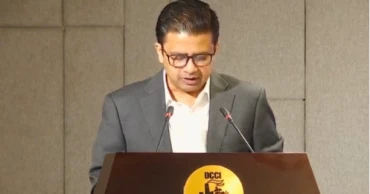
Dhaka Chamber of Commerce and Industry (DCCI) President Taskeen Ahmed on Wednesday called for a long-term, performance-based public-private partnership (PPP) framework to reverse decades of decline in Bangladesh's rivers and canals, warning that continued neglect is costing the economy billions of dollars annually in lost efficiency and congestion.
Taskeen made the call while presenting a paper titled ‘Revitalising Circular Waterways and Inland Trade’ at a seminar held at the DCCI Auditorium in Motijheel.
He said Bangladesh's more than 1,415 rivers and a historical canal network of roughly 24,000 kilometres form the backbone of the country's economy, but over 55% of canals are now silted or encroached.
Dry-season navigability has shrunk to 3,865 kilometres, down from 6,000 kilometres during the monsoon, while 77 percent of freight remains road-dependent despite waterways offering a cheaper and cleaner alternative, he noted.
Citing government data, Taskeen said the Ministry of Water Resources has been allocated Tk 10,533 crore, with FY26 canal excavation and irrigation targets so far achieved at 42.77 percent.
“A 180-day national programme targeting 1,204 kilometres of excavation is expected to be completed by June, alongside an additional 1,500 kilometres under relief-based re-excavation schemes,” he added.
The DCCI chief referred to a broader five-year plan, part of BNP's election manifesto for the 13th national parliamentary election, envisaging restoration of 20,000 kilometres of rivers and canals and revival of 520 disappeared rivers, with an initial rollout already covering 54 districts.
Highlighting the Sahapara pilot project as a model, Taskeen said the initiative has irrigated 1,200 hectares, lifted crop yields by 60,000 tonnes and benefited around 350,000 people by storing monsoon rainwater for dry-season irrigation, reducing farmers' reliance on costly deep-tube well electricity.
He said inland waterways cost 55-60 percent less than road transport for cargo movement between Dhaka and Chittagong and are four to eight times more energy-efficient per ton-kilometre, yet carry only about 7 percent of national freight by weight-distance.
Taskeen described the 112-kilometre Dhaka Circular Waterway as a stalled opportunity, citing encroachment of the Tongi Canal, failed feeder services for earlier waterbus routes, and funding priorities skewed toward mega-projects.
He said shifting just 20 percent of truck freight to the corridor could ease Dhaka's estimated $3-7 billion in annual congestion losses, pointing to the Hatirjheel water taxi service, launched in 2016, as proof of concept for urban waterway revival.
The DCCI president identified rapid re-siltation, land encroachment, inadequate long-term financing, fragmented governance among agencies such as BWDB, LGED and BIWTA, environmental safeguards, and climate variability as the key challenges to sustainable waterway restoration.
He put forward a nine-point roadmap, including shifting from short-term dredging contracts to five-to-ten-year performance-based PPP agreements, a unified water-trade legislation aligned with the National Logistics Policy 2025, GIS-based digital monitoring to prevent encroachment, agro-logistics hubs at canal junctions, and formal recognition of trade bodies as co-governance partners in waterway policymaking.
5 days ago
IMF recommends unified TIN to improve transparency, curb tax evasion
The International Monetary Fund (IMF) has recommended introducing a single Taxpayer Identification Number (TIN) in Bangladesh as part of sweeping reforms aimed at modernising the country's revenue administration, improving transparency and curbing tax evasion.
Under the proposed system, income tax, VAT, customs, import-export, tax deduction at source and other financial data of an individual or institution will be accessible and analyzable on a single platform.
The recommendation came during a meeting on Tuesday between an IMF delegation and senior officials of the National Board of Revenue (NBR) including NBR Chairman Ahsan Habib, according to sources familiar with the discussion.
An IMF fact-finding mission, led by Bangladesh Mission Chief Iva Petrova, is currently visiting Bangladesh to hold a series of discussions with the government on revenue administration reforms, tax collection enhancement, digital modernization, and broader economic reforms.
The IMF noted that this integration would enhance transparency and efficiency in tax administration, streamline tax evasion detection, and make taxpayer services faster and more effective.
Currently, Bangladesh uses electronic Taxpayer Identification Numbers (e-TIN) for income taxpayers and Business Identification Numbers (BIN) for VAT-registered entities.
The IMF observed that maintaining two separate identification numbers causes taxpayer information to remain scattered across different databases, preventing a consolidated view and effective analysis of a taxpayer's full economic activities.
The IMF highlighted that a single identification system would consolidate income tax returns, VAT returns, import-export data, tax deduction at source, banking transactions, and other tax-related information into one platform.
This would facilitate risk-based auditing, accelerate tax evasion detection, and significantly boost administrative efficiency.
During the meeting, IMF representatives said the storage of income tax, VAT, and customs data in separate databases remains a major limitation for the NBR.
Implementing an integrated taxpayer identity system would improve data verification, risk assessment, and tax collection. It would also allow taxpayers to access all tax-related services using a single identification number instead of multiple numbers, they said.
The IMF also emphasised full digital transformation and automation, recommending that the NBR's database be automatically integrated with other government bodies, including the Bangladesh Investment Development Authority (BIDA), the Registrar of Joint Stock Companies and Firms (RJSC), Bangladesh Bank, land registration authorities, the Office of the Chief Controller of Imports and Exports, Customs, and the Ministry of Commerce.
Furthermore, the IMF stressed implementing analytics-based compliance management, risk-based auditing, online income tax return filing, e-payments, and complete digitisation of tax deduction at source records.
According to the IMF, several countries have already implemented single taxpayer identification systems including India’s Permanent Account Number (PAN), Nepal’s PAN, Hong Kong’s Business Registration Number (PAN), Singapore’s Unique Entity Number (UEN), Australia’s Australian Business Number (ABN), and New Zealand’s IRD number.
Professor Mustafizur Rahman, Distinguished Fellow at the Centre for Policy Dialogue (CPD), said a single taxpayer identification number would benefit both tax administration and taxpayers.
Consolidating registration, tax deduction, business operations, and income tax information under one number would enhance NBR's coordination capacity, reduce opportunities for tax evasion, and simplify service access for taxpayers, he said.
NBR officials acknowledged that various reform activities are currently underway to modernise the revenue administration, with automation, data integration, and digital taxpayer services prioritised in the medium- and long-term revenue strategies.
Officials said while the IMF has recommended merging income tax and VAT identification numbers since 2005, immediate implementation is challenging under current national realities.
They said expanding the income tax and VAT networks, integrating databases, and strengthening technological infrastructure must occur before gradually considering a single identification system.
6 days ago
'Invest Bangladesh' to drive industrial growth, attract investment: Titumir
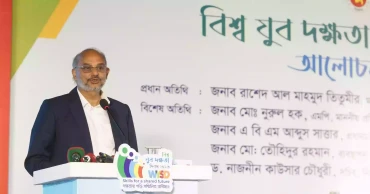
Prime Minister's Finance and Planning Adviser Dr Rashed Al Mahmud Titumir on Tuesday said the government is developing a new growth model, 'Invest Bangladesh', aimed at attracting greater investment in the industrial and manufacturing sectors to support sustainable economic development.
"Ensuring policy continuity and stability to attract investment, cutting red tape, ensuring access to finance and energy, improving multimodal and seamless connectivity, and creating productive and sustainable jobs are among the government's priorities," he said.
The adviser was speaking at a discussion organised by the National Skills Development Authority (NSDA) in the capital, marking World Youth Skills Day 2026, which was observed on July 15 under the theme “Skills for a Shared Future.”
He said developing skilled, productive and internationally competitive human resources is essential for Bangladesh's economic growth and development.
Titumir said education and training curricula need to be modernised and new overseas labour markets need to be explored to bring young people who are outside employment, education and training back into the mainstream.
He stressed the need to strengthen initiatives to send skilled workers abroad, including the Middle East, by providing internationally recognised qualifications and skills certificates.
The adviser also called for greater opportunities for reskilling and upskilling to meet the changing demands of the global labour market.
He underscored the importance of increasing women's participation in the formal workforce and making the best use of the country's remaining demographic dividend.
6 days ago

Turkey’s Sanko plans $300m investment in Bangladesh
Turkish textile major Sanko is keen to invest around $300 million to establish an integrated textile manufacturing facility in Mirsarai industrial zone.
The investment plan was discussed at a meeting between a Sanko delegation and Minister for Commerce, Industries, and Textiles and Jute Khandaker Abdul Muktadir at the Secretariat on Tuesday.
State Minister for Textiles and Jute Md Shariful Alam was also present.
The Sanko delegation said the company plans to establish a large-scale production facility in Bangladesh based on its existing business ties with the country and growing demand from international buyers.
The Turkish company currently supplies textile products to Bangladesh from its facilities in Turkey.
However, it now wants to expand its production base locally, citing Bangladesh’s growing market, skilled workforce and strong export potential.
Under the proposed investment, Sanko plans to establish facilities for fabric production, fabric processing and manufacturing of value-added textile products.
The initiative is expected to strengthen Bangladesh’s capacity to produce high-quality textile products and help the country move further up the value chain in the ready-made garment and textile sectors, the company representatives said.
They said Sanko already has several important international buyers in Bangladesh.
The delegation said potential locations for the project have already been identified and discussions have taken place with prospective local partners.
The company plans to begin further activities within the next few months, subject to necessary government approvals and the availability of required infrastructure.
Once construction begins, the facility is expected to be operational within 12 to 18 months, the representatives said.
The Sanko delegation sought government support in ensuring energy facilities, gas connections, uninterrupted electricity supply and necessary approvals for the project.
Minister Khandaker Abdul Muktadir highlighted Bangladesh’s investment potential and assured the Sanko delegation of the government’s necessary cooperation.
He said the government is encouraging foreign investment in the country’s industrial sector and working to provide investors with the necessary facilities and support.
6 days ago

S&P downgrades Bangladesh’s credit rating outlook to 'Negative'
Global rating agency S&P Global Ratings has revised Bangladesh’s long-term sovereign credit rating outlook from ‘Stable’ to ‘Negative’, citing persistent vulnerabilities in the banking sector, limited fiscal flexibility, energy market volatility, and growing trade risks.
In an assessment report released on Monday, S&P warned that financial sector imbalances, constrained government revenue generation, and broader global economic uncertainties could prolong Bangladesh’s economic recovery and elevate macroeconomic risks in the coming years.
The credit rating agency noted that Bangladesh continues to face structural headwinds, including low per capita income, weak revenue collection capacity, high debt service costs, and lingering administrative and institutional bottlenecks.
According to S&P, the country’s external stability will depend heavily on remittance inflows, a sustained recovery in ready-made garment (RMG) exports, and continued financial support from international development partners.
Growth forecast capped at 4.5 percent:
S&P has projected Bangladesh’s economic growth to average around 4.5 percent over the next three years—lower than historical trends. The agency attributed the subdued growth forecast to ongoing restructuring efforts aimed at addressing high non-performing loans (NPLs) in the banking system, residual impacts of the 2024 political crisis, and uncertainties surrounding energy supply and global RMG demand.
"High inflation and energy supply constraints continue to squeeze consumer purchasing power, slowing the domestic demand recovery," the report highlighted, adding that while Bangladesh maintains a competitive edge in RMG due to abundant labor, export momentum in FY2025–26 remained sluggish.
Rising external and trade headwinds:
The rating agency also flagged international trade policy shifts as a key challenge, noting that a recently introduced US tariff policy—imposing a 10% tariff on goods from several countries, including Bangladesh—presents new uncertainties for the export-oriented economy.
S&P warned that over the next 12 to 18 months, lingering geopolitical conflicts in the Middle East, volatility in global energy prices, and structural strain in domestic banks could further weaken Bangladesh's growth trajectory and external liquidity position.
The report cautioned that a further downgrade of the sovereign rating could occur over the next two to three years if long-term growth decelerates significantly relative to peer economies, or if external pressures—such as a widening current account deficit or declining foreign exchange reserves—worsen.
Earlier in May, peer credit agency Fitch Ratings similarly downgraded Bangladesh's sovereign outlook from 'Stable' to 'Negative', citing elevated global economic risks and regional uncertainties.
6 days ago

Remittance jumps 20% to $2.52 billion in first 27 days of July
Remittance inflow to Bangladesh reached $2,524 million ($2.52 billion) in the first 27 days of July, the first month of fiscal year 2026-27, according to the latest data from Bangladesh Bank.
This reflects a 20.2 percent year-on-year growth compared to the $2.10 billion received during the corresponding period (July 1-27) of the previous FY2025-26.
Central bank figures showed that Bangladeshi expatriates living in different countries sent home $87 million on July 27 alone.
The continued robust momentum in the remittance inflow through formal banking channels at the start of the new fiscal year is expected to bolster the country's foreign exchange reserves and help maintain macroeconomic stability.
Bangladesh received a record $35.56 billion in remittances in FY26, the highest remittance earnings so far in a single fiscal year.
The year-on-year growth was a 17.3 percent increase compared to $30.33 billion in FY25.
6 days ago
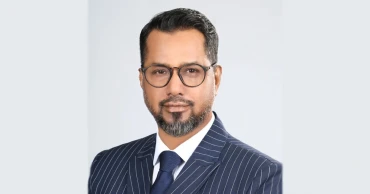
BSEC gets new commissioner
Hossain Sadat has joined the Bangladesh Securities and Exchange Commission (BSEC) as a commissioner, completing the regulator's full panel of commissioners.
Sadat assumed office on Tuesday after being appointed for a four-year term with approval from the Ministry of Finance, according to a press release issued by the commission.
A veteran corporate professional with nearly three decades of experience, Sadat has worked extensively in corporate governance, regulatory strategy, financial management, sustainable development, corporate communication, and audit and assurance.
His career spans leadership roles at Grameenphone, Shell Oil and Gas, Kean Energy, and Rahman Rahman Huq (KPMG Bangladesh).
He most recently served as president of the Institute of Chartered Secretaries of Bangladesh (ICSB).
He has also held board and council positions at the Bangladesh Institute of Capital Market (BICM), the Corporate Secretaries International Association (CSIA), and ICSB.
Sadat completed executive-level management training from the London Business School in the United Kingdom.
With his joining, the BSEC's commissioner panel is now complete.
6 days ago