Business
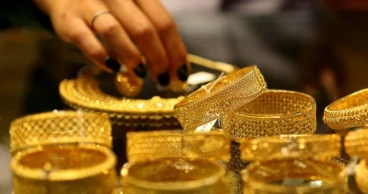
Gold price drops by Tk 2,216 per bhori in Bangladesh
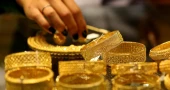
The price of gold in Bangladesh has been reduced by Tk 2,216 per bhori, with the new rate for 22-carat gold set at Tk 258,824 per bhori (11.664 grams), Bangladesh Jewellers Association (BAJUS) announced on Tuesday.
In a morning notification, BAJUS said the price of pure gold (tejabi gold) declined in the local market, prompting the adjustment.
The revised rates have come into effect immediately.
Under the new pricing structure, 21-carat gold has been fixed at Tk 247,044 per bhori, while 18-carat gold will cost Tk 211,760 per bhori.
The price of gold produced under the traditional method has been set at Tk 173,327 per bhori.
The selling price of gold must include a mandatory 5 percent government VAT and a minimum 6 percent making charge set by BAJUS. However, the making charge may vary depending on the design and quality of the jewellery.
On February 9, BAJUS had increased the price of 22-carat gold by Tk 2,216 per bhori to Tk 261,040.
Gold Price Shock: Tk16,330 surge hits Bangladesh overnight
So far in 2026, gold prices have been adjusted 29 times in the local market—raised on 18 occasions and reduced 11 times.
Despite the fall in gold prices, silver rates remain unchanged. Currently, 22-carat silver is being sold at Tk 6,357 per bhori.
The price of 21-carat silver stands at Tk 6,065 per bhori, 18-carat silver at Tk 5,190 per bhori, and traditional silver at Tk 3,907 per bhori.
5 months ago
Stocks edge up at DSE, CSE in early trading
Trading at Bangladesh’s capital market moved upward in early hours on Tuesday, with key indices rising on both the bourses and the majority of listed companies posting gains.
At the Dhaka Stock Exchange (DSE), the benchmark DSEX gained 13 points in the first hour of trading on the third working day of the week.
The Shariah-based DSES advanced 4 points, while the blue-chip DS30 index declined by 2 points.
Out of the traded issues, 177 companies saw price appreciation, while 153 declined and 63 remained unchanged.
DSE slips after previous surge, turnover declines
In the first half of the session, shares and units worth over Tk 700 crore were traded at the DSE.
Meanwhile, trading at the Chittagong Stock Exchange (CSE) also witnessed an upward trend, with its key CASPI index climbing 59 points.
Of the issues traded at the CSE, 82 advanced, 61 declined and 32 remained unchanged.
During the same period, shares and units worth nearly Tk 6.5 crore were traded on the CSE.
5 months ago
DSE slips after previous surge, turnover declines
The benchmark index of the Dhaka Stock Exchange (DSE) fell on Monday, a day after a major rally, as most listed companies witnessed price erosion and overall turnover declined.
On the second trading day of the week, the DSEX, the prime index of the DSE, lost 11 points. The Shariah-based DSES dropped 8 points, while the blue-chip DS30 index shed 9 points.
The total turnover at the DSE stood at Tk 1,257 crore, down from Tk 1,275 crore in the previous session.
DSE slips, CSE gains in early trading
Most of the traded issues ended lower, with 218 companies posting losses against 153 gainers, while prices of 26 companies remained unchanged.
In the block market, shares worth Tk 32 crore were traded from 26 companies, with Grameenphone topping the list with Tk 14 crore worth of shares changing hands.
Premier Bank PLC emerged as the top gainer at the DSE, advancing nearly 10 percent, while ICB Islamic Bank PLC was the worst loser, shedding around 10 percent.
Meanwhile, trading at the Chittagong Stock Exchange (CSE) ended on a positive note, with its benchmark CASPI index rising by 7 points.
DSE revises trading hours for Ramadan
Out of the traded issues, 116 companies advanced, 90 declined and 22 remained unchanged.
The turnover at the CSE, however, dropped to Tk 13 crore from Tk 24 crore in the previous session.
Safko Spinning Mills Ltd topped the gainers’ chart at the CSE with nearly 10 percent price appreciation, while Shepherd Industries PLC was the worst performer, losing around 10 percent.
5 months ago
DSE slips, CSE gains in early trading
Bangladesh’s capital market showed mixed trends in the first half of trading on Monday, with the Dhaka Stock Exchange (DSE) witnessing a decline while the Chittagong Stock Exchange (CSE) posted gains.
During the second working day of the week, the DSE’s benchmark index, DSEX, slipped by 3 points.
The Shariah-based index DSES also edged down by 3 points, while the blue-chip index DS30 lost 9 points.
In the first two hours of trading, shares and units worth over Tk 800 crore were traded on the DSE.
Decliners outnumbered gainers, as the prices of 196 companies fell against advances by 159, while shares of 36 companies remained unchanged.
In contrast, trading at the CSE remained upbeat.
DSE revises trading hours for Ramadan
The overall index CASPI rose by 23 points during the first half of the session.
Most companies at the CSE ended higher, with share prices of 91 companies advancing against declines by 66, while prices of 14 companies remained unchanged.
The turnover at the port city bourse stood at around Tk 10 crore in the first half of trading.
5 months ago
DSE revises trading hours for Ramadan
The Dhaka Stock Exchange (DSE) on Monday has announced revised trading hours for the capital market during the holy month of Ramadan.
In a notice issued at morning, the premier bourse said trading will take place from 10:00am to 1:40pm throughout Ramadan.
The post-closing session will be held from 1:40pm to 1:50pm.
However, the DSE’s official office hours will run from 9:00am to 3:30pm during the month.
It said normal trading hours will resume after the end of Ramadan and the Eid-ul-Fitr holidays. At that time, trading will continue from 10:00am to 2:30pm, as per the regular schedule.
Earlier, Bangladesh Bank also announced revised office and transaction hours for banks during Ramadan.
Post-election stability boosts stocks; DSE posts 5-month high turnover
Under the new schedule, banking transactions will be conducted from 9:30am to 2:30pm, Sunday through Thursday.
Banks will remain open from 9:30am to 4:00pm, while Friday and Saturday will continue to be weekly holidays.
5 months ago

BCIA expects capital market turnaround under new govt
Bangladesh Capital Market Investor Association (BCIA) on Sunday expressed optimism that Bangladesh’s capital market will rebound within the next six months if the newly elected BNP government takes prudent and timely measures.
In a statement congratulating the Bangladesh Nationalist Party (BNP) for its landslide victory and absolute majority in the 13th parliamentary election, the investors’ body said the government’s first six months in office would be crucial for rebuilding the economy.
BCIA said it firmly expects that the ruling party and a strong opposition will work in coordination to restore the fragile banking system, the battered capital market and the overall struggling trade, commerce and financial management framework within this initial period.
The organisation also voiced hope that government initiatives would revive public confidence, encouraging people to invest spontaneously across different sectors of the economy.
Advising the new administration, BCIA stressed the need to appoint a financially integrated and dignified Finance Minister, a State Minister for Finance with practical knowledge of the capital market, as well as competent heads of key institutions including Bangladesh Bank, Bangladesh Securities and Exchange Commission (BSEC), Investment Corporation of Bangladesh (ICB) and the National Board of Revenue (NBR).
Highlighting the stagnation in new listings, BCIA noted that while India saw 370 new IPOs over the past two years (2025–2026), not a single company was listed in Bangladesh during the same period.
Stocks surge as DSE turnover crosses Tk 500 crore in first half
It urged the government to ensure effective coordination among relevant institutions from day one and expedite the listing of at least two to three multinational and profitable state-owned companies to inject fresh momentum into the market and restore investor confidence.
The association also pledged that over the next five years, it would work in partnership with the government to contribute positively to the country’s financial sector and support the administration in achieving its highest level of success.
5 months ago

DSE, IIX sign MoU to introduce Orange bonds, Sukuk
Dhaka Stock Exchange PLC (DSE) and Impact Investment Exchange (IIX) on Sunday signed a memorandum of understanding (MoU) to collaborate on introducing and promoting Orange capital instruments, including Orange Bonds and Sukuk, in Bangladesh’s capital market.
The MoU was signed at the DSE boardroom by DSE Managing Director Nuzhat Anwar and IIX Founder and CEO Prof Durreen Shahnaz.
Under the agreement, DSE will explore facilitating the listing of Orange Bonds and Sukuk under a dedicated thematic or sustainable finance category, subject to regulatory approvals.
The initiative aims to position Orange instruments as credible thematic debt securities within Bangladesh’s capital market.
Symbolising the colour of United Nations Sustainable Development Goal 5 (SDG 5) on gender equality, the Orange Movement seeks to mobilise $10 billion globally at the intersection of gender equality and climate action.
“Capital markets play a vital role in channeling long-term finance toward national development priorities,” said Nuzhat Anwar, adding that the collaboration reflects DSE’s commitment to deepening the market and supporting sustainable financial instruments that deliver measurable social and environmental outcomes alongside financial returns.
Prof Durreen Shahnaz said Bangladesh stands at a critical juncture in realigning its financial markets with inclusive economic growth priorities. “We look forward to collaborating with DSE to jointly advance the Orange capital market, championing gender equality and climate action while strengthening trust, transparency and credibility in Bangladesh’s financial system.”
The partnership will combine IIX’s global experience in impact investing and gender-lens finance with DSE’s central role in developing the country’s capital market ecosystem.
The MoU also outlines plans for joint advocacy, market promotion and capacity-building initiatives, including workshops, investor engagement programmes and policy dialogues with regulators, financial institutions and development partners.
All activities will be carried out in line with Bangladesh’s regulatory framework and subject to approval by the relevant authorities.
Founded in 2009, IIX operates in 60 countries and has mobilised nearly $500 million in private capital, impacting more than 185 million lives and avoiding over 1.9 million metric tons of carbon emissions through its impact-driven financing initiatives.
Officials from both organisations and representatives from market intermediaries were present at the signing ceremony.
5 months ago
Stocks surge as DSE turnover crosses Tk 500 crore in first half
Trading at Bangladesh’s capital market opened on a strong note on Sunday, with turnover on the Dhaka Stock Exchange (DSE) crossing Tk 500 crore within the first half of transactions.
Market activity picked up sharply after a four-day weekly break following the 13th national parliamentary election, as investor participation rose significantly from the opening bell.
During the first half, the benchmark DSEX index advanced by 127 points.
The Shariah-based DSES index gained 27 points, while the blue-chip DS30 index climbed 53 points.
From the morning session, trading volume remained notably higher than usual. On most trading days, first-half turnover typically struggles to cross Tk 300 crore, but Sunday’s figure comfortably exceeded Tk 500 crore.
Bangladesh’s incoming govt takes office with economy at crossroads
At the DSE, share prices of 350 companies rose, while 25 declined and 14 remained unchanged.
Meanwhile, at the Chittagong Stock Exchange (CSE), the overall CASPI index jumped 252 points in the first half of trading.
At the port city bourse, prices of 98 companies advanced against declines in seven, while shares of five companies remained unchanged.
The turnover at the CSE stood at over Tk 6 crore during the same period.
5 months ago
BGMEA welcomes landmark Bangladesh–USA tariff agreement
The Bangladesh Garment Manufacturers and Exporters Association (BGMEA) has welcomed a significant new trade agreement between Bangladesh and the United States, signed today (Tuesday) following nine months of intensive bilateral discussions.
The agreement introduces a strategic reduction in reciprocal tariffs and provides a major boost for garments made from USA raw materials. In its initial response, BGMEA expressed sincere gratitude to the USA Government and the Office of the United States Trade Representative (USTR), as well as to Chief Adviser Dr. Muhammad Yunus and the interim government’s leadership for their roles in achieving this milestone.
BGMEA secures special healthcare benefits for members
Reciprocal Tariff Reduction: The standard tariff on Bangladeshi products in the U.S. market will be reduced from 20 percent to 19 percent.
Zero-Tariff Provision: Notably, garments manufactured in Bangladesh using cotton and man-made fibers imported from the United States will be exempt from reciprocal tariffs.
Market Expansion: BGMEA believes these provisions will significantly enhance Bangladesh’s competitive edge and access to the USA market.
To maximize these benefits, BGMEA emphasized the need for local spinners to ensure competitive yarn pricing, particularly since USA cotton is of superior quality but comes at a higher cost. The association also noted that ensuring the traceability and proper valuation of USA origin raw materials will be critical for exporters.
BGMEA Instructs Factories Not to Respond to RSC Letters on Non-OSH Complaints
5 months ago
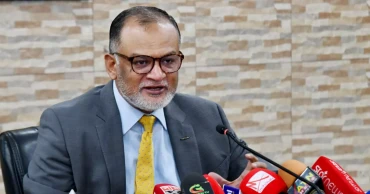
Govt wants to cap falls in potato, egg prices to protect farmers: Sk Bashir
Commerce Adviser Sk Bashir Uddin on Tuesday said that the government is trying to resist further declines in potato and egg prices to avoid hurting farmers, underscoring a policy push to balance producer viability with consumer affordability.
Speaking at a press conference at the Ministry of Commerce in the afternoon, he said prices of potatoes and eggs in the local market are currently at a ‘normal’ level and the overall market situation remains stable ahead of Ramadan.
“The market is now more stable compared to other times. Compared to last Ramadan, prices of essential commodities are expected to be lower in the upcoming Ramadan,” he said.
Expedite trade facilitation roadmap implementation for LDC graduation: Sk Bashir
Claiming there is no shortage or disorder in the market, the adviser said discipline has returned to the market as a result of various initiatives taken by the Ministry of Commerce. “We have been saying repeatedly, and we are saying it again, that the upcoming Ramadan will be better than the previous one.”
Referring specifically to potato and egg prices, Bashir said he does not want prices to decline further. “Eggs are selling at Tk 120 per dozen and potatoes at Tk 30 per kg. If prices fall below this level, farmers will be affected.”
To protect small-scale poultry farmers, he stressed the need to fix egg prices in line with feed costs. “Prices must be determined after considering all relevant factors.”
Replying to a question on alleged syndicates in the meat market, the adviser said the government deliberately refrained from importing beef to reduce prices, as such a move would have harmed local cattle farmers.
“We could have imported meat from Brazil at half the current price if we wanted to. But the government chose not to do so, keeping farmers’ interests in mind,” he said, adding that while some corporate dominance exists in the egg market, no such control is evident in the meat sector.
He also noted that there has never been a supply shortage in the egg market. “When egg prices rose to Tk 180 per dozen, the Ministry of Commerce approved the import of 290 million eggs. However, only 1.1 million eggs were actually imported—an amount that can meet national demand for just 10 to 15 minutes, given a daily demand of around 50 million eggs.”
On his last working day, Bashir acknowledged that there were shortcomings but said there was no lack of effort in controlling the market.
“There is no visible crisis in the market. Overall, the prices of eggs, potatoes, rice, pulses, sugar and edible oil are at a tolerable level,” he said, adding that monitoring and investigations into edible oil prices are continuing regularly.
Second round of tariff talks with US ‘encouraging’: Sk Bashir
5 months ago