The lead U.S. negotiator in the trade discussions with China praised the progress made over two days of meetings in Switzerland, noting "a great deal of productivity" in addressing ongoing disputes between the world's two largest economies. The talks followed a recent escalation in tensions after President Donald Trump imposed heavy tariffs on Chinese goods, prompting retaliatory measures from Beijing.
U.S. Treasury Secretary Scott Bessent described the weekend negotiations as making “substantial progress,” though he provided few specifics about the discussions. He indicated that more details would be shared during a scheduled press briefing on Monday.
U.S. Trade Representative Jamieson Greer also hinted at a breakthrough, suggesting that an agreement had been reached, but he, too, declined to elaborate. Both Bessent and Greer briefly spoke to reporters outside the Swiss ambassador’s official residence in Geneva, where the meetings took place, but did not answer questions.
Greer emphasized the swift resolution of some key issues, implying that the gap between the two sides may not have been as wide as previously assumed. He underscored the Trump administration’s priority of narrowing the U.S. trade deficit with China, which hit a record $263 billion last year.
“We believe the agreement we’ve reached with our Chinese counterparts will help address that serious national concern,” Greer said.
Following the talks, the White House released a statement titled “U.S. Announces China Trade Deal in Geneva,” which reiterated quotes from Bessent and Greer but offered no additional insight into the deal’s content.
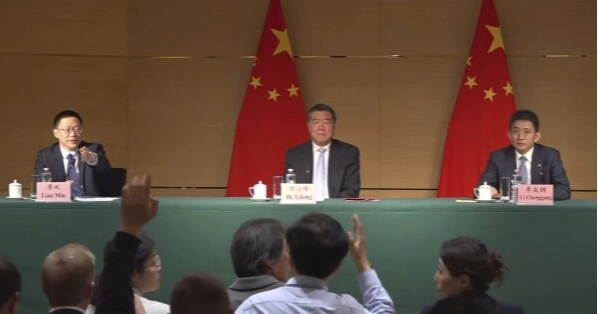
China’s delegation later held its own press conference, characterizing the discussions as “candid, in-depth and constructive.” Chinese Vice Premier He Lifeng said both parties agreed to create a consultation mechanism to support continued dialogue on trade and economic issues.
Additionally, Chinese officials confirmed that both sides would issue a joint statement on Monday, although the exact timing remained uncertain.
Bank ordinance gazette published keeping provision to take over any bank
“No matter when the statement is released, I believe it will be welcomed as good news for the international community,” said Li Chenggang, China’s ambassador to the World Trade Organization.
Trump was anxious to declare the sessions a win. Even before the final day of talks opened on Sunday, the president posed on his social media site that “GREAT PROGRESS” was being made toward what he suggested could be a “total reset” on the tariffs that have put the global economy on edge.
Beijing, however, appeared largely more measured about the negotiations’ overall direction, noting in a Saturday night editorial published before the second day of negotiations kicked off, that it would “firmly reject any proposal that compromises core principles or undermines the broader cause of global equity.”
During the Sunday evening news conference, He said “global trade wars that were provoked or initiated by the U.S. have captured global attention“ but “China’s position towards this trade war has been clear and consistent, and that is: China doesn’t want to fight a trade war, because trade wars produce no winners.”
“But if the U.S. insists on forcing this war upon us, China will not be afraid of it and will fight to the end,” the vice premier said, before adding: “We are ready to work together.”
Negotiations could go a long way toward stabilizing world markets roiled by the U.S.-China standoff that has ships in port with goods from China unwilling to unload until they get final word on tariffs.
Trump last month raised U.S. tariffs on China to a combined 145%, and China retaliated by hitting American imports with a 125% levy. Tariffs that high essentially amount to the countries’ boycotting each other’s products, disrupting trade that last year topped $660 billion.
Still, top members of the Trump administration were following the president’s lead in insisting that a hard reset of U.S.-China trade relations could be in the offing.
“Secretary Bessent has made clear that one of his objectives is to de-escalate,” U.S. Commerce Secretary Howard Lutnick, who wasn’t in Geneva, said on “Fox News Sunday.” He added that the U.S. and China have both imposed tariffs that are “too high to do business, but that’s why they are talking right now.”
“We are the consumer of the world. Everybody wants to sell their goods here,” Lutnick said. So they need to do business with America and we’re using the power of our economy to open their economy to our exporters.”
Kevin Hassett, director of the White House National Economic Council, told Fox News Channel’s “Sunday Morning Futures” that “what’s going to happen in all likelihood is that relationships are going to be rebooted. It looks like the Chinese are very, very eager to play ball and to renormalize things.”
“We’re essentially starting over, starting from scratch with the Chinese,” Hassett said “and they seem to think that they really want to rebuild a relationship that’s great for both of us.”
The talks mark the first time the sides have met face-to-face to discuss the issues. The prospects for a major breakthrough still appear slight, but even a small drop in tariffs — particularly if taken simultaneously — could help restore some confidence.