business
UKEF's £2 billion kitty to finance Bangladeshi projects procuring from Britain
UK Export Finance (UKEF) has offered financing support of up to £2 billion for eligible Bangladeshi buyers to undertake projects involving British goods and services in key development sectors.
The UK government’s export credit agency is engaging with government officials, financial institutions and business leaders in Bangladesh to explore financing opportunities and identify potential projects where British expertise, technology and financing can contribute to the country’s development ambitions.
With available country capacity of between £1 billion and £2 billion, UKEF can help eligible Bangladeshi buyers access competitive financing for projects in transport, agriculture, healthcare, airports, manufacturing, renewable energy and infrastructure.
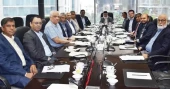
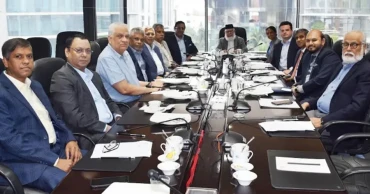
A UKEF delegation held a meeting with International Chamber of Commerce Bangladesh (ICCB) President Mahbubur Rahman and members of its Executive Board at the ICCB Secretariat on Thursday to discuss potential areas of cooperation and opportunities to mobilise UK-backed financing for projects in Bangladesh.
Mahbubur Rahman welcomed the delegation and highlighted the longstanding economic and commercial ties between Bangladesh and the United Kingdom.
He said Bangladesh’s growing infrastructure needs and expanding private sector offer significant opportunities for greater UK investment, technology and long-term financing.
He identified renewable energy, transport and logistics, airports and aviation, healthcare, agriculture and agro-processing, and climate-resilient infrastructure as priority sectors where UKEF support could play a role.
The ICCB president also expressed interest in working closely with UKEF, the UK Department for Business and Trade and British businesses to identify a pipeline of viable projects that could benefit from UK expertise and financing.
During the meeting, the UKEF delegation briefed ICCB members on its range of financing facilities available for eligible projects involving UK goods and services.
The discussions focused on how UKEF financing could help meet funding requirements for major development and private-sector projects while facilitating greater trade, investment and business cooperation between Bangladesh and the UK.
“The UK and Bangladesh have an important and long-standing economic relationship,” said Mark Birrell, UK Trade Counsellor for South Asia.
“This visit will allow us to hear directly from government and business leaders and explore where UK companies, expertise and finance can support innovation, growth and development,” he said.
UKEF offers guarantees, loans and insurance designed to help unlock competitive financing for projects involving UK suppliers.
Its support can be provided in more than 60 local currencies and includes long-term financing instruments such as the Buyer Credit Facility, Standard Buyer Loan Guarantee, Direct Lending Facility and Early Project Services Guarantee.
The visiting delegation is also scheduled to meet government representatives, banks and private-sector leaders during its Bangladesh visit from Sept 2 to 4.
The programme includes meetings with financial institutions and business organisations, including Standard Chartered Bangladesh and HSBC, to discuss how UKEF financing could help meet funding requirements and facilitate greater trade and investment between the two countries.
The delegation comprises Mark Birrell; Sandeep Kudtarkar, UKEF Country Head for India, Bangladesh and Nepal; and Rohini Aggarwal, Head of Trade Policy for South Asia.
The ICCB meeting was also attended by ICCB Vice President Naser Ezaz Bijoy, FBCCI Administrator Md Fazlul Hoque, BCI President Anwar-Ul-Alam Chowdhury (Parvez), CCCI President Mohammed Amirul Haque, BTMA President Showkat Aziz Russell, BAPI Vice President Syed S Kaiser Kabir, ICCB Secretary General Ataur Rahman, General Manager Ajay Bihari Saha and Deputy General Manager Syeda Shahnewaz Lotika.
9 hours ago
IsDB chairman meets Prof Yunus
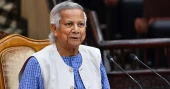
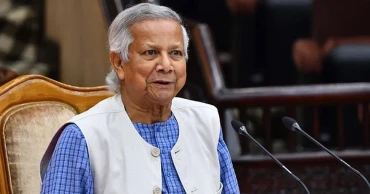
Chairman of the Islamic Development Bank (IsDB) Group Dr Muhammad Al Jasser met Nobel Laureate Prof Muhammad Yunus on Thursday and exchanged views on development, entrepreneurship and innovative solutions to social challenges.
The IsDB delegation also included Adeeb Yousuf Al Aama, CEO, International Islamic Trade Finance Corporation (ITFC); Anasse Aissami, Director General, Country Programmes, IsDB; and Abdihamid Abu, General Manager, Trade Finance, ITFC.
During the meeting at the Yunus Centre, the delegation discussed Prof Yunus's philosophy and practical experience in development, according to a press release.
They discussed his work with microcredit and Grameen Bank, the concept of social business, and his "Three Zeros" vision of zero poverty, zero unemployment and zero net carbon emissions.
Al Jasser said IsDB is considering ways to introduce microfinance across its member countries, drawing on lessons from Bangladesh's experience.
Prof Yunus welcomed the idea and asked that a team be sent to study Grameen's programmes closely, so that IsDB could identify which approaches might be of interest.
He also thanked Al Jasser for IsDB's continued partnership with Bangladesh, pointing to the US$1 billion financing agreement signed earlier in the day for the modernisation and expansion of the Eastern Refinery.
Al Jasser commended Prof Yunus's work, noting that a growing number of young people today are not looking for jobs in the traditional sense, and no longer see themselves simply as employees.
Prof Yunus said this calls for translating their creativity into problem-solving and entrepreneurship, an idea at the heart of microcredit from its earliest days. He pointed to the Nabin Programme as an initiative that began in Bangladesh before expanding elsewhere.
The conversation also covered Grameen University, which nurtures young people as job creators rather than job seekers.
Prof Yunus briefed the Islamic Development Bank on his initiatives in creating a series of digital healthcare, eye care, nursing college, hospital chain etc as social business network in the rural areas.
He emphasised the importance of empowering young people to use their creativity and entrepreneurial abilities to solve social problems, create dignified opportunities and build a more just society.
10 hours ago
BSEC holds stakeholder consultation on draft Direct Listing Rules 2026
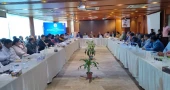
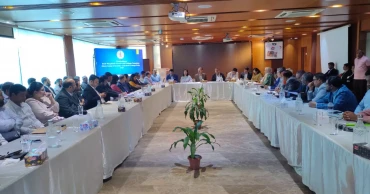
The Bangladesh Securities and Exchange Commission (BSEC) on Thursday held a stakeholder consultation meeting on its draft "BSEC (Direct Listing of Securities by Stock Exchange) Rules, 2026" at the commission's Agargaon office, as part of efforts to frame a modern, transparent and effective regulatory framework for direct listing of fundamentally strong companies on the capital market.
The meeting was chaired by BSEC Chairman Masud Khan and attended by BSEC commissioners, managing directors and senior officials of the Dhaka Stock Exchange and Chittagong Stock Exchange, the president of the Bangladesh Association of Publicly Listed Companies (BAPLC), the president of the Bangladesh Merchant Bankers Association (BMBA), and top representatives of listed and non-listed companies, merchant banks, issue managers, professional bodies and other market stakeholders.
Senior representatives from more than two dozen companies took part, including Unilever, Metlife, Nestlé Bangladesh, Banglalink, Karnaphuli Fertilizer Company Ltd (KAFCO), bKash, Incepta Pharmaceuticals, Healthcare Pharmaceuticals, Essential Drugs, Sinovia Pharmaceuticals, Nagad, Meghna Group of Industries (MGI), PRAN-RFL Group, DBL Group, Abul Khair Group, United Group, Kazi Farms Group, Confidence Group, Confidence Infrastructure PLC, BRB Cables, Edison Power, Edison Footwear, Borak Real Estate, Paschimanchal Gas Company, Sylhet Gas Fields Ltd, Impress-Newtex Composite Textiles Ltd, National Polymer, Karnaphuli Gas Distribution Company, Walton, Akij Resources, ACI PLC, North-West Power Generation Company Ltd, and Seiler Ring Cement.
A presentation was made on the draft rules, covering eligible companies for direct listing, the application and listing process, listing conditions, and the price discovery mechanism.
Participants shared their views, observations, suggestions and practical experience on the proposed provisions, with several emphasising the need to bring genuine and capable companies to the market through direct listing while safeguarding investors' interests and market discipline.
Speaking at the meeting, BSEC Chairman Masud Khan said the number of fundamentally strong companies in the country's capital market remains inadequate, and the commission wants to bring good, well-established family-run companies into the market through direct listing to deepen and widen it.
This, he said, would boost participation of quality companies while attracting more domestic and foreign investment.
He said listing brings companies enhanced reputation and credibility, along with the opportunity to establish themselves as strong corporate brands.
Listed companies also enjoy tax benefits, potential share price appreciation and greater share liquidity, he added, noting that sponsors gain an avenue to liquidate their shareholdings, while the arrangement would also help companies raise additional capital for future expansion.
The BSEC chairman further said the commission is also working to make its IPO rules more practical and effective alongside the direct listing framework.
He noted that a hybrid approach, combining existing share offloading with fresh share issuance, is under consideration, which would further expand listing opportunities for eligible companies and create new investment avenues in the market.
Some senior company representatives expressed interest in entering the market through direct listing, while others favoured the hybrid route combining IPO and share offloading. Participants welcomed the commission's initiative on direct listing and pledged their cooperation and continued input on the matter.
12 hours ago
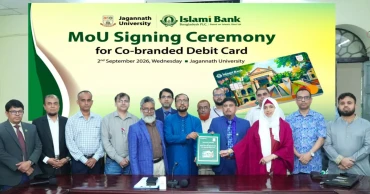
Islami Bank, JnU sign MoU for co-branded Master Debit Cards
Islami Bank Bangladesh PLC and Jagannath University (JnU) have signed a Memorandum of Understanding (MoU) to issue co-branded Master Debit Cards featuring the university's name and identity for its teachers, students, officers, and employees.
The signing ceremony was held at JnU, with its Vice-Chancellor Prof Dr Md Rais Uddin attending the event as the chief guest, according to a press release issued on Thursday.
Senior Vice President of Islami Bank Md Zahirul Islam and JnU Treasurer Prof Dr Sabina Sharmin signed the agreement on behalf of their respective institutions.
Under the agreement, cardholders will gain access to Islami Bank's modern digital banking services, including the CellFin app, POS and QR payment options, and its widespread ATM/CRM network.
The initiative includes fee-free privileges, dedicated facilities for students, and financial literacy programmes to enhance financial awareness among university stakeholders.
Provisions have also been made to extend services through other card schemes, including Visa and UPI, based on future requirements.
Islami Bank Executive Vice Presidents Md Maznuzzaman and Md Mosharraf Hossain, Senior Vice President Muzahidul Islam, and other senior officials from both organisations were present at the event.
12 hours ago
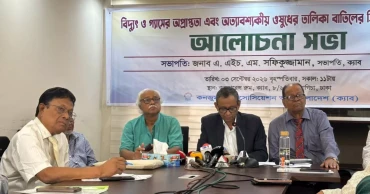
CAB demands resolution to gas-power crisis, equally slams decision to scrap interim's essential drugs list
The Consumers Association of Bangladesh (CAB) has demanded immediate government action to resolve the ongoing electricity and gas crisis, and to reinstate the recently scrapped list of essential medicines, warning that consumer suffering has reached an extreme level. The demands came at a discussion meeting titled "Protest against inadequate electricity and gas supply and the decision to scrap the essential medicine list," organised by CAB at its Segunbagicha office in the capital on Thursday. Addressing the meeting, CAB President AHM Shafiquzzaman said around 400 mills have already shut down amid the fuel crisis, raising the risk of higher production costs and unemployment. He said gas and oil prices, transport extortion and system loss were fuelling public suffering, and called for a reduction in import dependence to ensure domestic industry and fuel availability and moving towards self-reliance. He also urged the government to inform the public about the rationale behind scrapping the essential drugs list and take effective steps to control medicine prices, cautioning the authorities to adopt a pro-people policy ensuring safe food and medicine supplies. On August 3, 2026, a cabinet decision scrapped the Essential Medicines List 2026 and the Drug Price Determination Method 2026, both implemented by the interim government at the start of the year. Most notably, the interim government's framework expanded price-controlled generic drugs from 117 to 295. The latest decision of the BNP government reverts back to a 1994 law, and the prices for almost 180 additional medicines that were briefly facing state regulation will instead be determined directly by private pharmaceutical companies under Directorate General of Drug Administration (DGDA) oversight. Speakers at today's CAB event clearly stated that is a broken model. CAB Central Secretary General Humayun Kabir Bhuiyan said consumer suffering had peaked due to the gas-electricity crisis, and the scrapping of the interim government's essential medicines list. "We are not against the government; rather, we are playing an advocacy role, standing beside the government in the public interest," he said, urging authorities to identify those responsible and take swift, effective measures to ease consumer hardship. CAB Treasurer Shawkat Ali Khan said adulteration has "taken the shape of an epidemic," adding that various problems already existed around medicines even before the essential drug list was abruptly scrapped, worsening the crisis further. He called for restoring the essential medicine list to ensure logical pricing and availability, along with strict measures against adulterated medicine and food to safeguard public health. Bangladesh Sadharan Nagorik Samaj Convener Mohiuddin Ahmed said the energy crisis requires specific solutions, calling for effective measures to boost domestic gas extraction and ensure fuel supply, and stressed the need for long-term energy planning to reduce import dependence. CAB advisor Khalilur Rahman, Organising Secretary Abul Kalam Azad, Publicity Secretary Anwar Hossain Chowdhury, and Executive Committee Member Anwar Hossain were also present at the discussion. The event was moderated by CAB Executive Director Ahmed Ekramullah.
12 hours ago
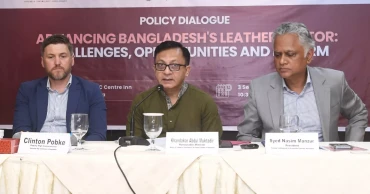
Minister unveils integrated reform plan to revive Bangladesh’s leather industry
The government is working on an integrated reform plan to revive Bangladesh’s leather industry and restore its position in the global market by reforming the tannery sector, attracting new investment and ensuring internationally compliant production systems.
Commerce, Industries, and Textiles and Jute Minister Khandakar Abdul Muktadir said this while speaking at a policy dialogue titled “Advancing Bangladesh’s Leather Sector: Challenges, Opportunities and Reform” at BRAC Centre Inn in the capital on Thursday.
He said the decision to relocate tanneries from Hazaribagh to Savar was right, but weaknesses in implementation and management have pushed the industry into difficulties.
The minister said the government will create opportunities for a “graceful exit” for tannery owners who, despite years of investment, are no longer interested in or capable of making fresh investments.
“This will create space for new entrepreneurs and investors to enter the sector,” he said.
Muktadir said 100 percent compliance will have to be ensured in the tannery sector, while obtaining certification from the Leather Working Group (LWG) will be made mandatory to improve Bangladesh’s acceptance in international markets.
The government also aims to build a “Bangladesh Leather” brand by exporting finished leather goods such as shoes, bags and other high-value products instead of exporting raw hides, he said.
On one of the sector’s major challenges, the Central Effluent Treatment Plant (CETP) in Savar, the minister said an initiative has been taken to build a new world-class CETP, while renovation of the existing facility is also being considered.
The existing system can effectively treat only around 14,000-15,000 cubic metres of waste against its projected capacity of 25,000 cubic metres, he said.
Large tanneries will be required to install their own effluent treatment plants (ETPs), while smaller ones will have to ensure full compliance by operating in coordination with the central CETP system, Muktadir said.
The government also plans to establish several plants to turn solid tannery waste into usable products, including tallow and bone meal. The initiative aims to transform the Savar Tannery Industrial Estate into an integrated waste-management industrial zone, he said.
To expand markets for leather and leather goods, the government is working to secure greater trade facilities in Japan, South Korea and Europe, the minister said.
It also plans to encourage major leather industry companies from Spain and Italy to invest in Bangladesh, he said, adding that the government aims to establish a skills and design development centre in Savar by 2027 for the leather and other industries.
Muktadir said the government will seek to restore the leather sector’s strong position in global markets by improving workers’ skills, strengthening design capabilities, promoting environment-friendly production, facilitating investment, ensuring proper ETP facilities and resolving complications related to bonded warehouse facilities.
The policy dialogue brought together policymakers, industry representatives and other stakeholders to discuss the challenges and prospects of Bangladesh’s leather sector.
14 hours ago
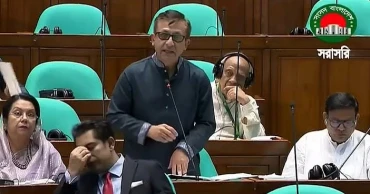
Trade deal helps Bangladesh retain US market competitiveness: Muktadir
Commerce Minister Khandakar Abdul Muktadir on Thursday said the trade agreement signed between Bangladesh and the United States has helped reduce the reciprocal tariff on Bangladeshi products and enabled the country to retain competitiveness in the US market.
He made the remarks in written reply to a starred question from ruling BNP lawmaker Md Salimuzzaman Molla (Gopalganj-1) in Parliament.
The lawmaker asked what benefits the Agreement on Reciprocal Trade (ART) signed with the US by the interim government will bring to the people of Bangladesh.
The minister said before April 2025, Bangladeshi products exported to the US were subject to an average Most Favoured Nation (MFN) tariff of around 15 percent.
In April 2025, the US imposed an additional 37 percent reciprocal tariff on Bangladeshi products on top of the existing MFN tariff, taking the overall average tariff burden to around 52 percent, he said.
Muktadir said following consultations with relevant stakeholders from the government and private sector, Bangladesh began negotiations with the US Trade Representative (USTR).
Following the negotiations, the US reduced the reciprocal tariff imposed on Bangladesh from 37 percent to 19 percent, he said.
The minister said the development led to the signing of the ART between Bangladesh and the US.
The agreement also includes a provision for a reduction in the reciprocal tariff on garments manufactured in Bangladesh using cotton imported from the US and subsequently exported to the US, he said.
Muktadir further said the US later conducted an investigation into forced labour under Section 301 of the Trade Act of 1974.
Considering whether countries had prohibited imports of products produced through forced labour or were effectively enforcing such prohibitions, the US imposed an additional tariff of 10 percent or 12.5 percent on products from around 60 countries, including Bangladesh, on top of their existing average MFN tariffs, he said.
However, as Bangladesh had signed the ART with the US, the additional tariff imposed on Bangladeshi products was set at 10 percent, the minister said.
“As a result, Bangladesh has been able to retain its export competitiveness in the US market compared with its competing countries,” he said.
Muktadir said the agreement and the subsequent tariff adjustments will help Bangladesh’s exporters maintain their position in the important US market.
15 hours ago
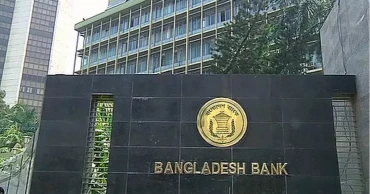
Young entrepreneurs to get up to Tk 20 lakh collateral-free funds under new BB scheme 'Uddyog'
Bangladesh Bank is set to launch a specialised financial program titled "Uddyog: Upazila-Based Young Entrepreneur Search, Identification, and Financing Program" to transform young citizens into successful entrepreneurs across the country.
The SME and Special Programs Department of the central bank will implement the initiative.
Details of the scheme were unveiled by BB Spokesperson and Executive Director Arif Hossain Khan at a press conference at the central bank headquarters on Thursday.
Unlike traditional competitive contests, "Uddyog" will identify promising young individuals directly at the upazila level through branches of scheduled banks. Participating banks will evaluate applicants' business plans, feasibility, and funding requirements to disburse the financial assistance.
Under the program, selected young entrepreneurs will receive financial support of up to Tk 20 lakh.
This package includes a maximum bank loan of Tk 10 lakh and a grant of up to Tk 10 lakh.
The interest or profit rate for the loan portion at the customer level has been fixed at a maximum of 4 to 7 percent. Crucially, the entire financing package will be provided without requiring any collateral.
However, if an entrepreneur fails to repay the loan portion within the stipulated timeframe, the grant portion will automatically be converted into an interest-free loan.
The account will then be classified under standard central bank rules, rendering the borrower a defaulter and ineligible for future loans.
To qualify for the programme, applicants must be adult Bangladeshi citizens and residents of the respective upazila, with an upper age limit of 28 years on the final date of application.
Prior business experience is not mandatory, allowing individuals with realistic and viable business ideas to apply.
Eligible sectors include agriculture, food processing, fisheries, livestock, handicrafts, tourism, services, technology, and other legitimate business ventures.
No application fee will be charged. Interested candidates can submit their application forms to any scheduled bank branch within their respective upazila.
In its initial pilot phase, the programme will roll out across 64 upazilas in eight selected districts spanning eight divisions: Manikganj, Feni, Naogaon, Jhenaidah, Bhola, Habiganj, Rangpur, and Netrokona.
Ten young entrepreneurs will be selected from each upazila, totaling 640 beneficiaries in the first phase, before the program expands nationwide.
Beyond financial funding, "Uddyog" will offer entrepreneurship development training, mentorship from experienced professionals, business registration support, assistance in business plan formulation, and market linkage services.
Bangladesh Bank estimates that each successful micro-entrepreneur creates employment for three to five people on average, making this initiative a key driver for job creation and local economic growth.
A detailed circular outlining the implementation methodology and terms will be issued by Bangladesh Bank on September 16, following which applications will remain open for one month.
16 hours ago

Gold price rises again after three consecutive cuts
Bangladesh Jewellers Association (Bajus) has raised the price of gold in the domestic market after three consecutive rounds of cuts, increasing the rate of 22-carat gold by Tk 5,482 per bhori.
With the latest adjustment, the price of 22-carat gold, including VAT, now stands at Tk 2,37,362 per bhori (11.664 grams), Bajus said in a notice issued Thursday morning.
The new price came into effect from 10am the same day.
The association said the hike was necessitated by a rise in the price of pure gold (tejabi) in the local market.
Along with 22-carat gold, prices of other categories have also been revised. The new price of 21-carat gold has been set at Tk 2,26,690 per bhori, 18-carat gold at Tk 1,94,614 per bhori, and traditional (sanatan) gold at Tk 1,58,980 per bhori, all inclusive of VAT.
Bajus said the revised rates will remain effective at all jewellery shops until further notice, though making charges will continue to apply depending on ornament design. Since VAT is already included in the sale price of gold and silver ornaments, it cannot be charged separately from customers.
The association's existing rules on exchange and repurchase of ornaments, excluding VAT, making charges and stone prices, will remain unchanged.
The previous price adjustment was made on September 2, when Bajus cut the price of 22-carat gold by Tk 4,374 per bhori, bringing it down to Tk 2,31,880. At the time, 21-carat gold was priced at Tk 2,21,441 per bhori, 18-carat at Tk 1,90,123, and traditional gold at Tk 1,55,306 per bhori.
So far in 2026, gold prices have been adjusted 111 times in the domestic market, increased 56 times, decreased 54 times, and revised once due to a VAT adjustment.
Along with gold, the price of silver has also been increased. The price of 22-carat silver, including VAT, has been raised by Tk 116 per bhori to Tk 5,132. The new price of 21-carat silver stands at Tk 4,957 per bhori, 18-carat at Tk 4,257, and traditional silver at Tk 3,208 per bhori.
Silver prices have been adjusted 68 times so far in 2026, with 35 rounds of increases and 33 rounds of decreases.
19 hours ago
Oil prices ease as Asian shares rise, following Wall Street gains
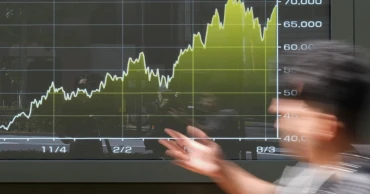
Oil prices edged lower on Thursday after rising sharply earlier in the week amid renewed fighting between the United States and Iran, while Asian stock markets mostly gained, tracking an upbeat performance on Wall Street.
Brent crude, the international benchmark, fell 0.4% to $95.26 a barrel. U.S. crude slipped 0.1% to $90.84 per barrel.
U.S. futures also moved slightly higher.
Oil prices had surged earlier this week as renewed conflict between the U.S. and Iran raised concerns over possible disruptions to energy supplies. President Donald Trump said Wednesday that he did not expect the U.S. bombing campaign to continue for “much longer.”
In Asian trading, Japan’s Nikkei 225 rose 0.2% to 64,455.83. SoftBank Group gained 2.9%, while Kioxia Holdings added 0.6% and Tokyo Electron rose 0.8%.
South Korea’s Kospi jumped 1.4% to 6,656.81, with Samsung Electronics gaining 1.3% and SK Hynix rising 1.4%.
Hong Kong’s Hang Seng index edged up 0.1%, while the Shanghai Composite gained 0.4%. Australia’s S&P/ASX 200 rose 0.5%, Taiwan’s Taiex gained 0.6%, and India’s Sensex added 0.3%.
The gains followed a positive session on Wall Street, where the S&P 500 rose 0.5% on Wednesday. The Dow Jones Industrial Average gained 0.6%, while the Nasdaq composite added 0.5%.
Investors were encouraged by positive signs of continued demand for artificial intelligence, which has been a major force behind this year’s stock market rally.
Dell Technologies surged 15.8% after reporting strong quarterly earnings. Nvidia gained 3.2%, Meta Platforms rose 2.5%, and Micron Technology added 2.4%.
In the bond market, the yield on the 10-year U.S. Treasury fell to 4.77% from above 4.81% early Wednesday. Global bond markets had come under pressure amid concerns over inflation, rising energy prices linked to the Iran conflict and growing U.S. government debt.
Investors are now awaiting the U.S. employment report for August, due Friday.
In currency trading, the Japanese yen strengthened against the U.S. dollar. The dollar fell to 157.78 yen from 158.71 yen late Wednesday after climbing above 160 yen earlier in the week, fueling expectations that Japanese authorities could intervene to support the currency.
The euro rose slightly to $1.1598 from $1.1588.
21 hours ago