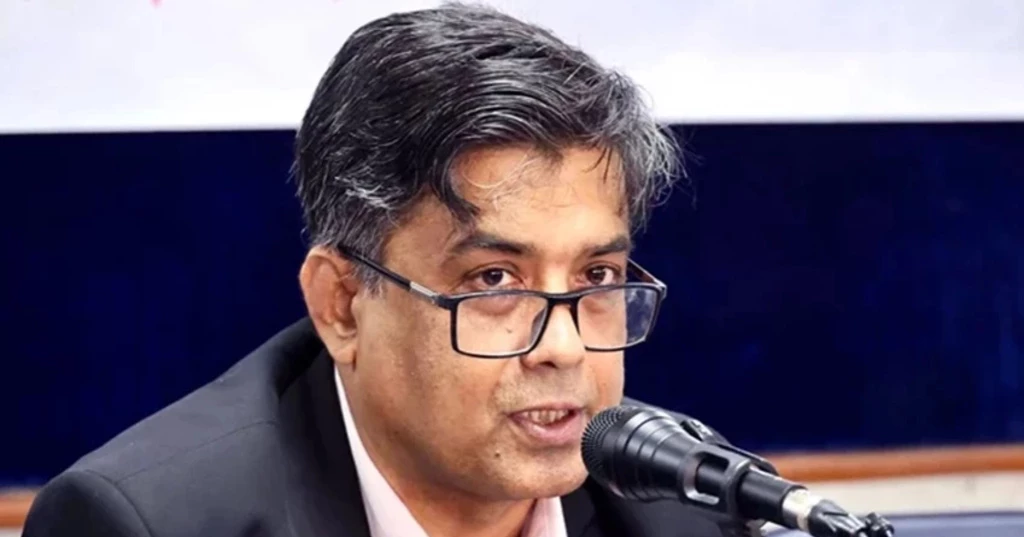
A total of 1,533,682 voters have registered to cast their votes through postal ballots, as registration for postal voting ended on Monday, Chief Adviser’s Press Secretary Shafiqul Alam said on Tuesday (January 06, 2026).
“A total of 1,533,682 voters have registered for postal voting. Of them, 761,140 are from within the country, while 772,542 are members of the Bangladeshi diaspora,” he told reporters at a media briefing held at the Foreign Service Academy.
Voters inside the country registered for postal ballots as they will be engaged in election duties and therefore unable to vote at their designated polling stations, he said.
Alam said members of the Bangladeshi diaspora are participating in the postal voting process for the first time.
Read more: Bangladesh Polls: 164 file appeals over nomination decisions in 2 days
The Press Secretary said the country has witnessed an unprecedented response to its first-ever online postal ballot registration, marking a significant step toward inclusive and participatory elections, particularly for expatriate voters.
Chief Adviser Professor Muhammad Yunus described the response as a ‘historic event’, Alam said.
Noting that the global average inclusion rate for diaspora voting in countries with long-standing systems is 2.7 percent, Alam said Bangladesh has surpassed 5 percent participation in its very first year.
He said the Election Commission’s postal voting model is now being closely observed by international stakeholders, including the European Union, UNDP, and several European countries.
The Election Commission has stated that postal ballots will be sent out and cast starting January 21, once the final list of candidates is confirmed.
The Chief Adviser emphasised that this initial experience will be crucial for expanding diaspora participation in future elections, Alam said, adding that with an estimated 1.5 crore Bangladeshis living abroad, the long-term goal is to ensure voting access for all eligible expatriates.
Regarding government initiatives to raise public awareness about the polls, particularly the referendum, Alam said the ‘Super Caravan’ campaign began on December 20 with a convoy of 10 vehicles under the title ‘Vote’r Gari’.
Citing an overwhelming public response, he said the number of vehicles will be increased from 10 to 30, and coverage will expand from 300 to 495 upazilas, including hard-to-reach island districts such as Bhola and Hatiya, where feasible.
The newly added vehicles in the ‘Super Caravan’ will operate from January 9 to January 31 and will screen 30 television commercials (TVCs) related to the elections and the referendum, he added.
Noting that the Election Commission’s preparations are progressing in full swing, Alam said training for 75 percent of security personnel, including police, Ansar, Coast Guard, and Border Guard Bangladesh, has already been completed, with the remaining training to conclude soon.
“We hope all concerned will remain fully prepared for voting,” he said, adding that training on CCTV monitoring and body-worn cameras is underway and expected to be completed by January 31.
To ensure rapid responses to any election-related disruptions, the Ministry of Home Affairs is developing a dedicated mobile app that will allow incidents of violence or irregularities to be reported instantly from anywhere in the country.
Monitoring control rooms will be established at the upazila, district, and divisional levels, along with a central control room in Dhaka, he added.
Alam said that Religious Affairs Adviser Dr AFM Khalid Hossain informed the Chief Adviser that his ministry recently held a meeting with 500 eminent Islamic scholars to involve mosque imams in election-related awareness campaigns, particularly focusing on the referendum.
At a meeting with the Chief Adviser at the State Guest House Jamuna, Dr Khalid said initiatives have been taken to encourage imams across the country to inspire people through their Friday sermons to cast a ‘Yes’ vote in the referendum.
Over 15 lakh people register for postal voting: EC
The initiative has received positive feedback, Alam said, noting that the meeting emphasized involving teachers from around 77,000 maktabs, imams from approximately 400,000 mosques nationwide, and priests from other places of worship, including temples and churches.
In addition, the Ministry of Religious Affairs is printing thousands of informational leaflets for distribution across the country, he added.