business

Stocks rally in early trade as DSE, CSE indices climb
Trading at the country’s two bourses advanced in early hours on Monday, the second working day of the week, with major indices posting notable gains amid increased investor participation.
The benchmark DSEX of the Dhaka Stock Exchange (DSE) rose 61 points in the first half of the session.
The Shariah-based DSES index gained 7 points, while the blue-chip DS30 index advanced 23 points, reflecting a broad-based upward trend.
Most of the listed companies saw price appreciation. Of the traded issues, 343 advanced, 21 declined and 24 remained unchanged.
The turnover at the DSE stood at Tk 360 crore in the first half of the trading session.
A similar upward momentum was observed at the Chittagong Stock Exchange (CSE).
The CSE All Share Price Index (CASPI) rose 106 points during the same period.
Stocks slide in early trade as DSEX loses 20 points
Among the traded issues at the CSE, 66 advanced, 25 declined and 20 remained unchanged.
The port city bourse recorded a turnover of Tk 8 crore in the first half of the session.
5 months ago

DSE inches up marginally; CSE fails to avert decline
The benchmark index of the Dhaka Stock Exchange (DSE) edged up marginally on Sunday, the first trading day of the week, recovering from early losses in the final hour of trading, while the Chittagong Stock Exchange (CSE) failed to rebound.
The DSEX, the prime index of the DSE, rose by 1 point at the close after remaining in negative territory for most of the session.
Of the other indices, the Shariah-based DSES remained unchanged, while the blue-chip DS30 index advanced by 6 points.
Stocks slide in early trade as DSEX loses 20 points
Most of the issues declined on the DSE as prices of 194 companies fell against 123 gainers, while 71 remained unchanged.
The total turnover at the DSE stood at Tk 568 crore, up from Tk 559 crore in the previous session.
In the block market, shares worth Tk 16 crore from 25 companies were traded, with Summit Alliance Port Limited dominating the segment with shares worth Tk 9 crore.
Sonargaon Textiles Limited topped the gainers’ list on the DSE, advancing 9 percent, while Asiatic Laboratories Limited was the worst loser, shedding 9.5 percent.
Meanwhile, the CSE witnessed a sharp fall as its overall index CASPI declined by 46 points.
Of the traded issues, 93 declined, 44 advanced and 13 remained unchanged.
Stocks end week sharply lower as DSE, CSE indices tumble
The port city bourse recorded a turnover of Tk 13.60 crore, slightly higher than Tk 13.10 crore in the previous trading day.
VFS Thread Dyeing Limited gained 7.5 percent to lead the gainers’ chart at the CSE, while Ring Shine Textiles Limited plunged 10 percent to become the day’s worst performer.
5 months ago

BERC slashes furnace oil price by Tk 15.90 per litre
The Bangladesh Energy Regulatory Commission (BERC) on Sunday reduced the retail price of furnace oil supplied by the Bangladesh Petroleum Corporation (BPC) by Tk 15.90 per litre, effective from midnight.
Under the new rate, furnace oil will be sold at Tk 70.10 per litre, down from the previous price of Tk 86 per litre, according to a BERC media release.
The commission said the price was re-fixed in line with Sections 34(4) and 34(6) of the Bangladesh Energy Regulatory Commission Act, 2003.
BERC noted that BPC had submitted a proposal on January 20, 2024 seeking a revision of furnace oil prices. Subsequently, state-run oil marketing companies also proposed increases in their marketing and composite transportation charges.
Among them, Meghna Petroleum Limited submitted its proposal on May 26, 2025, Standard Asiatic Oil Company Limited on June 3, Jamuna Oil Company Limited on June 26, and Padma Oil Company Limited on July 11.
A public hearing on the proposals was held on January 29 this year. Stakeholders and interested parties were allowed to submit written opinions until February 3 following the hearing.
After reviewing and analysing all proposals and opinions in detail, the commission exercised its authority under the law to re-determine the price, the release said.
As per the new decision, the marketing charge for furnace oil has been set at Tk 0.72 per litre for Padma Oil Company, Meghna Petroleum, Jamuna Oil Company and Standard Asiatic Oil Company. The composite transportation charge has been fixed at Tk 1.20 per litre.
BERC said the revised retail price of furnace oil will come into effect nationwide from 12:00am Sunday night.
Furnace oil is a high-viscosity, cost-effective, and energy-dense residual fuel derived from petroleum refining, primarily used in industrial and heavy-duty applications.
Its key uses include powering industrial furnaces, boilers, and kilns for heating, steam generation, manufacturing, and as a fuel in marine vessels and power generation plants
5 months ago
China (Hong Kong) firm to invest $19.59m in RMG factory at Uttara EPZ
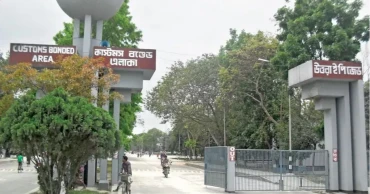
Tianford Bangladesh Textile Co., Ltd., a China (Hong Kong)-based company, has signed a land lease agreement with the Bangladesh Export Processing Zones Authority (BEPZA) to establish a garment manufacturing facility at Uttara Export Processing Zone (EPZ), with an investment of US$19.59 million.
The project is expected to create employment opportunities for 3,254 Bangladeshi nationals, said a press release.
The agreement was signed on Sunday at the BEPZA Complex in Dhaka. Md Tanvir Hossain, Executive Director (Investment Promotion) of BEPZA, signed on behalf of the authority, while Ge Zhenyu, Nominee Director of Tianford Bangladesh Textile Co., Ltd., signed on behalf of the investing company.
Production at violence-hit Uttara EPZ to resume Thursday
BEPZA Executive Chairman Major General Mohammad Moazzem Hossain witnessed the signing ceremony.
According to BEPZA officials, the company will establish the factory on 24,000 square metres of land at Uttara EPZ.
The facility will manufacture a wide range of woven and knit garments, including bottoms, tops, shirts, jeans, jackets, T-shirts, polo shirts, sportswear, sweaters, hoodies and various types of jersey products.
The factory is expected to have an annual production capacity of approximately seven million pieces.
Chinese company to invest $28 million in Uttara EPZ
Its products will be exported to major international markets including the United States, Canada, Japan, China, Australia, Brazil, the United Kingdom and European countries.
Welcoming the investment, BEPZA Executive Chairman Major General Mohammad Moazzem Hossain reaffirmed the authority’s commitment to ensuring seamless services and maintaining a business-friendly environment to support successful implementation of the project.
Ge Zhenyu expressed satisfaction with BEPZA’s investor-friendly initiatives and voiced confidence in Bangladesh as an increasingly attractive destination for foreign investors.
He said construction of the factory is scheduled to begin in April this year, with exports expected to commence next year.
5 months ago

Stocks slide in early trade as DSEX loses 20 points
Trading at the country’s two bourses witnessed a downward trend in the first half of Sunday’s session, with key indices falling at both the Dhaka and Chittagong stock exchanges.
At the Dhaka Stock Exchange (DSE), the benchmark DSEX dropped 20 points in early trading.
The Shariah-based DSES remained unchanged, while the blue-chip DS30 index declined by 6 points.
Most listed companies saw their share prices fall. Of the issues traded, 220 declined, 98 advanced and 70 remained unchanged.
The turnover at the DSE stood at Tk 300 crore in the first half of the trading session.
Meanwhile, the Chittagong Stock Exchange (CSE) also experienced a similar trend.
The CASPI, the CSE’s all-share price index, fell by 21 points during the same period.
Among the traded issues, 77 declined, 28 advanced and 10 remained unchanged.
The CSE recorded a turnover of Tk 5 crore in the first half of Sunday’s session.
5 months ago

Tk 1,000 discount & cashback on bKash payment at superstores this Ramadan
Like previous years, customers can enjoy up to Tk 1,000 in discounts and cashbacks this Ramadan on shopping with bKash payment at top superstores across the country. This offer has been introduced to make grocery and daily essential shopping more affordable, hassle‑free, and safe during the holy month of Ramadan and Eid. Additionally, exciting discounts and cashbacks of various amounts are also available on bKash payment at renowned fashion brands, bakeries, iftar markets, home appliances, restaurants, hotels, e‑ticketing, and many other products and services.
Tk 500 Discount at Superstores
Customers can get discount by applying ‘D2’ coupon code in bKash app and making minimum bKash payment of Tk 1,500 at selected superstores. During Ramadan, customers can avail Tk 100 once per day, and up to Tk 500 in 5 transactions during the campaign period.
This offer is available at different outlets of Agora, Unimart, Meena Bazar, Prince Bazar, Amana Big Bazar, Apon Family Mart, Big Bazar, Lavender, Mostafa Mart, Wholesale Club, Halishahar Mart, Khulshi Mart, Utsab Super Market, Bengal Meat, and several other superstores.
Tk 300 Discount at Shwapno & Daily Shopping
Meanwhile, customers can enjoy up to Tk 300 discount at ‘Shwapno’ and ‘Daily Shopping’ located nationwide by applying the ‘D3’ coupon code. The offer is applicable for minimum bKash payment of Tk 800. Customers can get Tk 100 discount once per day and up to Tk 300 in 3 transactions during the campaign.
Tk 200 Cashback on Online Groceries
For any order from online grocery platforms Chaldal, Daily Shopping, Meena Bazar, and Paragon, customers can get up to Tk 200 cashback by making a minimum bKash payment of Tk 1,200. Customers can receive 5% cashback up to Tk 100 once per day, and up to Tk 200 in 2 transactions during the campaign period.
It is to be noted that the bKash payment offers on grocery shopping will remain valid till March 21, 2026.
5 months ago

Remittance inflow crosses $2 billion in just 18 days of February
Expatriate Bangladeshis have sent over $2 billion in remittances during the first 18 days of February, as money transfers surged ahead of Ramadan and Eid.
According to data released by Bangladesh Bank on Thursday (Feb 19), if this upward trend continues, total remittances for the month are expected to cross the $3 billion milestone.
Central bank statistics show that January 2026 saw an inflow of $3.17 billion, marking it as the third-highest monthly total in the country's history. The current fiscal year (FY 2025–26) has shown robust growth, with total remittances reaching $21.56 billion between July 1 and February 18.
This represents a significant 22.3 percent increase compared to the $17.63 billion received during the same period of last fiscal year 2024-25.
The historical peaks for monthly remittances remain:
$3.29 billion (March 2025 – fueled by Eid-ul-Fitr)
$3.22 billion (December 2025)
$3.17 billion (January 2026)
Bangladesh’s forex reserves surge past $34 billion driven by remittance boom
Impact on Reserves
Economists believe the surge in formal channel transfers is a result of a stabilized exchange rate and a decrease in illegal hundi activities following the political transition in August 2024. This influx is providing a much-needed boost to the nation's foreign exchange reserves.
As of February 17, the country's gross reserves stood at $34.54 billion. However, according to the IMF’s BPM-6 calculation method, the net reserves are currently valued at $29.86 billion.
Banking officials and experts point to two primary drivers:
Ramadan Preparation: Families in Bangladesh face higher expenses during Ramadan, prompting expatriates to send more money home.
Increased confidence in the banking sector and a stable dollar rate have encouraged migrants to shun illegal channels in favor of official ones.
5 months ago

CAB demands action over obstruction of drive, unjustified price hike
Consumers Association of Bangladesh urged authorities to take strict legal measures against parties blocking a government-led market initiative and imposing unjustified price increases on essential goods, highlighting growing concerns over consumer protection and market regulation.
In a statement issued on Thursday, the consumer rights body strongly protested the incident that took place during a monitoring drive at Moulvibazar in the capital.
Date prices jump on first day of Ramadan despite ample supply, tariff cuts
According to the statement, a team led by Abdul Jabbar Mondal, Assistant Director of the National Consumer Rights Protection Department’s Dhaka Divisional Office, conducted the drive on Wednesday.
During the drive, inspectors found that the price of lentils had been increased by Tk 5 per kg within just 10 days at a trading establishment.
When asked to explain the price hike, the traders claimed higher procurement costs but failed to produce any valid cash memos in support of their claim.
They reportedly admitted that goods were purchased on credit and cash memos were collected only after payment was made following sales — a practice that violates existing laws and undermines market transparency.
In this connection, the authorities fined the establishment Tk 5,000 under Section 45 of the Consumer Rights Protection Act, 2009.
CAB alleged that Mohammad Ali Bhuiyan, president of the Moulvibazar Traders’ Association, publicly refused to pay the fine and mobilised traders, announcing a shutdown of shops.
He was also accused of inciting others and creating obstruction to the government operation.
CAB said unjustified price hikes of essentials, failure to maintain proper cash memo documentation and resistance to official monitoring drives reflect disorder in market management and anti-consumer practices.
The organisation called for exemplary punishment for those involved in price manipulation and obstruction of official duties, strict enforcement of mandatory cash memo issuance and stronger, regular market monitoring to ensure transparency and accountability.
It also urged the authorities concerned to take swift and effective steps to safeguard consumers’ rights and uphold good governance in the market system.
5 months ago
Date prices jump on first day of Ramadan despite ample supply, tariff cuts
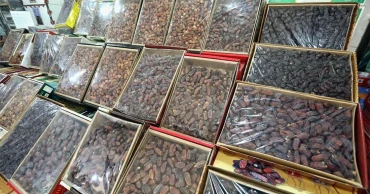
The prices of dates surged by as much as Tk 50 per kilogram in Dhaka on the first day of Ramadan, even as traders and officials say supplies remain adequate and import duties were recently reduced to stabilise the market.
Zahidi dates, a popular choice among middle, and lower-income consumers, were selling for Tk 350 per kg on Thursday, up from Tk 280-300 earlier this week.
Compared with the first day of Ramadan last year, the variety is nearly Tk 100 per kg more expensive.
Lower-priced loose or ‘bosta’ dates were trading at Tk 250–280 per kg, up from Tk 220–250 two days ago, according to visits to several retail markets in the capital.
Premium varieties saw even steeper price points. ‘Ajwa’ dates were selling for up to Tk 1,000 per kg, while Medjool reached Tk 1,650-1,800 per kg. Mid-range varieties such as Mabroom and Kalmi Maryam were priced between Tk 850 and Tk 950 per kg.
The increase comes despite a recent decision by the National Board of Revenue to cut import duties on dates to 15 percent from 25 percent ahead of Ramadan, a move aimed at keeping prices in check during peak demand.
According to official data, Bangladesh’s annual demand for dates ranges between 90,000 and 100,000 tonnes, with Ramadan accounting for 60,000 to 80,000 tonnes. Current reserves are about 25 percent higher than total demand, suggesting no immediate supply shortfall.
Some traders attributed the spike to market speculation.
A rumour about 150 containers of dates sinking near Thailand has circulated in recent days, prompting concerns among retailers. However, wholesalers in Dhaka said prices at the wholesale level have not risen.
“There has been no increase in wholesale prices,” said Abdur Rahim, a fruit trader with 27 years of experience at Badamtoli, one of the capital’s main wholesale markets, in a phone interview.
Consumers expressed frustration over the sudden increase. Mohammad Azizul, a buyer in the Motijheel area, said he paid Tk 350 per kg for Zahidi dates on Thursday after purchasing the same variety for Tk 280 last week.
10 lakh families to get affordable protein-rich food during Ramadan
“If prices change this quickly, many of us will have to reconsider buying dates,” he said, urging authorities to monitor the market.
Retailers, meanwhile, maintained that supply remains sufficient across markets in Dhaka, even as prices climbed at the consumer level on the first day of the fasting month.
5 months ago

Stocks end week sharply lower as DSE, CSE indices tumble
Stocks closed the week on a sharp downturn on Thursday as key indices at both the Dhaka Stock Exchange (DSE) and the Chittagong Stock Exchange (CSE) fell significantly, with most listed companies witnessing price erosion and overall turnover declining.
The market failed to rebound on the last trading day despite three consecutive sessions of losses. The benchmark DSEX index of the Dhaka bourse shed 53 points at the close after remaining in the red throughout the session.
The Shariah-based DSES index lost 10 points, while the blue-chip DS30 index declined by 12 points.
Losers dominated the DSE trading floor, as prices of 313 companies declined against 46 gainers, while 33 issues remained unchanged.
The turnover at the DSE dropped by Tk 376 crore to Tk 559 crore, down from Tk 935 crore in the previous session.
In the block market, shares worth Tk 29 crore from 24 companies were traded, with National Bank PLC posting the highest block turnover of Tk 6 crore.
Rahima Food Corporation Limited topped the DSE gainers’ chart with a 6 percent rise, while First Finance Limited plunged 10 percent to become the worst loser.
Meanwhile, the CSE also witnessed a notable decline, with its benchmark CASPI index falling by 79 points.
Stocks slide at DSE, CSE in early trading
Of the traded issues at the port city bourse, 113 declined, 46 advanced and 23 remained unchanged.
The turnover at the CSE fell by nearly Tk 8 crore to Tk 13 crore, compared to Tk 21 crore in the previous session.
Premier Leasing & Finance Limited emerged as the top gainer at the CSE with an almost 8 percent increase, while NRB Bank PLC declined 10 percent to end as the worst performer.
5 months ago