World
Earthquake devastates Afghan villages, 250 dead
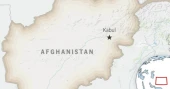
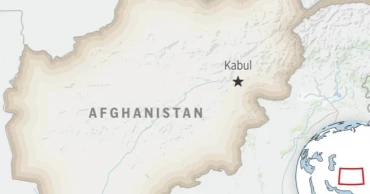
A powerful earthquake near Afghanistan’s eastern border with Pakistan leveled villages and caused widespread destruction late Sunday, leaving at least 250 people dead and 500 injured, officials said. Authorities warned the toll could climb as rescue teams reached affected areas.
The 6.0 magnitude quake struck at 11:47 p.m. in Kunar province, about 27 kilometers (17 miles) east-northeast of Jalalabad in neighboring Nangarhar province, at a shallow depth of 8 kilometers (5 miles), according to the U.S. Geological Survey. Shallow quakes typically cause greater damage.
The Kunar Disaster Management Authority reported that the worst-hit districts were Nur Gul, Soki, Watpur, Manogi and Chapadare.
“Rescue operations are still underway there, and several villages have been completely destroyed. The figures for martyrs and injured are changing. Medical teams from Kunar, Nangarhar and the capital Kabul have arrived in the area,” said Sharafat Zaman, a spokesman for the ministry of public health.
He noted that many areas had yet to provide casualty figures and that “the numbers were expected to change” as reports came in.
Jalalabad, a major trading hub near the Pakistan border with around 300,000 residents, is surrounded by vulnerable rural communities where homes are often built of mud bricks and wood. The region is also known for agriculture, including citrus and rice farming, sustained by the Kabul River.
Afghanistan has a history of devastating quakes. On Oct. 7, 2023, a magnitude 6.3 earthquake killed thousands. The Taliban government estimated about 4,000 deaths, while the U.N. put the figure closer to 1,500, making it one of the country’s deadliest recent disasters.
11 months ago
Houthis storm UN offices in Yemen, several employees detained
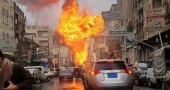
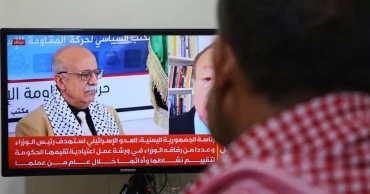
Iran-backed Houthis on Sunday raided offices of the United Nations’ food, health and children's agencies in Yemen’s capital, detaining several U.N. employees, officials said. The rebels tightened security across Sanaa following the Israeli killing of their prime minister and several Cabinet members.
Abeer Etefa, a spokesperson for the World Food Program, told The Associated Press that security forces raided the agencies’ offices in the Houthi-controlled capital of Sanaa on Sunday morning. She said at least one staffer was detained in the city and others reportedly detained in other areas.
“WFP reiterates that the arbitrary detention of humanitarian staff is unacceptable,” Etefa said.
Also raided were offices of the World Health Organization and UNICEF, according to a U.N. official and a Houthi official, who spoke on condition of anonymity because they weren’t authorized to brief the media.
The U.N. official said armed forces raided the offices and questioned employees in the parking lot. He said contact with several other WFP and UNICEF staffers were lost and that they were likely also detained.
Ammar Ammar, a spokesperson for UNICEF, said a number of the agency's staffers were detained, and UNICEF was seeking additional information from the Houthis.
Both Etefa and Ammar said their agencies were conducting “a comprehensive head count" of their employees in Sanaa and other Houthi-held areas.
The raids were the latest in a long-running Houthi crackdown against the United Nations and other international organizations working in rebel-held areas in Yemen.
They have detained dozens of U.N. staffers, as well as people associated with aid groups, civil society and the now-closed U.S. Embassy in Sanaa. The U.N. suspended its operations in the Houthi stronghold of Saada in northern Yemen after the rebels detained eight U.N. staffers in January.
At least 5 ministers confirmed killed in the Israeli strike
Sunday's raids came on the heels of the killing of the Houthi prime minister and several of his Cabinet members in an Israeli strike Thursday. It was a blow to the Iran-backed rebels who have launched attacks on Israel and ships in the Red Sea in relation to the Israel-Hamas war in the Gaza Strip.
Among the dead were Prime Minister Ahmed al-Rahawi, Foreign Minister Gamal Amer, Deputy Prime Minister and Minister of Local Development Mohammed al-Medani, Electricity Minister Ali Seif Hassan, Tourism Minister Ali al-Yafei and Information Minister Hashim Sharafuldin, according to two Houthi officials and the victims' families.
Also killed was a powerful deputy interior minister, Abdel-Majed al-Murtada, the Houthi officials said.
They were targeted during a “routine workshop held by the government to evaluate its activities and performance over the past year,” a Houthi statement said Saturday, two days after the strike. The Houthis said a funeral for all those killed is scheduled for Monday in Sabeen Square in central Sanaa.
Defense Minister Mohamed Nasser al-Attefi survived the attack while Abdel-Karim al-Houthi, the interior minister and one of the most powerful figures in the rebel group, didn’t attend the Thursday meeting, the Houthi officials said.
U.N. envoy for Yemen Hans Grundberg expressed “great concern” over Israel’s recent strikes in the Houthi-controlled areas following Houthi attacks against Israel.
“Yemen cannot afford to become a battleground for a broader geopolitical conflict,” he said in a statement. He called for de-escalation.
Thursday’s strike came after the Houthis attacked Israel on Aug. 21 with a ballistic missile that its military described as the first cluster bomb the rebels had launched at Israel since 2023. The missile, which the Houthis said was aimed at Ben Gurion Airport, prompted air raid sirens across central Israel and Jerusalem, forcing millions into shelters.
The Houthis are likely to escalate their attacks on Israel and ships in the Red Sea, after they vowed in July to target merchant ships belonging to any company that does business with Israeli ports, regardless of nationality.
“Our military approach of targeting the Israeli enemy, whether with missiles, drones or a naval blockade, is continuous, steady, and escalating,” al-Houthi, the group’s secretive leader, said in a televised speech Sunday.
11 months ago
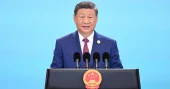
SCO bears greater responsibilities for peace, development: Xi
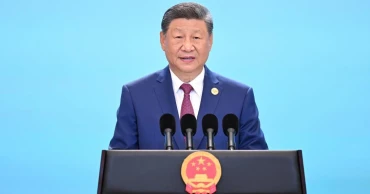
Chinese President Xi Jinping on Sunday said the Shanghai Cooperation Organization (SCO) is shouldering greater responsibilities for safeguarding regional peace and stability, and for boosting development of various countries in a world of increasing uncertainties and accelerated changes.
Xi made the remarks at a banquet to welcome international guests who are in China's port city of Tianjin to attend the SCO Summit 2025 from Sunday to Monday.
Before the banquet, Xi and his wife Peng Liyuan welcomed the guests when they arrived.
Addressing the banquet, Xi expressed confidence that with concerted efforts of all parties, the summit will be a complete success, and that the SCO is certain to play an even bigger role and achieve more progress, making greater contribution to boosting the unity and cooperation among member states, pooling the strength of the Global South and pushing for more progress of human civilization.
Founded in Shanghai in June 2001, the SCO has expanded from six founding members into a 26-nation family of 10 members, two observers and 14 dialogue partners spanning Asia, Europe and Africa.
With major emerging markets and developing countries such as China, Russia and India among its members, the SCO represents nearly half of the world's population and a quarter of the global economy.
The Tianjin summit is the largest-ever annual summit of the group. Member states are expected to adopt key documents, including the organization's development strategy for the next decade.
It is also President Xi's second time hosting the event, with the participation of leaders from more than 20 countries and 10 international organizations. Prior to the summit, Xi held more than a dozen bilateral meetings with arriving leaders in Tianjin.
Xi told the guests at the banquet that as an open and inclusive city, Tianjin serves as a pioneering zone for China's reform and opening-up, and hosting the summit here will undoubtedly inject new vitality into the sustainable development of the SCO.
The SCO has become an important force in building a new type of international relations and a community with a shared future for humanity, he added.
The summit includes the 25th Meeting of the Council of Heads of State of the SCO as well as the "SCO Plus" Meeting, both of which will be held on Monday.
Participants at the meetings will discuss plans for cooperation and development, and work to improve global governance, Xi said.
He expressed the hope that the SCO will, under the guidance of Shanghai Spirit, set sail once again from Tianjin toward an even brighter future.
After the banquet, Xi and Peng joined the guests in watching an art performance.
Senior Chinese officials including Cai Qi, Wang Yi, Chen Min'er, and Wang Xiaohong were present at the event.
11 months ago
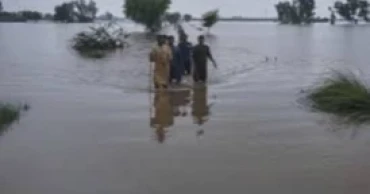
Punjab hit by worst floods in history, over 2 million affected
Pakistan’s Punjab province is grappling with the most severe flooding in its recorded history, officials said Sunday, as river levels surge to unprecedented highs and extreme weather continues to batter the region.
This year's intensified monsoon, worsened by global climate change, has led to widespread devastation across the country — particularly in the mountainous north and northwest — where landslides and flash floods have become more frequent.
In eastern Punjab, torrential rainfall has combined with rising river levels exacerbated by water releases from Indian dams, leading to extensive flooding across low-lying areas.
“This is the largest flood Punjab has ever faced,” said provincial senior minister Maryam Aurangzeb during a press briefing. “More than two million people have been affected. For the first time, the Sutlej, Chenab, and Ravi rivers are simultaneously carrying such dangerously high volumes of water.”
Emergency relief operations are underway, with schools, police stations, and military facilities repurposed as temporary shelters. Rescue teams are evacuating residents by boat from submerged areas, she added.
Aurangzeb also noted that the Foreign Ministry is compiling data on India’s recent release of dam water into Pakistani territory, calling it a “deliberate act.” India has yet to respond publicly. Last week, Indian authorities had issued a flood alert to Pakistan, marking a rare diplomatic exchange between the two neighbors since tensions nearly erupted into open conflict in May.
Punjab, home to around 150 million people, is a key contributor to Pakistan’s agricultural output and the country’s main wheat-producing region. The ongoing flooding has raised concerns of a repeat of the 2022 disaster, when floods destroyed vast stretches of farmland and triggered national food insecurity.
Between July 1 and August 27, Punjab has received 26.5% more rainfall than during the same period last year, according to Pakistan’s meteorological department.
The National Disaster Management Authority reports that since June 26, rain-related incidents have killed 849 people and injured over 1,100 across the country. Pakistan’s monsoon season typically continues through the end of September.
11 months ago
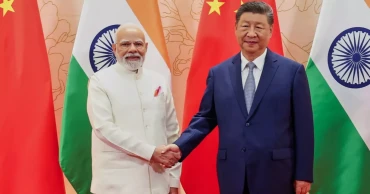
Xi, Modi commit to easing border tensions, strengthening ties at Tianjin meeting
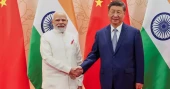
Chinese President Xi Jinping and Indian Prime Minister Narendra Modi have vowed to address longstanding border disputes and enhance bilateral cooperation during a meeting held ahead of a regional summit in Tianjin.
Modi’s trip marks his first visit to China since relations between the two nuclear-armed neighbors sharply declined following deadly clashes between their troops in 2020. The visit comes as part of India's participation in the Shanghai Cooperation Organization (SCO), a regional bloc focused on political, economic, and security issues, spearheaded by China.
In his remarks, Modi said that ties between the two countries have progressed “in a meaningful direction,” highlighting that the border situation has calmed after disengagement efforts. He emphasized that peace and stability along the frontier are essential for further development of India-China relations, according to a statement from India's Ministry of External Affairs.
President Xi echoed this sentiment, expressing hope that the talks in Tianjin would “further elevate” and sustain the “healthy and stable” trajectory of bilateral relations, as reported by China’s state broadcaster CCTV.
He urged both sides not to allow the border dispute to define their overall relationship. Instead, Xi said, the focus should be on mutual development. “As long as both countries stay committed to being partners rather than rivals, and prioritize opportunities over threats, China-India ties will steadily move forward,” he said.
Russian President Vladimir Putin also arrived in Tianjin on Sunday and is expected to hold talks with both leaders in the coming days.
Earlier this month, Chinese Foreign Minister Wang Yi visited New Delhi as part of a diplomatic thaw between the two nations. During that visit, both countries agreed to restart stalled border negotiations, resume direct flights, and ease visa restrictions.
Wang’s visit occurred around the same time the U.S. imposed 50% tariffs on India in response to its continued imports of Russian oil. However, Indian officials have indicated that efforts to repair ties with China had been underway well before that development.
Reaffirming India's independent foreign policy stance, Modi stated on Sunday that “India and China both value strategic autonomy, and their relationship should not be viewed through the prism of any third country,” according to India's foreign ministry.
In a sign of improving ties, both sides have increased high-level exchanges this year and discussed removing some trade and travel restrictions. In June, China granted Indian pilgrims permission to visit sacred sites in Tibet, further signaling progress in diplomatic engagement.
11 months ago
Macron’s plan to recognize Palestinian State in September sparks tensions with Israel, US
French President Emmanuel Macron’s upcoming move to formally recognize a Palestinian state has stirred sharp criticism from both Israel and the United States. The decision, intended to revive diplomatic momentum for a two-state solution amid the ongoing war in Gaza, has drawn fire for what opponents argue is a politically destabilizing gesture.
In a letter sent last week to Israeli Prime Minister Benjamin Netanyahu, Macron emphasized that France’s support for Palestinian statehood stems from the belief that lasting peace is vital for Israel’s security. He described the humanitarian catastrophe in Gaza as “unjustifiable” and underscored the urgency for a political resolution.
As the death toll in Gaza surpassed 63,000, according to the enclave’s Health Ministry, and Israel declared Gaza City a combat zone, Macron’s letter signaled a shift among Western powers. France, along with the UK, Canada, Australia, and Malta, plans to officially recognize a Palestinian state during the upcoming UN General Assembly session starting on September 23. New Zealand, Finland, and Portugal are reportedly weighing similar moves.
Netanyahu, who opposes Palestinian statehood and has vowed to intensify military operations in Gaza, condemned Macron’s stance. He accused the French leader of “fanning the flames of antisemitism” — a claim Macron rejected as “disgraceful.”
US Ambassador to France Charles Kushner echoed Israel’s position, warning in a letter that steps toward recognition could embolden extremists and jeopardize Jewish safety, including in France. His remarks prompted a formal response from the French Foreign Ministry.
“This strong reaction highlights how symbolic actions can carry significant weight,” said Pascal Boniface, a French geopolitical analyst. “There’s now a race between renewed diplomatic engagement focused on a two-state solution and an increasingly dire reality on the ground in Gaza that’s making such a solution harder to implement.”
Some advocates for Palestinian statehood expressed frustration that the recognition will be delayed until September, fearing that further destruction in Gaza will only complicate future diplomacy.
International leaders, including Macron, continue to urge Israel to halt its military offensive in the densely populated and war-torn Gaza Strip, where over 2 million people are displaced, infrastructure lies in ruins, and famine has taken hold.
In his letter, Macron warned that the occupation and forced displacement of Palestinians, along with policies leading to starvation, would not bring Israel peace. Instead, he argued, such actions would further isolate the country and fuel antisemitism globally.
While more than 140 countries already recognize Palestinian statehood—mostly as a symbolic gesture—analysts say Macron’s initiative could still have diplomatic impact.
Muhammad Shehada, a Gaza-based analyst and fellow at the European Council on Foreign Relations, said the involvement of major Western powers counters Netanyahu’s narrative that mass displacement is the only path forward. “This move brings weight to the two-state vision and pressures Israel diplomatically,” he noted.
Backing Moderate Palestinian Leadership
France’s diplomatic push, led in coordination with Saudi Arabia, also secured a significant breakthrough earlier this year: a joint statement from all 22 Arab League nations condemning Hamas attacks on civilians. This marked the first such consensus, agreed upon at a July conference in New York.
In the declaration, Arab leaders called on Hamas to relinquish control of Gaza and disarm, handing over authority to the Palestinian Authority (PA)—a move intended to strengthen moderate Palestinian factions and lay groundwork for statehood talks.
Shehada said the plan may help weaken hardline elements within Hamas by signaling that diplomatic engagement, not violence, can lead to an independent Palestinian state. “This offers Palestinians a political path and an alternative to armed struggle,” he said.
The PA seeks statehood in the West Bank, Gaza, and East Jerusalem—territories seized by Israel during the 1967 war. However, the PA was expelled from Gaza in 2007 following a Hamas takeover and now governs limited areas of the Israeli-occupied West Bank.
Despite renewed European support, the Palestinian Authority remains unpopular among many Palestinians, who view it as corrupt and ineffective. Nonetheless, Macron and other leaders continue to view a reformed PA as central to achieving a lasting peace.
11 months ago
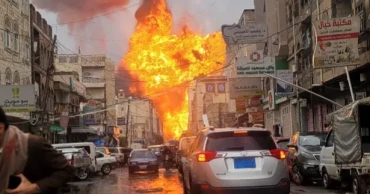
Houthis vow ‘vengeance’ after Israeli air strike kills prime minister in Sanaa
A senior Houthi official has pledged “vengeance” against Israel after the group confirmed that its prime minister in Sanaa was killed in an Israeli air strike earlier this week.
The Houthis announced on Saturday that Ahmed al-Rahawi was killed on Thursday in the Yemeni capital, along with “several” other ministers. According to the statement, al-Rahawi and other members of the Houthi-led administration were hit during a workshop. The group did not specify how many other officials died in the strike.
“We shall take vengeance, and we shall forge from the depths of wounds a victory,” said Mahdi al-Mashat, chairman of the Houthis’ Supreme Political Council, in a video message later that day.
The Israeli military described the strike on Sanaa as hitting “a Houthi terrorist regime military target,” amid intensifying regional tensions linked to Israel’s war in Gaza. Over the past months, Israel has repeatedly attacked Houthi sites after the Yemeni group launched operations against Israel and Western vessels in the Red Sea and Gulf of Aden, saying the actions were in solidarity with Palestinians.
On Wednesday, the Houthis claimed a missile strike on southern Israel, which Israeli authorities said was intercepted, reports Al Jazeera .
Following Saturday’s announcement, the Houthi presidency said its institutions remain functional despite the loss of senior officials. “The blood of the great martyrs will be fuel and a motivator to continue on the same path,” the statement said.
Al-Mashat vowed that the group would “continue the path of building our armed forces and developing their capabilities,” while reaffirming support for Palestinians. “To our people in Gaza, our stance is steadfast, and will remain so until the aggression ceases and the siege is lifted, no matter the scale of the challenge,” he said.
The exact death toll from Thursday’s strike is still uncertain. Israeli media, citing unnamed sources, reported that the attack targeted the entire Houthi cabinet, including al-Rahawi and 12 other ministers.
Just four days earlier, Israeli strikes on the Yemeni capital killed 10 people and wounded over 90, according to health officials. The Israeli army said those attacks struck Houthi military facilities and the presidential palace.
Al Jazeera correspondent Hamdah Salhut said Israel has signaled it will “continue to target Houthi-related targets, meaning that anything that could be used militarily or politically by the rebel group” is at risk.
She added that Israeli Defense Minister Israel Katz acknowledged earlier that strikes on Yemen had not been sufficient to deter the Houthis. Katz argued that Israel should go after the group’s leadership, similar to past assassinations of figures from Hezbollah, Hamas, and Islamic Jihad.
11 months ago

Chicago mayor pushes back against Trump’s immigration crackdown plan
Chicago Mayor Brandon Johnson on Saturday resisted the Trump administration’s plan to send federal officers into the city, calling the move “out-of-control” and signing an order limiting local cooperation.
Under Johnson’s executive order, the Chicago Police Department is prohibited from assisting federal agents with civil immigration enforcement or participating in related patrols, traffic stops, or checkpoints during the expected federal surge.
He also instructed all city departments to protect the constitutional rights of residents “amidst the possibility of imminent militarized immigration or National Guard deployment by the federal government.”
When asked at a news conference about federal officers “taking orders,” Johnson said: “Yeah, and I don’t take orders from the federal government.”
The mayor further barred Chicago police from covering their faces to conceal their identities, a practice commonly used by Immigration and Customs Enforcement officers since President Donald Trump took office earlier this year.
According to two U.S. officials, the operation could begin as soon as Sept. 5 and last about a month. They described it as part of a wider effort to boost federal law enforcement presence in Democratic-led cities, similar to what happened in Los Angeles earlier this summer. The officials spoke on condition of anonymity because details had not been publicly released.
On Saturday, Trump commented on Chicago violence and Illinois Gov. JB Pritzker on Truth Social: “Six people were killed, and 24 people were shot, in Chicago last weekend, and JB Pritzker, the weak and pathetic Governor of Illinois, just said that he doesn’t need help in preventing CRIME. He is CRAZY!!! He better straighten it out, FAST, or we’re coming! MAGA. President DJT”
Unlike the recent federal control of policing in Washington, D.C., the Chicago operation is not expected to involve the National Guard or military and will be centered solely on immigration enforcement rather than a broader anti-crime campaign, the officials said.
Chicago, home to a large immigrant community, and Illinois both have strong laws limiting cooperation with federal immigration enforcement. This has often put them at odds with Trump’s mass deportation agenda.
Johnson emphasized that neither city nor state officials had been consulted about the planned deployment and demanded that Trump abandon the proposal. At the news conference, he sharply criticized the president, accusing him of “behaving outside the bounds of the Constitution” and targeting Democratic-led cities in retaliation against political opponents.
“He is reckless and out of control,” Johnson said. “He's the biggest threat to our democracy that we've experienced in the history of our country.”
The White House defended the plan, saying it was aimed at public safety. “If these Democrats focused on fixing crime in their own cities instead of doing publicity stunts to criticize the President, their communities would be much safer,” White House spokeswoman Abigail Jackson said in an email Saturday.
11 months ago
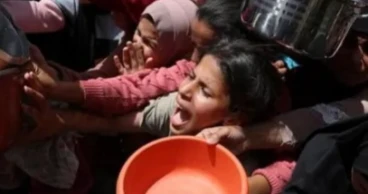
Israel to halt or reduce aid in northern Gaza amid intensifying offensive
Israel will soon halt or scale back humanitarian aid deliveries to northern Gaza as its military offensive against Hamas expands, an official said Saturday, a day after Gaza City was declared a combat zone.
The move is expected to draw further international condemnation as Palestinians face worsening humanitarian conditions and families of remaining hostages express growing alarm after nearly 23 months of war.
Speaking on condition of anonymity, the official told The Associated Press that Israel will stop airdrops over Gaza City in the coming days and reduce the number of aid trucks as preparations are underway to evacuate hundreds of thousands of people south.
On Friday, Israel ended daytime pauses in fighting that had allowed limited aid access, calling Gaza City a Hamas stronghold and citing the continued presence of tunnel networks. The UN and aid groups said the measures were far short of the 600 trucks needed daily to meet Gaza’s needs.
Meanwhile, Prime Minister Benjamin Netanyahu’s office confirmed the remains of hostage Idan Shtivi, kidnapped during Hamas’ Oct. 7 attack at the Nova music festival, were recovered in Gaza. Families of other captives renewed calls for a ceasefire deal, warning the ongoing offensive puts their loved ones in greater danger.
Aid agencies also warned of “massive population movement” if Israel presses ahead with further evacuations. Mirjana Spoljaric, president of the International Committee of the Red Cross, said the destruction of infrastructure and extreme shortages of food, water and medicine make it impossible to evacuate Gaza City’s population in a safe and dignified way.
Heavy Israeli airstrikes continued overnight. A strike on a Gaza City bakery killed 12 people, including six women and three children, while another strike on Rimal neighborhood killed seven, health officials said. Hamas called the attack on a residential building a “brutal escalation.”
Separately, four Palestinians were shot dead while trying to collect aid in central Gaza, according to Al-Awda Hospital officials. Gaza’s Health Ministry reported that 10 more people, including three children, died from starvation and malnutrition in the past 24 hours, bringing the war’s total to 332 such deaths.
Since the conflict began, at least 63,371 Palestinians have been killed, including nearly half women and children, according to the Hamas-run Health Ministry. While Israel disputes the figures, the UN and independent experts consider the ministry’s data the most reliable source on casualties.
END/UN
B/FH/0830 hrs
11 months ago
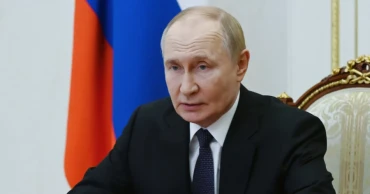
Putin to visit India in December, Kremlin confirms
Russia's President Vladimir Putin plans to travel to India in December, Putin's aide said Friday.
Putin's foreign affairs adviser Yuri Ushakov told reporters that the Russian leader will discuss his upcoming December visit with Indian Prime Minister Narendra Modi on Monday in China. Putin and Modi will meet on the sidelines of the annual summit of the Shanghai Cooperation Organization (SCO), which was established by China and Russia in 2001 with a focus on security in Central Asia and the wider region.
Putin is attending the summit and holding multiple bilateral meetings on the sidelines as part of a four-day visit to China on Aug. 31 to Sept. 3.
He also will hold extensive talks with Chinese leader Xi Jinping in Beijing and attend a massive military parade there commemorating the 80th anniversary of the end of World War, according to the Kremlin.
In addition meeting with Modi, the Russian leader on Monday is also scheduled to have bilateral meetings with Turkish President Recep Tayyip Erdogan and Iranian President Masoud Pezeshkian, as well as other contacts, Ushakov said.
Russian officials also were "working on the possibility of a bilateral meeting” between Putin and North Korean leader Kim Jong Un in Beijing, where Kim will also be attending the parade, Ushakov added.
According to Ushakov, Putin's meeting with Modi will be the first this year, but the two “have repeatedly maintained contact by telephone.”
Modi travelled to Russia last year twice — first to Moscow for talks with Putin in July, his first trip to Russia since the full-scale invasion of Ukraine by the Kremlin’s forces in 2022, and then to Kazan in October for the summit of the BRICS bloc of developing economies.
Russia had strong ties with India during the Cold War, and New Delhi’s importance as a key trading partner with Moscow has grown since the war in Ukraine.
Modi has avoided condemning Russia while emphasizing a peaceful settlement. Their partnership has become more complicated, however, as Russia has moved closer to China amid international isolation of Moscow over Ukraine.
China and India are key buyers of Russian oil following sanctions imposed by the United States and its allies that shut most Western markets off to Russian exports.
11 months ago