world
UNESCO adds West Bank site, Lebanese castles to World Heritage List despite Israeli objections
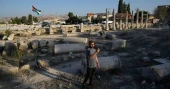
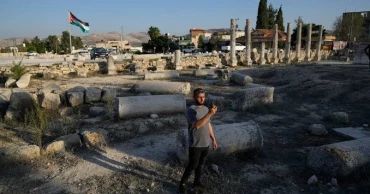
UNESCO has added the archaeological site of Sebastia in the occupied West Bank and five historic castles in southern Lebanon to its World Heritage List, despite strong objections from Israel.
The decision was taken on Friday during a meeting of UNESCO's World Heritage Committee in Busan, South Korea. The committee also placed both sites on the List of World Heritage in Danger, citing the ongoing conflicts in the Middle East.
The move came just days after Israel's Foreign Ministry urged the committee to reject the nominations, accusing those behind the proposals of using cultural heritage for political purposes.
Sebastia, located about 10 kilometres northwest of Nablus in the Israeli-occupied West Bank, is widely identified by historians as the ancient city of Samaria, the capital of the biblical Kingdom of Israel. The site contains archaeological remains from the Iron Age, Roman, Byzantine and Islamic periods. According to UNESCO, both Christian and Islamic traditions identify Sebastia as the burial place of John the Baptist.
The Palestinian delegation first nominated Sebastia for World Heritage status in 2012, arguing that the designation would help protect and preserve the site. The nomination said the area, which remains under Israeli control, needs greater conservation despite attracting visitors.
The designation comes as Israel moves to take control of large areas of land surrounding Sebastia while facing international pressure to curb violence by Israeli settlers in the occupied Palestinian territory.
The five castles in Lebanon's Mount Amel region were recognised for their architectural importance. UNESCO said the castles reflect nearly 900 years of military architecture, combining Crusader, Ayyubid, Mamluk and local influences.
Adel Naim Daoud Atieh, a member of the Palestinian delegation to UNESCO, said the recognition honours the people of Sebastia, who have protected the site for generations despite occupation, restrictions and repeated efforts to separate them from their cultural heritage.
Israel withdrew from UNESCO in 2019, accusing the agency of bias and of failing to recognise the country's historical links to the Holy Land. An Israeli delegate attending the Busan meeting as an observer said politics had undermined UNESCO's credibility and distorted history.
Earlier this week, Israel's Foreign Ministry accused the Palestinian delegation of falsely portraying Sebastia as an emergency case. It described the nomination as a political effort to ignore the site's Jewish and Christian history.
Israel also opposed the inclusion of Beaufort Castle, one of the five Lebanese castles, claiming that Hezbollah has turned it into a military base by building tunnels beneath the site and launching rockets from the area.
UNESCO and the Lebanese embassy in South Korea declined to comment on Israel's allegations. At Friday's meeting, a Lebanese delegate said the castles have been used only for cultural and tourism purposes since Israel withdrew from southern Lebanon in 2000. The delegate also accused Israeli media of misrepresenting tourist facilities as military tunnels.
Earlier this week, UNESCO also placed the ancient Lebanese city of Tyre on its List of World Heritage in Danger.
10 days ago
Wildfires force mass evacuations in Spain and France as heatwave fuels blazes
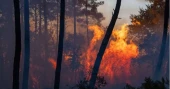
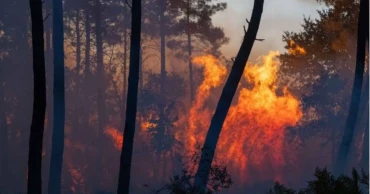
Spain declared a national emergency on Friday after fast-moving wildfires forced around 10,000 people to evacuate in the Madrid region, while major fires in southwestern France drove tens of thousands from their homes.
"We are experiencing a dramatic situation, not just in several Spanish regions but also in neighboring countries," Spanish Prime Minister Pedro Sánchez wrote on X.
"My solidarity with all the people who have been affected and been forced to leave their homes," he added.
The national emergency allows Spain's Interior Ministry to take charge of coordinating firefighting efforts as several regions battle wildfires intensified by a severe heatwave. Authorities also stepped in to help tackle another major blaze in the central province of Ávila.
The Madrid regional government said about 10,000 residents were evacuated from several villages after multiple fires spread out of control late Thursday.
"In my 60 years, I have never seen anything like this in my village," Burgohondo Mayor Francisco Martínez told Spain's public broadcaster TVE. "I have never seen fires of this size."
Spain's military emergency units, national firefighting teams and water-dropping aircraft have been deployed to support local firefighters.
An estimated 1,300 square kilometres of land have burned in Spain so far this year—more than four times the area destroyed during the same period in 2025.
Among this year's blazes is Spain's second-largest wildfire on record, which burned around 320 square kilometres in Guadalajara province, north of Madrid. Earlier this month, 13 people died in a wildfire in southern Spain, the country's deadliest in recent memory.
Sánchez on Wednesday called for political parties to work together on climate change, saying stronger action is needed to prepare for increasingly severe wildfire seasons.
Temperatures are expected to exceed 39 degrees Celsius in parts of Spain, with highs of up to 44 degrees forecast in the southeastern province of Almeria.
Tens of thousands evacuated in FranceIn southwestern France, authorities ordered further evacuations on Friday as wildfires continued to spread near the popular Cap Ferret peninsula on the Atlantic coast.
Around 40,000 people have fled their homes over the past two days as the fires, which started on Wednesday, burned more than 87 square kilometres. Some residents had to escape by boat.
France has requested assistance through the European Union's Civil Protection Mechanism.
President Emmanuel Macron said additional firefighting support would soon arrive, including two Canadair aircraft from Croatia, two Air Tractor planes from Portugal and Black Hawk helicopters from the Czech Republic and Slovakia.
Southern Europe has experienced several major wildfires this summer as extreme heat continues to affect the region.
According to the European Union's Copernicus Climate Change Service, Europe is the world's fastest-warming continent, with temperatures rising about twice as fast as the global average since the 1980s.
Scientists say climate change is making heatwaves and dry conditions more frequent and severe, increasing the risk of destructive wildfires, particularly across southern and southeastern Europe.
10 days ago
Trump imposes new tariffs on dozens of countries as temporary import taxes expire
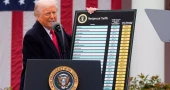
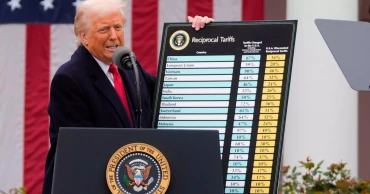
President Donald Trump has announced new double-digit tariffs on imports from dozens of US trading partners as temporary worldwide tariffs introduced earlier this year expired on Friday.
The new tariffs, ranging from 10% to 12.5%, will apply to imports from 60 trading partners that account for about 99% of US imports. The Trump administration said the countries had failed to adequately enforce bans on goods produced through forced labour.
"The United States has had a forced labour import ban for nearly a century and enforces it strictly. It is time for our trading partners to do the same," US Trade Representative Jamieson Greer said.
The tariffs replace the temporary 10% global import duties that expired at 12:01 a.m. Friday. Those temporary tariffs had been introduced after the US Supreme Court ruled in February that Trump did not have the authority to impose his earlier broad tariffs under emergency powers.
To introduce the new measures, the administration is using Section 301 of the Trade Act of 1974, which allows the president to impose tariffs on countries found to have unfair or unreasonable trade practices. Trump also relied on the same law during his first term to impose tariffs on Chinese goods.
The administration is also investigating whether 16 countries have overproduced goods in ways that hurt US manufacturers. Those countries account for about 70% of US imports, and additional tariffs could follow once the investigation is completed.
Trump argues that higher tariffs will help revive US manufacturing. Last year, he reversed decades of US policy supporting lower tariffs and freer trade by imposing import duties on goods from nearly every country, citing the country's long-running trade deficit as a national emergency.
However, the Supreme Court later ruled that the emergency law used for those tariffs did not authorize such measures, forcing the government to refund importers that had already paid the duties.
The administration first proposed the new forced labour-related tariffs last month. Since then, some countries have strengthened enforcement measures and qualified for lower tariff rates, according to a senior administration official.
For example, India's tariff rate was initially set at 12.5% but has been reduced to 10% after it improved enforcement against forced labour imports, the official said.
Some products, including oil, natural gas and fertilizer, are exempt from the new tariffs. Goods that qualify for duty-free treatment under the US-Mexico-Canada Agreement (USMCA) are also excluded.
The move drew criticism from some lawmakers and trading partners.
Representative Richard Neal, the top Democrat on the House Ways and Means Committee, accused the administration of using forced labour as an excuse for its tariff policy.
"Forced labour is a serious issue that deserves strong enforcement, not to be used as a justification for questionable tariff policies," he said.
Brazil, which faces a 12.5% tariff, called the decision "arbitrary and unjustified" and said it would invoke its reciprocity law, which could lead to retaliatory tariffs on US goods. The Brazilian government also plans to file a complaint with the World Trade Organization.
Chile, which also faces a 12.5% tariff, said it has strong labour protections and argued that the US decision was not supported by the evidence presented during the investigation.
Under US law, tariffs are paid by American companies importing foreign goods. Those businesses often pass the extra costs on to consumers through higher prices, raising concerns that the new measures could increase living costs ahead of the November midterm elections.
Human rights groups said they remain cautious about the administration's motives but acknowledged that import restrictions could help combat forced labour.
The International Labour Organization estimates that around 27.6 million people worldwide were trapped in forced labour in 2021.
Martina Vandenberg, founder of The Human Trafficking Legal Center, said import bans can be an effective tool against forced labour but warned they should be introduced gradually to give countries time to strengthen enforcement.
"Our concern is that import bans may exist only on paper without proper enforcement," she said.
Canada said the latest US action was expected.
Canada-US Trade Minister Dominic LeBlanc said Canada shares Washington's goal of preventing goods made through forced labour from entering supply chains and would continue discussions with the United States on the issue.
Experts also noted that the threat of new tariffs has already prompted some countries, including India, to strengthen their policies against forced labour, while new European Union rules due next year are expected to increase pressure on global supply chains.
10 days ago
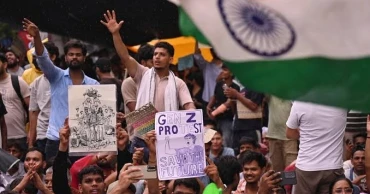
Indian activist ends 26-day hunger strike, but student protests continue
Indian activist Sonam Wangchuk ended his 26-day hunger strike on Friday, but protesters said their nationwide campaign over alleged exam paper leaks and education reforms will continue until Education Minister Dharmendra Pradhan resigns.
Wangchuk's fast became a symbol of the "Cockroach" protest movement, which began more than a month ago after allegations of leaks in some of India's most competitive entrance examinations.
The movement has since grown beyond education issues, attracting students, professionals, families and activists who are also protesting unemployment, government accountability and limited economic opportunities.
The demonstrations have become one of the largest and longest-running protest movements against Prime Minister Narendra Modi's government in recent years. Thousands of protesters have continued to take to the streets despite police using tear gas and batons earlier this week to stop marchers trying to reach Parliament.
In a post on X, Wangchuk said he ended his fast after meeting two federal ministers. He said the decision followed appeals from dozens of lawmakers and lengthy discussions, as well as concerns about possible violence, but did not provide further details.
Despite Wangchuk ending his protest, organisers said demonstrations would continue until the education minister steps down.
Protest groups also called for nationwide demonstrations on Friday to show support for students who were injured when police dispersed thousands of marchers heading to Parliament on Monday.
"We won't let Sonam sir's sacrifice go in vain," said Abhijeet Dipke, founder of the satirical Cockroach Janta Party, which has helped lead the movement. The group's name refers to a comment by India's chief justice comparing some unemployed young people to cockroaches.
The protests continued a day after Modi addressed the issue publicly for the first time. He announced that fast-track courts would handle cases involving exam paper leaks and said his government would introduce legislation in Parliament to crack down on such crimes.
However, protesters said the announcements did not meet their key demands, including greater government accountability, reforms to the examination system and compensation for families of students who died by suicide following the alleged paper leaks.
Fabeha Sayyed, a 23-year-old protester, said Modi's statement showed the government was finally paying attention to the issue, but questioned why the education minister had not been asked to resign.
"If he is truly concerned about the students and the families who lost loved ones, asking one minister to resign should not be difficult," she said.
10 days ago

Replica of Virgin Mary's House becomes a place of prayer for Catholics in the Philippines
A replica of the House of the Virgin Mary in the Philippines is drawing Catholic devotees, offering many believers a place of prayer and comfort without having to travel to Turkey.
The original House of the Virgin Mary is located in Ephesus, Turkey, where Catholic tradition says Mary, the mother of Jesus, spent her final years. Now, a carefully built replica in Alfonso town, about 70 kilometres south of Manila, is welcoming pilgrims from across the Philippines, Asia's largest Catholic nation.
"The idea began as a place of refuge," said Father Dennis Paez, who led the project. "This is a place where no questions are asked."
The shrine opened in 2024 and has already hosted several Catholic pilgrimages, including celebrations for the Feast of Our Lady of Mount Carmel earlier this month. The 67-square-metre building closely matches the original in Turkey, including its size, shape and stone design.
According to Catholic tradition, Mary lived in the house after the crucifixion of Jesus until her assumption into heaven. It is believed that the apostle John brought her there to protect her from persecution in Jerusalem.
Father Paez said the replica took around 10 months to build. People from different religious backgrounds worked together on the project, something he described as a symbol of the Virgin Mary bringing everyone together.
He said the shrine welcomes everyone without judgment.
"There is no therapy here. The therapist is our Mother," said Paez, who is also a psychologist working with young people.
Deep devotion to Mary in the PhilippinesThe Philippines has a population of about 113 million people, with nearly 80% identifying as Catholic.
Devotion to the Virgin Mary is deeply rooted in Filipino religious life. She is widely known as the Blessed Mother, and processions in her honour are held throughout the country.
"We are a long-suffering people," Paez said. "Our greatest wealth is our faith, and much of that faith is inspired by the Blessed Mother."
Religious historian Michael Delos Reyes said devotion to Mary dates back to the arrival of Spanish missionaries in the 16th century. Over time, many Filipinos have turned to her during times of national hardship.
Some believers credit Mary's intercession during the 1986 People Power Revolution that ended Ferdinand Marcos' rule. Others sought hope in her after Typhoon Haiyan devastated parts of the country in 2013.
A symbol of comfort and hopeThe phrase "To Jesus through Mary" reflects Mary's important role in Filipino Catholic life.
Deirdre de la Cruz, a history and Southeast Asian studies professor at the University of Michigan, said many Filipinos feel a strong connection with Mary because of her caring and motherly image.
She noted that images of the Virgin Mary and rosaries are commonly seen in homes, vehicles, churches and public spaces across the country.
"As someone who is known to provide comfort, Mary is a familiar figure whom people turn to during difficult times," she said.
Visitor Daphne Oseña Paez said her devotion to Mary became much stronger as an adult. A visit to Mexico to see the image of Our Lady of Guadalupe and a difficult pregnancy deepened her faith.
"We don't pray to Mary herself, but Mary intercedes for us," she said. "Whenever I faced hardships, I found comfort in her love as a mother."
Bringing a holy place closer to homeInside the replica, donated images of the Virgin Mary line the walls. At its centre stands a statue based on the one in Turkey, along with a relic believed to be from Mary's veil.
Many of the Marian images were donated by art collector and cultural advocate Maritess Pineda, who said she had long hoped to find a permanent home for her collection.
Rupert Suarez, who had previously visited the original shrine in Turkey with his wife, also joined the project after learning about plans to build the replica.
"I usually pray to the Mother," Suarez said. "It is truly a blessing that we now have this replica here."
Although the shrine has received little publicity since opening, Father Paez said pilgrims continue to arrive.
"I don't think I am the one bringing them," he said. "It is the Blessed Mother inviting them to come."
10 days ago
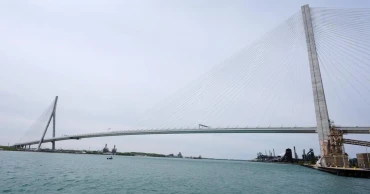
Canada inaugurates new bridge to US amid tariff tensions with Trump
Canada is set to mark the opening of a major new bridge linking the country with the United States, even as trade tensions with President Donald Trump cast a shadow over the celebrations.
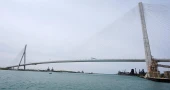
Officials gathered in Windsor, Ontario, on Friday ahead of the official opening of the Gordie Howe International Bridge to traffic on Monday. The bridge, which crosses the Detroit River, is expected to boost trade between the two countries and provide travelers with an additional border crossing.
The event was originally planned as a joint ceremony on the bridge with officials from both Canada and the United States. However, Canada decided against the joint celebration after Trump unexpectedly announced this week a 50% tariff on Canadian goods entering the US.
"It's regretful that we're at this point in time with our trade relationship. We're hopeful for better days ahead," Windsor Mayor Drew Dilkens told Detroit television station WXYZ.
The United States is Canada's largest trading partner, with more than 70% of Canadian exports going south of the border. Detroit is also the busiest crossing for commercial truck traffic between the two countries, according to the US Department of Transportation.
The new bridge is expected to increase competition by providing an alternative to the privately owned Ambassador Bridge, which has been the only crossing for large commercial trucks between Detroit and Windsor for nearly 100 years.
Detroit Mayor Mary Sheffield said she had initially been invited to a joint Canada-US ceremony before the plans changed.
Calling the bridge important for the region, Sheffield said it would play a vital role in supporting the local economy, while avoiding comments on whether it had become part of the political tensions between the two countries.
The bridge is named after legendary Canadian hockey player Gordie Howe, who starred for the NHL's Detroit Red Wings and died in 2016. Construction began in 2018 and took several years to complete, partly due to delays caused by the COVID-19 pandemic.
The six-lane bridge stretches about 2.4 kilometres (1.5 miles) across the Detroit River and rises 46 metres (151 feet) above the water at its highest point. Pedestrians and cyclists carrying proper identification will be allowed to cross free of charge in the coming weeks.
Canada financed the project at an estimated cost of US$6.4 billion. Under a recent agreement, Canada will share part of the bridge's toll revenue with the US government for 15 years. Michigan will also receive a share of the toll income, but only after Canada recovers its construction costs, a process expected to take several decades.
10 days ago
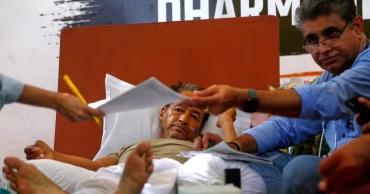
Indian activist Wangchuk ends 26-day hunger strike as 'Cockroach' protesters vow to press on
Indian activist Sonam Wangchuk ended a 26-day hunger strike on Friday that helped galvanize a youth movement that's become one of India’s largest protests in recent years, but demonstrators vowed to continue until the education minister resigns.
Wangchuk’s fast became a rallying point for India’s “Cockroach” protests, which began more than a month ago demanding education reforms after alleged leaks in some of the country’s most competitive entrance exams. Since then, the movement has tapped into broader public anger over unemployment, government accountability and economic opportunity, drawing professionals, families and activists to demonstrations in New Delhi and cities across the country.
The demonstrations have become one of the most sustained waves of public dissent against Modi’s government in recent years, with thousands returning to the streets even after police used tear gas and batons this week to disperse marchers trying to reach Parliament.
In a post on X, Wangchuk said he ended his fast in the presence of two federal ministers after appeals from dozens of members of parliament and following “a long negotiation on various conditions and in view of possible violence in the country.” He did not elaborate on the talks.
Protest organizers said demonstrations would continue until Education Minister Dharmendra Pradhan resigned. They have called for demonstrations across the country on Friday in solidarity with students who were beaten by police during a march to Parliament on Monday that drew thousands of people.
“We won’t let Sonam sir’s sacrifice go in vain,” said Abhijeet Dipke, the founder of Cockroach Janta Party, a satirical group that has spearheaded the movement, named in reference to a remark by the country's supreme court chief justice that compared some unemployed young people to cockroaches.
The nationwide protests come a day after Modi publicly addressed the protests for the first time, announcing fast-track courts to prosecute cases involving examination paper leaks. In a separate video message, Modi also said his government would introduce a legislation in Parliament to crack down on exam paper leaks.
The announcements did little to calm the movement, as protesters said they failed to address their demands for government accountability, examination reforms and compensation for the families of students who died by suicide after exam paper leaks.
10 days ago
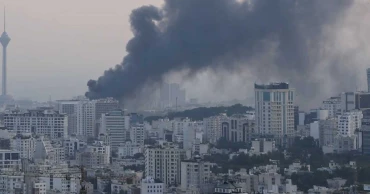
4 killed in U.S. strike in Iran
Four people were killed and five others injured in a U.S. missile attack near the southwestern Iranian city of Ahvaz, Iran's semi-official Tasnim news agency reported Friday.
Earlier Friday, multiple explosions were heard in Ahvaz, Fars News Agency reported.
The U.S. military announced the 13th night of strikes Thursday against Iran as clashes escalate over shipping routes.
The attacks came after Yemen’s Iran-backed Houthi rebels said they attacked two Saudi oil tankers in the Red Sea, potentially widening the Iran war as international oil topped $100 a barrel, reports AP.
A short time later, Iranian state media reported explosions along the strait in Qeshm and Bandar Abbas, where two people were reportedly injured, as well as to the northwest near Andimeshk, Omidiyeh and Firuzabad.
10 days ago
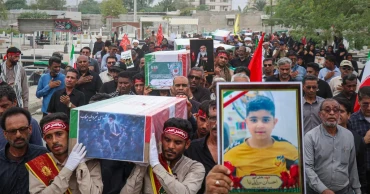
US military launches new strikes on Iran as clashes escalate over shipping routes
The U.S. military announced the 13th night of strikes Thursday against Iran as clashes escalate over shipping routes. The attacks came after Yemen’s Iran-backed Houthi rebels said they attacked two Saudi oil tankers in the Red Sea, potentially widening the Iran war as international oil topped $100 a barrel.
A short time later, Iranian state media reported explosions along the strait in Qeshm and Bandar Abbas, where two people were reportedly injured, as well as to the northwest near Andimeshk, Omidiyeh and Firuzabad.
U.S. Central Command said the latest attacks concluded shortly before 5 a.m. local time. The strikes were designed to “further degrade Iran’s ability to threaten civilian mariners and commercial vessels transiting regional waters” as the Americans push to regain control over the Strait of Hormuz and restore the flow of international shipping.
Meanwhile, the Houthis threatened to shut down another key trade route, with the world economy already reeling from Iran’s closure of the Strait of Hormuz. Iran and the U.S. have stepped up attacks as they vie for control of the strait, through which a fifth of the world’s oil and gas transited in peacetime, setting off a scramble for alternative routes.
President Donald Trump threatened “major military punishment” against the Houthis if their attacks on ships continue.
“If they do this again, the U.S. will hold Iran responsible, in that the Houthis are a Surrogate and/or Proxy of Iran, and major military punishment will be inflicted upon Iran and, of course, the Houthis, themselves,” Trump wrote on social media.
As the rhetoric escalated, so did the economic fallout. The price of Brent crude oil, the international standard, spiked more than 6% Thursday, to about $100 a barrel. That is the highest level since May, before the two sides reached a preliminary peace agreement last month that has since collapsed.
Prime Minister Ali al-Zaidi of Iraq, which has close ties to both the U.S. and Iran, was in Tehran on Thursday to call for peace and dialogue, and he promised not to allow Iraqi territory to be used for attacks on Iran, his office said. Al-Zaidi met with Trump earlier this month in Washington.
U.N. Secretary-General Antonio Guterres warned Thursday that the region is being pulled “into an ever-widening circle of confrontation” with one crisis feeding another and every escalation triggering the next.
“Diplomacy is the only way forward,” Guterres told the U.N. Security Council. He called for Pakistan’s efforts to mediate an end to the war to be strengthened.
Houthi attacks are a ‘double whammy’ on oil shipments
The Houthis’ SABA news agency said the rebels had struck two tankers, the Encelia and the Layla, in the Red Sea, causing fires on both. There were no reports of casualties.
It was the first reported Houthi attack on a vessel since they announced a blockade of Saudi-linked shipping through the Bab el-Mandeb Strait earlier this week in retaliation for the kingdom’s blockade on Yemen and a recent attack on the international airport in Yemen’s rebel-held capital, Sanaa.
Bab el-Mandeb, at the southern tip of the Arabian Peninsula, is a vital shipping chokepoint connecting the Red Sea to the Gulf of Aden. Around 12% of the world’s trade, including a fourth of global container traffic, passes through there, moving between Europe and Asia via Egypt’s Suez Canal.
The state-run Saudi Press Agency reported an attack set the Encelia ablaze overnight in the Red Sea. It did not mention the Layla.
The United Kingdom Maritime Trade Operations Center said it received a report of a tanker being struck by “an unknown projectile” 130 kilometers (80 miles) southwest of Al Shuqaiq, Saudi Arabia, in the Red Sea.
The Houthi attacks put at risk oil shipments from Saudi Arabia’s Yanbu port on the Red Sea and present a “double whammy” on top of the disruption in the Strait of Hormuz, said maritime data and analysis firm Lloyd’s List Intelligence.
Saudi Arabia has diverted millions of barrels a day of oil exports to Yanbu via an overland pipeline as the war has bottled up the Persian Gulf.
The Houthi threat “raises questions on the viability of this route,” Lloyd’s said in slides accompanying an online webinar Thursday.
The rebels say they are blockading Saudi Arabia, but during their announced blockade of Israel at the height of the war in Gaza, they targeted many vessels with little or no connection to that conflict, disrupting global trade.
Both sides dig in over Strait of Hormuz
Iran says it has the right to manage traffic and potentially charge fees in the Strait of Hormuz, which was open to all toll-free before the war. It has attacked ships using a route through the strait that is overseen by U.S. forces and intended to be outside Tehran’s control.
Trump said on social media Thursday that sanctioned Iranian funds in the possession of the U.S. will cover the expense of fixing boats damaged in the war.
“Please let this statement serve to represent, until further notice, that from this point forth, any and all damages done to Ships, Cargo, or anything related thereto, will be paid for by Iranian Money that the United States has in its possession, and controls,” Trump said.
It was unclear what legal mechanisms Trump would use to access and spend the funds, but he said that doing so would be “the fair and equitable thing to do.”
In response to Iran’s attacks, the U.S. began the widening campaign of strikes across Iran and restored a naval blockade of Iran’s ports. U.S. Central Command said it has redirected about a dozen commercial vessels and disabled one since the blockade resumed.
The war of words has also escalated. Iranian Foreign Minister Abbas Araghchi said Tehran would adopt an “eye for an eye” policy on U.S. strikes against its infrastructure. U.S. Secretary of State Marco Rubio retorted that Trump’s policy is “a head for an eye.”
“The price will continue to get higher every single night until they come to their senses,” Rubio told reporters while traveling in the Philippines for a regional summit.
Iran’s health ministry said Thursday that 55 people have been killed and 629 have been wounded since renewed U.S. airstrikes began on June 27.
Iran has responded to U.S. attacks by targeting energy infrastructure and desalination plants providing drinking water in parched neighboring Gulf countries.
Polls have shown the war is unpopular among Americans, a fact reflected in the narrow passage Thursday of a resolution in the U.S. House to halt the war. Though a handful of Republicans crossed party lines to support the measure, the vote remained largely symbolic.
10 days ago
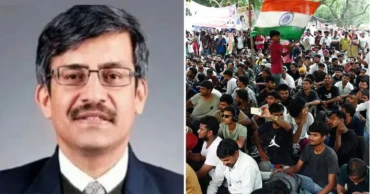
Education Secretary replaced amid protests over exam paper leaks in India
The Indian government has replaced Education Secretary Vineet Joshi in a major bureaucratic reshuffle amid growing protests over alleged examination paper leaks, including the controversy surrounding the NEET exam.
According to an official government notification issued late Thursday, Joshi has been transferred as Secretary in the Ministry of Panchayati Raj. He has been succeeded by Naresh Pal Gangwar, who was serving as Secretary in the Department of Animal Husbandry and Dairying under the Ministry of Fisheries, Animal Husbandry and Dairying.
The reshuffle also saw TK Anil Kumar, currently Additional Secretary in the Department of Rural Development, appointed as Secretary in the Department of School Education and Literacy.
Joshi had taken charge as Secretary of the Department of Higher Education in January 2025. The latest administrative changes were part of a wider reshuffle involving 13 appointments and four in-situ upgrades.
The move comes as protests continue over alleged examination paper leaks, with the satirical political outfit Cockroach Janta Party (CJP) and opposition parties demanding greater accountability from the government.
BJP MP Nishikant Dubey linked Joshi's transfer to the government's response to the controversy, saying Prime Minister Narendra Modi had acted against officials accused of negligence over the issue.
"Prime Minister Modi has replaced the Education Secretary for showing apathy regarding the paper leak issue. Strict action will be taken against those responsible for the paper leak, as well as those who displayed negligence or apathy," Dubey said.
Joshi, a 1992-batch Indian Administrative Service (IAS) officer of the Manipur cadre, previously served as the state's Chief Secretary. He was also the founding Director General of the National Testing Agency (NTA), which conducts major entrance examinations, including NEET and JEE.
His previous assignments also include serving as Chairman of the Central Board of Secondary Education (CBSE) and Additional Secretary in the Ministry of Education. Joshi holds a degree in mechanical engineering from IIT Kanpur and an MBA from the Indian Institute of Foreign Trade (IIFT).
Gangwar, who succeeds him, is a 1994-batch IAS officer of the West Bengal cadre and has been serving as Secretary in the Department of Animal Husbandry and Dairying before his latest appointment.
Source: NDTV
11 days ago