world
No sign Iran has tried to repair nuclear sites hit by US, Israeli strikes: IAEA chief
The head of the UN nuclear watchdog said Tuesday there was no indication that Iran had attempted to repair or rebuild its nuclear facilities damaged in US and Israeli military strikes in 2025 and 2026.
US President Donald Trump has said one of the main reasons Washington went to war with Iran on February 28 was to prevent Tehran from developing nuclear weapons. At the same time, he has maintained that US strikes on Iranian nuclear sites in June 2025 had “obliterated” the country's nuclear programme.
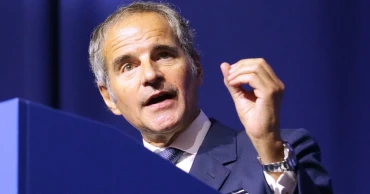
Addressing a UN Security Council meeting, International Atomic Energy Agency (IAEA) Director General Rafael Grossi urged Iran to allow inspectors access to all its nuclear facilities, including those damaged in the military attacks.
The IAEA has been unable to verify the status of Iran's stockpile of near-weapons-grade uranium since the United States bombed its nuclear sites last year.
However, Grossi said, “Since June 2025, we have not identified any activity to repair or reconstruct any of the facilities damaged in the military attacks of 2025 and 2026.”
Trump has repeatedly played down the economic impact of the war with Iran, which has become a political liability for Republicans ahead of next week's midterm elections. He has argued that higher fuel prices are a price worth paying to prevent Iran from acquiring nuclear weapons.
The White House did not immediately respond to a request for comment on Grossi's remarks on Tuesday evening.
Iran maintains that its nuclear programme is peaceful. However, the IAEA says the country has a stockpile of 440.9 kilogrammes (972 pounds) of uranium enriched to up to 60% purity, a short technical step away from the 90% enrichment level generally associated with weapons-grade uranium.
The Security Council meeting was requested by Bahrain, Denmark, Latvia, France, the United Kingdom and the United States after the IAEA referred Iran to the council over its failure to comply with nuclear non-proliferation obligations. Russia and China, both allies of Iran, unsuccessfully attempted to block the meeting.
Under its obligations under the Nuclear Non-Proliferation Treaty, Iran is legally required to declare all nuclear materials and activities and allow IAEA inspectors to verify that none of them is diverted from peaceful purposes.
Iran's Deputy Ambassador to the UN, Gholamhossein Darzi, criticised the Security Council for remaining silent following the US-Israeli attacks, condemning what he described as their “wars of aggression against Iran” and accusing Washington of committing war crimes against the Iranian people.
Darzi did not address the IAEA's unanswered questions or its demand for the return of inspectors. Instead, he argued that “Israel possesses nuclear weapons, yet your concern is the absence of inspectors in Iran.”
Israel has never confirmed that it possesses nuclear weapons.
US Ambassador to the UN Mike Waltz described Iran as a “brutal dictatorship” and asked whether the Iranian ambassador wanted to apologise to Bahrain's envoy, whose country is a member of the Security Council, for attacking his country.
“We've heard tireless allegations against the United States,” Waltz said. “What we have not heard today is an explanation for Iran's continued failure to satisfy its safeguard obligations.”
Waltz said the IAEA had sought answers from Iran and urged the Iranian representative to begin providing them.
“Your lies are no good here,” he said.
8 hours ago
US, Cuban officials trade angry words at UN over economic embargo
US and Cuban officials engaged in a heated exchange at the United Nations General Assembly on Tuesday, marking the latest public confrontation between the longtime adversaries over Washington’s escalating economic campaign against Havana.
The incident began shortly after US Ambassador to the UN Mike Waltz took the podium to urge countries not to support an annual resolution scheduled for a vote this week condemning Washington’s decades-long economic embargo against Cuba.
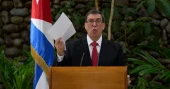
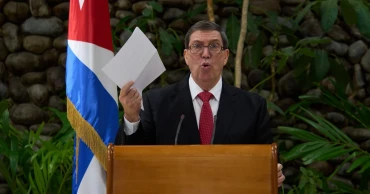
As Waltz detailed what he described as years of corruption by Cuba’s socialist government, members of the Cuban delegation, including Foreign Minister Bruno Rodríguez, began banging on their designated table and shouting for a point of order.
As UN officials tried to calm the situation, Rodríguez walked down the aisle towards the head of the General Assembly and shouted at Waltz, “You are a liar!”
Waltz responded, “You understand who you're dealing with? This is America. Back up.”
The confrontation was an unusual departure from the diplomatic decorum traditionally observed at the UN, but it reflected rising tensions between the two countries as President Donald Trump’s administration seeks to force political changes in Cuba by intensifying its already severe economic pressure.
Cuba, which has long struggled with serious economic and financial problems, is now facing an increasingly critical situation after Trump, a Republican, announced in late January that he would impose tariffs on any country selling or supplying oil to the island.
The warning has effectively cut off fuel supplies to Cuba, triggering widespread power outages that have disrupted basic activities, including cooking, water supply and internet and telephone services.
Cuban officials have also repeatedly pointed out that while US officials are demanding greater openness to private investment in Cuba, Washington continues to impose sanctions that undermine the very economic opening it has sought for decades.
Tuesday’s outbursts came a week after a similar exchange between Waltz and his Cuban counterpart, Ernesto Soberón Guzmán, outside a US-hosted panel featuring Cuban dissidents and former prisoners. The event sought to highlight allegations of repressive conduct by the Cuban government.
Waltz and other US officials have been using public events and gatherings at the world body to persuade UN member states to vote against the annual resolution on Wednesday. The measure seeks to condemn the US government's “maximum pressure policy” towards Cuba.
For the past 34 years, the resolution has received overwhelming support from UN member states.
Last year, 165 countries voted in favour of the resolution, while seven opposed it and 12 abstained. Argentina, Ukraine and Hungary opposed the measure for the first time.
Although such resolutions are not legally binding, they reflect international opinion.
8 hours ago
Two men charged over alleged Iran-backed plot at US military base in UK
Two British men have been charged with national security offences over an alleged Iran-backed plot targeting a US-operated military air base in England, prosecutors said Tuesday.
Mohmed Ahmad Abdulkarim and Nouman Essghir, both 24 and from London, were charged under the National Security Act, according to the Crown Prosecution Service.
Abdulkarim is accused of assisting Iran’s intelligence service, while Essghir faces a charge of entering a prohibited place for a purpose prejudicial to the United Kingdom.
The case centres on RAF Fairford in western England, which has been used by the US military for strikes against Iran during this year’s war.
The US withdrew its bombers from the base following a security scare last month, when five men were detained near its perimeter.
Prosecutors told Westminster Magistrates’ Court that Abdulkarim acted as an intermediary for a handler identified as Ali, who police believe is based outside Britain and working for Iran.
Prosecutor Louise Gray said Ali instructed a group of men to drive three vans carrying containers of gasoline to the base, leave the vehicles and walk away. In the early hours of September 27, the men received a phone message saying there was a bomb in the vehicles, prompting one of the suspects to contact police.
Armed officers rushed to the area, and five men, including Essghir, were arrested. Residents were evacuated while army bomb-disposal experts searched the vehicles. Police later found oil drums containing gasoline but no explosives.
Essghir was initially released on bail before being arrested again last week. The charge against him relates to an alleged reconnaissance mission to film the base on August 22.
Abdulkarim was arrested in the past week. Prosecutors alleged that he helped Ali by purchasing equipment for the operation and received payments totalling about £70,000 ($93,000).
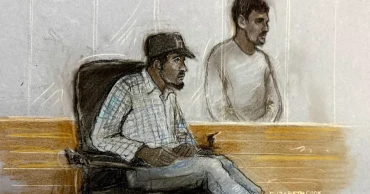
Essghir was remanded in custody until his next hearing, while Abdulkarim, who appeared in court in a wheelchair, was granted bail. Both are scheduled to appear in court again on November 20.
Six other men have also been arrested and released on bail as the investigation continues.
Iran has denied involvement in the incident, although it has previously said that any military base used to attack its territory would be considered a legitimate target.
Earlier this month, MI5 chief Ken McCallum warned that Iran and Russia were expanding their hostile activities in Britain, adding that the RAF Fairford incident was not an isolated case.
McCallum said Iran was seeking to extend its operations beyond its traditional targets, including opponents of the country’s Islamic authorities. More than 50 people have been arrested over Iran-linked plots in the past year, he said.
Laurence Taylor, head of Britain's Counter Terrorism Policing, said authorities believed several recent incidents had been directed by the Iranian state and were working to identify and respond to the threat.
16 hours ago

Serbia’s student movement faces challenges after election victory
Serbia’s student movement has won a major election victory over longtime leader Aleksandar Vucic, but fulfilling its promises of democratic reforms will be difficult amid entrenched corruption, political divisions and high public expectations.
The leaderless movement, whose candidates have limited political experience, has pledged to fight corruption, ensure media freedom and restore the rule of law after Vucic’s 14 years in power.
Preliminary results indicate that the Students’ List will secure 140 seats in the 250-member Parliament, compared with 104 for Vucic’s Serbian Progressive Party. However, appeals and possible polling reruns could delay the formation of a new government.
The transition may also require a separate presidential election following Vucic’s resignation last month to lead his party in the parliamentary race.
Tensions have surfaced since the victory, including incidents at pro-Vucic television stations. Journalists’ associations have also asked the media regulator to revoke Informer TV’s broadcasting licence.
Fighting corruption will be another major challenge, with the students promising police and judicial reforms, independent oversight and reviews of major government projects.
The movement has yet to clarify its position on Serbia’s EU membership bid and relations with Russia. Some of its officials have indicated that the country’s policy on sanctions against Moscow will remain unchanged, potentially disappointing supporters seeking closer ties with the West.
EU Enlargement Commissioner Marta Kos has welcomed the proposed reforms, saying they could bring Serbia closer to the European Union.
18 hours ago
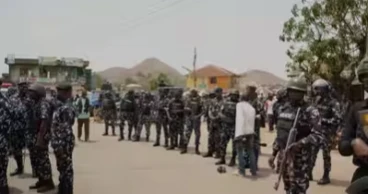
At least 62 killed in gunmen attack in northeastern Nigeria
At least 62 people have been killed and 52 others injured in an attack by gunmen on a community in northeastern Nigeria, the country’s emergency agency said Tuesday.
The attack took place on Friday in Binnari community in the Karim-Lamido local government area of Taraba state. Thousands of people were also displaced, said Ladan Ayuba, the state head of the National Emergency Management Agency (NEMA).
The assailants were reportedly bandits, armed criminals who frequently attack civilians across northern Nigeria.
NEMA officials said 52 bodies had been recovered so far, including 15 from the Benue River.
Taraba police spokesperson Victor Mshelizah said the death toll was not final as recovery operations continued. “We still have men on the ground, and the more we recover bodies, we will put them in account,” he told The Associated Press.
Amnesty International Nigeria director Isa Sanusi said the attackers drove people towards the river as they tried to escape.
“What happened was that people were chased towards the river, they launched into the river trying to escape the bandits,” Sanusi said.
Nigeria is grappling with a complex security crisis involving armed bandits who carry out mass kidnappings for ransom and control illegal mining sites, as well as Islamist militant groups, including Boko Haram and the Islamic State West Africa Province.
20 hours ago
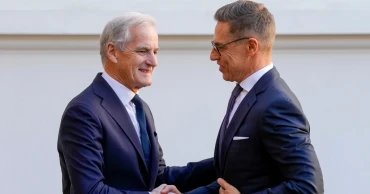
Localized ceasefire begins in Ukraine as Nordic leaders talk to Putin
Russia and Ukraine began observing a localized ceasefire in the Russian-occupied southern Ukrainian city of Oleshky on Tuesday to allow humanitarian aid delivery, while Russian missile attacks continued elsewhere.
The truce, which began at 3am, was brokered by US First Lady Melania Trump, according to the White House. Food and medical supplies are running critically low in the city, where drones and land mines restrict movement for up to 2,000 remaining residents.
Russian and Ukrainian negotiators and their militaries confirmed the ceasefire. Previous attempts at limited truces have often failed amid deep mistrust between the two sides.
Meanwhile, Finnish President Alexander Stubb and Norwegian Prime Minister Jonas Gahr Støre held a 90-minute phone call with Russian President Vladimir Putin to discuss the war and planned trilateral talks involving Russia, Ukraine and the United States, expected next month in Abu Dhabi.
Stubb described the discussion as “frank and substantive”. The Nordic leaders later spoke with Ukrainian President Volodymyr Zelenskyy, according to his office.
Danish Prime Minister Mette Frederiksen expressed scepticism about contacting Putin, saying she saw no signs that Russia wanted peace with Europe and stressing the need for European unity.
The Kremlin said lasting peace was possible only if Russia’s interests were fully and unconditionally taken into account. Zelenskyy urged Russia to stop attacks, including strikes on Ukraine’s power grid, to create a path to peace.
Melania Trump’s office said she led discussions with civilian negotiators from both countries after receiving a briefing from UN officials on Oleshky. Pope Leo XIV also spoke with Putin and Zelenskyy this month, urging them to allow humanitarian aid and safe civilian evacuations.
Negotiators said doctors, medicines, food and water would be delivered before evacuation corridors were opened. Moscow and Kyiv have blamed each other for the crisis.
Under international law, Russia, as the occupying power, must ensure the safety of civilians under its control. Ukraine has repeatedly sought a humanitarian corridor for aid deliveries and evacuations.
21 hours ago
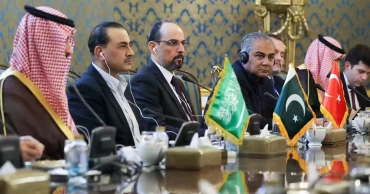
Mecca Pact nations, Iran agree to continue dialogue on regional peace
Senior officials from Iran, Saudi Arabia, Pakistan and Türkiye met in Tehran on Monday and agreed to continue talks to strengthen cooperation on promoting peace and security in the region.
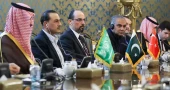
The meeting, the first of its kind among the four countries, was hosted by Secretary of Iran's Supreme National Security Council Mohsen Rezaei, and attended by Saudi Defense Minister Prince Khalid bin Salman bin Abdulaziz Al Saud, Pakistan's Chief of Army Staff Field Marshal Syed Asim Munir, and Türkiye's National Intelligence Organization Director Ibrahim Kalin, a statement issued after the meeting said.
"The participants agreed to continue discussions aimed at strengthening cooperation among the four regional countries, including in the realm of peace and security in the region," the statement said.
Speaking at a separate meeting with the senior officials from the Mecca Defense Alliance countries on Monday, Iranian President Masoud Pezeshkian said Tehran supports any understanding that leads to unity, solidarity, security and development in the region, according to a statement published on the website of his office.
Pezeshkian accused Israel of committing "acts of violence and widespread crimes" in West Asia with "U.S. support," urging Muslim states to guard against "interventionist and divisive" moves and play an active role in regional stability, Xinhua reports.
He reiterated that Iran does not seek to develop nuclear weapons and wants to continue its nuclear activities within the framework of its international rights and obligations.
Meanwhile, the Council of Ministers of Saudi Arabia on Tuesday reiterated it’s firm commitment to advancing regional de-escalation, underscoring its strong support for all initiatives aimed at easing tensions, particularly the mediation efforts spearheaded by Qatar and Pakistan.
Crown Prince and Prime Minister Mohammed bin Salman chaired the Cabinet session in Riyadh, reports Saudi Gazette.
The Cabinet discussed the content of talks held on Monday between states party to the Makkah Joint Defense Agreement—Saudi Arabia, Turkiye and Pakistan—and senior officials of Iran.
The Cabinet reaffirmed Saudi Arabia's commitment to establishing regional and international security and stability, the pivotal role of the Makkah Agreement states in ensuring regional security.
It reiterated the Kingdom's support for mediation efforts by Qatar and Pakistan to de-escalate tensions, as well as for all endeavors aimed at achieving peace.
Saudi Arabia, Pakistan and Türkiye on Aug. 7 signed the Mecca Joint Defense Agreement, under which an attack on one member is seen as an attack on all.
21 hours ago
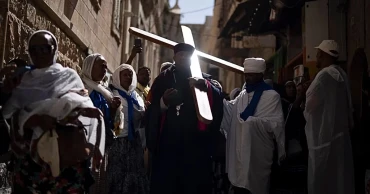
At least 60 Orthodox Christians killed in Ethiopia attacks
At least 60 Orthodox Christians were killed in two attacks in Ethiopia’s Oromia region, according to the country’s Orthodox Church, which urged authorities to protect civilians and bring the perpetrators to justice.
The Ethiopian Orthodox Tewahedo Church’s Holy Synod said Monday that 14 people were killed in Merti district on October 20 and another 46 in Shirka district on October 24. Both districts are in the Arsi Zone of Oromia.
More than 20 people were seriously injured and 20 houses were burned down in the attacks, which the church described as “brutal and merciless massacres.”
Oromia regional government spokesperson Hailu Adugna blamed the Oromo Liberation Army (OLA) for the attacks, accusing the rebels and their allies of attempting to provoke ethnic and religious conflict to divert attention from military losses in northern Ethiopia. However, he provided no evidence to support the allegations.
Adugna expressed sorrow over the deaths and destruction, saying regional authorities had begun taking action against those responsible. He also pledged assistance to the injured and displaced people.
The OLA could not be reached for comment. Its leader, Jaal Marroo, denied in an interview with The Associated Press published in February that his fighters target civilians, saying, “Our war is not against the people.”
The OLA is one of seven groups in the Ethiopian Peoples’ Forces Alliance for Survival, formed in September with the aim of removing Prime Minister Abiy Ahmed’s government. The alliance also includes the Tigray People’s Liberation Front and the Amhara Fano National Movement.
The church said the attacks violated constitutional guarantees of religious freedom and the right to life. It called on authorities to publicly condemn the killings and take measures to prevent further violence.
Oromia, Ethiopia’s largest region with a population of around 40 million, has been experiencing conflict between government forces and the OLA since 2018. Other armed groups and criminal gangs also operate in the region, where civilians face killings, extortion and kidnapping.
United Nations investigators have accused the OLA of killings, rape and kidnapping. Human rights monitors have also documented abuses by government forces, including indiscriminate drone strikes, extrajudicial killings and enforced disappearances.
Sarah Kimani, media manager at Amnesty International, told the AP in January that the organisation had documented summary executions, torture, abductions and rape by both government forces and the OLA.
She said internet blackouts and restrictions on independent media and civil society had obscured the extent of civilian suffering.
“What we have been able to document now is just the tip of the iceberg,” Kimani said.
21 hours ago
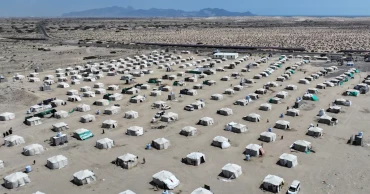
Houthis report 2 killed as fighting intensifies near Yemen’s Taiz
Yemen’s Iran-backed Houthi rebels on Tuesday accused government forces of killing at least two people in a late Monday strike on a gas station near the besieged city of Taiz, where fighting has intensified.
The Houthi-run Health Ministry said several others were wounded. Yemen’s military said it had launched airstrikes against Houthi positions in Taiz. Houthi-controlled Al-Masirah TV also reported government strikes on Mokha and Dhubab, near the Bab el-Mandeb Strait, but the AP could not independently verify the claims.
Saudi-led coalition spokesperson Brig Gen Turki al-Malki said coalition forces intercepted four Houthi drones targeting southern Saudi Arabia and three ballistic missiles aimed at its eastern region. The AP could not verify the claim.
Human Rights Watch said a Houthi attack on October 18 severely damaged the Hayjat al-Abd road, a vital route for food, fuel and medicine into Taiz, worsening the humanitarian crisis and potentially violating international law.
Meanwhile, Houthi official Mohammed al-Bukhaiti warned that Egypt’s support for Saudi Arabia could be considered a “hostile action” against Yemen. Egyptian lawmakers approved a measure supporting Saudi Arabia on Monday.
Egyptian Foreign Minister Badr Abdelatty on Tuesday called for collective efforts to ease regional tensions during a phone call with his Iranian counterpart. He said Cairo was in contact with Washington and Tehran to pursue peace, stressing that “a military solution is not a solution.”
22 hours ago
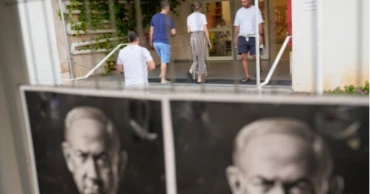
Israelis vote in crucial election as Netanyahu faces challenge after three years of war
Israelis went to the polls on Tuesday in a crucial election that could end Prime Minister Benjamin Netanyahu’s long tenure, as the country remains deeply divided after years of conflict, the October 2023 Hamas attack and ongoing debates over its political and national identity.
Netanyahu, Israel’s longest-serving prime minister, is facing a challenge from several political parties seeking to remove him from office, with opinion polls indicating a close contest involving his main rival, former military chief Gadi Eisenkot. More than seven million people are eligible to vote, with tens of thousands reportedly returning from abroad to participate.
Security and national defence have dominated the campaign inside Israel, while international criticism over the war in Gaza and violence by Jewish settlers in the occupied West Bank has raised concerns about Israel’s global standing and the safety of Jewish communities worldwide.
Israel’s fragmented parliamentary system makes it difficult for any single party to secure an outright majority. Neither Netanyahu’s religious and ultranationalist alliance nor the parties seeking to replace him may win enough seats to form a government independently, potentially leading to weeks of coalition negotiations.
Arab-led parties in Israel could play a decisive role in determining the next government if other political groups agree to cooperate with them.
Mansour Abbas, leader of the Islamist Ra’am party, expressed confidence while casting his ballot, saying the election would bring a change in government. He also hoped voter turnout in Arab communities would exceed 70 per cent. Arab citizens account for around one-fifth of Israel’s population.
Far-right National Security Minister Itamar Ben-Gvir warned that Abbas could end up influencing the next government if Netanyahu and his allies failed to secure victory. Ben-Gvir has drawn criticism for his treatment of Palestinian detainees and remarks dehumanising Palestinians in Gaza.
According to preliminary figures from the Central Elections Committee, nearly 17 per cent of eligible voters had cast their ballots within the first three hours of voting.
Emotions run high as voters head to pollsThe election has stirred strong emotions among voters. In Kiryat Shmona, a town near the Lebanese border considered a Netanyahu stronghold, one voter was seen kicking and tearing down a campaign poster of Eisenkot.
The vote is Israel’s first national election since the Hamas-led attack on October 7, 2023, which triggered the war in Gaza and a wider regional conflict.
In Tel Aviv, families of people killed in the attack and former hostages observed a moment of silence in remembrance of the victims. Yona Adam, whose daughter Mapal Adam was killed, urged people to remember those who had lost their lives.
Eisenkot visited communities attacked on October 7 early Tuesday, criticising the government for failing to take responsibility for the security failures surrounding the assault. He said government officials should have begun election day by visiting the communities near Gaza that were targeted.
Netanyahu had not appeared in public during the first three hours after polling stations opened.
Around 330,000 young Israelis are eligible to vote for the first time, many of them facing compulsory military service amid continuing security challenges.
Tensions with Iran have also featured prominently in the campaign. Netanyahu intensified his warnings to Tehran ahead of the election, threatening a devastating response if Iran attacked Israel.
Security, military service and democracy at stakeBeyond choosing a government, the election is widely viewed as a referendum on Netanyahu’s leadership and Israel’s future direction — whether the country should move further towards religious and nationalist politics or strengthen its liberal and secular democratic traditions.
Israel has faced growing international isolation over its military campaign in Gaza and its policies in the occupied West Bank. Public support for Israel in the United States has declined, while several European and other international partners have imposed sanctions.
Netanyahu’s supporters regard him as an experienced statesman who has guided Israel through multiple conflicts. They credit him with protecting the country’s Jewish identity and restraining what they consider excessive intervention by the judiciary.
His opponents, however, accuse him of deepening political divisions, prolonging the Gaza war and the hostage crisis for political survival, and undermining judicial independence and democratic institutions. They also criticise his government for maintaining arrangements that allow many ultra-Orthodox Jewish men to avoid compulsory military service.
“The present government is driving the country into the ground,” said Angela Bengur, a voter in Jerusalem.
Eisenkot’s supporters see him as a credible alternative with extensive military experience who could help counter what they regard as growing authoritarian tendencies. The conflict has also affected him personally, as his son and two nephews were killed in Gaza.
Parties expected to support Eisenkot have pledged to restore Israel’s international standing, strengthen judicial independence and increase military enlistment among ultra-Orthodox men.
For many voters, compulsory military service has become a central election issue.
The election is about “who serves and who evades service — who takes an active part in building this country and who doesn’t,” said Nisso Shitrit, a voter in Jaffa.
1 day ago