world
Nepal army deployed as protesters demand former chief justice as interim leader
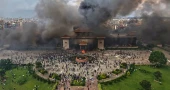
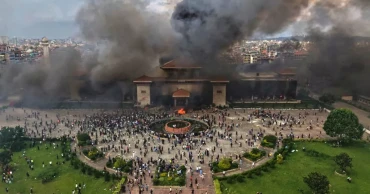
Nepal’s army moved to restore order Wednesday after two days of deadly protests that forced the government to collapse, leaving at least 25 dead and more than 600 injured, officials said. Soldiers patrolled the capital, checked vehicles, and urged residents to remain indoors following overnight unrest in which demonstrators set government buildings on fire.
Protesters held talks with military officials at army headquarters in Kathmandu, proposing former Supreme Court Chief Justice Sushila Karki to lead a transitional government. Karki, Nepal’s first female chief justice, served from 2016 to 2017 and remains a popular figure. However, some protesters outside the army complex opposed the choice.
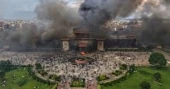
The demonstrations, initially triggered by a short-lived government ban on social media platforms including Facebook, X, and YouTube, escalated after police opened fire on Monday, killing 19 protesters. The unrest intensified on Tuesday with attacks on the parliament, presidential house, central secretariat, and prime minister’s residence. The building of Kantipur, Nepal’s largest media outlet, was also set ablaze, along with several car showrooms.
The unrest led Prime Minister Khadga Prasad Oli to resign Tuesday, though he fled his official residence, leaving his whereabouts unclear. President Ram Chandra Poudel asked him to lead a transitional government temporarily.
The protests reflect broader youth frustration over unemployment, social inequality, and the so-called “nepo kids” of political leaders enjoying privileges while many young Nepalese seek work abroad. Soldiers also quelled a jailbreak in central Kathmandu on Wednesday, preventing inmates from escaping after setting fires inside the main prison.
The government has defended the social media regulations as measures to ensure platforms are accountable, though critics say the rules curb free expression and target government opponents.
10 months ago

US observes 24th anniversary of 9/11 attacks with solemn tributes
The Americans marked 24 years since the September 11, 2001, terror attacks on Thursday with ceremonies, volunteer work, and other tributes honoring nearly 3,000 victims.
Commemorations took place in New York, at the Pentagon, and in Shanksville, Pennsylvania, with family members, dignitaries, and politicians attending. Many also observed the day privately, reflecting on the lasting impact of the attacks.
James Lynch, who lost his father Robert Lynch at the World Trade Center, said he and his family attended a local ceremony in New Jersey before spending time at the beach. “Any kind of grief never really goes away,” Lynch said while volunteering at a 9/11 charity event in Manhattan. “Finding the joy in that grief has been a huge part of my growth.”
The anniversary came amid heightened political tensions, a day after conservative activist Charlie Kirk was shot dead at a college in Utah. Authorities said additional security measures were in place for the ceremonies, including the World Trade Center event in lower Manhattan.
At Ground Zero, family members read aloud the names of victims, while moments of silence marked the times the planes struck and the towers fell. Vice President JD Vance and second lady Usha Vance attended the service.
At the Pentagon, President Donald Trump and first lady Melania Trump joined a service honoring 184 people killed when hijackers crashed a jet into the military headquarters. In Shanksville, Pennsylvania, Veterans Affairs Secretary Doug Collins participated in a memorial for passengers of Flight 93, who attempted to retake control of the hijacked plane.
Across the country, many observed a national day of service, participating in food and clothing drives, blood donations, park cleanups, and other community projects.
The 9/11 attacks killed 2,977 people, including financial workers at the World Trade Center and first responders. They reshaped U.S. domestic and foreign policy, leading to the Global War on Terror and U.S.-led invasions of Afghanistan and Iraq.
Legal proceedings against Khalid Sheikh Mohammed, the alleged mastermind of the attacks, remain unresolved. Meanwhile, the U.S. government continues to provide health care and compensation to thousands affected by the toxic dust from the collapsed towers, with more than 140,000 people still enrolled in monitoring programs.
10 months ago
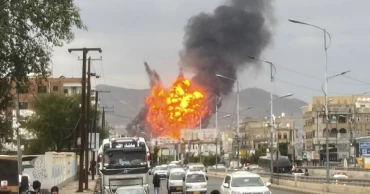
Israeli airstrikes kill at least 35 in Yemen: Houthi officials
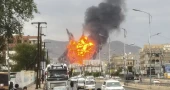
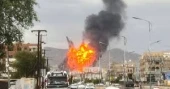
Israel launched another round of heavy airstrikes in Yemen on Wednesday, killing at least 35 people and wounding more than 130, just days after Houthi rebels carried out a drone attack on an Israeli airport, according to the Houthi-run health ministry. Rescue teams continued searching through the rubble.
Most of the casualties were reported in Sanaa, Yemen’s capital, where a military headquarters and a fuel station were among the sites hit. Al-Masirah, a Houthi-controlled news channel, said nearby homes were also damaged. Houthi military spokesman Brig. Gen. Yahya Saree said rebels fired surface-to-air missiles at Israeli jets in response.
The strikes came amid rising international scrutiny of Israel’s ongoing offensive in Gaza. European Commission President Ursula von der Leyen said she would push for sanctions and a partial trade suspension against Israel over its operations in the Gaza Strip. The EU remains divided on the issue.
Israel has urged around 1 million Palestinians to evacuate Gaza City as it steps up its offensive targeting Hamas’ remaining stronghold, while the Gaza Health Ministry reported 41 more deaths and 184 injuries in the past 24 hours, including 12 people seeking humanitarian aid. Thousands remain displaced, struggling with limited food, shelter, and fuel.
The war in Gaza began on October 7, 2023, when Hamas militants attacked southern Israel, killing over 1,200 people and abducting 251. Israel’s retaliatory campaign has so far killed more than 64,600 Palestinians, with women and children accounting for about half of the deaths, according to Gaza authorities.
Meanwhile, Israel’s strike on Qatar, a U.S. ally, targeting senior Hamas figures drew widespread condemnation and added to Israel’s diplomatic isolation. Hamas said its senior leaders survived the attack, though several bodyguards were killed.
The humanitarian situation in Gaza is worsening, with famine declared in parts of the city. Von der Leyen described it as a “man-made famine” and urged immediate action to protect civilians, especially children. Israel maintains that it allows sufficient humanitarian aid and blames Hamas for civilian casualties.
10 months ago

Flash floods in Indonesia kill 15, 10 missing
At least 15 people have been killed and 10 others remain missing after flash floods and landslides triggered by torrential rains struck Indonesia’s East Nusa Tenggara province and the tourist island of Bali, authorities said Wednesday.
The rains, which began Monday, caused rivers to overflow and unleashed landslides across the two provinces.
In East Nusa Tenggara, rescuers on Wednesday recovered the bodies of a mother and her child buried under mud in Mauponggo, the worst-hit village in Nagekeo district, along with a man in the neighboring village of Loka Laba. Earlier, three members of a family were found dead after their house was swept away in Mauponggo, where four others remain missing, officials said.
In Bali, rescuers pulled the body of a woman from a flooded area near Badung market in provincial capital Denpasar late Wednesday, said National Disaster Mitigation Agency spokesperson Abdul Muhari. Six people are still unaccounted for.
Eight other bodies were found earlier, including four who died when a building was washed away in the Kumbasari market area of South Denpasar, said Nyoman Sidakarya, head of Bali’s Search and Rescue Agency.
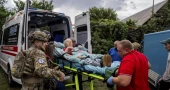
The floods and landslides have affected nine cities and districts in Bali, submerging at least 112 neighborhoods and damaging roads, bridges, shops and houses, according to Bali’s Disaster Mitigation Agency. Videos released by the National Search and Rescue Agency showed cars swept away in muddy waters, while soldiers and rescuers used rubber boats to evacuate children and the elderly from rooftops.
Bali Governor Wayan Koster said floodwaters reached up to 2.5 meters in places, forcing more than 800 people into temporary shelters. Electricity and water supplies were cut off, prompting hotels, restaurants, hospitals and other facilities to rely on generators, he added.
In Nagekeo, flash floods swept away villagers and vehicles, destroyed two bridges, two government offices, a plantation, rice fields and livestock, said local disaster agency head Agustinus Pone. At least six villagers were confirmed dead there, while four others remain missing.
Muhari said rescue operations have been hampered by severe weather and rugged terrain.
Indonesia frequently experiences floods and landslides during the rainy season, which typically lasts from September to March.
10 months ago
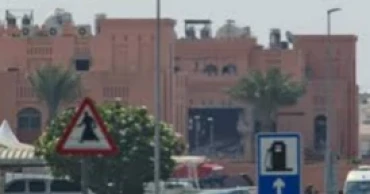
Qatar responds to Israeli Airstrike on Hamas leaders in Doha
On Wednesday, Qatari security forces secured the area around a building in Doha that was struck by Israeli airstrikes a day earlier. The attack targeted senior Hamas leaders who had gathered to discuss a U.S.-backed ceasefire proposal for Gaza.
The strike killed at least six people, including a Qatari security official, in a neighborhood that houses foreign embassies and schools. The attack, launched on the territory of a U.S. ally, sparked widespread international condemnation and threatened to derail ongoing peace talks and hostage negotiations with Hamas.
Netanyahu Defends Strike, Warns Qatar
Israeli Prime Minister Benjamin Netanyahu defended the strike, warning Qatar and other countries that harbor militants:
“Either expel terrorists or bring them to justice. If not — we will.”
Qatar rejected Netanyahu’s remarks, emphasizing that hosting Hamas leaders is part of ongoing mediation efforts that have led to ceasefires and hostage releases, coordinated with both the U.S. and Israel.
Details of the Attack
An Israeli official, speaking anonymously, said around 10 aircraft dropped approximately 10 missiles in the strike. According to Israel, the timing was based on an “operational opportunity,” as several Hamas leaders were gathered in a specific location deemed low-risk for Qatari civilians.
Although the building remained mostly intact, one room appeared to be the main target, with walls collapsed and debris scattered. Satellite imagery showed damage to surrounding structures, though no widespread destruction.
Qatar Blames Israel for Regional Instability
Qatar’s Prime Minister and Foreign Minister, Sheikh Mohammed bin Abdulrahman Al Thani, condemned Netanyahu’s actions as "barbaric," saying they pushed the region toward “irreparable instability” and violated international law.
Hamas Confirms Casualties but Claims Top Leaders Survived
Hamas reported that five lower-ranking members were killed, including the son of senior Hamas leader Khalil al-Hayya, three bodyguards, and al-Hayya’s office head. The group claimed its top leaders survived, though it provided no evidence.
Strike Evaded Qatari Air Defenses
Qatar, which has advanced air defense systems like Patriot and THAAD batteries, did not engage during the strike. Officials suggested that Israel used stand-off missiles launched from outside Qatari airspace, making them undetectable by radar.
The U.S. said it had warned Qatar in advance, but Qatar disputes this, saying the American message only came 10 minutes after the attack.
Geopolitical Fallout: Ceasefire Talks in Jeopardy
According to the Soufan Center, a U.S. think tank, the Israeli strike has serious strategic consequences.By hitting a Gulf Cooperation Council (GCC) state, Israel risks damaging the Abraham Accords and weakening its relationships with Arab partners.
The analysis warned that the strike could discourage future neutral mediators like Qatar from engaging in conflict resolution.
Regional Leaders Rally Behind Qatar
In a show of solidarity, UAE President Sheikh Mohammed bin Zayed Al Nahyan visited Qatar on Wednesday, reflecting rising unease among Gulf states. The UAE had already warned Israel that any attempt to annex the West Bank would cross a "red line" and jeopardize diplomatic agreements.
Qatar’s ruler, Sheikh Tamim bin Hamad Al Thani, hosted Sheikh Mohammed and also received visits from the crown princes of Kuwait and Jordan.
Qatari Leader Holds Global Talks
Following the strike, Sheikh Tamim held calls with several world leaders, including former U.S. President Donald Trump. According to Qatar’s state news agency, Tamim blamed Israel for the consequences of the attack, accusing it of adopting policies that threaten regional stability and hinder peace efforts.
10 months ago
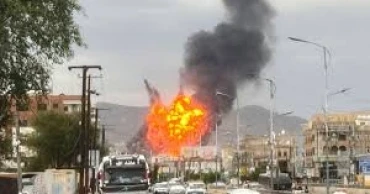
EU leader calls for sanctions on Israel as airstrikes hit Yemen
European Commission President Ursula von der Leyen announced plans to seek sanctions and suspend part of the EU’s trade with Israel over its actions in Gaza. However, the 27 EU member states remain divided on the issue, and it’s unclear whether there’s enough support to pass such measures.
Meanwhile, Israel carried out heavy airstrikes on Houthi rebel targets in Sanaa, Yemen, killing at least 35 people and injuring over 130, according to Houthi officials. The strikes reportedly hit a fuel station and a government site. Israel confirmed the attack, saying it was in retaliation for recent drone and missile attacks launched by the Houthis.
In Qatar, emergency workers responded to an Israeli strike in Doha, targeting Hamas political leaders discussing a potential ceasefire. Though Hamas said its top leaders survived, five lower-ranking members and one Qatari security officer were killed. The strike drew strong condemnation, including from Qatar’s Prime Minister, who accused Israeli PM Netanyahu of regional destabilization.
10 months ago

French police detain 250 as protests flare during Macron’s new PM’s first day
Protesters blocked roads, set fires and clashed with police in Paris and other French cities on Wednesday, piling pressure on President Emmanuel Macron and testing new Prime Minister Sébastien Lecornu on his first day in office.
France’s Interior Ministry said 250 people were arrested in the early hours of the nationwide demonstrations, called against budget cuts and other grievances.
Despite a massive deployment of 80,000 police, protesters created widespread disruptions. In Rennes, a bus was torched, while fire damage to electrical cables in the southwest halted one train line and disrupted another, authorities said.
The “Block Everything” movement, which spread online over the summer, urged citizens to strike, march and obstruct traffic. Although the call fell short of completely shutting down the country, protests spread from Marseille in the south to Lille and Caen in the north, and from Nantes and Rennes in the west to Lyon and Grenoble in the southeast.
Paris police reported 159 arrests by noon, with protesters attempting to block the city’s beltway and hurling objects at officers. Nearly 100 others were detained in other regions.
The unrest comes after the collapse of Macron’s previous government on Monday, when then-Prime Minister François Bayrou lost a parliamentary confidence vote. Lecornu, sworn in Tuesday, now faces a turbulent political climate marked by growing anger over spending cuts.
Protesters said they were defending public services against privatization and accused Macron’s government of ignoring ordinary people’s struggles. Some warned the anger could grow into a wider social movement, recalling the “Yellow Vest” protests of 2018–2019.
Interior Minister Bruno Retailleau accused far-left groups of hijacking the demonstrations and seeking violent confrontations with police. He said small organized groups dressed in black were responsible for much of the unrest.
Macron’s minority government has faced repeated waves of protests in recent years — from pension reform anger in 2022 to riots in 2023 following a police shooting of a teenager. The latest unrest signals further instability for Lecornu’s new government.
10 months ago
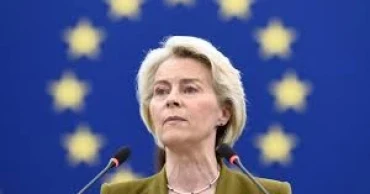
EU Commission President proposes sanctions, trade restrictions on Israel over Gaza conflict
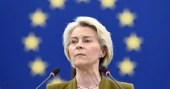
European Commission President Ursula von der Leyen announced Wednesday that she intends to pursue sanctions and a partial suspension of trade with Israel in response to the ongoing war in Gaza — a significant shift in stance for the EU leader, who has long supported Israeli Prime Minister Benjamin Netanyahu.
The European Union, made up of 27 member states, remains divided over its position on the Israel-Palestine conflict. It is still uncertain whether von der Leyen will secure enough support to pass the proposed measures.
She also revealed that the Commission will establish a Palestine donor coordination group next month, which will focus in part on the reconstruction of Gaza. Von der Leyen said the devastation in Gaza, especially the suffering of children and families, had deeply affected global public opinion.
According to Gaza’s Health Ministry, 126 Palestinians — including 26 children — have died due to hunger-related causes since a famine was declared in Gaza City by international experts on August 22.
“Famine must never be used as a weapon of war. For the sake of the children, for the sake of humanity — this must end,” von der Leyen said, receiving applause during a European Parliament session in Strasbourg.
Israeli Foreign Minister Reacts
In response, Israeli Foreign Minister Gideon Saar criticized von der Leyen on social media, accusing her of giving in to political pressure that, he claimed, undermines Israel’s relationship with Europe and strengthens Hamas.
Evacuation Orders in Gaza City
Von der Leyen’s remarks came after the Israeli military issued a mass evacuation order on Tuesday for Gaza City, where hundreds of thousands of Palestinians remain despite severe shortages of food and other essentials. Israel says it plans to retake what it describes as Hamas’ final stronghold.
Roughly 1 million Palestinians — about half of Gaza's total population — live in the northern region around Gaza City, according to estimates by both Israeli officials and the United Nations. Many residents have been displaced multiple times and remain uncertain about the safety of moving again.
The call for full evacuation preceded an Israeli airstrike that targeted Hamas leadership in Qatar, where ceasefire talks have stalled. The strike, conducted on the territory of a U.S. ally, drew international condemnation and heightened regional tensions, further jeopardizing efforts to end the conflict and secure the release of remaining hostages.
Hamas has claimed that its top leadership survived the strike.
EU to Freeze Support to Israel
Von der Leyen also announced plans to freeze EU bilateral support to Israel provided by the Commission, a decision that does not require approval from EU member states. It was not immediately clear how much financial aid the Commission currently provides to Israel or what the funding supports.
“We will suspend our bilateral assistance to Israel,” she told lawmakers, adding that payments will be halted in these areas but that support for Israeli civil society and institutions like Yad Vashem will continue.
The European Commission also provides funding to the Palestinian Authority.
Conflict Nearing Two-Year Mark
The war in Gaza erupted on October 7, 2023, when Hamas-led militants abducted 251 people and killed approximately 1,200 — mostly civilians — in southern Israel. According to Israeli authorities, 48 hostages remain in captivity in Gaza, with around 20 believed to still be alive.
In response, Israel launched a large-scale military operation in Gaza, which has since killed more than 64,000 Palestinians, according to the Hamas-run Health Ministry. While the ministry does not differentiate between civilian and combatant deaths, it reports that about half of the casualties were women and children. The United Nations and other international organizations generally view these figures as the most credible available.
The conflict has devastated much of Gaza’s infrastructure, with major cities reduced to rubble. Approximately 90% of Gaza’s 2 million residents have been displaced.
10 months ago
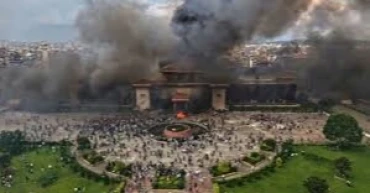
Nepal deploys Army amid worsening protest violence
The Nepalese army was deployed to the streets of Kathmandu on Wednesday in a bid to restore order after days of escalating unrest, during which tens of thousands of demonstrators torched government buildings and targeted political figures.
Armed troops patrolled major areas of the capital, enforcing a stay-at-home order and curfew while inspecting vehicles and questioning pedestrians. Their presence marked a shift toward stability after days of turmoil.
The military, which is rarely called upon in such situations, had initially remained in its barracks while police struggled to contain the protests. In a statement issued late Tuesday, the army reaffirmed its commitment to maintaining law and order and reported the arrest of 27 suspected looters.
On Wednesday, soldiers fired warning shots as inmates at Kathmandu’s central prison overpowered guards, set fire to buildings, and attempted a mass escape. The military successfully prevented the breakout and relocated the prisoners. No injuries were reported.
Violence peaked Tuesday as protesters set fire to government facilities and the homes of political leaders, prompting the resignation of Prime Minister Khadga Prasad Oli. His resignation did little to ease public anger, and large crowds continued to block roads and overrun government premises. Military helicopters evacuated several ministers to safety.
The protests also caused security forces to abandon posts in various cities, allowing hundreds of prisoners to flee from detention centers.
Protests Sparked by Social Media Ban Escalate
The unrest began Monday with demonstrations led by youth outraged over the government's sudden ban on social media platforms, including Facebook, X (formerly Twitter), and YouTube. Police responded with live fire, killing 19 people, which further inflamed public anger. Although the ban was lifted on Tuesday, protests continued, fueled by allegations of political corruption and the fatal police response.
President Ram Chandra Poudel, the ceremonial head of state, urged demonstrators to resolve the crisis peacefully and confirmed acceptance of Oli's resignation. Oli has been asked to head a caretaker administration, although his current location remains unclear.
Dubbed the "Gen Z protests," the movement initially began over digital censorship but quickly broadened to include grievances over political privilege and economic disparity. Youth unemployment in Nepal remains high, with World Bank data from last year estimating it at around 20%. The government believes more than 2,000 young people leave the country daily to find work abroad, primarily in the Middle East and Southeast Asia.
Politicians and Institutions Under Attack
Footage circulating on social media showed protesters assaulting former Prime Minister and Nepali Congress leader Sher Bahadur Deuba and his wife, Foreign Minister Arzu Rana Deuba. Both sustained injuries, with videos showing bystanders helping them to safety. The Nepali Congress, Nepal's largest political party, is part of the ruling coalition.
By Wednesday, smoke still rose from key government buildings, including the parliament, the presidential residence, the prime minister's official residence, and the central secretariat. The headquarters of Kantipur Publications, the country’s leading media house, was also torched. Several car showrooms were burned, and damaged vehicles lined the streets.
In addition to the 19 confirmed deaths, many others were injured. Prime Minister Oli has ordered an investigation into the use of lethal force and promised compensation to the victims’ families.
Controversial Social Media Law at the Heart of Protests
The violence comes amid the government's push for new legislation aimed at regulating social media platforms. Officials argue the law would ensure platforms are accountable and properly managed. However, critics, including rights groups, claim the bill would stifle free speech and silence dissent.
Under the proposed law, social media companies must register locally and appoint a point of contact within Nepal. Around two dozen platforms were ordered to comply, and those that failed were blocked. As of now, platforms like TikTok, Viber, and a few others that completed registration remain accessible.
10 months ago
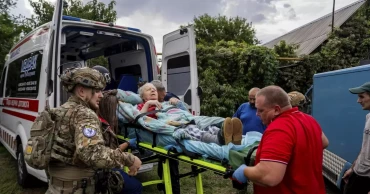
Russian glide bomb kills 24 pensioners in eastern Ukraine
A Russian glide bomb struck a village in eastern Ukraine on Tuesday as residents queued to collect their monthly pensions, killing at least 24 people and injuring 19 others, Ukrainian officials said.
The attack hit Yarova village in Donetsk region around 11 a.m., less than 10 kilometers from the front line. Regional head Vadym Filashkin said 23 of those killed were elderly pensioners.
“It was beyond words,” said resident Hennadii Trush, who lost his wife in the blast as she waited to collect her bedridden mother’s pension. He fled the village with his elderly mother after the attack. “Before, strikes landed on the outskirts. This time it was right in the center of the village,” he told the Associated Press, weeping with soot still on his face.
The strike destroyed homes and set the village ablaze. “The whole village is on fire,” said Pavlo Diachenko, head of communications for the regional police, who rushed to the scene. “Private houses were burning, and people tried to put out the flames with their own hands.”
The explosion tore through a mobile post office vehicle where pensions were being distributed, according to Ukrposhta, Ukraine’s postal service. The local post office had shut down a week earlier after staff evacuated. “Apparently, someone gave away the coordinates,” said Ukrposhta head Ihor Smilianskyi, noting that the car had been parked under trees to avoid detection.
At the morgue, victims showed severe blast wounds and burns. “They were all lying in one heap,” said Zinaida Hrymailo, who came to identify her 75-year-old cousin. She said her cousin had been preparing to leave Yarova after collecting her pension but died before she could flee.
Ukrainian President Volodymyr Zelenskyy condemned the attack as “frankly brutal,” urging the world to impose tougher sanctions on Russia. “The world should not remain silent,” he wrote on Telegram. “The United States needs a reaction. Europe needs a reaction. Strong action is needed so that Russia stops bringing death.”
The UN says more than 12,000 civilians have been killed since Russia’s full-scale invasion in February 2022. The latest strike came two days after Russia launched its largest aerial barrage of Kyiv since the war began.
Poland on alert
The assault also raised tensions in neighboring Poland, whose military said it went on the highest state of air defense alert overnight Tuesday. “To ensure the security of Polish airspace, the operational commander of the Polish armed forces has activated all necessary procedures,” the Operational Command said.
Polish and allied aircraft, along with radar systems, were fully deployed in what officials called “preventative” actions to secure areas adjacent to Ukraine.
European Council President Antonio Costa denounced the attack, asking: “Is this what Russia means when it talks about peace? When will President Putin accept to start peace talks already accepted by President Zelenskyy?”
Meanwhile, US and European officials held talks in Washington on new sanctions and tariffs targeting Russian oil revenues, as fears mount that Ukraine’s air defenses are being depleted faster than they can be replaced.
Glide bombs — retrofitted Soviet-era weapons that can weigh up to 3,000 pounds — have devastated eastern Ukraine in recent months.
10 months ago