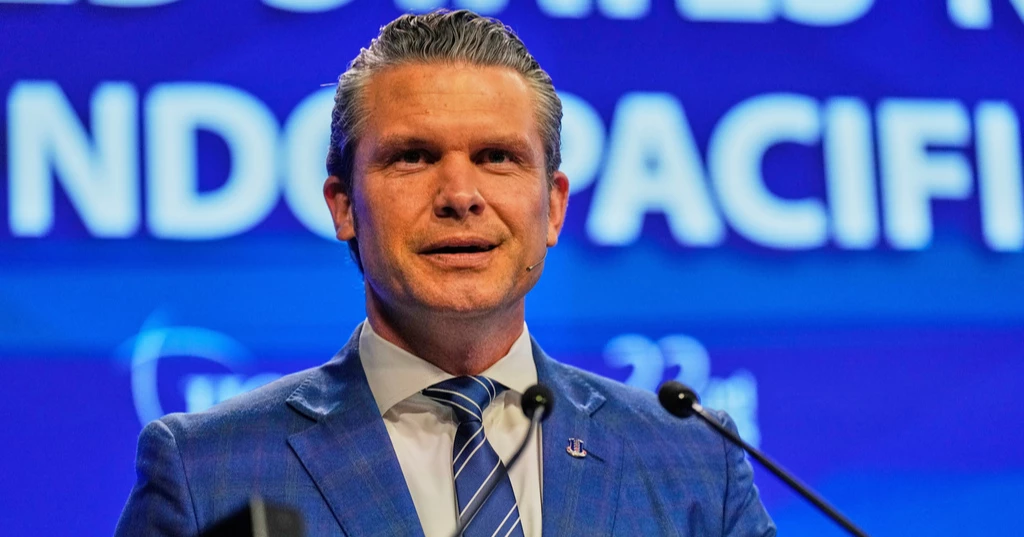
China on Sunday denounced US Defence Secretary Pete Hegseth for calling the Asian country a threat, accusing him of touting a Cold War mentality as tensions between Washington and Beijing further escalate.
The foreign ministry said Hegseth vilified Beijing with defamatory allegations the previous day at the Shangri-La Dialogue, a global security conference. The statement also accused the United States of inciting conflict and confrontation in the region, according to AP.
“Hegseth deliberately ignored the call for peace and development by countries in the region, and instead touted the Cold War mentality for bloc confrontation,” it said, referring to the post-World War II rivalry between the US and the former Soviet Union.
“No country in the world deserves to be called a hegemonic power other than the US itself,” it said, alleging that Washington is also undermining peace and stability in the Asia-Pacific.
US defense secretary warns Indo-Pacific allies of 'imminent' threat from China
Hegseth said in Singapore on Saturday that Washington will bolster its defences overseas to counter what the Pentagon sees as rapidly developing threats by Beijing, particularly in its aggressive stance toward Taiwan.
China’s army “is rehearsing for the real deal,” Hegseth said. “We are not going to sugarcoat it — the threat China poses is real. And it could be imminent.”
A ‘provocation’ by Hegseth
The Chinese statement said the matter of Taiwan is China’s internal affair and that the US should “never play with fire” with it. The statement also alleged Washington had deployed offensive weaponry in the South China Sea, was “stoking flames and creating tensions in the Asia-Pacific” and "turning the region into a powder keg.”
Spokesperson Zhang Xiaogang of China's defense ministry called Hegseth's comments a provocation and said they distorted China’s policy positions.
The US and China had reached a deal last month to cut US President Donald Trump’s tariffs from 145 per cent to 30 per cent for 90 days, creating time for negotiators from both sides to reach a more substantive agreement.
China also reduced its taxes on US goods from 125 per cent to 10 per cent.