world
Death toll from Japan earthquake rises to 34 as survivors struggle with heat, water shortages
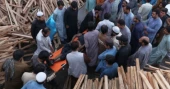
The death toll from the powerful earthquake that struck southwestern Japan has risen to 34, as thousands of survivors continue to endure extreme heat, water shortages and fuel scarcity while staying in emergency shelters or sleeping in their vehicles.
Rescue teams remained engaged in search operations on Friday, the fourth day after the magnitude 7.1 earthquake hit Kyushu, Japan's southern main island, on Tuesday. Authorities have not yet confirmed how many people remain missing.
The Kumamoto prefectural government said at least 96 people were injured, including six seriously. Officials are also investigating another death that may be linked to the earthquake.
Japanese Prime Minister Sanae Takaichi instructed authorities to do "whatever it takes" to restore water supplies and called for close coordination with the military and other agencies.
Although thousands of homes lost electricity after the quake, power was fully restored by Friday evening, according to the local utility company.
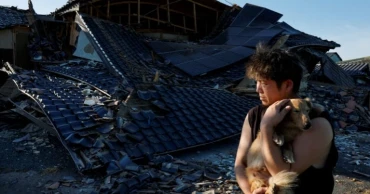
Historic inn badly damagedThe earthquake damaged more than 1,500 buildings, including 179 that were completely destroyed, according to preliminary government estimates.
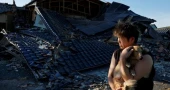
Among the damaged buildings is Kinparo, a 116-year-old traditional Japanese inn in Yatsushiro City. Its entrance collapsed, walls cracked and roof tiles fell during the quake.
Workers began clearing debris on Friday as experts prepared to assess the damage to the registered historic property.
Owner Keisuke Matsumoto said the repairs would be costly but expressed hope that the family-run inn, built by his great-great-grandfather, could be preserved.
His mother, Misao Matsumoto, said she escaped without injury but was deeply saddened to see the historic building badly damaged.
Water and fuel shortages continueNearly 80,000 households remained without running water on Friday, while more than 9,000 people were staying in evacuation centres.
Authorities were adding power supplies to shelters to improve access to air conditioning as temperatures reached 36 degrees Celsius.
Fuel shortages have also become a growing problem after damaged roads and power outages disrupted fuel deliveries and forced many petrol stations to close.
Many displaced residents have been sleeping in their cars for privacy, but limited fuel supplies have made it difficult to keep air conditioners running during the intense heat.
Hirokazu Sato, whose home was destroyed, said he, his wife and their three children were living in their car until temporary housing became available.
"We have to keep the air conditioner running day and night, but that uses a lot of fuel," he said.
Businesses affectedThe earthquake has also disrupted businesses across Kumamoto, an important manufacturing hub for Japan's semiconductor and automotive industries.
Taiwan Semiconductor Manufacturing Company (TSMC), which operates a facility in Kumamoto, said all employees were safe and operations were gradually resuming after inspections confirmed the buildings were structurally sound.
Rescue efforts continueSearch teams, assisted by rescue dogs, continued looking for survivors at damaged buildings, including the collapsed Aeon Mall in Kashima town.
The shopping centre was crowded when the earthquake struck. Company officials said about 3,000 shoppers were safely evacuated before an explosion occurred in another section of the building.
The mall's second floor later collapsed, trapping several people. Eleven people were rescued, but seven of them were confirmed dead.
Rescue operations have ended at a Nippon Paper Industries factory in Yatsushiro, where a chimney collapsed during the quake. Eleven workers were pulled from the site, but nine died.
Searches are continuing at collapsed homes across southern Kumamoto, although authorities have not released an official figure for the number of people still missing.
2 days ago
Marine Corps says F-35B stealth fighter crashed in California, pilot ejected safely
The U.S. Marine Corps says the pilot of an F-35B stealth fighter is expected to live after ejecting from the jet before it crashed in California.
The jet went down Friday near the Miramar air base in San Diego. "The pilot ejected, was transported to a local medical facility in stable condition for evaluation and treatment of non-life-threatening injuries," the Marine Corps said in an updated statement.
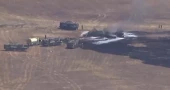
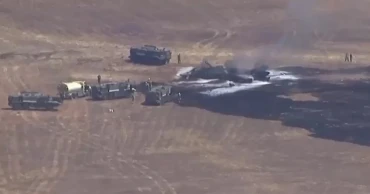
Aerial video from a news helicopter showed a plume of black smoke rising from the wreckage in a dirt field, with multiple military and firefighting vehicles and people standing nearby. What appeared to be white flame retardant covered the ground, and at least one person was spraying the wreckage with a fire hose.
Wade Lott saw the crash as he drove to work at a concrete company just south of the flight line.
"It just blew up, it was crazy," said Lott, 36, who watched from his truck as two jets descended toward the runway together. The first landed without incident, but the second suddenly began slowing down, almost as if it were trying to hover, Lott said. When the jet was about 100 feet (30 m) above the ground, the pilot ejected and their parachute deployed as they rose about 200 feet (61 m) into the air just in time.
"The jet hit the ground right next to another plane," said Lott. "It plowed into the runway and just blew up."
Candace Hadley, a spokesperson for San Diego Fire, said firefighters were on scene to respond to a vegetation fire that sparked near the crash site. She referred additional questions to Marine Corps Air Station Miramar.
The base used to host the Navy fighter pilot training school depicted in the original "Top Gun" movie, and was known as "Fightertown USA" in its heyday. The school was relocated to Naval Air Station Fallon in Nevada in 1996 after the base was transferred to the Marine Corps.
The U.S. Marine Corps, Navy and Air Force together have more than 630 F-35s, according to a 2024 analysis by the Government Accounting Office. The F-35B is one of several versions, and has an engine designed for short takeoffs and vertical landings. A single F-35B costs about $109 million. The report estimated that the overall F-35 program will cost roughly $2 trillion after the military buys more than 1,800 more jets and operates them for decades to come.
A Marines statement called Friday's crash a "Class A mishap." That's the most severe mishap category, used when the damage totals more than $2 million, an aircraft is destroyed or a service member killed. In the Air Force alone, there have been at least 17 other "Class A mishaps" involving F-35 aircraft since 2000, according to Air Force Safety Center statistics.
At least seven other military aircraft mishaps have happened in the U.S. this year, according to the Flight Safety Foundation's Aviation Safety Network database.
The F-35s are considered the safest and most capable fighter jets the military has in its fleet, according to the Lexington Institute think tank that focuses on defense technology and national security.
There have been fewer crashes involving any of the F-35 models since the jet was adopted in 2015 compared to other fighters when those planes were new, and fatal crashes are rare in F-35s.
In five F-35 crashes, the pilots were able to eject, though at least one sustained injuries. That pilot was injured when an F-35 crashed near the international airport in Albuquerque, New Mexico, in May 2024. The jet was heading an Air Force base in California from Texas.
3 days ago
Thousands of migrants return to Morocco after mass crossing into Spain's Ceuta enclave
Tens of thousands of migrants who entered Spain's North African enclave of Ceuta from Morocco voluntarily returned home on Friday, a day after the unprecedented influx created chaos, triggered a humanitarian emergency, and reignited debate over immigration across Europe. At least 57 people lost their lives during the mass crossing.
Ceuta President Juan Jesús Vivas estimated that around 60,000 migrants entered the territory, a figure equal to roughly 70% of the enclave's population. Spanish authorities later estimated the total at about 50,000, adding that more than 48,000 had already returned to Morocco by Friday evening, with more leaving throughout the day.
Many migrants swam several kilometers to reach Ceuta, while others attempted to cross through border barriers. Some encountered security forces using water cannons, tear gas, and warning shots to stop them. Officials said many of the fatalities resulted from drowning, while others were killed in a stampede near the Tarajal border crossing.
Spain deployed additional police officers and military personnel to restore order in Ceuta, located on the Strait of Gibraltar. On the Moroccan side, security forces clashed with migrants trying to reach Spanish territory. The incident also prompted Italy and France to announce tighter border controls for arrivals from Spain.
Describing the situation as unsustainable, Vivas said Ceuta was facing an unprecedented crisis. At the same time, groups of migrants also attempted to enter Melilla, Spain's other North African enclave, where confrontations with police were reported.
Spanish prime minister condemns border crossing
Prime Minister Pedro Sánchez visited Ceuta on Friday, calling the mass crossing a violation of Spain's territorial integrity. He blamed human trafficking networks for encouraging migrants to make the dangerous journey, saying smugglers had misled many young people and exposed them to deadly risks.
According to Spain's Interior Ministry, approximately 50,000 migrants crossed into Ceuta from Morocco beginning Thursday. By Friday evening, more than 48,000 had voluntarily returned.
Rachid Sbihi, head of an association representing Civil Guard officers, described the situation as a severe humanitarian crisis. Thousands of migrants, including many unaccompanied minors, spent the night in parks and on sidewalks, while others wandered the streets without shelter or assistance.
Moroccan authorities did not immediately comment on Spain's figures.
European Commission President Ursula von der Leyen described the scenes in Ceuta as unacceptable, stressing that migration into the European Union must follow established legal procedures. She called for an end to dangerous crossings, stronger action against smuggling networks, and faster returns under existing laws.
Dozens killed during dangerous crossing
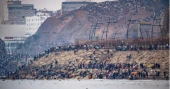
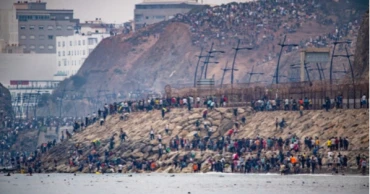
Officials said several of the 57 victims drowned while attempting to swim into Ceuta, while others died during a crush of people trying to cross the breakwater near Tarajal Beach. The shoreline was left scattered with abandoned belongings, including shoes and flotation devices.
Many migrants said they had hoped to find better economic opportunities in Spain but chose to return after witnessing the disorder.
Twenty-one-year-old Abdulah Buji from Tetouan said poor wages and limited job opportunities in Morocco had prompted him to make the journey. However, after failing to find work in Ceuta and seeing the chaotic conditions, he decided to return home.
Human rights organizations reported that Moroccan security forces used water cannons and fired warning shots into the air to prevent additional migrants from crossing into Ceuta.
Morocco's ambassador to Spain, Karima Benyaich, said her government supports legal, orderly, and safe migration but did not explain what had triggered the sudden surge.
Most migrants reached Ceuta by swimming from the Moroccan town of Fnideq, roughly five kilometers away, while others crossed from nearby Belyounech, where the distance is shorter.
Spanish authorities linked the mass crossing to a recent Supreme Court ruling that prevents the immediate deportation of migrants arriving by sea. Sánchez argued that human smuggling networks had misrepresented the court's decision, encouraging thousands to attempt the dangerous crossing.
Migration policy comes under renewed scrutiny
The crisis has intensified criticism of Sánchez's immigration policies. Earlier this year, his government approved residency and work permits for hundreds of thousands of undocumented migrants already living in Spain, arguing the measure would help address labor shortages and the country's aging population. The policy excluded migrants who entered the country after Jan. 1.
Opposition figures claimed the government's approach encouraged irregular migration. Madrid regional leader Isabel Díaz Ayuso accused Sánchez of allowing Spain to be overwhelmed through Ceuta.
The United States also expressed support for Spain, condemning the border breach and describing it as a violation of sovereignty and human rights. The U.S. State Department blamed the incident on Spain's migration policies, a claim rejected by the Spanish government.
Sánchez defended his administration's approach, insisting that the events in Ceuta were unrelated to the legalization program.
The crisis also prompted Italy to temporarily reinstate border controls for travelers arriving from Spain under the Schengen system, while France announced stricter checks along its border with Spain.
Pressure spreads to Melilla
The unrest extended to Melilla, Spain's second North African enclave, where migrants also attempted to cross from Morocco.
Violence erupted in the Moroccan border town of Bni Nsar, where migrants clashed with police, throwing stones and setting police vehicles on fire. Local media and rights groups reported injuries among security personnel and dozens of arrests.
Like Ceuta, Melilla is a self-governing Spanish territory on the North African coast, although Morocco continues to claim sovereignty over both enclaves.
3 days ago
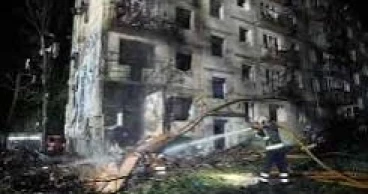
Russia launches missile and drone attack on Kyiv, killing three
At least three people were killed and more than a dozen others were injured after Russia carried out a heavy overnight assault on Kyiv using ballistic missiles and drones, Ukrainian officials said on Saturday.
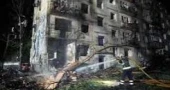
According to Kyiv Mayor Vitalii Klitschko, debris from intercepted missiles struck a five-story apartment building in the Solomianskyi district, causing significant damage and igniting a fire in the courtyard. Emergency crews were working to rescue residents believed to be trapped inside the building.
Klitschko also reported that another residential building in the Shevchenkivskyi district partially collapsed on its first and second floors, leaving additional people trapped. In the Darnytskyi district, several warehouse buildings caught fire as a result of the attack.
The latest strike occurred just two days after Russia launched another large-scale missile and drone offensive across Ukraine, which left 10 civilians dead and more than 50 injured. During that attack, one Russian missile briefly entered Polish airspace.
Ukrainian President Volodymyr Zelenskyy has continued to urge the United States and its Western allies to provide additional Patriot air defense systems to strengthen Ukraine's ability to intercept Russian ballistic missiles.
On Friday evening, Zelenskyy said he had spoken with U.S. Vice President JD Vance about his recent meeting in Washington with President Donald Trump, describing the discussions as constructive and encouraging.
In a post on Telegram, Zelenskyy stressed that Russia's aerial attacks remain relentless and reiterated that acquiring more Patriot missile interceptors is one of Ukraine's most urgent defense priorities.
During the NATO summit in Ankara in July, Trump said the United States would allow Ukraine to manufacture Patriot systems under license. However, speaking at a Cabinet meeting at Camp David on Friday, he indicated that no final decision had yet been made on the proposal.
3 days ago
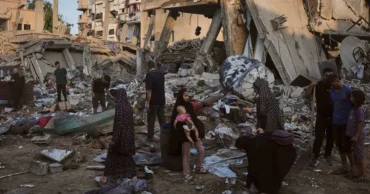
Trump announces Hamas disarmament agreement, but challenges remain
Hamas announced on Friday that it had agreed to disarm, marking a potentially major step toward ending the conflict in Gaza. However, significant obstacles remain, and it is uncertain whether the agreement will ultimately be implemented. Israel has not yet responded publicly to the announcement, which was first revealed by President Donald Trump just hours earlier. The development comes nine months after a U.S.-mediated ceasefire between Israel and Hamas was signed.
President Trump is holding Friday's Cabinet meeting at the Camp David presidential retreat in Maryland, marking the first Cabinet gathering there during his second term. A previous attempt to convene at Camp David in May was canceled due to poor weather conditions.
On Thursday, Trump indicated that he may withdraw acting Attorney General Todd Blanche's nomination for the permanent position rather than accept Senate Republicans' demands related to a broad tax audit immunity agreement that would benefit both the president and his family members.
Zelenskyy seeks Trump's support for expanded Starlink access
Ukrainian President Volodymyr Zelenskyy has urged Trump and other U.S. officials to help secure expanded access to Elon Musk's Starlink satellite communication network for Ukraine, with the goal of improving its ability to conduct operations inside Russia.
The request reflects Ukraine's efforts to reduce its dependence on U.S.-supplied Patriot air defense systems, which have become increasingly scarce as the conflict involving the U.S., Israel, and Iran continues. On Friday, Trump also appeared to soften his earlier pledge to allow Ukraine to manufacture Patriot interceptors under license.
According to a source familiar with the discussions, Zelenskyy personally raised the Starlink proposal during an Oval Office meeting with Trump earlier this week. He later reiterated the request to lawmakers on Capitol Hill, emphasizing the system's potential role in targeting operations within Russia. Both individuals who disclosed the conversations spoke anonymously because the discussions were private. Trump did not commit to approving the request.
White House suggests possible new military action against Iran
White House Press Secretary Karoline Leavitt reiterated the administration's criticism of Iran, accusing Tehran of violating a memorandum of understanding on a truce that had been signed with the United States last month. She alleged that Iran subsequently attacked commercial vessels and was responsible for the deaths of American service members.
Leavitt stated that President Trump would not tolerate what she described as Iran's continued terrorist activities and warned that the country would face ongoing consequences unless it engaged in meaningful negotiations.
Her remarks followed Trump's comments earlier on Friday, in which he suggested that U.S. military operations against Iran could continue. Speaking during a Cabinet meeting, Trump said the United States intended to strike Iran forcefully until it reached a point where it could no longer sustain the conflict.
U.S. dismisses case over Reflecting Pool damage
Federal prosecutors have dropped charges against former Olympian David Hearn, who had been accused of damaging the Lincoln Memorial Reflecting Pool. Government attorneys said that evidence gathered after the indictment showed the damage was caused by improper installation by the contractor and the accelerated pace of the construction project, rather than Hearn's actions.
3 days ago

SAARC Journalist Forum signs strategic MoU with ICJ parent
The SAARC Journalist Forum (SJF) and ICJ Global Media Group LLC, operator of the Intercontinental Connection of Journalists (ICJ), have signed a Memorandum of Understanding (MoU) establishing a three-year strategic partnership aimed at strengthening international cooperation among journalists, promoting press freedom, and expanding professional opportunities for media professionals across South Asia and beyond.
The agreement was signed by Raju Lama, International President of the SAARC Journalist Forum, in New York, and Saša Dobrijević, Founder and Chief Executive Officer of ICJ Global Media Group LLC, in Belgrade, Serbia.
SAARC Journalist Forum to host Dhaka Conference this year
According to the MoU, both organizations will collaborate to advance independent journalism, enhance professional standards, and increase the global visibility of journalists from South Asia. The partnership is based on mutual respect, professional ethics, and institutional cooperation. The agreement reflects both organizations’ shared commitment to defending press freedom and supporting responsible journalism.
Under the agreement, the SAARC Journalist Forum will join the ICJ Friends institutional network. The partnership includes reciprocal digital promotion, with both organizations displaying each other’s official logos and website links, as well as the creation of an official institutional profile for SJF on the ICJ platform to showcase its activities, achievements, and initiatives.
The MoU also encourages SJF-affiliated journalists to become ICJ members, providing access to an international media network, professional training, publishing opportunities, press credentials, participation in global media panels, and eligibility for ICJ awards. Premium members will also gain access to the ICJ Marketplace for the international distribution of investigative and exclusive journalism.
The agreement outlines cooperation in joint projects, information sharing, online exchanges, and coordinated initiatives designed to strengthen media solidarity across South Asia and globally. It further clarifies that the MoU is an expression of goodwill and does not create legally binding financial or commercial obligations between the two organizations.
The partnership will remain in effect for an initial period of three years, with the option of renewal by mutual written agreement. Either party may terminate the agreement by providing 60 days’ written notice.
The signing of the MoU marks a significant milestone in expanding international media cooperation, creating new opportunities for journalists in the SAARC region to engage with a broader global network while reinforcing the shared values of press freedom, ethical journalism, and professional development.
3 days ago
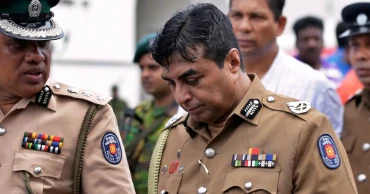
Ex-police chief sentenced to death for negligence in Easter attacks in Sri Lanka
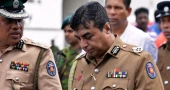
A Sri Lankan court on Friday sentenced former Police Chief Pujith Jayasundara to death after convicting him of criminal negligence for failing to prevent the Islamic State-inspired Easter Sunday bomb attacks in 2019 that killed more than 260 people.
Although sentenced to death, Jayasundara is unlikely to be executed as Sri Lanka has maintained an informal moratorium on capital punishment since 1976, meaning death sentences are generally commuted to life imprisonment. President Anura Kumara Dissanayake supports retaining the moratorium.
The coordinated bombings targeted three churches- two Catholic and one Protestant- and three tourist hotels, killing more than 260 people, including 42 foreign nationals. A parliamentary committee investigating the attacks found that police and intelligence officials failed to act despite receiving repeated intelligence warnings before the bombings.
Jayasundara may appeal Friday's verdict delivered by a three-member High Court bench.
The court was also scheduled to issue a verdict later Friday on former Defense Ministry Secretary Hemasiri Fernando, who faces the same charge.
Authorities blamed two Sri Lanka-based Islamic militant groups for carrying out the attacks. All suspects believed to have directly participated are dead, while separate trials are continuing for individuals accused of links to the perpetrators.
Sri Lanka's Catholic Church has maintained that those identified so far were not the masterminds behind the Easter Sunday attacks, alleging that a broader conspiracy was behind the bombings.
3 days ago
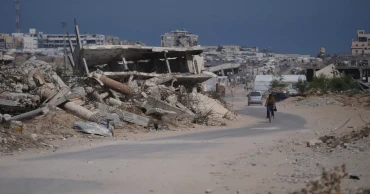
Hamas agrees to disarm under Gaza ceasefire roadmap
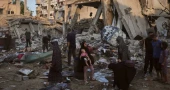
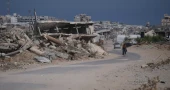
Hamas said Friday it has agreed to a phased roadmap to disarm, a significant step that could help end the war in Gaza if Israel also fulfills key conditions, including ending hostilities and withdrawing its forces from the Palestinian territory.
Senior Hamas official Bassem Naim confirmed the agreement on X, while a Hamas official and a regional official told media the group's commitment is contingent on Israeli concessions. Israel has not commented on the deal announced earlier by U.S. President Donald Trump, nine months after a U.S.-brokered 20-point ceasefire plan was signed.
The agreement calls for Hamas to surrender weapons, dismantle tunnels, facilitate an Israeli troop withdrawal, establish a new Palestinian technocratic government, deploy an International Stabilization Force (ISF) and begin Gaza's reconstruction. Police weapons would be transferred to the U.S.-backed National Committee for the Administration of Gaza, while heavy weapons and tunnels would be decommissioned in phases linked to Israel's withdrawal.
Israel, however, has insisted it will not withdraw from areas under its control until Hamas is fully disarmed. U.S., Turkish, Egyptian and Qatari mediators are guaranteeing the deal, though Israel is not a signatory. Officials said the disarmament process could take 200-350 days. The war began after Hamas' Oct. 7, 2023 attack that killed about 1,200 people, while Gaza's Health Ministry says Israel's offensive has killed more than 73,000 Palestinians.
3 days ago
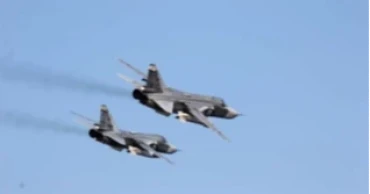
Russia-linked airstrike in Mali killed 8 civilians, rights group says
An airstrike carried out by Russian government-controlled Africa Corps in central Mali last month killed eight civilians, including three children, Human Rights Watch said Friday.
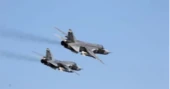
The rights group said a Russian Sukhoi Su-24 attack aircraft dropped two bombs on Kyrnia village in the Mopti region on June 15.
According to Human Rights Watch, one of the strikes landed near the home of the village chief, killing his wife and three children. The second strike hit a nearby cattle market, killing four men.
No members of the Islamic militant group JNIM, which has controlled the village for about six years, were reported among those killed, the rights group said.
The Associated Press could not independently verify the claims.
Mali has faced violence for more than a decade from militants linked to al-Qaida and the Islamic State group, including JNIM, as well as a Tuareg separatist rebellion in the north.
The situation has worsened in recent months after JNIM and Tuareg separatists launched their biggest coordinated attacks in more than a decade. The attacks targeted the airport in the capital Bamako, the nearby military town of Kati and several cities in northern and central Mali.
The attacks in April highlighted challenges facing Mali's efforts to fight the insurgency, including its growing reliance on Russia after the military-led government cut ties with former partners such as France.
Russian mercenaries have been operating in Mali since late 2021 to support the military government in its fight against militants and separatists. Last year, the Russia-linked Africa Corps, which is under the country's Defense Ministry, replaced the private Wagner Group in Mali.
Human Rights Watch said it interviewed 19 people, examined satellite images and reviewed a video posted online by Africa Corps. The video described the June strike as an attack on a gathering of "terrorists."
The rights group said around 100 JNIM fighters were in the village at the time, but most were gathered in another area. It said the strikes did not appear to have targeted a clear military objective.
Human Rights Watch urged Mali's government to investigate the attack and hold those responsible accountable. It warned that failure to do so could make the government complicit in possible war crimes.
Russia's Defense Ministry did not immediately respond to a request for comment.
3 days ago
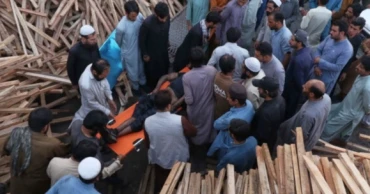
Coal mine blast in Pakistan kills 32, traps 10 miners
At least 32 miners were killed and 10 others remained trapped underground after a methane gas explosion at a coal mine in southwest Pakistan on Thursday.
The blast occurred at a mine on the outskirts of Quetta, the capital of Baluchistan province, government mine inspector Ghani Baloch said.
Seven bodies were recovered several hours after the explosion, while rescue teams later found 25 more, officials and the provincial disaster management agency said.
Rescue operations were continuing to locate and bring out the remaining trapped miners.
Baloch said rescuers would continue their efforts until all the trapped workers were found, but warned that the death toll could rise.
He said the chances of finding survivors decrease after methane explosions because oxygen levels inside the mine can fall sharply. Rescuers were also moving cautiously because of the dangerous conditions.
Authorities were handing over the recovered bodies to their families for burial, while relatives of the trapped miners waited anxiously for updates, Baloch said.
Baluchistan Mines and Minerals Minister Shoaib Nosherwani said rescue teams were working in extremely difficult conditions. He expressed condolences to the families of the victims and announced compensation of 500,000 Pakistani rupees (around $1,800) for each miner who died.
He also said authorities would investigate the cause of the explosion and review safety measures at coal mines.
A coal miners' union, meanwhile, blamed possible negligence for the accident and called for action against those responsible.
The Pakistan Central Mines Labour Federation urged the government to strictly enforce mine safety rules and take strong action against companies that fail to comply with safety regulations.
Deadly accidents are frequent in Pakistan's coal mining sector, particularly in Baluchistan, where many mines lack proper ventilation, gas monitoring systems and other basic safety facilities.
Mine workers and labour groups have long accused mine owners of failing to enforce safety rules and provide adequate protective equipment.
Despite the dangerous working conditions and low wages, thousands of people depend on coal mining for their livelihoods in Baluchistan, Pakistan's largest and least developed province, where poverty and unemployment remain widespread.
3 days ago