world
Jordan intercepts Iranian missiles as US, Saudi forces strike militia targets in Iraq
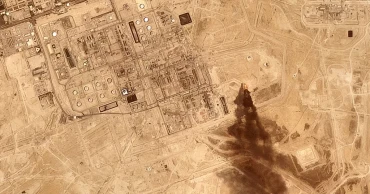
Jordan said its air defense systems intercepted and destroyed five missiles fired from Iran early Wednesday, hours after the United States said it had repelled an Iranian missile attack targeting American forces in the Middle East, ending a brief lull in hostilities.
Jordan's military confirmed the interceptions, while Iran's state-run IRNA news agency quoted the Islamic Revolutionary Guard Corps (IRGC) as saying its Aerospace Force had launched ballistic missiles targeting Jordan's Muwaffaq Salti Air Base and the headquarters of the US military's Central Command in the country.
The renewed exchange of attacks rattled global energy markets, with Brent crude, the international benchmark, rising 3.1 percent to $84.58 per barrel.
Earlier, the US Central Command (CENTCOM) said American forces remained on high alert and had joined Saudi forces in carrying out strikes against sites in Iraq allegedly used by Iran-backed militias to launch recent attacks.
The United States warned that any further attacks on American troops or Saudi Arabia's energy infrastructure could trigger additional military action.
In Baghdad, Iraqi Prime Minister Ali al-Zaidi convened an emergency meeting of the National Security Council to assess the situation following the strikes.
The latest escalation follows a short period of relative calm between Washington and Tehran, during which neither side reported attacks for about three days after weeks of heightened tensions centered on the Strait of Hormuz, the strategic waterway through which roughly one-fifth of the world's traded oil passes.
The renewed violence adds to mounting pressure on US President Donald Trump after weeks of conflict in the region. Four American service members have been killed in recent fighting, while the Pentagon has sought additional funding from Congress to cover the growing costs of military operations.
5 days ago
Zelenskyy has ‘good meeting’ with Trump at White House
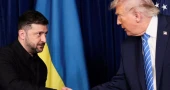
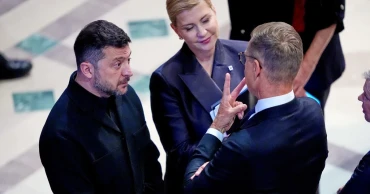
US President Donald Trump and Ukrainian President Volodymyr Zelenskyy met Tuesday ahead of Sen. Lindsey Graham’s funeral, discussing ways for Ukraine to produce more powerful weapons and “other ideas that could help” in its ongoing war with Russia.
The Oval Office meeting, which was closed to the media, followed a significant meeting at the NATO summit earlier this month in Ankara, Turkey, where Trump announced that the United States would give Ukraine a license to produce Patriot defense systems — a long-standing request from Kyiv to help counter Russian missile attacks.
The meetings highlight how Trump, who was once a major skeptic of continued US assistance to Ukraine, has grown more supportive of Zelenskyy as Ukraine continues to withstand Russia’s attacks more than four years after Moscow launched its invasion in 2022.
Zelenskyy’s relationship with Trump during the president’s second term was previously strained following a contentious White House visit during which the Ukrainian leader was criticized for appearing ungrateful. Since then, Zelenskyy has sought closer ties with the Republican administration and has relied on both expected and unexpected allies in Trump’s circle to influence the president.
The conflict in the Middle East, which has taken up much of the Trump administration’s attention this year, has also increasingly become linked to the Ukraine war. Ukraine fired on at least one Iranian vessel in the Caspian Sea over the weekend, while Zelenskyy has accused Russia of providing satellite images of US bases in the Persian Gulf to Iran.
After the meeting, Zelenskyy said on social media that he had a “good meeting” with Trump and thanked the Republican administration for its efforts to support Kyiv in the prolonged war.
Officials also agreed that Steve Witkoff and Jared Kushner, Trump’s main envoys, would travel to Kyiv at some point in the future, according to a person familiar with the talks who spoke on condition of anonymity because the meeting was closed to the media.
“The President and I discussed licenses for Patriot interceptor production and several other ideas that could help,” Zelenskyy said. He also expressed condolences to Trump over Graham’s death, describing the senator as a close ally.
“We also spoke about diplomacy — it's important that the diplomatic process be reinvigorated,” Zelenskyy said.
Trump later described the meeting as a “Great Honor” and said on Truth Social that “many things were discussed” and that “the meeting went very well.”
Zelenskyy seeks to boost Ukraine’s defense production
During his one-day visit to Washington, Zelenskyy also met with officials from Lockheed Martin to discuss further cooperation in defense production and technology exchanges.
“Ukraine has a lot to share with those who help us protect lives,” he wrote on social media.
Later, in a meeting with senators at the Capitol, Zelenskyy again made the case for Ukraine’s need for Patriot interceptors and urged support for a broad sanctions bill aimed at weakening Russian morale and increasing pressure on Moscow, according to two people familiar with the private discussion. They spoke on condition of anonymity to discuss the closed-door meeting.
Luke Coffey, a senior fellow at the conservative-leaning Hudson Institute, said increasing production of Patriot interceptors was important not only for Ukraine but also for the United States and its Gulf allies, particularly as supplies decline amid the war involving Iran.
“Ukraine has shown that its defense industry is capable, innovative and creative,” Coffey said. He said he expected Ukraine to be able to produce the missiles once it receives the license, which could also increase their availability for the United States.
Trump welcomed Zelenskyy to the White House as the Ukrainian president traveled to Washington to honor Graham. The senator’s final public act had been a visit to Kyiv, where he helped secure an agreement on a sanctions package aimed at countries that purchase Russian oil, gas and other exports.
In an interview with Fox News Channel on Tuesday, Trump recalled Graham’s strong support for Ukraine and said the South Carolina Republican senator’s position on the war had never changed.
Trump said Graham had suggested it was time to reach a deal with Iran but had made no similar proposal regarding the Russia-Ukraine war.
“Ukraine, he's very militant about,” Trump said on “Fox & Friends.” “I mean, Lindsey liked war, to be honest with you.”
The Trump administration’s closer engagement with Zelenskyy comes as far-right activist Laura Loomer, who has the president’s ear, has recently changed her views on Russia’s war against Ukraine.
Loomer, who is known for provocative social media posts and her influence with Trump, has traveled through Ukraine, witnessed Russian attacks firsthand and interviewed Zelenskyy. She has acknowledged being “bamboozled by Russian propaganda.”
Loomer said she spoke with Trump after meeting Zelenskyy in Ukraine last week and expects to meet with the president after returning from her trip.
Ukraine highlights Russia-Iran ties
Before meeting Trump, Zelenskyy warned that Russia has been assisting Iran by obtaining satellite images of US bases in the Gulf region that later appear in Iranian hands.
The Ukrainian president also said there was a “clear correlation” between the Russian images and subsequent Iranian strikes.
Iran is a key Russian ally in the war against Ukraine and has helped Moscow develop its drone capabilities.
Trump, however, played down the significance of possible Russian assistance to Iran on Monday, although he said he would raise the issue with Russian President Vladimir Putin.
“I don't think they've been doing it, certainly not at a high level,” Trump told reporters aboard Air Force One while traveling to Michigan. “And if they have, it has been very un-impactful.”
Regarding the attack on the Caspian Sea, the foreign ministers of Iran and Ukraine discussed the incident Tuesday, according to statements posted on social media.
Ukrainian Foreign Minister Andrii Sybiha described the conversation as “frank” and said Ukraine’s focus was “solely at defending our country from Russian aggression” and that it had never intended to target civilian vessels or people.
Iran said at least one sailor was killed in the attack.
Iranian Foreign Minister Abbas Araghchi said Tehran also did not seek escalation but made clear that “any attack on our citizens or interests is unacceptable” and that there “must be restitution for losses.”
Pro-Ukraine lawmakers push sanctions bill
Zelenskyy had a packed schedule during his latest Washington visit.
At his Capitol meeting, held shortly before a key vote on the Russia sanctions bill and after Graham’s funeral, the Ukrainian leader argued that there was an opportunity to bring Russian President Vladimir Putin to the negotiating table, according to one person familiar with the discussion.
The Senate took the first steps toward passing legislation in an 86-12 vote that would penalize countries continuing to purchase Russian oil, gas and other exports after more than a year of negotiations.
The bill has support from dozens of lawmakers from both major political parties and is seen as a major policy tribute to Graham, who died unexpectedly this month from a tear in his aorta.
The legislation would impose tariffs on goods from the world’s five largest buyers of Russian oil or natural gas, including China and India.
It also includes sanctions against Putin, senior Russian political and military officials, Russian financial institutions and energy projects.
6 days ago
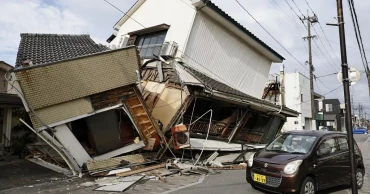
Japan quake death toll rises to 18
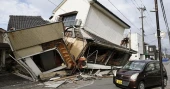
The death toll from a powerful earthquake in southwestern Japan has risen to 18 as soldiers and emergency workers continued searching through collapsed buildings and debris for survivors, authorities said Wednesday.
The magnitude 7.1 earthquake struck the Kumamoto region on Kyushu, Japan's southern main island, on Tuesday, leaving at least 62 people injured, including six critically, according to the prefectural government. Officials warned the number of casualties could increase as search operations continue.
Rescuers worked in sweltering heat to search damaged homes and commercial buildings, though authorities said it remained unclear how many people were still missing.
One of the hardest-hit locations was an Aeon Mall shopping centre in Kashima city, where thousands of shoppers were present when the quake struck. The company said about 3,000 customers were evacuated before a gas explosion occurred in another section of the mall.
The mall's second floor collapsed, trapping several people. Aeon President Akio Yoshida said four people were confirmed dead at the site, while three others remained missing.
"We take it seriously that an explosion happened and precious lives were lost," Yoshida told a news conference.
Elsewhere, a collapsed chimney at a Nippon Paper Industries factory in nearby Yatsushino killed five workers and injured others. Authorities said seven people were rescued from the debris, while four remained trapped.
In the first reported foreign fatality, a Vietnamese technical intern was killed after a crane collapsed at the factory where he worked. Seven other Vietnamese interns escaped safely, while the wife of one worker was injured when a wall fell and was receiving hospital treatment.
The earthquake also disrupted essential services, leaving nearly 34,900 households without electricity and about 15,000 without running water. More than 8,800 residents took shelter at over 400 evacuation centres, where authorities were installing additional power sources to provide air conditioning.
Japan's Self-Defense Forces joined rescue teams in the search operation, assisted by firefighters from Taiwan.
Prime Minister Sanae Takaichi said the government was making every effort to locate survivors and deliver food and other emergency supplies to the worst-hit areas.
Bullet train services remained suspended, while some flights were canceled despite the reopening of Aso Kumamoto Airport.
Kumamoto was also devastated by a major earthquake in 2016 that killed at least 50 people. Japan is among the world's most earthquake-prone countries.
6 days ago

US intercepts Iran missiles, strikes Iraq militias
The US military said Tuesday it intercepted a barrage of Iranian missiles targeting American forces in the Middle East and, along with Saudi forces, struck sites in Iraq used by Iran-backed militias to launch attacks in recent days.
US Central Command said all Iranian missiles fired at American forces were intercepted and that US troops “remain vigilant and at a high state of readiness.”
The United States also warned that further attacks on its troops or Saudi Arabia’s energy infrastructure could trigger additional military action.
The latest strikes ended a brief lull in fighting between the United States and Iran after weeks of tensions over the strategic Strait of Hormuz, a key Persian Gulf waterway through which about 20% of the world’s traded oil normally passes.
There was no immediate response from Tehran to the US military’s statement or the strikes.
The renewed fighting came as President Donald Trump faced growing pressure over the conflict. Four US troops have been killed in recent weeks, while the Pentagon has sought additional funding from an increasingly skeptical Congress to cover the war’s rising costs.
High gasoline prices linked to disruptions in the Strait of Hormuz have also raised concerns for Republicans ahead of November’s midterm elections. The US House narrowly passed a resolution last week calling for an end to military action against Iran.
Trump has repeatedly backed away from threats to target bridges, power plants and other infrastructure in Iran. But speaking to Fox News Channel on Tuesday, he said Iran knows he will “finish the job” if its leaders fail to reach a deal to end the war.
US, Saudi forces strike Iraq sites
Iran launched its ballistic missiles before US and Saudi forces carried out strikes in Iraq, according to a US official who said the two operations were not connected. The official spoke on condition of anonymity because of the sensitive military operations.
US and Saudi fighter aircraft struck several logistics and weapons sites in eastern Iraq in response to more than 30 drone attacks directed by Iran’s Islamic Revolutionary Guard Corps (IRGC) over the previous 72 hours, US Central Command said.
The command warned that the IRGC and its Iran-backed groups must stop the attacks to avoid further US military action.
Saudi Arabia’s Defense Ministry confirmed the strikes, saying the kingdom does not seek escalation but would respond to any aggression.
Saudi Arabia also said its air defenses intercepted and destroyed several drones launched by Iran-backed militias in Iraq for a second straight day. The drones had targeted petroleum facilities in the kingdom’s eastern region.
Iraqi Prime Minister Ali al-Zaidi ordered security agencies to investigate after Saudi Arabia accused Iran-backed groups of carrying out a similar attack Monday.
The Iraqi military said it was committed to preventing its territory from being used as a route or launching point for attacks against friendly countries.
The Iraqi militias denied involvement. The Islamic Resistance in Iraq, an umbrella group of Iran-backed armed groups, called Saudi Arabia’s allegations “fabrications” and suggested that Yemen’s Houthi rebels could have carried out Monday’s attacks.
Houthis target Saudi tanker
The Houthis claimed they fired missiles at the Saudi oil tanker NCC Ghazal, forcing it to turn back. Last week, they announced a blockade of Saudi shipping, raising concerns over another key waterway, the Bab el-Mandeb Strait leading to the Red Sea.
The United Kingdom Maritime Trade Operations Center said a tanker reported hearing explosions while sailing in the southern Red Sea. It did not identify the vessel but said the ship and its crew were safe.
The Houthis also fired on at least one Saudi tanker in the Red Sea last week.
Iran and the United States had paused their fighting over the weekend, although tensions remained high. Officials said mediators had made progress toward bringing the two sides back to negotiations.
Iran said Tuesday that earlier US strikes had destroyed an airport and a marine control tower and damaged 12 bridges and two tunnels, among other infrastructure.
Iran had effectively closed the Strait of Hormuz after the war began by firing at or threatening freighters and tankers off its coast. After an interim ceasefire deal was signed in June, a struggle for control of the waterway followed.
Trump meets Netanyahu
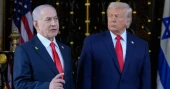
The latest strikes came on the same day Israeli Prime Minister Benjamin Netanyahu met Trump at the White House for the first time since the two countries launched the war against Iran on Feb. 28.
Israel has largely stayed out of the latest fighting with Iran.
Netanyahu called the meeting “excellent,” while Trump described it as “very good” and said “many important subjects were discussed.”
Meanwhile, concerns have grown over the US military’s ability to intercept Iranian missiles as lawmakers, military officials and experts warn that the country’s stockpile of missile interceptors is declining.
Sean Parnell, the Pentagon’s chief spokesperson, rejected those concerns, saying the US military “has everything it needs to execute at the time and place of the president’s choosing.”
6 days ago
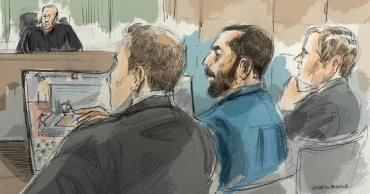
Salman Rushdie attacker declines to testify as terrorism trial nears jury stage
The man accused of stabbing author Salman Rushdie has decided not to testify or present any defence witnesses in his federal terrorism trial, with the case expected to go to the jury as early as Wednesday.
Hadi Matar’s lawyer Nathaniel Barone informed the court on Tuesday that the 28-year-old would not take the witness stand. “At this time, the defense rests,” Barone told the court. Matar has pleaded not guilty to charges, including carrying out an act of transnational terrorism.
Federal prosecutors also concluded presenting their case on Tuesday, and closing arguments are scheduled for Wednesday morning.
Rushdie, the award-winning author of books including Midnight’s Children and The Satanic Verses, testified last week about the 2022 attack that nearly killed him and permanently damaged his eyesight.
The attack occurred while Rushdie was preparing to deliver a lecture on protecting writers at the Chautauqua Institution, an arts and intellectual retreat in New York. Prosecutors said Matar rushed onto the stage and stabbed Rushdie 15 times in front of the audience.
Witnesses and another speaker, Henry Reese, helped restrain the attacker until police officers assigned to the event arrested him.
Prosecutors allege that Matar was motivated by a 1989 death order, or fatwa, issued by Iran’s then-Supreme Leader Ayatollah Ruhollah Khomeini against Rushdie following the publication of The Satanic Verses, which sparked protests in several Muslim-majority countries.
Rushdie, who was born in India to a Muslim family and later became a US citizen, spent years in hiding after the fatwa was issued. He gradually returned to public life after Iran’s government distanced itself from Khomeini’s order in 1998.
US prosecutors claim Matar, a US-born citizen of Lebanese descent, acted in support of Iran and the Lebanon-based Hezbollah militant group. They have presented evidence that Matar began researching Rushdie’s location in 2020 and later wrote private notes expressing intentions to kill him.
Iran has denied involvement in the attack, although Iranian officials at the time said Rushdie had brought the situation upon himself by insulting Islam.
Matar also chose not to testify during his 2025 state court trial, where he was convicted of attempted murder and is currently serving a 25-year prison sentence.
His defence lawyer has argued that prosecutors have failed to prove Matar’s motives, saying there was no direct evidence showing his intentions.
Barone on Tuesday unsuccessfully sought dismissal of the federal case, arguing that prosecutors had not presented sufficient evidence. The judge rejected the request.
If convicted in the federal terrorism case, Matar could face a maximum sentence of life in prison.
6 days ago

3-day SAARC training on lumpy skin disease begins in Sri Lanka
A three-day SAARC regional training on “LSD Surveillance and Control Measures in South Asia” began on Tuesday in Kandy, Sri Lanka, aiming to strengthen regional cooperation and capacity development to control lumpy skin disease (LSD).
The training programme brought together livestock experts and veterinary professionals from five SAARC member states – Bangladesh, Bhutan, Nepal, Pakistan and Sri Lanka, according to a press release.
The event has been jointly organised by the SAARC Agriculture Centre (SAC), the Ministry of Agriculture and Livestock of Sri Lanka, and Gram Unnayan Karma (GUK), Bangladesh.
Delivering oping speech, Director General of Sri Lanka's Department of Animal Production and Health (DAPH) and Chairman of the SAARC CVOs Forum Dr BSS Perera highlighted the critical need for regional collaboration to address transboundary animal diseases.
In his keynote presentation, Virologist at the Veterinary Research Institute of Sri Lanka Dr S Puvanendiran explained that LSD is primarily spread by biting insects such as mosquitoes, flies, and ticks.
He noted that the virus can survive for long periods in skin lesions and scabs, with warm weather, animal movement, and inadequate vector control contributing to its spread.
Speaking in the event as a special guest, GUK Director Md Mokhlesur Rahman stressed the importance of raising awareness among farmers and strengthening collaboration between veterinarians, farmers, and development organisations for effective disease prevention.
6 days ago
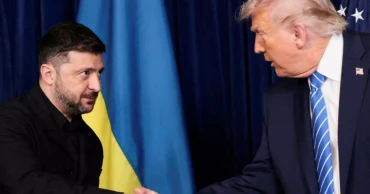
Zelenskyy meets Trump at White House, seeks stronger US support for Ukraine
Ukrainian President Volodymyr Zelenskyy met with US President Donald Trump at the White House on Tuesday, seeking deeper cooperation with Washington on defence and peace efforts as the two leaders held their second meeting this month.
The meeting took place ahead of the funeral of Republican Senator Lindsey Graham, a longtime supporter of Ukraine who had recently visited Kyiv and helped secure a sanctions package targeting countries that buy Russian oil, gas and other exports.
Shortly after arriving in the United States, Zelenskyy said on social media that his top priorities were strengthening Ukraine’s air defence capabilities and expanding strategic cooperation with Washington.
“Peace needs to be brought closer,” Zelenskyy said as he arrived at the White House.
A White House official said Trump planned to discuss the ongoing peace process between Russia and Ukraine during the closed-door talks.
Trump also reflected on Graham’s strong support for Ukraine, saying the senator had consistently backed Kyiv and had pushed for a deal to end the war. However, Trump noted that Graham had not taken the same approach regarding the Russia-Ukraine conflict as he had on Iran.
Meanwhile, Zelenskyy has received unexpected support from Laura Loomer, a conservative activist known for her influence among Trump’s supporters. After visiting Ukraine and meeting Zelenskyy, Loomer said she had changed her views after witnessing the impact of Russia’s attacks firsthand and acknowledged she had been influenced by Russian propaganda.
Loomer said she discussed her Ukraine visit with Trump and believed the situation was favourable for Kyiv ahead of Zelenskyy’s White House meeting.
Before the talks, Zelenskyy accused Russia of assisting Iran by providing satellite images of US military bases in the Gulf region that were later used in Iranian attacks. He said there was a clear connection between Russian imagery and subsequent strikes.
Trump, however, played down the significance of any possible Russian assistance to Iran, saying he did not believe Moscow had provided substantial help. He added that he would raise the issue with Russian President Vladimir Putin.
During his Washington visit, Zelenskyy is also scheduled to meet US senators at the Capitol following Graham’s funeral.
Republican leaders are seeking to move forward with Graham’s sanctions legislation, which has support from lawmakers of both major parties. The bill includes tariffs on goods from major buyers of Russian energy, including China and India, as well as sanctions targeting Russian President Vladimir Putin, senior officials, financial institutions and energy projects.
Trump and Zelenskyy previously met on the sidelines of the NATO summit in Ankara earlier this month, where Trump announced that the United States would help Ukraine produce Patriot air defence systems — a long-standing request from Kyiv to counter Russian missile attacks.
Trump said Washington and Kyiv had developed a good relationship and that Ukraine would be able to manufacture the advanced defence systems relatively quickly with US assistance.
6 days ago
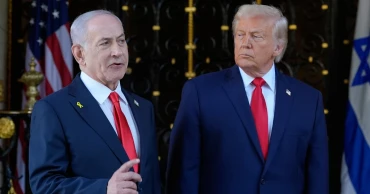
Trump voices frustration with Netanyahu ahead of first meeting since Iran war
US President Donald Trump expressed frustration with Israeli Prime Minister Benjamin Netanyahu ahead of their first meeting since launching a joint war against Iran, highlighting tensions between the two allies over the future course of the conflict.
The Tuesday meeting comes as both leaders face mounting domestic pressure. Netanyahu is preparing for reelection while dealing with strains in his relationship with Trump, and Trump is facing calls to end a costly war that has disrupted regional stability and pushed up prices ahead of the US midterm elections.
Trump revealed his irritation over reports that Netanyahu planned to share intelligence about Iranian activities at Pickaxe Mountain, a potential nuclear site that the US president has repeatedly threatened to strike.
“I know exactly what’s going on at Pickaxe,” Trump told Fox News’ “Fox & Friends.” He said Iran’s activities there were “not a big problem” and suggested Netanyahu was raising the issue to keep Washington involved.
“Why do you have to announce to the world?” Trump said, indicating his frustration with the Israeli leader.
Despite their differences, the two leaders are expected to discuss several key issues, including a US-Israel framework agreement with Lebanon related to the Israel-Hezbollah conflict and efforts to expand the Abraham Accords, according to a White House official.
“We have a little difference,” Trump told reporters Monday when asked whether he and Netanyahu were on the same page regarding Iran. “But pretty close, yeah.”
Trump and Netanyahu have had a fluctuating relationship over the years. Their alliance appeared stronger after Trump returned to the White House last year, with both leaders presenting a united front when they launched military action against Iran in February.
However, after Iran retaliated with drone and missile attacks targeting US bases and cities across the Gulf region and disrupted shipping through the Strait of Hormuz, Trump faced increasing pressure from domestic opponents and regional allies to end the conflict.
Netanyahu had pushed for continuing military operations against Iran and its ally Hezbollah in Lebanon, while Trump moved toward seeking a deal with Tehran. The differences between Trump, Netanyahu and US Vice President JD Vance have become increasingly visible in recent weeks.
Israeli political analyst Amit Segal wrote in the newspaper Israel Hayom that Washington was making clear that it was leading the war strategy, leaving Israel in a less influential position.
During his White House visit, Netanyahu is expected to present Israeli intelligence on Iran’s nuclear programme, according to a person familiar with the matter.
In an interview with Fox News, Netanyahu said he wanted to hear Trump’s plans for Iran, adding that the US president’s decision would largely determine the next steps.
“If he can do so without returning to intense military fighting, that’s fine,” Netanyahu said, while insisting that Iran’s nuclear programme must be ended.
Netanyahu also warned Tehran against attacking Israel, saying any such move would trigger a “very forceful” response.
6 days ago
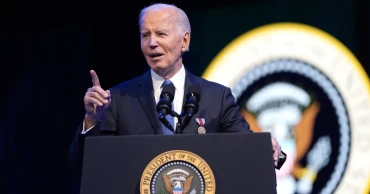
Biden memoir interview tapes released, show discussions of sensitive information and memory lapses
Audio recordings and transcripts from interviews conducted with former US President Joe Biden for his memoir have been made public, revealing conversations in which he discussed sensitive government matters and, at times, acknowledged difficulty recalling certain details.
The material, comprising about three hours of audio and 117 pages of partially redacted transcripts, was released by the Oversight Project, an initiative of the conservative Heritage Foundation, after Biden ended a legal effort to keep the interviews confidential.
The recordings were made in 2016 and 2017 with memoir ghostwriter Mark Lewis Zwonitzer, before Biden launched his successful 2020 presidential campaign.
In one 2016 interview, Biden referred to sensitive foreign policy issues handled during the administration of then-President Barack Obama, saying, "They didn't even know I had this," while discussing government documents.
During a 2017 session, Biden appeared to mention finding classified material from his vice-presidential tenure, although the specific contents remain redacted in both the audio recordings and transcripts.
The recordings became part of an investigation led by Special Counsel Robert Hur, who in 2024 decided not to bring criminal charges against Biden over his handling of classified documents. Hur concluded there was insufficient evidence to support prosecution and noted that a jury would likely view Biden as a sympathetic elderly figure with memory limitations.
The report sparked widespread debate over Biden's age and mental fitness as he sought re-election. Biden was 74 when the interviews took place and 81 when Hur's report was released. He later withdrew from the 2024 presidential race following a widely criticized debate performance against Republican Donald Trump.
The newly released recordings include moments where Biden struggles to recall dates or specific events. However, they also show him accurately recounting meetings and conversations, suggesting he retained detailed knowledge of many issues.
Jeff Clark, vice president of litigation at the Oversight Project, said the recordings demonstrated what he described as Biden's cognitive decline and argued the public had a right to access the material.
Biden's spokesman, TJ Ducklo, criticized the release, saying the interviews were intended to remain private and had been provided to the Justice Department under that understanding. He accused the current administration of using the Justice Department for political purposes.
Biden initially filed a lawsuit to block the release of the recordings but abandoned the case after a divided federal appeals court ruled that the public interest in disclosure outweighed his privacy claims. A three-judge panel concluded there was a "substantial" public interest in making the material available.
6 days ago

Iran hangs 2 men over killing of 4 police officers in January protests
Iran on Tuesday hanged two men convicted in a case of killing four police officers during January protests, state media reported.
A report by Mizanonline.ir, affiliated to the country’s judiciary, identified the two as Abolfazl Sepahi Badjani and Amir Hossein Safari Hosseinabadi, saying they also set a police station on fire and damaged public properties in the central city of Isfahan, some 400 kilometers (250 miles) south of the capital, Tehran.
The two men are the latest executed from among the tens of thousands who were arrested during a January crackdown on nationwide protests. Rights groups say more could face death sentences. The protests that began late December and extended to January faced a heavy crackdown by security forces.
Earlier in July Iran hanged two other men in the same case.
Iran put the death toll of the protests at more than 3,000. Right groups activists put the number at more than 7,000.
6 days ago