Tech
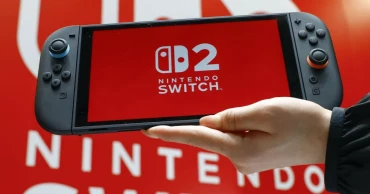
Nintendo's Switch 2 console sells over 3.5m units in 4 days
Nintendo Co on Wednesday said that it sold over 3.5 million units of its Switch 2 console worldwide in just four days after its release last Thursday, the fastest pace for any hardware of the company.
Sales of Switch 2 were about double that of the original Switch console, released in 2017 in the first four days, according to the Kyoto-based gaming giant.
Microsoft Unveils Majorana 1: A Breakthrough in Quantum Computing
Kyodo News reported that Nintendo plans to sell 15 million units of Switch 2, its first new gaming console in over eight years, in the current fiscal year through March 2026 worldwide. Strong pre-order demand has sparked optimism that the device would boost the company's fortunes.
The new console includes new features such as screen sharing and voice chat via a built-in microphone.
It also features a larger screen with roughly twice the pixel count of the original Switch and supports 4K output on televisions.
1 year ago
Tech Tip: How to protect your 23andMe genetic data
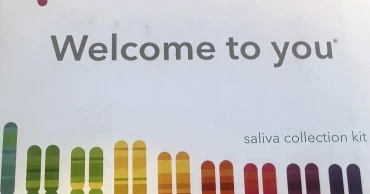
Remember 23andMe—the company that let you explore your ancestry through a saliva-based DNA test? Since its founding in 2006, it also ventured into health research and drug development. However, it struggled financially and filed for Chapter 11 bankruptcy in March, sparking concerns about the security of customers’ sensitive genetic data.
Now, 27 U.S. states and the District of Columbia have filed a lawsuit in bankruptcy court, seeking to prevent the sale of 23andMe’s genetic data archive without user consent. A biotech firm is currently looking to acquire the company, pending court approval.
What Happened to 23andMe?
The San Francisco-based firm filed for bankruptcy protection in March. Its co-founder and longtime CEO Anne Wojcicki stepped down to potentially bid for the company as it looks to sell off most of its assets through court-supervised restructuring. 23andMe also aims to cut costs by reducing its real estate footprint, including leases in San Francisco and Sunnyvale, while continuing operations during the sale process.
Is Your DNA Data Still Safe?
23andMe has stated that customer privacy and data protection are central to any sale agreement, and any buyer must adhere to relevant privacy laws. However, experts caution that the U.S. lacks a federal privacy law, and only about 20 states have their own regulations.
Security risks are also heightened during bankruptcy. In 2023, a breach at 23andMe exposed the genetic data of nearly 7 million users. The company settled a class-action lawsuit for $30 million over its failure to protect user data.
Disney to pay $439m to take full control of streaming service Hulu
Genetic data is particularly sensitive, as it’s uniquely tied to you. “You can change your email if it’s compromised, but your DNA is permanent,” said David Choffnes, a cybersecurity professor at Northeastern University.
While 23andMe claims it doesn’t share information with insurers, employers, or law enforcement (without a legal order), experts warn that the company can still use data for targeted advertising. Even anonymized genetic data can potentially be re-identified by third parties.
How to Delete Your Data from 23andMe
California Attorney General Rob Bonta previously alerted consumers of their right to delete their data, especially in light of the company’s financial troubles.
To delete your data:
Log in to your 23andMe account.Go to Settings > scroll to “23andMe Data” > click “View”.Download your data if desired.Proceed to the “Delete Data” section and click “Permanently Delete Data.”Confirm the request via the email sent to you.If you’ve given consent to store your saliva sample, you can request its destruction under “Preferences.” You can also withdraw consent for your genetic data to be used in third-party research under “Research and Product Consents.”
1 year ago

Disney to pay $439m to take full control of streaming service Hulu
Disney will pay Comcast's NBCUniversal nearly $439 million for its stake in Hulu, taking full control of the streaming service.
The move closes out an appraisal process that's dragged on for a few years. Disney said in November 2023 that it was acquiring a 33 per cent stake in Hulu from Comcast for at least $8.6 billion. That amount reflected Hulu's guaranteed floor value of $27.5 billion, according to a regulatory filing.
Disney has run Hulu since 2019, when Comcast ceded its authority to Disney and effectively became a silent partner, reports AP.
Hulu began in 2007 and quickly evolved into as a service backed by entertainment conglomerates who hoped to stave off the internet with an online platform for their own TV shows. Disney joined in 2009, planning to offer shows from ABC, ESPN and the Disney Channel. A decade later, Disney gained majority control of the business when it acquired 21st Century Fox.
Disney said in a regulatory filing on Monday that its appraiser arrived at a valuation below the guaranteed floor value during the initial phase of the appraisal process, while NBCUniversal’s appraiser arrived at a valuation substantially in excess of the guaranteed floor value.
Global outage disrupts ChatGPT services, users report widespread access issues
A third appraiser was brought in and concluded that The Walt Disney Co will pay $438.7 million for the Hulu stake.
“We are pleased this is finally resolved. We have had a productive partnership with NBCUniversal, and we wish them the best of luck," Disney CEO Bob Iger said in a statement. "Completing the Hulu acquisition paves the way for a deeper and more seamless integration of Hulu’s general entertainment content with Disney+ and, soon, with ESPN’s direct-to-consumer product, providing an unrivaled value proposition for consumers.”
The transaction is anticipated to close by July 24. It's not expected to impact Disney's fiscal 2025 adjusted earnings forecast.
Shares of Disney rose slightly in morning trading on Tuesday.
1 year ago
Global outage disrupts ChatGPT services, users report widespread access issues
OpenAI’s AI chatbot ChatGPT experienced a global outage on Tuesday afternoon, leaving users across major regions—including India, US, and UK, unable to access the service.
The disruption began around 3pm in Bangladesh time and peaked shortly after 3:30pm. According to Downdetector, India logged nearly 800 complaints, while the US and UK reported close to 1,100 and over 1,450 issues respectively.
The majority of users, around 93 per cent, reported that ChatGPT simply stopped responding. Others faced issues such as login loops, blank chat windows, and unexpected logouts.
Common error messages included: “Hmm…something seems to have gone wrong” and “A network error occurred. Please check your connection and try again.”
In India, 88 per cent of complaints were about the chatbot not responding, with eight per cent related to the mobile app and three per cent tied to API failures.
OpenAI acknowledged the outage on its official system status page, stating, “Some users are experiencing elevated error rates and latency across the listed services. We are continuing to investigate this issue.”
New York Times signs first AI content licensing deal with Amazon
The company later confirmed that the disruption also impacted its video creation tool, Sora, and GPT API services, resulting in degraded performance.
However, OpenAI has yet to provide a specific timeline for full restoration of services.
As the outage persisted, users turned to social media platforms like X (formerly Twitter) to share their frustration. Screenshots of glitches and error messages circulated widely, accompanied by memes and concerns over interrupted work.
This marks one of the more significant service disruptions for ChatGPT in recent months.With inputs from Indian Media
1 year ago
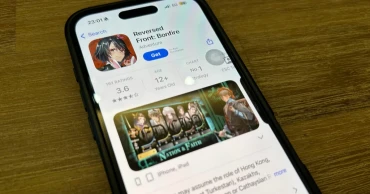
Hong Kong police accuse mobile game app of promoting armed revolution
Hong Kong police on Tuesday accused a mobile game application of advocating armed revolution and promoting secessionist agendas, saying that those who publish it or share it with others online may risk violating national security laws.
The announcement — the first to publicly denounce a gaming app — indicates that authorities are widening the crackdown that has followed anti-government protests in 2019. Authorities have crushed or silenced many dissenting voices through prosecutions under the 2020 national security law imposed by Beijing and a similar, homegrown law enacted last year.
In a statement, police warned residents against downloading the “Reversed Front: Bonfire" application, saying those with the app installed might be seen as possessing a publication with a seditious intention.
They also warned people against providing financial assistance to the application developer, including making in-app purchases.
“'Reversed Front: Bonfire' was released under the guise of a game with the aim of promoting secessionist agendas such as ‘Taiwan independence’ and ‘Hong Kong independence,’ advocating armed revolution and the overthrow of the fundamental system of the People’s Republic of China,” police said.
The game application was developed by ESC Taiwan, which did not immediately respond to The Associated Press' request for comment. On the application's Facebook page, the developer posted about surging searches for the game name and a Hong Kong broadcaster’s news report about Tuesday’s development.
Apple unveils software redesign while reeling from AI missteps
According to the application’s introduction, players can assume the role of Hong Kong, Tibet, Uyghur, Taiwan or Cathaysian Rebel factions, among others, to overthrow the communist regime. They may also choose to lead the communists to defeat all enemies.
The game’s website says it “is a work of nonfiction. Any similarity to actual agencies, policies or ethnic groups of the PRC in this game is intentional.”
On Tuesday night, the app was still available on Apple's App Store but not on the Google Play store. The game publisher last month said Google Play had taken the app down because it did not prohibit users from adopting hateful language in naming.
Apple, Google and Meta have not immediately commented.
After playing the game for about three months, Kuo Hao Fu in Taiwan said he found that its content uses a humorous approach to describe serious political issues. Fu disagreed with the police accusations, saying players can also choose to be part of the force representing China.
“The Hong Kong police's actions demonstrate how Hong Kong's democratic freedoms have been controlled by the Chinese Communist Party,” he said. “When even this level cannot be tolerated, it completely destroys creative freedom in gaming.”
China considers Taiwan its own territory, to be brought under its control by force if necessary. Many Taiwanese in the self-ruled island showed concerns about Hong Kong's declining freedoms under Beijing's grip.
The Beijing and Hong Kong governments insist the city's national security laws were necessary to return stability to the city following the protests.
1 year ago
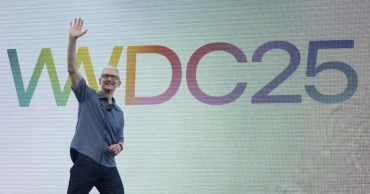
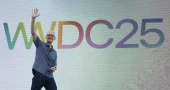
Apple unveils software redesign while reeling from AI missteps
After stumbling out of the starting gate in Big Tech’s pivotal race to capitalize on artificial intelligence, Apple tried to regain its footing Monday during an annual developers conference that focused mostly on incremental advances and cosmetic changes in its technology.
The presummer rite, which attracted thousands of developers from nearly 60 countries to Apple's Silicon Valley headquarters, was more subdued than the feverish anticipation that surrounded the event during the previous two years.
Apple highlighted plans for more AI tools designed to simplify people's lives and make its products even more intuitive while also providing an early glimpse at the biggest redesign of its iPhone software in a decade. In doing so, Apple executives refrained from issuing bold promises of breakthroughs that punctuated recent conferences, prompting CFRA analyst Angelo Zino to deride the event as a “dud” in a research note.
In 2023, Apple unveiled a mixed-reality headset that has been little more than a niche product, and last year WWDC trumpeted its first major foray into the AI craze with an array of new features highlighted by the promise of a smarter and more versatile version of its virtual assistant, Siri — a goal that has hasn't been achieved yet.
“This work needed more time to reach our high-quality bar,” Craig Federighi, Apple’s top software executive, said Monday at the outset of the conference. The company didn't provide a precise timetable for the Siri's AI upgrade to be finished but indicated it won't happen until next year, at the earliest.
Trump tariff threats on EU, Apple, send US futures and global markets skidding
"The silence surrounding Siri was deafening," said Forrester Research analyst Dipanjan Chatterjee said. “No amount of text corrections or cute emojis can fill the yawning void of an intuitive, interactive AI experience that we know Siri will be capable of when ready. We just don’t know when that will happen. The end of the Siri runway is coming up fast, and Apple needs to lift off.”
The showcase unfolded amid nagging questions about whether Apple has lost some of the mystique and innovative drive that turned it into a tech trendsetter during its nearly 50-year history.
Instead of making a big splash as it did with the Vision Pro headset and its AI suite, Apple took a mostly low-key approach that emphasized its effort to spruce up the look of its software with a new design called “Liquid Glass" while also unveiling a new hub for its video games and new features like a “Workout Buddy” to help manage physical fitness.
Apple executives promised to make its software more compatible with the increasingly sophisticated computer chips that have been powering its products while also making it easier to toggle between the iPhone, iPad, and Mac.
“Our product experience has become even more seamless and enjoyable,” Apple CEO Tim Cook told the crowd as the 90-minute showcase wrapped up.
IDC analyst Francisco Jeronimo said Apple seemed to be largely using Monday's conference to demonstrate the company still has a blueprint for success in AI, even if it's going to take longer to realize the vision that was presented a year ago.
“This year’s event was not about disruptive innovation, but rather careful calibration, platform refinement and developer enablement —positioning itself for future moves rather than unveiling game-changing technologies,” Jeronimo said.
Besides redesigning its software. Apple will switch to a method that automakers have used to telegraph their latest car models by linking them to the year after they first arrive at dealerships. That means the next version of the iPhone operating system due out this autumn will be known as iOS 26 instead of iOS 19 — as it would be under the previous naming approach that has been used since the device's 2007 debut.
The iOS 26 upgrade is expected to be released in September around the same time Apple traditionally rolls out the next iPhone models.
Trump threatens 25% import tax on Apple unless iPhones made in US
In an early sign that AI wasn't going to be a focal point of this year's conference, Apple opened the proceedings with a short video clip featuring Federighi speeding around a track in a Formula 1 race car. Although it was meant to promote the June 27 release of the Apple film, “F1” starring Brad Pitt, the segment could also be viewed as an unintentional analogy to the company's attempt to catch up to the rest of the pack in AI technology.
While some of the new AI tricks compatible with the latest iPhones began rolling out late last year as part of free software updates, the delays in a souped-up Siri became so glaring that the chastened company stopped promoting it in its marketing campaigns earlier this year.
While Apple has been struggling to make AI that meets its standards, the gap separating it from other tech powerhouses is widening. Google keeps packing more AI into its Pixel smartphone lineup while introducing more of the technology into its search engine to dramatically change the way it works. Samsung, Apple's biggest smartphone rival, is also leaning heavily into AI. Meanwhile, ChatGPT recently struck a deal that will bring former Apple design guru Jony Ive into the fold to work on a new device expected to compete against the iPhone.
Besides grappling with innovation challenges, Apple also faces regulatory threats that could siphon away billions of dollars in revenue that help finance its research and development. A federal judge is currently weighing whether proposed countermeasures to Google's illegal monopoly in search should include a ban on long-running deals worth $20 billion annually to Apple while another federal judge recently banned the company from collecting commissions on in-app transactions processed outside its once-exclusive payment system.
On top of all that, Apple has been caught in the crosshairs of President Donald Trump's trade war with China, a key manufacturing hub for the Cupertino, California, company. Cook successfully persuaded Trump to exempt the iPhone from tariffs during the president's first administration, but he has had less success during Trump's second term, which seems more determined to prod Apple to make its products in the U.S.
EU fines Apple 500 million euros, Meta 200 million in digital cases
The multidimensional gauntlet facing Apple is spooking investors, causing the company's stock price to plunge by 20% so far this year — a decline that has erased about $750 billion in shareholder wealth. After beginning the year as the most valuable company in the world, Apple now ranks third behind longtime rival Microsoft, another AI leader, and AI chipmaker Nvidia.
Apple's shares closed down by more than 1% on Monday — an early indication the company's latest announcements didn't inspire investors.
1 year ago

Fresh tensions surface ahead of US-China trade talks in London
As the U.S. and China prepare for trade negotiations in London this week, new disagreements have surfaced, threatening to destabilize a fragile truce on tariffs reached just weeks ago.
In May, the two countries agreed in Geneva to a 90-day pause on most of the high tariffs—over 100%—they had imposed during their ongoing trade war, which had stoked fears of a global economic slowdown.
Since the truce, tensions have re-emerged over key issues including semiconductor technology, the export of rare earth minerals, and U.S. visa policies for Chinese students.
President Donald Trump and Chinese President Xi Jinping spoke by phone last Thursday in an attempt to smooth over the tensions. The following day, Trump confirmed on social media that trade talks would resume Monday in London.
Technology Disputes Reignite Tensions
Just a day after the Geneva deal was announced on May 12, new friction arose. The U.S. Commerce Department issued guidance warning that AI chips from Huawei, a major Chinese tech company, could breach U.S. export restrictions—alleging the chips were likely developed using American technology despite export bans.
Beijing reacted strongly, accusing the U.S. of unfairly restricting access to vital semiconductor technologies.
“The Chinese side urges the U.S. to correct its wrongful practices immediately,” a spokesperson from China’s Commerce Ministry said.
While U.S. Commerce Secretary Howard Lutnick did not attend the Geneva talks, he is set to participate in the London discussions, signaling a potential openness to hearing China’s complaints about export regulations.
China Loosens Grip on Rare Earth Exports
China retains a significant advantage in rare earth production—materials critical for manufacturing everything from cars to military equipment. In April, China began requiring special export licenses for seven types of rare earths, sparking concern among global automakers over potential shortages.
Trump criticized China online on May 30, accusing it of breaking the Geneva agreement—though he did not reference rare earths directly.
In response to international pressure, including from European businesses, China signaled over the weekend that it was easing some restrictions. A Commerce Ministry statement said it had approved several export applications and would continue processing compliant requests.
This move highlights China's leverage in trade disputes, particularly when it comes to strategic resources.
Student Visa Policy Fuels Further Strain
Although not a typical subject of trade talks, the U.S. plan to cancel some Chinese student visas has become another flashpoint.
China's Commerce Ministry responded to criticism over its compliance with the Geneva agreement by pointing to U.S. actions—including the AI chip export guidance, a halt on selling chip-design software to China, and the visa revocation policy—as evidence of the U.S. undermining the deal.
“The United States has unilaterally created new trade and economic frictions,” the ministry said in a statement.
U.S. Secretary of State Marco Rubio confirmed on May 28 that the U.S. would begin aggressively revoking visas for Chinese students, particularly those with ties to the Chinese Communist Party or studying in sensitive fields.
During the 2023–24 academic year, more than 270,000 Chinese students were enrolled in U.S. institutions.
1 year ago
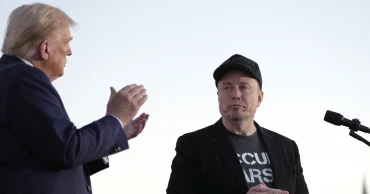
Musk risks losing billions as tensions with Trump escalate
The clash between the world’s richest man and one of its most influential political figures could cost Elon Musk billions, with major implications for his companies Tesla, SpaceX, Starlink, and social media platform X.
The growing feud with Donald Trump could lead to heightened regulatory scrutiny on Tesla’s self-driving ambitions, reduced NASA contracts for SpaceX, fewer international Starlink deals, and a renewed exodus of advertisers from X. While the final impact depends on how far Trump takes the dispute, analysts warn that Musk is especially vulnerable due to his companies’ heavy reliance on government support.
Auto industry expert Sam Abuelsamid commented wryly, “Trump doesn’t have a history of retaliating against rivals, so maybe this just blows over.” But he quickly shifted tone, pointing out that Musk's empire “depends heavily on government support,” leaving it exposed.
Although both sides could suffer in a prolonged standoff, Musk appears to have more at stake.
Tesla’s Robotaxi Rollout at Risk
The fallout comes just ahead of Tesla's much-anticipated autonomous taxi test in Austin, Texas — a critical move as electric vehicle sales slow in many markets. Trump could influence federal regulators to intensify oversight just as Tesla needs momentum.
Even prior to Thursday’s public spat, the National Highway Traffic Safety Administration (NHTSA) requested data on how Tesla’s self-driving technology performs in low-visibility conditions. This followed a probe into 2.4 million vehicles with Tesla’s Full Self-Driving software after incidents including a pedestrian fatality. NHTSA confirmed the investigation is ongoing and reaffirmed its commitment to road safety.
Republicans urge Donald Trump and Elon Musk to end their feud
Meanwhile, the Department of Justice is also examining Tesla vehicle safety, though it has not provided recent updates.
Investor enthusiasm around Tesla’s robotaxis had lifted the stock by 50% in recent weeks, but the feud with Trump triggered a 14% drop on Thursday. Shares rebounded 4% on Friday.
“Tesla’s rally was largely driven by excitement over robotaxis,” said Morningstar analyst Seth Goldstein. “This Trump-Musk conflict could put a damper on that.”
Carbon Credit Sales in Jeopardy
Tesla’s lucrative carbon credit business is another area at risk. While often overlooked, this revenue stream surged 33% to $595 million in Q1 — despite falling overall earnings.
However, as Musk and Trump exchanged barbs on Thursday, Republican lawmakers added provisions to Trump’s proposed budget to remove fines for fuel-inefficient cars. That change could reduce demand for Tesla’s regulatory credits, which are sold to automakers needing to meet emissions standards.
Although Musk has minimized the credits' importance, any reduction would still hurt, especially amid ongoing Tesla boycotts tied to his past alignment with Trump.
Potential for Sales Revival — or More Trouble
Musk’s political leanings have alienated environmentally conscious consumers, contributing to Tesla’s sales challenges. If his break with Trump is perceived as genuine, some buyers may return — though this remains uncertain.
Previously, analysts speculated Tesla could grow its market in conservative “red” counties, but sentiment has since shifted.
“There’s more uncertainty than clarity after Thursday,” said TD Cowen analyst Itay Michaeli, who recently lowered his Tesla price target from $388 to $330. The stock closed Friday at $300.
Tesla has not issued a statement on the situation.
SpaceX and NASA: A High-Stakes Standoff
Trump’s threat to slash government funding for SpaceX is especially significant. The $350 billion private company, central to NASA’s space missions, could be impacted if contracts are cut.
SpaceX currently operates the only U.S. spacecraft — the Dragon capsule — capable of sending astronauts to and from the International Space Station. Losing this capability would leave NASA with a politically difficult fallback: relying on Russia’s Soyuz capsules.
Musk responded provocatively, suggesting SpaceX might decommission Dragon, though he later appeared to walk back the comment in a follow-up post on X.
Starlink’s Global Business in the Spotlight
Musk warns he may shut SpaceX Capsule vital to NASA
Starlink, SpaceX’s satellite internet division, may also face repercussions. Its recent wins — including service approvals in Saudi Arabia, Bangladesh, Pakistan, India, and other countries — may have benefited from Musk’s previously close relationship with Trump.
India, where 40% of the population lacks internet access, approved a major Starlink license on Friday. Whether politics played a role in these deals remains unclear.
Ad Recovery on X Could Stall
X, the platform formerly known as Twitter, has seen advertisers slowly return after initially fleeing due to Musk’s tolerance for conspiracy content. Some of that recovery may have been driven by concerns over alienating conservative audiences.
Musk has labeled the advertiser pullout an “illegal boycott” and sued several companies. The Trump administration even launched a Federal Trade Commission probe into possible coordination.
Now, if Trump distances himself from Musk, it could make X a liability again for brands.
“There’s a real risk that X could become toxic again for advertisers,” said Cornell political scientist Sarah Kreps. “But a mass exit isn’t guaranteed — it all depends on how serious and prolonged the conflict becomes.”
Source: With inputs from news agency
1 year ago
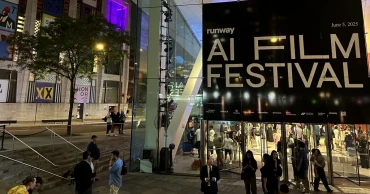
Film festival showcases what artificial intelligence can do on big screen
Artificial intelligence 's use in movie making is exploding. And a young film festival, now in its junior year, is showcasing what this technology can do on screen today.
The annual AI Film Festival organized by Runway, a company that specializes in AI-generated video, kicked off in New York Thursday night with ten short films from around the world making their debut on the big screen.
“Three years ago, this was such a crazy idea,” Runway CEO Cristóbal Valenzuela told the crowd. “Today, millions of people are making billions of videos using tools we only dreamed of.”
The film festival itself has grown significantly since its 2023 debut. About 300 people submitted films when it first began, Valenzuela said, compared to about 6,000 submissions received this year.
The one and half-hour lineup stretched across a range of creative styles and ambitious themes — with Jacob Alder's “ Total Pixel Space " taking home the festival's top prize. The 9-minute and 28-second film questions how many possible images — real or not — exist in the digital space, and uses math to calculate a colossal number. A stunning series of images, ranging from the familiar life moments to those that completely bend reality, gives viewers a glimpse of what's out there.
Meanwhile, Andrew Salter's “Jailbird," which snagged second place, chronicles a chicken's journey — from the bird's perspective — to a human prison in the United Kingdom to take part in a joint-rehabilitation program. And “One,” a futuristic story by Ricardo Villavicencio and Edward Saatchi about interplanetary travel followed in third place.
The 10 films shown were finalists selected from thousands submitted to Runway's AI Film Festival this year. The shorts will also be shown at screenings held in Los Angeles and Paris next week.
Amazon commits to stepping up fake-review fight after UK watchdog's investigation
How AI is used and executed is a factor judges evaluate when determining festival winners. But not every film entered was made entirely using AI. While submission criteria requires each movie include the use of AI-generated video, there's no set threshold, meaning some films can take a more “mixed media” approach — such as combining live shots of actors or real-life images and sounds with AI-generated elements.
“We’re trying to encourage people to explore and experiment with it,” Valenzuela said in an interview prior to Thursday's screening.
Creating a coherent film using generative AI is no easy feat. It can take a long list of directions and numerous, detailed prompts to get even a short scene to make sense and look consistent. Still, the scope of what this kind of technology can do has grown significantly since Runway's first AI Film Festival in 2023 — and Valenzuela says that's reflected in today's submissions. While there are still limits, AI-generated video is becoming more and more life-like and realistic.
Runway encourages the use of its own AI tools for films entered into its festival, but creators are also allowed to turn to other resources and tools as they put together the films — and across the industry, tools that use AI to create videos spanning from text, image and/or audio prompts have rapidly improved over recent years, while becoming increasingly available.
“The way (this technology) has lived within film and media culture, and pop culture, has really accelerated,” said Joshua Glick, an associate professor of film and electronic arts at Bard College.
He adds that Runway's film fest, which is among a handful of showcases aimed at spotlighting AI's creative capabilities, arrives as companies in this space are searching for heightened “legitimacy and recognition” for the tools they are creating — with aims to cement partnerships in Hollywood as a result.
AI's presence in Hollywood is already far-reaching, and perhaps more expansive than many moviegoers realize. Beyond “headline-grabbing” (and at times controversial) applications that big-budget films have done to “de-age” actors or create eye-catching stunts, Glick notes, this technology is often incorporated in an array of post-production editing, digital touch-ups and additional behind-the-scenes work like sorting footage.
1 year ago
Amazon commits to stepping up fake-review fight after UK watchdog's investigation
Amazon has pledged to beef up fight against fake reviews, Britain's competition regulator said Friday after an investigation into whether big online platforms are doing enough to crack down on phony online ratings for products and services.
The Competition and Markets Authority said it secured the “undertakings” from Amazon, after getting a similar agreement earlier this year from Google to clamp down on rogue reviews plaguing the internet.
According to AP, the company promised to strengthen its existing systems for fighting fake reviews. It will also tackle catalog abuse, which involves sellers boosting star ratings for a product by hijacking good reviews from a completely different one.
As an example, a shopper might come across a pair of headphones with a five-star rating. But, after looking closer, most of the reviews are for a mobile phone charger, the watchdog said.
As part of its commitments, Amazon has agreed to sanction anyone caught using these tactics. Businesses could be banned from selling on the Amazon website and users posting fake reviews could be banned from posting them, the CMA said.
Reddit files case against Anthropic over alleged unauthorized use of user Comments to train AI
The watchdog's chief executive, Sarah Cardell, said that so many people shop on Amazon and “star ratings and reviews have a huge impact on their choices.”
Amazon's pledges “mean people can make decisions with greater confidence – knowing that those who seek to pull the wool over their eyes will be swiftly dealt with.”
The pledges apply to Amazon's UK website. The company said in a statement that it has zero tolerance for fake reviews and that the measures build on Amazon's existing efforts to tackle them.
“We invest significant resources to proactively stop fake reviews ever appearing on our store, including on expert human investigators and machine learning models that analyse thousands of data points to detect risk," the company said.
The CMA opened its investigations into Amazon and Google in 2021 to examine whether the two companies broke UK consumer law by failing to protect shoppers. It began looking into phony reviews on some big websites amid the boom in online shopping fueled by the coronavirus pandemic.
1 year ago