tech

US lifts restrictions on Anthropic's AI models after cybersecurity review
The Trump administration has lifted restrictions on artificial intelligence company Anthropic's latest Claude AI models after a temporary ban prompted by cybersecurity concerns.
Anthropic said Tuesday that its Claude Fable 5 model is once again widely available. The company is also restoring access to its most advanced model, Mythos 5, but only for a limited number of US-based organisations approved by the federal government.
The US Commerce Department had blocked foreign nationals from accessing both AI models on June 12. Anthropic said the decision forced it to suspend the products for all users just days after launching them.
In a blog post, the San Francisco-based company said the government's concerns stemmed from findings by cybersecurity researchers at Amazon, its main cloud computing partner.
According to Anthropic, the researchers discovered a way to bypass the safety protections built into Claude Fable 5, allowing the system to identify and potentially exploit software vulnerabilities.
US officials have become increasingly cautious after Anthropic warned earlier this year that its Mythos AI model was highly capable of detecting software weaknesses that could be misused by hackers to target critical computer systems.
Meanwhile, Anthropic's main competitor, OpenAI, announced on Friday that it is also limiting the release of its latest AI model at the request of the Trump administration.
OpenAI said its new model, GPT-5.6 Sol, will initially be available only to a small group of government-approved users for a temporary period.
Last month, President Donald Trump signed an executive order creating a framework for the federal government to review the national security risks of the most advanced AI systems for up to 30 days before they are released publicly.
Although participation in the review process is voluntary for AI developers, the administration has yet to fully implement the new framework.
3 months ago

Neon acquires OpenAI drama 'Artificial' after Amazon drops film
Independent film distributor Neon has acquired "Artificial," director Luca Guadagnino's upcoming drama about OpenAI CEO Sam Altman, after Amazon MGM Studios decided not to release the project.
Neon announced Tuesday that it secured the worldwide rights to the film following a competitive bidding process. The company plans to release the movie later this year and position it as an awards contender during the upcoming Oscar season.
The film, with an estimated budget of $40 million, stars Andrew Garfield as Sam Altman and follows the events surrounding Altman's brief dismissal and reinstatement as OpenAI's chief executive in 2023. The cast also includes Monica Barbaro, Yura Borisov and Academy Award winner Mark Rylance, while Ike Barinholtz portrays Elon Musk.
Amazon MGM unexpectedly dropped the nearly completed film earlier this month, only a few months after Amazon announced a $50 billion investment in OpenAI through a broad, multiyear partnership signed in late February.
At the time, Amazon MGM said the project would be "better served" by another studio and subsequently put the film up for sale.
Neon has built a strong reputation for releasing critically acclaimed films, including Oscar winners Parasite and Anora. The distributor has also backed each of the last seven Palme d'Or winners at the Cannes Film Festival.
The company did not disclose how much it paid to acquire the worldwide distribution rights.
In a statement, Neon said the deal reflects its commitment to working with visionary filmmakers and bringing ambitious films to audiences around the world.
3 months ago

Chinese vice premier calls for stronger link between innovation and industry
Chinese Vice Premier Zhang Guoqing has called for closer integration between scientific and technological innovation and industrial development, saying stronger quality management is essential to boost the supply of high-quality products and services.
Zhang, who is also a member of the Political Bureau of the Communist Party of China Central Committee, made the remarks during a visit to east China's Zhejiang Province from Thursday to Saturday.
He said China should continue creating new drivers of economic growth and strengthen its competitive advantages to support the country's steady economic recovery.
During his tour of the cities of Hangzhou and Yiwu, Zhang visited companies working in sectors such as brain-computer interface technology, robotics and textiles.
He described enterprises as the main force behind innovation and said their role should be further strengthened. He urged companies to invest more in basic research, pursue cutting-edge innovation and speed up breakthroughs in key technologies.
Zhang also called for expanding the country's AI Plus Initiative by promoting practical applications of artificial intelligence. He said faster development of industry-specific AI models and intelligent agents would help modernize manufacturing, improve productivity and support the transformation of traditional industries into smarter, greener and more integrated operations.
During a visit to the Yiwu International Trade City, Zhang reviewed quality control, brand development and regulation of e-commerce platforms.
He urged businesses to put quality first, build stronger brands through innovation and develop long-term brand strategies. He also called for stricter action against trademark infringement and counterfeit products in line with the law.
The vice premier said platform companies should play a greater role in promoting innovation, supporting economic growth, creating jobs and improving China's competitiveness in global markets while increasing the supply of high-quality products and services.
3 months ago
Singapore launches online safety commission to combat digital abuse
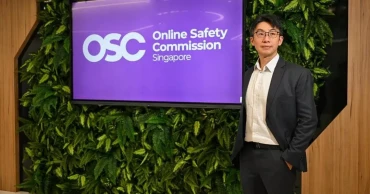
Singapore on Monday launched its new Online Safety Commission, providing victims of online abuse with a dedicated channel to seek the removal of harmful content, access support services and pursue civil remedies.
According to a joint statement issued on Sunday by the Ministry of Digital Development and Information, the Ministry of Law and the commission, the new body will initially deal with five types of harmful online behaviour. These include sexual harassment, doxxing, cyberstalking, the non-consensual sharing of intimate images, and image-based child sexual abuse.
Authorities said more categories of online harm will be added in later stages.
Victims of online harassment and cyberstalking are expected to first report the harmful content to the online platform. If the platform does not respond quickly or fails to take appropriate action, they can then file a complaint with the commission.
However, cases involving doxxing, intimate image abuse and image-based child abuse can be reported directly to the commission without first contacting the platform.
The commission has the authority to order people who posted harmful content, administrators of online groups or pages, and digital platforms hosting such content to take corrective action if there is evidence that online harm has occurred. This may include removing content, blocking access to it or restricting user accounts. Failure to comply with these orders is considered a criminal offence.
If online platforms or administrators ignore the commission's directives, internet service providers may be instructed to block access to the offending websites or online services in Singapore. App stores may also be ordered to stop offering apps operated by non-compliant platforms.
The commission will also help victims identify anonymous individuals responsible for online abuse when their identities are unknown.
In addition, it will work with community organisations to provide counselling and other support services for victims of digital abuse.
3 months ago

China’s ‘artificial sun’ project reaches major engineering milestone
China's "artificial sun" project has achieved a major engineering breakthrough with the successful development and testing of two key superconducting magnet systems for future fusion reactors.
The Institute of Plasma Physics under the Chinese Academy of Sciences announced on Saturday that it had completed the development, acceptance and full-performance testing of a toroidal-field superconducting magnet and a high-temperature superconducting central solenoid coil.
Scientists said all of the project's core technologies were developed in China, marking a significant step forward in the country's fusion energy research.
According to the institute, the newly developed systems rank among the world's most advanced in terms of overall performance and are expected to play a vital role in future fusion reactors.
The achievement is part of China's Experimental Advanced Superconducting Tokamak (EAST), widely known as the country's "artificial sun" project.
Fusion energy aims to replicate the process that powers the sun by producing clean, safe and nearly limitless energy. Superconducting magnets are among the most important components of fusion reactors, as they generate the powerful magnetic fields needed to confine extremely hot plasma during the fusion process.
Researchers said the successful testing of the two magnet systems represents an important milestone in advancing China's long-term goal of developing practical fusion power.
4 months ago
BG Interactive showcases managed cybersecurity solutions at Phoenix Summit
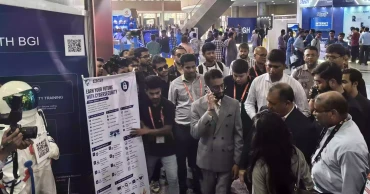
BG Interactive Ltd showcased its next-generation managed cybersecurity services, Security Operations Center (SOC) capabilities and cybersecurity workforce development initiatives at Phoenix Summit Dhaka 2026, highlighting its commitment to strengthening Bangladesh’s cyber resilience amid the country’s accelerating digital transformation.
As a sponsor of one of the country’s leading cybersecurity events, the company presented its Cyber Command Center (CCC) and a range of managed security services aimed at helping organisations strengthen cyber resilience while reducing operational costs.
A notable moment at the summit was the visit of Information and Broadcasting Minister Zahir Uddin Swapon to the company's booth on Friday. During the visit, the minister commended BG Interactive’s initiatives and encouraged its efforts to strengthen Bangladesh's cybersecurity landscape.
At Booth No. 8, BG Interactive demonstrated its flagship Security Operations Center as a Service (SOCaaS), a fully managed 24/7 cybersecurity monitoring and incident response service designed to help organisations avoid the substantial investment required to establish and operate their own Security Operations Centers.
According to the company, organisations using the service can significantly reduce capital expenditure while benefiting from continuous threat monitoring, real-time incident detection, rapid response, threat intelligence and compliance reporting delivered by cybersecurity specialists.
BG Interactive also offers end-to-end SOC deployment and implementation services for organizations seeking dedicated on-premise Security Operations Centers, covering architecture design, technology selection, implementation, customised operational playbooks, operational management and continuous optimization.
The company said its cybersecurity portfolio includes Vulnerability Assessment and Penetration Testing (VAPT), digital forensics, cybersecurity advisory and consultancy, cybersecurity training, and ISO and IT auditing services.
Its ISO consulting services support organisations in achieving and maintaining internationally recognized certifications, including ISO 27001:2022, through governance assessments, risk and compliance reviews, application security audits, SOC maturity assessments, cloud security audits and disaster recovery evaluations.
As part of its workforce development efforts, BG Interactive also provides cybersecurity awareness and technical training on phishing defence, secure software development, cloud security, SIEM operations, incident response, malware analysis, threat hunting and role-based security training for IT professionals, developers, HR personnel, finance teams and senior executives.
To engage students and technology enthusiasts, the company introduced "Cyber Hunt," an interactive cybersecurity competition where participants solve cyber challenges for a chance to win prizes, including a smartphone.
4 months ago

Trump administration restricts access to advanced AI models
OpenAI and Anthropic have limited access to their latest artificial intelligence models following cybersecurity reviews by the administration of US President Donald Trump, reflecting increased government scrutiny of advanced AI systems.
OpenAI said Friday its new model, GPT-5.6 Sol, will initially be available only to a small group of customers approved by the Trump administration. The company described the move as temporary, saying it expects broader public access in the coming weeks.
Australia plans tougher enforcement of social media ban for under-16s
Hours later, Anthropic announced that the administration had approved a limited release of its Mythos 5 cybersecurity model, two weeks after the Commerce Department restricted its deployment. The company said the model would initially be available only to selected cyber defenders and infrastructure providers.
The White House said it is working with leading AI developers to address national security risks posed by increasingly powerful AI technologies. Earlier this month, Trump signed an executive order creating a framework for reviewing advanced AI systems for up to 30 days before public release.
The policy has drawn criticism from lawmakers and cybersecurity experts, who warned that government control over AI releases could hurt US innovation and competitiveness. Both OpenAI and Anthropic are also exploring public stock market listings as regulatory oversight of the sector continues to expand.
4 months ago

Australia plans tougher enforcement of social media ban for under-16s
Australia is preparing to tighten its laws banning children under the age of 16 from using social media, as the government admits many young users continue to access major platforms despite the restrictions.
Prime Minister Anthony Albanese said the government is reviewing whether the existing law, which took effect on Dec. 10 last year, needs to be strengthened and whether regulators have sufficient authority to enforce it effectively.
"We're working on that as a priority because this is something that other generations didn't have to deal with, which is why it's complex," Albanese told Parliament on Thursday.
Speaking to the Australian Broadcasting Corp. on Friday, he said the government was examining whether the legislation was "as strong as possible" and whether eSafety Commissioner Julie Inman Grant had all the powers needed to enforce the rules.
Australia became the first country to introduce a nationwide ban preventing children under 16 from holding accounts on social media platforms such as Facebook, Instagram and YouTube. Since then, several other countries have introduced or proposed similar restrictions.
Britain last week announced plans to stop children under 16 from accessing several social media platforms to reduce exposure to harmful content and excessive screen time.
Canada, Brazil and Indonesia have also introduced age-based rules or proposed legislation for children's social media access, while France, Spain, Denmark, Thailand and South Korea are considering similar measures.
In April, eSafety Commissioner Julie Inman Grant said she was considering legal action against Facebook, Instagram, Snapchat, TikTok and YouTube, claiming the companies had not done enough to prevent underage Australians from using their platforms.
Those platforms, along with X, Kick, Reddit, Threads and Twitch, face fines of up to 49.5 million Australian dollars (US$34 million) if they fail to take reasonable steps to remove accounts belonging to children under 16.
Experts say recent data suggests the current restrictions are not working as intended.
Lisa Given, an information sciences expert at Melbourne's RMIT University, said the government's latest move appeared to be driven by growing evidence that many children continue to use restricted platforms.
Data released by the eSafety Commissioner in March showed that seven out of 10 underage children still had accounts on Facebook, Instagram, Snapchat and TikTok after the ban came into effect.
She also cited a study published this week in the *British Medical Journal*, which found that 85% of surveyed Australian children aged 12 to 17 were still using restricted social media platforms.
"I do think it's failing," Given said, adding that many young people themselves had described the policy as ineffective.
According to ‘The Sydney Morning Herald’, Inman Grant said earlier this month that her office lacked sufficient authority to enforce the law effectively.
"What I would say is a regulator is only as good as the tools and the resources that they're given," she was quoted as saying.
The Associated Press sought comment from her office on Friday, but did not immediately receive a response.
Given said stronger enforcement powers or alternative regulatory measures may be needed, adding that courts would likely have to determine what qualifies as the "reasonable steps" platforms are legally required to take.
Albanese also said the government plans to move ahead with digital duty of care legislation, which would make online platforms more accountable for harm caused by their content and algorithms.
4 months ago

Apple increases prices for Macs and iPads
Apple on Thursday raised prices for several Mac and iPad models, attributing the increases to a global shortage of memory chips driven by surging demand from the artificial intelligence (AI) industry.
The Cupertino, California-based technology giant described the supply crunch as an “unprecedented challenge” for the consumer electronics sector, saying the rapid expansion of AI data centres has sharply increased demand for memory and storage components.
“We have never seen a component price increase this much, this quickly,” Apple said in a statement, adding that it had absorbed rising component costs for as long as possible before deciding to increase prices.
Under the revised pricing, the entry-level MacBook Neo now costs $699, up from $599, while the 512GB MacBook Air has risen to $1,299 from $1,099. The 1TB MacBook Pro is now priced at $1,999, compared with its previous $1,699.
Among iPads, the 128GB iPad Air now costs $749, up from $599, while the 256GB iPad Pro WiFi has increased to $1,199 from $999.
Industry analysts expect Apple to raise iPhone prices later this year. IDC analyst Nabila Popal said the latest increases exceeded expectations and suggested iPhone Pro and Pro Max models could see price hikes of up to $200.
Apple shares fell $13.29, or 4.5%, to $279.88 in Thursday afternoon trading.
4 months ago
Agility Robotics seeks Wall Street debut in $2.5bn humanoid robot push
Agility Robotics, a US company that develops human-like robots for warehouse work, plans to go public in a move that could test investor confidence in the growing market for AI-powered humanoid machines.
The Oregon-based company announced Wednesday that it will merge with an investment firm in a deal valuing Agility at about $2.5 billion. The move is expected to make it the first publicly traded company focused entirely on building and selling humanoid robots.
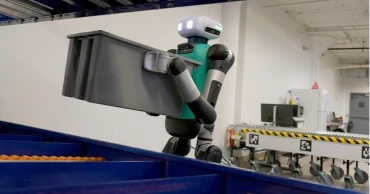
Agility is best known for its robot "Digit," which is designed to lift and move heavy containers and storage bins in warehouses and industrial facilities. Company officials say Digit is already being used commercially, making it one of the first humanoid robots to perform real-world warehouse tasks.
The company will merge with a special-purpose acquisition company (SPAC) managed by Churchill Capital Group. Churchill co-founder and chairman Michael Klein said Agility has attracted support from major technology and investment firms, including Amazon, Nvidia, SoftBank and Foxconn.
Among its early customers are Toyota, German industrial supplier Schaeffler and Latin American e-commerce giant Mercado Libre.
Agility faces competition from companies such as Tesla, whose CEO Elon Musk has promoted the Optimus humanoid robot as a key part of the company's future plans. Chinese robotics company Unitree is also moving toward a stock market listing in Shanghai.
Despite being classified as a humanoid robot, Digit was not designed to closely resemble a human, according to Agility co-founder and chief robot officer Jonathan Hurst. Its bird-like legs and claw-style gripping hands are specifically designed to improve performance in industrial environments.
Chief Executive Officer Peggy Johnson said Digit is intended to handle repetitive, physically demanding and potentially hazardous tasks that many workers prefer to avoid.=
"The demand is growing rapidly," Johnson said, noting that companies are bringing manufacturing back home, experienced workers are retiring, and fewer young people are interested in taking up routine manual jobs.
Unlike many traditional industrial robots that operate behind safety barriers, future versions of Digit are expected to work directly alongside human employees in warehouses and factories. The company also sees potential applications in hospitality, home services and elderly care in the future.
Agility said the funds raised through the public listing will help expand commercial deployments and increase production of its next-generation robot, Digit V5.
The company believes the global market for humanoid robots could eventually exceed $1 trillion, although a growing number of firms are competing to capture a share of the sector.
Industry analysts say Agility and Unitree represent two different approaches to humanoid robotics. While Agility focuses on practical workplace robots, Unitree has gained attention for showcasing robots that can dance, perform backflips and demonstrate other entertainment-oriented features.
Experts say the emerging humanoid robot industry is still evolving, with companies continuing to search for the most promising commercial opportunities.
4 months ago