tech
Musk warns he may shut SpaceX Capsule vital to NASA
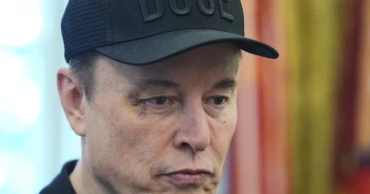
A feud between US President Donald Trump and billionaire Elon Musk unfolded online Thursday, with Musk threatening to shut down a key spacecraft that NASA depends on for transporting astronauts and cargo to the International Space Station (ISS).
The tension began after Trump suggested ending federal contracts with Musk’s companies—SpaceX and Starlink.
In response, Musk posted on X (formerly Twitter) that SpaceX would “begin decommissioning its Dragon spacecraft immediately.”
It's unclear whether Musk intends to follow through. However, the Dragon capsule—developed with federal funding—plays a critical role in maintaining ISS operations.
NASA heavily relies on SpaceX not only for space station missions but also for science launches and future moon landings.
The Dragon Capsule’s Role
Currently, SpaceX is the only American company capable of flying astronauts to the ISS using its four-person Dragon capsules. Boeing’s competing Starliner capsule has faced setbacks, including a troubled 2023 mission that ended with NASA astronauts returning to Earth aboard a SpaceX capsule nine months later. The Starliner remains grounded as NASA considers another test—possibly without crew.
In addition to NASA missions, SpaceX also uses the Dragon for private flights. The next one, arranged by Houston-based Axiom Space, is scheduled for next week. SpaceX’s cargo version of the capsule is also routinely used to deliver supplies to the ISS.
NASA’s Alternative: Russia
Aside from SpaceX, Russia’s Soyuz spacecraft is the only other current option for transporting astronauts. Each Soyuz flight carries three crew members—typically two Russians and one NASA astronaut. In turn, each SpaceX flight carries one Russian under a reciprocal agreement, ensuring that both nations always have crew aboard for emergency returns.
When SpaceX launched its first crewed mission for NASA in 2020, it allowed the U.S. to reduce dependence on Russia, which had been charging tens of millions of dollars per seat.
SpaceX’s Other NASA Ties
Beyond crewed flights, SpaceX has launched numerous NASA science missions and military payloads. The company also secured a contract to help safely deorbit the ISS when its mission ends.
Moreover, NASA has chosen SpaceX’s massive Starship rocket to land astronauts on the moon—at least for the first two missions. Although the rocket’s latest test flight ended in failure when it lost control and disintegrated, it remains central to NASA’s lunar plans.
1 year ago
Reddit files case against Anthropic over alleged unauthorized use of user Comments to train AI
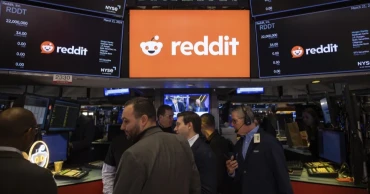
Reddit has initiated legal action against AI startup Anthropic, accusing the company of unlawfully extracting large volumes of user-generated content from its platform to train the Claude chatbot.
The lawsuit, filed Wednesday in California Superior Court in San Francisco, claims Anthropic employed automated tools to access Reddit’s content without consent, violating the platform’s terms of service and compromising user privacy. Reddit alleges that Anthropic trained its AI models on user data without informing or obtaining permission from those users.
“AI companies should not be permitted to extract and use personal content without clear boundaries on how that data is handled,” said Reddit’s chief legal officer, Ben Lee. He noted that Reddit’s data partnerships—with companies such as Google and OpenAI—include provisions that protect user privacy, allow content deletion, and prevent misuse, unlike the practices Reddit accuses Anthropic of using.
Anthropic responded to the allegations by stating it “disagrees with Reddit’s claims and will defend ourselves vigorously.”
Founded in 2021 by former OpenAI leaders, Anthropic is best known for its Claude AI assistant. It partners commercially with Amazon, which integrates Claude into its Alexa voice assistant. Like many AI developers, Anthropic has used publicly available web data, including Reddit and Wikipedia, to train its language models.
New York Times signs first AI content licensing deal with Amazon
Reddit’s complaint diverges from typical copyright-based lawsuits brought against AI companies. Instead, it centers on Anthropic’s alleged violation of Reddit’s terms and its engagement in unfair business practices.
The legal filing cites a 2021 research paper co-authored by Anthropic CEO Dario Amodei, identifying specific Reddit forums—covering topics like gardening, history, and personal advice—as particularly valuable for training AI. The suit also refers to Anthropic’s argument to the U.S. Copyright Office that using large-scale web data for statistical AI training constitutes lawful use.
Now a publicly traded company, Reddit has used licensing agreements both to raise capital and to ensure protections for its users. The lawsuit highlights the platform’s growing efforts to safeguard its data as demand from AI firms for human-created content continues to increase.
1 year ago

Amazon to invest $10 billion in North Carolina for new data center and AI hub
Amazon announced plans Wednesday to invest $10 billion in a major new campus in North Carolina, aimed at expanding its data center and artificial intelligence capabilities. The project is expected to significantly boost the economy in Richmond County, a rural area once known for its textile industry.
The investment will create at least 500 direct jobs and support thousands more through construction and related supply chains, according to statements from Amazon and North Carolina Governor Josh Stein. Stein described it as one of the most significant economic investments in the state's history.
Data centers already have a notable presence in North Carolina — Apple, for example, operates facilities there. But Amazon’s project is poised to be transformative for Richmond County, located on the state’s southern border with South Carolina and home to roughly 42,000 people.
The facility will employ a range of skilled workers, including engineers and cybersecurity professionals. Amazon also committed to partnering with universities, community colleges, and workforce development programs to train people in data center operations and broadband technologies.
“This investment will establish North Carolina as a center for advanced technology, while generating hundreds of high-skill jobs and substantial economic benefits,” said David Zapolsky, Amazon’s Chief of Global Affairs and Legal. He emphasized the company’s intent to collaborate with local governments, suppliers, and educational institutions to build a pipeline of future talent.
On Tuesday, Richmond County commissioners approved an incentive package for Amazon. According to The Richmond Observer, the company will be eligible for annual cash grants over a 20-year period based on property and equipment tax rebates, provided it meets job creation and investment targets.
“This project will reshape our community in ways we can’t yet fully envision,” said Richmond County Manager Bryan Land during the meeting. He noted that accompanying infrastructure upgrades — including water, wastewater, and fiber-optic improvements — would come at no cost to local taxpayers.
Governor Stein’s office referred to the development as an “innovation campus,” saying it will house servers, data storage, networking gear, and other high-tech equipment.
“Artificial intelligence is revolutionizing the way we work and create,” Stein said at a public event in Hamlet on Wednesday. “North Carolina will remain at the forefront of this transformation by continuing to attract top-tier tech companies like Amazon.”
Amazon noted that it has invested $12 billion in North Carolina since 2010 and currently employs around 24,000 full- and part-time workers across the state.
1 year ago

Meta becomes the latest big tech company turning to nuclear power for AI needs
Meta has cut a 20-year deal to secure nuclear power to help meet surging demand for artificial intelligence and other computing needs at Facebook’s parent company.
The investment with Meta will also expand the output of a Constellation Energy Illinois nuclear plant.
The agreement announced Tuesday is just the latest in a string of tech-nuclear partnerships as the use of AI expands. Financial details of the agreement were not disclosed.
Constellation's Clinton Clean Energy Center was actually slated to close in 2017 after years of financial losses but was saved by legislation in Illinois establishing a zero-emission credit program to support the plant into 2027. The agreement deal takes effect in June of 2027, when the state's taxpayer funded zero-emission credit program expires.
With the arrival of Meta, Clinton’s clean energy output will expand by 30 megawatts, preserve 1,100 local jobs and bring in $13.5 million in annual tax revenue, according to the companies. The plant currently powers the equivalent of about 800,000 U.S. homes. George Gross, professor of electrical and computer engineering at the University of Illinois. estimates that 30 additional megawatts would be enough to power a city with about 30,00 residents for one year.
“Securing clean, reliable energy is necessary to continue advancing our AI ambitions,” said Urvi Parekh, Meta’s head of global energy.
Surging investments in small nuclear reactors comes at a time when large tech companies are facing two major demands: a need to increase their energy supply for AI and data centers, among other needs, while also trying to meet their long-term goals to significantly cut greenhouse gas emissions.
Rise in harmful content on Facebook following Meta's moderation rollback
Constellation, the owner of the shuttered Three Mile Island nuclear power plant, said in September that it planned to restart the reactor so tech giant Microsoft could secure power to supply its data centers. Three Mile Island, located on the Susquehanna River just outside Harrisburg, Pennsylvania, was the site of the nation’s worst commercial nuclear power accident in 1979.
Also last fall, Amazon said it was investing in small nuclear reactors, two days after a similar announcement by Google. Additionally, Google announced last month that it was investing in three advanced nuclear energy projects with Elementl Power.
U.S. states have been positioning themselves to meet the tech industry’s power needs as policymakers consider expanding subsidies and gutting regulatory obstacles.
Last year, 25 states passed legislation to support advanced nuclear energy, and lawmakers this year have introduced over 200 bills supportive of nuclear energy, according to the trade association Nuclear Energy Institute.
Advanced reactor designs from competing firms are filling up the federal government’s regulatory pipeline as the industry touts them as a reliable, climate-friendly way to meet electricity demands from tech giants desperate to power their fast-growing artificial intelligence platforms.
Still, it’s unlikely the U.S. could quadruple its nuclear production within the next 25 years, like the White House wants. The United States lacks any next-generation reactors operating commercially and only two new large reactors have been built from scratch in nearly 50 years. Those two reactors, at a nuclear plant in Georgia, were completed years late and at least $17 billion over budget.
Additionally, Gross recommends that the U.S. invest more in the transmission grid that moves that power around.
“That’s my biggest concern,” Gross said, adding that spending on the grid has actually fallen off in recent years, despite the voracious demand for energy.
Amazon, Google and Microsoft also have been investing in solar and wind technologies, which make electricity without producing greenhouse gas emissions.
Meta's Movie Mate to Chat with M3GAN in Theater: Interactive Experience or Distraction
Shares of Constellation Energy Corp., based in Baltimore, were flat Tuesday.
1 year ago
Meta's nuclear deal signals AI's growing energy needs
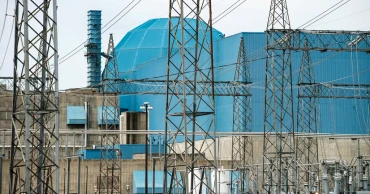
Meta's deal to help revive an Illinois nuclear power plant was one way of signaling that the parent company of Facebook and Instagram is preparing for a future built with artificial intelligence.
Meta's 20-year deal with Constellation Energy follows similar maneuvers from Amazon, Google and Microsoft, but it will take years before nuclear energy can meet the tech industry's insatiable demand for new sources of electricity.
AI uses vast amounts of energy, much of which comes from burning fossil fuels, which causes climate change. The unexpected popularity of generative AI products over the past few years has disrupted many tech companies' carefully laid plans to supply their technology with energy sources that don't contribute to climate change.
Even as Meta anticipates more nuclear in the future, its more immediate plans rely on natural gas. Entergy, one of the nation’s largest utility providers, has been fast-tracking plans to build gas-fired power plants in Louisiana to prepare for a massive Meta data centre complex.
France has touted its ample nuclear power — which produces about 75% of the nation's electricity, the highest level in the world — as a key element in its pitch to be an AI leader. Hosting an AI summit in Paris earlier this year, French President Emmanuel Macron cited President Donald Trump’s “drill baby drill” slogan and offered another: “Here there’s no need to drill, it’s just plug baby plug.”
In the US, however, most of the electricity consumed by data centres relies on fossil fuels — burning natural gas and sometimes coal — according to an April report from the International Energy Agency.
New York Times signs first AI content licensing deal with Amazon
As AI demand rises, the main source of new supply over the coming years is expected to be from gas-fired plants, a cheap and reliable source of power but one that produces planet-warming emissions.
Renewable energy sources such as solar and wind account for about 24% of data centre power in the US, while nuclear comprises about 15%, according to the IEA. It will take years before enough climate-friendlier power sources, including nuclear, could start slowing the expansion of fossil fuel power generation.
A report released by the US Department of Energy late last year estimated that the electricity needed for data centres in the US tripled over the past decade and is projected to double or triple again by 2028 when it could consume up to 12% of the nation’s electricity.
It takes a lot of computing power to make an AI chatbot and the systems they're built on, such as Meta's Llama. It starts with a process called training or pretraining — the “P” in ChatGPT — that involves AI systems “learning” from the patterns of huge troves of data.
To do that, they need specialized computer chips — usually graphics processors, or GPUs — that can run many calculations at a time on a network of devices in communication with each other.
Once trained, a generative AI tool still needs electricity to do the work, such as when you ask a chatbot to compose a document or generate an image. That process is called inferencing. A trained AI model must take in new information and make inferences from what it already knows to produce a response.
All of that computing takes a lot of electricity and generates a lot of heat. To keep it cool enough to work properly, data centres need air conditioning. That can require even more electricity, so most data centre operators look for other cooling techniques that usually involve pumping in water.
1 year ago

One Tech Tip: How to use your smartphone to photograph the Northern Lights
People in parts of the U.S. may be able to see Northern lights Monday night — or at least use a smartphone's camera to reveal hints of the aurora not visible to the naked eye.
Space weather forecasters issued a rare, severe solar storm alert on Sunday after the sun let out a huge burst of energy called a coronal mass ejection last week. Another one headed toward Earth on Monday could produce more aurora sightings and with it, more social media posts of the majestic spectacle.
If you plan to head outside after sunset to look for the lights, and photograph them, there are things you can do to make sure you get the best shot. First, though, try to find a quiet, dark area away from light pollution and check the weather forecast — clouds can cover up the aurora borealis.
As for equipment, ideally, you should use a DSLR camera because its manual controls give you lots of control, and a tripod to hold it steady. But many people won't have this sort of equipment. But if you've only got a smartphone, you can still take great photos of the night skies.
Here are some tips on how to shoot the Northern Lights:
A good setup
Before fiddling with your phone, take a few other steps to improve your chances of getting a good shot. First, dim your screen. A bright screen can hurt your night vision and both others nearby.
Even if you don't have a tripod, it's best not to hold your phone with your hands while shooting at night because there's a good chance the picture will turn out blurry. Find something to rest your device against, like a hat, a book or even just the ground.
New York Times signs first AI content licensing deal with Amazon
Of course, check the forecast because auroras are best seen in clear skies. Find a dark spot, away from city lights and look north. Also, consider going horizontal instead of vertical to capture a wider image.
Tips for the iPhone
First, turn off your phone's flash. It's usually marked by the lightning bolt symbol in the corner of the screen.
Next, use Night Mode, which is found on iPhone 11 and newer models. It usually turns on automatically in low light. You can tell it's on because a circular icon with a crescent moon will appear in the top left corner of the screen.
For night shots, a longer exposure is better because there's more time for light to hit the lens. Apple says Night Mode's exposure length is normally determined automatically, but you can still experiment with manual controls.
To get to the controls, tap the arrow at the top of the camera screen, which will bring up a row of controls at the bottom. Tap find the exposure icon, which is the same crescent moon symbol as the Night Mode icon.
A slider will come up, which you can drag left or right to choose between Auto and Max timer settings. Max will give you the longest exposure time. Whichever setting you choose, it will be remembered for the next time.
Then, tap the shutter button to take your shot. Better yet, turn on the countdown timer. The delay gives you time to move away and reduces the chance any movement from your finger will affect the shot.
If you are going handheld, and the iPhone detects movement in the frame, it will display crosshairs. Try to keep them lined up to minimize any motion that can ruin the shot.
Tips for Android devices
There are similar night and astrophotography modes available on most Android devices.
On Pixel phones, tap the Night Sight setting at the bottom of the screen. If you're using a tripod, the astrophotography setting will come up automatically once the phone has detected that it is still and ready, according to Google's online guide.
Now you can press the shutter, which will trigger a five-second countdown timer before the phone starts taking a long exposure of up to four minutes.
If you don't have a tripod, you'll have to activate the astro mode by tapping the crescent moon icon and swiping the slider.
Rise in harmful content on Facebook following Meta's moderation rollback
You'll still get a five-second timer when you hit the shutter, which Google says “allows you to place your phone down on a steady surface facing the sky.” Then the phone will play a sound to let you know it's done.
Newer Samsung phones can access an astrophoto mode, but users will have to download the company's free Expert Raw camera app to get it.
Use a third-party app
If you feel like you need some outside assistance for your snapshots, tourist boards and other outfits from some Nordic countries have suggestions for you. Iceland Air, for instance, has a blog entry on the best apps for taking pictures of the Northern lights, including the Northern Lights Photo Taker, which costs 99 cents to download and “does exactly what it says," according to the post.
Inspired by Iceland lists additional apps to try, especially if your default camera lacks manual controls. These include NightCap Camera, ProCamera, and Slow Shutter for iOS. For Android, ProCam X Lite is a good choice.
Visit Norway suggests similar camera replacement apps, but notes that you should test them before you go to see what works best for you and the type of phone you have.
1 year ago

China criticizes US over chip restrictions and student visa threats
China strongly criticized recent U.S. actions it claims are detrimental to Chinese interests on Monday. These include new guidelines restricting exports of AI chips, a ban on selling chip design software to China, and a plan to revoke visas for Chinese students.
“These actions seriously violate the understanding reached in trade talks held in Geneva last month,” China’s Commerce Ministry stated.
The criticism refers to a joint agreement in which the U.S. and China pledged to ease trade tensions by reducing the steep tariffs each side had imposed. However, despite this temporary truce, fundamental disagreements remain unresolved, as highlighted by the latest tensions.
The 90-day agreement was intended to allow both sides time to negotiate a more lasting resolution. Yet, while tariffs were lowered, they still remain elevated compared to earlier levels, contributing to continued uncertainty for global businesses and investors.
U.S. Trade Representative Jamieson Greer confirmed that the U.S. had agreed to reduce a tariff rate from 145% to 30%, while China lowered its own rate on American imports from 125% to 10%.
According to the Commerce Ministry, China upheld its side of the deal by rolling back tariffs and other trade measures. In contrast, it accused the U.S. of reigniting tensions with new restrictions and undermining the fragile trade relationship.
“The U.S. has unilaterally instigated new economic and trade conflicts, increasing instability and uncertainty in our bilateral ties,” the ministry said. It added that China would “take firm and strong actions to protect its lawful rights and interests.”
In response to recent remarks by former President Donald Trump, China pushed back against his accusations. “Instead of examining its own actions, the U.S. has wrongly blamed China for breaking the deal—claims that have no basis in fact,” the statement read.
Trump had escalated rhetoric on Friday, posting on social media that China had “totally violated” the trade agreement and announcing he would no longer deal gently with Beijing. Later that day, he said he hoped to resolve the issue in talks with Chinese President Xi Jinping, while maintaining his criticism.
Adding to the friction, the Trump administration last week revealed plans to begin revoking U.S. student visas for Chinese nationals. Over 275,000 Chinese students are currently enrolled in American universities.
The U.S. and China are locked in a broader competition over cutting-edge technologies like artificial intelligence. Washington has been working to limit China’s access to the latest chip technology, while Beijing seeks to assert dominance in the Asia-Pacific region—including over Taiwan, a key U.S. partner and global tech hub.
1 year ago

New York Times signs first AI content licensing deal with Amazon
The New York Times Company has signed a multiyear agreement to license its content to Amazon for AI-related uses, marking the newspaper’s first such deal in the generative AI space.
Announced on May 29, the partnership comes as the Times continues its legal battle against OpenAI and Microsoft over alleged copyright infringement involving the use of its journalism to train AI systems.
According to Variety, the agreement will bring The New York Times’s editorial content to various Amazon platforms, enhancing customer experiences across the tech giant’s services.
According to the companies, the collaboration aims to make the Times’s original content more accessible within Amazon products, including direct links to Times offerings, and reflects a shared commitment to delivering global news and perspectives via AI.
Under the deal, Amazon will license content from The New York Times, including NYT Cooking and The Athletic sports publication. This includes the real-time display of summaries and brief excerpts on Amazon products such as Alexa, and the use of content to train Amazon’s proprietary foundation AI models.
Rise in harmful content on Facebook following Meta's moderation rollback
New York Times CEO Meredith Kopit Levien said, “This deal is consistent with our long-held principle that high-quality journalism is worth paying for. It aligns with our deliberate approach to ensuring that our work is valued appropriately, whether through commercial deals or through the enforcement of our intellectual property rights.”
The Times’s move reflects the broader, mixed response of media companies to the rise of artificial intelligence, some opting for licensing partnerships while others pursue legal action.
Last month, The Washington Post, owned by Amazon founder Jeff Bezos, entered a “strategic partnership” with OpenAI.
1 year ago

India's self-proclaimed 'history hunter' on drive to salvage the past for future generations
Cameras from a bygone era. Rusty typewriters. Vintage radios. Matchboxes once used to light contraband cigarettes.
In an age of new technology and artificial intelligence, a visit to the New Delhi home of Aditya Vij is like stepping into a time machine. Every corner of his museum feels like a carefully constructed history chapter.
The anthropologist is an avid collector of artifacts and has dedicated his life to antiquities. Over decades, he has doggedly collected thousands of items that span several centuries and documented their relevance and the impact they have had on society.
Each collectable he has salvaged feels like a victory against time, Vij says, underscoring his belief that maybe one individual's attempts can quietly resist their erasure from people’s memory.
“The deepest emotion I feel while collecting these items is the sense of satisfaction that I managed to save a piece of history,” said Vij, during an interview surrounded by his priceless collection of vintage cameras and gramophones.
The excitement of the hunt
Fossils of fish, snails, tadpoles and fern leaves that date back millions of years are Vij's most ancient items. But he has a passion for another trove of objects that date back to around 1915: thousands upon thousands of matchboxes.
His obsession began at the age of 8 when he discovered his first matchbox while wandering on the roads with his father. Today, the 51-year-old possesses more than 22,000 matchboxes.
A few of them are over a century old and their cover labels showcase different forms of religious representations and political scenarios of the times they were produced.
“It is not just the possession of these trinkets, but the process of hunting for them is what adds a layer of excitement for me,” Vij said, adding that matchboxes symbolize different cultures at different times.
'Vigilance and quick action'
Nvidia tops Q1 forecasts despite tariff hurdles
He says the preservation of memory through these collectables pushes people to think about the craftsmanship of a time where life was slower and decisions were more deliberate.
Some of his possessions were acquired by a chance.
Many years ago, Vij says, he spotted a scrap dealer about to break an old radio with a hammer. He shouted from across the street and stopped the man. The scrap dealer, taken by surprise, explained how he would get good money out of the parts. Vij offered to buy it. Today, that radio sits amongst his existing collection of vintages.
“Thirty more seconds and I would have lost it, and sometimes that’s what it takes — vigilance and quick action,” he said.
Vij describes his journey that of a man "who links the past to the future" and aspires to create a museum out of his house that will act as a physical space where younger generations get to learn about innovations from the past.
Otherwise, Vij says, these unassuming objects would be forever lost in the vast expanse of new technology.
“What was once familiar has become rare, often forgotten, and has left behind only traces of nostalgia and memories," he said.
‘Urgency to preserve history’
Vij also gets requests from parents who want him to show their children how his collectables were put in use during the past. Some want their children to see how a typewriter works, or how pictures were clicked using a film camera.
Others come to see how some household devices used to operate, like the rotary telephones, tube radios, pressing irons, ice cream makers, and lanterns.
“When they (kids) tell me how they had no idea about the existence of these objects, that is when I feel a stronger urgency to preserve history," he said.
SpaceX launches another Starship rocket after back-to-back explosions, but it tumbles out of control
Over the past few years, Vij says, technology has evolved rapidly and the gadgets from his childhood were made obsolete overnight. He believes archiving them is necessary.
"I hope the younger generations realize the importance of history and carry it forward by preserving it,” he said
1 year ago

Rise in harmful content on Facebook following Meta's moderation rollback
Meta's latest Integrity Report shows worrying spike in violent posts and harassment after policy shift aimed at easing restrictions on political expression.
Facebook has seen a notable rise in violent content and online harassment following Meta’s decision to ease enforcement of its content moderation policies, according to the company’s latest Integrity Report.
The report, the first since Meta overhauled its moderation strategy in January 2025, reveals that the rollback of stricter content rules has coincided with a drop in content removals and enforcement actions — and a spike in harmful material on its platforms, including Instagram and Threads.
Meta’s shift, spearheaded by CEO Mark Zuckerberg, was aimed at reducing moderation errors and giving more space for political discourse. However, the company now faces growing concern that the relaxed rules may have compromised user safety and platform integrity.
Violent Content and Harassment on the Rise
The report shows that violent and graphic content on Facebook increased from 0.06–0.07 per cent in late 2024 to 0.09 per cent in the first quarter of 2025. While the percentages appear small, the scale is significant for a platform used by billions.
Likewise, bullying and harassment rates rose in the same period. Meta attributed this to a March spike in violating content, noting a slight rise from 0.06–0.07 per cent to 0.07–0.08 per cent. These increases mark a reversal of a downward trend in harmful content seen in previous years.
Content Removals and Enforcement Plummet
The rise in harmful posts comes as Meta dramatically reduces enforcement activity. Only 3.4 million pieces of content were actioned under its hate speech policy in Q1 2025 — the lowest since 2018. Spam removals also fell sharply, from 730 million at the end of 2024 to 366 million in early 2025. Additionally, the number of fake accounts removed dropped from 1.4 billion to 1 billion.
Meta’s new enforcement strategy focuses primarily on the most severe violations, such as child exploitation and terrorism, while areas previously subject to stricter moderation — including immigration, gender identity, and race — are now framed as protected political expression.
The definition of hate speech has also been narrowed. Under the revised rules, only direct attacks and dehumanising language are flagged. Content previously flagged for expressing contempt or exclusion is now permitted.
Shift in Fact-Checking Strategy
In another major change, Meta has scrapped its third-party fact-checking partnerships in the United States, replacing them with a crowd-sourced system known as Community Notes. The system, now active across Facebook, Instagram, Threads, and even Reels, relies on users to flag and annotate questionable content.
While Meta has yet to release usage data for the new system, critics warn that such an approach could be vulnerable to manipulation and bias in the absence of independent editorial oversight.
Fewer Errors, Says Meta
Despite the concerns, Meta is presenting the new moderation approach as a success in terms of reducing errors. The company claims moderation mistakes in the United States dropped by 50 per cent between the final quarter of 2024 and Q1 2025. However, it has not disclosed how this figure was calculated. Meta says future reports will include more transparency on error metrics.
“We are working to strike the right balance between overreach and under-enforcement,” the report states.
Teen Protections Remain in Place
One area where Meta has not scaled back enforcement is in content directed at teenagers. The company has maintained strict protections against bullying and harmful content for younger users and is introducing dedicated Teen Accounts across its platforms to improve content filtering.
Meta also highlighted growing use of artificial intelligence, including large language models, in its moderation systems. These tools are now exceeding human performance in some cases and can automatically remove posts from review queues if no violation is detected.
As Meta pushes ahead with its looser content policies, experts and users alike will be watching closely to see whether the company can truly balance free expression with safety — or whether its platforms risk becoming breeding grounds for harmful content.
Source: With inputs from agencies
1 year ago