Lifestyle

Can’t take hormone therapy for menopause? Doctors say effective alternatives exist
When Shilpa Gajarawala began experiencing intense hot flashes, sleepless nights and brain fog, hormone therapy wasn’t an option. The 58-year-old physician assistant from Jacksonville, Florida, had survived breast cancer — and that history put standard hormone treatments off the table.
“For two years, I tried to kind of power through,” she said.
But specialists say women like Gajarawala don’t need to endure these symptoms. Although many rely on hormone therapy to ease menopause, new federal label changes may lead more women to consider it. Still, a large number avoid the treatment, and doctors advise others to steer clear due to conditions such as severe liver disease, or histories of heart attack, stroke, blood clots or hormone-sensitive breast cancer.
For them, experts say a wide range of lifestyle changes, nonhormonal medications and other strategies can offer relief.
“The key here is that there’s something for everybody,” said Dr. Stephanie Faubion, medical director at the Menopause Society. “There’s always a solution.”
Lifestyle changes
Doctors say exercise doesn’t directly eliminate menopausal symptoms, but it can contribute to weight loss — and even modest reductions in weight have been linked to fewer hot flashes and night sweats. They recommend a mix of aerobic exercise such as walking or running, along with strength training to slow bone loss.
Diet also plays a role. Emerging research shows a “plant-forward” diet rich in vegetables and soy and low in oil may reduce hot flashes, Faubion said. While the reasons are not fully understood, some experts believe the benefit may be tied to weight management.
Physicians also suggest avoiding common triggers, including caffeine and alcohol. Eating well and staying active help curb rising midlife health risks, such as heart disease and diabetes, which are influenced by the sharp decline in estrogen during menopause.
“It’s important that we focus on maintaining cardiovascular health,” said Faubion, noting the need for adequate sleep, stress management and smoking cessation.
Prescription medications
Several nonhormonal prescription drugs have shown promise.
Certain antidepressants can ease hot flashes and mood disturbances. Oxybutynin, a drug commonly used for overactive bladder, may also reduce hot flashes while helping with frequent urination — another common menopausal complaint.
A newer entrant, Veozah (fezolinetant), works by targeting the part of the brain that regulates body temperature and blocking the source of hot flashes. Another nonhormonal drug, elinzanetant — sold as Lynkuet — was recently cleared by the U.S. Food and Drug Administration and works similarly, blocking two nerve-system molecules instead of one.
5 simple lifestyle changes that may help slow biological ageing: Experts
However, the medications carry risks. Veozah includes a warning about rare but serious liver injury. Lynkuet can cause fatigue and trouble staying awake. Oxybutynin may lead to dry mouth or incomplete bladder emptying. Some antidepressants can cause weight gain, although generally at higher doses than those used for menopause.
“There’s no medication out there that’s entirely free of risk,” said Dr. JoAnn Manson of Harvard Medical School.
Other approaches
Nonhormonal over-the-counter options — such as lubricants — can help with vaginal dryness. Cognitive behavioral therapy has proved useful in helping women cope with hot flashes by reducing their psychological impact.
Clinical hypnosis may also help, with moderate evidence suggesting fewer and less severe hot flashes, Manson said, though more research is needed.
Dr. Juliana Kling of the Mayo Clinic Alix School of Medicine said women should not feel they must simply endure menopause. “I would implore women to have that conversation ... about what treatment might be beneficial for them,” she said.
Gajarawala has since changed her routine: she avoids red wine, walks 10,000 steps daily, practices tai chi and uses an extended-release antidepressant.
“It’s been a significant improvement,” she said.
Source: AP
8 months ago

5 simple lifestyle changes that may help slow biological ageing: Experts
Your “biological age” may say more about your health than the number of years you have lived. While chronological age counts your birthdays, biological age reflects how well your body’s systems are functioning — and how long you are likely to live.
With modern epigenetic testing, people can now estimate their biological age at home using a simple saliva sample. The results often reveal how diet, exercise, sleep and habits like smoking or drinking influence the pace of ageing. Experts say the encouraging news is that healthy choices can lower biological age, giving people more control over their long-term wellbeing.
Longevity specialists Dr Sophie Shotter and Nadine Baggott outline five lifestyle habits that can help slow the ageing process:
1. Stay active and keep a youthful mindset
Exercise is one of the strongest protective factors against age-related decline. Even a few minutes of daily physical activity — such as brisk walking or varied body movements — reduces the risk of serious illnesses. According to The Independent, exercise affects DNA methylation, a process that regulates genes linked to ageing signs like wrinkles and greying hair.
2. Choose healthier foods
Diet plays a major role in chronic disease and biological ageing. A study cited in the report found that nearly 2,700 women who adopted healthier eating habits for 6–12 months lowered their biological age by an average of 2.4 years. Experts recommend meals rich in fruits, vegetables, whole grains, nuts, legumes, lean proteins, fish and healthy fats to support cell repair and reduce stress on DNA.
3. Prioritise adequate sleep
Consistently getting about eight hours of sleep helps the body repair DNA, restore hormonal balance, reduce inflammation and clear cellular waste. Proper sleep lowers the risk of age-related conditions including diabetes, heart disease, cancer and dementia.
4. Avoid harmful habits
Smoking, vaping and excessive alcohol consumption significantly accelerate ageing. The report notes that smoking can age the lungs by more than four years and airway cells by nearly five years. These habits damage DNA, increase inflammation and put extreme stress on cells.
5. Manage stress effectively
Chronic stress disrupts hormonal responses and weakens the immune system, which can accelerate biological ageing. Experts say practising emotional regulation and stress-management techniques can add years to healthy life.
Research also indicates that external factors — such as loneliness, harsh climates, pollution and living conditions — influence how quickly people age. Their impact varies depending on genetics, level of exposure and overall lifestyle.
With inputs from NDTV
8 months ago
These children's books from 2025 make great holiday gifts for every age group
Look no further for great gift ideas for your kiddos. The Associated Press scoured the bookshelves for standout 2025 releases to share the love of reading with your child, student or friend, and came up with this list for the holidays.
Board books and read-to-me books (ages 0-3)
— “I Love You, Little Moose!” by Sandra Magsamen. A five-line poem about nature and all the things we love about it, with vibrant colors and bubble-letter text. This board book also has soft plushie antlers on top. Cartwheel Books, $8.99.
— “Why Does the Wind Blow?” by Eric Carle. Science made easy in classic Eric Carle style! This quick read explains in simple terms how wind blows, aided by illustrations and one Very Hungry Caterpillar. World of Eric Carle, $5.99.
— “Little Heroes of Color: I’m A Little Hero” by David Heredia. Heroes range from hardworking Jim Thorpe to inventive Arvind Gupta to fearless Sonia Sotomayor. Rhyming and repetition make complicated words and ideas easier to understand. In the back, readers will find a mirror with a message that they're a little hero, too. Cartwheel Books, $9.99.
— “Everywhere You Are” by Victoria Monét, illustrated by Alea Marley. This sweet book reaffirms a parent’s love for their child even when they’re not physically together. Grammy winner Monét's musicality shines in this lullaby, illustrated in a colorful, swirly, star-speckled outer space. G.P. Putnam’s Sons Books For Young Readers, $18.99.
Early readers (ages 3-8)
— “Bitty and Bub, Best Buds” by Janee Trasler. Five short, silly comics follow fun-loving friends Bitty and Bub. It’s a great introduction to reading comics, using speech bubbles in simple panel progressions. Holiday House, $14.99.
— “Don’t Trust Fish” by Neil Sharpson, illustrated by Dan Santat. Why read another boring animal book when you can read something hilarious? The book teaches kids how to recognize mammals, reptiles, amphibians and birds — and, chiefly, why you shouldn't trust fish. Dial Books, $18.99.
— “Grandmother Moon” by Wunneanatsu Lamb-Cason, illustrated by Trisha B. Waters. A girl's grandma explains Grandmother Moon to her. The author’s Indigenous storytelling tradition is extended by dreamy full-page paintings. Includes a Moon Calendar and a guide to reading the calendar on the scales of Turtle’s back. Beaming Books, $18.99.
Bob Ross paintings fetch over $600,000 at auction to support public TV stations
Middle grade (ages 8-12)
— “Dory Fantasmagory 7: Center of the Universe” by Abby Hanlon. Book 7 in the silly illustrated series that’s a perfect bridge into chapter books. In this story, Dory has a new rival. Dory’s zany antics and odd friends could elicit laughter from any reader. Dial Books, $17.99.
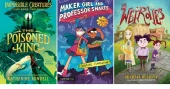
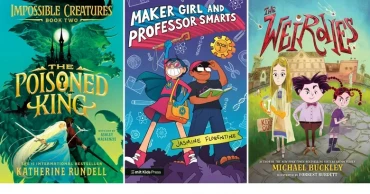
— “Maker Girl and Professor Smarts” by Jasmine Florentine. So what if they don't have superpowers? These supersmart best friends are ready to take on supervillains! This hilarious, hybrid graphic chapter book includes science-backed instructions for making sorbet and cardboard grappling hooks. MIT Kids Press, $19.99.
— “The Weirdies” by Michael Buckley, illustrated by Forrest Burdett. From the creator of “Sisters Grimm,” these 10-year-old triplets and the world they live in are weird — and highly entertaining. Pencil-hatching illustrations accompany Lemony Snicket-esque humor and fourth-wall breaking. Little, Brown Books for Young Readers, $14.99.
— “The Poisoned King” by Katherine Rundell, illustrated by Ashley Mackenzie. It's up to 12-year-old Princess Anya to save the dragons and her kingdom. The hotly anticipated Book 2 of the Impossible Creatures series is a fantasy adventure driven by an unyielding belief in the power of goodness. Knopf Books for Young Readers, $19.99.
— “Bunns Rabbit” by Alan Barillaro. The other rabbits fear that Bunns' short ears are a bad omen. Full of heart, this mature, tender chapter book showcases descriptive writing and stunning, dramatically lit illustrations. Candlewick, $18.99.
Young adult (ages 12+)
— “The Story of My Anger” by Jasminne Mendez. Told in verse and as a play, this empowering story follows Yuli, a junior at a Texas high school, as she learns how to handle racism, the pressure to shine, and stress at home with a widowed mom living with a chronic illness. Dial Books, $19.99.
— “The House of Quiet” by Kiersten White. A Gothic mystery that explores class struggle and what it means to make a positive impact in the world. The stunning ending pulls the pieces together without a single detail wasted. Delacorte Press, $19.99.
— “When We Were Monsters” by Jennifer Niven. Arlo and Effy trade off narrating this genre-bender of dark academia, murder mystery, thriller and romance. A “Frankenstein” motif throughout the novel conveys themes of monsters and fate vs. free will. Knopf Books for Young Readers, $20.99.
— “Leave It on the Track” by Margot Fisher. After her dads die in a fire, Moose moves to a new state to live with her older half-sister, who convinces her to try roller derby. Fisher's debut grabs you and doesn't let go, tackling grief, being LGBTQ+ and finding community. Dutton Books for Young Readers, $19.99.
— “Take Up Space, Y’all” by Tess Holliday and Kelly Coon. A body positivity book with guides and tips, from finding your fashion to having a healthy relationship with food to dealing with labels. It always defers to consulting your doctor for medical needs like skin problems and mental health challenges. Running Press Kids, $13.99.
— “I Wish I Didn’t Have to Tell You This: A Graphic Memoir” by Eugene Yelchin. The sequel to “The Genius Under the Table” also stands on its own, chronicling a Jewish man’s escape from Soviet Russia in the 1980s with a unique art style that incorporates photographs. Yelchin’s mom and grandmother provide comic relief with their melodrama and uncanny wisdom. Candlewick, $22.99.
Source: AP
8 months ago

Bob Ross paintings fetch over $600,000 at auction to support public TV stations
Three paintings by beloved public television icon Bob Ross sold for more than $600,000 at auction on Tuesday, with proceeds going to help U.S. public TV stations struggling from federal funding cuts.
The first sale in a planned series of auctions, held at Bonhams in Los Angeles, featured 30 Ross paintings. The highlight was “Winter’s Peace” — a serene snow landscape painted during a 1993 episode of “The Joy of Painting” — which fetched $318,000 from a phone bidder.
“For a good cause — and you get the painting,” auctioneer Aaron Bastian said during the sale, pausing to echo Ross’s signature optimism: “Bob would remind you that this is your world, and you can do anything you want.”
Two other works painted during the same year — “Home in the Valley” and “Cliffside” — sold for $229,100 and $114,800 respectively. The prices, which include the buyer’s premium, far exceeded pre-auction estimates that had capped around $50,000 per piece.
Three more Ross paintings will be auctioned in Marlborough, Massachusetts, on January 27, followed by additional sales in New York and London. All proceeds will support public TV stations that air programming from American Public Television, including “America’s Test Kitchen,” “Julia Child’s French Chef Classics,” and “This Old House.”
Joan Kowalski, president of Bob Ross Inc., said the initiative will especially aid smaller and rural PBS affiliates hit hardest by recent federal cuts. “These stations have been the gateway for generations of viewers to discover not just Bob’s gentle teaching, but the transformative power of the arts,” she said.
Rare video captures sucker fish “surfing” whales in the ocean’s wildest ride
Congress recently eliminated $1.1 billion in public broadcasting funds, as proposed by the Trump administration, affecting around 330 PBS and 246 NPR stations nationwide.
Ross, who died in 1995 at age 52 after an 11-year run with “The Joy of Painting,” became a cultural phenomenon for his calm voice, signature hairstyle, and philosophy that there are “no mistakes, only happy accidents.” His popularity soared again during the COVID-19 lockdowns as new audiences rediscovered his soothing art tutorials online.
Source: AP
8 months ago
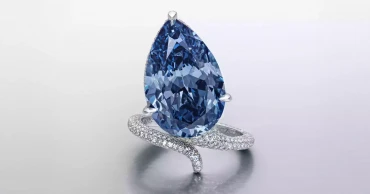
‘Mellon Blue’ diamond sells for $26.6 million at Swiss auction
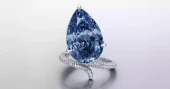
A rare blue diamond weighing nearly 10 carats has been sold for 20.5 million Swiss francs ($26.6 million) at a Christie’s auction in Geneva.
The 9.51-carat gem, known as the “Mellon Blue”, was named after late American arts patron Rachel “Bunny” Mellon. The diamond had been expected to fetch between $20 million and $30 million, and its final sale price — including buyer’s premium and fees — came within that range.
Christie’s said the stone was part of Mellon’s private collection for decades and had previously been sold in 2014 for $32.6 million, one of the highest prices ever paid for a colored diamond at auction.
Max Fawcett, Christie’s global head of jewelry, described the Mellon Blue as “the gem of gems,” praising its Fancy Vivid Blue color grade and Internally Flawless quality certified by the Gemological Institute of America.
The auction marks the first of two major jewelry sales in Geneva this week. On Wednesday, rival house Sotheby’s will auction the “Glowing Rose” pink diamond, expected to attract bids of around $20 million.
8 months ago

Oscar-nominated actor Sally Kirkland dies at 84
Sally Kirkland, the veteran American actor and model best known for her Oscar-nominated performance in the 1987 film Anna and roles alongside Paul Newman and Robert Redford in The Sting, has died at the age of 84.
Her representative, Michael Greene, confirmed that Kirkland passed away Tuesday morning at a hospice in Palm Springs, California.
Earlier this year, friends launched a GoFundMe campaign to support her medical expenses after she suffered multiple fractures — including four neck bones, her right wrist, and left hip — and later developed infections requiring hospital care and rehabilitation.
Kirkland’s career spanned more than six decades across stage, film, and television. Her film credits include The Way We Were with Barbra Streisand, Revenge with Kevin Costner, EDtv directed by Ron Howard, Oliver Stone’s JFK, Bruce Almighty with Jim Carrey, and The Haunted, a 1991 television movie. She also had a cameo in Mel Brooks’ Blazing Saddles.
Her defining role came in Anna, where she portrayed a fading Czech actress rebuilding her life in the United States. The performance won her a Golden Globe and earned her an Academy Award nomination alongside Cher, Glenn Close, Holly Hunter, and Meryl Streep.
Born in New York City, Kirkland was the daughter of a Vogue and Life magazine fashion editor. She began modeling at age five before training in acting under Philip Burton and Lee Strasberg. She also appeared in several Shakespeare productions and Andy Warhol’s 13 Most Beautiful Women in 1964.
Beyond acting, Kirkland was deeply involved in humanitarian work, volunteering for AIDS, cancer, and heart disease patients, feeding the homeless through the Red Cross, and advocating for young prisoners.
Source: AP
8 months ago
Vitamin-fortified safe edible oil essential to protect public health: Speakers
Speakers on Tuesday said ensuring the availability of vitamin-fortified and safe edible oil is now a pressing need to nurture a healthy and productive generation.
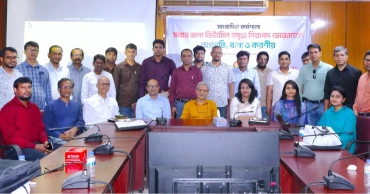
The speakers said this at a workshop for journalists titled ‘Vitamin-Fortified Safe Edible Oil for All: Progress, Challenges, and Way Forward’, at the BMA Bhaban in Dhaka.
The workshop was organised by PROGGA (Knowledge for Progress) and the National Heart Foundation of Bangladesh, with participation from 23 journalists from print, television, and online media.
They said the sale of edible oil in open drums violates government regulations and poses risks to public health.
Although Vitamin ‘A’ Enrichment in Edible Oils Act, 2013 exists, most oils in the market does not contain any vitamins or contain less than the mandated amount, they said.
A study by ICDDR, B found that 65% of edible oil in the market is sold in drums, of which 59% does not contain any vitamin A, and only 7% meet the legal standard for vitamin content.
The speakers said these non-food grade, hazardous drums are often used previously to store chemicals, engine oil, or industrial products.
These drums also do not provide information about the oil’s source or quality, allowing adulterated or substandard oils to enter the market easily. T
They called for strengthened coordinated monitoring by the Ministry of Industries, BSTI, the Directorate of National Consumer Rights Protection, and the Food Safety Authority to ensure safe, vitamin-fortified edible oil.
The speakers also pointed out that vitamin A deficiency rises the risk of childhood blindness and maternal mortality, while vitamin D deficiency is associated with greater risk of rickets, loss of bone density, cardiovascular disease, and various non-communicable diseases.
Fakir Muhammad Munawar Hossain, Former Director (Deputy Secretary), Operations and Laboratories Department, Directorate of National Consumers' Right Protection (DNCRP); Mustak Hassan Md. Iftekhar, Consultant, National Heart Foundation Hospital & Research Institute; Dr. Ashek Mahfuz, Portfolio Lead for Large Scale Food Fortification (LSFF) and Value Chain, Global Alliance for Improved Nutrition (GAIN), among others, were present.
The key presentations were delivered by Dr. Aliva Haque, Program Officer and Md. Hasan Shahriar, Head of Programs, PROGGA.
8 months ago
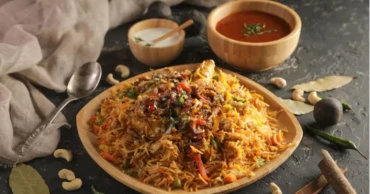
Can you eat biryani and still lose weight? Nutritionist shares two simple hacks
Many people believe that losing weight means giving up their favourite foods, eating only bland meals, or starving themselves. But experts say that’s far from the truth.
Nutritionist and weight-loss coach Mohita Mascarenhas says you can enjoy biryani guilt-free—even while trying to lose weight. “You just need to cook it the right way and watch your portions,” she explained.
A healthier take on biryani
According to Mohita, the traditional biryani recipe—made with equal portions of rice and meat and plenty of ghee—contains too much fat and carbs but not enough protein.
Her “fat-loss biryani” focuses on lean protein, measured rice, aromatic spices, and minimal ghee. “It’s full of flavour, not guilt,” she said. “I believe in building a body you love without hating your food.”
How to make fat-loss biryani
Here are the two key tweaks she suggests:
1. Adjust the meat-to-rice ratio:
For every 200 grams of rice, use 400 grams of boneless chicken marinated in Greek yoghurt and spices. Soak the rice and refrigerate the marinated chicken for 30 minutes before cooking.
2. Skip deep-frying:
Instead of deep-frying onions, sauté or air-fry 100 grams of finely chopped onions using just one teaspoon of ghee.
When plating, Mohita recommends pairing the biryani with 300 grams of raita made from low-fat Greek yoghurt and chopped vegetables.
Portion control is key
The recipe serves four people, and one portion amounts to roughly 400 calories with 30 grams of protein.
Mohita says that once you try this version, you’ll realise healthy food doesn’t have to be dull. “With a few smart changes, even your favourite biryani can be part of your fitness journey,” she added.
With inputs from NDTV
8 months ago
80% of strokes preventable through lifestyle modification: Experts
Nearly 80 percent of strokes are preventable through lifestyle modifications and controlling high blood pressure, quitting smoking, avoiding unhealthy diets and staying physically active, said experts.
The experts said this at the International Stroke Conference 2025 held on Sunday at Bangladesh Medical University (BMU), marking a significant milestone in advancing stroke awareness, prevention and treatment.
They urged community-level interventions and called for integrating stroke education into schools, workplaces, and even urban planning.
Speakers said that a new era for acute stroke care and the development of next-generation neurointervention services conference can raise public awareness, enhance prevention and ensure modern stroke treatment in Bangladesh.
With the theme of “Transformation of Acute Stroke Care and Development of Next Generation Neurointervention Services in BMU,” the scientific session highlighted innovative approaches to emergency stroke treatment and advanced neurointervention technologies.
Experts emphasised that stroke remains one of the leading causes of death and disability in Bangladesh — yet most cases are preventable.
Organised by BMU’s Department of Neurology, the event took place at Shaheed Dr. Milon Hall. BMU Vice-Chancellor Prof. Dr. Md. Shahinul Alam attended the programme as the chief guest while Pro-Vice Chancellor (Administration) Prof. Dr. Md. Abul Kalam Azad presided over the session.
Vice-Chancellor Prof. Dr. Md. Shahinul Alam said the International Stroke Conference would open a new horizon in stroke management.
“With the support of foreign experts, BMU aims to ensure state-of-the-art stroke treatment facilities in Bangladesh. Their participation today reflects a strong commitment to advancing modern neurological care in our country,” he said.
Other speakers highlighted the importance of multidisciplinary collaboration, prevention strategies, and the need for integrated stroke management.
Experts said despite progress in medical science, public knowledge about stroke remains alarmingly low.
Millions in Bangladesh still fail to recognise early symptoms, leading to treatment delays and preventable deaths, they said.
Recognising some early signs including face drooping, arm weakness, speech difficulty can save both life and brain, they said.
Speakers later emphasised the need to align Bangladesh’s stroke management guidelines with international standards, expand data sharing, and strengthen global training programs.
Sustainable progress in stroke prevention and care is impossible without global collaboration, they said.
8 months ago

From Bollywood flair to bodega colors, Mamdani’s campaign redefined NY’s political design
When Zohran Mamdani launched his groundbreaking bid for New York City mayor, his campaign visuals — bright blue signs with bold orange lettering — quickly became one of the race’s most talked-about features.
From Queens to the Bronx, the “Zohran for New York City” signs stood out from traditional red, white, and blue campaign designs. While many saw the color scheme as a nod to Bollywood posters and Mamdani’s Indian roots, designer Aneesh Bhoopathy said the inspiration came from something much closer to home — the colorful visual language of New York’s bodegas, yellow cabs, and hot dog stands.
“The design was meant to feel like New York itself — energetic, diverse, and alive,” said Bhoopathy, a Philadelphia-based designer who had previously worked with Mamdani and the Queens chapter of the Democratic Socialists of America.
A bold, nostalgic look that resonated
The campaign’s bold colors and vintage font — echoing hand-painted signs and comic book covers — offered a striking contrast to more conventional political branding. The look even influenced Mamdani’s main rival, former New York Governor Andrew Cuomo, who later switched to a blue-and-orange color palette featuring the Statue of Liberty’s crown — also the colors of the Knicks and Mets — after losing the Democratic primary to Mamdani.
Mamdani, soon to become New York’s first Muslim and South Asian mayor, is the son of Columbia University scholar Mahmood Mamdani and filmmaker Mira Nair, best known for Monsoon Wedding.
Design experts said the campaign’s aesthetic did more than just look good — it told a story about the city itself. “It reflects the working-class fabric of New York — the bodegas, taxi cabs, and halal carts that sustain it,” said David Schwittek, a digital media professor at Lehman College.
Gavan Fitzsimons, a marketing professor at Duke University, said the retro tone likely evoked nostalgia among voters: “It felt like a throwback to a time when politics seemed less divisive and more hopeful.”
Some US states introduce gun safety lessons for schoolchildren
A new visual language for progressive politics
Analysts also drew parallels to Rep. Alexandria Ocasio-Cortez’s 2018 campaign, which used bright colors and upward-slanting lettering inspired by labor movement posters and Mexican Lucha libre flyers. Richard Flanagan, a political science professor at the College of Staten Island, said both campaigns used design to connect heritage, community, and movement politics.
While experts say it’s too early to tell whether Mamdani’s visuals will reshape campaign aesthetics nationally, his team’s work has already sparked copycat designs and viral fan-made merchandise — including the “Hot Girls for Zohran” line worn by model Emily Ratajkowski.
“The playfulness of his branding made people want to be part of it,” said NYU marketing professor Court Stroud. “It turned campaign design into a shared identity.”
Design with meaning
Media scholar Lisa Burns of Quinnipiac University noted that most candidates still rely on the “safe” red, white, and blue palette — but Mamdani’s success may inspire more risk-taking.
“In a sea of sanitized political messaging, Mamdani’s visuals stand out because they mean something,” said Schwittek. “They reflect who he is and where he comes from.”
Designer Bhoopathy agreed, saying the campaign’s energy matched the candidate’s own
Source: AP
8 months ago