Lifestyle
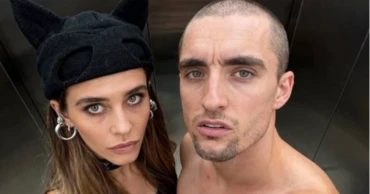
Russian daredevil couple behind viral Empire State Building proposal face criminal charges
Russian daredevil climbers and social media personalities Angela Nikolau and Ivan Beerkus have been arrested after carrying out a dramatic marriage proposal atop New York's Empire State Building.
Videos shared widely online show the couple, dressed in black, climbing to the top of the building's antenna without authorization. After unfurling a banner reading, "When the power of love beats the love of power, the world knows peace," Beerkus proposed to Nikolau.
Authorities later arrested the pair. They are facing felony charges including burglary, reckless endangerment and criminal mischief, as well as misdemeanor charges of criminal trespass.
A spokesperson for the Empire State Building said the incident was resolved with the assistance of the New York Police Department and stressed that there was never any danger to tenants, visitors or guests at the building's observation deck.
Nikolau and Beerkus are well known for climbing some of the world's tallest buildings without ropes or other safety equipment, attracting millions of followers on social media through their high-risk stunts.
Nikolau grew up in a circus family and trained in rhythmic gymnastics before becoming famous for taking photographs from the rooftops of skyscrapers in Moscow.
She met Beerkus in 2016, and the two soon began climbing together. According to USA Today, their first major climb as a team was China's Goldin Finance 117 tower in Tianjin that year.
In 2022, they also climbed Malaysia's Merdeka 118, the world's second-tallest building.
Beerkus has completed several solo climbs as well, including the Eiffel Tower in Paris, Shanghai Tower in China and Shun Hing Square in Shenzhen.
The couple's adventures have been featured in several documentaries, including the 2024 Netflix film Skywalkers: A Love Story. Nikolau has also appeared in the documentaries On the Edge of Freedom and Who Is Next?
Outside their climbing exploits, Beerkus produces music, while Nikolau paints and has a background in dance and acrobatics. Their engagement took place atop the Empire State Building on July 1.
Source: NDTV
30 days ago
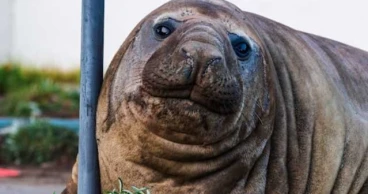
Neil the giant seal becomes a social media star
Australian wildlife officials have urged people to respect the privacy of Neil, a one-ton elephant seal whose growing social media fame is drawing large crowds and raising concerns about public safety.
Neil, a five-year-old southern elephant seal weighing about 1,000 kilograms, returned to the beaches of Tasmania in June for his regular twice-yearly visit after spending months feeding at sea. While his arrival has delighted many locals, it has also caused disruptions as the giant marine mammal roams through coastal towns.
During his latest visit, Neil has damaged traffic bollards, knocked down a warning sign and broken through a fence while wandering through neighborhoods. He is also known for resting in unusual places, including the middle of roads, bringing traffic to a halt.
Wildlife officials say the biggest concern is not the property damage but the increasing number of people trying to get close to the seal for photos and videos.
Neil has attracted more than 1.4 million followers on TikTok, making him one of Tasmania's most famous animals. His playful but destructive behavior, including nudging parked cars and breaking through barriers set up to keep him away from roads, has made him an online sensation.
However, experts say his behavior is normal for a young male elephant seal.
Sophia Volzke, an elephant seal researcher at the University of Tasmania, said juvenile males naturally practice fighting skills before reaching adulthood. Since Neil has no other young male seals nearby, he ends up testing his strength on objects such as parked vehicles and roadside barriers.
Speaking at a news conference in Hobart on Thursday, Kris Carlyon of Tasmania's Department of Natural Resources and Environment warned that Neil's popularity could put both people and the seal at risk.
He said officials had seen people carrying babies close to the seal just to capture photos for social media, describing such behavior as irresponsible.
Authorities have also asked the public not to reveal Neil's exact location online, fearing large crowds could force wildlife officers to relocate him if safety becomes a concern.
Carlyon pointed to the case of Freya, a walrus in Norway that attracted huge crowds before being euthanized in 2023 after authorities said it posed a growing risk to public safety.
"There is a risk here of essentially loving Neil to death," Carlyon said.
Elephant seals normally return twice a year to the places where they were born to rest, shed their fur and fast before heading back to sea. Although several seal species sometimes wander into coastal towns, Neil is unusual because he is the only male elephant seal regularly coming ashore in Tasmania.
Researchers believe Neil's mother likely came from breeding colonies on sub-Antarctic islands south of Tasmania to give birth. Female elephant seals have also been seen in Tasmania, but they are much smaller than males and generally cause fewer problems.
Volzke said elephant seals once lived in greater numbers around Tasmania and may now be returning to former habitats.
She said people would need to learn how to coexist with the animals.
Neil is expected to grow much larger if he survives to adulthood, potentially reaching about five meters in length and weighing around three times his current weight. However, researchers say around 90% of male elephant seals die before reaching breeding age at about 10 years old.
For now, Neil continues to relax wherever he chooses, including a patch of sidewalk where he has repeatedly returned despite being moved by wildlife officers. He has even been spotted playing with an orange traffic cone, much to the delight of his online followers.
Local resident Dale Creamer said the famous seal had become something of a hometown celebrity.
"He's one of our biggest exports at the moment," Creamer said. "It's Neil's world and we're just living in it."
1 month ago

Historic Swiss steam railway marks 100 years with scenic Alpine journeys
Train lovers are gathering in Switzerland this weekend to celebrate the 100th anniversary of the historic Furka steam railway, with vintage locomotives carrying visitors through the breathtaking Swiss Alps.
The railway first completed a continuous journey across the Furka Pass on July 3, 1926, creating an important rail connection between the central Swiss regions of Uri and Valais. Sitting 2,431 metres (7,976 feet) above sea level, the Furka Pass is one of Switzerland's highest Alpine crossings and is also known for the winding road featured in the 1964 James Bond film Goldfinger.
The historic mountain route was closed in the early 1980s after a tunnel built beneath the Alps redirected rail traffic. However, hundreds of volunteers, often called the railway's "pioneers," worked for years to restore and preserve the line, allowing the steam trains to run much as they did a century ago.
The first section reopened as a heritage railway in 1992, while the full 18-kilometre (11-mile) route became operational again in 2010. Today, the steam railway operates only during the summer as a tourist attraction, taking passengers between Realp and Oberwald through scenic landscapes of rivers, Alpine meadows, green pastures and lingering patches of snow.
Visitors who travelled on the railway last month praised the experience. Passenger Stephan Willareth described the journey as "wonderful," while former Swiss railway employee Kurt Guldemann admired the history and engineering of the vintage locomotives.
Bernhard Lang, one of the volunteer drivers, said learning to operate a steam locomotive takes years because each engine has its own character.
"It's like a living machine," he said. "You have to understand how it behaves, moves, smells and sounds."
Jacob Kallert, a 21-year-old German transport engineering student and the railway's youngest train manager, said drivers must pay close attention to every sound the locomotive makes.
"You can hear whether everything is working properly," he said. "It also gives you a real sense of what travelling by steam train was like in the past."
Volunteer Sergio Rovelli said many people become deeply attached to the railway after joining the project.
"We say everyone who works here catches the 'Furka Virus,'" he joked. "Once you come here, you enjoy it and want to stay."
A one-way ticket for the nearly two-and-a-half-hour journey starts at 46 Swiss francs (about $57). The anniversary celebrations began on Friday and will continue throughout the weekend.
1 month ago

Masked wrestlers become World Cup attraction
Alongside football, Mexico's famous lucha libre wrestling has become one of the biggest attractions for World Cup visitors, with colourful masked wrestlers filling the streets and arenas as fans from around the world embrace one of the country's most celebrated traditions.=
Masked wrestlers can be seen everywhere during the tournament, from stadium surroundings and busy streets to restaurants and bars. Many football fans are taking a break from World Cup action to experience the high-energy wrestling shows that have long been a key part of Mexican culture.
While Spain played Uruguay in Guadalajara, thousands of spectators packed the iconic Arena México, known as the home of lucha libre, to watch a headline bout featuring Místico and Máscara Dorada against The Beast Mortos and Sammy Guevara.
"It was simply fantastic, we enjoyed it immensely," said Andy Winston from Manchester, who has travelled with his family to all three World Cup host countries, Canada, the United States and Mexico, while supporting England.
"You can't come to Mexico and not come to watch lucha libre. It's a great tradition, a classic," he said.
Fans wearing football jerseys from England, Japan, South Korea, Brazil, Colombia, Spain and Mexico filled the arena, cheering loudly throughout the event.
"It was a wonderful night, much better than I imagined," said Brazil's Henrique Nunes dos Santos. "You connect with the spectacle in a way that makes it all seem real. There's a gigantic energy."
Lucha libre dates back to the early 20th century and combines American wrestling, Greco-Roman wrestling, acrobatic moves and theatrical performances. Over the years, it has developed into a unique form of entertainment and was recognised as part of Mexico City's cultural heritage in 2018.
"Lucha libre is in our roots. For almost 93 years, it has been part of us Mexicans and has also become a calling card for Mexicans," said Julio César Rivera, spokesperson for the World Wrestling Council.
The matches usually feature a battle between the "técnicos," or heroes, and the "rudos," the villains. The wrestlers are known for their colourful masks, which often represent superheroes, animals or other symbolic figures.
The masks are much more than costumes. They represent the wrestler's identity, heritage and character, and performers rarely reveal their real names in order to preserve the mystery.
Thirty-year-old wrestler Star Black said he fell in love with lucha libre while helping his grandparents sell wrestling masks as a child.
"I started to fall in love with the masks, the capes, the aerial maneuvers and the moves of lucha libre, and one day I decided to train," he said.
The World Cup has further boosted interest in the sport. Many international visitors are staying in Mexico because of lower accommodation costs before travelling to matches in the United States and Canada, said José Ángel Garfias Frías, a lucha libre researcher at the National Autonomous University of Mexico.
"Lucha libre was already popular, but now with the World Cup, the arenas are much more crowded, and we see many tourists there wearing their national team jerseys," Garfias said.
Outside stadiums, wrestling masks are almost as common as national flags, with street vendors selling both. Although FIFA security rules prohibit masks inside stadiums, some fans have still been seen wearing them.
Lucha libre and football have long shared a close connection in Mexico. Argentine footballer Gabriel Pereyra famously celebrated goals for Mexican club Cruz Azul by wearing Místico's wrestling mask, while legendary wrestler América Salvaje based his ring identity on Club América's colours.
"Lucha libre is Mexico. It's part of our identity. And it's as popular as soccer," said Claudio Díaz, one of many masked supporters celebrating Mexico's advancement to the knockout stage.
For wrestler Dragón Legendario, lucha libre reflects Mexican society even more than football.
"I feel that soccer doesn't represent us Mexicans as much; lucha libre represents us way more," he said. "People from all walks of life come here, from grandmothers to businessmen to women who run small restaurants. It has all kinds of fans."
1 month ago

World Cup excitement could inspire a new generation of young soccer fans
The excitement surrounding the FIFA World Cup could help attract more young children to soccer in the United States, with experts saying the tournament may inspire a new generation of players and lifelong fans.
At a World Cup-themed event for toddlers at a library in suburban Kansas City, 17-month-old Jude Cornell eagerly chased soccer balls and played with training equipment while his mother, Kyra Cornell, joked that she was already imagining his future in the sport.
The event took place about 20 miles (32 kilometers) from one of the stadiums hosting World Cup matches, reflecting the growing enthusiasm for soccer across the country.
Soccer is already one of the most popular youth sports in the United States. According to the Aspen Institute, 7.5% of children aged 6 to 12 played organized soccer in 2024. While that is slightly lower than a decade ago, only baseball and basketball attracted more young participants.
Experts say youth participation has long helped turn players into devoted fans.
Eighteen-year-old Haley Garbowski, who recently won a state high school championship in Missouri, is one example. A regular attendee at professional women's soccer matches, she now helps coach younger children at a summer sports camp and plans to study business and sports marketing at San Diego State University.
Her experience also reflects how soccer fandom often grows within families. While her grandparents never followed the sport, her mother gradually became a fan after watching her daughter play.
Michael Lewis, a sports marketing professor at Emory University, said soccer's popularity has been growing steadily across generations.
"Soccer is a generational story that's building generation after generation, but it takes a long, long time," he said.
Although soccer still trails baseball, basketball and American football in overall popularity, researchers see increasing interest among younger Americans, particularly Millennials and Generation Z.
The sport's growth in the United States began accelerating in the 1970s, when international stars such as Pelé played in the now-defunct North American Soccer League. Interest continued to rise after the United States hosted the FIFA World Cup in 1994 and launched Major League Soccer (MLS) two years later.
Today's youth soccer system is also much stronger than in previous decades, with competitive academies, travel teams and MLS development programs helping produce better players.
Experts say the success of women's soccer has also played a major role in expanding the sport. More girls are joining youth leagues, helping keep participation high while creating a larger fan base.
Nicholas Watanabe, a professor at the University of South Carolina, said the long-term success of women's soccer has benefited the men's game as well.
In Kansas City, the professional women's team, the Kansas City Current, has become another sign of the sport's growth. The club plays in the first stadium built specifically for a women's professional soccer team and has been involved in local World Cup community events.
Despite the progress, analysts say soccer still faces challenges in competing with America's most popular sports. Many of the world's best players compete in Europe, and many American fans follow European clubs instead of MLS teams.
Still, experts believe the sport is in its strongest position yet in the United States.
Darin White, executive director of the Center for Sports Analytics at Samford University, said he is more optimistic than ever about soccer's future in the country, pointing to its growing popularity among younger fans and increasing interest from marketers.
Back at the Kansas library, toddlers continued kicking soccer balls around while one child proudly repeated the name "Messi," referring to Argentine star Lionel Messi.
As for Jude Cornell, his mother said she hopes to enroll him in a local soccer program once he is old enough.
"You don't know," she said with a smile. "Maybe next spring or summer we start trying."
1 month ago

Nutrition apps may help healthy habits, but experts warn gaming features can have downsides
Nutrition-tracking apps can help people build healthier eating habits, but experts say some of the gaming-style features designed to keep users engaged may also encourage unhealthy behaviors, especially among those at risk of eating disorders.
Many popular apps, including MyFitnessPal and Noom, use techniques commonly seen in mobile games, such as badges, streaks, rewards, points and reminders, to motivate users to log meals and track calories.
Researchers say these features can be useful for some people but may also create pressure and anxiety for others.
Isabella Anderberg, a psychologist at Flinders University in Australia who studies digital dieting behavior, said calorie tracking can reinforce unhealthy habits linked to body image concerns and disordered eating.
"Not everyone will experience harm from using these apps, but some people are more vulnerable," she said, urging users to approach them with caution.
Health experts say nutrition apps can play a positive role, particularly for people managing long-term conditions such as heart disease and diabetes. They can also help users plan meals, monitor nutrition and stay physically active.
Many users say the apps motivate them through progress tracking and reminders.
Angela Drury, an English professor from Georgia, said she has used several nutrition apps over the past decade to support her fitness goals. She currently uses Nourish, which includes access to a dietitian through her health insurance.
She said earning badges for consistently logging meals feels rewarding, but repeated reminders to record meals sometimes made her feel guilty.
"It felt like it was scolding me," she said.
Most nutrition apps ask users to enter personal details such as age, weight and height before suggesting daily calorie or nutrient targets. They then use game-like rewards and notifications to encourage users to stick to those goals. While many apps are free, additional features are often available through paid subscriptions.
Health experts caution that calorie recommendations vary depending on factors such as age, sex and physical activity. They also warn that food databases used by apps may contain inaccurate calorie counts or portion sizes.
Courtney Simpson, a behavioral psychologist and director of eating disorders at the Evidence-Based Treatment Centers of Seattle, said some apps recommend calorie targets that are unrealistically low for adults.
She said such goals can leave users feeling discouraged, while the reward systems encourage them to continue chasing unhealthy targets.
"The issue is not gamification itself," Simpson said. "The question is whether it is promoting healthy behaviors."
Neither MyFitnessPal nor Noom responded to requests for comment.
Researchers also advise users to pay attention to their body's signals rather than relying entirely on app recommendations.
Anderberg said people who already believe they must be thinner to be healthier are more likely to become overly focused on calorie counting, which can lead to frustration when daily targets are missed.
She encouraged people to trust their body's needs, whether that means resting, recovering from an injury or occasionally enjoying favorite foods.
Simpson added that focusing only on body weight is not a reliable measure of health. She said repeatedly losing and regaining weight has been linked to poorer long-term health outcomes.
She stressed that lasting improvements come from healthy habits that are practical and sustainable.
Drury agreed that nutrition apps can be problematic for people vulnerable to eating disorders but said setting realistic goals and listening to the body's needs are more important than chasing numbers.
She said she has learned that starving herself is not the path to achieving long-term fitness or good health.
1 month ago
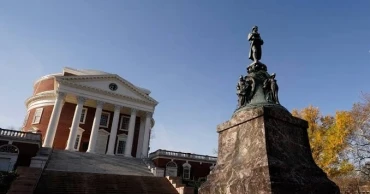
Jefferson's legacy still shapes US politics and identity 250 years after nation's founding
As the United States prepares to mark its 250th anniversary, the legacy of Thomas Jefferson continues to spark debate, with historians saying no other American founder reflects the country's ideals and contradictions more than the author of the Declaration of Independence.
Pulitzer Prize-winning historian Jon Meacham says defining what it means to be "Jeffersonian" is far from simple because Jefferson's ideas have been interpreted differently across generations.
Meacham notes that before the civil rights movement, Jefferson was often associated with states' rights and limited government. He also points out that President Franklin D. Roosevelt once described Jefferson as an "apostle of liberty" whose principles supported America's fight against Nazi Germany during World War II.
According to Meacham, Jefferson represented both "the very best and the very worst" of the United States.
His greatest contradiction remains central to American history. Jefferson famously wrote that "all men are created equal" while owning enslaved people throughout his life. At the same time, he promoted ideas that continue to shape debates over government, individual freedom, agriculture, innovation and national expansion.
Historian Andrew Burstein says Jefferson is perhaps the most adaptable figure from early American history, with politicians across the political spectrum claiming his legacy. In his book Democracy's Muse, Burstein argues that Jefferson has been portrayed over time as everything from a Roosevelt-style liberal to a Reagan conservative and even a favorite of the Tea Party movement.
Historian Peter S. Onuf says there were periods when almost every American considered themselves Jeffersonian, yet Jefferson remained a deeply controversial figure.
That debate is especially visible at University of Virginia, the university Jefferson founded, where a memorial now honors thousands of enslaved people who lived and worked there.
At Monticello, Jefferson's historic estate, visitors are reminded not only of his role in writing the Declaration of Independence but also of the hundreds of enslaved people who lived there. The site includes a burial ground for enslaved people and an exhibit about Sally Hemings, with whom historians widely believe Jefferson had six children.
Brandon Dillard, Monticello's director of historic interpretation and audience engagement, says the site's mission is to present an honest account of America's complex origins and its ongoing struggle to live up to the ideals expressed in the Declaration.
Monticello also reflects modern challenges. Climate change has altered the estate's landscape, while the site has adopted environmentally friendly technologies, including geothermal heating systems and green-energy standards.
The estate has also faced questions about diversity among its staff. Dillard acknowledged that the lack of racial diversity among museum guides reflects a broader issue across museums and historical institutions in the United States.
Jefferson's influence has stretched across nearly every major political era in US history.
Supporters of the Confederacy and later segregationists cited his support for states' rights, while Abraham Lincoln and civil rights leaders embraced his declaration that all people are created equal.
In 1963, Jefferson's words were used by both segregationist George Wallace and civil rights leader Martin Luther King Jr. during one of the most pivotal years of the American civil rights movement.
Roosevelt relied on Jefferson's ideas to support the New Deal, while President Ronald Reagan later portrayed him as an advocate of limited government and lower public spending.
More recently, President Donald Trump has quoted Jefferson's criticism of newspapers to support his attacks on what he calls "fake news." Meanwhile, scholars such as Ibram X. Kendi have argued that Jefferson's views on colonisation and race continue to influence debates over immigration and discrimination.
Despite current political divisions over immigration, Monticello continues its long-standing tradition of hosting Independence Day citizenship ceremonies. This year's keynote speaker is scheduled to be Abigail Spanberger.
Each year, hundreds of thousands of people visit Monticello for different reasons. Some come to learn about Jefferson's achievements, while others seek a deeper understanding of America's history, including its legacy of slavery.
Among them is Duane Cromwell, who said she grew up in South Carolina learning a version of history that downplayed slavery. Visiting Monticello, she hoped to better understand the realities of America's past.
Reflecting on her experience, Cromwell compared racism to kudzu, an invasive plant common across the US South that becomes so widespread people often stop noticing it. She believes society has made progress through greater interaction among people from different backgrounds but says learning the full history remains essential.
For Cromwell, visiting Monticello was not just about understanding Jefferson. It was about understanding America itself.
1 month ago

Miss Universe Fatima Bosch speaks out for Afghan women, urges equal rights and education
Miss Universe 2025 Fatima Bosch has spoken out in support of Afghan women, saying every girl deserves the right to education, freedom and the opportunity to shape her own future.
In a recent Instagram post, Bosch highlighted the stark contrast between her own life and the lives of women living under Taliban rule in Afghanistan, where women and girls continue to face sweeping restrictions on their rights and daily lives.
"Every girl deserves education, freedom, and the chance to choose future," she wrote in the caption.
Bosch shared a series of images comparing her life and the experiences of girls attending school in different countries with those of Afghan women and girls. The photos showed Afghan women wearing blue burqas while working, waiting for food aid or living in difficult conditions.
One image carried the message: "Meanwhile, on the other side of the world... there is a woman just like me, with the same abilities, the same dreams, the same work ethic. She may even be a better person than I am. The only difference is that she's in a refugee camp and has no voice."
Since the Taliban returned to power on August 15, 2021, women and girls in Afghanistan have faced increasing restrictions on their rights. They have been barred from secondary schools and universities, prevented from entering parks, gyms, beauty salons and many other public places, and face limits on employment, travel and public participation.
The Taliban also dissolved the Ministry of Women's Affairs and replaced it with institutions responsible for enforcing the new restrictions.
In March 2022, authorities required women to be accompanied by a 'mahram', or close male guardian, when visiting health centres. Female health workers were also instructed to bring a male guardian to work.
Women have also been banned from appearing on television, while female journalists have been ordered to cover their faces on air. By late 2022, women were prohibited from attending universities and working for non-governmental organisations.
According to a United Nations report published in August 2025, more than 78% of Afghan women are not in education, employment or training. The report also said women in Afghanistan are living shorter and less healthy lives because of the ongoing restrictions.
The UN said that since 2021, nearly 100 decrees limiting the movement, participation and rights of women and girls have been introduced and enforced, with none of them reversed so far.
Bosch's message has drawn attention to the continuing struggles of Afghan women and renewed calls for the international community to support their rights and freedoms.
Source: NDTV
1 month ago
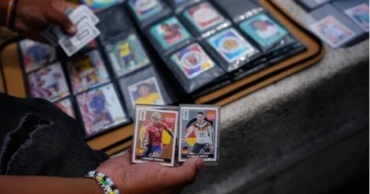
Panini World Cup sticker craze grows as fans race to complete albums
Panini's iconic World Cup stickers are in unprecedented demand, with many retailers selling out as football fans worldwide rush to complete the largest-ever tournament album featuring 980 collectible stickers.
The expanded 48-team FIFA World Cup has boosted interest in the long-running tradition, which began in 1970. Panini said it produced more than two billion sticker packs, each containing seven stickers, before the tournament started.
Retailers report demand has exceeded expectations. Adam Martin, co-owner of Dave and Adam's Card World, said his company has already reordered supplies twice after underestimating interest.
While individual stickers usually have modest value, collectors are chasing rare special-edition versions with coloured borders. Industry experts believe the ultra-rare one-of-one black-bordered Lionel Messi sticker could fetch as much as $200,000 at auction.
Collectors say the hobby's appeal extends beyond completing albums, with sticker-swapping events drawing thousands of participants worldwide. Panini has organised trading sessions in New York, while large swap meets have also taken place in Chile.
The 2026 tournament is expected to be Panini's final World Cup under its FIFA licence, with Fanatics-owned Topps set to take over production of official World Cup stickers and collectibles from the 2030 tournament, marking the end of a decades-long partnership.
1 month ago
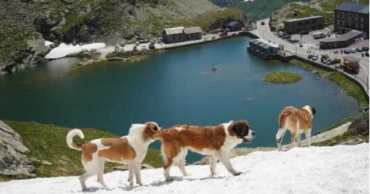
St. Bernard dogs keep Swiss Alpine tradition alive through breeding, museum
St. Bernard dogs continue to roam the famous Great St. Bernard Pass in the Swiss Alps, preserving a centuries-old tradition while a unique museum and breeding center works to protect the iconic breed for future generations.
Located in Martigny, Switzerland, Barryland, the world's only museum dedicated to St. Bernard dogs, has welcomed more than 130,000 visitors since opening last summer. The expanded facility replaced a much smaller center and offers visitors live grooming and physiotherapy demonstrations, interactive exhibits and augmented reality experiences showcasing the historic mountain pass.
Barryland Director Mélanie Glassey-Roth said strong public interest in the breed and its rich history prompted the creation of the larger facility.
"There is a lot of interest in these dogs and their heritage, so we decided to build a much bigger park," she said.
The Great St. Bernard Pass, standing 2,469 meters (8,100 feet) above sea level on the Swiss-Italian border, is one of Switzerland's highest and most challenging mountain crossings.
Large mountain dogs have lived there since the mid-1600s. Originally brought in as guard dogs, they later became famous for their remarkable ability to locate travelers trapped in snow and fog.
The breed takes its name from the Great St. Bernard Hospice, founded in 1050 by Bernard de Montjoux to provide shelter for pilgrims and merchants crossing the dangerous pass. The dogs became an essential part of the hospice's rescue work and earned worldwide recognition in the early 19th century after soldiers of Napoleon Bonaparte spread stories of their bravery across Europe.
Among them, Barry the First remains the breed's most celebrated hero. He is traditionally credited with rescuing more than 40 people between 1800 and 1812. To honor that legacy, the Barry Foundation always keeps one male dog named Barry.
Today, the Barry Foundation oversees the breed's preservation programme. Its 21 caretakers look after 32 dogs, while around 20 pedigree puppies are born each year.
Although St. Bernards no longer take part in mountain rescue missions because their large size makes helicopter transport difficult, smaller breeds such as Australian shepherds now perform those tasks. However, several St. Bernards still spend summers at the historic mountain pass to keep the long-standing tradition alive.
The foundation's dogs consume about 10 metric tons of dry food annually before returning each autumn to Barryland, about 40 kilometers away, after spending the summer in the mountains.
Caretaker Alexandra Piatti said watching the dogs grow throughout their lives is one of the most rewarding parts of her job.
"We see them from birth, watch them grow, become mothers, and support them through every stage of life," she said.
The dogs also continue to serve communities in new ways. In 2025, they carried out 609 visits to hospitals, nursing homes, schools and prisons across Switzerland, providing comfort and companionship.
Another caretaker, Déborah Dini, said preserving the breed's legacy remains central to their work.
"We continue the tradition. We care for them and we love them," she said.
1 month ago