lifestyle
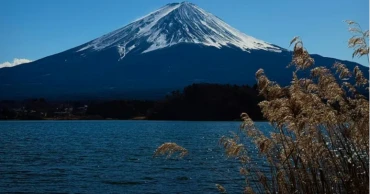
Why Mount Damavand, Asia’s tallest volcano, is so famous
Mountains rarely dominate headlines. They remain unchanged while empires rise and fall, borders move, and history reshapes nations. But Mount Damavand, Iran’s towering, snow-covered giant, refuses to remain merely a silent landmark.
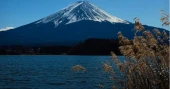
Standing at 5,609 metres, Damavand is officially Asia’s tallest volcano. Unofficially, it represents far more: a geological mystery, a cultural symbol, a mountaineer’s challenge and, more recently, a backdrop to modern conflict. Few natural monuments combine poetry, politics, science and survival so seamlessly into a single silhouette.
A peak that is more than just a mountain
Rising from Iran’s Alborz mountain range near the southern edge of the Caspian Sea, Damavand commands the landscape with its almost perfect cone and permanent snowcap, making it one of West Asia’s most recognisable peaks.
It is Iran’s highest mountain, Asia’s tallest volcano and one of the world’s most prominent peaks. Yet its significance extends far beyond geography.
Its snow-covered summit appears in poetry, folklore and even on Iranian currency. In the epic Shahnameh, Damavand is described as the prison of Zahhak, the tyrant king whose defeat symbolised justice triumphing over cruelty. Other legends place the mythical Simorgh, the bird of wisdom, atop its peak.
For centuries, writers and poets have used Damavand as a symbol of resistance, endurance and national pride, a reputation so powerful that the mountain features on Iranian banknotes.
6 months ago
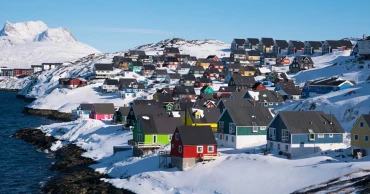
Greenland in winter and summer: A land of ice, adventure, and stunning landscapes
Greenland, an autonomous territory of the Kingdom of Denmark, is the world’s largest island. Nestled between the Atlantic and Arctic oceans, it primarily experiences two distinct seasons: long, dark winters from October to May and bright, sunlit summers from June to August.
Many also describe spring as occurring between March and May and autumn between September and October. Regardless of the season, Greenland is known for its stunning landscapes and picturesque skies, which remain a constant attraction throughout the year.
According to a December 2024 report by The Guardian, 92,673 tourists visited Greenland in 2022, rising to 131,767 in 2023. A CNN report noted that the island welcomed 141,000 visitors in 2024, with figures for 2025 yet to be released.
Despite past US President Donald Trump’s interest in acquiring Arctic territories, Greenland remains a highly sought-after destination for travelers. Visitors are drawn not only to its dramatic scenery but also to experiences such as viewing the Northern Lights, exploring Inuit culture, witnessing the midnight sun during summer, and taking part in adventure activities.
What visitors should know as Louvre ticket prices jump by 45% for many tourists
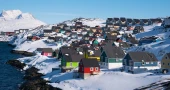
Here’s a look at how Greenland appears during its winter and summer seasons.
Greenland in winter
For those seeking a true winter wonderland, Greenland offers a chilly paradise from October through May, with temperatures ranging from -9°C to -30°C. The northern regions experience polar nights, where the sun does not rise from November to January, while the southern areas receive some daylight.
Despite the freezing conditions, visitors can enjoy a variety of activities such as Arctic ice tours, dog sledding, skiing, and snowshoeing. The northern polar nights also provide an opportunity to witness the aurora borealis, along with experiencing local life in small towns.
Spring begins in March, bringing daylight to both northern and southern regions. With sunlight reflecting off vast expanses of snow and ice, tourists are advised to wear sunscreen and sunglasses. This season also offers unique experiences such as polar plunges into icy waters, combining winter fun with bright, photogenic landscapes.
Winter storms dump snow and ice across New England
Greenland in summer
Though brief, summer in Greenland is enchanting, particularly north of the Arctic Circle, where the Midnight Sun keeps daylight constant for 24 hours. Temperatures are milder, ranging from 5°C to 15°C, allowing visitors to wear lighter clothing.
As snow melts, it unveils cascading waterfalls, green tundra, and vibrant wildflowers. Wildlife enthusiasts can spot musk ox, whales, birds, arctic hares, and reindeer. Adventure seekers can enjoy kayaking, hiking, and sailing through fjords, while icebergs, misty mornings, and local cuisine add to the charm of the season.
Summer gradually gives way to autumn, with shorter days and the return of aurora sightings. Visitors can continue camping, water activities, and outdoor exploration as long as sunlight permits, making Greenland a year-round destination for nature lovers and adventurers alike.
#With inputs from NDTV
6 months ago

From apothecaries to Americanos, traditional Chinese medicine becomes a way of life
For centuries, traditional Chinese medicine (TCM) was practiced with ritual and patience: dried roots and peels were weighed from wooden drawers, brought home and slowly boiled into a bitter brew whenever the body required healing.
Today, it can be ordered iced and sipped on the commute.
On Chengdu’s bustling Chunxi Road, a long established commercial district in southwest China’s Sichuan Province, an unexpected cup of coffee is reshaping perceptions. “It tastes like regular coffee at first,” said Shazia, a Pakistani student in China. “But there’s a light, lemony note at the end.”
The drink, a dried tangerine peel and hawthorn Americano, comes from Tong Ren Tang, a renowned traditional Chinese medicine (TCM) pharmacy with more than 350 years of history.
For many visitors, the combination can seem puzzling. Why are coffee, bread and trendy tea drinks in China increasingly blended with medicinal ingredients? The shift reflects not a return to traditional treatments but changing attitudes toward health and everyday consumption.
Read More: 5 simple lifestyle changes that may help slow biological ageing: Experts
Founded in 1669, Tong Ren Tang has expanded beyond clinical medicine into lifestyle retail. Through its youth-focused sub-brand, Zhima Health, it now offers coffee, tea, baked goods and bottled “wellness waters,” incorporating familiar herbs into modern café settings.
The menu features items such as goji berry lattes and monk fruit Americanos. These products fall under China’s concept of “medicinal and edible homology,” where certain herbs are considered food ingredients that provide mild nourishment rather than treatment.
Modern store designs and familiar flavors reduce resistance to traditional medicine. For many young consumers, the appeal lies less in proven effects than in reassurance. Health becomes a low-effort daily ritual, woven into coffee breaks and meals, as TCM finds a new role in fast-paced urban life.
6 months ago
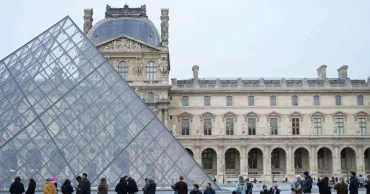
What visitors should know as Louvre ticket prices jump by 45% for many tourists
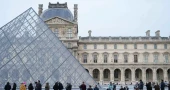
Queues stretching beneath I.M. Pei’s iconic glass pyramid have long been a defining part of a visit to the Louvre, rivaling even the draw of the Mona Lisa.
Now, the world’s most visited museum is raising the cost of entry for many travelers as it seeks funds to address mounting challenges—from overcrowding and security needs to labor unrest and the fallout from October’s high-profile theft of the French Crown Jewels. The museum was forced to close again on Monday following a staff walkout.
Beginning Wednesday, the Paris landmark will implement a two-tier pricing system, increasing ticket prices for most non-European visitors to 32 euros ($37), up from 22 euros ($26). The overnight rise amounts to a 45% increase.
The new rate applies to visitors from most countries outside the European Union, including the United States, which traditionally accounts for the largest share of foreign visitors to the museum.
The decision has drawn criticism from French labor unions, who argue that the move runs counter to the Louvre’s universal cultural mission.
Who still gets free entryAccording to the museum, the higher fee will be charged to visitors who are neither citizens nor residents of the European Union, Iceland, Liechtenstein or Norway.
The Louvre has long struggled with surging visitor numbers, an aging facility, recurring strikes and escalating security and maintenance costs—pressures faced by many of France’s major museums.
France’s CGT Culture union has condemned the tiered pricing system, saying it turns cultural access into a “commercial product” and creates unequal access to national heritage.
However, the Louvre notes that several groups will continue to enjoy free admission, including visitors under 18 and certain young residents of European countries.
The previous ticket increase took effect in January 2024, when standard admission rose from 17 euros to 22.
Impact of the Crown Jewels theftEven before the Oct. 19 daytime robbery that saw French Crown Jewels worth an estimated 88 million euros ($102 million) stolen from the Louvre, discussions were underway about raising fees for visitors from outside Europe.
The swift heist intensified concerns over the protection of priceless cultural treasures and fueled debate over how major museums should finance necessary upgrades—and whether tourists should shoulder more of the cost.
The Louvre has not explicitly linked the ticket increase to the theft.
By comparison, standard entry to Rome’s Colosseum, including the Forum and Palatine Hill, costs 18 euros ($20), while adult admission to Athens’ Acropolis stands at 30 euros ($33).
Repeated labor unrestThe museum has repeatedly faced public disruptions due to internal tensions.
In June, an unannounced strike by gallery attendants, ticket sellers and security personnel delayed the museum’s opening, leaving thousands of visitors waiting outside beneath the pyramid.
Staff members say mass tourism has overwhelmed the institution, pointing to excessive crowding, staff shortages and worsening working conditions.
Paris showcases royal jewels as city still reels from Louvre heist
By December, unions said the jewel theft and the deteriorating state of the historic former royal palace had elevated their long-standing concerns into a national issue. Louvre employees have since voted to continue striking until they see what they consider meaningful reforms.
6 months ago

How US politics is affecting international travel
The US was poised for a banner year in 2026, celebrating the centenary of Route 66, the 250th anniversary of independence, and co-hosting the FIFA World Cup. But political developments under President Donald Trump are prompting tourists to reconsider travel plans.
Since returning to office in January 2025, Trump’s administration has imposed tariffs on allies, threatened to annex Canada, detained foreign visitors at the border, and launched mass deportations. Plans to screen tourists’ social media accounts have also been floated.
As a result, several nations issued travel warnings, and international visitor spending in the US fell sharply—an estimated $12.5 billion loss in 2025, according to the World Travel & Tourism Council. Nearly half of travelers surveyed said they were less likely to visit the US because of Trump.
Trump’s recent actions abroad—airstrikes in Caracas, capturing Venezuela’s President Nicolás Maduro, renewed talks over Greenland, and threats to Cuba, Iran, Colombia, and Mexico—are extending travel concerns beyond the US. Prospective visitors to Greenland and Cuba report hesitancy, citing safety concerns and uncertainty about potential conflicts. Tour operators note immediate impacts in Cuba, while bookings to Colombia and Mexico remain largely unaffected.
Travel agencies emphasize the role of official government guidance. British tour operators, for instance, will not send clients to countries flagged as unsafe by the Foreign Office, and travel insurance is often voided if guidelines are ignored.
Some tourism officials see a silver lining. Greenland, for example, could leverage the heightened media attention to raise global awareness of its culture, nature, and history. In Iran, long-standing US policies and perceptions, rather than recent rhetoric, are the main factors affecting tourism.
For now, the travel industry is navigating a climate where perception is key, and the perceived risks of visiting the US or other targeted countries may outweigh the rewards.
With inputs from BBC
6 months ago

Eco-friendly toilet papers gain popularity, but environmental impact varies
Consumers are increasingly turning to sustainable toilet paper, seeking options made from recycled fibers or alternative materials. Traditional toilet paper relies on trees, energy-intensive manufacturing, and chemicals that can harm the environment.
Experts say switching to recycled content can have a significant impact: the Environmental Paper Network estimates that if every American used one roll of recycled toilet paper, more than 1 billion gallons of water and 1.6 million trees could be saved.
Toilet paper made from postconsumer recycled fibers—recycled from paper products already used—is the most sustainable option. Labels from the Forest Stewardship Council or the Sustainable Forestry Initiative indicate adherence to scientifically verified sustainability practices. The Natural Resources Defense Council (NRDC) also ranks brands annually, with top performers in 2025 including Aria, Green Forest, Natural Value, Trader Joe’s, and Whole Foods 365, all made entirely from recycled materials.
While bamboo and other fast-growing alternatives are marketed as eco-friendly, studies show that production methods, especially energy sources like coal in China, can offset environmental benefits. Experts recommend focusing on recycled-content paper, ideally produced with low-impact energy.
Bidets offer another way to reduce toilet paper use. By rinsing with water, bidets can significantly cut paper consumption, making them a highly sustainable alternative. Simple attachments cost around $30, while advanced seats with heated water and air dryers can exceed $600.
Although sustainable toilet paper often costs more, growing demand could lower prices over time through economies of scale. Experts emphasize that consumer choices send a strong signal to manufacturers to expand environmentally responsible options, making sustainable hygiene products more widely accessible.
6 months ago

New giant panda pair debuts publicly in Malaysia
KUALA LUMPUR, Jan. 10 (Xinhua/UNB) — Two giant pandas from China, named “Chenxing” and “Xiaoyue,” made their first public appearance in Malaysia on Saturday.
A milestone moment: Indonesia’s first giant Panda cub revealed
The panda pair, which is on loan to Malaysia, was formally introduced to visitors during a special ceremony at the Giant Panda Conservation Center at Zoo Negara, the country’s national zoo. The debut followed a period of quarantine and adjustment to their new environment.
Meet Jia Jia and De De, Hong Kong's first locally born giant pandas
Malaysian Prime Minister Anwar Ibrahim attended the event as the guest of honor, alongside senior government officials and Chinese Ambassador to Malaysia Ouyang Yujing.
Giant Panda "Yi Yi" celebrates second birthday in Malaysia
6 months ago
Winter storms dump snow and ice across New England
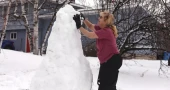
A wave of wintry weather swept across New England on Wednesday, bringing a mix of snow, ice, sleet and freezing rain that led to hazardous driving conditions and widespread school closures, while forecasters warned of additional storms later in the week.
Rain, snow and slush coated roads across the region, prompting dozens of school districts to either close or delay opening. Although snowfall totals were expected to be modest, officials said icy roads made it too dangerous to operate school buses safely.
Some areas saw around a tenth of an inch of ice accumulation—enough to create slick and dangerous conditions, though slightly below levels typically associated with widespread power outages. Even so, several thousand customers lost electricity, mainly in Maine, with hundreds more affected in Massachusetts.
School officials cited safety concerns as the main reason for closures. Administrators at Maine Regional School Unit 21 in Kennebunk said icy conditions along both morning and afternoon bus routes posed risks to students and staff.
All six New England states were placed under winter weather advisories by the National Weather Service, which also issued hazardous outlooks for northern regions that may face more severe winter storms in the coming days. Forecasters warned that heavy rain followed by falling temperatures could further worsen road conditions later in the week.
Transportation officials in Maine, New Hampshire and Massachusetts reported numerous crashes and vehicles sliding off roads, though no serious injuries had been reported by late Wednesday morning. Several regional airports, including Boston’s Logan International Airport, were forced to deice aircraft due to the snow and ice.
In parts of southern Maine, winter weather advisories were issued even though snowfall was expected to reach only about two inches. Meteorologists said the combination of freezing rain, sleet and snow justified the warnings. Another weather system is forecast to bring rain late Friday into Saturday, followed by a chance of snow extending into Sunday.
Patriotic crystal ball to light up Times Square on New Year’s Eve as US 250th anniversary begins
Officials said such mixed winter precipitation significantly worsens travel conditions, even when snow totals remain relatively low.
6 months ago

FACT FOCUS: Trump spreads confusion over childhood vaccination numbers
President Donald Trump stirred confusion about childhood vaccines in social media posts following changes to U.S. federal recommendations.
On Monday, the Trump administration took the unusual step of reducing the number of vaccines routinely recommended for all children. Previously, the government broadly advised immunizations against 11 diseases, plus additional vaccines that are now categorized for at-risk children or recommended through “shared decision-making” with a healthcare provider.
Leading medical organizations, however, continue to endorse prior schedules, saying no new scientific evidence supports the change and warning that conflicting guidance could leave children vulnerable to preventable illnesses.
Trump tweeted that “America will no longer require 72 ‘jabs’” for children and posted a graphic comparing U.S. vaccination numbers to a European country that supposedly gave 11 shots. Both claims were misleading.
According to federal records, the U.S. childhood vaccination schedule previously covered routine protection against 18 diseases, with doses spread across different ages. The total number of injections a child received varied depending on factors such as combination shots, brand differences, and the child’s starting age. Excluding annual flu vaccines and COVID-19 shots, most children received about three dozen injections.
Under the new schedule, children receiving only the recommended-for-all vaccines would get roughly 23 injections, covering diseases like measles, whooping cough, polio, chickenpox, and HPV.
Contrary to Trump’s claim, no child was ever required to receive 72 injections. While states mandate certain vaccines for school enrollment, these requirements are narrower than the prior federal schedule and allow exemptions in many cases.
Medical experts say clear communication is crucial to avoid public misunderstanding and maintain trust in vaccination programs.
6 months ago
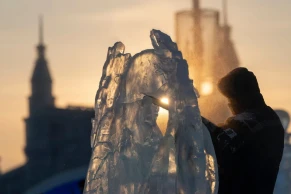
Artists sculpt magic at Northern China’s ice and snow festival
Every January, the northeastern Chinese city of Harbin hosts a remarkable winter tradition. Despite the city - capital of Heilongjiang province—already being blanketed in ice, artists flock here from near and far to create even more, competing to craft the year’s finest ice sculpture.
The result is enchanting. Illuminated from within, the sculptures transform parts of the city into a magical, almost cinematic landscape, reminiscent of a festive holiday show. Visitors, often traveling long distances, bundle up to experience the spectacle.
5 simple lifestyle changes that may help slow biological ageing: Experts
In images captured by Associated Press photographer Ng Han Guan on Saturday, an ice sculptor readies his piece for the festival’s competition, while spectators approach the glowing icy steps of a towering obelisk adorned in yellow and purple lights.
The festival continues through mid-February, and for the adventurous, it even offers the chance to swim among the ice.
6 months ago