lifestyle

Mount Olympus seeks UNESCO World Heritage status for its cultural and natural value
Greece is hoping to secure UNESCO World Heritage status for Mount Olympus, the country's highest peak and the legendary home of the ancient Greek gods, by highlighting its unique blend of mythology, history, biodiversity and natural beauty.
The 2,918-metre (9,573-foot) mountain, snow-covered for much of the year, has long been linked to ancient Greek mythology. According to legend, Zeus, the king of the gods, ruled from its highest peak after defeating the Titans.
Greece's nomination for Mount Olympus as a mixed cultural and natural World Heritage site will be considered during the UNESCO World Heritage Committee meeting in Busan, South Korea, running from Sunday to July 29.
"Olympus is part of our everyday life," said Evagelos Geroliolios, mayor of Dion-Olympus municipality, based in the mountain town of Litochoro. "It represents mythology, history, biodiversity, stunning landscapes and a rich cultural heritage."
Interest in the mountain may also increase with the release of Christopher Nolan's latest film, The Odyssey, based on Homer's epic, where Mount Olympus is portrayed as the home of Zeus and the Olympian gods who shape Odysseus' journey.
Archaeological discoveries have added to the mountain's historical importance. Excavations on one of its lower peaks uncovered an ancient open-air sanctuary dating back to the Hellenistic era (323 B.C. to 30 B.C.). Historians believe it may be the sanctuary mentioned by the ancient writer Plutarch, who described religious processions and animal sacrifices dedicated to Zeus.
Mount Olympus also remained an important religious site during the Christian era. It is home to what is believed to be the world's highest Orthodox Christian chapel, located on the Prophet Elias peak at 2,803 metres. The mountain also contains the remains of a monastery founded in 1542 and the Holy Cave of St. Dionysios, where a small spring is believed by many to have holy water.
Beyond its cultural and religious importance, Mount Olympus is known for its rich wildlife and plant life, including many species found nowhere else. Local officials believe this combination of natural and cultural significance makes it a strong candidate for World Heritage recognition.
"We want to preserve this place for future generations," Geroliolios said, adding that UNESCO recognition would be an achievement of global importance rather than just a local or national one.
Greece first placed Mount Olympus on UNESCO's Tentative List in 2014, the required first step before submitting a formal nomination. The application has since undergone detailed evaluations by international heritage and conservation experts.
However, the mountain's inclusion is not guaranteed. A draft agenda for the UNESCO meeting suggests the committee may ask Greece to provide additional information before making a final decision.
Despite the uncertainty, local residents remain hopeful that the mountain's exceptional natural and cultural value will earn it a place on the prestigious list.
Supporters also believe World Heritage status would strengthen efforts to protect the mountain, although it could also bring more visitors.
Mountain guide Babis Marinidis, president of the Alpine Club of Litochoro, said increasing tourism could put additional pressure on the fragile ecosystem.
"How many visitors can this mountain and its ecosystem really support?" he asked, noting that many tourists ignore restrictions such as bans on camping and swimming.
Because of the growing number of visitors, local authorities are considering measures such as entry fees and visitor registration to better manage tourism. Marinidis said he had previously opposed such restrictions but now believes limits may be necessary.
Mount Olympus remains a popular destination for hikers and climbers from around the world. Although reaching the summit does not require advanced climbing skills, rapidly changing weather and difficult terrain can make the mountain dangerous.
On July 11, a 64-year-old Greek hiker died after collapsing on a trail. In May, rescue teams recovered the body of a 25-year-old Spanish climber who went missing while attempting to reach the summit through snowy conditions.
First-time visitor Triantafyllos Giannospyros said careful planning and proper preparation are essential.
"You need to respect the mountain and always put safety first," he said.
Hotel owner Stavroula Vourou, whose business serves many hikers visiting Litochoro, shared the same view.
"People come here to conquer the mountain," she said. "But if you respect Mount Olympus, it will respect you too."
15 days ago

Paris Grand Mosque marks 100 years, highlights unity and interfaith dialogue
The Grand Mosque of Paris marked its 100th anniversary on Friday, with worshippers and religious leaders celebrating its history while calling for greater unity, religious tolerance and understanding in France.
Built a century ago to honour Muslim soldiers from France's former colonies who fought and died in World War I, the mosque has become one of Paris' best-known landmarks and an important place of worship for the country's Muslim community.
Chems-eddine Hafiz, rector of the Grand Mosque, described the mosque as a symbol of France's diversity and interfaith dialogue. However, he expressed concern over growing religious tensions linked to conflicts in the Middle East and the country's increasingly polarised political climate ahead of next year's presidential election.
"It is everyone's responsibility to see Muslims as part of the national community," Hafiz told The Associated Press.
People from across the Paris region attended the centenary prayers, including French-born Muslims and families with roots in Algeria, Senegal and other former French colonies.
Located in the historic Latin Quarter, the mosque is also a popular tourist attraction. Inspired by Spain's Alhambra Palace in Granada, it features an ornate prayer hall, a 33-metre-high minaret overlooking the Seine River, a traditional tea room and a hammam.
Built to honour Muslim soldiers
Hafiz said the mosque was built to recognise the sacrifices made by Muslim soldiers who fought for France during World War I, particularly those who died in battles such as Verdun.
He noted that when the mosque opened in 1926, then French President Gaston Doumergue described France's diversity as a source of national strength.
While he believes that message remains relevant today, Hafiz said prejudice against Muslims continues.
"Anti-Muslim acts are still committed, and Islam is often misunderstood," he said.
Calls for greater acceptance
Islam is the second-largest religion in France, which has Western Europe's biggest Muslim population. However, many Muslims say they still face discrimination and negative stereotypes, especially after a series of extremist attacks over the past decade.
The issue has become more prominent as campaigning begins for France's 2027 presidential election, with far-right leader Marine Le Pen and her National Rally party continuing to focus on immigration and Islam.
Volunteer Fatma Chouchane said Muslim women should be free to choose whether to wear headscarves without restrictions in schools or workplaces.
"I ask France to leave these people alone and let them make their own religious choices," she said.
Despite those concerns, Chouchane said the mosque's centenary should be a celebration of unity.
"It is a symbol. It is the Paris museum for Muslims. We must all stand together," she said.
For Ibrahima Seye, who moved to France from Senegal, the Grand Mosque was one of the first places he visited after arriving in the country.
"It's always open," he said. "It is important for the Muslim community, and many tourists also appreciate it."
16 days ago
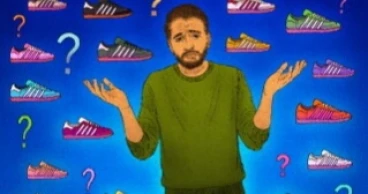
Cutting daily choices can reduce stress and improve decision-making, experts say
Modern life often encourages people to believe that having more choices leads to better decisions whether it is buying clothes, choosing entertainment or finding the right partner. But psychologists say too many options can have the opposite effect, making people feel overwhelmed, anxious and less satisfied with their decisions.
Barry Schwartz, emeritus professor of psychology at Swarthmore University and author of The Paradox of Choice, said research over the years has consistently shown that too many choices can create mental stress rather than freedom.
"There have been hundreds of studies showing that there can be too much of a good thing," Schwartz said.
He advised people to reduce the number of decisions they make every day, saying it helps lower mental pressure and makes decision-making easier.
Too many options can discourage decisions
Schwartz cited several studies showing that people often avoid making decisions when faced with too many choices.
For example, people were less likely to select a Medicare Part D prescription drug plan in US states offering more plan options. A similar pattern was found with 401(k) retirement savings plans, where employees were less likely to join when employers offered too many investment choices—even when matching contributions were available.
The same trend appears in everyday life. One well-known study found that shoppers bought more jars of jam when offered six flavours than when they had 24 choices. Another study showed students were more likely to complete an extra-credit assignment when they could choose from six topics instead of 30.
According to Schwartz, too many options can leave people feeling stuck.
"Instead of being liberated by all this choice, you're paralyzed," he said.
He added that people may also become less satisfied with their final decision because they keep wondering whether another option would have been better.
This is especially true for people psychologists describe as "maximizers"—those who always want the absolute best choice.
However, Schwartz noted that not everyone reacts the same way. People with a strong interest in a particular subject, such as car enthusiasts, often enjoy comparing many options before making a purchase.
Brain prefers familiar decisions
Daniel Willingham, a psychology professor and neuroscience researcher at the University of Virginia, said the human brain naturally tries to avoid unnecessary thinking because problem-solving requires more energy than relying on habits or memory.
He explained that when people face a task, the brain first searches for familiar solutions before using deeper thinking.
"Another way to put it is that if you're thinking, things are not going well," he said.
This is why many people follow the same daily routines, such as taking the same route to work, even though they have other options.
Schwartz added that social media has made the problem worse by encouraging constant comparisons with other people's choices, increasing expectations that every decision should be perfect.
Aim for "good enough"
Author David Epstein said researching his book Inside the Box: How Constraints Make Us Better changed the way he makes decisions. Instead of endlessly comparing products, he now limits his choices—for example, buying several of the same T-shirt in different colours once he finds one that fits well.
His approach follows the idea of "satisficing," introduced by Nobel Prize-winning economist and psychologist Herbert Simon. The concept encourages people to choose an option that meets their needs instead of searching endlessly for the perfect one.
Epstein said he now sets simple rules before shopping online. Once he finds a product that meets his main purpose, he buys it instead of continuing to compare endless features and reviews.
Both Willingham and Schwartz also recommend relying on trusted advice for some decisions. Instead of researching every available phone, for example, people can simply buy a model recommended by a satisfied friend.
For more important decisions, such as financial planning, Willingham said seeking professional advice often leads to better outcomes than trying to figure everything out alone.
Schwartz acknowledged that changing decision-making habits can be difficult, but said the benefits are significant.
Over time, he said, people become more confident in their decisions, feel happier with their choices and save valuable time each day.
16 days ago

America revisits permanent daylight saving time after 1970s failure
The United States is once again considering ending its twice-yearly clock changes, as lawmakers debate legislation that would make daylight saving time permanent despite a failed attempt in the 1970s.
The House of Representatives this week overwhelmingly approved a bill to keep clocks one hour ahead year-round. The proposal now faces uncertainty in the Senate, where several Republicans oppose the measure. President Donald Trump has expressed support for the legislation.
Americans currently move clocks forward in spring and back in autumn. However, an AP-NORC poll last year found only 12 percent of adults supported the biannual time changes, while nearly half opposed them. The American Medical Association and the American Academy of Sleep Medicine have backed adopting a single year-round time system.
The US previously experimented with permanent daylight saving time between January and October 1974 before repealing it amid public opposition, largely over concerns that children were travelling to school before sunrise.
Experts say any renewed effort should also consider adjusting US time zones, as sunrise varies widely across large regions. Republican Senators Tom Cotton and Mike Rounds warned that permanent daylight saving time could leave some areas in darkness well into the morning, with sunrise in parts of South Dakota occurring after 9:30 a.m. during winter.
17 days ago

How to ease thumb pain from texting, scrolling on smartphones
Frequent texting, scrolling and prolonged smartphone use can strain the hands and thumbs, causing pain, stiffness and discomfort that may develop into more serious conditions if left unaddressed, according to medical experts.
Often referred to as "texting thumb," the condition includes symptoms such as aching joints, stiffness, pain near the base of the thumb and clicking sensations during movement. Repetitive use of smartphones can also increase the risk of conditions such as carpal tunnel syndrome, thumb arthritis, trigger thumb and De Quervain's tenosynovitis.
Experts say modern smartphones are larger and heavier than earlier devices, while people now spend significantly more time using them—not only for calls and messages but also for social media, online banking, streaming videos and other daily activities.
Dr. Maureen O'Shaughnessy of the University of Kentucky HealthCare Hand Center said smartphones are now an integral part of everyday life, making it more practical to adopt healthier usage habits rather than avoiding devices altogether.
She advised users to avoid maintaining the same hand, wrist and elbow position for extended periods, as this can strain tendons and joints. Alternating hands while texting, using different fingers instead of relying solely on the thumbs, and changing posture regularly can help reduce stress on the hands.
Experts also recommend making use of smartphone accessibility features such as voice-to-text and increasing font size to lessen thumb movement and reduce the need to hold the phone close to the face.
Grip accessories, including ring or loop attachments on the back of phones, can improve comfort by distributing the device's weight more evenly across the hand. These accessories can also serve as stands when watching videos.
Daily stretching exercises may also provide relief. Doctors suggest gently flexing the wrists, stretching the fingers and moving the thumbs in small circles. For pain at the base of the thumb, placing the hand flat on a surface and gently pulling the thumb away from the fingers for about 30 seconds may help ease discomfort.
Medical experts advise seeking professional treatment if pain, numbness or tingling continues despite reducing screen time and using home remedies such as ice packs or over-the-counter anti-inflammatory medication.
Dr. Eugene Tsai of Cedars-Sinai Orthopaedics and Sports Medicine noted that human hands were not designed for prolonged smartphone use and emphasized the importance of taking regular breaks and using devices in ways that reduce strain on the joints and tendons.
18 days ago

Life in one of the world's hottest towns: How Banda residents struggle with extreme heat
Scorching temperatures around the clock, frequent power cuts and sleepless nights have become part of daily life for residents of Banda, a town in northern India that has repeatedly ranked among the hottest places on Earth.
Climate change, driven largely by the burning of fossil fuels such as coal, oil and gas, is making heatwaves across India more frequent and severe, according to experts. Banda, in Uttar Pradesh state, has been among the worst-hit areas.
In May, the town recorded a temperature of 48.2 degrees Celsius (118.8 degrees Fahrenheit), one of several occasions this year when it was India's hottest location. Climatologist and weather historian Maximiliano Herrera said Banda also ranked as the hottest place on Earth on seven different days this year, most of them in April.
Although temperatures have eased slightly since then, high humidity brought by the monsoon has kept conditions uncomfortable.
An Associated Press team visited Banda in June to see how residents cope with the extreme heat.
Before sunrise, 70-year-old Munni Devi and her four sons begin unloading vegetables at the local market while temperatures are already around 30 degrees Celsius.
Despite the exhausting conditions, Devi said missing work is not an option.
"Everyone feels the heat, but because of our circumstances, we have to bear it," she said.
She said the heat has become more intense every year, while unreliable electricity leaves many families without even ceiling fans for hours at a time. To keep cool, her grandchildren are often sprayed with water using a hose.
As temperatures climb during the afternoon, many people remain indoors if possible. But street vendors and auto-rickshaw drivers continue working outside to earn a living.
Meanwhile, 70-year-old animal lover Shobharam Kashyap spends his afternoons building wooden birdhouses to help birds survive the extreme weather.
He and other volunteers have installed more than 15,000 birdhouses across Banda, many painted green because he believes birds prefer that colour. He has also placed clay bowls filled with water around his home for birds to drink and cool off.
Kashyap said caring for birds reflects a long-standing cultural tradition in India, where people often leave food for birds at temples.
The rising temperatures are also putting pressure on Banda's healthcare system.
Doctors at the town's main hospital say patient numbers increase every summer, with many suffering from dehydration, heat exhaustion, diarrhoea, vomiting and abdominal pain.
Hospital superintendent Dr Abhishek Pranayami said admissions continue to rise every year, placing growing pressure on doctors and medical staff.
Even after sunset, temperatures remain high, forcing many residents to spend the night outdoors.
At Banda railway station, families gather on open platforms hoping for cooler air. Some sleep on blankets spread across the platform, while others rest on benches or near the station entrance. Labourers whose homes remain unbearably hot often sleep on nearby pavements or even on gravel despite traffic and noise.
Parents with young children sometimes stay awake through the night, waiting at the station where the open space offers some relief from the heat.
Climate and health expert Abhiyant Tiwari of NRDC India said Banda has always experienced hot summers, but climate change is making heatwaves more intense, longer-lasting and more dangerous.
He warned that persistently high night-time temperatures are especially harmful because they prevent the human body from recovering after prolonged daytime heat exposure.
District Magistrate Amit Aasery said local authorities have opened cooling centres, distributed hundreds of thousands of oral rehydration solution (ORS) kits and strengthened hospital preparedness during heat alerts.
Officials are also monitoring groundwater levels, soil moisture and vegetation while working to improve water supplies and raise public awareness about heat risks.
However, Aasery acknowledged that local efforts alone cannot solve the problem.
"What is happening here is a global phenomenon. It is because of climate change. We are the recipient of this," he said.
18 days ago
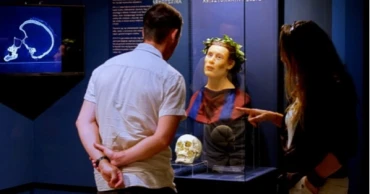
Ancient Roman faces recreated in Hungary exhibition using DNA and forensic science
A new exhibition in Hungary is giving visitors a rare chance to meet the people of ancient Rome through lifelike facial reconstructions based on DNA analysis and forensic science.
The exhibition, titled "Once We Were Like You," is being held at the Aquincum Museum in Budapest until Oct. 31. It features highly detailed reconstructions of more than a dozen people whose skulls were unearthed in Aquincum, a thriving Roman settlement on the Danube frontier nearly 2,000 years ago.
The reconstructed faces include a blacksmith, a stable boy, a soldier and a slave, offering a glimpse into the lives of ordinary people who once lived in the Roman city.
"Our main goal was to bring some of these individuals closer to people today," said Loránt Vass, an archaeologist and co-curator of the exhibition.
According to the museum, the exhibition seeks to answer questions about everyday people in ancient times—what they looked like, who they were and how they lived.
Experts used DNA extracted from the bones to identify features such as skin, hair and eye colour, and even whether a person likely had freckles. The skulls also provided clues about facial structure, age, injuries and diseases.
Using these findings, curators created names, occupations and life stories for each reconstructed individual, based on historical evidence and scientific analysis.
"We don't know their real names, unfortunately, but we tried to include everything anthropology and genetic studies could tell us about their lives," said co-curator Péter Vámos.
One reconstructed figure, named Respectus, is portrayed as a construction worker who earned a living plastering walls and cutting stone. According to the exhibit, years of hard labour left visible marks on his bones. It also suggests he broke his nose and lost a tooth during a tavern fight after drinking wine.
Vass said Respectus reflects the lives of many people who lived in Aquincum. Analysis showed that most of the skeletons had signs of inflammation, indicating years of physically demanding work.
"They regularly performed hard labour, and many also experienced periods of hunger," Vass said. "This suggests that most belonged to the lower middle class, a group that is rarely remembered in Roman history."
Among the 16 reconstructions, six are life-size silicone models that have been carefully painted and fitted with realistic hair, clothing and jewellery.
Artist Emese Gábor, who created the silicone models, said artificial intelligence can generate digital images of ancient faces, but physical reconstructions provide a more meaningful museum experience.
"They can be viewed from every angle and are life-size," she said. "I rely on scientific methods and combine traditional and modern techniques in this work."
DNA analysis also revealed the ethnic diversity of Aquincum's population. The findings showed that, alongside Roman citizens from what is now Italy, the city was home to people whose ancestors came from present-day Scotland and Syria, as well as members of the nomadic Sarmatian tribes. The region's earlier Celtic inhabitants were also represented.
Vass said archaeological discoveries often end up as stored artifacts, with little attention paid to the people behind them.
"The bodies have no weight, no life, no soul," he said.
By recreating the faces of Aquincum's former residents, the museum hopes visitors will see them as people much like themselves.
"The title of the exhibition reminds us that they were like we are today," Vass said. "They had jobs, faced challenges and lived ordinary lives. Their circumstances may have been different, but people are still people. I don't think that has changed much throughout history."
19 days ago

Duchess of Sussex Meghan earns Daytime Emmy nomination for Netflix show
Meghan, the Duchess of Sussex, has received a Daytime Emmy nomination for her Netflix lifestyle series With Love, Meghan.
The former actor, who married Britain's Prince Harry in 2018, was nominated on Tuesday in the Outstanding Lifestyle Program category.
Her show will compete with A Different Breed, George to the Rescue, The Motherhood and The Wizard of Paws.
The winners of the 53rd Annual Daytime Emmy Awards will be announced on Oct. 30 at the Hollywood Palladium.
With Love, Meghan features cooking, entertaining and gardening segments, along with appearances by celebrities including Chrissy Teigen and Mindy Kaling. Prince Harry also made a guest appearance. The series ran for two seasons in 2025 and also released a holiday special.
Before joining the British royal family, Meghan—then known as Meghan Markle—played Rachel Zane in the legal drama Suits from 2011 to 2018. She left the show before marrying Prince Harry.
CBS led all networks with 48 Daytime Emmy nominations.
The nominees for Daytime Drama Series are Beyond the Gates, Days of Our Lives, General Hospital and The Young and the Restless.
The nominees for Lead Actress in a Daytime Drama Series are Stacy Haiduk (Days of Our Lives), Karla Mosley (Beyond the Gates), Michelle Stafford (The Young and the Restless), Heather Tom (The Bold and the Beautiful) and Tamara Tunie (Beyond the Gates).
For Lead Actor in a Daytime Drama Series, the nominees are Eric Braeden (The Young and the Restless), Steve Burton (General Hospital), Scott Clifton (The Bold and the Beautiful), Thorsten Kaye (The Bold and the Beautiful) and Christian Jules Le Blanc (The Young and the Restless).
The nominees for Daytime Talk Series are 3rd Hour of Today, The Drew Barrymore Show, The Kelly Clarkson Show, Live with Kelly and Mark, TODAY with Jenna & Friends and The View.
Kelly Clarkson was also nominated for Daytime Talk Series Host. Other nominees include Joy Behar, Whoopi Goldberg, Alyssa Farah Griffin, Sara Haines, Sunny Hostin and Ana Navarro of The View, along with Tamron Hall, Jennifer Hudson and Sherri Shepherd.
Clarkson is set to end her seven-season run this fall, while Sherri was canceled in May after four seasons.
Meanwhile, ABC's The View is facing renewed scrutiny from federal regulators, who want to revisit whether the program should be subject to equal-time broadcasting rules.
19 days ago

Dog rescued from Britain's highest mountain after suspected cannabis poisoning
A dog owner has thanked a volunteer mountain rescue team after her Labrador was carried down Britain's highest mountain when it apparently became ill after ingesting cannabis during a hike.
Christina Bluhme was climbing Ben Nevis in the Scottish Highlands with her 5-year-old black Labrador, Tokyo, and another dog on July 5 when Tokyo suddenly began staggering, appearing disoriented before losing the ability to walk.
"It was a very frightening experience," Bluhme said on Monday. "She had a very bad reaction."
Bluhme, who has worked as a dog trainer for 25 years, said she had no idea at the time that cannabis might have caused the dog's condition.
The incident comes as cases of cannabis poisoning in pets continue to rise in the UK. The problem is even more common in the United States, where marijuana is legal for recreational use in many states and available for medical purposes in others. The American Society for the Prevention of Cruelty to Animals (ASPCA) added marijuana and other drugs to its list of the top 10 pet toxins for the first time in 2023. Its poison control centre reported a 10% increase in calls related to suspected marijuana ingestion compared with the previous year and nearly a threefold rise over the past five years.
When Tokyo collapsed, Bluhme, her son Magnus and the two dogs had been climbing for more than three hours and were close to the 1,345-metre (4,413-foot) summit of Ben Nevis. By then, the weather had deteriorated, with rain setting in and temperatures dropping to around 5 degrees Celsius.
Realising something was seriously wrong, Bluhme abandoned plans to reach the summit.
"I told my son we had to turn back and get her down because something was clearly wrong," she said.
Her son called for emergency assistance, but police initially said they were unsure whether a rescue team could be sent.
Fortunately, members of the volunteer Lochaber Mountain Rescue Team were already descending the mountain after helping with the helicopter evacuation of an injured hiker. The rescuers placed the 25-kilogram Labrador on a stretcher and carried her quickly down the steep, slippery trail, reaching the base in about an hour.
"They were almost running," Bluhme recalled. "I was holding onto the stretcher while they moved so quickly. It was amazing."
Police alerted Crown Vets in nearby Fort William, where a veterinarian was waiting when the group arrived.
Vets first suspected a spinal problem, but a senior veterinarian later concluded Tokyo had likely been exposed to a neurotoxin after she repeatedly drifted in and out of consciousness. Following consultation with a poison control centre, they determined her symptoms were consistent with cannabis intoxication.
Tokyo was treated with activated charcoal and made a full recovery overnight.
Although the veterinary treatment cost about 1,000 pounds (around $1,335), Bluhme said she was simply grateful her dog survived.
"By the next day, it was as if nothing had happened," she said. "She recovered very quickly, and I'm probably the one who's still recovering from the experience."
20 days ago
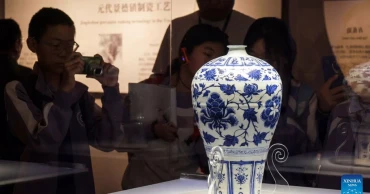
Chinese porcelain remains a timeless symbol of cultural exchange
Chinese blue-and-white porcelain has long served as a bridge between civilizations, influencing art across continents and continuing to inspire cultural exchanges today.
Italian Renaissance painter Giovanni Bellini highlighted three pieces of blue-and-white porcelain in his final masterpiece, The Feast of the Gods. Chinese historian Yan Chongnian said a vessel in the painting closely resembles porcelain unearthed at the imperial kiln site in Jingdezhen, east China's Jiangxi Province. Weng Yanjun, head of the Jingdezhen Imperial Kiln Institute, said the porcelain not only decorates the mythical feast scene but also reflects historical exchanges between civilizations.
As porcelain imports to Europe increased and still-life painting became popular, blue-and-white porcelain frequently appeared in Western oil paintings, demonstrating its lasting influence on European society.
Known as China's porcelain capital, Jingdezhen has produced ceramics for more than 1,700 years. Since the Song Dynasty (960-1279), its porcelain has been exported to Central Asia, West Asia, Europe and Africa. Ge Chengyong, a professor at the China Academy of Cultural Heritage, said Chinese porcelain preserves the memory of civilizations, promotes mutual learning and contributes to global culture.
The exchange also influenced Chinese ceramics. Jiangxi Provincial Academy of Culture and Tourism researcher Li Shiqi said mythological themes became common on export porcelain in the mid-18th century, creating new artistic possibilities and strengthening cultural understanding.
Today, artists continue to combine oil painting with ceramic art. Jingdezhen-based ceramic artist Wang Yantian said the fusion enriches artistic expression, supports cultural inheritance and boosts industry development.
The city also attracts international artists. Australian artist David Reid, who moved to Jingdezhen in 2018, said the city inspires him to blend Chinese elements with Western modernism. French ceramic artist Camille Kami, impressed by Jingdezhen's centuries-old craftsmanship, chose to settle there after studying ceramics across Europe.
Chen Kelong, Jingdezhen Party chief, said the city will continue promoting creativity and innovation while strengthening international cultural exchanges. He said Jingdezhen has established partnerships with more than 180 cities in over 70 countries and attracts artists and ceramists from more than 50 countries and regions.
21 days ago