lifestyle
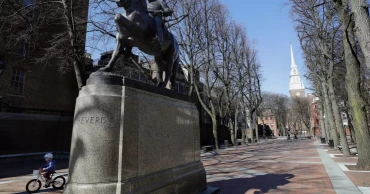
City strolls can be as beneficial as nature walks, say researchers
Strolling through a leafy park or along a forest trail is often seen as the ultimate stress reliever. The crunch of fallen leaves, the sound of a rushing stream, and the gentle rustle of trees all combine to calm the mind. But could a walk through busy city streets offer similar benefits?
Researchers say yes — if you know where and how to walk.
While nature walks are widely known to lower stress, improve focus, and promote mental well-being, new studies suggest that walking in urban environments can also provide meaningful psychological benefits. The key, experts say, lies in paying attention to your surroundings and finding elements that engage your senses.
Whitney Fleming, an environmental psychology researcher at Bangor University in Wales, said people shouldn’t underestimate the value of urban greenery. “Look at the green,” she said. “Most cities have greenery. No matter where you are, you can find a nice tree.”
Walking itself is a powerful form of moderate exercise that can help reduce the risk of heart disease, high blood pressure, dementia, depression, and certain cancers, she added. But being mindful of nature — even in small doses — can amplify those benefits. Fleming’s research found that people who noticed plants while walking felt significantly less anxious and more positive than those focused on man-made surroundings.
“Having natural elements to look at in cities is really important because you can still receive benefits even when not in a purely natural setting,” she said.
Other researchers argue that urban environments, too, can nurture mental well-being. Cesar San Juan Guillen, a social psychology professor at the University of the Basque Country in Spain, said earlier studies often unfairly compared peaceful nature scenes with stressful cityscapes.
His research compared visitors to a green urban park with those spending time in a lively plaza featuring a historic church, playground, and cafes. Both groups reported improved focus and fewer negative emotions, but those in the busier plaza felt even more energized and relaxed.
Historic city centers, cemeteries, and places with sweeping views can spark what psychologists call “soft fascination” — a gentle, restorative form of attention. “This type of involuntary attention may be more effective at helping people recover from mental fatigue caused by work or study,” San Juan Guillen said.
Urban design also plays a role in how people experience city walks, said Tristan Cleveland, an urban planning consultant with Canadian firm Happy Cities. His research shows people tend to walk faster past blank walls and are less likely to stop and chat.
To get the most out of a city walk, Cleveland recommends routes that evoke interest and pleasure — what he calls the “first kiss test.” “If it’s a place you’d take someone on a date, it’s probably the right kind of place for a walk,” he said.
Annabel Abbs-Streets, author of The Walking Cure and 52 Ways to Walk, agreed, saying moments of joy can be found anywhere — from the historic streets of Dubrovnik to the peaceful cemeteries of London.
“It’s not that green is good and gray is terrible,” she said. “They’re just different — and sometimes that difference itself can be good.”
Source: AP
9 months ago

Solid gold toilet set for auction with $10 million starting price
Sotheby’s has announced the auction of a solid gold toilet, described as the world’s most valuable lavatory. The piece, titled “America”, was created by Italian artist Maurizio Cattelan and is both a fully functional toilet and a sculpture.
The auction, scheduled for November 18 in New York, will start at roughly $10 million, reflecting the value of the 101.2 kilograms (223 pounds) of gold used to make it. Sotheby’s calls the work an “incisive commentary on the collision of artistic production and commodity value.”
Cattelan, known for provocative works like the duct-taped banana “Comedian” and the kneeling Hitler sculpture “Him”, said “America” satirizes extreme wealth. The artist noted, “Whatever you eat, a $200 lunch or a $2 hot dog, the results are the same, toilet-wise.”
Doctors prescribe time outdoors to boost mental and physical health
Two versions of the toilet were made in 2016. The one being auctioned has been privately owned since 2017. Its counterpart was displayed at the Guggenheim Museum, where visitors could book a three-minute session to use it. That version was also shown at England’s Blenheim Palace in 2019 but was stolen shortly after.
The toilet will be on display at Sotheby’s New York headquarters from Nov. 8. Visitors can view it up close, but it will not be functional this time.
Source: AP
9 months ago

Climate anxiety drives young Americans to reconsider having children
For 27-year-old Amanda Porretto, starting a family is far from certain. As the average age of first-time mothers in the U.S., she feels social pressure from her family — especially her father, who wants grandchildren — but she’s unsure about bringing a child into a world threatened by climate change.
“Some people think it's bad not to have a child,” said Porretto, who works in advertising. “I just don’t think I need to bring more people into a world where there’s already so much to fix.”
An increasing number of young Americans share Porretto’s hesitation. Studies show that concerns about global warming and its future effects — from extreme weather to resource scarcity — are influencing decisions about parenthood.
A 2024 Lancet study found that most people aged 16 to 25 were “very” or “extremely” worried about climate change, and more than half said it made them hesitant to have children. A Pew Research Center report from last year found that adults under 50 without children were four times more likely than older adults to cite climate change as a reason for delaying or avoiding parenthood. Another study in the Proceedings of the National Academy of Sciences this year found over half of respondents said climate concerns made them question having kids.
Climate impact of having childrenThe link between parenthood and climate change extends beyond fears for children’s safety to concerns about their carbon footprint.
“Having a child is by far, by orders of magnitude, the most carbon-intensive decision a person can make,” said Nandita Bajaj, executive director of Population Balance, a nonprofit focused on human environmental impact.
Johns Hopkins bioethics professor Travis Rieder calls this effect a “carbon legacy.”“You’re not just engaging in carbon-expensive activities like buying a bigger house or car,” he said. “You’re also creating someone who will have their own carbon footprint — and possibly more children — for generations.”
Quantifying a child’s environmental impact is complex, he noted, as it depends on factors like lifestyle and wealth. For instance, data from the Emissions Database for Global Atmospheric Research show that, per capita, the average American emits over 12 times more carbon than the average person in Ghana.
Global warming reshapes extreme rainfall, snowfall across Northern Hemisphere: Study
Why it’s a difficult conversationDespite its large impact, procreation is rarely discussed as a climate issue. Experts say this is because pregnancy is typically seen as a time for celebration, not criticism, and because such discussions often evoke controversial debates about overpopulation from the 1970s that were tied to racism and eugenics.
Climate factors into personal decisionsFor some, like 43-year-old writer Ash Sanders, climate change was central to her decision not to have children — though life took a different turn. When she unexpectedly became pregnant, she felt pressured by her Mormon upbringing and her partner to keep the baby. She later chose an open adoption.
“I feel guilt for bringing her into the world,” Sanders said. “She’s happy and amazing, but I still feel guilt all the time.”
Juan Jaramillo, a marine biologist, said environmental concerns influenced his decision as a teenager in the 1970s to never have children. “Pollution and other issues were already serious back then,” he said. “It just didn’t make sense to me.”
For Rieder, who has studied the ethics of reproduction and climate, the issue was deeply personal. “Having children is meaningful and important — but also carbon expensive,” he said. “The question is how to balance those two truths.”
For him, that balance meant having one child.
Source: AP
9 months ago

Amitabh Bachchan proud as grandson Agastya Nanda debuts in Ikkis
Veteran actor Amitabh Bachchan expressed pride and emotion over his grandson Agastya Nanda, who will make his film debut in Ikkis. The trailer of the Sriram Raghavan-directed movie was released on Tuesday to a positive response.
Amitabh Bachchan took to X to share a heartfelt note about Agastya’s milestone. He wrote, “Agastya! I held you in my hands when you were born… today you play in theatres all over the world. You are SPECIAL. All my prayers and blessings to you… may you bring glory to your work and pride to the family.”
Agastya’s father, industrialist Nikhil Nanda, also expressed his pride on Facebook. He said, “Watching the trailer of Ikkis, I felt immense pride – as a father and as an Indian. Agastya’s portrayal of Second Lieutenant Arun Khetarpal (PVC) is a moving tribute to courage and our nation’s spirit. Wishing Agastya, Sriram Raghavan, and the Ikkis team every success.”
Produced by Maddock Films, Ikkis features a stellar cast including Agastya Nanda, Dharmendra, and Jaideep Ahlawat. The film is scheduled for theatrical release in December 2025.
Source: NDTV
9 months ago

7 Most Affordable Countries for Citizenship by Investment in 2026
As global mobility has become a form of financial strategy, citizenship-by-investment programmes are drawing attention beyond the super-rich arena. More nations now offer cost-effective routes to second homes. It allows investors to expand their portfolios geographically while unlocking visa-free access and new business opportunities. These programmes merge lifestyle flexibility with long-term economic security, often for far less than expected. Here’s a list of the cheapest golden visa programmes in 2026.
7 Easiest Countries to Buy Citizenship in 2026
.
Nauru
Titled the Economic and Climate Resilience Citizenship Program, Nauru has shaped its Citizenship by Investment initiative. Through this programme, investors obtain a stable second citizenship and contribute to Nauru’s climate resilience and long-term growth.
The Nauruan passport, respected for its political neutrality, serves as a safeguard during times of global uncertainty. It grants visa-exempt access to 88 strategic destinations, including the UAE, the UK, Hong Kong, and Singapore.
To qualify, investors must contribute a minimum of USD 130,000 (BDT 1,59,29,953, with USD 1 = BDT 122.54). Families can apply together, including spouses, dependent children, parents, and even siblings, for additional fees.
Read more: Digital Nomad Visas in Europe in 2026: Top 10 European Countries
Importantly, contributions are made only after government approval, ensuring financial protection for applicants. Nauru imposes no restrictions on dual nationality, allowing new citizens to retain their existing passports.
Dominica
When it comes to the most efficient and affordable citizenship programmes, the Caribbean nation of Dominica shines with flexibility. The application process stands out for its speed and the absence of residence requirements, making it highly appealing to global investors.
Applicants may choose between contributing to the Economic Diversification Fund or investing in government-approved real estate projects. Each option requires a minimum investment of USD 200,000 (BDT 2,45,07,620).
Holding Dominican citizenship opens entry upon arrival or visa-free entry to 142 destinations, a network that covers key business and leisure hubs across the globe. The programme also accommodates family inclusions, like spouses, unmarried dependent children under 31, and parents or grandparents over 65 for extra fees.
Read more: China’s K Visa For Bangladeshi Professionals: Eligibility, Application Process, Fees
North Macedonia
Europe’s most affordable golden visa pathway is the investment migration framework of the Republic of North Macedonia. A North Macedonian passport allows visa-on-arrival or open-border travel to 125 nations, among them the Schengen Area, Türkiye, and Hong Kong.
The investment threshold begins at EUR 200,000 (approximately BDT 2,83,96,000), which must be maintained for at least a two-year commitment to a private investment. Applicants may include their spouses and accompanying children below 18, with extended fees. However, spouses can secure citizenship one year after the main applicant’s approval.
Antigua and Barbuda
Known for its competitive and flexible citizenship programme, Antigua and Barbuda offers several routes to citizenship. Among them, a contribution to the National Development Fund remains the most budget-friendly at USD 230,000 (BDT 2,81,83,763). The passport grants entry without a visa or on-arrival visa to about 150 destinations, including the UK, Hong Kong, and Europe’s Schengen Area.
The programme accommodates a wide family circle: spouses, dependent children under 31 (along with their own spouse and children), parents, and grandparents aged 55 or above. Even unmarried siblings of either the main applicant or their spouse can be included, all with additional fees.
Read more: Top 10 Countries Offering Post-Study Work Visas for International Students
A modest requirement applies – citizens must spend at least five days in the country within the initial five-year period post-citizenship.
St Lucia
For those pursuing global access through a straightforward process, St Lucia offers one of the Caribbean’s most efficient citizenship-by-investment programmes. It grants permanent citizenship without any residency or visit obligations, making it particularly convenient for international investors. Holders of a St Lucian passport enjoy visa-free or on-the-spot visa entry to over 146 destinations, including Europe’s Schengen Area.
A minimum investment of USD 240,000 (BDT 2,94,09,144) is required as a contribution to the National Economic Fund. The application can extend to include a spouse, children under 31, siblings below 18, and parents aged 55 or above, subject to extra charges.
St Lucia imposes no restrictions on dual citizenship, and the investment funds are safeguarded – only payable once the application receives approval from the government.
Read more: Thai e-Visa for Bangladeshis: Step-by-Step Guide to Apply Online
St Kitts and Nevis
Among the longest-running citizenship programmes in the region, St Kitts and Nevis continues to stand out for its extensive travel privileges and family-friendly provisions. Its passport provides visa-on-arrival or visa-exempt access to 156 destinations worldwide, with citizenship rights extending to future generations through descent.
The entry-level investment starts from USD 250,000 (BDT 3,06,34,525) through the Sustainable Island State Contribution – one of several available options. Applicants can include a spouse, accompanying children below 30, and parents over 55 for added expenses.
No residence or minimum stay is required, and dual citizenship is fully permitted, allowing individuals to maintain their existing nationality.
Türkiye
With its seamless application process and no residency requirement, Türkiye has built one of the most sought-after citizenship-by-investment programmes worldwide. Turkish citizens enjoy open-border or entry-upon-arrival access to 111 destinations, including Singapore and Japan.
Read more: How to Get a German Opportunity Card From Bangladesh
Among the available investment routes, real estate stands out as comparatively lower, requiring a minimum of USD 400,000 (BDT 4,90,15,240), which must be maintained for at least three years. The programme extends full citizenship rights to the applicant’s spouse and children under 18.
Over to You
The cheapest countries for citizenship by investment programmes reveal how strategic planning can open global doors without extravagant spending. Comparably, Nauru remains the most cost-efficient, while Türkiye ranks as the costliest in this lineup. North Macedonia leads as Europe’s lowest-entry option, with Dominica positioned mid-range – closely followed by Antigua and Barbuda, St Lucia, and St Kitts and Nevis. Eventually, securing citizenship through investment has become a strategic move to diversify assets and safeguard one’s legacy for generations.
Read more: Gold Investment in Bangladesh in 2025: Safe Haven or Risky Bet?
9 months ago

Garden nightmares: From mint invasions to runaway birdseed, spooky surprises lurk in backyards
Halloween decorations may feature towering skeletons and front-yard zombies, but longtime gardeners say the real frights often emerge from their own backyards — through invasive plants, misplaced seeds and wildlife mischief.
Many homeowners recount years-long battles with problem plantings that seemed harmless at first. One gardener said she is still haunted by mint she planted directly in the soil decades ago, which spread uncontrollably and continues to resurface despite repeated efforts to remove it. Others have found that improperly identified ornamentals — such as spreading Liriope instead of the clumping kind — can destroy nearby bulbs and perennials when removal becomes necessary.
Gardeners say some blunders are self-inflicted, while others arise from plant mislabelling, overenthusiastic squirrels, or misguided advice. A couple in New York, for instance, was encouraged to scatter cayenne pepper to deter pests from their vegetable garden. They later realised they had used pepper flakes containing seeds — and soon hot pepper plants overran their beds.
Wildlife-related mysteries are common too. One homeowner who couldn’t understand why ripe tomatoes kept disappearing from his vines eventually learned that landscapers were eating them while mowing the lawn. In another case, a neighbour’s running bamboo grew under a fence and punctured a backyard swimming pool.
Even bird feeders can lead to chaos. A Texas gardener who hung one over newly landscaped stones said flung seeds and rainstorms quickly turned the tidy space into a patchwork of weeds.
Experts warn that surprises can also arrive with pests. New York horticulture specialist Alice Raimondo recalled a homeowner bringing in decorative cones for a craft project — only to discover they were filled with live bagworms.
Gardeners say the lesson is simple: even the best intentions can turn into cautionary tales, proving that nature sometimes offers a shocking trick instead of a seasonal treat.
Source: AP
9 months ago

Clocks ‘fall back’ tonight as experts urge morning sunlight for health
Daylight saving time ends at 2 a.m. local time Sunday across most of the United States, offering people an extra hour of sleep as clocks shift back to standard time until March 8. But health experts say enjoying the bonus rest should come with a dose of early morning sunlight to help the body adjust smoothly.
While many welcome the autumn switch, the sudden shift can still disrupt daily routines. Health groups including the American Medical Association and the American Academy of Sleep Medicine have long pushed for permanent standard time, saying the back-and-forth changes take a toll on our internal clocks.
A new Stanford University study supports that view, finding that the twice-a-year time changes are the least healthy option. Researchers concluded that although either permanent daylight saving or permanent standard time would be healthier, standard time best matches natural sunlight patterns and the body’s circadian rhythm.
Jamie Zeitzer, co-director of Stanford’s Center for Sleep and Circadian Sciences, compared the body’s internal clock to a conductor leading an orchestra, with each organ acting as a different instrument. When light exposure changes abruptly, he said, the synchronization suffers, and “each of the body’s systems just works a little less well.”
Sunlight plays the key role in this rhythm. Morning light helps the brain trigger alertness, while darkness at night increases melatonin, the hormone that promotes sleep. Too much evening light, whether from late sunset or screen exposure, delays that process.
Disrupted circadian rhythms can influence heart rate, metabolism, blood pressure and stress hormones.
The spring shift, which shortens sleep by an hour, is often harder to adjust to and has been linked to increases in traffic crashes and even heart attacks in the days that follow. People living with seasonal affective disorder may also struggle after the clocks change and daylight shortens.
Although many adapt quickly, the effects can be harsher on shift workers or the sleep-deprived. Nearly one-third of American adults get less than the recommended seven hours of nightly sleep, and more than half of teenagers fall short of the recommended eight or more hours.
Sleep experts recommend easing into the change by moving bedtime earlier in small increments ahead of the switch. They also emphasize getting sunlight early in the day, even by sitting near a window if going outdoors isn’t possible.
Most countries do not observe daylight saving time. Within the U.S., only Arizona and Hawaii remain on standard time all year.
Efforts in Washington to end the clock-changing ritual have stalled. The Sunshine Protection Act, which would make daylight saving time permanent, has yet to move forward in Congress.
Source: AP
9 months ago
Halloween : Why October 31 is marked with costumes, candy and spooky traditions
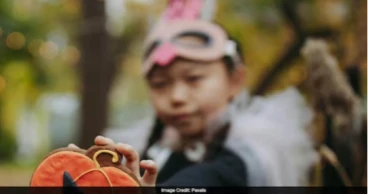
Halloween, observed annually on October 31, is among the most beloved celebrations in the United States. Known for festive costumes, trick-or-treating, themed parties, and creepy decorations, it brings joy to people of all ages. Children and adults alike enjoy transforming into ghosts, witches, vampires, superheroes, or pumpkins as they take part in various community activities.
Historical Background
Halloween traces its origins back over 2,000 years to the ancient Celtic festival called Samhain, which was celebrated in today’s Ireland, northern France, and the United Kingdom. The Celts believed the harvest season ended on October 31 and that on this night, the boundary separating the living and the dead weakened. Spirits were thought to roam the earth, so people lit bonfires and disguised themselves in costumes to drive them away.
Later, when the Romans conquered Celtic territories, they merged Samhain with two Roman observances: Feralia, a day dedicated to remembering the dead, and a celebration honoring Pomona, the goddess of fruit and trees. Because Pomona’s symbol was the apple, games such as bobbing for apples became tied to Halloween customs.
North Carolina Halloween party shooting leaves 2 dead, several injured
In the 8th century, Pope Gregory III designated November 1 as All Saints' Day, also known as All Hallows' Day, to commemorate saints. The previous evening, October 31, evolved into All Hallows’ Eve, and gradually the name transformed into Halloween. Over centuries, Christian practices and Celtic rituals combined to form the holiday celebrated today.
Modern Festivities
A favorite Halloween activity is children dressing up in scary or humorous outfits and visiting houses while shouting, "Trick or Treat!" Neighbors hand out candies and treats, a tradition linked to the ancient Celtic belief that giving food to wandering spirits would bring good fortune.
Pumpkin carving is another iconic part of the celebration. This tradition is rooted in an old Irish tale about Stingy Jack, a man who fooled the devil but was doomed to wander with a glowing coal inside a carved turnip, lighting his path. When Irish immigrants moved to America, they found pumpkins to be a softer and more convenient alternative to turnips. Since then, pumpkins of various sizes, shapes, and even colors have become central decorations in Halloween festivities.
From eerie costumes to glowing jack-o’-lanterns, Halloween continues to evolve while keeping alive the mysterious and playful spirit that has defined it for generations.
With inputs from NDTV
9 months ago
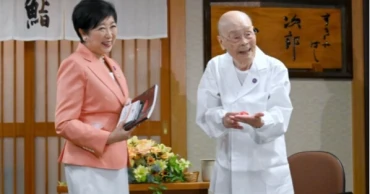
Japan’s sushi master Jiro Ono turns 100, still not ready to hang up his apron
Jiro Ono, the globally acclaimed sushi master who held three Michelin stars for more than a decade and became the world’s oldest chef to do so, has served royalty, world leaders and inspired an award-winning documentary. Yet even at 100, he is not prepared to fully step away from his craft.
“I want to continue for another five years,” Ono said last month, as he received a congratulatory certificate and gift ahead of his milestone birthday on Japan’s “Respect for the Aged Day.”
When asked about the secret to his longevity, he answered simply, “Working.” Tokyo Gov. Yuriko Koike, who visited to offer congratulations, heard Ono admit he no longer comes to the restaurant daily, “but even at 100, I try to work if possible. The best medicine is work.”
Ono, founder of the famed Sukiyabashi Jiro — a 10-seat sushi bar tucked in a basement in Tokyo’s Ginza district — celebrated his 100th birthday on Monday. He joins the ranks of nearly 100,000 centenarians in one of the world’s fastest-aging nations.
Born in Hamamatsu in 1925, Ono began his culinary training at age 7 in a local inn restaurant, moved to Tokyo, and became a sushi chef at 25. He opened Sukiyabashi Jiro in 1965 and has spent decades pursuing absolute excellence.
“I still haven’t achieved perfection,” he said in the 2012 documentary, “Jiro Dreams of Sushi.” “I will keep climbing toward the summit, but no one knows where the summit is.”
Film director David Gelb described Ono as both a master and a father figure to those around him. Initially intimidated by his legendary standing, Gelb was quickly won over by Ono’s humor and warmth. He recalled shooting footage of an octopus being massaged for an hour and Ono joking that he worried the movie might become unbearably boring.
Ono’s devotion to regular customers is unwavering. Even when Japan’s government requested a table for former U.S. President Barack Obama and then-Prime Minister Shinzo Abe in 2014, he declined at first because every seat was booked. The visit was rescheduled later that evening. Ono remembers Obama enjoying the sushi “and I was happy.” His son and head chef Yoshikazu said Obama smiled and winked as he tasted medium fatty tuna.
Doctors prescribe time outdoors to boost mental and physical health
Sukiyabashi Jiro earned three Michelin stars in 2007 and retained them until 2019, when Ono was recognized by Guinness World Records as the oldest three-star head chef at 93 years and 128 days. The restaurant was later dropped from the guide after limiting reservations to regulars or those booked through top hotels.
In recent years, Ono prepares sushi only for select guests as his hands have grown less steady. But his ambition remains strong. After hearing news of Japan’s oldest man passing away at 113, Ono remarked that 13 more years sounded achievable. “I will aim for 114,” he said.
“I value my life so that I can continue working for a long time,” he added. He avoids alcohol, walks regularly and maintains a healthy diet. Asked about his favorite sushi, he instantly named three classics: tuna, gizzard shad and saltwater eel.
Gelb said Ono’s enduring passion is inspirational. “It’s amazing that this tradition continues and he’s still going strong at 100,” he said, delivering birthday wishes in Japanese.
Source: AP
9 months ago
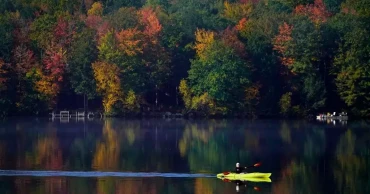
Doctors prescribe time outdoors to boost mental and physical health
Call it a new kind of medical advice: find a shady tree, breathe deeply and check back tomorrow.
Healthcare providers in the United States have long encouraged patients to spend more time outside. Now, hundreds of them are formalizing that guidance by issuing prescriptions for nature outings, as stress fueled by social media, politics and global conflict continues to weigh on Americans.
No one needs a doctor’s note to step outdoors, but some practitioners say the written prescription helps people treat the advice as a priority rather than a luxury.
“When I bring it up, it’s almost like granting permission to do something they may think is frivolous at a time when everything feels serious and stressful,” said Dr. Suzanne Hackenmiller, a gynecologist from Waterloo, Iowa. She began prescribing nature after finding comfort outside following her husband’s death.
Research shows benefits in natureStudies have consistently found that time in natural environments can lower blood pressure, reduce stress hormones and strengthen the immune system.
“Study after study says we’re wired to be out in nature,” said Dr. Brent Bauer, director of the Mayo Clinic’s complementary and integrative medicine program in Minnesota. The program explores treatments such as meditation, massage, acupuncture and nutrition. “There’s real science behind it.”
Making the advice stickTurning suggestions into prescriptions began gaining momentum around a decade ago. Dr. Robert Zarr, also a certified nature guide, founded Park Rx America in 2016 to help doctors incorporate outdoor time into treatment plans.
A cheese lover’s guide to choosing the right mozzarella for every dish
The group’s guidelines encourage providers to discuss a patient’s interests, how often they can get outdoors and nearby parks to visit. The details are written into a prescription, and patients receive reminders.
Nearly 2,000 providers worldwide have joined Park Rx America, including in Australia, Brazil, Cameroon and Spain, and more than 7,000 nature prescriptions have been issued since 2019, said Dr. Stacy Beller Stryer, the group’s associate medical director. About 100 similar programs have emerged in the U.S.
For some, the prescription itself is motivation. Bauer, who treats business executives, said he writes about 30 nature prescriptions each year.
“When someone hands me a piece of paper telling me to take a medication, I’m more likely to act on it,” he said. “The same idea works here.”
Nature as a refugeHackenmiller said more patients are searching for breaks from a world filled with constant crisis.
“When so many things are out of our control, it can help to step away from the media and immerse ourselves in nature,” she said. “People often reconnect with moments when nature brought them comfort before.”
Proper timing key to successful shrub transplants, experts advise
Measuring impact still underwayA 2020 study by the U.S. Forest Service and researchers from two universities found more research is needed to assess how often patients follow through and what long-term health results emerge. Still, experts agree that getting outdoors is beneficial unless conditions like smoke or insects pose a hazard.
At William & Mary in Virginia, students prescribe outdoor time to fellow students through an online system. Applicants list when they can go outside, how far they’re willing to travel and what activities they enjoy. The program issued an average of 22 prescriptions per month in 2025, up from 12 in 2020.
Senior Kelsey Wakiyama, from Villanova, Pennsylvania, said she relied on nature prescriptions after arriving on campus and not knowing the local trails.
“I love the greenery,” she said. “When you’re indoors for hours, the fresh air feels incredible. It calms my nervous system and brings back good memories.”
Source: AP
9 months ago