special
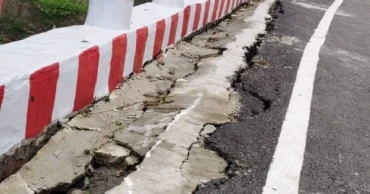
Concern as cracks develop on Chandpur bridge approach road before inauguration
Major cracks have developed on the approach road of a newly constructed bridge in Kachua upazila of Chandpur even before its official inauguration, triggering concern and anger among local residents over the quality of work and potential safety risks.
The damage was reported at the bridge being constructed on the Majhigacha-Nindpur Ronger Bazar connecting road at Haripur village under Bitara union at a cost of Tk 2.32 crore.
According to officials of the Local Government Engineering Department (LGED), the project is being implemented under the “Programme for Supporting Rural Bridges,” financed jointly by the government of Bangladesh and the World Bank.
The project, which includes a nearly 12-metre RCC girder bridge and its connecting road, is being carried out by the firm – Harun and Sons.
A visit to the site revealed that soil beneath the guard walls on both sides of the bridge had eroded significantly, while large cracks and holes had developed at several points along the approach road.
Even light rainfall has reportedly washed away soil and damaged the road surfacing, intensifying fears among residents ahead of the monsoon season.
Local residents, including Md Hazrat Ali and Md Jilani, expressed frustration over the apparent poor-quality construction.
They questioned how a project worth millions of taka could begin deteriorating before completion, warning of greater risks during heavy rains.
About the allegations, Harunur Rashid of Harun and Sons said recent rainfall had damaged parts of the approach road and that repair work was already underway.
He assured that any future damage would also be repaired.
LGED Kachua Upazila Engineer Abdul Alim Liton said sections of the project were affected by recent heavy rainfall and that authorities are investigating the matter.
He added that the contractor has not yet received the final payment, which will only be released after a full quality assessment.
2 months ago

Over 40 lakh pending cases: Govt moves to fast-track lower court cases
The government has taken some measures aimed at accelerating the disposal of pending cases in lower courts and expanding access to legal aid.
Officials said the reforms are designed to ensure faster, more transparent and affordable justice, and to reduce the suffering of litigants.
As part of the latest legislative push, parliament has amended two key laws to streamline civil and criminal procedures.
The Code of Civil Procedure (Amendment) Act, 2026 introduces provisions for serving summons through SMS and voice calls, filing plaints and written statements via affidavit, allowing direct cross-examination, and enabling execution petitions to be filed within the original suit—removing the need for separate execution cases, according to an official document.
Besides, the Code of Criminal Procedure (Amendment) Act, 2026 allows courts to bypass the lengthy proclamation and attachment process for absconding accused and mandates digital methods for serving summons.
In a significant shift towards digitisation, testimony from investigating officers, doctors and magistrates recording confessions is now being accepted online under the Information Technology Use Act, 2020, reducing the need for physical court appearances and expediting trial proceedings.
To ease the burden on magistrates, the government has set up dedicated judicial magistrate courts, allowing them to focus more on trials rather than administrative and ancillary duties.
In a bid to tackle the longstanding backlog, authorities have established 871 new courts and created 232 judicial posts, with 304 more in the pipeline.
Recruitment is underway for 150 civil judges, while the appointment process for hundreds of judicial staff is also progressing.
The Legal Aid Services (Amendment) Act, 2026 has made pre-litigation mediation mandatory in most cases under scheduled laws, with settlements gaining the status of court decrees once certified by the Chief Legal Aid Officer.
The mediation programme, currently active in 20 districts, has already contributed to higher dispute resolution rates and a decline in new case filings, officials said.
Other measures include expansion of legal aid services, introduction of online platforms, support for expatriates, appointment of specialised mediators, and a toll-free hotline (16699).
To address infrastructure shortages, the government has proposed constructing Chief Judicial Magistrate court buildings in 23 districts and expanding existing facilities in four others.
Plans for additional court buildings and judges’ residences are also being revised.
Besides, an e-bail bond management system is now operational in 16 districts and will be introduced nationwide in phases.
E-family courts are functioning in Dhaka and Chattogram, with plans for expansion across the country.
Additionally, cause lists for all courts have been made fully accessible online while information and service centres have been set up on district court premises to assist litigants.
The government is also preparing to launch online registration of Muslim marriages and divorces in selected areas under an ICT-based civil registration project, aimed at reducing fraud and litigation.
An “e-Judiciary” project is in the pipeline to digitise the entire judicial process, from case filing to record management.
The authorities also plan to amend the Bangladesh Legal Practitioners’ and Bar Council Order, 1972 to modernise the bar examination system and improve professional standards.
Case backlog remains a major challenge in Bangladesh. As of December 31, 2025, a total of 4,041,924 cases were pending in subordinate courts, according to Law, Justice and Parliamentary Affairs Minister Md Asaduzzaman.
Experts attribute the delays to a shortage of judges, inadequate infrastructure, lengthy procedures and frequent adjournments, underscoring the need for sustained reforms.
2 months ago
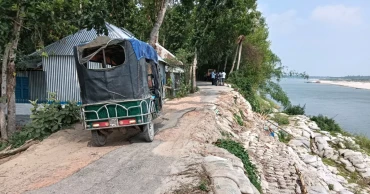
River erosion puts Rajbari road and dozens of families at risk
Erosion by the Gorai River is threatening a key rural road and putting more than 50 families at risk in Baliakandi upazila of Rajbari, causing growing concern among local residents ahead of the monsoon.
Several parts of the Narua-Konagram road, which connects Narua and Jangal unions, have already been severely damaged by river erosion. In the Jamsapur area, around 100 yards of the road has narrowed so much that it has effectively turned into a footpath.
Although battery-run auto-rickshaws and vans are still moving with difficulty, larger vehicles have been unable to use the road for several months.
Locals said accidents often occur when small vehicles overturn while trying to pass through the damaged portions.
Residents fear the situation could worsen rapidly during the rainy season if immediate protection work is not carried out.
The road, built on an embankment under the Bangladesh Water Development Board (BWDB), was later paved by the Local Government Engineering Department (LGED). It is regularly used by residents and students from Narua, Jamsapur, Konagram, Morabila and nearby villages.
2 months ago
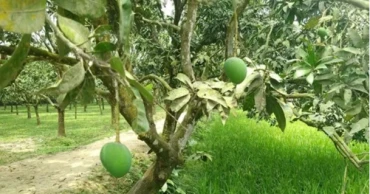
Rangpur’s Haribhanga mango expected to exceed Tk 250cr in trade as harvest nears
Haribhanga mango is expected to generate trade worth over Tk 250 crore this season, as the harvest of Rangpur’s signature fruit is set to begin in mid-June, agriculture officials said.
The Haribhanga mango, a Geographical Indication (GI) product of Bangladesh, is widely known for its distinctive taste, aroma and premium market value, making it one of the most commercially important fruits in northern Bangladesh.
Agriculture officials say if weather conditions remain favourable, the current season could generate business worth more than Tk 250 crore from this mango alone.“We are expecting trade of over Tk 250 crore from Haribhanga mango this year,” said Md Sirazul Islam, Additional Director of the Department of Agricultural Extension (DAE), Rangpur division.According to the DAE, more than 3,000 hectares of land in Rangpur district have been brought under Haribhanga mango cultivation this year.Recent rainfall has supported fruit growth and improved juiciness, although some areas experienced minor damage due to hailstorms and strong winds. Overall, officials expect a better yield than last year.Agricultural experts say Haribhanga mango follows a natural alternate bearing cycle – known locally as “on year” and “off year”— and this season is considered an “on year,” meaning trees are bearing significantly more fruit than usual.The mango is typically harvested in mid-June when it reaches full maturity, although early market arrivals often include unripe fruit sold at higher prices by some traders.Data from agriculture offices shows that mango buds began appearing in December and harvesting is expected to begin on schedule this year.Haribhanga mango is known for being fiberless, sweet and highly aromatic, with a thin skin, small seed, and an average weight of 200-300 grams.Farmers estimate an average yield of 10-12 tonnes per hectare. With cultivation spanning over 3,000 hectares, total production value is projected to exceed Tk 250 crore.However, farmers remain cautious about weather risks.“Some of my orchards have been damaged by storms and further bad weather could cause losses,” said Nazmul Islam, a mango grower from Padaganj in Mithapukur, who cultivates mangoes on over 12 acres of land.Despite minor damage from recent hail and wind, growers remain optimistic about a strong harvest if conditions remain stable.Local wholesalers say demand is already building ahead of the season. “Buyers from Dhaka, Chattogram and Sylhet have started contacting us. We expect both price and demand to be strong this year,” said Abdul Malek, a trader.Experts note that Haribhanga mango is no longer limited to the domestic market. It is exported to countries, including Malaysia and Singapore, while direct sales through social media and e-commerce platforms have increased significantly in recent years. Its GI status has further strengthened brand value and pricing.Fakhrul Anam Benju, President of the Rangpur chapter of Shushashoner Jonno Nagorik (SHUJAN), said the mango’s commercial reach is expanding rapidly but challenges remain.“Despite its huge potential, farmers are concerned about the lack of cold storage and modern preservation facilities. Since Haribhanga is highly perishable, special transport arrangements such as dedicated trains or faster logistics should be introduced,” he said.DAE’s Sirazul Islam said the crop is in its peak “on-year” cycle and that they are actively supporting farmers with technical guidance.On February 12, 2024, Haribhanga mango received official recognition as a Geographical Indication (GI) product of Bangladesh.
2 months ago
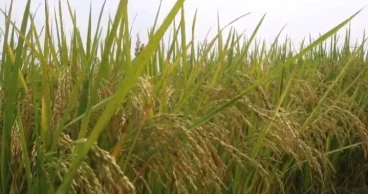
Low paddy prices leave Naogaon farmers reeling despite bumper yield
In Naogaon, one of Bangladesh’s leading rice-producing districts, a season of abundance has turned into one of distress as farmers struggle with falling paddy prices.
Despite a bumper Boro harvest this season farmers said they are incurring significant losses, with market prices dropping well below last year’s levels.
The situation has left many farmers frustrated as higher yields have not translated into better earnings.
According to the Department of Agricultural Extension (DAE), 192,500 hectares were brought under Boro cultivation across 11 upazilas in Naogaon this season. The production target has been set at 1.32 million tonnes of paddy, which would yield approximately 0.88 million tonnes of rice.
Harvesting has already begun, but only about 25–30 percent of the crop has been cut so far.
However, current market prices remain discouraging.
Farmers say paddy is now selling at Tk 1,000 to Tk 1,100 per maund—significantly lower than last year’s peak price of at least Tk 1,400.
“We are selling at a loss,” said Abul Kalam Azad, a marginal farmer from Bijoykandi village in Raninagar upazila. “After spending nearly Tk 30,000 per bigha, we are getting back only Tk 25,000 to Tk 26,000. That means a loss of Tk 5,000 to Tk 6,000 per bigha.”
Like many others, Azad cultivated paddy on leased land, paying around Tk 14,000 per bigha annually.
Total production costs—including land preparation, seedbed, transplantation, irrigation, fertilisers, pesticides, harvesting and threshing—have risen sharply this season.
Bipath Chandra Pramanik, another farmer from the same area, said a lack of sunshine has made it difficult to dry freshly harvested paddy, forcing farmers to sell their produce prematurely at lower prices.
“We took loans for cultivation. Now creditors are pressuring us and we have no option but to sell immediately,” he said. “If we could dry the paddy and wait a few days, we might get a better price.”
Farmers say a price of Tk 1,300 to Tk 1,400 per maund would at least allow them to break even.
Not all farmers, however, are rushing to sell.
Shamsur Rahman, a relatively well-off farmer from Khatteshwar village, said he has stored his harvest in hopes of better prices. He cultivated Jirashail paddy on 20 bighas of his own land.
“I will sell after the rainy spell ends and the paddy dries properly,” he said, expressing hope that prices will rise in the coming weeks.
A visit to major paddy markets including Abadpukur Hat, Lohachura Hat and Ahsanganj Hat revealed an oversupply of freshly harvested, wet paddy, which is contributing to the price slump.
“Most of the paddy arriving in the markets is still wet and buyers are limited,” said trader Enamul Haque. “On Tuesday, depending on quality, paddy was sold between Tk 1,000 and Tk 1,100 per maund.”
Traders said unsold stock from the previous season remains in storage, making buyers less interested in purchasing new supplies.
Farhad Hossain Chakdar, general secretary of Naogaon District Rice Mill Owners Group, attributed the market downturn partly to excessive imports in previous periods.
“Large traders are already facing liquidity constraints due to unsold stocks,” he said. “Without their active participation, a recovery in paddy prices is unlikely.”
He urged the government to speed up procurement and clear public food warehouses to stabilise the market. “If the government buys paddy at Tk 36 per kg, farmers will benefit and the situation may improve,” he added.
Agriculture officials, however, remain cautiously optimistic.
Homaira Mondal, deputy director of the Department of Agricultural Extension(DAE) in Naogaon, said the harvesting season has just begun and prices are expected to improve.
“Farmers are currently selling wet paddy, which affects prices,” she said. “As the peak harvesting period begins and dry paddy enters the market, prices are likely to rise.”
She added that government procurement, once started, would further support farmers.
Local stakeholders say the seasonal price drop has become a recurring problem.
“Every year during the harvest season, farmers face a price crash,” said a local rice trader. “Unless fair prices are ensured and agricultural incentives are increased, marginal farmers will continue to suffer.”
2 months ago
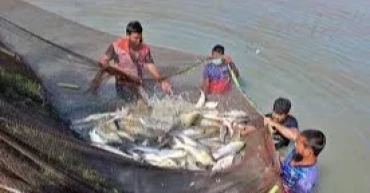
Govt intensifies nationwide drive to boost fish production, protect biodiversity
The government has stepped up a wide range of initiatives across the country to increase fish production, expand aquaculture technologies and improve the livelihoods of marginal fish farmers.
The programmes being implemented by the Department of Fisheries focus on modern farming practices, restoration of water bodies, conservation of indigenous species and strengthening supply chains to sustain the sector’s steady growth.
Officials said regular training sessions are being conducted to enhance farmers’ technical knowledge and practical skills.
These include hands-on guidance on carp polyculture, monosex tilapia farming, pangas cultivation and the culture of indigenous small fish species such as shing, magur, gulsha, pabda and tengra, according to an official document.
To accelerate technology adoption, demonstration farms are being set up in different regions, allowing farmers to observe and replicate improved aquaculture techniques.
At the same time, poor and marginal fish farmers are receiving free inputs—including fish fry, feed, lime and fertilisers—to reduce production costs and increase output.
Efforts are also underway to rehabilitate water bodies through pond renovation and re-excavation, aimed at improving water retention and boosting productivity.
Besides, carp and indigenous fish fry are being released into open water bodies and institutional ponds to enhance natural fish stocks and support nutritional needs, particularly among low-income communities.
To reduce post-harvest losses and strengthen the fisheries supply chain, insulated fish boxes, plastic crates, fish cutting and descaling machines are being distributed among traders and stakeholders.
Beel nursery programmes have also been introduced, where hatchlings are reared into fingerlings before being released into open waters to improve survival rates and increase overall fish production.
Conservation remains a key pillar of the initiative. Fish sanctuaries are being established and restored in rivers and wetlands to ensure breeding and protection of native species.
Authorities are also conducting regular drives and mobile courts under the Fish Protection and Conservation Act, 1950, to curb illegal fishing practices and safeguard aquatic resources.
Officials said steps are being taken to ensure the quality of fish feed through licensing, monitoring and testing.
To promote intensive aquaculture, aerators are being distributed to farmers to maintain adequate oxygen levels in ponds under high-density culture systems.
Meanwhile, the government-owned fish seed production farm at Chatmohar is undergoing renovation, including pond re-excavation, hatchery modernisation and infrastructure repairs, to improve access to quality fry and training facilities for farmers.
Alongside technical support, the government continues to provide interest-free microcredit to fish farmers under the “Microcredit Programme Guidelines for Fisheries Sector-2011.” The loans are distributed through a revolving fund system, with beneficiaries required to pay only a five percent service charge.
Fish remains the primary source of animal protein in Bangladesh, and its consumption has grown significantly over the past three decades, driven largely by aquaculture expansion.
According to official data, per capita fish consumption has now reached around 62–63 grams per day, surpassing the national nutrition target of 60 grams.
Bangladesh achieved self-sufficiency in fish production in the 2016–17 fiscal year, and annual output currently exceeds 4.5 million metric tonnes.
Bangladesh earned Tk 4,376 crore by exporting 71,477 metric tons of fish and fish products in the 2023-2024 fiscal year.
Despite this progress, experts caution that challenges persist. Earlier studies by FAO and WorldFish indicated gaps in consumption, particularly in rural areas, where access to fish protein remains lower than in urban centres.
Researchers also warn that while overall fish intake has increased, dietary diversity has declined as farmed fish increasingly replace nutrient-rich indigenous species from natural water bodies—raising concerns over micronutrient deficiencies among poorer households.
Recent estimates put annual per capita fish consumption at around 27 kilograms, a sharp rise from just 7.5 kilograms in 1990.
However, rising fish prices, climate change impacts, shrinking rivers and wetlands, pollution and post-harvest losses continue to affect availability and affordability.
Experts say sustaining production growth while ensuring equitable access and preserving biodiversity will be key to meeting Bangladesh’s future protein demand and addressing nutritional gaps, particularly among low-income and rural populations.
2 months ago

Khagrachhari’s women entrepreneurs making strides, eye bigger role in economy
Breaking away from traditional career expectations, an increasing number of women in Khagrachhari are choosing entrepreneurship over conventional jobs, emerging as successful business owners and contributing to the local economy.
After completing their education, many women in the hill district are no longer waiting for government or private sector jobs. Instead, they are launching their own ventures, ranging from clothing and fashion businesses to traditional jewellery and indigenous handmade products.
Women entrepreneurs in the district say they will be able to generate more employment opportunities and make a significant contribution to the country’s economy if they receive low-interest loans, flexible financing and stronger government patronage.
Challenging the long-held notion that women are confined to household chores and childcare, women entrepreneurs in Khagrachhari are proving their capabilities in business and innovation.
According to local entrepreneurs, around 45-50 women in the district are currently engaged in various businesses. Many are involved in clothing trade, fashion accessories and the marketing of traditional indigenous attire, including Pinon Hadi, a popular garment worn by ethnic minority women in the Chittagong Hill Tracts.
Several of them have already achieved notable success, although they say additional institutional support is necessary to scale up their businesses.
Among the prominent entrepreneurs are Tejashree Chakma, proprietor of Fusion Mart; Baby Chakma, owner of Fashion Code; and Hira Chakma, proprietor of Hira Fashion.
They said most women entrepreneurs in Khagrachhari are educated and deliberately chose business as a profession instead of pursuing conventional employment after graduation.
They also said experienced entrepreneurs are encouraging newcomers, and a stronger community network among both new and established businesswomen could further strengthen the district’s entrepreneurial ecosystem.
2 months ago
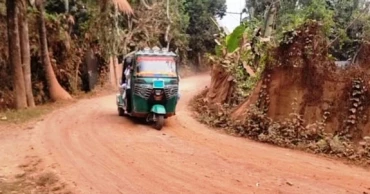
Residents suffer as carpeting work on Chandpur road stalled for 18 months
Carpeting work on nearly five kilometres of the Laokora Muktijoddha Road in Hajiganj upazila of Chandpur has remained stalled for around 18 months due to alleged negligence by the contractor, causing severe hardship for thousands of residents in at least 12 villages.
According to locals, the 5.5-kilometre road stretching from Uaruk Station on the Chandpur-Cumilla highway to Laokora Bottoli is considered a vital communication route in the area.
The road serves as the main transport link for nearly 200,000 people living in 12 villages across the border areas of Hajiganj, Kachua and Shahrasti upazilas.
The road renovation project, worth around Tk 1.5 crore, was awarded in December 2024 to Ivy Construction.
Later, the project was reportedly handed over on a sub-contract basis to Afzal Traders, another contracting firm based in Chandpur.
Rahmat Ullah, a Union Parishad member of Laokora village, said the development and renovation of the road is crucial for local residents.
He alleged that the road has remained dug up for more than a year and that repeated communications with the contractor have yielded no visible progress.
The UP member urged the district and upazila administrations to take immediate steps to resolve the issue.
Local residents, including Bablu Patwary and Abdul Jalil, said patients, pregnant women, elderly people and commuters are enduring immense suffering due to the unfinished roadwork.
They said travelling on the road becomes even more hazardous at night.
Auto-rickshaw driver Ibrahim said excessive dust from the damaged road leaves drivers and passengers covered in dirt and causes daily inconvenience.
CNG-run auto-rickshaw drivers Nabir Hossain and Khorshed Mia said their vehicles are being damaged frequently due to the poor road condition.
Local school teacher Faraz Hossain Bhuiyan said excessive dust has forced people to wear masks while travelling on the road.
He added that people of all ages, from children to the elderly, are suffering from respiratory and other health complications.
Md Tahsinul Hossain Mukul, Assistant Engineer of the Chandpur office of the Local Government Engineering Department, said the contractor has been warned several times in writing.
He said a letter has also been sent to seize the contractor’s bank security as a penalty.
Mukul added that if the contractor fails to resume work by June, penalties will be imposed and the renovation of the road will be completed through a fresh tender process.
Officials of Ivy Construction for their version could not be reached over the phone.
2 months ago
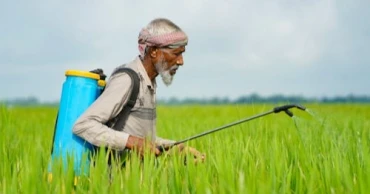
Revisiting tax barriers can revive growth of stunted pesticide industry
The development of Bangladesh's domestic pesticide industry has been stalled for a number of years now, due to significant tariff disparities and regulatory hurdles, leaving the country heavily dependent on imports essential to the agriculture sector that still dominates the economy.
Industry insiders and agricultural economists warn that, while Bangladesh has successfully become a global exporter of pharmaceuticals, the relatively simple technology of pesticide manufacturing remains underdeveloped due to a "discriminatory" tax structure.
They suggested a reasonable and competitive tax rate on raw material imports for pesticide production in the upcoming budget for the fiscal year of 2026-27.
The primary obstacle to the growth of local industries is the stark contrast in import duties between finished products and raw materials. If the tax barrier is removed, Bangladesh could become self-sufficient in pesticides within the next three years, said Tawfiqul Islam Khan, additional research director of the Centre for Policy Dialogue (CPD).
This is seen as a critical step before the country's LDC graduation, after which the agricultural sector may face even greater challenges if a self-sustaining local industry is not established, Khan pointed out.
He said that crop production at an affordable cost will be affected due to import dependency and higher duties on pesticide raw materials. In the volatile global situation, the import dependency of any food production-related product may affect food security.
How the "discriminatory" tax structure manifests:
Finished Pesticides: Low-quality finished pesticides can be imported from countries like India and China with a mere 5 percent customs duty and no additional VAT.
Raw Materials: Local manufacturers face duties of up to 58 percent on the 32 essential raw materials required for production.
Unjustified VAT: An additional 15 percent VAT is imposed on raw material imports, a cost not applied to imported finished goods.
KSM Mostafizur Rahman, President of the Bangladesh Agrochemical Manufacturers Association (BAMA), noted that this imbalance has turned Bangladesh into a market for foreign products rather than a manufacturing hub.
"While our pharmaceutical industry has grown from import-dependence to near self-sufficiency with 200 local firms, the pesticide industry is being held back by these tax barriers," he stated.
The current tax policy has resulted in domestic producers holding only a tiny fraction of the market, that is estimated between Tk 5,000 crore and Tk 7,500 crore.
Seven multinational companies control 55 percent (Tk 4,125 crore) of the market. Approximately 41% percent of the demand is met by local importers.
Domestic producers account for only 4 percent (Tk 300 crore) of the market share.
Agricultural economist Jahangir Alam emphasized that these high costs are ultimately passed down to farmers, increasing their production expenses while forcing them to use potentially inferior imported products.
Budget 2026-27: Opportunity to shift
BAMA and other stakeholders have placed two major demands before the National Board of Revenue (NBR) for the upcoming FY 2026-27 budget.
Zero Tariff on Raw Materials: Following an inter-ministerial recommendation that labeled the current high duties as "irrational," entrepreneurs are seeking a total waiver on the 58 percent duty for raw materials.
Ease of Port Procedures: Manufacturers report severe delays at Chittagong Port, where raw materials are often held for 40 to 45 days pending physical factory visits by customs officials, leading to massive compensation costs.
Industry leaders believe that if these barriers are removed, Bangladesh could become self-sufficient in pesticides within the next three years. This is seen as a critical step before the country's LDC graduation, after which the agricultural sector may face even greater challenges if a self-sustaining local industry is not established.
3 months ago
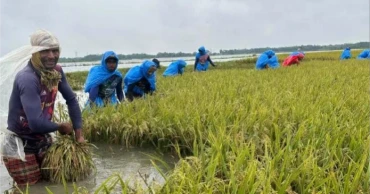
Farmers in tears as flash floods inundate Boro crop in Chhatak haors
An early wave of flash floods, triggered by upstream hill runoff and days of relentless rain, has inundated vast stretches of haor land in Chhatak upazila of Sunamganj, leaving thousands of farmers staring at devastating crop losses.
Within hours of heavy rainfall from Saturday morning, water levels rose sharply across the low-lying wetlands, submerging ripened boro paddy—the region’s primary and often only annual crop.
The sudden flood has turned once-golden fields into an endless expanse of water,said farmers.
Villages under Chormohalla union—including Buraigiri, Boroghatti, Bagachhara, Gojahati, Baruka and Ura beel—are now largely underwater.
The situation worsened dramatically after a key embankment at Khaner Badh in Boroghatti beel collapsed, sending torrents of water rushing into nearby fields and submerging nearly 400 acres of mature paddy in a short span.
“I watched my paddy go under water right before my eyes,” said Abdus Sobhan, a farmer from Buraigiri, holding a handful of soaked rice stalks.
“This boro crop was our only hope for the year. Now there won’t even be enough rice to feed my family.”
Abul Kalam, a farmer from Srinagar village, said his 17 bighas of land—along with nearly 200 bighas in his village—have been completely submerged. “It breaks my heart. I don’t know how we will survive this,” he said.
Similar scenes have been reported from multiple haors across unions such as Kalaruka, Uttar Khurma, and Dakshin Khurma.
Areas including Jhawar beel, Borobara, Puraidubi, Banderlama, Bhathgaon, Jauabazar, and Singchapair are all grappling with the same crisis.
Many farmers said the rapid rise in water left them with no time to harvest their crops.
Official estimates from the upazila agriculture office state that a total of 14,996 hectares were cultivated with boro this season—3,382 hectares in haor areas and 11,614 hectares in non-haor lands.
As of May 1, officials said 2,513 hectares in haor areas and 3,833 hectares in non-haor areas have already been harvested.
However, farmers on the ground contest these figures, alleging that the official data does not reflect the scale of devastation.
“Large parts of Chormohalla and surrounding areas are now under water. Thousands of hectares of ripe paddy have been lost,” said Advocate Abdul Ahad, a local resident and additional public prosecutor at the Sunamganj Judge Court. “The government estimates are far from the reality.”
Farmers also blamed poor water management for aggravating the disaster.
They alleged that inadequate drainage systems, silted canals, absence of functional sluice gates, and weak embankments have made the haor areas highly vulnerable.
“Even if the rain stops, the water has nowhere to go,” said a farmer in Boroghatti. “On one side there is hill runoff, and on the other, broken embankments—our crops are trapped in between.”
The crisis has been compounded by an acute shortage of agricultural labourers during the peak harvesting season, said farmers.
With fewer seasonal workers arriving this year, many farmers took to the fields themselves. But rising water levels and strong currents have made it nearly impossible to salvage the submerged crops.
As the waters continue to rise, uncertainty looms large over the livelihoods of thousands of farming families in Chhatak’s haor belt, where a single crop failure can push households into prolonged financial distress.
3 months ago