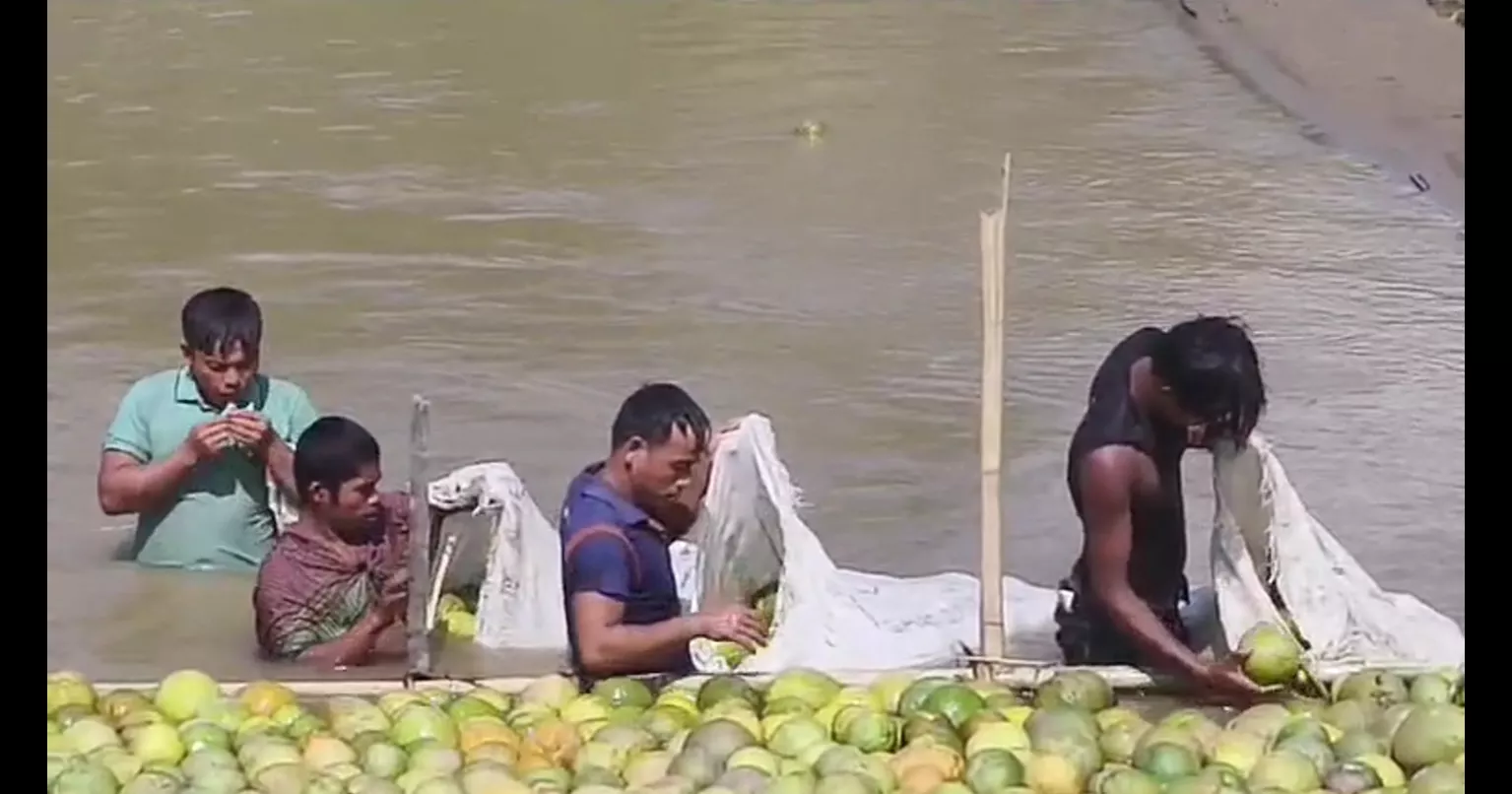
In the serene hills of Khagrachhari and Rangamati districts, an unusual yet striking sight has become a seasonal norm: dozens of pomelos, locally known as ‘jambura’, drifting gently down rivers and streams.
This phenomenon is drawing attention as a brilliant example of ingenious local business practice.
Local farmers transport pomelo fruits from remote hilly areas by floating them across rivers, as overland transport is challenging.
During the pomelo season, the traditional knowledge and techniques involved in floating these hilly jamburas are clearly visible.
Where the fruits would normally hang on trees, countless pomelos are now seen floating in rivers and streams. At first glance, it may appear they have been discarded due to spoilage, but in reality, this is a clever transportation technique devised by indigenous farmers of the Chittagong Hill Tracts to overcome logistical hurdles.
Garbage pile turns Companiganj Bazar into a breeding ground for diseases
With the harvest season in full swing, moving pomelos from remote hill gardens to markets poses significant difficulties due to rugged terrain and limited road access.
To overcome these challenges, local farmers have turned to nature—floating freshly picked fruits downstream. Using the natural current of rivers and streams, they transport the fruits to accessible locations, where small bamboo enclosures are set up to catch and collect them. From there, the fruits are processed and distributed to markets across the country.
This floating method significantly reduces transportation costs, which are otherwise high due to poor road conditions in the hilly areas. Moreover, it minimises damage to the fruits during transport. Farmers also say that sorting becomes easier, as any spoiled fruit can be quickly identified once it surfaces.
Local farmers, including Asit Baran Chakma and Kalayan Chakma, said this natural transportation method has increased their profit margins, allowing them to send produce to distant markets without incurring extra costs.