special

Graft-tainted EVMs turn burden; experts push for disposal after probe
Around 150,000 Electronic Voting Machines (EVMs), procured at a cost of Tk 3,825.34 crore to modernise Bangladesh’s election system during the Awami League regime, have now become a burden for the Election Commission, with experts calling for their disposal after most of the devices fell into disrepair.
Officials say the majority of these machines are no longer usable – with only a few thousand currently functional, raising serious concerns over the effectiveness of the project and the use of public funds.
The EVM project has also been hit by allegations of massive corruption and irregularities.
Experts have questioned the quality of the machines, excessive expenditure and their overall usability, with some claiming that the devices were procured in a way that could allow manipulation in elections.
According to findings, audit objections have been raised over the procurement of the machines and related equipment. Investigators believe that irregularities in the purchase process contributed to significant financial losses.
Bangladesh first introduced EVMs on a trial basis in 2010 under the leadership of then Chief Election Commissioner ATM Shamsul Huda. The machines were used for the first time in a ward during the Chattogram City Corporation election in 2011, using devices developed by the Bangladesh University of Engineering and Technology.
However, technical problems soon became evident. In the 2013 Rajshahi City Corporation election, a malfunction in one centre prevented the announcement of results, prompting the then commission to step back from using EVMs.
The initiative was revived after a new Election Commission took charge under KM Nurul Huda, with plans to expand the use of EVMs in elections. In 2017, the machines were again used on a trial basis in several polling rooms in a ward during the Rangpur City Corporation election.
From the beginning, the introduction of EVMs remained politically controversial. While the then ruling Awami League promoted the system as a modern and transparent method of voting, opposition parties, including the BNP, raised doubts about its neutrality.
Election experts, observers and civil society members also expressed concerns, but critics say these views were largely ignored.
From digital dream to dumping dilemma: EVM project falters
Ahead of the 2018 national election, the government approved a project worth Tk 3,825 crore to procure 150,000 EVMs. However, the project reportedly did not clearly mention where the machines would be stored or how they would be maintained.
Now, the Election Commission is facing a dilemma over what to do with the machines, many of which have already exceeded their usable life. Officials are considering disposal, but the process has been stalled due to ongoing investigations into alleged corruption in procurement.
The Anti-Corruption Commission is currently probing the allegations, while audit objections from the Comptroller and Auditor General’s office remain unresolved.
Officials said the machines cannot be disposed of at this stage, as doing so could create further complications during the investigation.
In addition, any disposal process would require clearance from the Department of Environment, adding another layer of complexity to the situation.
As a result, the costly EVM project now stands as a major challenge for the Election Commission, with unresolved questions over accountability, financial loss and the future of electronic voting in Bangladesh.
One of the key issues highlighted by auditors relates to the pricing of the machines.
ACC finds defects in EVMs, questions experts' endorsement
According to the Comptroller and Auditor General’s office, each EVM was purchased at around Tk 2.34 lakh, significantly higher than the estimated market price. The audit suggests that the total cost could have been limited to about Tk 343 crore, indicating excess expenditure of more than Tk 3,000 crore.
Experts have also questioned the procurement method, noting that the machines were acquired without an open tender process. Instead, a direct procurement approach was followed, limiting competition and raising concerns about transparency and accountability.
Besides, the machines were supplied with only a one-year warranty. After the warranty period expired, further public funds were required to maintain and repair the equipment. Despite an expected lifespan of at least 10 years, many machines reportedly developed faults within a short period.
The ACC has launched an investigation into the project, focusing on procurement procedures, cost irregularities and the quality of the machines. Officials said the probe would also examine possible irregularities in training and operational expenses.
Contacted, election expert Dr Abdul Alim said the EVMs used in Bangladesh were fundamentally flawed as they lacked an internationally recognised verification system.
In many countries, he noted, EVMs are equipped with a Voter Verifiable Paper Audit Trail (VVPAT), which produces a paper slip after a vote is cast showing the chosen symbol.
Riding the rough ride: ADB projects modest growth for Bangladesh
The slip is then deposited in a sealed box and can be counted alongside the machine results in case of any dispute or audit. “This dual system ensures transparency and allows verification if confusion arises,” Alim said.
He said Bangladesh’s EVMs did not have such a provision, making the results difficult to independently verify.
The election expert also alleged that the machines were unusually expensive despite being locally produced with technology developed by BUET and manufactured at the Bangladesh Machine Tools Factory.
“Our EVMs are among the costliest in the world, which raises questions about possible corruption in the project,” he said.
Referring to the procurement, Alim claimed the initiative was associated with Tarique Ahmed Siddique, former military adviser to ousted Prime Minister Sheikh Hasina, alleging that the project was mainly designed to misappropriate public money.
He said the machines are currently unused but the government is still spending public funds to store them.
The expert suggested that after completing investigations and preserving a small number of machines as samples for legal or court purposes, the rest should be destroyed to avoid further wastage of taxpayers’ money.
Election Reform Commission Chairman and noted election expert Dr Badiul Alam Majumdar also criticised the EVM project, saying there are allegations that the machines were procured at several times the price of similar machines used in India.
Cleared today, occupied tomorrow! Why can’t Dhaka keep its footpaths free?
He described the machines as low-quality and unsuitable for ensuring credible elections, noting that many of them have already become damaged and unusable.
Badiul Alam said there are allegations that the procurement was carried out with the intention of facilitating the misappropriation of public funds.
He emphasised that a neutral and independent investigation should be conducted into the purchase of the EVMs and that anyone found responsible should face exemplary punishment.
The election expert said the machines are unlikely to be used again in Bangladesh’s elections and have effectively become a financial burden, making it necessary for the authorities to take a clear and lawful decision regarding their future.
3 months ago
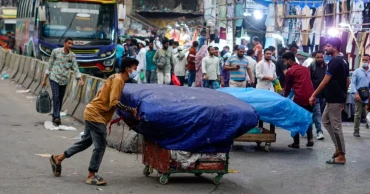
Cleared today, occupied tomorrow! Why can’t Dhaka keep its footpaths free?
Dhaka’s footpaths have once again fallen back into chaos just days after a coordinated eviction drive, underlining the persistent challenge of freeing public spaces from long-standing encroachments.
Sidewalks cleared during a five-day drive by Dhaka Metropolitan Police (DMP) have already been reoccupied in many key areas, raising fresh questions about the effectiveness of such enforcement efforts.
The drives were conducted from April 1 to 5 in eight traffic divisions, targeted illegal shops, street vendors and unauthorised parking on roads and footpaths.
Authorities removed structures, fined violators carrying out mobile court drives. Yet, within days, most areas saw hawkers return.
According to DMP data, 405 cases were filed, Tk 11.56 lakh were realised in fines, 57 individuals were warned and 96 others were sentenced to jail during the drives.
Relief short-lived
For a brief period, citizens experienced some relief in areas such as Gulistan, Dholaikhal, Uttara, Shanir Akhra and Kalabagan in Dhanmondi.
Within two days of the drive ending, sidewalks in most areas were once again occupied.
DMP fines Tk 3.33 lakh, jails nine in eviction drives
In Gulistan, vendors have reclaimed footpaths much like before, though some now operate more cautiously.
In front of Golap Shah Mazar, many who previously used fixed stalls have shifted to laying goods on sheets, allowing them to move quickly if needed.
Similar scenes have returned in Paltan, Motijheel and New Market areas where makeshift shops line the sidewalks.
Visiting the stretch from Science Laboratory to Nilkhet UNB found hundreds of vendors occupying both sides of the road, forcing pedestrians onto busy streets and worsening traffic congestion.
Cycle of eviction and return
The pattern has become familiar: eviction drives briefly clear footpaths, only for vendors to return soon after.
Beyond New Market, hawkers have reappeared in Mohammadpur, Shyamoli Ring Road, Moghbazar, Banglamotor, Farmgate, Karwan Bazar, Gulistan and several other parts of the capital.
3 months ago
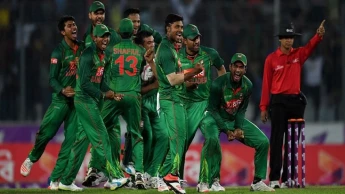
Politicisation of cricket looks set to continue under new government
In Bangladesh, cricket is far more than a national obsession. Combined with its enormous commercial appeal, the game has been converted into the ultimate political currency.
The recent dissolution of the Bangladesh Cricket Board (BCB) and the lightning-fast installation of a politically connected ad-hoc committee exposes a harsh reality: governments may change, but the state or ruling dispensation's suffocating grip on the country's most popular sport remains completely unbroken.
For decades, ruling regimes have understood that controlling cricket is a way to control the masses. During Sheikh Hasina's long period of rule, which is often called an authoritarian regime by political analysts, the BCB functioned as little more than a direct wing of the state machinery.
The partisan dominance was absolute. It spread into every level of the administration, from the high-level boardroom decisions down to the stadium gates. It reached a point where the national team was actually led by sitting members of parliament. This wasn't a coincidence; it was a strategy to use the sport as a populist tool, designed to unify a fractured public under the ruling party's banner while masking the government’s deeper failures.
When the Awami League government collapsed in August 2024, the BCB naturally fell into chaos.
The power vacuum led to the emergence of a new board headed by Aminul Islam Bulbul, formed under the watch of the interim government. It was sold to the public as a necessary transition to keep the sport stable. However, in the tough landscape of Bangladeshi sports politics, this board quickly became a target for the next political force waiting in the wings.
This week, the National Sports Council (NSC)—now operating under the newly elected BNP-led government—dissolved Aminul’s board. They cited severe electoral fraud and manipulation as the reason. While the allegations of rigged e-voting and administrative coercion are serious, the underlying motive feels far too familiar to anyone watching.
Govt dissolves BCB board over election fraud; Tamim appointed as interim head
This ouster doesn't look like a crusade for transparency; it looks like a calculated purge. It is a move to erase the interim government's footprint and allow a new regime to capture the board's massive resources and public influence.
The makeup of the new 11-member ad-hoc committee, led by former national captain Tamim Iqbal, shows this political reality clearly. While they are tasked with holding a fair election within three months, the committee is heavily stacked with the immediate family members of senior BNP figures—including the sons of both the Home Minister and the Finance Minister, alongside a BNP-affiliated lawyer.
The faces in the boardroom have changed, but the structural strategy is identical: a new political net has simply been cast over the BCB.
This cyclical power grab shows a deep hypocrisy within the nation's sports administration. The very same political factions that spent years condemning the Awami League for weaponizing the cricket board are now eagerly sharing the rewards of winning using the exact same government tools.
Ousted BCB chief Aminul denounces board dissolution as ‘constitutional coup,’ appeals to ICC
The NSC's intervention is a blunt instrument of control, one that flagrantly ignores the International Cricket Council's (ICC) strict rules against government interference.
Yet, the usual threat of an ICC suspension for state interference might be empty this time around. The sport's global governing body is currently chaired by the powerful Indian administrator Jay Shah, and his leadership operates against a very sensitive geopolitical backdrop.
During the interim government’s time, Aminul’s board drew New Delhi's ire by refusing to play in India during the last T20 World Cup, citing legitimate security concerns amid growing tensions between the two countries. The diplomatic standoff erupted shortly after Indian authorities forced the Kolkata Knightriders to terminate Mustafizur Rahman's contract to play for them in this year's IPL, cricket's biggest money-spinner, claiming unspecified security risks.
Hanging heavily over these athletic disputes was a glaring political reality: ousted Prime Minister Sheikh Hasina—accused of planning the deaths of over 1,400 citizens during the July mass uprising—was actively being sheltered in Delhi. Because Aminul’s public defiance directly challenged the Indian cricket establishment, the current ICC leadership may be perfectly willing to turn a blind eye to the NSC’s action, which was called a “bureaucratic coup” by Aminul. It is a situation where geopolitical retribution might be allowed to quietly override the ICC’s own governance statutes.
While politicians, ex-players, and their proxies battle for control of the lucrative BCB chair, the actual development of the sport is being pushed to the side. In Bangladesh, regimes rise and fall, but the cricket board remains a captured prize, trapped in a vicious cycle of political patronage that it cannot seem to escape.
Ultimately, this endless political tug-of-war leaves the sport itself as the biggest casualty.
3 months ago

New labs aim to restore consumer trust in Bangladesh’s food chain
From formalin-laced fish to adulterated spices, food safety has long been a lingering concern for consumers across Bangladesh.
Now, in a significant step towards restoring public confidence and strengthening oversight, the government is planning to establish a state-of-the-art reference laboratory in Dhaka alongside two modern food testing laboratories in Chattogram and Khulna divisions by 2031.
The project, part of the Food Testing Capacity Development Project supported by the Japan International Cooperation Agency (JICA), aims to modernise the country’s fragmented food testing system and enhance its ability to detect contamination with greater accuracy and speed.
A system under pressure
At present, mobile laboratory vans conduct instant testing at field level across all seven divisions while mini-labs in districts provide preliminary screening.
More advanced testing is carried out in approved government and private laboratories.
Officials said this layered system has helped expand coverage but still faces limitations in consistency, capacity and technological sophistication.
The proposed reference laboratory in Dhaka is expected to serve as the central hub for high-precision analysis, setting benchmarks and ensuring uniform standards nationwide.
The regional labs in Chattogram and Khulna will further decentralise advanced testing capacity, reducing delays and improving regional access.
The Bangladesh Food Safety Authority (BFSA), under the Ministry of Food, has been leading nationwide efforts through mobile courts, inspections and sample testing.
At least 15 food establishments are monitored every month by each field office, with follow-up checks to ensure compliance.
In the 2024–25 fiscal year, nearly 16,000 food establishments and markets were inspected, while more than 11,000 have already been monitored in 2025–26 fiscal year.
Mobile courts, a key enforcement tool, have also been active.
In 2024–25, 150 establishments were penalised by central mobile courts, resulting in fines of over Tk 1.04 crore. In 2025-26 fiscal year, 126 drives have so far yielded Tk 56 lakh in fines.
Beyond the central operations, district and upazila administrations conduct additional drives with support from food safety officers, extending enforcement reach across the country.
Legal action and surveillance
To strengthen legal enforcement, 71 pure food courts are currently operational nationwide, according to an official document gleaned by UNB .
These courts handled 137 cases in 2024–25, collecting Tk 23 lakh in fines. In the current fiscal year, 120 cases have already been filed, with fines amounting to over Tk 90 lakh.
Food sample testing, a cornerstone of surveillance, is also being carried out at multiple levels. Each district collects at least two samples monthly for laboratory analysis.
In 2024–25, over 1,700 samples were tested through approved laboratories, while more than 1,300 samples have been tested so far in 2025–26 (until February).
Mini-labs and mobile testing units continue to play a crucial role in rapid screening. Last fiscal year, over 6,500 samples were tested through mini-labs and more than 9,400 via mobile labs.
The current fiscal year has already seen over 10,000 tests conducted in mini-labs and around 7,600 through mobile units,according to government document.
Towards a safer food chain
Despite these efforts, experts say the absence of a centralised, high-capacity reference facility has been a major gap in Bangladesh’s food safety architecture.
Bangladesh Standards and Testing Institution’s ability to regulate products requiring mandatory certification remains seriously inadequate, leaving consumers vulnerable to low-quality and counterfeit goods.
Although around 315 products are supposed to receive compulsory BSTI approval, consistent market monitoring is largely absent. Surprise inspections are uncommon, and many small manufacturers and importers continue to use counterfeit BSTI seals with minimal fear of consequences.
The organisation also struggles with limited resources, operating with only a few laboratories and inspectors—often with a single কর্মকর্তা responsible for multiple districts—making regular oversight impractical.
Even when irregularities are identified, the penalties imposed are so minor that many businesses choose to disregard compliance altogether.
Enforcement efforts tend to focus more on small traders, while influential groups and substandard imports frequently avoid scrutiny.
As a result, uncertified bottled water, edible oil, cement, baby food and electrical products often make their way into the market.
Rural areas receive little to no monitoring, and checks on imported electronics, cosmetics and processed foods at customs remain weak.
The planned laboratories are expected to address this by improving detection capabilities, ensuring internationally compliant testing standards, and supporting evidence-based enforcement.
As Bangladesh’s food system grows increasingly complex with urbanisation and changing consumption patterns, officials believe that investing in modern testing infrastructure will be critical to safeguarding public health.
3 months ago

Heavy pesticide use in Rangpur mango farming sparks concerns
Excessive use of pesticides and hormones in mango cultivation in Rangpur is raising serious health concerns for farmers and undermining fruit quality, posing a potential threat to the region’s export prospects.
As mango orchards across Rangpur bear newly formed fruits following the blooming season, growers and traders are already weighing expected gains.
But in a push for higher yields, many farmers are increasingly relying on frequent chemical spraying and hormone use – the practice now drawing growing concern.
According to the Department of Agricultural Extension (DAE), mangoes, including the popular Haribhanga variety, were cultivated on 6,049.5 hectares of land in the district in the 2024-25 fiscal year, producing around 82,662 tonnes.
In the current fiscal year, around 6,910 hectares of land have been brought under cultivation, with an expected production of around 72,300 tonnes.
Experts say the problem begins soon after harvesting, when farmers apply hormones at the base of trees to boost future yields, which may harm long-term productivity.
Growers note a sharp rise in pesticide use over the years. While mango orchards previously required only two to three spray rounds in a season, many farmers now apply chemicals as many as 30 to 35 times, often alongside hormones. They say such intensive use is driven by the need to ensure fruits remain on trees, though it is ultimately affecting taste and quality.
Saddam Hossain, a former student of Begum Rokeya University, Rangpur and entrepreneur from Badarganj, said excessive pesticide use is reducing the shelf life and taste of mangoes. “The unique flavour of Haribhanga mango is no longer the same, which is reducing its demand in wider markets,” he said.
Farmers themselves are also experiencing health issues due to prolonged exposure to pesticides.
Abdul Baten, a grower with 15 years of experience, said he now suffers from blurred vision at times. “Constant exposure to sprays and chemicals seems to be affecting my body,” he said.
Another farmer, Yakub Ali from Padaganj, echoed similar concerns, saying the sharp increase in pesticide use has become unavoidable for many growers, despite its negative impact on fruit quality.
Medical experts warn that long-term exposure to pesticides can cause serious health complications, including respiratory issues, eye problems and skin damage.
Dr Sultana Ashrafi, an assistant professor at Rangpur Medical College Hospital, said excessive hormone use could lead to toxicity, affecting kidneys and blood cells.
“Farmers must use personal protective equipment while spraying to reduce risks,” she said.
Nutritionists also highlight the impact on consumers. Fatema Tuz Zohra, a clinical nutritionist at Rangpur Ideal Health City, said excessive pesticide use diminishes both the taste and nutritional value of mangoes.
However, agriculture officials maintain that controlled use of pesticides and hormones is safe.
DAE Deputy Director Sirajul Islam advised farmers to apply fungicides before flowering and follow recommended intervals, stopping sprays 15-20 days before harvest.
Officials also warned that overuse of chemicals could hinder export opportunities.
Shahin Ahmed, assistant information officer at the Agricultural Marketing in Rangpur, said compliance with international safety standards is essential for exporting mangoes. “If pesticide levels exceed acceptable limits, exports will face setbacks,” he said.
With both health and economic implications at stake, experts stress the need for balanced practices to ensure safe consumption and sustain the reputation of Rangpur’s mangoes.
3 months ago

FM’s India Visit: Dhaka to push key bilateral concerns in talks with Delhi
Bangladesh is keen to see bilateral relations return to normalcy on the basis of ‘mutual respect and mutual gains,’ as Foreign Minister Dr Khalilur Rahman prepares to visit India on a ‘goodwill’ trip this week which comes amid increased engagement between the two countries in recent weeks.
Although Dhaka prefers to describe the trip as a ‘goodwill visit,’ officials told UNB that it will involve substantive discussions with New Delhi to ‘better understand current dynamics’ and to raise issues of key importance to Bangladesh.
In addition to his meeting with Indian External Affairs Minister Dr S Jaishankar, Dr. Khalilur is scheduled to hold talks with National Security Adviser Ajit Doval and Petroleum and Natural Gas Minister Hardeep Singh Puri.
Bangladesh will reiterate its request for the extradition of former Prime Minister Sheikh Hasina as well as seek the swift return of other accused individuals including prime suspect Faisal Karim Masud who was arrested in Kolkata in connection with the killing of Shahid Sharif Osman Bin Hadi, convenor of the Inqilab Mancha.
“It may take time but we want to see their return as soon as possible,” a senior official told UNB, referring to extradition of accused (Hadi’s murder).
Dhaka will also urge a more positive approach from India regarding the full resumption of visa services, noting that India stands to benefit significantly from medical tourism.
Border management will be another key issue, with Bangladesh emphasising that it does not want to see any loss of life along the border.
The two sides are also expected to discuss energy cooperation, water-sharing of common rivers, and measures to ease trade barriers.
The Foreign Minister is scheduled to depart for New Delhi on Tuesday afternoon, before continuing on to Mauritius. Prime Minister’s Foreign Affairs Adviser Humaiun Kabir will accompany him during the New Delhi leg of the visit.
Both sides are now working to retune bilateral relations, a move that could usher in a new phase of cooperation on a range of issues important to both Dhaka and Delhi and lend genuine momentum to the relationship, officials said.
This will mark the first high-level visit to India since the BNP government, led by Prime Minister Tarique Rahman, assumed office, following a period of significant strain in bilateral relations.
“The meeting between the two foreign ministers will be held in New Delhi on April 8,” a senior official told UNB, without elaborating further.
Bangladesh and India share deep-rooted bonds of history, language, culture, and multitude of other commonalities, said an official, noting that in any bilateral meeting all issues of mutual interest come up for discussion.
The two Foreign Ministers are likely to discuss cooperation in the areas of energy, water sharing, border management, visa, people-to-people ties, he said adding that a future visit of Prime Minister Tarique Rahman to India may also come up for discussion at the meeting.
Indian Prime Minister Narendra Modi has already invited Prime Minister Tarique, his wife Dr Zubaida Rahman, their daughter Barrister Zaima Rahman to pay a visit to India at a convenient time.
“I take this opportunity to invite you, along with Dr Zubaida Rahman and your daughter Zaima, on a visit to India at a mutually convenient time. A warm welcome awaits you in India,” Modi said in his letter handed over to PM Tarique by Speaker of the Indian Lok Sabha Om Birla who represented the government of India at the swearing-in ceremony of the newly elected government of Bangladesh.
Prime Minister Modi said he looks forward to working closely with Prime Minister Tarique to strengthen their multifaceted bilateral relations, enhance regional cooperation, and advance their common goals in wide-ranging areas of connectivity, trade, technology, education, skill development, energy, healthcare, as well as cultural and people-to-people exchanges.
Asked whether the Prime Minister would consider India for his first bilateral visit, a diplomatic source told UNB that Bangladesh would take a decision “creatively” on the matter.
Forward-Looking Ties
Indian High Commissioner to Bangladesh Pranay Verma on Monday reaffirmed India’s intent to work together with the Government and the people of Bangladesh in a ‘positive, constructive and forward-looking manner’ based on mutual interest and mutual benefit.
The Indian envoy conveyed the intent when he paid a courtesy call on Prime Minister Tarique Rahman at his office.
They discussed bilateral engagement with focus on people-centric cooperation in multiple domains aligned with the national development priorities of the two countries, said the High Commission after the meeting.
The discussions focused on enhancing cooperation in a wide range of areas including public health, financial inclusion, women‘s empowerment, rural development, bilateral trade and investment, ease of doing business, technology partnerships, and power and energy cooperation.
The High Commissioner underlined that India-Bangladesh cooperation should transform their geographical proximity into new opportunities by strengthening economic and connectivity linkages, and by enhancing cultural and people-to-people exchanges.
Water Sharing Issues
The subject of water is widely seen as a sensitive issue and Bangladesh always keeps talking about its long pending request for concluding the agreement on the sharing of the waters of the Teesta River, the draft of which was finalised in 2011. The two countries share 54 common rivers, including the Teesta.
In India’s federal scheme of things, nothing is done without consultations with the State Government and any agreement that they conclude will have to be acceptable to the State Government of India; at the same time, it would also have to be acceptable to Bangladesh, officials said.
The Bangladesh-India Ganga/Ganges Water Treaty was signed on December 12, 1996 and is expiring in December this year.
As discussions for its renewal are yet to commence between the two countries, officials said this might be one of the issues to be discussed this time.
In July 2024, the governments of Bangladesh and India had decided to begin discussions on renewal of the Ganga Water Treaty.
The discussions are yet to commence in this regard and no fresh agreement has been ratified between the two countries.
The Indian side had offered to renew it in 2024 but the interim government did not pursue it at that time, a diplomatic source in New Delhi told UNB.
Inputs on drinking water and industrial water requirements have also been received from all stakeholders including from the government of West Bengal, which have been taken into account while formulating the Indian government’s views.
Visa Issues
Indian High Commissioner to Bangladesh Pranay Verma, in his recent meetings with the Ministers in Dhaka, explored new areas for future collaboration in people-centric domains aligned with the respective developmental priorities of the two countries based on mutual interest and mutual benefit.
The two sides also discussed various aspects of Bangladesh-India economic cooperation, including ways to strengthen transport, energy and digital connectivity between the two countries.
At the foreign minister–level meeting, the Bangladesh side is expected to raise the visa issue as tourist visas for Bangladeshis have remained suspended since July 2024 on security grounds.
Indian visa centres in Bangladesh are still understaffed, suggesting that a full resumption of services may take time, a diplomatic source said, adding that the restart will be announced once finalised.
India thinks the two countries can truly become catalysts for each other's sustainable growth, work for each other's security and enable mutual prosperity as two fast-growing economies and aspiring societies.
Bangladesh and India on Thursday discussed ways to enhance bilateral defence cooperation, including joint training initiatives.
The issues were discussed when Bangladesh High Commissioner to India M Riaz Hamidullah met Indian Chief of Army Staff General Upendra Dwivedi at the South Block.
They also explored opportunities for deeper collaboration aimed at promoting regional peace and security.
The envoy said he was pleased to meet General Upendra Dwivedi and reflect on Bangladesh-India ties, including defence cooperation.
3 months ago
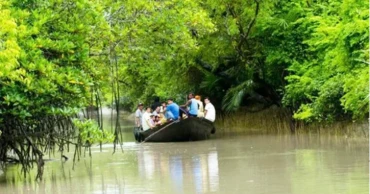
Coastal livelihoods under threat as pirate activities on the rise in Sundarbans
A renewed surge in piracy in the Sundarbans is placing coastal livelihoods at risk as fishermen, woodcutters, and honey collectors face abduction and extortion in the forest.
At least six fishermen who were allegedly abducted by pirate gangs have returned home after their families paid ransom, said their families.
Family members said Anarul, Imran, and Sushanta returned early Saturday while Saddam, Yunus Ali, and Saiful Islam came back on Friday morning.
The fishermen were reportedly abducted on March 30 from Chunkuri, Malancha, and Mamundo rivers by groups identifying themselves as the ‘Don’ and ‘Alif alias Alim’ gangs.
Victims’ families said Tk 40,000 was paid for Saddam’s release, while Tk 35,000 each was paid for Anarul, Sushanta, and Imran. Besides, Tk 25,000 each was reportedly paid for release of Yunus Ali and Saiful Islam.
However, four other abducted fishermen, including Enamul and Hazrat, are still missing, and their whereabouts remain unknown.
Fishermen who regularly travel to the Sundarbans, speaking on condition of anonymity, claimed that pirate groups have moved deeper into the forest with the remaining hostages.
They said this shift followed increased operations by law enforcement agencies after the State Minister for Environment, Forest and Climate Change instructed authorities on April 1 to make the Sundarbans free of piracy.
Members of the Rapid Action Battalion (RAB), Coast Guard, Border Guard Bangladesh (BGB), and police have intensified patrols in the area, which may have pressured the pirate groups to relocate.
However, police said they have not received formal complaints.
Md. Fazlul Haque, station officer of Burigoalini in Satkhira Range, said that no families have officially informed them about the abductions or the releases.
Shyamnagar Police Station’s Officer-in-Charge Md. Khaledur Rahman said that in many such cases families try to resolve the situation quietly due to fears for the victims’ lives. “They often avoid informing law enforcement agencies because of the risk involved. Police are treating the matter seriously.”
In a separate incident, forest officials have detained seven honey collectors near the Notabeki patrol outpost inside a protected sanctuary area of the Sundarbans.
They were allegedly collecting honey without permission.
Due to poor network coverage in the remote area, authorities have yet to confirm their identities.
The resurgence of piracy follows years of relative calm.
The much-awaited honey collection season in the Sundarbans began on April 1 but honey collectors voiced concern about the recent increase in the activities of forest-based criminal groups including incidents of abductions for ransom.
Several honey collectors have reportedly chosen to stay away from the forest this season due to mounting extortion demands.
One honey collector, speaking on condition of anonymity, said that robbers demanded Tk 10,000 from each collector, and many groups were forced to pay, discouraging others from entering the Sundarbans for honey collection.
The Forest Department stated that it has taken steps to ensure the safety of honey collectors and has advised them to follow guidelines aimed at protecting forest resources.
The Sundarbans were declared pirate-free in 2018, but attacks have reportedly increased under the interim administration.
3 months ago
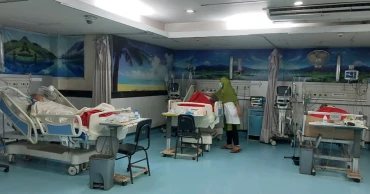
ICU shortage at Rangpur Medical College Hospital leaves patients at risk
A severe shortage of intensive care unit (ICU) beds at Rangpur Medical College Hospital (RMCH), the largest public healthcare facility in northern Bangladesh, is putting critically ill patients at grave risk amid limited access to life-saving support.
Hospital director Brig Gen Ashikur Rahman said between March 1 and April 5, 29 of the 79 patients admitted to the ICU died — a figure that underscores the mounting pressure on the already stretched critical care system.
Despite serving eight districts in the Rangpur division, the hospital has only 10 ICU beds, far short of the growing demand.
Patients suffering from stroke, pneumonia and other life-threatening conditions are among those seeking admission, many of whom remain in critical condition.
Doctors and health experts say the high death toll is linked not only to the shortage of beds but also to inadequate facilities including a lack of modern equipment and trained personnel.
Saiful Islam, a resident of Domar upazila in Nilphamari, has been trying for weeks to secure an ICU bed for his critically ill wife Arzina Begum. “After 24 days of struggle, we finally managed a bed,” he said, describing the ordeal.
For many others, access to ICU care remains uncertain.
“Getting an ICU bed now depends on luck,” said Sonali Begum, a patient’s relative. “Many patients are being turned away due to a lack of beds. We can only wait and hope.”
Another relative, Zainal Ahmed, said the high cost of private healthcare leaves families with few alternatives.
“Private hospitals charge Tk 30,000 to Tk 40,000 per day for ICU care. We cannot afford that, so we wait here. But by the time a bed becomes available, it may be too late,” he said.
The 1,000-bed hospital treats between 2,500 and 3,000 patients daily, far exceeding its capacity.
“Six months ago, we couldn’t get an ICU bed. Now it’s the same situation,” said another relative. “We don’t have the money for private hospitals. Where should we go?”
Hospital sources said the demand for ICU services is rising daily but limited beds and equipment prevent many patients from being admitted.
Health experts have termed the situation unacceptable for a divisional-level public hospital.
They said expanding ICU capacity must go beyond increasing beds — requiring modern ventilators, life-support systems, and trained doctors and nurses.
“In the current reality, many patients are forced to seek treatment at private facilities which are beyond the reach of most people,” said a public health expert, adding that poor patients are often left without care.
Dr Md Alfe Sani Moudud Ahmed, assistant professor of Critical Care Medicine at RMCH, said the actual number of deaths outside the ICU remains unknown.
“If so many patients are dying inside the ICU, we have no data on how many are dying outside without access to critical care,” he said. “At least 10 percent of the 2,500 to 3,000 daily patients need ICU support. That means we need around 100 ICU beds.”
“With only 10 beds, we are struggling to provide services. Without increasing equipment and skilled manpower, the situation will worsen,” he added.
Hospital Director Brig Gen Ashikur Rahman said authorities are trying to deliver the best possible care with limited resources.
“We have informed the higher authorities about the need to increase ICU beds. We hope for a quick solution,” he said.
3 months ago

Upstream rains flood haors, endanger boro harvest
Thousands of hectares of boro paddy in Sunamganj’s haor areas are under threat as severe waterlogging triggered by unusually heavy upstream rainfall continues to inundate croplands across the district.
The situation has turned critical since the last week of March when excessive rainfall in upstream catchment areas caused rivers to swell and overflow, sending water rushing into the low-lying haors.
Farmers are now locked in a dispute over how to manage the excess water.
While those in the upper haors are pressing to cut embankments to ease waterlogging, downstream farmers are resisting the move, fearing their fields will be submerged.
According to official data, at least 1,189 hectares of boro land have already gone under water.
Sources at the Water Development Board (WDB) said 710 Project Implementation Committees (PICs) were formed this season across 53 haors to construct crop protection embankments.
Although earthwork has been completed turfing is still underway in many areas.
Rainfall data shows a sharp increase this year, with Sunamganj recording around 200 millimetres of rain in March compared to just 5 millimetres during the same period last year.
“The excessive rainwater from upstream has overflowed rivers and entered haors from multiple points,” said a senior WDB official.
An emergency meeting held by the district administration on March 31 was followed by field inspections to assess drainage requirements.
Khulna division reports 56 suspected measles cases in 24 hours
Authorities have so far cut embankments in at least 10 haors on a limited scale to release trapped water.
However, tensions among farmers persist.
“If farmers in the upper areas cut the dams, those downstream resist to protect their crops,” said Md Selim, a resident of Mohanpur village in Sunamganj Sadar upazila.
According to the Department of Agricultural Extension (DAE), boro has been cultivated on 223,511 hectares in more than 200 haors in the district this season.
“If fully harvested, the crop could yield around 1.4 million tonnes of rice, with an estimated market value of Tk 5,050 crore,” said DAE Deputy Director Md Omar Faruk.
“But farmers now fear significant losses due to waterlogging and the possibility of further heavy rainfall,” he said.
Waterlogging has already affected several haors, including Mini Pagnar, Halir, Kailani, Chhayar, Putiyar, Dakuar, Joalbhanga and Kanlar.
Local farmers complained that many natural drainage canals have been encroached upon or filled up over the years, worsening the situation.
Chittaranjan Talukder, vice-president of Haor Banchao Andolan, said early and intense rainfall has overwhelmed the natural water bodies.
“Rivers, canals and beels that usually act as reservoirs are already full and overflowing. Waterlogging is widespread, and farmers are struggling to cope,” he said. adding that proper dredging of rivers and wetlands could help mitigate the crisis.
WDB Executive Engineer Mamun Howlader said emergency drainage efforts are underway.
“Rainfall in both Cherrapunji and Sunamganj has been significantly higher this year. Some haors are already being drained,” he said.
Officials warned that the situation may worsen, with heavy rainfall forecast for April 6–7.
“As the season progresses timely intervention is crucial to prevent large-scale crop losses,” said Omar Faruk.
With uncertainty looming, haor farmers are now anxiously waiting for effective measures to save their standing crops.
3 months ago

Rangpur’s Khalashpir coalfield, iron ore spark renewed policy interest
Beneath the quiet agricultural landscape of Pirganj upazila in Rangpur lies a long-standing but largely untapped story of coal reserves and iron-rich mineral deposits, now drawing renewed attention from policymakers and experts.
Recent reviews of historical data, alongside ongoing exploration, have highlighted the significant potential of the Khalashpir coalfield and surrounding areas.
However, officials said comprehensive feasibility studies are still needed before any commercial extraction can begin.
A resource identified decades ago
Interest in Khalashpir dates back to 1959–62 when the then Geological Survey of Pakistan first identified coal potential in the Gondwana Basin during exploratory work in the area.
Further exploration by Geological Survey of Bangladesh (GSB) in 1989–90 involved drilling four wells across a 25-square-kilometre area. Three of these confirmed the presence of high-quality bituminous coal at depths between 257 and 451 metres.
Initial estimates indicated around 143 million metric tonnes of coal within a 2.52-square-kilometre zone. Later studies suggested significantly larger reserves, according to official documents gleaned by UNB.
In 2006, a study by CJMDC estimated approximately 705.69 million tonnes of coal across a 7.62-square-kilometre area.
Around the same time, Hosaf International Ltd., in collaboration with a consortium including Shandong-Ludi and Xinwen Mining Group, conducted a techno-economic feasibility study after obtaining a licence from the Bureau of Mineral Development.
During 2005–06, the consortium drilled 11 additional boreholes, leading to a preliminary estimate of about 685 million metric tonnes of coal spread over 12.25 square kilometres in Khalashpir coalfield.
Need for updated feasibility assessment
Despite these promising findings, no commercial extraction has yet taken place.
In 2009, the Hydrocarbon Unit reviewed earlier studies with technical assistance from UK-based International Mining Consultants Group Consulting Limited.
The review identified limitations in previous assessments and recommended a comprehensive, full-scale feasibility study.
Officials say such a study remains essential to evaluate environmental, technical and economic viability before any final decision is made.
“Existing data are encouraging, but not sufficient for commercial development,” an official said. “A detailed and updated feasibility study is required.”
Iron-rich mineral potential
In addition to coal, Pirganj has also shown promise for iron-rich mineral deposits.
Geological exploration in Shanerhat area during 1965–66 revealed the presence of metal-rich ores.
Subsequent drilling by the GSB in 1999–2000 and again in the 2023–24 fiscal year confirmed the presence of iron and other metallic elements through preliminary analysis.
A new exploration well is currently being drilled in the Chhota Paharpur (Shanerhat) area to determine the extent of the resource and assess its suitability for commercial extraction.
Experts say further drilling and detailed laboratory analysis will be necessary to confirm the quantity and quality of these deposits.
Balancing development and sustainability
While the findings offer potential opportunities for reducing import dependence and strengthening the energy and industrial sectors, experts stress the need for careful planning.
Coal mining, particularly in densely populated and agricultural regions, poses environmental and social challenges including land use, water management and displacement risks.
Similarly, any development of iron ore resources will require strong regulatory oversight and environmental safeguards.
Officials emphasised that future decisions will be guided by scientific evidence and sustainability considerations.
“The potential is significant, but development must be responsible and well-planned,” an energy sector official said.
3 months ago