special
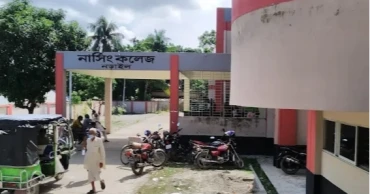
Staff shortage cripples Narail Nursing College; one teacher runs entire institution
Established to produce skilled nursing professionals, Narail Government Nursing College is struggling to function with only one teacher for nearly 200 students, while the lack of residential facilities has forced students to live in classrooms, exposing serious shortcomings three years after its academic activities began.
The college, which started classes in 2023, is also grappling with a prolonged manpower crisis, vacant support staff positions and the suspension of students' monthly stipends, affecting both academic activities and student welfare.
According to college authorities, the institution was established in 2020 on 2.90 acres of land at Bhawakhali in Narail municipality adjacent to the district hospital at a cost of around Tk 12 crore.
However, despite the passage of several years, no permanent posts have been created as the institution has yet to receive an economic code, a prerequisite for staffing and budget allocation.
Initially, the college operated with a principal and four instructors on deputation from other institutions. At present, only one instructor and one office assistant are running the entire institution.
The acute shortage has severely disrupted teaching and academic management for nearly 200 students enrolled in four batches of the three-year diploma programme.
The college also lacks residential facilities despite the diploma being a residential course. Female students are currently staying in makeshift dormitories created inside classrooms of the academic building, while male students have been forced to rent accommodation outside the campus.
Students have also been deprived of their monthly stipends for the past three years, creating financial hardship, particularly for those from low-income families.
Apart from the shortage of teachers, the college has no accountant, computer operator or laboratory operator. Posts for cook, security guard, cleaner and other support staff also remain vacant, causing daily operational difficulties.
Students urged the authorities to appoint the required number of qualified teachers immediately and ensure adequate staffing to restore normal academic activities.
They expressed hope that prompt intervention by the authorities will remove uncertainty surrounding their education and help ensure a proper learning environment.
Sutapa Sikder, the college's lone instructor, described the manpower shortage as the institution's biggest challenge.
"Around 10 teachers are needed for nearly 200 students, but I am the only instructor here. You can imagine the situation," she said.
The instructor said the problems have already been communicated to the higher authorities and expressed hope that additional teachers will be appointed soon.
Civil Surgeon of the district Dr Md Abdur Rashid said the issues relating to manpower, accommodation and other logistical shortcomings have been reported to the higher authorities.
He said the authorities concerned are also working to secure the required economic code and create the necessary posts, expressing hope that the problems will be resolved soon.
16 days ago

Bangladesh plans long-term energy transition with audits, renewables
The government has taken a move to strengthen energy audits across major industries as part of a broader strategy to curb energy waste, reduce dependence on imported fuels and build a more efficient and financially sustainable power sector.
The initiative, outlined in the national budget document, seeks to promote the use of energy-efficient equipment and encourage designated industrial consumers to optimise electricity consumption at a time when rising fuel costs and growing demand continue to put pressure on the country’s energy system.
The move comes as Bangladesh grapples with mounting electricity generation costs driven by dwindling domestic gas reserves and increasing reliance on imported liquefied natural gas (LNG).
More than 40 percent of the country’s electricity generation capacity is gas-based, making the sector particularly vulnerable to fluctuations in global fuel prices.
Shift towards renewable energy
To address these challenges, the government plans to reduce dependence on imported fossil fuels by expanding renewable energy and making better use of indigenous energy resources.
The budget document says investors will receive incentives to manufacture renewable energy equipment locally, including solar panels, wind turbine components and battery storage systems.
Bangladesh has set an ambitious target of meeting 20 percent of its electricity demand from renewable sources by 2030, with the share expected to rise to between 30 and 50 percent by 2050.
To achieve these goals, authorities have outlined a series of initiatives including expanding rooftop solar programmes, conducting wind resource assessments in coastal regions, implementing utility-scale solar projects and piloting waste-to-energy generation.
The government also plans to formulate a National Energy Storage Roadmap and improve grid flexibility to accommodate a larger share of renewable electricity.
Expanding generation and transmission
The government aims to raise the country’s electricity generation capacity to 35,000 megawatts by 2030 while expanding the transmission network to 25,000 circuit kilometres.
Construction of the 2,400MW Rooppur Nuclear Power Plant is progressing rapidly, according to the document.
Fuel rods have already been loaded into one reactor, with around 300MW expected to be connected to the national grid by August 2026. The first unit is projected to supply 1,200MW by January 2027.
The government says its long-term objective is to establish a modern, affordable, uninterrupted and environmentally sustainable electricity system.
Addressing structural weaknesses
Electricity generation costs have risen sharply due to what it describes as years of unplanned power and energy policies, corruption, rent-seeking, mismanagement and irregularities, according to the document.
It alleged that capacity charge mechanisms enabled widespread financial misappropriation and capital flight, while several large-scale power projects undertaken during the previous administration included controversial contractual provisions that imposed heavy financial obligations through expensive power purchases and imports.
Heavy reliance on fossil fuels has further increased production costs, the document said.
As a result of the widening gap between electricity generation costs and retail tariffs, government subsidies for the power sector are expected to exceed Tk 40,000 crore in the current fiscal year.
Although Bangladesh’s installed electricity generation capacity now stands at 28,919MW including imported electricity and grid-connected renewable power, ensuring uninterrupted and high-quality supply remains a challenge.
Reform agenda
The government says it has prioritised reforms in electricity generation, transmission and distribution through short-, medium- and long-term plans.
Among the key measures are strengthening transparency and accountability, identifying those involved in corruption and tightening monitoring across the sector.
It has planned to retire inefficient power plants, modernise facilities where necessary and adopt a least-cost generation strategy.
The budget outlines plans to review capacity charges and power purchase agreements to improve financial accountability, while modernising transmission and distribution systems through smart grid technologies aimed at reducing system losses.
Special emphasis has also been placed on expanding electricity access in remote and island areas.
To keep electricity tariffs affordable, future power plants will be developed through competitive bidding, the document says.
In metropolitan areas, underground distribution lines and substations will be introduced as part of broader grid modernisation efforts.
The government has also prepared a draft Power Sector Strategy Paper (2026–2050), which proposes a least-cost generation plan, a balanced energy mix and the integration of advanced technologies such as SCADA, Geographic Information Systems (GIS) and Advanced Metering Infrastructure (AMI).
Besides, the entire process of obtaining new electricity connections and paying bills has been automated to improve customer services.
With industrial energy audits, renewable energy expansion and governance reforms forming the backbone of the strategy, the government hopes to make Bangladesh’s power sector more efficient, resilient and financially sustainable while meeting the country’s growing electricity demand.
16 days ago
10 Khulna villages face flood threat as Atai River embankment weakens
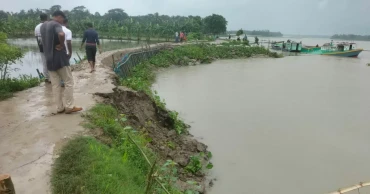
A vulnerable embankment along the Atai River in Dighalia upazila of Khulna district has sparked fears of flooding in 10 villages following days of heavy rainfall and high tidal surges.
The affected section located between Mominpur and Hajigram villages is part of Kamargati–Pather Bazar road which once served as a key transport route connecting several villages with Khulna city through Daulatpur.
Over the past decade, continuous riverbank erosion has washed away nearly two-thirds of the road, leaving the remaining portion to function as a flood protection embankment. Residents now use an alternative road for communication.
Locals said the recent heavy rains and rising tidal waters have severely weakened the embankment.
Water began overtopping the structure, causing large cracks and raising fears of an imminent breach.
Sensing the danger, villagers gathered on Friday evening after the tide receded and carried out emergency repairs using bamboo and earth under floodlights to temporarily reinforce the embankment.
However, they said the risk remains high.
17 days ago
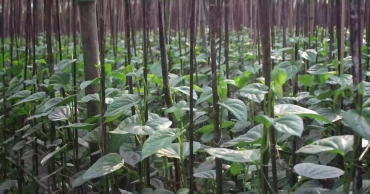
How betel cultivation changed the fortunes of three Naogaon villages
What was once a farming community dependent on seasonal rice cultivation has evolved into a thriving hub of commercial betel leaf production, bringing prosperity and optimism to hundreds of families in three villages of Naogaon. For many farming families in Jalm, Magura and Jageshwar, the vibrant green betel gardens symbolise more than agricultural success—they represent financial independence and a promising future built leaf by leaf. About 11 kilometers of the three villages under in Kirtipur Union in Sadar upazila, are now widely known as the district's "betel villages.” Rows of neatly maintained betel gardens stretch across homesteads and agricultural fields, reflecting years of hard work and investment by farmers who have embraced the high-value crop as a sustainable source of income. Home to around 2,500 people, the three villages have become a model for commercial betel cultivation, replacing traditional dependence on paddy farming with a more profitable agricultural enterprise. From Rice Fields to Prosperity According to local farmers and officials, the area's elevated, flood-free sandy loam soil and favorable climate provide ideal conditions for betel cultivation.
Combined with controlled irrigation, proper drainage, regular maintenance and guidance from agricultural extension officials, farmers have developed efficient and modern cultivation practices.
17 days ago

Cracks before completion: Tk 2.2cr bridge in Chandpur sparks quality concerns
A bridge under construction at a cost of around Tk 2.2 crore in Chandpur's Matlab municipality has developed major cracks before the work is even completed, triggering allegations of poor-quality construction and prompting residents to demand an independent technical investigation.
The nearly 100-foot bridge, being built near Bardia Bazar to replace an old 10-foot culvert, has been under construction for about four months. The project also includes approach roads on both sides.
According to locals, visible cracks have appeared in different parts of the bridge, although construction is still underway.
They alleged that substandard construction materials and irregularities have marked the project from the beginning.
17 days ago

Biman seeks proposals for dry lease of 3 Dreamliners to expand fleet
In a move to expand and modernise its fleet, Biman Bangladesh Airlines has invited international proposals to dry lease three Boeing 787-9 Dreamliner aircraft for six years, aiming to induct the wide-body jets by January 1, 2027.
A dry lease in aviation is an arrangement where an aircraft owner provides only the bare aircraft without crew, maintenance, or insurance.
The leasing party (lessee) takes full operational control, assuming responsibility for supplying their own pilots, handling maintenance, arranging insurance, and operating the aircraft under their own Air Operator Certificate (AOC).
According to a Request for Proposal (RFP) issued on July 15, the national flag carrier is seeking offers from airlines, aircraft operators, owners, manufacturers and leasing companies for the dry lease of three Boeing 787-9 aircraft for a period of 72 months.
The deadline for submitting proposals is 10:00am Bangladesh Standard Time (BST) on August 9.
The RFP states that the aircraft should preferably be delivered by January 1, 2027, although bids offering later delivery schedules until February 28, 2027 will also be considered during technical evaluation.
Biman has specified that the aircraft must be no more than 15 years old as of June 30, 2027, and should be powered by GEnx-1B74/75 engines with a maximum take-off weight of 254 tonnes. Preference will be given to sister-ship aircraft from the same lessor.
Under the proposed, each aircraft must feature a two-class cabin configuration with more than 300 passenger seats.
All seats must be new, while the aircraft must be delivered in full operating condition with valid Certificates of Airworthiness and Registration.
The airline has also stipulated that major scheduled maintenance, including heavy maintenance checks and landing gear overhauls, should not become due within the first 24 months of the lease period. Each aircraft must be delivered immediately after undergoing a fresh C-check, it said.
The RFP outlines extensive technical requirements, including advanced avionics, Engine Health Monitoring systems, Aircraft Health Monitoring capability, Flight Data Monitoring, upgraded flight recorders, TCAS Version 7.1, ACARS, Terrain Awareness and Warning Systems, satellite communications, GPS/GNSS navigation and compliance with all applicable FAA, EASA and Civil Aviation Authority of Bangladesh regulations.
Biman has also required the aircraft to be painted in its own livery at the lessor’s expense before delivery and equipped with Atlas-standard galley facilities capable of serving two major and two minor meals for passengers and crew.
Financial proposals must separately quote monthly lease rentals for each aircraft, maintenance reserves for major components and security deposits.
Biman said it expects each aircraft to operate about 4,000 flight hours annually.
The evaluation process will consist of technical and financial assessments.
Technical proposals meeting all mandatory requirements will qualify for financial evaluation. Overall scores will be calculated by assigning a 25 percent weight to technical evaluation and 75 percent to financial evaluation, with the highest-scoring proposal selected as the lowest evaluated bid.
Biman said negotiations would be held in Dhaka with qualified bidders before signing the lease agreement. The airline also reserved the right to accept or reject any or all proposals without assigning any reason.
At present, the total number of aircraft in the fleet is 19. Of these, four are Boeing 777-300 ER, four are Boeing 787-8, two are Boeing 787-9 Dreamliner, four are Boeing 737 and five are Dash 8-400 aircraft.
In order to modernize the Biman fleet with new generation aircraft, Biman signed two agreements with Boeing in April and May 2008 for purchasing new generation four 777-300ER, four 787-8 and two 737-800 aircraft.
Four 777-300ER aircraft joined Biman fleet in October/November 2011, February 2014 and 21 March 2014. Two 737-800s aircraft joined Biman fleet in November/December 2015.
Three Boeing 787-8 aircraft joined Biman fleet in August/December 2018 and August 2019. On 16 May 2019, 5th Boeing 737-800 arrived to join Biman’s fleet. 6th Boeing 737-800 arrived to join Biman fleet in June 30, 2019.
Fourth new 787-8 aircraft delivered by Boeing in September 2019.
The first of the three Dash-8 planes purchased based on G2G agreement between the Governments of Bangladesh and Canada was added to the fleet on 26 December 2020 and the second & third are respectively on 24 February 2021 & 05 March 2021.
19 days ago

Bangladesh eyes smarter welfare system through Dynamic Social Registry
Bangladesh is embarking on one of the most ambitious overhauls of its social protection system, seeking to replace fragmented welfare programmes with a digitally driven, citizen-centric model that promises to make benefits more transparent, targeted and accessible.
Dynamic Social Registry (DSR), a nationwide digital platform being implemented by the Ministry of Finance and the Ministry of Social Welfare, is designed to allow citizens to apply for social protection benefits from anywhere in the country while enabling the government to identify eligible recipients through data-driven poverty assessments, according to the budget document.
The initiative signals a shift from traditional, programme-based welfare administration towards an integrated digital ecosystem where social protection is linked to verified household data, direct benefit transfers and continuous updating of beneficiaries’ socioeconomic conditions.
A move away from fragmented welfare
The government acknowledges that Bangladesh’s existing social protection framework—comprising more than 90 separate programmes—has struggled with overlapping benefits, weak coordination and exclusion of many deserving households.
According to the budget document, the current system is “neither sufficiently responsive to contemporary needs nor sustainable in the long term.”
The DSR is intended to address these weaknesses by creating a unified database capable of scientifically assessing poverty and determining eligibility across different social programmes.
Officials said this will reduce duplication, improve targeting and ensure that government resources reach those who need them most.
Building on a digital foundation
The reform builds upon the Single Registry System, already introduced by the Finance Division to streamline beneficiary management.
Under the system, social protection payments are transferred directly into beneficiaries’ mobile financial service or bank accounts through the Government-to-Person (G2P) payment mechanism.
The registry currently contains information on around 4 crore beneficiaries and can verify another 2 crore citizens.
According to the budget document, the digital registry has already improved transparency in beneficiary selection, strengthened account verification and eliminated duplication in fund disbursement.
A life-cycle approach
The budget outlines plans for a life-cycle approach to social protection, bringing every citizen—from birth through old age—under a comprehensive support framework.
Officials say the strategy aims not only to provide financial assistance but also to promote economic empowerment and self-reliance while ensuring that vulnerable groups remain protected during different stages of life.
The document also reiterates the constitutional commitment to ensuring food, clothing, shelter and employment for every citizen, while acknowledging that persistent poverty and unequal distribution of resources continue to drive inequality.
Family Card Programme at the centre
The government’s flagship initiative is the Family Card Programme which represents a significant departure from individual-based welfare schemes.
Built on the philosophy that “the family, not the individual, is the fundamental unit of development,” the programme seeks to identify poor households and provide them with integrated support covering food security, healthcare, education and livelihood opportunities.
Unlike many existing programmes, the Family Card is issued in the name of the mother or female head of household, a move aimed at strengthening women’s financial and social position within families.
Each beneficiary household receives Tk 2,500 per month directly through the G2P payment system—almost three times higher than allowances under many existing safety-net programmes.
The government is also incorporating household family-tree information into the database, creating a more comprehensive digital record of beneficiaries.
Ultimately, authorities plan to transform the Family Card into a Universal Social ID Card for every citizen by 2030, replacing the allowance-based components of many existing social protection programmes.
During the pilot phase, 60,044 female heads of households have been receiving benefits.
In the coming fiscal year, the government plans to issue Family Cards to 41 lakh women, backed by a proposed allocation of Tk 14,500 crore.
Expanded benefits across programmes
Alongside structural reforms, the government has proposed expanding several existing social safety programmes.
The Old Age Allowance Programme will add 100,000 beneficiaries, increasing total coverage to 62 lakh, while the monthly allowance will rise from Tk 650 to Tk 700.
The Widow and Destitute Women Allowance Programme will also expand by 100,000 beneficiaries to 30 lakh, with monthly payments increasing to Tk 700.
Under the Disability Allowance Programme, beneficiary numbers will increase from 34.5 lakh to 38 lakh, while monthly payments will rise from Tk 900 to Tk 1,000.
The government also plans to expand educational support for students with disabilities by increasing beneficiaries from 81,000 to 100,000 and raising stipend rates across all education levels.
Support for pregnant women and newborns will continue through the Mother and Child Assistance Programme, with beneficiaries increasing to nearly 19 lakh and an allocation of Tk 1,944.70 crore proposed for the next fiscal year.
Financial assistance for patients suffering from cancer and five other chronic diseases will also be strengthened, with one-time grants doubling from Tk 50,000 to Tk 100,000.
Pension and legal reforms
The budget also proposes measures to improve the Universal Pension Scheme, including better management of pension funds and allowing participants to withdraw 30 percent of accumulated savings as a one-time gratuity.
In addition, the government plans to establish a state-funded welfare programme for destitute orphan children and amend weaknesses in the Parents’ Maintenance Act, 2013 to improve its implementation.
Challenges ahead
While the reform agenda is among the most comprehensive attempts to modernise Bangladesh’s social protection architecture, successful implementation will depend on several factors.
Maintaining accurate and regularly updated household data, ensuring digital access in remote areas, protecting personal information and coordinating among multiple ministries will all be critical to achieving the programme’s objectives.
There will also be pressure to ensure that genuinely poor households are not excluded during the transition from existing schemes to a unified digital system.
20 days ago
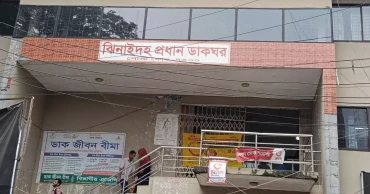
54 years after independence, Jhenaidah ED postal workers still await recognition
More than five decades after Bangladesh’s independence, thousands of Extra Departmental (ED) employees of the government postal service are still waiting for official recognition as departmental staff.
Their long-standing grievances have now spilled over into a nationwide strike, disrupting mail delivery and causing inconvenience for customers awaiting important documents.
Since July 6, ED employees across the country, including around 300 workers in Jhenaidah district, have been observing an indefinite work stoppage, demanding higher pay and recognition as regular departmental employees.
The protest has effectively crippled operations at branch post offices, particularly in rural areas where ED workers form the backbone of postal services.
As part of their movement, the employees have submitted memorandums addressed to the Prime Minister through Deputy Commissioners, Superintendents of Police and Upazila Nirbahi Officers (UNOs), warning that the strike will continue until their demands are met.
According to the protesters, nearly 23,021 ED employees are serving at 8,543 branch post offices across Bangladesh including around 300 workers at 104 branch post offices in Jhenaidah.
“We have been victims of discrimination for years,” said Ripon Hossain, postmaster of Gopalpur Branch Post Office and one of the protesters.
He said the then government had promised to increase their allowances in 2018 following earlier protests, but the commitment has remained unfulfilled even after eight years.
“We do not receive festival allowances or Eid bonuses either. With today’s cost of living, it is impossible to support a family on such meagre earnings,” he said.
Currently, an ED branch postmaster receives a monthly allowance of Tk 4,460, while EDDA peons receive Tk 4,354, EDMC runners Tk 4,177 and ED night guards only Tk 4,000.
The prolonged strike has left customers struggling to access postal services.
Mizanur Rahman, who visited the post office to collect important employment-related documents, said he had been returning for several days without success.
“I was told the employees are on strike and no services are being provided. If my documents do not arrive on time, I could face serious problems,” he said.
Postal authorities acknowledged that the strike has severely affected service delivery.
Riazul Islam, Postmaster of Jhenaidah Head Post Office, said postal services in rural areas have been disrupted because of the work stoppage.
“We are trying to ensure the delivery of highly urgent documents such as land records, appointment letters and court papers through alternative arrangements wherever possible,” he said.
He added that higher authorities are aware of the hardships faced by ED employees and that the issue is now awaiting a policy decision at the central level.
20 days ago

Football has "amazing ability" to bring people together, Sarah Cooke says ahead of England-Argentina semi-final
Expecting a great game of football between Argentina and England, British High Commissioner to Bangladesh Sarah Cooke on Tuesday said football has an "amazing ability" to bring people together, and that is something they see clearly in Bangladesh.
"Both teams are really strong and have legendary players. England has stars like Harry Kane and Jude Bellingham, while Argentina has Lionel Messi. With so much talent on the pitch, I know it will be a great game of football," she told UNB in an interview ahead of England-Argentina semi-final.
The pair will resume one of international football's most storied rivalries at the Atlanta Stadium, as England bid to defeat the defending champions and reach their first World Cup final since 1966.
The High Commissioner said the passion for the game here is incredible.
"Whether it's people watching matches with friends and family, supporting their favourite teams, or celebrating the sport together, football creates connections that go beyond borders," she said.
"That's one of the reasons football can play such a positive role in strengthening the friendship and cultural ties between the UK and Bangladesh," the British envoy said.
Responding to a question, the High Commissioner said it is fantastic that England will be competing in the World Cup semi-final this year.
"I know many people in Bangladesh will be supporting Argentina, but judging by all the England flags I have spotted around Dhaka, there are plenty of England fans here too. It's going to be a brilliant match," she said.
Sarah Cooke thanked the Bangladeshis who support England. "Thank you so much for cheering on England in this crucial match. Your support is really appreciated."
The High Commissioner said she knows the team takes a huge amount from the encouragement they receive from supporters around the world, and it is wonderful to see so many fans in Bangladesh backing England.
Responding to a question, Sarah Cooke said, "I don't want to jinx the result on Thursday, but I am sure there will be lots of celebrations should England reach the final on Sunday. We all hope that football is coming home this year!"
20 days ago
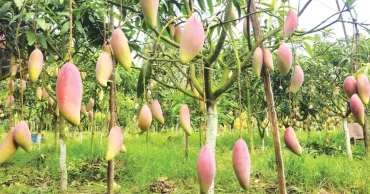
Can exotic mangoes rewrite the future of Bangladesh’s coastal farming?
For decades, Bangladesh’s coastal farmers have lived with a stubborn reality. Saline soil, prolonged waterlogging and the growing impacts of climate change have steadily narrowed their crop choices, leaving many vulnerable to repeated production losses.
Now, a research initiative in Patuakhali is challenging that assumption with mangoes.
Scientists at the Bangladesh Agricultural Research Institute (BARI) say they have successfully grown and evaluated 32 mango varieties, including several exotic cultivars, under the saline and waterlogged condition of the southern coast, raising hopes that commercial mango cultivation.
The findings come from BARI’s Regional Horticulture Research Centre at Lebukhali in Dumki upazila, where researchers have spent years testing whether improved mango varieties from around the world can adapt to the country’s coastal environment.
If the results continue over multiple growing seasons, researchers believe the initiative could diversify farming, increase rural incomes and eventually create export opportunities.
A different future for coastal agriculture
Bangladesh’s coastal belt has traditionally been regarded as unsuitable for many high-value fruit crops because of rising soil salinity and seasonal waterlogging. Climate change has only intensified those constraints.
The BARI research seeks to turn those limitations into opportunities by identifying varieties capable of thriving where conventional orchards struggle.
During the 2024-25 season, scientists evaluated 31 exotic mango germplasms alongside local materials, assessing their adaptability, yield, fruit size, colour, sweetness, edible portion, storage life and disease tolerance.
Among the standout performers were six striking red-skinned varieties — Miyazaki, Lady Jane, Chiang Mai, Taiwan Red, Kuzai and King Chakapat.
Red-skinned mangoes remain rare in Bangladesh, giving them strong commercial appeal.
Researchers believe they could command premium prices in domestic markets while offering long-term export potential.
Bigger, sweeter and available beyond the season
Some varieties distinguished themselves not only through appearance but also through productivity and quality.
Brunei King produced exceptionally large fruits, averaging about 2.35 kilograms each — several times heavier than ordinary mangoes commonly sold in local markets.
Chiang Mai recorded the highest edible portion, with about 81 percent of the fruit consisting of flesh rather than peel and seed, making it attractive for consumers and processors alike.
Sada Dofala registered 26 percent total soluble solids (Brix), indicating an exceptionally sweet fruit.
Chiang Mai also emerged as the highest-yielding variety, with an estimated production potential of 2.73 tonnes per hectare. Kingston Pride and Katimon also demonstrated encouraging productivity under coastal conditions.
Researchers identified another commercially significant trait in the Chokanon variety: off-season fruiting.
Bangladesh’s mango season usually runs from May to August. A variety capable of producing fruit outside that window could allow growers to reach markets when supplies are limited and prices are considerably higher.
Post-harvest performance has also been encouraging. Banana Mango remained in good condition for nine to ten days at room temperature, increasing its suitability for transport to distant markets and, potentially, export.
Beyond mangoes
The research programme extends well beyond a single fruit crop.
Scientists are simultaneously developing production technologies for year-round guava cultivation in waterlogged areas and for mango, guava, dragon fruit, malta and pomelo under saline conditions.
The broader objective is to diversify agriculture across Bangladesh’s coastal belt, reducing farmers’ dependence on a limited number of traditional crops while improving resilience against climate-related shocks.
The research centre is also working directly with farmers by providing improved saplings, technical training, orchard management support and advice on disease control and modern fruit production.
Farmers begin to take notice
The research has already generated interest among growers.
Md Abdul Jabbar Akand from Galachipa said he established a mango orchard on waterlogged land this year after receiving guidance from BARI.
“Earlier we never imagined exotic mangoes could grow in our coastal conditions,” he said. “Now, after seeing the growth of the trees and the fruiting, we are much more confident.”
Sufia Khatun, a farmer from Bauphal, said she is planning to expand from guava into mango cultivation if quality planting materials become available.
Md Kabir Mridha of Kalapara said fruit cultivation on saline land had reduced production risks but added that wider success would depend on farmers having reliable access to improved saplings, technical assistance and stable markets.
Research still underway
Researchers caution that the findings remain preliminary.
Senior Scientific Officer Dr Mahamuda Ratna said almost all tested varieties except MI PK-013 and MI PK-025 have shown encouraging performance in fruit quality, colour, edible portion, harvesting period and storage characteristics.
However, she said recommendations for commercial cultivation would only be made after evaluations over multiple growing seasons.
Principal Scientific Officer Dr Md Alimur Rahman said the ultimate goal is to identify mango varieties best suited to Bangladesh’s coastal climate while developing production technologies that enable profitable fruit cultivation under saline and waterlogged conditions.
21 days ago