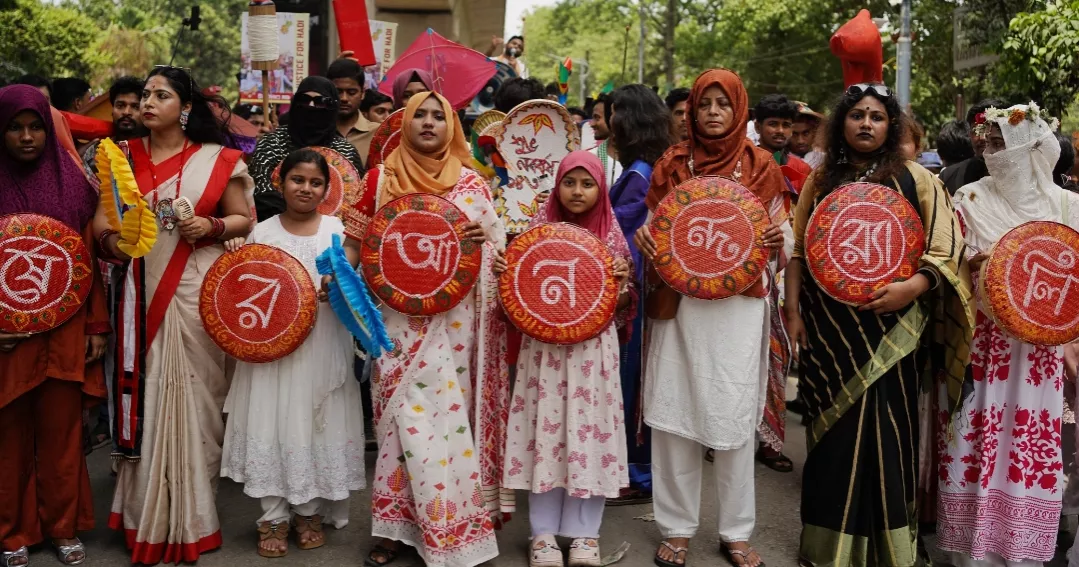
Pahela Baishakh, marking the first day of the Bengali New Year, is not merely a festive occasion; it stands as a powerful symbol of unity, inclusiveness and cultural identity in Bangladesh.
The festival transcends religious and social boundaries, bringing together people from all walks of life, regardless of caste, colour or faith. It is one of the rare occasions where diversity is not only acknowledged but celebrated with collective enthusiasm.
Across the country, people join vibrant festivities featuring traditional music, cultural performances and fairs that reflect the rich heritage of Bengal. From urban centres to rural communities, the day fosters a shared sense of belonging and harmony.
One of the most iconic highlights of the celebration is the procession – earlier named Mangal Shobhajatra – organised by students of the Faculty of Fine Arts at the University of Dhaka. Recognised by UNESCO as an Intangible Cultural Heritage of Humanity, the procession symbolises resistance against injustice and the aspiration for a peaceful and inclusive society.
Although the government has renamed the Mangal Shobhajatra as Baishakhi Shobhajatra this year, its spirit and mode of celebration remain unchanged.
In the early hours of the day, thousands of people gathered to take part in colourful processions, welcoming the new year with hopes of renewal and prosperity. The morning air resonated with traditional songs, adding to the cultural depth of the occasion.
Like previous years, Pahela Baishakh was welcomed in a festive atmosphere, as the Baishakhi Shobhajatra from the Faculty of Fine Arts at the University of Dhaka drew large crowds.
Adorned with masks and traditional folk motifs, the procession reflected the rich cultural heritage of Bengal while promoting messages of unity, harmony and resistance to injustice.
People from different walks of life – students, artistes and cultural activists – joined the procession, turning it into a vibrant public celebration of the Bengali New Year.
President Mohammed Shahabuddin and Prime Minister Tarique Rahman issued separate messages, greeting the people of Bangladesh and Bangla-speaking communities around the world.
Opposition Party Leader Dr Shafiqur Rahman also greeted the people of the country on the occasion.
Meanwhile, the government undertook extensive initiatives to ensure inclusive and safe celebrations nationwide.
Cultural programmes were arranged at both national and local levels, while law enforcement agencies remained on high alert to maintain security and discipline during public gatherings.
Authorities, including police and other security forces, implemented special measures such as increased patrols, traffic management and surveillance to ensure peaceful festivities.
Beyond the celebrations, Pahela Baishakh serves as a reminder of the nation’s deep-rooted cultural identity. It reinforces the values of unity, secularism and coexistence—principles that continue to shape the social fabric of Bangladesh.
As people welcomed the New Year, they not only celebrated tradition but also renewed their collective commitment to harmony, resilience and cultural pride.