special
Prolonged spell of frequent power outages degrade quality of life in Sylhet city
Residents of Sylhet city have been enduring frequent power outages over the past several days, with repeated load-shedding during both daytime and nighttime causing widespread inconvenience amid hot and humid weather.
Officials of the Bangladesh Power Development Board (PDB) said the disruptions were caused by an inadequate electricity supply from the national grid compared to local demand.
They, however, could not say when the situation would fully return to normal, adding that the frequency of load-shedding would decline once power supply from the national grid improves.
Residents from different parts of the city said electricity has been going out several times a day and night. In many cases, power remains available for an hour before being cut again for another hour, disrupting normal life.
Helal Uddin, an employee at a business establishment in the Ambarkhana area, said repeated outages during office hours were affecting business operations.
"Power goes out several times during the eight-hour office period. Sometimes electricity remains for an hour and then goes off the next hour, causing losses to businesses," he said.
Zahid Ahmed, a resident of Bagbari area, said he faced considerable hardship after electricity went out around midnight shortly after his young child had gone to sleep.
"It took nearly an hour for power to return. Managing a small child in such conditions was very difficult," he said.
The frequent outages are also disrupting operations at shops, small businesses and offices, while people working online and Higher Secondary Certificate (HSC) examinees are also facing difficulties.
Residents have urged the authorities to take immediate and effective steps to ensure an uninterrupted power supply.
Sylhet PDB Chief Engineer Imam Hossain said the demand for electricity remained high, but the national grid was unable to provide adequate supply.
He said the electricity demand in Sylhet under the PDB's jurisdiction stood at 232 megawatts as of 7pm on Sunday, while the national grid supplied only 148 megawatts.
"As a result, we had to impose load-shedding of 84 megawatts," he said.
The chief engineer said the improvement of the situation depends entirely on power generation.
"The problem has intensified over the last three to four days. If generation increases, the supply situation will also improve. However, it is difficult to say exactly when the situation will return to normal," he added.
1 month ago
Bridge without roads fails to benefit Rangpur farmers
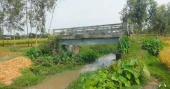
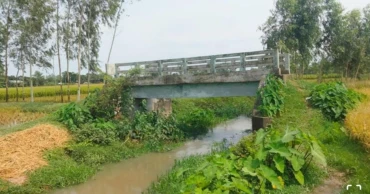
A bridge built over the Sonamati canal in Pirganj upazila of Rangpur at a cost of more than Tk 8 lakh has become a symbol of poor planning, with local farmers alleging that it has brought them little or no benefit due to the absence of approach roads on either side.
The bridge constructed in Bhendabari village under Bhendabari union stands isolated amid vast stretches of farmland, making it virtually unusable for the people it was intended to serve.
Although the structure was built to facilitate farmers’ movement and transportation of crops, farmers said they are unable to use it because there are no connecting roads and both ends of the bridge are significantly higher than the surrounding fields.
“We cannot even take our harvested crops across the bridge to the market,” said farmer Ramjan Ali, expressing frustration over what he described as a wasted public investment.
A visit to the site revealed that while there is a narrow footpath leading to the eastern side of the bridge, the western end opens directly onto cultivated farmland with no road connection.
Farmer Lal Mia said the bridge has remained largely ineffective since its completion.
“Without access roads, the bridge is of no practical use to us. The elevated ends make it difficult even to carry harvested crops across,” he said.
Another farmer, Sabuj Mia, said nearly 150 acres of farmland surround the area along with a Hindu cremation ground.
“Most of the farmland lies between the canal and the Sonamati River. This bridge was supposed to be the easiest route for transporting agricultural produce, but without connecting roads, it serves little purpose,” he said.
Residents said the main road lies to the north of the bridge while agricultural land stretches in all directions.
Although there is a narrow walking path beside some fields no proper approach roads have been built on either side of the bridge.
A local farmer, requesting anonymity, said the road could not be widened because a few landowners refused to give up land needed for its construction.
“As some landowners were unwilling to provide land for the road, the approach road to the bridge could not be developed,” he said.
According to official sources, the Bangladesh Agricultural Development Corporation (BADC) constructed four bridges in Pirganj upazila during the 2020-21 fiscal year under a project titled ‘Small-scale Irrigation Development and Irrigation Efficiency Enhancement through Surface Water Conservation’.
The four bridges were built at a total cost of Tk 40 lakh to facilitate the transportation of agricultural produce from fields.
The Sonamati canal bridge alone cost Tk 803,000.
Hossain Mohammad Altaf, Executive Engineer (Construction) of BADC Rangpur, said the structure was designed as a pedestrian footbridge rather than a vehicle bridge.
“The bridge was constructed to allow people to cross the canal on foot. It was not designed for vehicular movement, so the project did not include funding for approach roads,” he said.
He added that the bridge was intended to enable farmers to carry their produce across the canal on foot.
However, acknowledging local concerns, Altaf said efforts would be made to improve accessibility.
“We will take steps to make both ends of the bridge more convenient for public use so that people can cross it without difficulty,” he said.
While officials maintain that the bridge has fulfilled its design objectives, local farmers argue that the absence of proper road connectivity has undermined its intended purpose.
They urged the authorities to build approach roads and lower the elevated ends of the bridge so that it can genuinely serve the farming community and ensure that public funds are put to effective use.
1 month ago
Naogaon Medical College yet to realise full potential amid persistent shortfalls
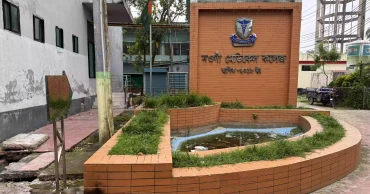
Naogaon Medical College has been operating without a campus of its own for nearly eight years, forcing hundreds of aspiring doctors to pursue their medical education amid severe infrastructural and staffing constraints.
Since its academic activities began in the 2018-19 session, the government medical college has been functioning from a section of the 250-bed Naogaon General Hospital.
While student enrolment has steadily increased over the years, the institution’s facilities and manpower have failed to keep pace, creating challenges ranging from classroom shortages and teacher scarcity to inadequate accommodation and limited clinical exposure.
According to college authorities, the first batch of students has already completed their MBBS degree and internship while the second batch admitted in the 2019-20 session is currently undergoing internship training at the same hospital.
At present, 348 students from the third to eighth batches are studying at the institution, of whom 210 are female.
The college has an approved workforce of 90 positions, including principal, professors, associate professors, assistant professors, lecturers and curators but only 45 posts are currently filled.
The existing faculty consists of one principal, three professors, nine associate professors, six assistant professors, 24 lecturers and two curators.
One of the curators is currently on deputation at Rajshahi Medical College.
With many departments lacking adequate faculty members, teachers are often required to take classes for multiple batches and departments simultaneously.
Faculty members and officials said the situation is affecting not only classroom teaching but also academic supervision and research activities.
Although the college currently runs 11 departments including Anatomy, Physiology, Biochemistry, Forensic Medicine, Pharmacology, Microbiology, Pathology, Medicine, Surgery, Gynaecology and Community Medicine it has only three classrooms for its hundreds of students.
The absence of a dedicated examination hall further compounds the problem.
During examinations, classrooms are converted into exam venues, forcing the suspension of regular classes and disrupting the academic calendar.
The infrastructure limitations extend beyond classrooms.
Departmental heads and consultants lack adequate office space, while administrative, academic and departmental activities are being carried out within the confines of a single building originally not designed to accommodate a medical college.
Students also face significant accommodation challenges.
Many say the lack of residential facilities affects their training and overall educational experience.
“Clinical experience is essential for becoming a competent doctor,” said Anisur Rahman, a student of the college.
“To gain that experience, we need facilities such as a dedicated operation theatre complex, which we do not have because there is no campus of our own. The general hospital also lacks an ICU. As a result, while we are progressing academically, we remain behind in terms of clinical exposure.”
Several students requesting anonymity echoed similar concerns.
“Clinical experience is the most valuable asset for a medical student. But we face serious limitations in this regard,” one student said.
“Many complicated cases requiring advanced treatment are referred to Rajshahi and other medical college hospitals. As a result, we miss opportunities to observe important diseases and treatment procedures firsthand. The environment needed to build confidence as future physicians is still lacking.”
Abdullah Al Hamza, a student of the 2021-22 session, said students at established medical colleges enjoy facilities such as reading rooms, canteens, gymnasiums and playgrounds, all of which are considered important for medical education and student well-being.
“We have none of those facilities,” he said.
Advocate D M Abdul Bari, president of local socio-cultural organisation Ekushey Parishad, said Naogaon Medical College holds immense potential in producing skilled doctors for Naogaon and neighbouring districts.
“However, delays in developing infrastructure, recruiting teachers and constructing a permanent campus are preventing the institution from reaching its full potential,” he said.
“If vacant posts are filled and adequate classrooms and residential facilities are ensured alongside the construction of a permanent campus, the quality of education will improve significantly and the college will be able to function effectively as a full-fledged government medical institution.”
Principal Dr Mukhtar Hossain acknowledged the challenges.
“The biggest problem we face is the lack of our own campus,” he said.
“The building where we currently operate is insufficient for a medical college. We have to suspend classes during examinations, there is not enough office space for teachers and consultants, and we cannot provide residential facilities for all students.”
He also expressed concern over the accommodation situation of female students.
“A section of female students has to stay outside the hostel facilities, often facing security concerns,” he said.
“We have repeatedly written to the Ministry of Health seeking the necessary infrastructure and manpower support.”
1 month ago

Tech, skills and innovation at core of Bangladesh’s new education blueprint
Bangladesh is preparing for a major transformation of its education system placing technology, skills development and innovation at the heart of a long-term strategy aimed at building a globally competitive workforce and accelerating economic growth.
Under an ambitious plan outlined in the FY2026-27 budget document, the government intends to gradually increase education spending to 5 percent of GDP over the next five years while introducing wide-ranging reforms designed to equip young people with the knowledge, technical expertise and digital skills needed for the jobs of the future.
The government views education not merely as a means of obtaining certificates but as the most reliable foundation for national reconstruction, productivity growth, social equity and employment generation.
The document says the government has already begun laying the groundwork for improving educational infrastructure, enhancing teaching quality, expanding technology-based learning and developing a workforce capable of competing in both domestic and international labour markets.
Emphasising the country’s large youth population, the government said Bangladesh’s demographic dividend can only be transformed into national wealth through a modern education system that equips students with knowledge, skills, ethical values and innovative capacity.
As part of a major overhaul, the government plans to reform the curriculum to promote leadership, social responsibility, creativity and character development alongside academic learning.
Greater emphasis will be placed on technical and vocational education, third-language instruction, sports, cultural activities and technology-enabled learning.
The budget document outlines plans to progressively introduce technical education from Class VI onwards, enabling students to acquire market-relevant skills in fields such as agriculture, ICT, electrical work, electronics, graphic design, tourism, healthcare and construction.
A mandatory third-language programme, including options such as Japanese, Korean, Mandarin, Arabic, French and German, is also being considered.
To support overseas higher education and language learning, the government has already introduced student loans of up to Tk 10 lakh.
The government also announced a range of welfare initiatives, including free education for girls up to the graduate level, expanded merit-based scholarships, school uniforms and learning materials for disadvantaged students, and greater support for children with disabilities.
A nationwide Mid-Day Meal Programme will be gradually introduced to improve student nutrition and health, while special attention will be given to sanitation and hygiene facilities for female students and women teachers.
To build a technology-driven education system, the government plans to implement a “One Teacher, One Tab” programme, establish multimedia classrooms, expand free Wi-Fi access, introduce a unique Edu-ID for every student and increase digital library facilities.
Students will also receive exposure to artificial intelligence, robotics, coding and digital literacy.
The document further highlighted efforts to strengthen links between education and employment through industry-academia partnerships, apprenticeships, internships and entrepreneurship programmes.
Universities and industries will jointly establish skills development centres and offer industry-recognised short courses.
The government also aims to reverse “brain drain” by engaging highly educated Bangladeshis living abroad through student exchange programmes, visiting scholar initiatives, joint research projects and internationally recognised credit transfer systems.
Quality improvement across all streams of education, including primary, secondary, higher, madrasa and technical education, remains a priority, the document says.
It also promises regular teacher training, professional development opportunities and special incentives for educators serving in rural and remote areas.
The story of tomorrow’s Bangladesh will be written by today’s children, adolescents and young people, the document states, adding that the government seeks to build a generation capable not only of securing employment but also of creating new opportunities and leading change.
1 month ago
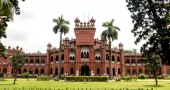
DU: In the hotbed of the culture war, is cultural space shrinking?
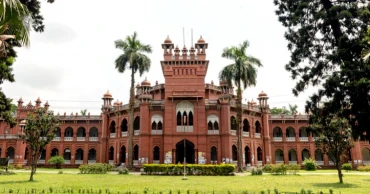
Dhaka University has long been recognized as a vibrant cultural hub in the country, a place where artists find their voice through their activities.
From theater to fine arts, from poetry recitations to musical performances, the university's cultural identity has been inseparable from its academic one. But something appears to be shifting.
In recent times, Dhaka University finds itself in the midst of a quiet yet significant transition. The campus that once echoed with cultural energy now feels noticeably different.
Many claim that large-scale, spirited cultural activities, cultural gathering, and that cultural vibe in campus are no longer as visible as before. Events still take place, but on a smaller scale, with less participation and enthusiasm.
For some students, student leaders, and cultural activists, the changes reflect a broader shift in the university's political and social landscape following July uprising 2024.
They argue that an atmosphere of uncertainty, ideological polarization, and fear of public backlash has discouraged participation in traditional cultural activities. Others, however, believe the campus is simply experiencing a period of adjustment and that cultural practices are evolving rather than disappearing.
Dhaka University's cultural identity was shaped not only by organized events but also by everyday interactions that animated campus spaces.
The Teacher-Student Centre (TSC), Charukola, and other spots hosted informal rehearsals, musical performances, recitation sessions, and cultural discussions. These activities fostered a sense of community and made culture a visible and integral part of campus life.
A cultural activist and former student of DU, Robiul Hossain, said especially before Covid-19, there was a strong culture centering TSC. Every day from 10am to midnight, apart from the club, small groups (from department or outside) would practice singing, reciting or dancing. Many people would flock to see their beautiful cultural chat.
Students were much more aware and interested in these topics back then, and the clubs received a very good response from sponsors and audiences alike, he added.
Cultural organizations held programmes regularly while departmental events also showcased elements of indigenous and Bengali culture. Pohela Boishakh and year-round programmes at Charukola attracted large and diverse crowds.
However, Robiul said that the university's cultural space has narrowed significantly since August 5. 'Before the July Uprising, the main concern was whether any program would go against the Awami League and Bangabandhu.
But after August 5, I thought that cultural practices would be carried out properly, but it did not happen. Everyone went through a fear of mob culture. Nothing major may have happened directly at DU, but we had to face many things indirectly.'
There is also debate surrounding cultural practices centering Liberation War. Many believe, since the July uprising, attempts have been made to position the July and Liberation War against each other, undermining the spirit of the Liberation War.
Last year, an exhibition organized by Islami Chhatra Shibir at TSC displayed photographs of several individuals convicted by the International Crimes Tribunal for crimes against humanity committed during the 1971 Liberation War.
The exhibition sparked widespread criticism on social media and drew protests from various political, social, and cultural student organizations, teachers and students. Following the controversy, the university administration removed the photographs from the exhibition.
Robiul Hossain said, "During our time, many programmes were organized around the Liberation War. However, they mainly focused on the Awami League or Chhatra League, as if the Liberation War was solely their contribution. We failed to present the full and accurate history."
"There was an opportunity after August 5 to present that history properly, but unfortunately we could not do so. Now there are attempts to place the Liberation War and the July movement in opposition to each other," he added. "As a result, many TSC-based organizations are reluctant to work on Liberation War-related themes for fear of being labelled."
Sheikh Tasnim Afroz Emi, a former vice-president of Shamsun Nahar Hall Union, alleged that after August 5, some coordinators occupied the room of Slogan '71, a registered TSC-based organisation, and renamed it "Inquilab 24".
However, the director of TSC confirmed that Room 207 is currently being used by the Dhaka University Literature Society and the Dhaka University Career Club, not by Inquilab 24.
DUCSU’s role questioned
After years without elected student representation, many students saw the return of an elected DUCSU panel as an opportunity to help restore a healthy campus environment and support the university's cultural traditions. But some students and activists now allege that DUCSU has failed to play that role and instead represents a particular group.
Although they are hesitant to state it on the record, the clear indication here is towards the Jamaat e Islami, whose student wing, the Islami Chhhatra Shibir, who backed the panel that swept the election. Even against the background of the July Uprising, the result stunned the nation.
Abdul Kader, who rose to prominence as a leader of the student-led uprising of 2024, was a VP candidate in the last DUCSU election,for a panel seen as most closely aligned to the student protesters of 2024, via the National Citizen Party.
He claimed that the student body has increasingly become representative of a specific Islamist-oriented group.
He alleged that DUCSU's literature and cultural secretary has primarily organized programmes of an "Islamic orientation" while showing little initiative in arranging broader cultural events.
"DUCSU and the current student representatives have failed to create an environment where artists feel safe and encouraged," Kader also said. "They could have helped rebuild the cultural sphere, but their activism has become one-dimensional. They need to understand that they represent the entire student body, not just one group."
Describing the current situation as confusing, Kader added that while the campus may have been freed from the influence of Awami League and Chhatra League, it has not been returned to ordinary students. Instead, he alleged, “another conservative group” - again, the only logical inference being Jamaat-Shibir iophas come to dominate parts of campus life.
Rise of Qawwali and Milad Mahfil
Among the most noticeable developments since August 2024 has been the growing visibility of Islamic cultural events, particularly Qawwali performances and Milad Mahfils.
Dhaka University Cultural Society’s President Atikur Rahman Toha said, "I think this may have been an attempt to establish an alternative cultural stream in opposition to the longstanding traditions of Bengali culture."
However, such events are no longer as visible as they once were. "Ultimately, it appears that the effort to position Qawwali culture as a competing cultural force was not successful. That is why the trend has gradually lost momentum," Toha said.
Robiul Hossain, however, rejects the notion that such practices are entirely new.
"Milad gatherings always existed, especially in residential halls. The difference is that they were usually confined to mosques and smaller settings," he said.
He argues that Muslim students should have legitimate cultural spaces and that, in previous years, Islamic cultural expressions were often unfairly labeled as anti-Liberation War or politically problematic.
At the same time, Robiul believes some groups have used Islamic cultural activities as a form of political expression.
"Qawwali is a rich and valuable cultural tradition. But when it becomes associated with political messaging, people begin to perceive it politically rather than culturally. Some of the post-August initiatives were motivated as much by politics as by culture."
Inevitable decline or temporary disruption?
Many argue that the main reasons behind the decline of cultural activities at the University were a sense of ‘unknown fear,’ ‘uncertainty,’ and the fear of ‘mob culture.’ Others believe that although cultural events temporarily decreased after August 5 due to the formation of new committees and organizational restructuring within cultural organizations, activities are now gradually returning to normal.
Robiul Hossain said, “After the fall of the government on August 5, those of us who remained neutral hoped that we would finally be able to engage in cultural activities freely and without obstacles. However, that did not happen, mainly because of the influence of ‘mob culture.’
“Because of this mob culture, everyone went through a period of fear. Although no major incidents occurred directly at Dhaka University, we had to face many challenges indirectly.’
He further said, ‘Before August 5, there were many talented artists and club members who had family ties or other connections with Awami League or Chhatra League.
Many of them were not involved in any controversial activities, but after August 5, they withdrew from public participation. As this significant group stepped away, cultural activities centering TSC and the university became even more limited. Finding active members for TSC activities has now become a challenge.’
On the other hand, Atikur Rahman Toha said that cultural events at the university did decline to some extent after August 5 - and that is both true and undeniable. However, events are now being held regularly again, and their activities are moving forward at a normal pace.
“There were several reasons behind the decline in events during that period. There was an atmosphere of fear and uncertainty. At the same time, the formation of new committees within the clubs and the need to manage various internal matters required considerable time. Taken together, these factors delayed the return to stability.”
1 month ago

Spending smarter: Govt targets efficient public expenditure, higher revenue
Amid mounting fiscal pressure and growing development needs the government has embarked on a medium-term reform agenda aimed at making every taka of public spending count while strengthening revenue collection and safeguarding debt sustainability.
The strategy outlined in the FY2026-27 national budget seeks to improve the quality and efficiency of public expenditure, raise the country’s revenue base, and reduce reliance on debt-driven growth as Bangladesh navigates a challenging economic environment marked by inflationary pressures and global uncertainties.
At the heart of the reform agenda is a strategic expenditure framework designed to ensure that public spending is aligned with national development priorities and delivers maximum economic and social returns.
Priority sectors include infrastructure, education, healthcare, energy, agriculture and employment-generating activities, according to budget document.
It also states that public investment in education and healthcare will be gradually increased to 5 per cent over time.
Future development projects will undergo economic appraisal, cost-benefit analysis and implementation-readiness assessments to ensure value for money and maximise development impact.
The budget document notes that the government intends to improve expenditure efficiency through the rationalisation of non-priority spending and stronger fiscal discipline across public institutions.
Subsidy programmes are expected to become more targeted and efficient so that benefits reach intended recipients while limiting fiscal pressures. Support for agriculture, food security and energy supply will continue, although inefficient subsidy arrangements will be reviewed and reformed, according to the document.
The document also highlighted reforms aimed at making social protection programmes more targeted, inclusive and effective through greater use of technology, digital beneficiary databases and enhanced monitoring systems.
Technology-based systems in public procurement, project implementation and budget management are also expected to be strengthened to improve transparency, accountability and efficiency, it added.
Bangladesh’s revenue-to-GDP ratio currently stands at around 8 per cent, while the tax-to-GDP ratio is about 6.8 per cent.
The government aims to raise these ratios to 11 per cent and 9.6 per cent respectively by FY2030-31 through policy and administrative reforms.
The document said that the government seeks to improve the country’s debt sustainability and restore Bangladesh’s debt risk rating from the current “moderate” category to a “low” risk category through stronger revenue mobilisation, sustainable budget deficits and modernised debt management.
The government intends to reduce dependence on debt-financed growth and promote production, employment and private investment as key drivers of long-term economic development, it added.
For FY2026-27, the government proposed a record public expenditure programme of Tk 9.38 lakh crore, marking an increase of about 19 percent from the original Tk 7.90 lakh crore budget of the previous fiscal year.
The expansion reflects the government’s strategy to stimulate economic recovery, strengthen public services and accelerate infrastructure development amid ongoing fiscal and inflationary pressures.
Total public spending is estimated at around 13.7 percent of GDP, up from 12.7 percent in FY2025-26, indicating a more expansionary fiscal stance.
Of the total outlay, the Annual Development Programme (ADP) has been set at Tk 3 lakh crore, a 30 percent increase over the previous year’s allocation, with Tk 1.90 lakh crore expected from domestic resources and Tk 1.10 lakh crore from foreign loans and grants.
The government prioritised investment in transport and communication networks, power and energy, education, healthcare, agriculture, employment generation and social protection programmes to enhance productivity and support long-term growth.
Revenue collection has been targeted at Tk 6.95 lakh crore, leaving a budget deficit of roughly Tk 2.43 lakh crore, which will be financed through domestic and external borrowing.
The budget also placed emphasis on improving expenditure efficiency through a strategic expenditure framework, under which major spending decisions will be assessed based on their economic and social returns.
According to budget documents, non-development expenditure stands at around Tk 6.38 lakh crore, reflecting significant commitments to salaries, pensions, subsidies, interest payments and social safety net programmes.
The increased spending is expected to support the government’s growth target of 6.5 percent and inflation target of 7.5 percent while advancing reforms aimed at modernising infrastructure, strengthening human capital and fostering inclusive economic development across the country.
1 month ago
Tk 342 cr Narail embankment project faces delays, 6,000 acres remain at flood risk
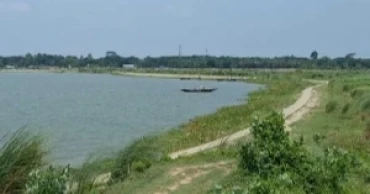
Thousands of residents in Narail’s Lohagara upazila continue to suffer recurring floods and crop losses as a long-awaited embankment project along the Madhumati River remains incomplete even seven years after its approval.
The unfinished project has left at least 6,000 acres of cropland and hundreds of homesteads in four unions vulnerable to seasonal flooding.
Local people said they had hoped the embankment would provide a permanent solution to decades of hardship.
However, despite the project’s approval in 2019, visible progress on the ground remains limited, the said.
Local administration and the Bangladesh Water Development Board (BWDB) sources said continuous riverbank erosion over the years has washed away paved roads along the Madhumati River.
Now river water regularly inundates vast stretches of agricultural land and residential areas, damaging crops and homes alike.
To address the situation, the then government approved a Tk 342 crore project at an Executive Committee of the National Economic Council (ECNEC) meeting in 2019.
The project involves constructing a 3.1-kilometre embankment from Kotakol to Ghagha Chairman’s House area in Dhaloitala under Lohagara upazila.
But legal disputes and objections from local residents delayed implementation for years.
After overcoming court-imposed restrictions, the BWDB and district administration formally began work on the project in 2023.
Although the project was originally scheduled for completion by June 2025, progress has remained slow despite two extensions of the deadline.
Residents claimed that apart from excavation work in some sections, there has been little visible advancement.
They also point to unresolved land acquisition issues as a major obstacle.
Official data show that of the 161 affected landowners whose land is required for the project, only 24 have so far received compensation.
People living in at least 15 villages across four unions have urged the authorities to expedite the construction, saying the embankment is essential to protect both farmland and homes from recurring floods.
“We have been waiting for years. Every monsoon brings uncertainty. Crops are damaged and water often enters our homes. The embankment must be completed as soon as possible,” said Monu Mia, a resident of the affected area.
However, some landowners whose properties fall within the project area insist that construction cannot proceed unless they receive compensation.
The contract value for the embankment construction has been fixed at Tk 5.95 crore.
Md Milon Ali, manager of SA UBJ, the contracting firm implementing the project, said the company has been facing significant difficulties due to unresolved land acquisition issues.
“We have not yet received possession of the entire project area from the Water Development Board. Whenever we try to work in certain locations, local residents obstruct the work, saying they will not allow construction until compensation is paid. As a result, we can only work in some sections. Once the land is fully handed over, the project can be completed quickly,” he said.
BWDB Executive Engineer Abhijit Kumar Saha said the project remained stalled until 2022 because of court orders, despite being approved in 2019.
“Construction activities started in 2023. However, local resistance and land-related complications have prevented the contractor from working regularly. Even after land boundaries are marked, the markers are sometimes removed. We hope the work can be accelerated once these issues are resolved,” he said.
Additional Deputy Commissioner (Revenue) Hosne Ara Tanni said the district administration had repeatedly identified and handed over the required land to the BWDB.
“So far, compensation cheques have been distributed to 24 verified claimants. Applications and documents submitted by the remaining affected landowners are being scrutinised, and compensation will be provided in phases,” she said.
1 month ago
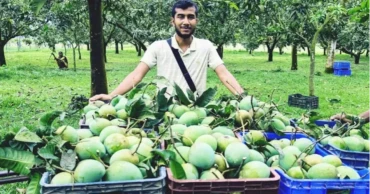
Haribhanga mango harvest turns Northern Bangladesh into hub of economic activity
Every summer the arrival of Haribhanga mangoes brings a wave of excitement to northern Bangladesh. But in Rangpur and surrounding districts, the famed sweet and juicy fruit represents far more than a seasonal treat.
From orchard owners and traders to transport workers and online entrepreneurs, thousands of people now depend on the GI-recognised mango for their livelihoods, turning what was once a region marked by seasonal hardship into a growing hub of rural prosperity.
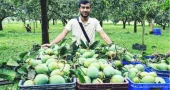
Rows of mango trees laden with clusters of ripe fruit now dominate the landscape in Rangpur and surrounding districts.
The sight reflects not only a successful harvest but also the growing prosperity of farming communities that once struggled with poverty and seasonal unemployment.
Rangpur’s geographically indicated (GI) Haribhanga mango entered the market earlier than usual this year.
While the official marketing season generally begins around June 20, an intense heatwave accelerated ripening, prompting growers to start harvesting ahead of schedule.
The season was formally inaugurated on June 15 by Rangpur Deputy Commissioner Mohammad Ruhul Amin at an orchard in Padaganj of Mithapukur upazila. Since then, harvesting and trading activities have gained full momentum.
The main production hubs—including Padaganj, Khoregachh, Paikarhat, Moyenpur, Changmari, Balua Masumpur, Kutubpur, Gopalpur, Lohanipara, Ramnathpur and Kalupura—have turned into bustling trading centres where growers, traders and buyers negotiate prices from dawn to dusk.
The economic impact of the fruit extends far beyond orchard owners.
Farm labourers, seasonal workers, traders, online entrepreneurs, transport operators and courier service providers are all benefiting from the mango season.
The entire supply chain becomes active during these few months, generating employment and income opportunities across northern Bangladesh.
“We have cultivated mangoes on 10 acres of land this year,” said orchard owner Mashiur Rahman. “Some fruits were damaged by storms and hail, but the current market prices are encouraging. We hope to recover our losses and make a profit.”
Wholesale trader Ranga Mia said large buyers from Dhaka, Chattogram, Sylhet and other parts of the country have already started placing orders.
“Demand is strong, and if market conditions remain favourable, both traders and farmers will benefit this season,” he said.
Haribhanga mangoes are now available in markets across Rangpur city, including the Central Bus Terminal Road, City Bazaar, Lalbagh, Modern Mor, Dhap Bazaar and Shapla Chattar areas. Vendors are also selling the fruit door-to-door in neighbourhoods.
As in previous years, prices are relatively high at the beginning of the season. Depending on size and quality, wholesale prices currently range from Tk 1,200 to Tk 2,400 per maund.
Mango entrepreneur Hanifur Rahman Sajib said weather conditions prompted many growers to harvest early this year.
“Haribhanga is highly popular because of its taste. Individual fruits typically weigh between 150 and 500 grams,” he said.
However, he noted one major challenge: the fruit ripens within four to five days after harvesting, leading to significant post-harvest losses every year.
According to the Department of Agricultural Extension (DAE), Haribhanga mango cultivation has expanded significantly across five northern districts—Rangpur, Kurigram, Gaibandha, Nilphamari and Lalmonirhat.
This year, the fruit has been cultivated on nearly 6,000 hectares of land, with a production target of about 45,000 metric tonnes. Average yields range from 10 to 12 tonnes per hectare.
Growers and traders estimate that total sales could exceed Tk 300 crore if weather and market conditions remain favourable.
DAE Additional Director Md Sirajul Islam said Bangladesh currently exports mangoes to more than 30 countries while following Good Agricultural Practices (GAP).
“We are working to expand exports further in the coming years,” he said.
Local authorities view Haribhanga mango as a strategic economic asset.
Deputy Commissioner Mohammad Ruhul Amin said the district administration has prioritised the development of the Haribhanga sector and plans to support increased exports through infrastructure improvements, road development, banking services and better logistics, including initiatives such as a dedicated mango train.
Rangpur Divisional Commissioner Shahidul Islam said efforts are underway to expand cultivation and strengthen export opportunities.
The success of Haribhanga mango cultivation has already transformed many rural communities.
Areas once marked by seasonal hardship now witness thriving economic activity during the harvest season.
Farmers have diversified their income sources, local businesses have expanded, and thousands of people find temporary employment linked to the mango trade.
1 month ago
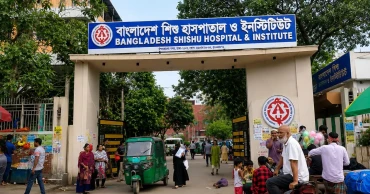
Govt plans major upgrade of Shishu Hospital with 100 new beds, modern facilities
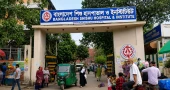
Every day hundreds of anxious parents arrive at Bangladesh Shishu Hospital and Institute (BSHI) with critically ill children, hoping for treatment that could save young lives.
But the country’s largest specialised paediatric hospital has long been under pressure, struggling with rising patient loads and limited capacity for advanced care.
Now, the government has undertaken a Tk 344.02 crore expansion project aimed at transforming the hospital into a more advanced and comprehensive centre for specialised child healthcare.
The proposed “Bangladesh Shishu Hospital and Institute Expansion Project-2”, scheduled for implementation between July 2026 and June 2028, seeks to expand infrastructure, introduce cutting-edge treatment facilities and strengthen specialised services that remain limited across Bangladesh.
Responding to Growing Demand
The expansion comes at a critical time when demand for specialised paediatric treatment is rising steadily due to population growth, improved disease detection and greater public awareness of children’s healthcare needs.
According to project documents, the expansion will include the addition of 100 new beds and six cabins, five state-of-the-art operation theatres and nearly 1,400 advanced medical equipment.
The project also envisages the procurement of more than 1,700 furniture and the introduction of extensive hospital automation through 36 software packages, aimed at improving patient management and service delivery.
At the heart of the initiative is the vertical expansion of the hospital’s existing C-Block at Sher-e-Bangla Nagar.
The building will be extended from the fourth floor to the ninth floor, creating an additional 4,461 square metres of floor space without requiring any new land acquisition.
Planning Commission officials said the site already possesses the structural foundation necessary for vertical expansion, reducing implementation risks and avoiding the delays often associated with land acquisition and utility relocation.
Bringing Advanced Care Within Reach
The expansion will facilitate the introduction and strengthening of paediatric urology, kidney transplantation, surgical oncology and orthopaedic surgery services.
For many families, these are treatments that currently require referrals abroad or lengthy waits at a handful of specialised facilities.
The hospital is also set to establish a comprehensive paediatric cardiac care programme, including a catheterisation laboratory (Cath Lab), cardiac intensive care beds, dedicated operation theatres and post-operative recovery units.
Congenital heart diseases remain among the leading causes of childhood illness requiring specialised intervention.
Health experts believe expanded cardiac facilities could significantly improve survival rates while reducing treatment costs for families.
Strengthening Diagnostics
The project further seeks to improve diagnostic accuracy and speed through the installation of advanced imaging technologies, including CT scan and MRI facilities.
Such equipment plays a crucial role in diagnosing neurological disorders, cancers, congenital abnormalities and other complex childhood diseases.
Doctors say delayed diagnosis often contributes to poor treatment outcomes, particularly for patients arriving from remote districts.
Reducing Medical Migration
Bangladesh has made notable progress in child health indicators over the past decades, including reductions in child mortality and improvements in immunisation coverage.
However, access to specialised paediatric treatment remains uneven, forcing many families to seek expensive care abroad, particularly in neighbouring countries.
Health sector officials believe the planned expansion of BSHI could help bridge that gap by making advanced treatment available domestically.
A Legacy Nearly Five Decades in the Making
The story of Bangladesh Shishu Hospital is closely intertwined with the country’s post-independence healthcare development.
Founded in 1972 by noted philanthropist Prof Tofayel Ahmed with support from voluntary organisations and the government, the institution began modestly with a 50-bed inpatient facility operating from a rented house in Dhanmondi and outpatient services from a tent in Sukrabad.
What started as Bangladesh’s first specialised children’s hospital gradually evolved into the nation’s premier paediatric healthcare and training centre.
A landmark decision by the National Economic Council in 1974 paved the way for the construction of a dedicated 250-bed hospital, later designed for expansion to 500 beds. The institution moved to its permanent Sher-e-Bangla Nagar campus in 1977.
Over the decades, the hospital expanded beyond patient care to become a major centre for medical education and research through the Bangladesh Institute of Child Health (BICH), established in 1983.
Today, it trains specialists in paediatrics, neonatology, nephrology, cardiology, neurology, pulmonology, haemato-oncology and paediatric surgery, while also producing skilled nurses and allied health professionals.
In 2021, Parliament elevated the institution’s status through the Bangladesh Shishu Hospital Act, formally transforming Dhaka Shishu Hospital into Bangladesh Shishu Hospital and Institute.
Investing in the Future
The government’s Election Manifesto 2026 places particular emphasis on strengthening maternal and child healthcare services, and the new expansion project aligns closely with that commitment.
Beyond bricks and mortar, the investment represents a broader recognition that specialised healthcare for children is essential to the country’s future human development.
For families arriving from distant districts with critically ill children, the expansion promises something more tangible: shorter waiting times, improved access to advanced treatment and the possibility of receiving world-class care closer to home.
If implemented successfully, the project could mark another major milestone in the evolution of Bangladesh’s premier children’s hospital—from a small post-independence initiative into one of South Asia’s leading centres for paediatric healthcare.
1 month ago
One hour of rain, days of disruption: Sunamganj school battles waterlogging
A spell of rain often brings more worry than relief for the students of Gobindaganj Government Primary School in Chhatak upazila of Sunamganj.
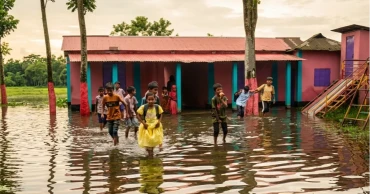
Just an hour of continuous rainfall is enough to leave the school compound submerged, disrupting classes and turning the daily journey to school into a challenge for hundreds of children.
Located in Chhatak’s Gobindaganj area, the school has been grappling with severe waterlogging for years.
Students said the playground, walkways and areas surrounding classrooms go underwater after even moderate rainfall, creating an unhealthy environment and hampering academic activities.
The school currently serves 467 students under the supervision of one head teacher and nine assistant teachers.
However, recurring waterlogging has made regular attendance and classroom activities increasingly difficult.
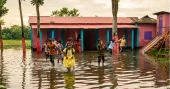
A recent visit to the school revealed stagnant rainwater covering much of the playground. Mud and scattered waste mixed with the water, creating slippery and unhygienic conditions.
Many students were seen carrying their shoes in their hands while wading through muddy water to reach their classrooms. Others had no choice but to sit through lessons in wet clothes.
Teachers say the situation not only disrupts lessons but also affects students’ concentration and overall learning experience.
“My daughter studies in Class One. Whenever it rains, she does not want to go to school,” said guardian Nilima Nasrin. “Even after an hour of rainfall, water enters the classroom premises. It is ruining the learning environment for young children.”
Parents and local residents blame the problem on the absence of an effective drainage system.
They fear that prolonged waterlogging could expose children to waterborne diseases, skin infections and mosquito-borne illnesses.
According to locals, the institution has been suffering from the same problem for years. They allege that inadequate drainage infrastructure and the dumping of waste around the school premises have worsened the situation over time.
Head teacher Mostak Ahmed said the situation becomes particularly difficult during the rainy season.
“Rainwater frequently enters the school compound and reaches the classrooms. Conducting classes under such conditions is extremely challenging,” he said. “The problem has intensified because waste materials have been dumped around the school, blocking the natural flow of water.”
The issue has drawn the attention of local education authorities.
Upazila Primary Education Officer Mohammad Shahjahan Ahmed said he had been informed about rainwater entering the school premises.
“We have heard about the situation. We will investigate the matter and take necessary steps accordingly,” he said.
Chhatak Upazila Nirbahi Officer (UNO) Mohi Uddin also assured action.
“We will look into the matter and discuss it with the relevant authorities to find a solution,” he said.
As the monsoon season gains momentum, parents, teachers and residents hope that promises of action will soon translate into tangible improvements, ensuring that rainfall no longer stands between children and their education.
1 month ago