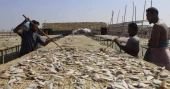
special

Kumargaon power station in Sylhet shut for almost 3 weeks
Residents of Sylhet have been experiencing frequent power cuts several times a day for almost three weeks, after the 225-megawatt power station at the Kumargaon 132/33 KV grid substation was forced to shut down by a technical glitch.
Bidyut Acharya, assistant engineer of the Kumargaon power plant, said engineers who have been working on reviving it however, say that the station may resume operations within this week.
According to officials at the grid, the power station was shut down nearly three weeks ago following a technical fault.
However, the repair work is currently underway, with a specialised team from Dhaka now conducting testing and inspections of the station's systems.
"The team from Dhaka is carrying out the testing. Once all tests are completed and systems are verified, we are hopeful the 225 MW station will be operational within the week," said Acharya.
2 units of Barapukuria power plant resume generation
Electricity from the Kumargaon plant is distributed to all four districts within Sylhet division: Moulvibazar, Sunamganj, Sylhet and Habiganj. In its absence, Sylhet is currently relying solely on power from the national grid.
However, the National Load Dispatch Centre (NLDC) has been supplying Sylhet with less electricity than the region's demand, leading to increased load shedding.
People of these districts have been going through prolonged power outages and disruptions in the area.
The inconsistent power supply has also disrupted water distribution by the Sylhet City Corporation, leading to daily water shortages in many neighborhoods.
Payra Power Plant’s Unit 2 to remain offline for maintenance for 2 months
Officials from the local power distribution office have said load shedding may be expected to persist, or even worsen, until the power station is fully operational.
1 year ago

Bangladesh’s overdependence on remittance: How secure is the future?
Bangladesh’s economy continues to lean heavily on the flow of remittances from migrant workers, a key driver for foreign reserves, debt repayments and import payments.
In the past six months, the country has enjoyed a strong remittance windfall. Yet economists and migration experts remain uncertain about the long-term sustainability of this reliance.
According to Bangladesh Bank, over USD 30 billion in remittances were sent to the country during the 2023–24 fiscal year, averaging USD 2.5 billion per month.
In March alone, Bangladesh recorded a historic peak of USD 3 billion, marking the highest monthly inflow of remittances in its history. These figures show steady progress when compared to previous years.
Despite this growing dependence, experts caution that the economic support from this sector may not remain as secure in the future, especially considering changing global conditions.
Data from the Bureau of Manpower, Employment and Training (BMET) shows that nearly 15 million Bangladeshis live abroad, of whom approximately 6 to 6.5 million regularly send remittances home.
A significant portion of this remittance flow originates from Middle Eastern nations, where about 34 percent of Bangladeshi migrants are based, mostly working as manual labourers across various sectors.
An analysis of the Bangladesh Bank’s latest remittance report indicates that Saudi Arabia, the UAE, Oman, Kuwait and Qatar are the top contributors.
Over 70 percent of the workers who left Bangladesh in the first five months of this year headed for Saudi Arabia alone.
Labour migration to other countries has, however, declined.
The UAE, Bangladesh’s second-largest remittance contributor in the Middle East, has halted the intake of Bangladeshi workers, while Oman’s labour market remains closed.
Bangladesh received $2.7 billion remittances in 29 days of June
Among Asian nations, Malaysia was a major destination, but since last year, the outflow of workers to the country has been completely suspended. Italy, a prime destination for Bangladeshi workers in Europe, is also becoming increasingly difficult to access through legal channels. Many have returned home after failing to secure work abroad, particularly in European countries.
A recent study conducted by the Economic Study Centre of Dhaka University titled ‘The Economic Significance of Remittance in Bangladesh’ sheds light on the actual sources of remittance inflow. It states that the lion’s share comes from blue-collar worker who are employed in low-income and physically demanding jobs.
While their hard-earned money fuels the nation’s economy, their own lives abroad often remain marred by hardship. The once-promising route to upward mobility is becoming increasingly difficult.
BMET data shows that while about 1.3 million people left the country in search of work in 2023, the number dropped to 1 million in 2024. Many of those who went abroad in 2023 have already returned empty-handed. The agency has no precise records on how many labourers return to the country each year using ‘outpasses’.
The Wage Earners’ Welfare Board reports that over 80,000 workers returned home on outpasses in 2024, compared to just over 50,000 a decade ago.
Many of these workers had sold family assets or taken out loans to finance their overseas employment. But failing to secure the promised work, they were forced to return—some even re-entering the country as undocumented migrants after losing legal status abroad.
Those struggling to survive in foreign lands often suffer from severe mental distress.
According to a 2024 survey by the Refugee and Migratory Movements Research Unit (RMMRU), the average life expectancy of Bangladeshi migrant workers is just 37 years, compared to over 70 years in the general population.
Backed by IMF, remittances, Bangladesh’s Forex reserves hit $27.3 billion
A vast majority of migrants do not receive the work they were promised. To survive, many are compelled to perform hazardous tasks for low pay.
Among Bangladeshi migrant workers, 31 percent die of unnatural causes, 16 percent from various accidents, and only 28 percent pass away naturally. Most alarmingly, 15 percent resort to suicide due to unbearable life conditions abroad.
“Overseas workers are treated as nothing more than money machines,” said Marina Sultana, Director of RMMRU and a noted migration researcher.
“They are sending money that boosts reserves, but policymakers consistently neglect their futures. While other countries stand up for the rights of their migrant workers, Bangladesh lags far behind. This is discouraging people from going abroad, straining domestic employment and increasing unemployment, which ultimately impacts the economy,” she said.
Around 3,000 recruiting agencies are authorised to send workers abroad. However, these agencies have long faced allegations of malpractice and corruption.
While a few have faced punishment, meaningful reform remains absent. Protected by political connections and supported by groups within relevant ministries, many of these agencies have formed powerful syndicates.
A High Court report submitted by the Ministry of Expatriates' Welfare and Overseas Employment in April this year revealed damning information. It stated that 17,777 workers were unable to go to Malaysia due to agency failures.
Besides, these agencies charged aspiring migrants exorbitantly, well beyond the government-fixed fee of Tk 78,990.
A separate report by the Anti-Corruption Commission in May confirmed that some agencies had charged up to Tk 500,000 per person for Malaysian jobs. Between 2021 and 2024, 13 agencies were found to have embezzled over Tk 1,000 crore from aspiring workers.
Linking recruitment ethics with remittance sustainability, Marina Sultana said, “Until ethical recruitment is ensured, remittances cannot be regarded as a stable and robust economic pillar. These agencies must be held accountable for repeated failures and malpractice, or else the country risks a sudden collapse in remittance inflow.”
She also raised concerns over the failure to train and send skilled workers abroad.
“Countries like Nepal and Sri Lanka are exporting skilled labour. Despite having numerous training centres, Bangladesh still largely exports unskilled workers. Countries such as Hong Kong and Singapore could be promising markets for female workers. Yet the cycle of relying on low-skilled migrants in the Middle East continues. Though remittance numbers are good for now, the future remains uncertain,” Marina said.
Economic recovery rides on favourable exports, remittances, stable exchange rate: Planning Ministry
Migration experts say the demand is shifting globally, particularly in the Middle East, towards skilled workers. Even in Saudi Arabia, Bangladesh’s biggest remittance contributor, new standards are being set ahead of the 2034 FIFA World Cup, with skills and qualifications becoming mandatory.
With the global tide changing, it may be time for Bangladesh to move beyond celebrating record-high remittances and instead focus on securing the well-being and rights of the people who make those numbers possible.
1 year ago
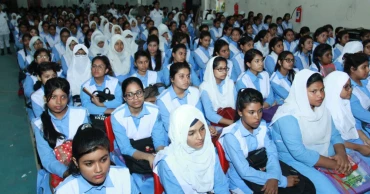
Dozens of colleges in Cumilla at risk of closure due to dramatic drop in number of eligible candidates
The Cumilla Education Board, which oversees 468 colleges across the districts of Cumilla, Feni, Noakhali, Lakshmipur, Chandpur and Brahmanbaria, is heading into a critical admission season.
A total 259,260 seats are available for Class XI, but just 106,581 students passed the SSC examination under the district board in 2025, leaving over 150,000 seats potentially unfilled this year.
The drastic shortfall is attributed largely to widespread failure in mathematics. These vacancies have triggered concerns that many colleges, particularly in rural areas, may struggle to attract students, and some might even close if enrolment remains weak.
Notable institutions like Cumilla Cadet College and Feni Girls Cadet College accept only their own students and thus will see no outside admissions.
Parents and students have indicated that top city colleges—Cumilla Victoria Government College, Cumilla Government College and Cumilla Education Board Model College—remain the most sought after.
Meanwhile, principals from urban colleges believe colleges offering high quality teaching will still manage to admit a reasonable number of students, even in this crisis.
No grace marks given in this year’s SSC exams: Inter-edu board head
Humayun Kabir Masud, principal of Cumilla Commerce College, said that this year’s exam was conducted on a much more level playing field, which exposed the genuine educational standard of students across the board.
Dr. Jahangir Hossain Majumder, Deputy College Inspector of Cumilla Education Board, added that over 19,456 students who passed in 2024 failed to be admitted this year due to reasons such as early marriage, poverty, migration abroad, or transfers to other boards; many of these students have dropped out.
The online admission process began on July 30 and continues through to August 11, with an application fee of Tk 220.
The results of Stage 1 applications will be released at 8pm on August 20, and confirmations will follow from August 22-23 .
A second admission stage opens from August 23 to 25, with results on August 28 and final confirmations by August 30.
SSC 2025: 984 educational institutions achieve 100% pass rate
Students who retook the SSC and obtained revised results may submit applications on August 13–14 , and the deadline for changing preference order is August 15.
Unless the authorities intervene or students significantly change their preferences, many colleges—especially rural or lower tier institutions—face an unprecedented enrolment crisis that may threaten their future operations.
1 year ago
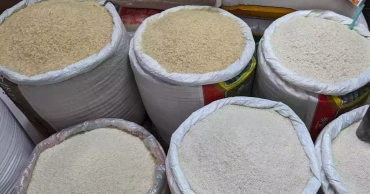
Rice shortage unlikely this year due to steady supply, strong stocks
Bangladesh is unlikely to face any rice shortage during the 2025–26 fiscal year as projected demand and supply will remain well balanced, according to an official document.
Government stock levels, boosted by strong procurement during the Boro season and a proactive import strategy, are set to meet the year's total requirement of 41.73 lakh metric tonnes including safety reserves and subsidised distribution.
Of the total demand, 31.23 lakh MT is earmarked for distribution while 10.50 lakh MT is kept as safety stock.
Currently, government stocks stand at 15.21 lakh MT leaving a net requirement of 26.52 lakh MT for the fiscal year.
The document shows that a record volume of procurement has been made in the current Boro season. Between April and June 2025, the government procured 10.84 lakh MT of rice.
An estimated 13.78 lakh MT of rice will be distributed from July to November 2025, bringing the projected stock down to 8.54 lakh MT by November.
The Aman season typically faces challenges such as floods and lower yields compared to Boro, with a smaller marketable surplus.
Over the past five Aman seasons, the government procured an average of 28,000 MT of paddy and 4.59 lakh MT of rice annually.
In the 2024–25 Aman season, the government procured 26,700 MT of paddy and 5.19 lakh MT of rice, including 5.37 lakh MT in rice form.
Between December 2025 and March 2026, another 8.83 lakh MT of rice is projected to be distributed. Under the government’s subsidised food programme, this fiscal year some 55 lakh families—up from 50 lakh last year—will receive 30 kilograms of rice per month at Tk 15 per kg for six months: August, September, October, November, February, and March.
The 2025–26 food budget includes a provision to import 9 lakh MT of rice and procure 22.29 lakh MT from domestic sources. Out of the total net requirement of 26.52 lakh MT, 22.29 lakh MT will be sourced locally.
To cover the remaining 4.23 lakh MT gap, the government has already decided to import 4 lakh MT of rice as a precautionary measure ahead of the flood-prone Aman season.
The decision was taken on July 15 at a meeting of the Food Planning and Monitoring Committee, chaired by Finance Adviser Dr. Salehuddin Ahmed at the Bangladesh Secretariat.
Briefing reporters after the meeting, Food Adviser Ali Imam Majumder said the move aims to mitigate any potential risks due to seasonal floods.
He also noted that the government has already procured 3.76 lakh MT of Boro paddy against a target of 3.50 lakh MT and collected 9.50 lakh MT of rice out of a 14 lakh MT target.
Bangladesh has maintained a cautious and adaptive approach to rice stocking over the past five years, driven by changing weather patterns, domestic production, and global market conditions.
Government data shows that rice stocks have generally remained within a stable range, fluctuating between 10 to 15 lakh metric tonnes (MT) in recent years.
The stock levels are largely influenced by the outcomes of the Boro and Aman harvests, as well as emergency imports during years of crop shortfall or natural disasters.
Govt to import 4 lakh tonnes of rice to avert food risk in flood season
During 2020–21 and 2021–22, stocks saw temporary declines due to floods and COVID-19 disruptions. However, the government responded by stepping up imports and expanding procurement from local farmers.
In 2022–23 and 2023–24, stocks rebounded as domestic production improved, aided by better weather and higher procurement targets.
In the ongoing 2025–26 fiscal year, the government started with a stock of 15.21 lakh MT, one of the highest in recent memory.
High price of rice in Bangladesh bucks the trend of easing inflation
To ensure food security and price stability, the government has consistently procured 20–22 lakh MT annually from local sources, with strategic imports planned during lean seasons.
The stocking strategy also supports vulnerable families through subsidized food programmes during key months.
1 year ago

Balashi Ghat: Gaibandha’s emerging riverside retreat for nature lovers
Set against the backdrop of three mighty rivers-- the Teesta, Jamuna and Brahmaputra-- Balashi Ghat in Gaibandha is fast becoming a popular destination for nature lovers and casual travellers alike.
Spanning a 64-kilometre embankment, the area holds immense potential to transform into a major open-air tourist hub, offering a unique blend of natural beauty and rustic tranquillity.
Stretching across four upazilas, the embankment’s long line of cement boulders glistens under the sun.
On one side lies the vast expanse of river and sandy char lands, while the other is adorned with lush green farmland and scattered rural settlements.
Though already frequented by local visitors, especially on weekends, the area still lacks basic amenities such as seating arrangements, which limits its full potential as a tourist destination.
The embankment, part of the Brahmaputra River bank protection project, is just 6 kilometres from Gaibandha district town.
From paradise to pollution: Cox’s Bazar tourists shocked by sewage in sea
Green grass has been planted along both sides of the dam, and infrastructure including a well-designed guest house, a truck terminal and other buildings have been developed at Balashi Ghat by BIWTA.
Professor Zahurul Kaiyum, a researcher of the Liberation War and a cultural activist, said, “The chars of Gaibandha and the newly built embankments around Balashi Ghat have immense tourism potential. From horse carts and country boats to river patrol police...everything adds to its rustic charm. On clear days, India’s Garo Hills are visible from here.”
The ghat is a hive of activity during monsoon when the riverbanks disappear beneath the rising waters. Boats ferry goods and passengers to destinations like Chilmari, Roumari, Rajibpur, Kurigram, Gangachara in Rangpur, Lalmonirhat, Sanandabari in Jamalpur, Islampur and Bahadurabad Ghat.
Gowainghat in Sylhet somehow missed out on the most basic fruit of development: paved roads
1 year ago

Retailers flout LPG price cap, charge Tk 150–200 more despite BERC order
Even though the Bangladesh Energy Regulatory Commission (BERC) had set the price of a 12- kg LPG (liquefied petroleum gas) cylinder at Tk 1,364 for the month of July, many consumers in the capital were being forced to pay between Tk 1,500 and Tk 1,600 — well above the official rate.
The price discrepancy has sparked frustration among households and small businesses, who say they are being burdened with unjustified additional costs amid already mounting living expenses.
Talking to UNB, a resident of Uttara said, "I went to three different shops in my area, and no one was selling the cylinder for less than Tk 1,500. If the government fixes a price, why is it not being enforced? We, the common people, are suffering."
Fuel prices to remain unchanged in August
"We are the worst sufferers," said Kokhon, a restaurant owner, adding, "We use a lot of gas cylinders, but the prices are extremely high. Retailers always charge more than the price set by BERC — they don’t care about the official rate. It’s all controlled by a syndicate," he added.
Akhi Afrin, a housewife from Uttara’s Diabari, expressed similar frustration.
"This is not a luxury item. LPG is a basic necessity for cooking. If prices go up like this, how will we manage our household budget?" she said.
Surprisingly, many consumers remain unaware of the government-fixed LPG price.
When asked, several gave similar responses, UNB observed.
Climate change driving up grocery prices globally
Questioned about the inflated rates, Raju Ahmed, Assistant Director (Tariff-2) at BERC, said the market is currently under surveillance by the Directorate of National Consumers' Right Protection, in coordination with the respective Deputy Commissioners' (DC) offices.
In response to why prices remain inflated despite ongoing monitoring, Raju Ahmed told UNB, “It should not be the case, but if such irregularities are occurring, I will bring the matter to the attention of higher authorities.”
He urged consumers to lodge formal complaints with the Directorate, attaching valid receipts as evidence, so that appropriate action can be taken.
Retailers, however, claim they are not deliberately ignoring the government-set rate. Instead, they point to problems in the supply chain and alleged price irregularities at the wholesale level.
BERC reduces LPG, auto gas prices for July
"We're buying cylinders at higher rates from distributors — sometimes over Tk 1,450 per cylinder," said Jahidul Islam, an LPG retailer in Uttara.
"If we sell at BERC’s price, we’ll incur losses. We are being forced to charge higher just to stay in business," he said.
Another seller, requesting anonymity, said distributors themselves are not adhering to BERC prices.
"There is no proper monitoring, and small sellers like us are being blamed unfairly," he added.
He also mentioned that popular brands such as Beximco and Bashundhara are sold at higher rates due to their high demand.
Experts argue that the core issue lies in weak enforcement of BERC’s pricing directives.
"BERC may fix the prices, but without proper monitoring and a transparent distribution chain, consumers will never benefit," said an energy expert and consumer rights advocate.
"There needs to be strict action against those who are overcharging, including wholesalers," he said.
Faridpur farmers in distress as onion prices plummet
Consumers are now calling on the government to intervene and ensure LPG is sold at the regulated price. Many have urged BERC and the Ministry of Energy and Mineral Resources to conduct market inspections and hold both distributors and retailers accountable.
Until then, the gap between official pricing and real-world costs continues to weigh heavily on the average household.
1 year ago

US tariff cut signals stronger, competitive trade ties with Bangladesh
The decision by the United States to reduce its reciprocal tariff rate for Bangladesh from 35% to 20% marks a significant step towards strengthening bilateral trade relations, officials here said, stressing the need for having an effective diversified, competitive and tolerant trade strategy.
"Looking ahead, ensuring internal stability and proactive governmental measures will be key in maintaining competitiveness and fostering future growth," former director of Bangladesh Garment Manufactures and Exporters Association (BGMEA) Mohiuddin Rubel told UNB on Friday.
Rubel, also Additional Managing Director, Denim Expert Ltd and Managing Director, Bangladesh Apparel Exchange Ltd, said ptimism prevails for Bangladesh's trajectory, poised for continued advancement and resilience in the evolving economic landscape.
Chief Adviser Prof Muhammad Yunus has described the latest US decision as a "decisive diplomatic victory" and proudly congratulated the Bangladesh tariff negotiators on securing a landmark trade deal with the United States.
"The future of Bangladesh is undeniably bright. Today’s success stands as a powerful testament to the nation’s resilience and its bold vision for a stronger economy tomorrow," he said in an immediate reaction after the successful tariff negotiations with the United States.
By reducing the tariff to 20%, 17 points lower than anticipated, he said their negotiators have demonstrated remarkable strategic skills and unwavering commitment to safeguarding and advancing Bangladesh’s economic interests.
Prof Yunus said they have been working relentlessly since February and navigated successfully through a complex negotiating process involving tariff, non-tariff and national security matters.
"The agreement they negotiated preserves our comparative advantage, enhaces our access to the world's largest consumer market and safeguards our core national interests," he said in his message shared by Press Secretary Shafiqul Alam.
This achievement not only underscores Bangladesh’s rising strength on the global stage but also opens the door to greater opportunities, accelerated growth and lasting prosperity, Prof Yunus said.
Describing it as an "exciting development" in trade dynamics, Rubel said Bangladesh has adjusted its reciprocal tariff to 20%, positioning itself competitively against countries like Pakistan, Cambodia and Vietnam.
Notably, compared to India and China, which have higher tariffs, this move sets Bangladesh apart, potentially attracting business from China, the exporter thinks.
Despite potential short-term impacts on US sales due to increased retail prices, Rubel said, historical resilience suggests Bangladesh is primed for a long-term success.
Reflecting on the post-COVID economic landscape, Bangladesh's steadfast growth amidst global challenges is commendable.
"While short-term growth may vary amid global economic shifts, Bangladesh's strategic positioning and historical performance bode well for sustained progress," Rubel said.
An Opportunity and A Warning
Executive Director, South Asian Network on Economic Modeling (SANEM) Selim Raihan said while this reduction in the US countervailing duty rate is encouraging, it does not create a room for complacency or create room for complacency; rather, it is an opportunity and a warning at the same time.
Trump's tariffs: Third and probably last round of talks underway in Washington
"Bangladesh needs to take effective steps now to establish a diversified, competitive and tolerant trade strategy," he said.
The recent reduction in the US reciprocal tariff rate for Bangladesh, from 35% to 20%, is a welcome development for the country’s export sector, said the economist.
"This revision comes as part of a broader recalibration of the United States' reciprocal tariff framework, which appears to apply to many of its trading partners," Raihan said.
For instance, Sri Lanka’s rate has been lowered to 20% (from 30%), and Pakistan’s to 19% (from 29%). Bangladesh's other competitors like Vietnam and India face tariff rates of 20% and 25% respectively.
In this context, Bangladesh’s new tariff rate now aligns more closely with those of its key competitors in the US market, suggesting a reduced risk of trade diversion and a lower likelihood of significant disruption to its exports, particularly in the readymade garments sector.
A notable element of uncertainty, however, remains in the global trade landscape: the reciprocal tariff rate for China is yet to be finalised, Raihan said.
Given China’s central role in global manufacturing and its competitive overlap with Bangladesh in several export categories, the eventual US decision on China’s tariff rate will be pivotal in shaping future patterns of global trade.
"If China is subject to significantly higher tariffs, Bangladesh and other South and Southeast Asian exporters may see a shift in demand in their favour. Conversely, a more favorable rate for China could intensify competition," said the economist.
As such, the final terms for China will be critical in determining how trade flows realign in the months ahead, he said.
A Triumph for Interim Govt’s Approach
Former US diplomat Jon Danilowicz said the White House announcement of a 20% tariff rate for Bangladesh represents a "triumph" for the interim government’s approach to negotiations.
Bangladesh may get reduced tariffs on exports to USA: Finance Adviser
Further details of the bilateral agreement are likely forthcoming, he said.
Over the past four months, Danilowicz said the interim government and its lead negotiator, National Security Adviser Dr Khalilur Rahman, faced relentless attacks from multiple corners.
He said this despite the steady progress Bangladesh had made in strengthening the bilateral relationship since President Trump’s inauguration.
"Now that the negotiations have concluded with a positive result for both Bangladesh and the United States, I hope these critics are prepared to admit their errors," said the former US diplomat who served in Dhaka in the past.
With progress on the July Charter, an election date set to be announced, and positive news on the tariffs, he observed that this has been a good week for those who have Bangladesh’s best interests at heart.
Energy Adviser Fouzul Kabir Khan said from domestic price stability to successful tariff negotiations with the US, Commerce Advisor Sk Bashir Uddin has proved his mettle, to the dismay of naysayers.
We Negotiated Carefully
“We negotiated carefully to ensure that our commitments aligned with our national interests and capacity,” said Khalilur Rahman, Bangladesh’s lead negotiator.
“Protecting our apparel industry was a top priority, but we also focused our purchase commitments on US agricultural products. This supports our food security goals and fosters goodwill with U.S. farming states," he said.
“We’ve also preserved our global competitiveness and opened up new opportunities to access the world's largest consumer market” Dr Rahman added.
The government has placed an order to purchase 25 aircraft from Boeing with a plan to increase wheat and soybean import from the United States.
“We remain engaged with the US. We have placed an order for purchasing 25 aircraft from Boeing. India and Vietnam each placed an order for 100 aircraft while Indonesia has placed an order for 50 aircraft from Boeing,” Commerce Secretary Mahbubur Rahman told reporters on July 27.
He said Bangladesh needs some aircraft within the next couple of years and hopes to get a few as national carrier Biman Bangladesh Airlines needs to expand its fleet.
US Chargé d’ Affaires meets Fakhrul, discusses tariffs, election
For weeks, President Donald Trump was promising the world economy would change on Friday with his new tariffs in place. It was an ironclad deadline, administration officials assured the public.
But when Trump signed the order Thursday night imposing new tariffs on 68 countries and the European Union, the start date of the punishing import taxes was pushed back seven days so that the tariff schedule could be updated.
The change, according to AP, while potentially welcome news to countries that had not yet reached a deal with the US - injected a new dose of uncertainty for consumers and businesses still wondering what’s going to happen and when.
1 year ago
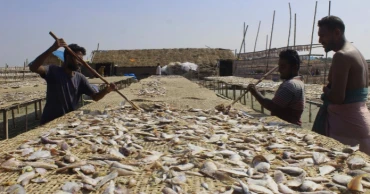
Turning your nose? How ‘shutki’ can be a mainstay of Bangladesh’s robust fisheries export sector
Bangladesh’s traditional dried fish industry, locally known as shutki, is gaining renewed attention as a potent earner of foreign currency, with exports showing signs of strong growth that marks it out as a highly promising item in the country's fisheries export portfolio.
According to the Department of Fisheries and the Export Promotion Bureau, Bangladesh exported 3,038 tonnes of dried fish in FY 2023–24, earning approximately Tk 765 million ($8.5 million), marking a significant increase from the previous fiscal year’s earnings of Tk 488 million ($5.5 million). The growth has been driven by rising global demand in niche markets such as Hong Kong, Singapore, the Middle East, the United States, and parts of Europe.
Though the industry is still far from attaining even a fraction of the heights achieved by the country's readymade garment industry, stakeholders say the potential is "enormous", if proper investments and reforms are introduced.
Only 13 percent of dried fish produced in Bangladesh were found to contain traces of pesticides, while the remaining 87 percent are considered safe for consumption, according to findings of a new study. Researchers noted that even in the dried fish samples where pesticide residues were detected, the levels dropped significantly after cooking.
The findings were presented recently at a seminar organised by the Bangladesh Food Safety Authority at its headquarters in Shahbagh.
The Department of Fisheries informed that Bangladeshi shutki, essentially dried sea fish, has strong export prospects due to its unique taste, low cost, and availability. However, it must address hygiene and quality concerns to enter premium markets.
Golden fibre glows again; Faridpur fields promise Tk 2,000cr harvest
The current domestic production stands at over 20,000 tonnes annually, with major production hubs located in Chattogram, Cox’s Bazar, Dublar Char, and Ashar Char. However, the country still imports dried fish to meet domestic demand, which exceeds 55,000 tonnes per year.
Industry insiders say lack of modern drying infrastructure, post-harvest handling, and quality control have kept the sector from reaching its full export potential. Many producers rely on traditional sun-drying methods, leaving the products vulnerable to contamination, pest infestations, and harmful chemical use.
A recent study by the Bangladesh Council of Scientific and Industrial Research (BCSIR) revealed that while 13% of dried fish samples tested had pesticide residues, that number is considered low within the industry, and so it was good news. The large majority were within safe limits and posed minimal risk when properly cooked.
To improve product quality and safety, initiatives supported by the FAO and various NGOs have introduced solar dryers, covered drying racks, and other hygienic methods in coastal communities. These are expected to boost both export viability and domestic consumer confidence.
In addition to its economic promise, shutki plays a key role in food security, especially in low-income and disaster-prone regions, due to its affordability, long shelf-life, and high protein content.
Experts and policymakers are calling for a national action plan to support dried fish producers with access to finance, modern technology, and international market linkage.
As global demand for clean, shelf-stable seafood grows, Bangladesh’s shutki sector may indeed find its place in the billion-dollar bracket—provided it gets the attention it deserves.
In recent years, Bangladesh has emerged as a notable player in the dried fish export market, leveraging its rich marine resources and favorable geographical location. The country boasts an extensive coastline along the Bay of Bengal, providing access to a wide range of fish species that are ideal for drying and preserving. Dried fish products from Bangladesh are gaining increasing attention in international markets, particularly in Southeast Asia, the Middle East, and Europe.
According to the Bangladesh Export Promotion Bureau (EPB), the country's seafood exports, including dried fish, exceeded $400 million in 2022. This market potential is expected to expand further, as demand for dried fish continues to rise globally. In the 2023-2024 fiscal, the country was able to earn Tk4,376 crore by exporting fish and fish products.
According to Business Research Insights, the global dried seafood market was valued at approximately $4 billion in 2023 and is projected to reach $6.8 billion by 2032, reflecting a compound annual growth rate (CAGR) of 6% during the forecast period.
Bangladesh's dried fish exports have primarily targeted markets in the Middle East, particularly Saudi Arabia, the UAE, and Kuwait, where dried fish is a staple in local cuisine. What is also noticeable is that each of those destinations is home to fairly large communities of Bangladeshi expatriates, and ultimately they may be the ones to drive the demand for shutki from abroad.
While Bangladesh's dry fish export industry is poised for growth, several challenges need to be addressed to fully capitalize on its potential. One of the key challenges is improving the quality and consistency of dried fish products to meet international standards.
Bangladesh's exporters must ensure proper drying, processing, packaging, and adherence to hygiene regulations to compete effectively in global markets. However, opportunities abound for Bangladesh to expand its dry fish exports by investing in value-added products such as packaged dried fish snacks and ready-to-eat meals, consumers in foreign countries have often said.
With global trends moving toward sustainable seafood sourcing, Bangladesh can also benefit from initiatives aimed at promoting eco-friendly fishing practices and improving traceability.
According to export analysts, the increasing demand for ready-to-eat, high-protein foods in diaspora communities, particularly in the UK, US, and Middle Eastern countries, has opened up new doors for Bangladesh’s dried fish market. With improved packaging, branding, and cold-chain logistics, Bangladeshi exporters can tap into ethnic supermarkets and gourmet seafood outlets abroad.
“Bangladeshi shutki is a delicacy in many migrant communities, but it has not yet been scaled for mass export due to quality and certification gaps,” said Md. Asadul Islam, a seafood exporter based in Chattogram. “If we meet EU and FDA standards consistently, we can easily triple our export figures within a few years.”
Local dried fish hubs like Nazirartek in Cox’s Bazar, one of the country’s largest processing zones, are showing early signs of modernization. Several small and medium enterprises (SMEs) have begun adopting solar tunnel drying systems, plastic net enclosures, and vacuum-sealed packaging to enhance safety and shelf-life.
However, challenges remain. Producers cite rising production costs, poor electricity access in coastal regions, seasonal labor shortages, and limited access to affordable credit as key barriers to growth.
Women play a significant role in the dried fish value chain—particularly in cleaning, drying, sorting, and packaging. According to the Bangladesh Fisheries Research Institute (BFRI), over 1.4 million women are directly or indirectly involved in fisheries and post-harvest processing, many of whom work informally with little legal or financial protection.
To ensure long-term sustainability, experts are also urging for better coastal resource management and sustainable fishing practices, as overfishing and climate change increasingly threaten marine biodiversity in the Bay of Bengal.
Can Bangladesh reverse the decline in farming hands?
In a recent roundtable held in Khulna, organized by the Marine Fisheries Association, stakeholders recommended the formation of a dedicated “Dried Fish Export Promotion Cell” under the Ministry of Commerce, as well as a national certification and grading system to ensure consistency in export quality.
“If Bangladesh can standardize shutki production and position it as an ethnic delicacy and health food, it could soon rival shrimp and hilsa in export value,” said Dr. S.M. Nizam Uddin, a marine economist at the University of Dhaka.
While the billion-dollar mark may still be a distant goal, the dried fish sector is clearly undergoing a transformation. With the right policy support, technological investment, and branding efforts, Bangladesh could turn its ancient shutki tradition into a globally competitive industry.
1 year ago
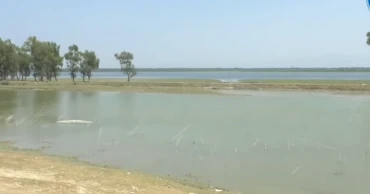
Shattered lives: How Rohingya crisis steals sea from Teknaf’s fishermen
In the quiet fishing village of Jaldash Para in Teknaf’s Hnila union, the scent of salt air still lingers, but the sound of oars cutting through the Naf River has long faded.
Where boats once bobbed with fresh catch and laughter rang through narrow lanes, silence now hangs heavy... broken only by the rustle of old fishing nets and whispered conversations about survival.
“Once our village was full of life... the smell of fresh catch, the buzz of trade, and the clatter of nets,” says 70-year-old Samapti Das, her hands deftly weaving fishing gear beside her 96-year-old mother.
“Now, there’s no fish, no buyers, no work. We survive on hope, barely,” he says.
For thousands like Samapti in Teknaf, life changed dramatically in 2017 when over 700,000 Rohingya fled violence and persecution in Myanmar’s Rakhine State, crossing into Bangladesh and turning Cox’s Bazar into the world’s largest refugee settlement.
Funding cuts heighten monsoon risks for Rohingyas in Bangladesh: UNHCR
The humanitarian crisis triggered a wave of global attention, but for Teknaf’s fishing communities, it sparked something else entirely: an indefinite loss of livelihood.
In response to the influx, the government declared the Naf River, once the region’s lifeline, off-limits to local fishermen.
Initially described as a temporary security measure, the ban, now entering its eighth year, has devastated the lives of more than 5,000 fishing families.
The Ministry of Home Affairs, citing concerns over illegal border crossings and smuggling, enforced the restriction with support from Border Guard Bangladesh (BGB).
But while the policy may have aimed to protect borders, it has left an entire community stranded, not in camps, but in poverty.
In bamboo huts and tin-roofed homes, the stories are eerily similar: nets rotting in corners, boats tethered and crumbling, and families unable to afford food or medicine.
Amid global aid crisis, Tk 652.55 crore project targets Rohingyas, local hosts
Nabi Hossain lies groaning in pain, unable to afford treatment. His wife, Mostofa Khatun, sits beside him, her voice barely a whisper.
“We don’t even have money for paracetamol. Fishing was our only income,” she says.
Not far from their home, Abdul Gani, president of the Jaliapara Small Fishermen’s Cooperative Society, counts more than 200 boats lying idle.
“Our tools are rotting. Our spirit is breaking,” he says.
Once a bustling riverside community, Hnila now bears the weight of uncertainty.
Acting Chairman of Hnila Union Parishad, Ali Ahmed, estimates nearly 5,000 families remain entirely dependent on the river.
“Security is important,” he says, adding, “but what about people?”
His frustration runs deep. “Despite the military presence, border crimes like drug and arms trafficking haven’t stopped. In fact, they’ve grown worse. But the fishermen, the innocents, are the ones who’ve paid the price.”
The human toll is staggering. Children dropping out of school. Kitchens without fire. Illnesses left untreated.
“Hunger gnaws quietly in the shadows,” Ahmed says in sad voice.
In the absence of state support, many families are turning to NGOs or informal moneylenders, piling on debt they cannot repay.
Abu Morshed Chowdhury, President of the Cox’s Bazar Civil Society Forum, believes it's time to reconsider how these communities are treated.
“If we cannot ensure security and livelihood, then these communities must be resettled somewhere safe, where they can work and live with dignity,” he says.
There has been a slight policy shift.
According to Teknaf Upazila Nirbahi Officer (UNO) Sheikh Ehsan Uddin, since August 5, limited fishing is permitted during daytime hours, but only in specific stretches of the river, such as Shahporir Dwip.
“The rest of the river remains restricted for security reasons,” he says.
For the people of Teknaf, it’s a small relief, but not enough.
1 year ago

Romania seeks stronger ties with Bangladesh, eyes energy sector: Ambassador Sena Latif
Highlighting the potential of deepening relations with Bangladesh in a number of areas, Romanian Ambassador to Bangladesh Sena Latif has said energy is one of the sectors that they would like to focus on more, given the potential in both countries.
“We have had in the past years a very good increase in bilateral trade relations, but there is always much more to do. We think energy would be one of the sectors we would like to focus more on,” Ambassador Sena told UNB in an interview, sharing the potential in the areas of hydro, wind and solar energy.
Sena Latif, who started her mandate as Ambassador Extraordinary and Plenipotentiary of Romania to India in November 2024, submitted her credentials to President Mohammed Shahabuddin and had a courtesy meeting with Foreign Secretary Asad Alam Siam on Tuesday.
The Ambassador said they are looking to deepen ties in the areas of IT, communication, garments and petrochemicals. “So, we are very happy that this cooperation is really something tangible that we felt here.”
She said Romania is “very strategically located” at the crossroads of many regions, and entering Romania means entering the European market (the EU is the largest trade partner for Bangladesh).
“So, we have calculated that if a Bangladeshi company or Asian companies want to send their products to Europe, if they use the Port of Constanta, they would save six days rather than sending through Rotterdam or other Western ports. So this is something I think we can tap more into,” Ambassador Sena said.
Talking about the credentials submission ceremony, she said she is very grateful for the way she was received at the Presidential ceremony. “It was a very impressive ceremony that actually shows the importance that is given and the openness of Bangladesh to the world.”
The Ambassador said it is an important time in Bangladesh's history as the country is set to graduate from the LDC status in 2026, but also considering everything that is happening in the world – the very “unpredictable and still challenging times” they face.
Experts urge caution as Bangladesh plans Boeing aircraft purchase to ‘ease US tariff pressure’
“And I think it's the time where now we and our partnership with Romania and Bangladesh and the European Union can show what we can do through our commitment in multilateral forums and our bilateral relations with transparency and mutual respect,” she said.
Responding to a question, the Romanian Ambassador said, “We are in a very good phase of our partnership. I was very happy that the President of Bangladesh actually mentioned that Romania was one of the first countries to recognise the independence of Bangladesh right after the proclamation.”
“So, that laid the foundation for a solid, enduring partnership we have developed over the years – very good relations in trade and now, more recently, also in people-to-people relations,” she said.
Ambassador Sena said they are very happy to see a growing diaspora and a growing community from Bangladesh – not just manpower, a lot of Bangladeshi citizens going to work, more for construction, hospitality, IT, and agriculture, but also students.
“So, one of our priorities in the embassy is to facilitate the process for visas easily and the consular aspects they need, but at the same time to also deepen our relations, especially in trade,” she said.
Responding to a question on bilateral trade volume, the Ambassador said they are trying to get back to better numbers that they had and also that they proved in the past they can achieve, as the year before was, which was a good year.
“We hope to get back there if we manage to have more contacts between our chambers of commerce. This is our first objective – to have meetings and economic missions, so to organise economic business delegations from Romania to Bangladesh,” she added.
Bangladesh encouraged Romania for the resumption of labour recruitment from Bangladesh, stressing the need for finding ways to deepen the engagement in potential areas.
Bangladesh also suggested academic collaboration through joint scholarships, recognition of degrees, and academic exchanges between universities of the two countries.
Asked about the opportunity to recruit qualified manpower from Bangladesh, the Ambassador said this is still a very dynamic and new phenomenon.
“So, it's still very evolving. I think now IT, construction and hospitality are the areas of most need. We're trying to look also maybe in pharma and medical jobs. So, we can also see where the need is,” she said, adding that Romanian businesses are very appreciative of Bangladeshis.
Appreciating the role of Honorary Consul of Romania in Dhaka Enayetullah Khan, Ambassador Sena said Khan remains very actively involved for decades and they are very grateful for his activity promoting bilateral relations.
“Also, we've got to learn a lot about the media and the arts and culture in Bangladesh. So, we'd like to also deepen our cooperation in that area, given the more people-to-people contacts that have been happening between our countries,” she said.
Talking about Bangladeshi students in Romania, the Ambassador said more and more are interested in studying in Romania. “So, we're trying to find ways to have better communication, make the offers more easily presented to them.”
The Ambassador said Romania is a candidate for accession to the Organisation for Economic Co-operation and Development (OECD), where the most developed countries are member states and they are still in the process themselves of adopting some reforms that are still necessary. “So, I think in that sense, we can also be helpful in exchanges and good lessons learned and behaviour that we have had to reform.”
One year after uprising, govt moves to restore order in public service
During her interactions in Dhaka, both sides expressed satisfaction with the existing bilateral relations and reaffirmed their commitment to further strengthening cooperation.
Bangladesh proposed collaboration in trade, investment, labour mobility, education and consular services and highlighted opportunities for trade diversification and investment in sectors such as ICT, renewable energy, and agro-processing.
1 year ago