special
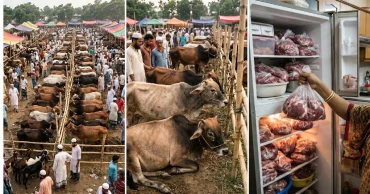
BAU experts advise scientific cattle selection , meat preservation ahead of Eid-ul-Azha
With cattle markets becoming increasingly crowded ahead of Eid-ul-Azha, experts at Bangladesh Agricultural University urged buyers and traders to follow scientific guidelines when purchasing sacrificial animals and preserving meat.
They warned against artificially fattened cattle, disease transmission risks and improper storage practices.
In separate interviews with UNB, three professors from the university highlighted key indicators of unhealthy cattle, potential public health threats at livestock markets and the correct method of preserving meat to maintain its quality and nutritional value.
How to identify artificially fattened cattle
Prof Dr Mohammad Alam Mia of BAU’s Department of Physiology said cattle that have been artificially fattened using steroids, growth hormones or harmful drugs often display several visible signs.
Such animals typically have dry noses, swollen and flabby bodies caused by excessive fluid retention, and difficulty standing or walking.
They become exhausted after minimal movement and often breathe rapidly. When pressure is applied to the skin, it remains depressed for some time before returning to normal.
“The thigh muscles of these cattle are unusually soft and their bones tend to be weaker, increasing the risk of fractures,” he said.
He added that artificially fattened cattle usually show poor appetite, do not ruminate properly and may produce excessive saliva or foam around the mouth.
After travelling long distances to markets, they often become fatigued quickly and are reluctant to stand once seated, he said.
Dr Alam said healthy cattle can be naturally fattened within three to six months through balanced nutrition, regular deworming, vitamin and mineral supplementation and proper farm management.
He advised buyers to assess not only an animal’s size but also its behaviour, breathing pattern, nasal condition and mobility before making a purchase.
If any abnormalities are suspected, they should seek advice from livestock officers or veterinary professionals, he added.
Disease risks at cattle markets
Prof Dr Md Amimul Ehsan of BAU’s Department of Medicine said livestock markets could facilitate the spread of serious diseases, including anthrax and foot-and-mouth disease (FMD).
He said anthrax cases has recently been detected in Rangpur and Gaibandha, with some infected individuals developing skin lesions and eye swelling after exposure to affected animals.
“Humans can contract anthrax through contact with infected blood, meat or other body tissues,” he said, stressing the importance of routine vaccination programmes and veterinary health screening at market entry points.
He said anthrax-infected animals often die suddenly before showing symptoms.
In symptomatic cases, body temperature may rise to 104–105 degrees Fahrenheit.
After death, dark, tar-like blood may ooze from the nose, mouth and anus. Exposure to air can cause the bacteria to form spores capable of surviving in the environment for long periods, he added.
Living animals may also exhibit black lesions or blisters on the tongue, nose or throat, along with unusual agitation or lethargy.
Dr Ehsan said FMD poses another significant concern because the virus can spread through the air over distances of up to 15 kilometres.
“A single infected animal transported from Dinajpur or Chattogram to Dhaka could potentially spread the virus along the route and within surrounding market areas,” he said.
Unsold animals returning from markets may also carry infections back to their home districts, threatening healthy livestock populations, he warned.
The professor urged farmers not to bring sick animals to markets until they have fully recovered following treatment.
Suggestions for cattle market visitors
He also advised visitors to cover any cuts or wounds before entering livestock markets, as pathogens such as anthrax bacteria and tetanus-causing organisms can enter through broken skin.
Proper handwashing with soap or sanitiser after contact with animals and safe disposal of animal waste and blood are also essential preventive measures, he added.
Choosing quality cattle and preserving meat properly
Prof Dr Md Abul Kalam Azad of BAU’s Department of Animal Science said good-quality beef cattle should have evenly distributed muscle and a smooth body structure.
Excessive muscle accumulation in the thighs or grape-like clusters of tissue may indicate poorer meat quality, he said.
An unusually swollen dewlap — the loose skin hanging beneath the neck — could also signal underlying health problems.
Dr Azad noted that cattle weighing more than 350 kilograms generally contain higher levels of fat and saturated fat, which may increase health risks for consumers.
For quality meat, he recommended indigenous two-tooth cattle weighing between 200 and 250 kilograms, typically priced between Tk 90,000 and Tk 130,000.
“If the teeth cannot be examined, a thick horn base can serve as an indicator that the animal is mature and suitable for purchase,” he said.
On meat preservation, Dr Azad cautioned against placing freshly slaughtered meat directly into deep freezers at minus 18 degrees Celsius.
He explained that immediately after slaughter, meat temperature remains around 40 degrees Celsius and requires a gradual cooling process.
The temperature takes roughly 16 hours to fall to 10–15 degrees Celsius, followed by an additional eight hours during which proteins break down into amino acids through natural biochemical processes.
“If this process is interrupted, the meat may lose quality and nutritional value. Direct freezing can damage the microstructure of the meat, causing it to become dry and fibrous after thawing,” he said.
To ensure optimum quality, he recommended dividing meat into one- to two-kilogram portions and storing it in a refrigerator at around 4 degrees Celsius for 24 to 48 hours before transferring it to a deep freezer.
Following this method, meat can retain its quality for six months to one year, he said.
Dr Azad also suggested waiting at least three days after slaughter before cooking beef to achieve its best flavour and aroma.
2 months ago

Human-elephant conflict intensifies in Sherpur border hills
Human-elephant conflict has reached a severe level in the Garo Hills area along the Sherpur border as herds of wild elephants continue to enter farmlands in search of food, causing widespread damage to crops and property.
The situation becomes particularly serious during the Aman and Boro rice ripening seasons, as well as when jackfruit and bananas are ready for harvest.
2 months ago

Indirect 'tax traps' in budget risk widening economic inequality, warn economists
At a time when the national economy is reeling under the combined pressures of high inflation, stagnant employment, investment crunches, and massive revenue deficits, the upcoming national budget for the 2026-27 fiscal is fueling deep concerns among lower- and middle-income groups over a looming ‘tax trap.’
Economists, business leaders, and civil society representatives have warned that while the government faces immense pressure to boost revenue collection, the burden is disproportionately falling on ordinary citizens. Meanwhile, effective actions against tax evasion, hidden wealth, money laundering, and outstanding dues by the wealthy and politically influential groups remain severely limited.
Financial analysts identify Bangladesh’s overwhelming reliance on indirect taxes as the primary structural flaw of its revenue system. Currently, the bulk of revenue originates from Value Added Tax (VAT), source taxes, and import duties, which apply uniformly regardless of an individual's financial standing.
Speaking at a roundtable discussion organized by the think-tank 'Voice for Reform', economists revealed that nearly 80 percent of total revenue collection in Bangladesh comes from indirect taxes. In sharp contrast, developed economies rely on direct taxes, such as income and wealth taxes, as their financial foundation.
"The National Board of Revenue (NBR) hikes taxes precisely where VAT collection is guaranteed, but they are unwilling to take risks when it comes to collecting actual income tax," said Dr. Mustafizur Rahman, Distinguished Fellow at the Centre for Policy Dialogue (CPD). This structure, experts argue, inherently accelerates economic disparity.
Elite defiance and data fudging:
The structural vulnerability is compounded by the regulatory failure to hold influential groups accountable. NBR data shows that while luxury vehicle owners and elites in affluent neighborhoods routinely conceal rental incomes and assets, visible legal actions are scarce, and billions in corporate tax defaults remain tied up in legal loopholes for years.
Furthermore, trade-based money laundering executed through under-invoicing, over-invoicing, and informal hundi channels continue unabated, depriving the state of vital liquidity.
"The influential classes always manage to exert control over the policymaking levels. Consequently, even when initiatives are taken to impose taxes on them, they are often rendered ineffective later on," noted former NBR Chairman Dr. Md. Abdul Majid.
Budget-related sources indicate that the upcoming budget will likely propose new taxes or increase existing rates on a wide array of consumer goods and services. Targets include motorcycles, internet services, computer hardware, local LC commissions, agricultural imports, and raw materials for essential consumer commodities.
Because manufacturers pass these tax hikes directly to consumers by adjusting commodity prices, public distress is projected to intensify. Persistent food inflation has already driven the cost of rice, pulses, oil, fish, and vegetables beyond the reach of many, forcing middle-class families to deplete savings, defer medical treatments, and slash educational expenses.
The Ministry of Finance is currently preparing to approve a massive national budget of approximately Tk 9.38 lakh crore alongside an Annual Development Programme (ADP) of over Tk 3 lakh crore for FY2026-27.
Defending the large fiscal footprint, Finance and Planning Minister Amir Khosru Mahmud Chowdhury stated, "Growth and employment generation are impossible without aggressive investment. Therefore, a large development budget has been adopted to pull the economy out of its fragile state."
However, analysts label these targets as highly unrealistic. Dr. Debapriya Bhattacharya, another Distinguished Fellow at CPD, questioned, "Is the upcoming budget realistic, or is it based on miraculous projections?"
He warned that setting unachievable targets when institutional implementation capacity is weak will only destabilize the macroeconomic environment.
Dr. M. Masrur Reaz, an eminent economist, echoed these concerns, emphasizing that checking administrative expenditures is critical.
"Simply expanding the budget is not enough; the quality of expenditure must be guaranteed. Unnecessary operating expenses must be strictly checked to ensure development benefits reach the grassroots," he said.
In a bid to expand the tax net and alter its reputation of over-taxing compliant taxpayers, the NBR is planning rigorous door-to-door tax surveys in elite neighborhoods, including Gulshan, Banani, Baridhara, Dhanmondi, and Uttara in Dhaka, alongside Khulshi in Chattogram. Authorities will cross-match asset disclosures and lifestyles against submitted tax returns.
The government has also set a targeted revenue collection goal of Tk 5,000 crore from wealth surcharges alone, supported by moving land mouza values closer to actual market rates to capture taxes from high-value real estate transactions.
Mirroring these requirements, the political manifesto of the ruling BNP has also prioritized structural tax reforms. The party's platform identifies the political economy as the root cause of revenue stagnation and promises to curb evasion through a fully digital tax architecture, automated information exchange, and risk-based auditing.
Industrial stimulus and healthcare relief
To stimulate employment, the budget is expected to introduce time-bound industrial tax holidays equipped with "sunset clauses." Strategic sectors slated for incentives include Active Pharmaceutical Ingredients (API), agricultural machinery, automobile components, computer hardware, artificial intelligence technologies, robotics, and plastic recycling.
On a positive note, the government is considering slashing duties on vital medical equipment, including cardiac stents (heart rings), kidney dialysis machinery, and pharmaceutical raw materials. With out-of-pocket healthcare expenditures currently exceeding 70 percent in Bangladesh, this move is anticipated to bring tangible relief to low-income patients. Conversely, sin taxes on tobacco and alcohol are projected to rise significantly.
Ultimately, the overriding challenge for the government remains executing structural tax reforms that widen the direct tax base and curb illicit financial flows, rather than squeezing an inflation-weary middle class that is already buckling under historical economic strains.
2 months ago

Govt mulls SIM tax cut, removal of levies on replacement and IoT SIMs
The government is considering reducing the tax on new SIM card issuance and abolishing taxes on SIM replacements and Internet of Things (IoT)/Machine-to-Machine (M2M) SIMs as part of efforts to expand the telecommunications sector and strengthen digital connectivity.
According to National Board of Revenue (NBR) sources, a proposal to this effect is currently under consideration.
“The Bangladesh Telecommunication Regulatory Commission (BTRC) sent a letter to the Posts and Telecommunications Division on May 5, which was later forwarded to the NBR,” a senior NBR official told UNB.
The recommendations were discussed at a high-level meeting chaired by PM’s adviser adviser on posts, telecommunications and ICT Rehan Asif Asad on April 29, according to the letter.
Senior officials from the Posts and Telecommunications Division, NBR, BTRC and other relevant agencies attended the meeting.
BTRC said the current tax structure on SIM issuance has become a significant barrier to market expansion and subscriber acquisition.
According to the regulator, mobile operators currently spend about Tk 700 to activate a new subscriber connection.
Of the total amount, Tk 300 is paid as SIM tax, around Tk 50 covers the SIM kit cost, while the remaining Tk 350 is spent on operations, distribution, marketing and other taxes.
The commission said operators often subsidise nearly half of the acquisition cost, while about 43 percent of the expenditure goes to the government as non-recoverable SIM tax.
BTRC also noted that the average revenue per user (ARPU) for mobile operators currently ranges between Tk 130 and Tk 150 per month.
Consequently, operators need nearly five months to recover the cost of acquiring a new customer, though the actual payback period can stretch to six to nine months due to lower usage levels and shorter customer lifecycles.
The regulator said the prevailing tax regime has made new customer acquisition economically less attractive and created a structural impediment to telecom market growth.
Citing international practices, BTRC said only a handful of countries, including Jamaica and Ghana, continue to impose taxes on new SIM issuance.
On SIM replacement, the commission argued that replacement SIMs do not generate new subscriber connections or additional revenue for operators, as they merely reactivate existing mobile numbers.
“Imposing taxes on replacement SIMs amounts to double taxation and places an unnecessary financial burden on customers, particularly those who lose their handsets or SIM cards,” it said.
BTRC further recommended the complete withdrawal of taxes on IoT and M2M SIMs to accelerate digital transformation and facilitate the adoption of smart technologies.
The regulator noted that the overall tax burden on mobile services in Bangladesh stands at around 39 percent, significantly higher than in many other countries.
It added that IoT and M2M SIMs generate substantially lower revenues than conventional mobile connections, with average monthly earnings of only Tk 20–25 per SIM compared with Tk 130–150 from regular subscribers.
According to BTRC, maintaining the current tax burden could discourage investment and make large-scale deployment of IoT services economically unviable.
The commission said removing taxes on IoT SIMs could significantly expand the use of smart devices across sectors such as industrial automation, logistics, agriculture, energy management and smart city solutions, thereby enhancing productivity, reducing waste and creating new business and employment opportunities.
It also said wider adoption of IoT services would drive greater data consumption and eventually generate additional government revenue through VAT and service-related taxes.
2 months ago
Rhythmic clanging fills blacksmith villages in B’baria ahead of Eid
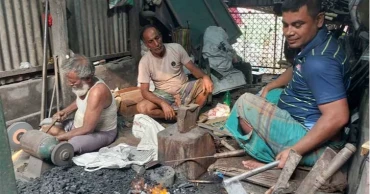
As Eid-ul-Azha draws closer, the rhythmic clanging of hammers on glowing iron has transformed blacksmith villages in Brahmanbaria’s Nabinagar upazila into bustling hubs of activity.
From dawn until deep into the night, blacksmiths are working tirelessly to meet the growing demand for sacrificial tools such as cleavers, machetes, knives and traditional cutting blades used during the Eid cattle sacrifice.
For many of the artisans, the annual festival season is the busiest and most profitable period of the year.
“In the rest of the year, work remains limited. But before Eid-ul-Azha, we hardly get time to breathe,” said Shyamal Karmakar, a local blacksmith, while shaping a red-hot blade with repeated hammer strikes.
Across blacksmith neighbourhoods and marketplaces in Bholachang, Sohata, Shyamgram, Kadair and Sreeghar, furnaces burn constantly as sparks fly from workshops crowded with customers seeking new tools or sharpening old ones.
The metallic “tung-tang” sound of hammer and chisel echoes through the air, creating a familiar pre-Eid atmosphere in the rural landscape.
Blacksmiths said prices of raw materials and labour have increased significantly this year, forcing them to charge more for their products and services.
According to the artisans, skinning knives are selling for Tk100 to Tk200, machetes for Tk200 to Tk350, traditional cutting blades or boti for Tk250 to Tk500, slaughtering knives for Tk300 to Tk1,000, and heavy cleavers for Tk500 to Tk800.
“Coal prices have nearly doubled compared to two months ago,” said Sunil Karmakar, another blacksmith in the area.
“Earlier, a sack of coal cost Tk 400 to Tk 450. Now we have to buy it for Tk 800 to Tk 850. Labour costs have also gone up,” he said.
Despite the higher prices, customers continue to crowd the workshops as many families prefer preparing their own tools ahead of Eid due to the shortage of butchers during the festival.
Abdul Karim, a customer at a blacksmith shop, said he bought a cleaver for Tk 500 and also brought several old tools for repair and sharpening.
“I purchased a new cleaver and came to sharpen knives and machetes,” he said.
Anwar Hossain, another customer, said many people now choose to slaughter sacrificial animals themselves because it has become difficult to find skilled butchers during Eid.
“That is why I bought a new boti and sharpened my old machete and knife,” he said, adding that sharpening costs have increased by Tk 20 to Tk 50 compared to last year, depending on the type of tool.
Blacksmiths said sales have already doubled ahead of Eid, and they expect even greater demand in the final two days before the festival.
To cope with the rush, many artisans started preparations nearly a month ago and are continuing work without pause.
The blacksmiths said they will continue working at full pace until Eid.
2 months ago
Damaged Teesta Bridge link road poses threat to regional connectivity
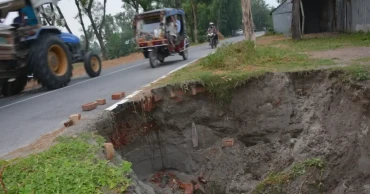
Large parts of the approach road to the Second Teesta Bridge in Gangachara upazila in Rangpur have caved in following recent rainfall, creating deep craters and exposing thousands of commuters to serious risks.
Locals said and they fear major accidents if urgent repairs are not undertaken before the monsoon intensifies.
The damaged sections particularly near Mahipur on the northern side of the bridge have become increasingly hazardous following several days of continuous rainfall.
Locals said soil beneath the road has been washed away, causing parts of the pavement to collapse and leaving deep holes along one of the region’s busiest transport corridors.
The bridge and its connecting road serve as a crucial link between Rangpur and Lalmonirhat districts and provide access to the Burimari land port, facilitating the movement of thousands of passengers and goods vehicles every day.
Since the bridge opened traffic volume especially heavy vehicle has increased significantly on the route.
During a recent visit to the area, at least eight points along the northern approach road were found affected by subsidence, with some sections developing deep cavities that pose risks to both vehicles and pedestrians.
“This road is extremely important for people travelling between Rangpur and Lalmonirhat,” said local resident Nazrul Islam.
“Large holes have appeared on the northern side of the bridge after several days of rain. If repairs are not carried out immediately, a serious accident could occur at any time.”
Concerns Over Construction Quality
Locals have also raised questions about the durability of the road and the quality of past repair works, pointing to repeated failures despite substantial public spending.
Ruhul Islam, a resident of the area, said river erosion becomes a recurring challenge during every monsoon while the road had already been in a fragile condition before the latest rainfall.
“In several places, the asphalt surface has peeled away, creating large potholes,” he said. “If heavy rain continues for a few more days, a significant portion of the road may collapse.”
He alleged that similar damage occurred several times in the past and was repaired hurriedly, but the recurring failures suggest deeper problems in the execution of the bridge project.
Another local resident, Niaz Ahmed, said repeated repairs have failed to provide a lasting solution.
“Public money is being spent repeatedly in the name of maintenance, yet the road continues to collapse,” he said. “When a bridge and connecting road built at a cost of Tk 153 crore repeatedly develop the same problems, questions naturally arise about the quality of the work.”
Costly Repairs, Limited Results
According to officials of the Local Government Engineering Department (LGED), around Tk 28 crore was spent in 2024 on the renovation and widening of an approximately 11-kilometre stretch of the Teesta Bridge approach road, from Burirhat in Rangpur to Sirajul Market in Gangachara.
The project was jointly implemented by three contractors—M/S Khairul Kabir Rana, KKR Limited and Barendra Limited.
During the same period, another road improvement project covering the Lalmonirhat section from Sirajul Market to Kakina was carried out by Shahadat Enterprise at a cost of Tk 3.53 crore.
Despite these expenses, locals said the road has yet to achieve a durable condition, as recurring subsidence and potholes continue to disrupt traffic and endanger commuters.
Threat to Regional Connectivity
Abdullah Al Hadi, chairman of Laxmitari Union Parishad, described the route as one of the busiest roads connecting Rangpur and Lalmonirhat districts.
“The appearance of fresh erosion and subsidence near the bridge before the flood season is alarming,” he said. “If immediate repairs are not undertaken, there is a risk that larger sections of the road could collapse, disrupting communication across the region.”
Gangachara Upazila Engineer Shah Md Obaidur Rahman said officials have already visited the site after receiving reports of the damage.
“Necessary steps are being taken to repair the affected sections as quickly as possible,” he said.
Longstanding Problems
The Second Teesta Bridge, built over the Teesta River, was inaugurated on September 16, 2019, to strengthen connectivity between Gangachara and the upazilas of Patgram, Hatibandha, Kaliganj and Aditmari in Lalmonirhat district, as well as the strategically important Burimari land port.
However, since its inauguration, the bridge’s approach road has repeatedly suffered from subsidence, potholes and structural defects.
On several occasions, authorities have had to restrict the movement of heavy vehicles due to safety concerns.
2 months ago
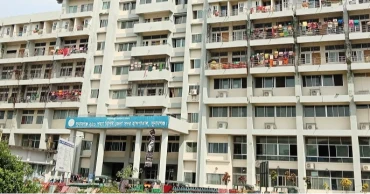
Staff shortage cripples healthcare services at 250-bed Sunamganj Sadar Hospital
The 250-bed Sunamganj Sadar Hospital has been grappling with a severe manpower shortage, crippling healthcare services at the district’s largest public medical facility and forcing patients to endure long waits, inadequate treatment and mounting frustration.
The overburdened healthcare workers are struggling to maintain basic care to patients.
Hospital sources said nearly half of the approved posts at the district’s main public healthcare facility are lying vacant, affecting treatment services in one of the country’s haor regions where thousands depend on the hospital for affordable care.
According to hospital authorities, the hospital has a total of 472 approved posts but only 255 employees are currently working, leaving 217 positions vacant.
The crisis is most acute among doctors. Of the 74 approved physician posts, only 28 are currently filled, meaning 46 positions remain vacant.
Besides, against 262 sanctioned posts for nurses, only 199 are currently serving, while 63 positions remain empty.
The shortage extends to medical technologists as well.
Of 10 approved posts, only six are occupied. In other categories, the situation appears even worse – only 22 employees are working against 126 approved posts, leaving 104 vacancies.
Patients and their relatives told UNB that the staff shortage has made access to proper treatment increasingly difficult.
Many alleged that they have to wait for hours to consult doctors, while several departments struggle to provide regular services due to a lack of manpower.
“I have been admitted to the hospital for two days, but there is a shortage of doctors, nurses and cleaners here,” said patient Soaeb Hasan. “We are facing different kinds of suffering every day.”
Ismail Hossain, an attendant of another patient, said many patients coming from remote areas fail to receive treatment from specialist physicians.
“Despite having such a large hospital, patients often hear that specialist doctors are unavailable. In the end, many are forced to go to Sylhet for treatment,” he said.
Concerns were also raised over the activities of brokers operating inside the hospital premises.
Abdus Samad, another patient’s guardian, alleged that an organised broker syndicate frequently harasses patients and even misbehaves with doctors when they fail to receive undue benefits.
“If these brokers can be controlled, both patients and doctors will feel safer, and harassment will decrease,” he said.
Locals also expressed concern over the hospital environment and the retention of doctors.
Habibur Rahman Chowdhury, a retired official and resident of the area, said some physicians eventually leave due to harassment and lack of security.
“Even when doctors join the hospital, some dishonest people create an unpleasant environment through. Ensuring doctors’ security is very important,” he said.
Sajia Begum, a resident of Shologhor area, said the unhygienic environment reflects the shortage of support staff.
“People expect healthcare services in a clean and healthy environment. But waste and garbage can be seen lying in different corners of the hospital,” she said.
Hospital authorities admitted that the prolonged vacancy crisis has placed enormous pressure on existing staff and affected patient care.
Dr Mahbubur Rahman Swapan, deputy director of the 250-bed hospital, said doctors and healthcare workers are struggling to manage the growing workload.
“We are facing difficulties in providing services due to shortages in various posts, including doctors,” he said.
“If these vacancies are filled quickly, pressure on the existing workforce will ease and patients will receive better and smoother healthcare services.”
He added that the issue has repeatedly been communicated to higher authorities, urging immediate recruitment to overcome the crisis.
2 months ago

Battling ecological decline: Govt launches afforestation, climate resilience projects in CHT
The lush green hills of the Chattogram Hill Tracts (CHT), known for their dense forests, flowing streams and rich biodiversity, are increasingly facing the harsh realities of climate change and environmental degradation.
Deforestation, drying water sources, soil erosion and deadly landslides have become recurring threats in three hill districts -Rangamati, Khagrachhari and Bandarban, prompting the government to roll out a series of initiatives aimed at restoring ecological balance and strengthening climate resilience.
According to the Ministry of Chittagong Hill Tracts Affairs, extensive afforestation programmes, watershed management activities and climate-resilient infrastructure projects have been taken to address mounting environmental vulnerabilities.
Officials say the initiatives are designed not only to restore degraded forests and protect hill slopes, but also to safeguard the livelihoods of indigenous communities whose lives remain closely tied to the fragile hill ecosystem.
Under the government’s Election Manifesto 2026, authorities have set targets to plant thousands of fruit-bearing, forest and medicinal saplings during the 2025-26 fiscal year.
The ministry said 80,000 saplings will be planted in Rangamati, 82,250 in Khagrachhari and another 100,000 in Bandarban as part of the afforestation drive.
Besides, the Chittagong Hill Tracts Development Board has launched a broader plantation programme under the Prime Minister’s “One Child, One Tree” pledge, which forms part of a nationwide initiative to plant 2.5 billion trees over five years.
Under the scheme, the board plans to plant 500,000 trees across 26 upazilas in the three hill districts over the next five years. Activities to plant 25,000 trees have already begun during the current fiscal year, according to official documents.
Authorities believe the plantation drives will help stabilise vulnerable hill slopes, restore degraded forest areas and reduce the growing risks posed by climate-induced disasters.
2 months ago
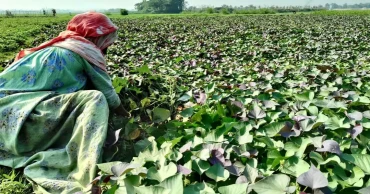
Japanese Okinawa sweet potato brings new hope to farmers in Brahmanbaria
A Japanese variety of sweet potato known as Okinawa is steadily transforming the fortunes of farmers in Nabinagar upazila of Brahmanbaria, as growing consumer demand and high yields turn the crop into a promising superfood.
Although cultivation began on an experimental basis about three years ago, this season recorded nearly 30 bighas cultivation of Okinawa sweet potato in char areas and fallow lands. Farmers, agricultural entrepreneurs and health-conscious consumers are increasingly showing interest in the crop because of its profitability and nutritional value.
Farmers in Sunamganj haor region worried over cattle feed shortage after crop loss
Sweet potatoes are currently cultivated on about 255 hectares of land in Nabinagar upazila.
Around 20 farmers in Natghar, Nabinagar West, Satmora, Barikandi and Birgaon unions are now producing the Okinawa variety, signalling the beginning of what could become a lucrative new crop for the area.
Local farmers said the Okinawa variety produces significantly higher yields than traditional local sweet potatoes. Production can exceed 100 maunds per bigha, while the crop also offers better storage capacity and greater resistance to pests and diseases.
According to farmers, more than three maunds of sweet potatoes can be harvested from each decimal of land, around one and a half times higher than many local varieties. The tubers are larger in size and more visually appealing, making them attractive in the market.
The sweet potato, when boiled or roasted, reveals a distinctive yellow interior with a naturally sweet taste and soft texture. Consumers say slow cooking enhances its flavour, while chilling after boiling further intensifies its sweetness.
Nutrition experts say the crop is widely misunderstood in terms of its impact on blood sugar. With a relatively low glycaemic index, Okinawa sweet potatoes can be consumed in moderation even by diabetic patients. They are also rich in antioxidants, dietary fibre and vitamin A, supporting digestion, eye health and long-term energy release.
The variety is closely associated with Japan’s Okinawa region, known globally for longevity and healthy diets, which has contributed to its branding as a superfood in international markets.
Farmers in Nabinagar say the crop has already begun improving their incomes.
Nur Mohammad of Barikandi village said he started cultivation after receiving training from the Department of Agriculture Extension and collecting vines through local officials.
“Last year, I cultivated it on 20 decimals of land and harvested around 65 maunds,” he said.
Another farmer, Kamal Mia of Darilapang village under Nabinagar West union, said he has been cultivating the crop for two consecutive years on three bighas of land.
“The yield is high, demand is strong, and the price is good. We get around 120 maunds per bigha. It is profitable due to low production costs, so I plan to expand cultivation further,” he said.
Officials say interest in the crop is growing steadily.
Nabinagar Upazila Agriculture Officer Md Jahangir Alam Liton said farmers are increasingly adopting the variety due to its profitability and market demand.
He said initiatives are underway to expand cultivation further through training programmes and vine production, with a target of bringing 100 bighas under Okinawa sweet potato cultivation next season.
However, challenges remain in post-harvest management.
Deputy Director of Brahmanbaria DAE Dr Mostafa Imran Hossain said Bangladesh still lacks adequate storage facilities for sweet potatoes.
He stressed that the development of proper storage systems and agro-processing industries could ensure fair prices for farmers and year-round availability for consumers.
2 months ago
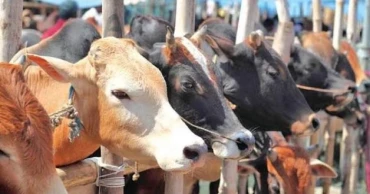
Bovine nightstays proliferate in guise of farms in Sunamganj
With Eid-ul-Azha approaching, cattle smuggling syndicates have intensified their operations along the Dowarabazar border, allegedly using registered and unregistered dairy farms as temporary transit camps for smuggled Indian cattle.
Locals said smuggling syndicates have become increasingly active around the border-adjacent Bogla Bazar, Narsingpur and Banglabazar cattle markets, where large consignments of Indian cattle are allegedly being moved under the cover of darkness.
Farmers in Sunamganj haor region worried over cattle feed shortage after crop loss
According to allegations, several establishments in the Boglabazar area have been registered as cattle farms, but are being used as temporary holding centres for incoming cattle at night in exchange for fees ranging between Tk 200 and Tk 500 per animal.
A field visit reportedly found little evidence of regular livestock rearing activities during the day, with locals claiming that while fodder is kept for appearance, the facilities remain largely inactive until nightfall when cattle are brought in and later moved out before dawn.
Several residents, requesting anonymity, said there are eight farms in the area, of which four are registered and four are unregistered, and that a portion of these are being used as safe shelters for smuggled cattle entering through the border.
A local trader said cattle are brought into the farms at night and removed early in the morning, creating instability in local cattle markets.
Locals further alleged that the misuse of farm licences for such activities poses a threat not only to illegal trade control but also to law and order in the border region, calling for stricter monitoring by the administration.
They also claimed that despite repeated reports and discussions in district law and order meetings, including one held on May 9, no visible progress has been made in curbing cattle smuggling or monitoring farm activities effectively.
Giant bulls ‘Kala Babu’, ‘Dhala Babu’ steal Eid spotlight in Thakurgaon
Earlier, on April 30, 2025, a 28 BGB task force seized a steel-bodied boat carrying 90 cattle worth around Tk 10 million from the Surma River in Sunamganj town following a tip-off, and filed a case in connection with the incident.
Farm owners, however, denied involvement in illegal activities, saying cattle brought in are owned by traders who temporarily keep them at the farms before distribution.
Dowarabazar Upazila Nirbahi Officer (UNO) Arup Ratan Singha said farm permissions were granted under regulations and directed the livestock department to investigate the matter, adding that legal action will be taken if any irregularities are found.
Sirajganj farmers gear up for Eid cattle trade with over 617,000 sacrificial animals
Doarabazar Police Station Officer-in-Charge Tariqul Islam said the matter is under observation and legal action will be taken if credible information is received.
Local residents and civil society members have demanded permanent closure of such alleged “night stay centres,” strict monitoring of registered and unregistered farms, enhanced border surveillance, and strong action against those involved.
2 months ago