education
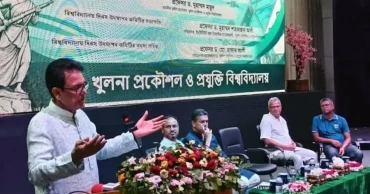
Govt to distribute bicycles to secondary schoolgirls to encourage female education: Milon
Education Minister Ehsanul Haque Milon on Tuesday said the government has taken an initiative to distribute bicycles to secondary schoolgirls across the country to encourage female education.
“An initiative has been undertaken to provide bicycles to encourage girls’ education at the secondary level, alongside providing a tablet to each of the 116,000 students who achieved a GPA-5, as a means of encouragement,” he said.
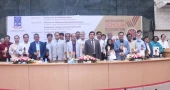
He made these remarks while speaking as the chief guest at the Khulna University of Engineering & Technology (KUET) Day held at the university auditorium.
The Minister said, “The government spends approximately Tk 10.75 lakh on each student. Therefore, the focus must be not only on building infrastructure but also on ensuring the proper return on this investment.”
He said as part of the government’s broader plans, the Prime Minister wants to raise the current allocation for education from 3.4 percent to 5 percent in the national budget.
Stressing the need for technology-oriented education, Milon called for introducing courses related to electric vehicles (EV) alongside traditional mechanical and electrical engineering.
He also mentioned the need to launch modern subjects like artificial intelligence (AI) and robotics at the university level, while expressing frustration over a stalled application to introduce an AI course at the University Grants Commission (UGC) for two years.
The Minister also questioned the rationale behind opening new departments at the university saying, “The necessity of launching departments such as ‘Building Engineering and Construction Management’ alongside Civil Engineering, and ‘Urban and Regional Planning’ alongside Architecture, should be reviewed beforehand.”
“For disciplines like Leather Engineering, laboratory facilities and existing specialized institutions in the country must also be taken into consideration,” he added.
Regarding the delays in teacher recruitment he said, “The appointment of approximately 4,500 teachers is currently stalled due to complications at the Ministry of Education.”
“Discussions are underway to swiftly resolve these issues and ensure the appointments,” he also said.
He said in 2003, during the tenure of the then Prime Minister Khaleda Zia, four BITs were simultaneously transformed into universities, while he was working with her as the State Minister for Education.
“The initiative was undertaken because the highest priority was being accorded to education,” he added.
KUET Vice-Chancellor Prof Dr. Mohammad Mashud presided over the program, while Parliament Whip Rakibul Islam Bakul, MP, was present as a special guest.
Every year, September 1 is observed as KUET Day or University Day, commemorating the institution's upgrade from a BIT to a full-fledged engineering and technology university on this day in 2003.
To mark the day, the university organized various programs, including the hoisting of national and university flags, colorful rallies, project exhibitions, open lab sessions, sports competitions, discussion meetings, prayers, and cultural events.
1 day ago

KU first-year admission tests Dec 17-18; KUET on Jan 8
Khulna University (KU) will hold admission tests for first-year undergraduate (honours) courses for the 2026-27 academic year on December 17 and 18 next.
The decision was taken at a meeting of the university’s Central Admission Committee on Thursday, according to a notification signed by the university’s acting Registrar Prof Dr SM Mahbubur Rahman.
According to the notification, the admission tests for ‘C’ and ‘D’ units will be held on December 17.
The ‘C’ unit covers disciplines under the Schools of Arts and Humanities, Social Sciences, Law, Education and Fine Arts.
The ‘D’ unit includes disciplines under the School of Management and Business Administration.
The tests for ‘A’ and ‘B’ units will be held on December 18.
The ‘A’ unit covers disciplines under the School of Science, Engineering and Technology, while the ‘B’ unit includes disciplines under the School of Life Sciences.
Meanwhile, Khulna University of Engineering and Technology (KUET) will hold its first-year admission test for the 2026-27 academic year on January 8, 2027.
The test is for admission to BSc Engineering, BURP and B.Arch programmes.
To ease transportation and accommodation problems for students from different parts of the country, KUET has decided to hold the admission test at centres in three divisional cities – Khulna, Dhaka and Rajshahi.
The decision was taken following discussions on undergraduate admissions at the 118th special meeting of KUET’s Academic Council held on Thursday, university sources said.
The admission test will be held under the multiple-choice question (MCQ) system.
An admission test committee has already been formed to ensure the smooth conduct of the examination, the sources added.
6 days ago
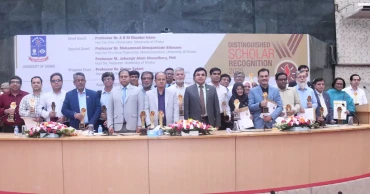
62 DU teachers honoured for ‘outstanding contributions’ to research
Dhaka University has honoured 62 teachers and researchers who have received 2,000 or more citations on their Google Scholar profiles, in recognition of their outstanding contributions to research and efforts to enhance the university’s visibility internationally.
The researchers were honoured at a ceremony held at the Nabab Nawab Ali Chowdhury Senate Building on Thursday.
The event was presided over by Dhaka University Vice-Chancellor Prof Dr A B M Obaidul Islam. Pro-vice-chancellors, the treasurer, deans of all faculties, chairmen of all departments, directors of all institutes and centres, the proctor, and the honored teachers and researchers were present.
Congratulating the honored teachers and researchers, Prof Obaidul Islam said they must play a leading role in transforming the university into a research-oriented institution and improving its position in international rankings to a respectable level.
He said it would not be possible to take the university forward through government funding alone. Support from the university’s alumni and industry is also needed.
Highlighting various initiatives taken by the university administration to improve education and research, he said work is underway to formulate a 20-year academic development plan.
He said efforts were being made to strengthen industry-academia relations and alumni networking with the aim of creating a Tk 1,000 crore fund for research and another Tk 1,000 crore fund for student welfare. Joint education and research projects are also being undertaken with renowned universities around the world.
“We want to make research activities more dynamic and effective by undertaking ‘lab-to-lab’ and ‘researcher-to-researcher’ initiatives with universities and research organizations around the world,” he said.
The Vice-Chancellor called on teachers and researchers to work together in a coordinated manner in this regard.
6 days ago
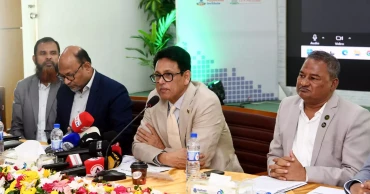
Expanding TVET can turn huge population into a resource: Education Minister
Education and Primary and Mass Education Minister ANM Ehsanul Hoque Milon on Sunday said there is no alternative to TVET (Technical and Vocational Education and Training) to transform the country's population into human resources.
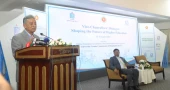
The minister made the remarks while speaking as chief guest at a programme titled "A National Dialogue on TVET for a Skilled & Productive Bangladesh" held at Daffodil Plaza auditorium in Dhanmondi.
The minister said technical education plays a crucial role in the socio-economic development of the country.
"We have to come out of the concept of only conventional education. There is no alternative to technical education in building a developed Bangladesh," he said, adding that Prime Minister Tarique Rahman has taken a plan to turn the country's huge population into human resources, and they are working keeping that goal in mind, giving the highest priority to technical education.
He further said there is huge global demand for skilled manpower in technical education, noting that expatriate workers are one of the main sources of the country's foreign currency earnings.
"If we can send them abroad with skills, our economy will be further enriched," he said, stressing the need to give more importance to technical education.
To this end, the minister said four more engineering colleges are going to be established in Bangladesh. Besides, he said, Dhaka Polytechnic Institute will be developed as a model institution, for which a separate project is being undertaken.
10 days ago
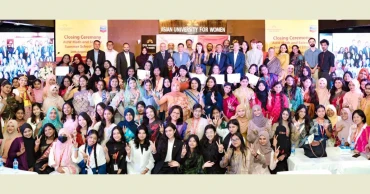
2026 "Math and Science Summer School" concludes with focus on empowering young women in STEM
The 2026 Math and Science Summer School programme has concluded with a renewed focus on encouraging more young women to pursue education and careers in science, technology, engineering, and mathematics (STEM), while helping them build confidence and unlock their full potential.
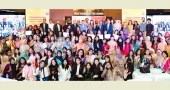
Supported by Chevron Bangladesh, the Asian University for Women (AUW) campus in Chattogram recently hosted a vibrant and lively ceremony to mark the closing of the 2026 “Math and Science Summer School”.
The event concluded with awarding certificates to 104 bright college girls from across the country who successfully completed the intensive four-week programme.
Dr. Md. Ziauddin, Divisional Commissioner, Chattogram, was present as the Chief Guest.
Ashiq Rahman, Director of Operations, Chevron Bangladesh, and Dee Bourbon, Lead Advisor Community Partnerships at Chevron, were also present as special guests.
Their presence underscored Chevron’s long-standing partnership with AUW and its dedication to building an inclusive education system for women in Bangladesh.
From AUW, Dr. Mohiuddin Ahsanul Kabir Chowdhury, Director of the Summer School, extended heartfelt gratitude to the students and faculty for their dedication and hard work, noting that the program continues to serve as a beacon of opportunity for young women across the country.
Dr. Md. Ziauddin praised AUW and Chevron Bangladesh for their continued commitment to advancing women’s education and preparing future leaders in STEM.
He emphasized that initiatives such as the Summer School play a vital role in shaping the next generation of scientists, innovators, and changemakers.
Ashiq Rahman, Director of Operations, Chevron Bangladesh, said Chevron is proud to support the Math and Science Summer School since 2019. “Through initiatives like this, we aim to encourage more young women to pursue STEM education and unlock their potential."
Dee Bourbon, Lead Advisor, Community Partnerships, Chevron, said they are proud to support a program that helps young women build confidence, expand their knowledge, and pursue opportunities that can shape their futures.
A highlight of the event was the presentation of the "Emerging Woman Leader in STEM” award to nine outstanding participants in recognition of their exceptional performance and leadership potential.
Since its inception in 2019, the Chevron Bangladesh-supported AUW Summer School has given 477 young women from across Bangladesh access to specialized courses in mathematics, physics, chemistry, computer programming, and public health taught by experienced local and international faculty.
10 days ago
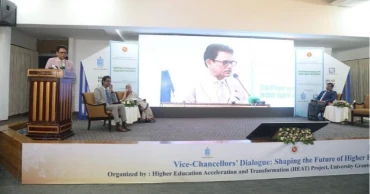
Education Minister envisions postgraduate university focused on research
The government will take an initiative to establish a postgraduate university in Bangladesh, modeled on institutions in developed countries, to advance higher education, research and innovation, Education Minister Dr ANM Ehsanul Haque Milan said Saturday.
“Many universities have been established in the country through government and private initiatives, but Bangladesh still does not have a postgraduate university,” he said.
“Such universities exist in neighboring countries and other parts of the world, where world-class research is conducted. Many Bangladeshi students also enroll in these institutions to pursue higher degrees,” the minister added.
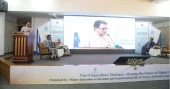
He was speaking as the chief guest at the closing session of a two-day “Vice-Chancellors’ Dialogue” held at BRAC CDM in Savar today.
The dialogue was organised under the Higher Education Acceleration and Transformation (HEAT) Project being implemented by the University Grants Commission (UGC).
UGC Chairman Professor Dr Mamun Ahmed chaired the programme.
Chittagong University Vice-Chancellor Professor Dr Mohammad Al Forkan, Rajshahi University Vice-Chancellor Professor Dr Md Faridul Islam, former Bangladesh Public Service Commission chairman Professor Dr ZN Tahmida Begum and BRAC University Vice-Chancellor Professor Dr Syed Farhat Anwar also spoke at the event.
The education minister said the prime minister has expressed interest in establishing a postgraduate university in Bangladesh to promote research and innovation.
“The government will provide all-out support to build new universities on the model of institutions in developed countries,” he said.
“Budget allocation for the education sector has been increased to 2 percent of GDP. There are plans to raise it to 3 percent next year and gradually to 5 percent,” he said.
He also said employment opportunities and future demand should be taken into consideration when opening new departments at universities.
The minister said some private universities in the country are failing to provide quality education.
“The UGC has been instructed to identify these universities,” he said, adding that the government has not yet taken the tough decision to shut down low-quality private universities, keeping students’ interests in mind.
He said the current government has not approved any new private university and instructed the UGC to take necessary steps to introduce PhD programmes at quality private universities.
“The UGC will work to implement these plans at the university level,” he said.
Highlighting Bangladesh’s potential in the international education market, Milan said the United Kingdom is planning to expand its $35 billion education market to $40 billion.
“They have built this market by attracting foreign students. Bangladesh also needs to create a quality education and research environment capable of attracting international students,” he said.
The minister also suggested establishing a research bank and identifying the reasons behind the low enrollment rate of students who have completed O Level and A Level examinations at universities.
Speaking as the chair, UGC Chairman Professor Dr Mamun Ahmed said the commission is working to bring Bangladesh’s higher education up to international standards in line with the government’s priority sectors.
Producing graduates with knowledge and skills suited to the national and international labour markets is one of the major goals of higher education, Mamun said.
UGC Chairman Professor Dr Mamun Ahmed, UGC members Professor Dr Masuma Habib, Professor Dr Abdullah-Al-Mamun, Professor Md Mehedi Hasan Khan, Professor Dr Md Aslam Hossain and Professor Dr Niaz Ahmed Chowdhury took part as chairs and discussants in the sessions.
Vice-chancellors of different universities and experts associated with the HEAT Project and the Bangladesh Research and Education Network also took part in the open discussion.
11 days ago
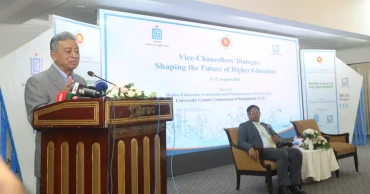
Higher education should focus on jobs, entrepreneurship: Finance Minister
Finance and Planning Minister Amir Khosru Mahmud Chowdhury has called for aligning higher education with employment and entrepreneurship opportunities, urging authorities to consider national priorities, labour-market demand and the potential for job creation when establishing new universities or introducing new departments and subjects.
He also advised the University Grants Commission (UGC) chairman against recommending the approval of universities in an unplanned manner.
Economy suffering from ‘overregulation’, says Amir Khosru
The minister made the remarks on Friday while speaking at an interaction session with higher education policymakers on the first day of a two-day vice-chancellors’ dialogue organised under the Higher Education Acceleration and Transformation (HEAT) project being implemented by the UGC.
The dialogue began at BRAC CDM in Savar.
12 days ago
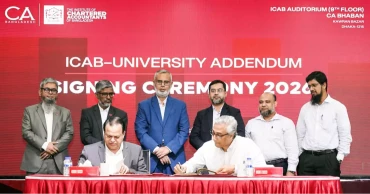
14 universities sign MoUs with ICAB
The Institute of Chartered Accountants of Bangladesh (ICAB) on Thursday signed addenda to existing Memorandums of Understanding (MoUs) with representatives from 25 departments of 14 public and private universities and institutions.
The ceremony, titled "ICAB–Public and Private Universities Signing Ceremony 2026," was held at the ICAB Auditorium in Dhaka to foster stronger ties between academic institutions and the accountancy profession.
Under the enhanced partnership, ICAB and the participating universities will collaborate to attract top graduates and post-graduates to the Chartered Accountancy (CA) profession by offering Credit for Prior Learning (CPL) and paper exemptions where applicable, creating a faster pathway to qualification.
13 days ago
'Evening curfew' at DU women's halls: Provost Standing Committee recommends 1-hour extension
Dhaka University’s Provost Standing Committee has recommended one hour extension for daily entry at female halls of residence, as a group of female students protesting for the last many days demanding the lifting of the ‘evening curfew’ which bars female students’ entrance and exit from the hall from 10pm to 6am.
The secretary of the committee, Israfil Ratan, who also serves as DU's proctor, confirmed the information today, saying that the decision had been taken yesterday. The recommendation will be present before the syndicate meeting. If the recommendation is approved by the syndicate, then this will be executed.
According to the existing rules, DU female students can't enter or go out from the halls from 10pm to 6am. If needed, they must take late pass permission from the house tutors prior. In an emergency case, the authorities contact the local guardians to let them go out.
15 days ago
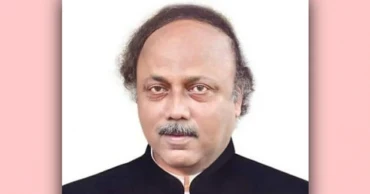
Crimes against humanity: Ex-RCC Mayor Liton, 33 others face arrest warrants
The International Crimes Tribunal (ICT) on Tuesday issued warrants for the arrest of 34 people, including former Mayor of Rajshahi City Corporation (RCC) AHM Khairuzzaman Liton, in a case filed over crimes against humanity committed during the July 2024 uprising.
The three-member ICT-2, chaired by Justice Nozrul Islam Chowdhury, passed the order after taking cognisance of formal charges against the accused.
The court also fixed September 17 for the next hearing.
Four of the accused are in jail. They are former MP from Rajshahi-3 constituency Asaduzzaman Asad, Dablu Sarkar, Zahirul Islam Rubel and Mohaiminul Islam Manik.
Earlier on July 30, the prosecution submitted formal charges against 38 people before the ICT-2.
According to the prosecution, Raihan Ali was shot dead in front of Lobongo Restaurant under Boalia Police Sation in Rajshahi city during July uprising on August 5, 2024.
Meanwhile, Anjum Shakib was also shot dead in front of Shah Makhdum College during the movement. A number of people were also injured during the incident.
15 days ago