education
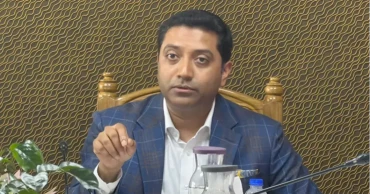
Govt introduces major reform in primary teacher transfer process: State Minister
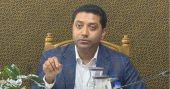
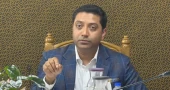
State Minister for Primary and Mass Education Bobby Hajjaj on Sunday said the government has introduced a new decentralised system for teacher transfers to make the process transparent, accountable and free from corruption.
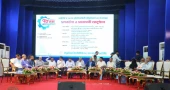
The teacher transfer process had long been known as a major area of syndicate control and corruption, which stood as a significant obstacle to improving the quality of education, he said while addressing the Validation Workshop on the Bangladesh Education Sector Analysis (ESA) 2026, organised by GPE and UNICEF at a hotel in the capital.
Bobby Hajjaj said that under the directive of Prime Minister Tarique Rahman and the initiative of the Ministry of Primary and Mass Education, the teacher transfer process has been decentralised and brought to the local level.
Under the new policy, separate committees are being formed at the upazila, district, divisional and city corporation levels to review transfer applications at regular intervals, he said.
At the upazila level, a four-member committee headed by the Upazila Nirbahi Officer (UNO) will scrutinise applications, while the Upazila Primary Education Officer will issue transfer orders based on the committee’s recommendations, he added.
Besides, similar five- or six-member committees will operate at the district, divisional and city corporation levels to examine transfer applications and issue transfer orders, he said.
Education and Primary and Mass Education Minister Dr A N M Ehsanul Hoque Milon attended the programme as the chief guest.
Officials from the Ministry of Education, the Ministry of Primary and Mass Education, relevant departments and UNICEF were also present at the event.
1 month ago

Students to get easy loans of up to Tk 10 lakh for higher studies abroad
Students seeking higher education abroad will be eligible for easy loans of up to Tk 10 lakh under a new government programme, Finance Minister Amir Khosru Mahmud Chowdhury said while placing the proposed national budget for FY2026-27 on Thursday.
Unveiling the proposed budget in Parliament, the finance minister said plans are underway to introduce a mandatory third language, such as Japanese, Korean, Mandarin, Arabic, French or German, into the curriculum alongside Bangla and English.
“To support third-language learning and facilitate higher education abroad, the government has already introduced a loan facility of Tk 10 lakh for students wishing to pursue higher studies overseas,” he said.
The initiative aims to expand opportunities for higher education abroad and help talented students overcome financial barriers.
The government plans to keep interest rates comparatively low and allow repayment after graduates enter the job market, he said.
The finance minister also said the government would ensure access to the scheme without administrative hassles.
The proposed budget allocates Tk 136,606 crore for education and human resource development, a significant increase from the current allocation of Tk 87,206 crore, which accounted for 1.39 percent of GDP.
According to the finance minister, the government plans to raise spending on education to 5 percent of GDP by 2030, viewing the investment as a strategic step toward building a skilled workforce and a knowledge-based economy.
Amir Khosru said the government considers overseas education not as "brain drain" but as "brain circulation" that can contribute to remittance growth and the development of skilled human resources in the future.
1 month ago
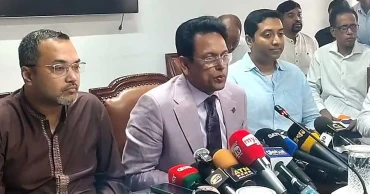
Govt to roll out new school curriculum in 2028, add 4 new subjects from 2027
A new curriculum will be introduced in primary and secondary schools from 2028, while four new textbooks will be added to Classes IV and VI from the 2027 academic year.
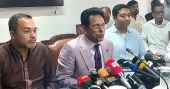
Education Minister Dr ANM Ehsanul Hoque Milon and Prime Minister’s Adviser on Education, and Primary and Mass Education Mahdi Amin disclosed the plans at a press conference organised at the Secretariat on the government’s three-month activities.
Milon stresses improved technical education system
Under the initiative, two new subjects – Sports and Culture – will be introduced in Class IV, while Technical and Vocational Education, and Learning with Happiness will be added to the curriculum for Class VI students next year.
Responding to a question on whether the government is formulating a completely new curriculum or revising the existing one, Mahdi Amin said both curriculum reforms and the introduction of new subjects are being considered.
He said the education sector had suffered significant setbacks over the past 16 years and it will take time to rebuild it.
“There are areas within the current curriculum that require additions, omissions and revisions. At the same time, we are introducing new subjects in line with our vision of reshaping the education system,” the adviser said.
He said Sports and Culture will be introduced as separate compulsory subjects from Class IV, while Technical and Vocational Education, and Learning with Happiness will be mandatory from Class VI.
Mahdi Amin said the Learning with Happiness course will focus on values, principles and character-building to help develop responsible citizens. The programme will also include teachers’ guides and training modules to support classroom instruction.
He added that greater emphasis will be placed on learning a third language through an expanded component within the existing curriculum framework.
“Four new subjects are being introduced and a major new chapter on third-language learning will be added. Alongside these, necessary revisions and improvements to the existing curriculum will continue through consultation with education experts and professionals,” the adviser said.
Asked whether the changes will take effect next year, Minister Milon said a complete curriculum overhaul could not be accomplished within three months.
“We are introducing the new subjects in Classes IV and VI from 2027 after making the necessary revisions and ensuring the process is realistic and implementable,” he said.
“The broader curriculum reform that many expect is already underway and will be visible from 2028. However, the current revision process is progressing well and four new textbooks are being introduced,” the minister added.
Replying to a question regarding a recent report by Transparency International Bangladesh (TIB) alleging that vice-chancellors were appointed to universities on political considerations, he declined to comment. “If you want to know about the TIB report, ask TIB. I am not willing to respond to that,” he said.
“TIB will do its work and I will do mine. This is a newly elected government and it knows how to manage the university education system. That is entirely our matter. It is too early for such reports when we have only just begun our journey,” Milon added.
1 month ago
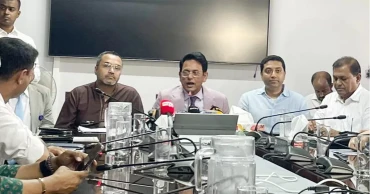
SSC results to be published on July 20: Milon
The results of the Secondary School Certificate (SSC) and equivalent examinations will be published on July 20, Education Minister Dr ANM Ehsanul Hoque Milon said on Monday.
He made the announcement at a press conference held at the Secretariat on the government's three-month programme.
A total of 1,857,344 candidates appeared at the SSC and equivalent examinations that began on April 21.
Of the total examinees, 930,305 are males and 927,039 females – from 30,666 institutions.
Under the nine general education boards, a total of 1,418,318 candidates took part in the SSC examination.
Under the Madrasah Education Board, 303,286 students sat for the Dakhil examination.
Meanwhile, under the Technical Education Board, 134,660 students took part in SSC (Vocational) examinations.
1 month ago
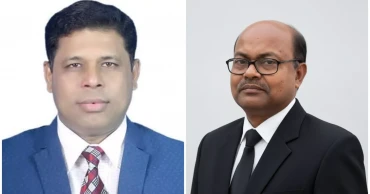
JU Appoints Prof Shamsul Alam and Prof Nazrul Islam as new Pro-VCs
The government has appointed two professors of Jahangirnagar University as Pro-Vice Chancellors (Academic) and (Administration) of the university.
According to separate gazette notifications issued by the Secondary and Higher Education Division of the Ministry of Education on Saturday, Prof Dr Md Shamsul Alam of the Department of Government and Politics has been appointed Pro-Vice Chancellor (Academic), while Prof Dr Muhammad Nazrul Islam of Mathematics Department has been appointed Pro-Vice Chancellor (Administration).
The appointments were made under Section 13(1) of the Jahangirnagar University Order, 1973, with the approval of the President of Bangladesh, who also serves as the university’s Chancellor.
The gazette notification said they will hold office for four years from the date of joining or until reaching the age of retirement, whichever occurs earlier.
They will receive salaries, allowances and other benefits in accordance with existing rules and regulations and perform duties assigned under the university's laws, statutes and ordinances, as well as responsibilities delegated by the Vice-Chancellor.
The notifications also require both Pro-Vice Chancellors to remain present on the university campus on a full-time basis during their tenure.
The President and Chancellor retain the authority to revoke the appointment at any time if necessary.
1 month ago
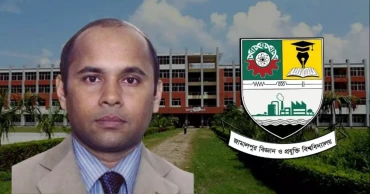
Prof Amir Hossain Bhuiyan relieved of duties as VC of JSTU
Professor Dr Mohammad Amir Hossain Bhuiyan has been relieved of his duties as Vice-Chancellor (VC) of Jamalpur Science and Technology University (JSTU).
The Ministry of Education issued a notification in this regard on Saturday.
The notification said the decision was approved by the President and Chancellor of the universities.
In line with a condition stipulated in a previous notification issued on May 14, 2026, Prof Bhuiyan has been released from the post of Vice-Chancellor of Jamalpur Science and Technology University, it said.
The notification also granted him permission to rejoin his substantive position as a professor in the Department of Environmental Sciences at Jahangirnagar University.
1 month ago
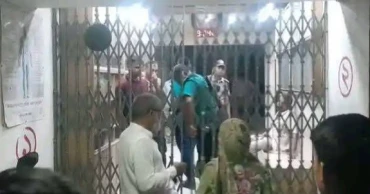
4 police personnel including OC withdrawn over assault on BNP affiliate's leader at Rangpur police station
A leader of the Jatiyatabadi Swechchhasebak Dal was allegedly beaten and injured inside a police station in Rangpur city by several police personnel, including the officer-in-charge (OC), prompting authorities to withdraw four officers and form an investigation committee.
The incident took place around 10:30 pm on Wednesday at Kotwali Police Station.
The victim, Rakibul Islam Rakib, is the member secretary of the Rangpur Sadar Upazila unit of the Bangladesh Jatiyatabadi Swechchhasebak Dal.
According to the victim and eyewitnesses, a young couple who had previously been reported missing through a General Diary (GD) filed by their family members was found and brought to Kotwali Police Station on Wednesday evening. Several Swechchhasebak Dal leaders later went to the station at the request of the couple’s families to help settle the matter.
Rakib claimed that upon arriving at the station, he saw a police officer allegedly assaulting the couple. When he protested and attempted to inform a party leader over the phone, the OC, an SI and several other police personnel allegedly attacked and beat him.
Following the incident, BNP and its associate body activists gathered in front of the police station. As tensions mounted, the station’s collapsible gate was closed. Rakib later spoke to journalists from inside the gate, visibly injured with blood stains on his body and swelling around one eye.
Rakib alleged that despite repeatedly identifying himself as a Swechchhasebak Dal leader and a BNP activist who had suffered political persecution over the past 17 years, he was assaulted and left bleeding. He also claimed that two of his mobile phones were seized during the incident.
Rangpur Metropolitan BNP Convener Shamsuzzaman Samu rushed to the police station after learning of the incident and arranged for Rakib’s treatment at a hospital. The recovered couple was released from the station around 11:30 pm.
Condemning the incident, Rangpur district Swechchhasebak Dal Member Secretary Zakaria Islam Jim alleged that the mindset of some police personnel had not changed despite political changes in the country. He warned of a strong protest movement if action was not taken against those responsible within 24 hours.
Later, Rangpur Metropolitan Police ordered three officers directly involved in the incident to be attached to the police lines. They are female constable Lima Soren, duty officer Meherunnesa and Sub-Inspector Masud Rana. The information was confirmed by the Metropolitan Police media cell late Wednesday night.
Denying the allegations, Kotwali Police Station OC Azad Rahman said no one had been assaulted. According to him, police intervened only to stop an altercation between members of the two families of the recovered couple.
Rangpur Metropolitan Police Commissioner Mohammad Abdul Mabud said a three-member probe committee had been formed to investigate the allegations. He confirmed that the OC and three other police personnel had been withdrawn pending the outcome of the investigation.
1 month ago
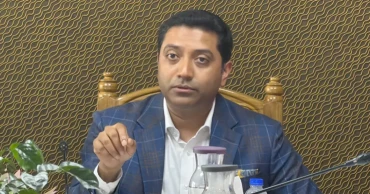
Irregularities in primary school feeding programme won’t be tolerated: Bobby Hajjaj
State Minister for Primary and Mass Education Bobby Hajjaj on Sunday said the government is business-friendly but will not tolerate irregularities in the implementation of the primary school feeding programme.
He said there is no scope to stockpile food supplied for students under the government primary school feeding programme, stressing that the food allocated for each day must be delivered to students on the same day.
The state minister made the remarks at a views-exchange meeting on the implementation of the government primary school feeding programme held at the Primary Training Institute (PTI) in Mirpur, Dhaka.
“If quality and nutritious food cannot be ensured for students under the school feeding programme, the government will not continue business relations with the supplier institutions concerned,” Bobby said.
“We want the food to properly reach the children. If those responsible fail to act responsibly, neither their jobs nor businesses will remain secure in future,” he added.
He also warned that strict action would be taken against any supplier found involved in irregularities in food quality, supply or distribution.
“The basic condition of business is to meet demand properly. And the main objective of this project is to deliver nutritious food to children,” he said.
The state minister said the school feeding programme is currently operating in 151 upazilas and the project, worth nearly Tk 5,500 crore, is equivalent to around one percent of the national budget.
“If food cannot be delivered properly after taking responsibility for a Tk 5,500 crore project, it will amount to injustice to people,” he said.
He said all suppliers must submit a complete map of their supply chain within the next seven days, clearly mentioning from which factories products are sourced and where they are being distributed.
The state minister also directed supplier institutions to appoint qualified food technicians to ensure food quality.
Primary and Mass Education Secretary Md Sakhawat Hossain, Director General of the Directorate of Primary Education Shahina Ferdousi, Project Director of the Mid-Day Meal programme and other officials were present at the programme.
2 months ago
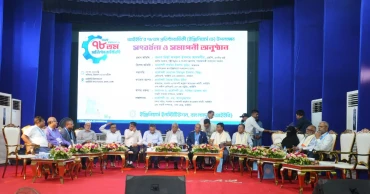
IEB honours engineer-MPs at Engineers Day closing ceremony
The Institution of Engineers, Bangladesh (IEB) on Saturday honoured engineer-members of parliament elected to the 13th Jatiya Sangsad at a reception marking the closing ceremony of its 78th founding anniversary, celebrated as Engineers Day.
The event, held at the IEB auditorium at its headquarters in Ramna, Dhaka, also recognized Dr Engineer Mohammad Abdul Baki, recipient of the Independence Award 2026 for his contributions to research and training.
Engineer-MPs felicitated at the event included Engineer Md Ashraf Uddin (Bakul), MP for Narsingdi-5; Engineer Moinul Islam Khan, MP for Manikganj-2; and reserved-seat MPs Engineer Sanzida Islam (Tuli), Engineer Mahbuba Hakim Camelia and Engineer Mardia Momtaz. The guests were presented with honorary crests and ceremonial shawls in recognition of their contributions and public service.
Speaking as chief guest, Local Government, Rural Development and Cooperatives Minister Mirza Fakhrul Islam Alamgir, MP, described the IEB as one of Bangladesh’s most prestigious institutions, saying it has played an important role not only in the professional development of engineers but also in the country’s overall progress. “The IEB has consistently contributed to the nation’s development journey, and we expect this role to continue in the future,” he said.
Highlighting the role of engineers in national transformation, the minister said development should not be confined to infrastructure alone but must also include integrity, accountability and visionary planning.
He said engineers, as an important segment of the country’s educated population, have historically played active roles in democratic movements and national causes.
Referring to recent political developments, he said engineers would have a critical role in translating aspirations for democratic rights and sustainable development into reality. He also emphasized the need for professionalism, merit and ethical practices to address alleged irregularities and inefficiencies in development projects in previous years.
In his welcome remarks, Prof Dr Engineer Md Sabbir Mostafa Khan, honorary general secretary of IEB, said the institution had organized month-long seminars and programs to mark its 78th founding anniversary.
He said discussions held throughout the celebration focused on national development, engineering education, technological advancement and other issues of public importance.
Presiding over the programme, Engineer Mohammad Riazul Islam (Riju), president of IEB and chairman of RAJUK, said the IEB has continued to contribute to state-building and national development through professional capacity building and by uniting engineers beyond political affiliations to work for technological progress and the country’s broader interests.
Among others, Engineer Khan Manjur Morshed, vice-president (Academic & International Affairs); Engineer Shaikh Al Amin, vice-president (Human Resources Development); Engineer Niaz Uddin Bhuiyan, vice-president (Services & Welfare); Engineer A T M Tanbir-ul Hasan (Tamal), vice-president (Administration & Finance); Engineer Muhammad Ahsanul Rasel, honorary assistant general secretary (Admin & Finance); Engineer Sabbir Ahmed Osmani, honorary assistant general secretary (Service & Welfare); and Engineer Md Noor Amin, honorary assistant general secretary (Human Resources Development), were present at the programme.
The event was moderated by Engineer KM Asaduzzaman, member secretaryof the organizing committee and honorary secretary of IEB Dhaka Centre. A vote of thanks was delivered by Engineer Niaz Uddin Bhuiyan, convener of the organizing committee and vice-president (Services & Welfare) of IEB.
2 months ago

DU Prof Abdullah-Al-Mamun made UGC member
Dr Abdullah-Al-Mamun, professor and former chairman of the Department of Japanese Studies at Dhaka University, has been appointed a full-time member of the University Grants Commission (UGC).
The Secondary and Higher Education Division under the Ministry of Education issued a notification in this regard on Saturday.
According to the notification, Dr Mamun has been appointed as a UGC member for the next four years under the University Grants Commission Act, 1973. The appointment will take effect from the date of joining.
He has already submitted his joining letter to the UGC chairman, the notice said.
Dr Mamun has also made notable contributions to education and research at the international level.
In 2024, he received the Fulbright Research Professorship at Adelphi University in the United States. In 2023, he served as a Japan Foundation Fellow at the International University of Japan.
He earned his PhD in International Economic Development from the University of Huddersfield, UK, in 2020. In 2018, he obtained a Postgraduate Certificate in Research Methods from the same university.
He also received a Certificate in Law from the University of Northumbria, UK, in 2009 and holds an MBA in Marketing.
Earlier, he completed a postgraduate diploma from the Department of Japanese Studies at Dhaka University. He also obtained his Bachelor’s and Master’s degrees from the Department of Sociology at the university.
His research interests include Japanese studies, development planning, international development cooperation, development project management, aid effectiveness, development sociology and political sociology.
2 months ago