local-business
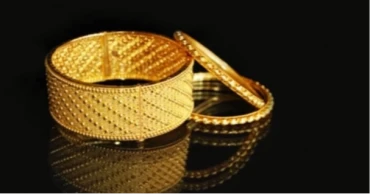
Gold price rises again after three consecutive cuts
Bangladesh Jewellers Association (Bajus) has raised the price of gold in the domestic market after three consecutive rounds of cuts, increasing the rate of 22-carat gold by Tk 5,482 per bhori.
With the latest adjustment, the price of 22-carat gold, including VAT, now stands at Tk 2,37,362 per bhori (11.664 grams), Bajus said in a notice issued Thursday morning.
The new price came into effect from 10am the same day.
The association said the hike was necessitated by a rise in the price of pure gold (tejabi) in the local market.
Along with 22-carat gold, prices of other categories have also been revised. The new price of 21-carat gold has been set at Tk 2,26,690 per bhori, 18-carat gold at Tk 1,94,614 per bhori, and traditional (sanatan) gold at Tk 1,58,980 per bhori, all inclusive of VAT.
Bajus said the revised rates will remain effective at all jewellery shops until further notice, though making charges will continue to apply depending on ornament design. Since VAT is already included in the sale price of gold and silver ornaments, it cannot be charged separately from customers.
The association's existing rules on exchange and repurchase of ornaments, excluding VAT, making charges and stone prices, will remain unchanged.
The previous price adjustment was made on September 2, when Bajus cut the price of 22-carat gold by Tk 4,374 per bhori, bringing it down to Tk 2,31,880. At the time, 21-carat gold was priced at Tk 2,21,441 per bhori, 18-carat at Tk 1,90,123, and traditional gold at Tk 1,55,306 per bhori.
So far in 2026, gold prices have been adjusted 111 times in the domestic market, increased 56 times, decreased 54 times, and revised once due to a VAT adjustment.
Along with gold, the price of silver has also been increased. The price of 22-carat silver, including VAT, has been raised by Tk 116 per bhori to Tk 5,132. The new price of 21-carat silver stands at Tk 4,957 per bhori, 18-carat at Tk 4,257, and traditional silver at Tk 3,208 per bhori.
Silver prices have been adjusted 68 times so far in 2026, with 35 rounds of increases and 33 rounds of decreases.
7 hours ago
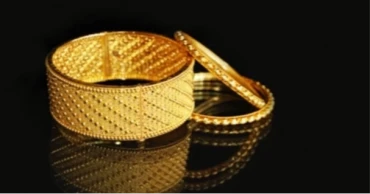
Gold price sees fresh cut of Tk 4,374 per bhori
Bangladesh Jewellers Association (Bajus) has once again revised down the price of gold in the local market, cutting the rate by Tk 4,374 per bhori.
Following the adjustment, the price of 22-carat gold including VAT now stands at Tk 2,31,880 per bhori, effective from 10am on Wednesday, according to a Bajus notice issued in the morning.
The trade body said the fresh pricing was set in view of a fall in the price of pure gold in the local market.
Under the new rates, 21-carat gold will cost Tk 2,21,441 per bhori, 18-carat gold Tk 1,90,123 per bhori, and traditional (Sanatan) gold Tk 1,55,306 per bhori, all inclusive of VAT.
Bajus said the new prices will remain effective at all jewellery shops until further notice, though making charges will apply depending on ornament design.
Since VAT is already included in the sale price of gold and silver ornaments, jewellers cannot charge it separately from customers.
Bajus's existing rules on ornament exchange and repurchase, excluding specified VAT, making charges and stone value will remain unchanged.
Bajus last adjusted gold prices on the morning of August 31, cutting the rate by the same Tk 4,374 per bhori to fix 22-carat gold, including VAT, at Tk 2,36,254 per bhori.
At the time, 21-carat gold was priced at Tk 2,25,640, 18-carat at Tk 1,93,739, and traditional gold at Tk 1,58,280 per bhori, effective from 10am that day.
With this latest change, gold prices have been adjusted 110 times in the local market so far this year, increased 55 times, decreased 54 times, and revised once for VAT.
Alongside gold, the price of silver has also been reduced. The price of 22-carat silver, including VAT, has been cut by Tk 116 per bhori to Tk 5,016. The price of 21-carat silver has been set at Tk 4,782 per bhori, 18-carat at Tk 4,082 per bhori, and traditional silver at Tk 3,091 per bhori.
Silver prices have been adjusted 67 times in the local market so far in 2026, with 34 increases and 33 decreases.
1 day ago
BSEC clears draft rules for direct listing of shares without IPO
The Bangladesh Securities and Exchange Commission (BSEC) has approved a draft regulation allowing qualifying companies to get listed on stock exchanges directly, without going through an Initial Public Offering (IPO), by offloading a portion of existing shareholders' holdings.
The decision was taken at the 1,027th commission meeting held on Tuesday at the BSEC office, chaired by its Chairman Masud Khan.
Under the draft “Bangladesh Securities and Exchange Commission (Direct Listing of Securities by Stock Exchange) Rules, 2026”, companies will be able to list through direct listing by offloading at least 10 to 20 percent of shares held by existing shareholders, instead of raising fresh capital through an IPO.
Eligible companies include those wholly or majority owned by the government; companies where the government holds at least 10 percent of paid-up capital directly or indirectly; companies majority owned by foreign shareholders; BTRC-approved telecom and ICT service or infrastructure companies with a minimum paid-up capital of Tk 300 crore; scheduled banks, financial institutions and insurance companies with at least three years of commercial operation; and companies with an annual turnover or total assets of at least Tk 500 crore.
Companies will also need to fulfil additional conditions set by the respective stock exchange, depository and central counterparty as prescribed by the commission.
The draft rules will be published in newspapers and on the BSEC website shortly for public opinion, the commission said in a press release.
2 days ago
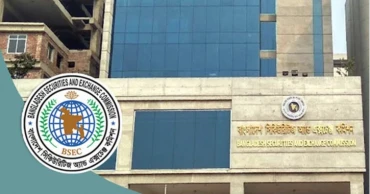
BSEC eases share transfer rules for Z-category firms, approves DSE's derivative roadmap
The Bangladesh Securities and Exchange Commission (BSEC) has relaxed prior-approval requirements for certain share transfers by sponsors and directors of Z-category companies, and approved the Dhaka Stock Exchange's (DSE) roadmap for launching financial derivatives products.
In the 1,027th commission meeting held on Tuesday with BSEC Chairman Masud Khan in the chair, it decided that prior commission approval will no longer be required for confiscation of a Z-category sponsor or director's shares over loan default, or for transmission of shares following a shareholder's death.
The stock exchanges concerned will handle such cases as per their Listing Regulations.
On dividend payments to foreign shareholders of listed companies, the commission decided that firms must obtain Double Taxation Avoidance (DTA) certificates from the National Board of Revenue (NBR) within 30 days of declaring or approving dividends for foreign shareholders, and disburse the dividend within the same financial year.
Companies will also need to submit a Preliminary Dividend Compliance Report after completing local dividend distribution, and a full Dividend Compliance Report within 30 days of remitting dividends to foreign shareholders, to be filed with both the commission and the relevant exchange.
Separately, the commission approved DSE's implementation plan for launching financial derivative products, covering regulatory initiatives, system development, infrastructure build-out, and clearing-settlement and risk management arrangements.
BSEC said it will regularly monitor DSE's progress on the plan. Index futures will be introduced first, with formal derivatives trading at DSE expected to begin in January 2028.
2 days ago

Businesses with turnover up to Tk 2cr exempted from turnover tax
Businesses and companies with annual turnover of up to Tk 2 crore will no longer have to pay turnover tax, offering relief to small businesses.
The National Board of Revenue (NBR) issued a notification on Tuesday, introducing the exemption and revising the turnover tax structure for businesses and companies, officials said.
Under the revised provision, businesses and companies with annual turnover exceeding Tk 2 crore but up to Tk 4 crore will pay turnover tax at 0.5 percent of their annual turnover.
Those with turnover above Tk 4 crore will continue to pay a minimum turnover tax at the rate of 1 percent.
The 1 percent turnover tax had previously been applicable to most businesses and companies, with some exceptions. The latest decision has therefore provided a partial relief, particularly for smaller businesses.
An NBR official said the exemption was introduced to ease the tax burden on small businesses and provide them with greater financial relief.
The move comes after the Federation of Bangladesh Chambers of Commerce and Industry (FBCCI), the country’s apex trade body, recently urged the Ministry of Finance to gradually phase out the 1 percent minimum turnover tax imposed on businesses and companies. The Dhaka Chamber of Commerce and Industry (DCCI) also made a similar demand.
Business leaders have long argued that the minimum turnover tax increases the effective tax burden on businesses with low profit margins. Since the tax is imposed irrespective of profit or loss, businesses operating at a loss may also have to pay the tax.
However, industrial establishments can already pay turnover tax at a reduced rate of 0.2 percent instead of 1 percent for the first three years after commencing commercial production.
Different rates apply to certain sectors.
Manufacturers of cigarettes, bidis and tobacco products are subject to turnover tax at 3 percent, while manufacturers of carbonated beverages and sweets pay 2.5 percent. Mobile phone operators are subject to a 1.5 percent turnover tax.
The latest change applies to the general category of businesses and companies that were previously subject to the 1 percent rate.
2 days ago

FBCCI urges early preparations to stabilise market ahead of Ramadan
Federation of Bangladesh Chambers of Commerce and Industry (FBCCI) has called for early preparations to keep the market stable during Ramadan and Eid, stressing that dialogue between businesses and the government must continue from now.
FBCCI Administrator Fazlul Haque made the remarks on Tuesday at a stakeholder consultation organised by the chamber body at its Motijheel office.
"To keep the market for essential commodities stable, we will hold another consultation with businesses by next October, in discussion with the concerned ministries and departments, ahead of Ramadan," Fazlul said.
The meeting brought together businesspeople from various sectors to discuss stock, supply, import and price situations of essential commodities.
Participants placed a range of recommendations before the FBCCI administrator on controlling market conditions and commodity prices.
Fazlul said the recommendations would be reviewed in discussion with relevant ministries and departments before the next steps are taken.
He said the main objective of the FBCCI initiative was to bring stakeholders together to identify problems in the market and find solutions, adding that the participation of both small and large businesses in the meeting was a positive sign.
Noting that demand for daily essentials typically rises ahead of Ramadan and Eid, Fazlul said the chamber body would place the necessary recommendations before the government to ensure ordinary people are not forced to buy goods at excessive prices.
Fazlul further said the FBCCI does not want to carry out mere symbolic activities to control the market, but instead wants to play an effective role by implementing the recommendations given by businesses.
He also flagged concerns that prices of goods might rise following the announcement of a new pay scale for government employees.
He said the government should send out a positive message to allay public fears of price hikes triggered by the pay scale announcement, and urged that the wage increase not be used as an opportunity to destabilise the market.
2 days ago

Gold prices drop by Tk 11,489 in two rounds this week
Bangladesh Jewellers Association (Bajus) has once again cut the price of gold ornaments in the domestic market, reducing the price of the best quality 22-carat gold by Tk 4,374 per bhori.
According to the new pricing, effective from 10am on Monday, the price of 22-carat gold ornaments including VAT now stands at Tk 2,36,254 per bhori.
Bajus said the decision to lower the price came in response to a fall in the price of tejabi (pure) gold in the local market.
Alongside 22-carat gold, the price of 21-carat gold ornaments has also been reduced by Tk 4,141 to Tk 2,25,640 per bhori.
Similarly, the price of 18-carat gold ornaments has been cut by Tk 3,616 to Tk 1,93,739 per bhori, while traditional gold ornaments now cost Tk 1,58,280 per bhori, down Tk 2,916.
This marks the second price cut in just two days.
On August 29, Bajus slashed the price of 22-carat gold by Tk 7,115 per bhori. With Monday's cut, the price of the finest quality gold has come down by a total of Tk 11,489 in just two rounds.
Silver prices also fall
Bajus has also revised down the price of silver ornaments.
The VAT-inclusive price of 22-carat silver ornaments has been reduced by Tk 175 to Tk 5,132 per bhori, while 21-carat silver now costs Tk 4,957 per bhori, down Tk 117.
The price of 18-carat silver ornaments has been cut by Tk 117 to Tk 4,257 per bhori, and traditional silver ornaments now cost Tk 3,208 per bhori, down Tk 116.
All prices set by Bajus are inclusive of VAT. One bhori of gold is equivalent to 11.664 grams.
3 days ago
BB cuts interest rate to 7% for Tk 3,000cr North Bengal agro-refinance fund
Bangladesh Bank (BB) on Sunday reduced the interest rate on its Tk 3,000-crore refinancing fund for the formation of a specialized agro-based economic hub in northern Bangladesh.
According to a circular issued by the Agricultural Credit Department-1 of Bangladesh Bank, participating banks will now receive refinancing facilities from the central bank at an interest rate of 3.0 percent, down from previous levels, while the maximum interest or profit rate at the customer level has been capped at 7 percent.
For Shariah-based financing, the profit rate at the customer level cannot exceed 7 percent under any circumstances, and interest or profit must be calculated on a reducing balance method.
The Tk 3,000-crore refinancing scheme was originally formulated on July 6 to boost agricultural production, preservation, marketing, processing, and export activities across the Rajshahi and Rangpur divisions.
Under the revised guidelines, the maximum loan or investment tenure for agricultural production will be up to 18 months, including a 3-month grace period based on the specific project.
For sectors including agricultural product preservation, transportation, marketing, infrastructure development, and agro-processing, the maximum loan tenure will be up to 36 months (3 years), including a grace period of 3 to 6 months. Participating banks must repay the principal amount along with the 3 percent interest to Bangladesh Bank within 18 to 36 months from the date of receiving the refinance funds.
Penalties for Irregularities
To prevent the misuse of funds, the central bank warned that if any bank misuses the fund or charges more than the stipulated 7 percent interest or profit rate, an additional penal interest rate of 2 percent will be realized as a one-time penalty on the misutilized amount.
Mandatory Publicity
Bangladesh Bank has made publicity mandatory for participating banks to ensure the benefits reach genuine entrepreneurs and farmers. Banks must display banners highlighting the 7 percent interest/profit rate scheme inside and outside their branch premises and organize special campaigns to promote the concessional credit facility.
The central bank emphasized that despite being a major agricultural hub, the northern region struggles to realize its full economic potential due to limitations in preservation, marketing, processing, and supply chain infrastructure. Lowering the interest rate to 7 percent is expected to reduce borrowing costs, boost investments in agro-processing, decrease crop wastage, and generate local employment across North Bengal.
All other terms and conditions of the original policy issued on July 6 will remain unchanged, and the revised directive takes immediate effect.
3 days ago

Remittance inflow reaches $2.67 billion in 29 days of August
Expatriate Bangladeshis sent US $2.669 billion in remittances during the first 29 days of August, according to the latest data released by Bangladesh Bank.
Between August 1 and August 29 of the current fiscal year FY 2026-27, total remittance inflows registered a 22.3 percent monthly growth compared to $2.182 billion received during the corresponding period of the previous fiscal year FY 2025-26.
During the three-day period from August 27 to 29, the country received $214 million in foreign remittances.
Cumulative remittance inflows from July 1 to August 29 for FY 2026-27 reached $5.527 billion, reflecting an 18.6 percent yearly growth over the $4.660 billion recorded during the same timeframe in FY 2025-26.
Central bank figures indicate a sustained upward momentum in official remittance channels, driven by consistent inflows through formal banking networks.
3 days ago
Gold price falls by Tk 7,115 per bhori after four hikes
Bangladesh Jewellers Association (BAJUS) has cut gold prices by Tk 7,115 per bhori after four consecutive increases, setting the price of 22-carat gold at Tk 2,40,628 per bhori including VAT.
The new prices came into effect at 10am on Saturday, BAJUS said in a notice.
The association said the price of locally sourced Tejabi gold (pure gold) had declined, prompting it to revise gold prices after reviewing the overall market situation.
Under the new rates, one bhori (11.664 grammes) of 22-carat gold will cost Tk 2,40,628, while 21-carat gold will be priced at Tk 2,29,781 per bhori.
The price of 18-carat gold has been fixed at Tk 1,97,355 per bhori, while gold under the traditional system will cost Tk 1,61,196 per bhori.
The revised prices will remain effective at all jewellery shops until further notice, BAJUS said.
However, labour charges will apply depending on the design of jewellery. As VAT is already included in the selling price of gold and silver jewellery, jewellers cannot collect VAT separately from customers.
BAJUS also said its existing rules would remain applicable to jewellery exchange and purchase transactions, excluding specified VAT, labour charges and stone prices.
The latest adjustment came four days after BAJUS raised gold prices by Tk 1,633 per bhori on Aug 25, setting the price of 22-carat gold at Tk 2,47,743 per bhori, including VAT.
So far this year, gold prices have been adjusted 108 times in the domestic market. Prices have been raised 55 times, cut 52 times and adjusted once due to VAT.
Silver prices also cut
Alongside gold, BAJUS has also reduced silver prices by Tk 175 per bhori.
The price of 22-carat silver has been set at Tk 5,307 per bhori, including VAT. The prices of 21-carat and 18-carat silver have been fixed at Tk 5,074 and Tk 4,374 per bhori, respectively.
Silver under the traditional system will cost Tk 3,324 per bhori.
Silver prices have been adjusted 65 times so far this year, with 34 increases and 31 decreases.
5 days ago