local-business
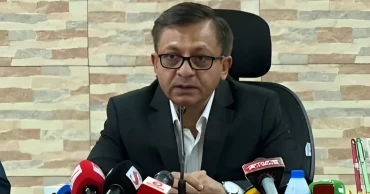
Govt to strengthen TCB with AI monitoring to ensure market stability: Commerce Minister
The government is undertaking a series of measures to ensure transparency, accountability and effective oversight in the country's essential commodities market, Commerce Minister Khandakar Abdul Muktadir said Monday.
The government has initiated strategic reserve building, AI-powered supply chain monitoring and enhanced TCB capacity to prevent any form of syndication or market manipulation in the daily commodities sector, said the minister at the inauguration of the Trading Corporation of Bangladesh's (TCB) truck sale programme ahead of Eid-ul-Azha at Agargaon in the captial.
No scope to hike essentials’ prices citing fuel costs: Commerce Minister
“No syndicate or market manipulation will be allowed to take hold in the essential commodities market. Strategic reserves, artificial intelligence-based supply chain surveillance and a stronger TCB are our instruments to ensure that,” the minister said.
He said the government's primary goal is to ensure subsidised essential food items reach low-income, lower-middle-income and marginalised communities across the country.
TCB regularly sells goods at subsidised rates nationwide, with special truck sale drives during major festivals.
Muktadir said approximately 2.28 crore beneficiaries received subsidised food during the last Ramadan, a figure now being expanded to about 2.88 crore.
Similarly, food supply through TCB during last year's Eid-ul-Azha stood at around 10,900 tonnes, which has been raised to approximately 14,000 tonnes this year, an increase of nearly 40 percent.
“Whenever there is an unusual market situation, a festival or abnormal price pressure, the government will activate TCB truck sales as needed. We are always prepared to ensure food security for people,” he said.
On beneficiary verification, the minister disclosed that around 59 lakh of the one crore beneficiaries on the previous list were found to be questionable.
Following thorough verification, 80 lakh genuine beneficiaries have been selected through a transparent process, with a further 20 lakh families to be included in phases.
He added that new policies are being formulated to ensure transparency in TCB dealer appointments. “TCB is being transformed into a fully unquestionable, accountable and technology-driven institution.”
He also expressed the government's intent to build a broader, partnership-based market ecosystem that allows more entrepreneurs to participate in the essential commodities sector and fosters healthy competition. “This government is firmly committed to establishing effective market oversight and control in the interest of the people. Our goal is a market that is transparent, stable and free from manipulation.”
Commerce Secretary (Current Charge) Md Abdur Rahim Khan spoke as a special guest, while TCB Chairman Brigadier General Mohammad Faisal Azad delivered the welcome address.
The minister formally opened the truck sale drive by selling TCB products to buyers at fair prices.
2 months ago

Bangladesh overtakes China in apparel supplies to US amid tariff barriers
In a significant shift in global trade dynamics, Bangladesh has overtaken China to become the second-largest apparel exporter to the United States in the first quarter of 2026.
The shift comes as steep "counter-tariffs" imposed by the Trump administration have gutted China’s market share, even as global demand remains sluggish.
According to data from the Office of Textiles and Apparel (OTEXA), US apparel imports from the world fell by 11.63 percent to $17.73 billion during the January-March 2026 period. While nearly all major manufacturing hubs recorded negative growth, the scale of China’s collapse has allowed Bangladesh to climb the rankings despite its own moderate decline in earnings.
The Tariff Impact: China vs. Bangladesh
The reshuffling of the leaderboard is largely attributed to a series of aggressive trade policies. While Bangladesh’s exports to the US fell by 8.38 percent to $2.04 billion in the first quarter, China’s exports plummeted by a staggering 52.91 percent, falling to just $1.69 billion.
Industry analysts note that this is a direct consequence of the reciprocal tariffs initiated in April 2025. While China faces massive hurdles, Bangladesh secured a strategic trade agreement on February 9, 2026, which reduced its specific counter-tariff rate to 19 percent.
However, the legal landscape remains volatile. Following a February Supreme Court ruling that declared certain emergency tariffs illegal, the US administration applied a new 10 percent duty under the 1974 Trade Act. Just this past week, the US Court of International Trade issued a stay on these duties for specific importers, adding a layer of uncertainty for global buyers.
Vietnam Maintains Dominance
Despite the shifts between Bangladesh and China, Vietnam continues to hold the top spot. It was the only country among the top five suppliers to post positive growth, with its exports rising 2.77 percent to $3.98 billion. Vietnam now commands 22 percent of the US apparel market share, compared to Bangladesh’s 11.5 percent.
Comparative Regional Performance (Jan-Mar 2026):
2 months ago

Restaurant owners demand tax cuts, gas connections ahead of budget
Restaurant owners in Bangladesh have urged the government to reduce Value-Added Tax (VAT), resume new pipeline gas connections and end ‘bureaucratic harassment’ by regulatory agencies to protect the industry from mounting economic instability.
Bangladesh Restaurant Owners Association (BROA) made the demand at a press conference held at Dhaka Reporters Unity (DRU) on Sunday, ahead of the national budget for the fiscal year 2026-27.
The association also placed an 11-point demand including maintaining VAT and tax rates at ‘tolerable levels’ and introducing a one-stop service for licenses and permits.
While the VAT on the sector was previously reduced from 15 percent to 5 percent following discussions with the National Board of Revenue (NBR), leaders claimed they are still struggling under a 10 percent supplementary duty, source taxes, and various other levies.
They called for a flat 5 percent VAT rate for canteens and catering services and the total withdrawal of source taxes.
"High tax rates discourage compliance and lead to evasion," said BROA Secretary General Imran Hasan. "Reducing rates while expanding the tax net would ultimately increase government revenue."
Hasan noted that the industry has yet to fully recover from the Covid-19 pandemic, with global instability and rising fuel costs further inflating operational expenses.
"The uncontrolled rise in commodity prices has pushed essential goods beyond consumers' purchasing power. Its direct and severe impact is now being felt across the restaurant sector," Hasan added.
The association also highlighted the energy crisis, noting that a shortage of Liquefied Petroleum Gas (LPG) has disrupted operations.
They urged the government to increase LPG imports and restart new pipeline gas connections to stabilise food prices.
The association also hit out at regulatory bodies including Rajuk, the Fire Service, and the Department of Environment accusing them of creating ‘bureaucratic complications’ and unnecessary pressure.
According to BROA, opening a restaurant currently requires 10 to 12 different approvals, a process that can take up to six months.
Hasan argued that these hurdles are forcing many into ‘systematic’ non-compliance.
Other key demands include reopening trade license services under the two Dhaka city corporations, permitting beef imports to lower costs, preventing ‘corporate aggression’ within the sector, and launching government-supported training programs for unskilled workers.
The association also revealed that approximately 80 percent of restaurants in the country remain unregistered, often operating without proper hygiene standards or tax contributions.
2 months ago

Credit cards emerge as a financial lifeline for middle-class amid policy shift
Once regarded as an exclusive financial tool for the elite and high-net-worth travelers, credit cards have rapidly transitioned into an essential daily companion for the middle-class and younger generation in Bangladesh.
From grocery shopping and hospital bills to online purchases and utility payments, the credit card is increasingly being viewed as a "digital alternative to cash" within the country's burgeoning digital economy.
In response to this growing demand, Bangladesh Bank has significantly overhauled credit card regulations. Under the new policy, the borrowing limit for credit cards has been doubled:
Unsecured Loans: The limit for loans without collateral has been increased to Tk 20 lakh from the previous Tk 10 lakh.
Secured Loans: Against collateral, the limit has been raised to Tk 40 lakh from Tk 20 lakh.
Financial analysts suggest this move will provide a crucial cushion for high-cost medical emergencies, foreign education expenses, and business travel while further accelerating the nation’s "cashless" ambitions.
One of the primary drivers of credit card popularity among salaried professionals and young entrepreneurs is the 45-day grace period. If the total bill is settled within this timeframe, the cardholder essentially enjoys a short-term, interest-free loan.
Industry data underscores this shift:
Active Cards: There are currently approximately 54 lakh credit cards in use in Bangladesh.
Transaction Volume: Monthly credit card transactions are averaging over Tk 3,000 crore, with recent figures exceeding Tk 3,500 crore.
Spending Patterns: Domestically, the highest spending occurs at department stores, supershops, and retail outlets, followed by utility bills and healthcare.
The use of dual-currency cards is also surging internationally. Interestingly, Bangladeshi debit cards are seeing the highest transaction volumes in the United Kingdom, largely driven by the high number of Bangladeshi students residing there.
To combat the rising risk of digital fraud, banks are introducing cutting-edge security:
Numberless Cards: Institutions like Prime Bank and Mastercard have launched "numberless" cards where CVV and expiry details are hidden from the physical card and stored only in mobile apps.
Regulatory Safeguards: Bangladesh Bank now mandates 24-hour helplines for reporting lost cards and has strictly prohibited the harassment of customers during loan recovery.
Diversification: Islamic and Student Cards
The market is also diversifying to cater to specific demographics. Shariah-based Islamic credit cards, which utilize a service charge (Ujrah) instead of conventional interest, are gaining traction among the youth. Furthermore, specialized products like Student Credit Cards (often backed by parental guarantees) and Freelancer Cards for international software and subscription payments are becoming widely available.
Despite the benefits, financial experts warn that unplanned usage can lead to a debt trap. Relying on "minimum payments" can cause high interest rates to compound rapidly.
Industry experts advise cardholders to strictly adhere to payment schedules and maintain digital hygiene—such as never sharing OTPs or PINs—to ensure the credit card remains a tool for convenience rather than a financial burden.
2 months ago
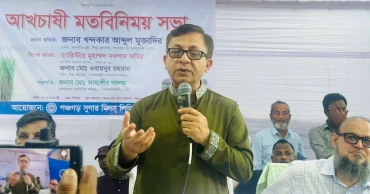
Govt committed to reopening closed sugar mills: Industries Minister
Industries Minister Khandakar Abdul Muktadir on Saturday said the government is firmly committed to reopening closed state-owned sugar mills while ensuring the interests of sugarcane farmers, workers and the long-term profitability of the mills.
“The mills are assets of the people of Bangladesh and it is the government’s responsibility to ensure their honest and effective use. We want the closed factories to resume production, create employment opportunities and contribute to revitalising local economies,” he said.
Commerce Minister stresses cut in red tape, faster business approvals to attract investment
The minister came up with the remarks while addressing a views-exchange meeting with sugarcane farmers on the premises of Panchagarh Sugar Mills Limited as the chief guest.
A number of sugar mills in the country remain shut while many operational mills are functioning under various limitations, he said.
Modernisation, renovation and the introduction of new technologies are essential for their effective revival as most of the mills are between 50 and 70 years old, he said.
Besides, some mills would require installation of new machinery, while others would need infrastructure renovation or alternative operational plans, he said.
The minister also said functioning industrial establishments generate not only direct employment but also create economic opportunities for many people through related activities.
“When employment increases, money circulation in people’s hands rises, local economies become more active and poverty declines. Keeping that goal in mind, the government is advancing efforts to revive industries,” he added.
Chairman of Bangladesh Sugar and Food Industries Corporation (BSFIC) Md Jahangir Alam, Panchagarh-1 MP Barrister Nawshad Zamir, Industries Secretary Md Obaidur Rahman, BSCIC Chairman Md Saiful Islam, Panchagarh Deputy Commissioner Mosammat Shukria Parvin, District Council Administrator Md Touhidul Islam among others attended the programme.
Sugarcane farmers’ representatives, labour leaders and local dignitaries were also present.
Panchagarh Sugar Mills Limited was established during 1966-69 with a daily crushing capacity of 1,016 metric tonnes and began commercial production in 1969-70.
The mill is currently operated under the Bangladesh Sugar and Food Industries Corporation.
2 months ago
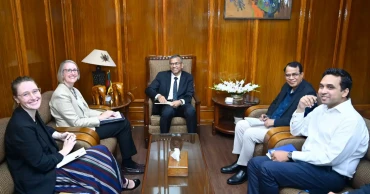
Britain pledges continued support for modernisation of Bangladesh Bank
British High Commissioner to Bangladesh, Sarah Cooke, on Thursday reaffirmed the UK government’s commitment to supporting the transformation of Bangladesh Bank into a modern, technology-driven, and robust central bank.
The commitment was made during a courtesy call with the Governor of Bangladesh Bank, Md. Mostaqur Rahman, at the central bank's headquarters in the capital.
The meeting covered a wide range of bilateral cooperation issues, with a particular focus on the modernization of the financial sector, capacity building for the central bank, and the enhancement of human resources.
A significant portion of the discussion centered on anti-money laundering (AML) efforts and the recovery of laundered assets. Both parties expressed a firm resolve to strengthen coordination with relevant UK authorities to recover assets smuggled abroad. The talks also touched upon critical legislative reforms, including the ‘Bank Resolution Act,’ aimed at ensuring long-term stability and good governance in the banking industry.
In a move toward greater digital integration, the High Commissioner and the Governor discussed:
Digital Bank Statement Verification: Implementing a digital system to verify bank statements provided during visa applications to prevent fraud.
Combating Illegal Migration: Joint efforts to prevent illegal migration and the use of forged documents.
FATF Mutual Evaluation: Preparations for the upcoming Financial Action Task Force (FATF) assessment to ensure Bangladesh's compliance with global financial security standards.
Governor Mostaqur Rahman expressed his gratitude for the UK’s consistent support in Bangladesh’s development journey. He reiterated the central bank’s firm commitment to building a cashless society and a resilient digital payment ecosystem.
"We are focused on ensuring transparency and good governance within the financial sector through modern technology," the Governor noted during the exchange.
The meeting was also attended by Deputy Governor of Bangladesh Bank Dr. Habibur Rahman, Stolen Asset Recovery Consultant Farhanul Ghani Chowdhury, and representatives from the British High Commission, including Emma Wind and Issam Musaddeque.
2 months ago
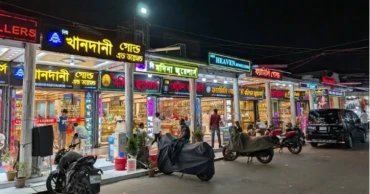
Shops, shopping malls to stay open until 10pm
Shops and shopping malls across the country will be allowed to remain open until 10 pm from Tuesday (May 12) to facilitate Eid-ul-Azha shopping amid the ongoing energy crisis.
The decision was announced by the Bangladesh Shop Owners Association in a press release issued on Thursday evening following discussions with the Ministry of Power, Energy and Mineral Resources.
Under existing government austerity measures, shops are required to close by 7pm.
Govt to hold talks with opposition on energy crisis, open to pragmatic proposals: PM
On May 4, the association formally requested the ministry to extend business hours until 11pm to accommodate the increased shopping rush ahead of Eid.
Confirming the development, Bangladesh Shop Owners Association President Md Helal Uddin said the government approved the extension after consultations with the Prime Minister, although no formal notification would be issued.
“The minister informed that shops can remain open until 10pm. However, he stressed that decorative lighting and unnecessary electricity consumption in shops and shopping malls must be avoided,” Helal Uddin said.
2 months ago
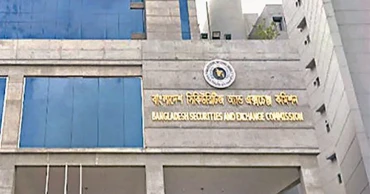
BSEC slaps Tk 22.75cr fine on Vanguard Asset for repeated law violations
The Bangladesh Securities and Exchange Commission (BSEC) has imposed Tk 22.75 crore fine on Vanguard Asset Management Limited for violating securities laws in connection with two separate investment transactions made through the Vanguard AML Rupali Bank Balanced Fund.
The decisions were taken at a meeting of the BSEC held on Tuesday with its Chairman Khondoker Rashed Maqsood in the chair, according to a press release issued on Wednesday.
In the first case, Vanguard Asset Management Limited, in 2013, invested a total of Tk 1.50 crore from the Vanguard AML Rupali Bank Balanced Fund into shares of Bengal Poly & Paper Sack Limited, at Tk 25 per share, including a Tk 15 premium, on the face value of Tk 10, in violation of securities laws.
The commission found this investment unlawful and ordered Vanguard to refund Tk 5.74 crore (principal plus applicable returns) to the fund within 30 days of the order.
As Vanguard failed to deposit the amount within the stipulated deadline, the BSEC additionally resolved to impose a fine of Tk 6.75 crore on the company.
In the second case, in 2017, Vanguard Asset Management invested a total of Tk 6 crore from the same fund into 48 lakh shares of AFC Health Limited at Tk 12.50 per share, including a Tk 2.50 premium, over the face value of Tk 10, again in breach of securities laws.
The commission ordered Vanguard to return Tk 14.85 crore (principal and returns) to the fund within 30 days. Following its failure to comply, Vanguard was further fined Tk 16 crore in this case.
The BSEC also decided that if Vanguard fails to pay the imposed fines within seven days after the expiry of the 30-day deadline, the amounts will be treated as the company's own liability. An additional fine of Tk 10,000 per day will be levied for each day of continued non-payment beyond that period.
It also held the Investment Corporation of Bangladesh (ICB), which serves as trustee of the mutual fund concerned, accountable for failing to exercise adequate oversight and discharge its duties properly, a lapse that contributed to the losses suffered by unit-holders of the fund. Accordingly, the BSEC resolved to impose a fine of Tk 15 lakh on ICB.
Separately, the BSEC noted that the fund's auditor, Malek Siddiqui Wali & Co, Chartered Accountants, failed to clearly flag in its audit report the matter of the fund retaining 99 percent of these illegal investments.
The commission resolved to refer the firm to the Financial Reporting Council for appropriate action.
2 months ago
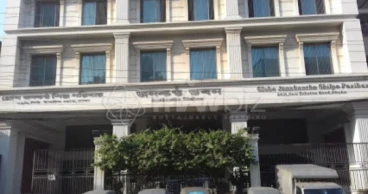
Janata Bank puts Globe Janakantha assets up for auction to recover defaulted loans
State-owned Janata Bank PLC has issued an auction notice for the assets of Globe Janakantha Shilpa Paribar, including the iconic 15-storey ‘Janakantha Bhaban,’ to cover for defaulted loans amounting to Tk 215 crore.
Interested bidders have been directed to submit their applications to the court by 2:00 pm on April 28. Applicants must include a pay order or bank draft equivalent to 10 percent of the reserved price. The reserved price will be disclosed during the auction, and the bidding process will follow court regulations.
The bank noted in the advertisement that neither the bank nor the court would take responsibility for any disputes arising after the sale of the assets.
The loan was disbursed in 2021 through Janata Bank’s Dilkusha Corporate Branch, reportedly following a recommendation from Salman F. Rahman, the then-private industry and investment adviser to former Prime Minister Sheikh Hasina.
Records show that in August 2020, Salman F. Rahman sent a letter to the Janata Bank Chairman recommending Tk 250 crore in working capital for Globe Janakantha. The recommendation cited financial losses allegedly incurred by the company during the BNP-Jamaat alliance government.
Subsequently, in September 2021, the Janata Bank board approved Tk 225 crore in working capital for five concerns under the group. The Bangladesh Bank issued a No Objection Certificate (NOC) for the loan two months later.
Globe Janakantha Shilpa Paribar consists of eight entities, including Globe Metal Complex, Globe Insecticides, Globe Cables, and the daily newspaper 'Janakantha.' However, most of these units are currently inactive. In March, the daily 'Janakantha' suspended both its print and online operations.
Hafizur Rahman, the group’s former Chief Operating Officer (COO), told media outlets that the industrial group is currently burdened with massive debt.
Janata Bank’s Non-Performing Loan (NPL) Crisis
Janata Bank is currently struggling under a heavy burden of defaulted loans from large conglomerates such as Beximco, S. Alam, Thermex Group, and AnnonTex Group. By the end of last year, the bank's total disbursed loans stood at Tk 97,934 crore, of which 74 percent has been identified as bad or defaulted loans.
The Managing Director of Janata Bank, Md. Mujibur Rahman, stated that the bank prioritizes auctions under the Money Loan Court Act to recover defaults. "Response to auctions is not always positive, particularly for large amounts. If recovery through auction fails, we proceed with legal lawsuits as per the law," he said.
Following the fall of the Awami League government on August 5, the bank has initiated several cases against loan defaulters. Last year, Janata Bank managed to recover Tk 900 crore in defaulted loans.
2 months ago
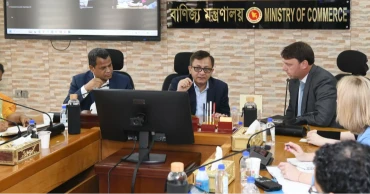
No reason for concern, Bangladesh-US trade deal designed for mutual benefit: Minister
Commerce Minister Khandakar Abdul Muktadir on Tuesday said the Bangladesh-US trade agreement should be utilised for mutual benefit, stressing that there is no reason for concern over the deal.
He made the remarks while talking to reporters after a meeting with US Assistant US Trade Representative for South and Central Asia Brendan Lynch at the conference room of his ministry in the morning.
The minister said international agreements are always built on mutual cooperation. “Any international agreement is shaped by both parties. It is designed to create a win-win situation, taking into account the interests of both sides. Therefore, there is nothing to worry about this agreement,” he said.
He noted that the current government did not initiate the agreement but inherited it as part of state continuity.
“A state-level agreement is not like a personal contract that can be cancelled at will. It is a reality, and we want to utilise it to expand trade and investment in the country,” Muktadir added.
He also referred to a recent investigation initiated by the United States, saying Bangladesh had sought clarification on the matter and responded with its observations after receiving explanations. “We have clearly stated that such an investigation would have been more positive if it had not been initiated in the context of the existing agreement,” he said.
Highlighting Bangladesh’s production and trade reality, the minister said the country does not have overcapacity in any sector and rejected allegations of dumping.
“We import most of our goods. Our exports, particularly in the ready-made garment sector, operate under strict international compliance. There is no scope for labour law violations or child labour,” he said.
On the possibility of cancelling the agreement with the US, Muktadir said the government, as the elected representative of the people, always prioritises national interest.
“If any clause in the agreement goes against Bangladesh’s interests, there is scope for amendment within the agreement itself. It has a self-correcting mechanism,” he said.
The minister added that there is no reason for panic or worry regarding the issue.
During the meeting, both sides discussed strengthening Bangladesh-US trade and investment relations, along with other issues of mutual interest.
Senior officials, including Secretary (Routine Duty) of the Ministry of Commerce Md Abdur Rahim Khan, were present.
2 months ago