local-business

US-Iran war inflicts commodity shock on economy 'trapped in triple constraint': DAIRA
A new policy brief released this week by the Dacca Institute of Research and Analytics (DAIRA) has warned that the US-Iran conflict has delivered a severe commodity shock to Bangladesh's already-fragile economy, calling for urgent fiscal and monetary course correction ahead of the FY2026-27 budget.
The brief titled ‘Macroeconomic Impact of the US-Iran Conflict on Bangladesh: Monetary Assessment and FY2026-27 Budget Recommendations’ lays out a sobering picture: Brent crude surged 45.8 percent to $103.69 per barrel following the March 2026 conflict outbreak, urea fertilizer prices spiked 74.7 percent to $725.63 per metric tonne, and foreign exchange reserves bled $993 million in a single month.
Bangladesh entered the shock from a position of weakness. Quarterly GDP growth had already slipped to a decade-low of 3.03 percent, consumer price inflation stood at 8.71 percent, and Bangladesh Bank's repo rate was held at 10.00 percent, leaving a real interest rate of barely 1.29 percent.
Triple Constraint
The brief describes Bangladesh as trapped in a “triple constraint”, simultaneously defending reserves, containing inflation, and protecting the vulnerable with little fiscal room to manoeuvre.
Bangladesh Bank, the report argues, faces a structural dilemma. If oil prices remain above $100 per barrel, inflation could spiral to between 12 and 18 percent through fuel cost pass-through via the Bangladesh Petroleum Corporation, elevated liquefied natural gas costs raising power tariffs, and a fertilizer-to-food price feedback loop. “Yet raising interest rates further would choke private credit growth already hovering at 0.2–0.3 percent month-on-month, deepening the GDP slowdown.”
FX reserves, which had recovered from $24.8 billion in July 2024 to $35.1 billion by February 2026, are now under renewed pressure. At the March burn rate of $993 million per month, the brief warns reserves could reach $28–30 billion within six to nine months, approaching the IMF's critical three-month import cover threshold of $26 billion.
The report estimates that the conflict shock will impose additional fiscal pressure of BDT 83,000 to 130,000 crore on the FY2026-27 budget, roughly 3.7 percent of the FY2025-26 budget driven by BPC petroleum subsidy top-ups, Bangladesh Power Development Board power sector losses, swollen fertilizer subsidies and expanded food safety net requirements.
This comes as the FY2025-26 budget had already trimmed the subsidy, PPE and liabilities line by 18.4 percent to BDT 82,420 crore, a reduction the brief describes as “critically optimistic given the commodity shock.”
In the near term, Daira recommends holding the repo rate at 10 percent with a pre-announced trigger of 10.50 percent should CPI breach 12 percent, defending a $30 billion FX floor through targeted intervention, fast-tracking IMF Extended Credit Facility tranche drawdowns, and capping the Annual Development Programme at 90 percent while ring-fencing energy, agriculture and social safety net allocations.
The brief further urges that fertilizer and fuel support be delivered exclusively through the Farmer's Card Direct Benefit Transfer registry, restricting subsidised urea to smallholders farming under 2.5 acres.
Over the longer term, the report calls for allocating BDT 8,000–12,000 crore annually to grid-scale solar and wind power purchase agreements, building a 45-day strategic petroleum and LNG reserve funded by a BDT 0.50 per litre surcharge, and restructuring the energy subsidy architecture entirely toward direct transfers.
Three critical risk signals were flagged for policymakers: FX reserves falling below $30 billion, CPI exceeding 12 percent year-on-year, and the exchange rate against the dollar breaching Tk 125, each demanding immediate policy escalation.
“The FY2026-27 budget must prioritise fiscal discipline over development ambition,” the report concludes. “Monetary policy must hold its credibility even at a growth cost, and energy subsidy architecture must transition from universal to targeted before the next external shock arrives.”
3 months ago
BGMEA seeks policy support in budget to face challenges
The Bangladesh Garment Manufacturers and Exporters Association (BGMEA) has submitted a comprehensive set of proposals for the upcoming 2026-27 national budget, warning that the country’s top export-earning sector is facing an "unprecedented challenge" due to global and domestic factors.
A BGMEA delegation, led by its President Mahmud Hasan Khan, submitted the proposals during a meeting with the National Board of Revenue (NBR) held at NBR Building in Agargaon on Sunday.
NBR Chairman Abdur Rahman Khan chaired the event. NBR members Azizur Rahman, Mobinul Kabir and Barrister Mutasim Billah Faruki were present at the meeting. BGMEA Vice President Md Shehab Udduza Chowdhury was also present.
According to the BGMEA, total apparel export earnings declined by 3.73 percent during the July-February period of the current fiscal year FY2025-26 compared to the same period last year.
The association highlighted that nearly 400 garment factories have shut down over the last three years, with many others remaining financially vulnerable.
Rising Costs and Declining Investment
The industry is grappling with a sharp rise in the cost of doing business. The BGMEA said bank loan interest rates have reached 12-15 percent, gas prices surged by 286 percent between 2017 and 2023, while electricity prices rose by 33 percent over the last five years.
It said minimum wages increased by 56 percent in 2024, and the annual increment was raised from 5 percent to 9 percent in December 2024. Chattogram Port tariffs were increased by 41 percent on October 15, 2025.
These factors, combined with a 60 percent reduction in export incentives since July 2023, have caused investment in the sector to stagnate, the trade body said.
It said capital machinery imports for the textile and garment sectors fell by 37.87 percent and 12.44 percent, respectively, during the first seven months of the current fiscal year.
Key Budgetary Demands
To sustain competitiveness, the BGMEA has proposed several tax and customs reforms for the 2026-27 fiscal year, including lowering the source tax on garment exports from 1.0 percent to 0.65 percent and maintaining it for the next five years, exempting the 10 percent income tax on cash assistance provided against exports, implementing a 1 percent concessional duty on the import of solar PV system equipment, such as solar panels, inverters, and lithium-ion batteries, to encourage renewable energy use, and resolving HS Code complexities by allowing the import of raw materials listed in the Utilisation Declaration (UD) without repetitive code-specific amendments to bond licenses.
The BGMEA emphasised that the RMG sector contributes approximately 83 percent of the nation's total export earnings and is the largest provider of employment.
It urged the government to implement these policy supports to ensure the industry's survival and achieve national export targets.
3 months ago

GAC’s EV brand AION launched in Bangladesh
DHS Motors Limited, the official distributor of GAC Motor vehicles in Bangladesh, has officially launched the electric vehicle (EV) brand AION at the 19th Dhaka Motor Show.
The AION brand is ranked among the top three in sales in the highly competitive EV markets of Thailand and China. It has also been ranked number one in China’s vehicle quality ratings for three consecutive years.
The showcase featured two new EV models — AION Y and AION V. The models are known for their advanced features, premium comfort, spacious interiors and strong driving range. The AION Y offers a range of 430km per charge, while the AION V provides up to 485km per charge, drawing strong interest from visitors at the exhibition.
A special introductory offer was announced during the motor show. The AION Y is priced at Tk 50 lakh, while the AION V is available at Tk 62 lakh.
DHS said the introduction of AION reflects its commitment to advancing the electrification of Bangladesh’s automobile industry and supporting environmental sustainability.
Alongside AION, other GAC models — EMKOO, EMZOOM and E9 — were also displayed at the event. The ultra-luxury MPV GAC E9, launched at last year’s motor show, has attracted significant attention for its comfort and premium features.
The EMKOO and EMZOOM crossover SUVs have also gained popularity among younger customers due to their design, features and performance.
Special offer prices were also announced for these models, with EMZOOM priced at Tk 40 lakh, EMKOO at Tk 45 lakh, and E9 at Tk 1.16 crore.
3 months ago

Bangladesh’s first “Made in Bangladesh” EV unveiled by BAIL
The country’s first “Made in Bangladesh” electric vehicle (EV) has been unveiled by Bangladesh Auto Industries Limited (BAIL), at an auto show in Dhaka.
At the exhibition, BAIL introduced three indigenous EV brands: MEV (four-wheel passenger and cargo vehicles), Glyder (motorbikes) and Otomax (three-wheelers). Multiple prototype models of each brand were displayed.
The company said it aims to offer affordable, environment-friendly, internationally standard locally manufactured EVs with a five-year warranty.
It also claimed that fuel and maintenance costs for consumers could be reduced by up to 80 percent through its EVs.
BAIL further stated that it will provide dedicated after-sales service and spare parts support to ensure a strong user experience. Product delivery is expected within three months, with pre-booking to start soon.
The company also expressed expectations that the upcoming national budget for 2026–27 would have a positive impact on locally manufactured vehicle pricing.
BAIL Managing Director Mir Masud Kabir said customer support and reliability are central to the company’s strategy.
“For us, the most important thing is providing customer support, and we will do our utmost to ensure the highest level of service and reliability,” he said.
“We are trying to offer customers good-quality products at a very affordable price. We are preparing to play a significant role in developing the EV ecosystem nationwide,” he added.
The exhibition, organised by CEMS-Global USA, opened on Thursday and concluded at 7pm on Saturday at the International Convention City Bashundhara, featuring more than 70 companies from over 10 countries and around 200 booths.
3 months ago

BGMEA seeks extended central bank support to tackle apparel sector crisis
Bangladesh Garment Manufacturers and Exporters Association (BGMEA) has urged Bangladesh Bank to strengthen policy support and extend key deadlines to help the readymade garment (RMG) sector cope with ongoing multidimensional challenges.
A BGMEA delegation led by Director Majumder Arifur Rahman made the request during a meeting with Bangladesh Bank Deputy Governor Dr. Md. Kabir Ahmed at the central bank headquarters on Wednesday, according to a press release issued on Thursday.
The association specifically called for an amendment to BRPD Circular-07/2025, seeking to extend the eligibility period for policy support for defaulted accounts from November 2025 to March 31, 2026.
BGMEA representatives said the extension would enable struggling and “sick” industrial units to access necessary support and resume normal operations.
They added that such measures could also help reduce non-performing loans (NPLs) in the banking sector and improve overall financial stability.
The delegation further urged the central bank to issue mandatory directives to commercial banks to ensure proper implementation of the announced policy support.
It noted that many eligible factories are missing out on benefits due to delays or lapses in execution by banks.
The BGMEA delegation requested more time for closed factories to apply for reopening.
While welcoming the government’s initiative to revive shuttered units, the association stressed the need for additional time to collect and verify accurate data from affected businesses to ensure a transparent and effective rehabilitation process.
Deputy Governor Dr. Md. Kabir Ahmed assured the delegation that the central bank would consider the proposals and take appropriate steps.
Former BGMEA Vice President Shahidul Islam, PR and Publicity Committee Chairman Masud Kabir, and senior officials from the Bangladesh Bank’s Banking Regulation and Policy Department (BRPD) were present.
3 months ago

Gold price drops by Tk 3,266 per bhori in Bangladesh
The price of gold in Bangladesh has been reduced by Tk 3,266 per bhori, with the new rate for 22-carat gold set at Tk 246,927, according to the Bangladesh Jeweller’s Association (BAJUS).
In a notice issued on Thursday morning, BAJUS said the decision to lower the price was taken following a decline in the price of pure gold in the local market and considering the overall market situation.
Under the revised rates, the price of 22-carat gold has been fixed at Tk 246,927 per bhori (11.664 grams).
The price of 21-carat gold has been reduced by Tk 3,149 to Tk 235,671 per bhori, while 18-carat gold has been cut by Tk 2,683 to Tk 202,020 per bhori. The price of gold under the traditional method has been lowered by Tk 2,216 to Tk 164,521 per bhori.
BAJUS last adjusted gold prices on April 15, when it increased the price of 22-carat gold by Tk 2,216 per bhori to Tk 250,193.
So far in 2026, gold prices in the country have been adjusted 56 times, including 32 increases and 24 decreases.
Alongside gold, the price of silver has also been reduced in the local market. The price of 22-carat silver has been cut by Tk 350 to Tk 5,715 per bhori.
The price of 21-carat silver has been set at Tk 5,424 per bhori, while 18-carat silver now costs Tk 4,666 per bhori. Silver under the traditional method has been fixed at Tk 3,499 per bhori.
In 2026 so far, silver prices have been adjusted 35 times in the domestic market, with 19 increases and 16 decreases.
3 months ago

DCCI pushes for lower taxes, digitalisation in FY27 budget recommendations
Dhaka Chamber of Commerce & Industry (DCCI) on Wednesday submitted a set of proposals for FY2026-27 national budget to NBR, calling for tax relief, automation, and wide-ranging reforms to improve the business climate and strengthen revenue mobilisation.
The proposals were formally presented at the NBR in the morning as part of the chamber’s recommendations ahead of the upcoming national budget.
The chamber prepared the recommendations focusing on strengthening revenue collection capacity, creating a business-supportive environment, lowering the tax burden, and promoting investment in productive sectors to boost employment.
DCCI said it submitted a total of 54 proposals for inclusion in the FY2026-27 national budget, highlighting 16 key recommendations covering income tax, VAT, customs, automation of tax administration, and measures to facilitate businesses and investment.
The chamber emphasised expansion of the tax base and simplification of tax structure as core objectives. It proposed business-friendly tax policies, automation of tax administration, reforms in value-added tax (VAT) systems, protection for local industries and simplification of import duty and tariff structures.
Among the major income tax proposals, DCCI recommended increasing the tax-free income threshold and restructuring tax slabs.
Under the proposal, income up to Tk 500,000 would remain tax-free, followed by 5% tax on the next Tk 200,000, 10% on the next Tk 300,000, 15% on the next Tk 400,000, 20% on the next Tk 500,000, and 25% on the remaining income.
The chamber argued that the change would encourage new taxpayers to enter the tax net and help expand the tax base.
It also said the revised structure would ease the burden on low-income and lower-middle-income earners and stimulate economic activity.
DCCI proposed reducing the tax rate for non-listed companies from 27.5% to 25%, particularly for firms complying with banking transactions and other compliance requirements.
It also recommended maintaining strict revenue reporting conditions, requiring all receipts to be received through banking channels or digital payments.
The chamber noted that while only about 350 companies are listed, the number of non-listed companies is significantly higher, and reducing the tax rate would encourage business expansion and motivate firms to move toward listing.
It said Bangladesh’s tax-GDP ratio remained low at 6.7% in FY2025 and a large portion of economic activity remained outside the formal system.
To address this, DCCI proposed automation of tax administration, data integration and digital filing systems.
It suggested integrating databases including national ID, banking, trade licence, electricity and gas connections, vehicle registration, mobile financial services, and land ownership through a central API to automatically identify potential taxpayers and bring them under the tax net.
DCCI recommended introducing an automated e-corporate tax return system, citing that corporate tax filing currently involves manual processes that are complex, time-consuming and prone to errors.
The proposed platform would allow online filing, appeals and refunds, and enable automated bank transfers through BEFTN for tax refunds, reducing time and compliance costs.
The chamber proposed reducing withholding tax on interest from securities to 5% and gradually exempting it entirely. It also recommended allowing taxpayers to adjust or claim refunds where excess tax is deducted.
Similarly, DCCI proposed reducing withholding tax on interest from corporate deposits from 20% to 10%, with provisions for adjustment against final tax liability.
It said the move would ease pressure on companies and support investment, particularly for small businesses.
DCCI recommended restoring provisions similar to the Income Tax Ordinance 1984 to allow adjustment of business losses against other income, stating that current provisions increase tax burden on businesses.
The chamber also proposed gradual abolition of surcharge on net wealth over three to five years instead of immediate withdrawal, arguing this would reduce “tax on tax” and ensure fairness for taxpayers with high assets but low income.
The chamber proposed reducing minimum tax on turnover from 1% to 0.25% for individuals and 0.60% for entities other than individuals. It argued that minimum tax based on turnover increases business costs and should eventually be abolished so tax is levied only on profits.
On VAT issues, DCCI proposed withdrawing the increase in
advance tax on commercial imports from 5% to 7.5% and maintaining it at 5%, with gradual removal in future.
The chamber said the higher advance tax increases working capital requirements, affects cash flow and ultimately raises consumer prices.
DCCI also recommended abolishing the Tk 50,000 cap on VAT refunds and allowing full refund of negative net amounts through automated systems. It said removing the ceiling would increase working capital and support production and business expansion.
The chamber proposed complete online VAT processes, including appeals, credit refunds and risk management, through the e-return portal. It also recommended a single-step VAT refund system to reduce administrative delays and improve cash flow.
DCCI suggested introducing a national mobile application for VAT collection, allowing sellers to generate VAT receipts in real time using BIN numbers. The data would automatically be transmitted to NBR systems and shared with buyers via mobile or email.
The chamber said such an app would increase transparency, reduce tax evasion and boost revenue collection.
DCCI recommended automating customs refunds by transferring refund amounts directly to bank accounts through BEFTN or EFT instead of manual cheque payments. It said automation would reduce harassment and improve service efficiency.
The chamber also proposed uniform customs valuation for stearic acid and similar chemicals instead of country-specific valuation rates. It said differing valuation based on source country creates market distortion and unfair competition.
DCCI said its proposals aim to expand the tax base, improve compliance, reduce business costs, encourage investment, enhance automation, and strengthen revenue mobilisation.
The chamber expects the recommendations, if implemented, to support economic growth, improve competitiveness and create employment in the upcoming fiscal year.
3 months ago
Bangladesh Commerce Minister urges Australian investment in solar energy sector
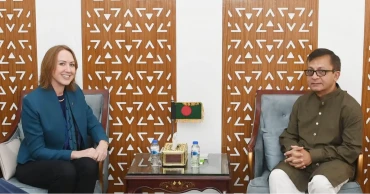
Commerce Minister Khandakar Abdul Muktadir on Tuesday called on Australia to scale up investment in Bangladesh's solar power sector, saying the government is actively working to create a business-friendly environment for foreign investors in renewable energy.
The minister made the call during a meeting with Australian High Commissioner to Bangladesh Susan Ryle at the Commerce Ministry in Dhaka. The two sides held wide-ranging discussions on strengthening bilateral trade, investment and economic cooperation.
“The government is committed to building an investment-friendly environment and is particularly encouraging foreign investment in the renewable energy sector,” Muktadir said.
He said revitalising existing industrial enterprises, establishing new industries and generating employment are among the government's top priorities. “One of our key goals is to activate industrial assets worth approximately $7 billion and attract private investment to make these sectors productive.”
The minister specifically urged Australian companies to invest in Bangladesh's solar power generation sector.
High Commissioner Ryle said bilateral trade between the two countries currently stands at around $5.14 billion and is growing steadily.
She noted that the energy sector, particularly renewable energy, holds significant investment potential in Bangladesh, adding that a high-level Australian delegation is already reviewing opportunities for cooperation in green energy, innovation and technology.
She also said that approximately 28,000 Bangladeshi students are currently studying in Australia, making it one of the most important destinations for Bangladeshi students abroad.
Both sides expressed interest in expanding cooperation in trade, education and scholarships, capacity building for Commerce Ministry officials, trade negotiations and infrastructure development.
Commerce Ministry Secretary (Current Charge) Md. Abdur Rahim Khan was also present at the meeting.
3 months ago
BGMEA launches podcast series to tackle RMG challenges, boost global brand image
In a first-of-its-kind initiative, the Bangladesh Garment Manufacturers and Exporters Association (BGMEA) has launched an official podcast series to address critical industry challenges and strengthen the "Made in Bangladesh" brand on the global stage.
The series features in-depth discussions with a diverse range of stakeholders, including industry leaders, economists, bankers, and policymakers. This initiative is part of the current BGMEA Board’s broader strategy to enhance transparency, counter industry myths, and chart a progressive path for the nation’s ready-made garment (RMG) sector.
The podcast covers high-priority topics essential to the country's economic future, such as:
LDC Graduation: Analyzing the potential impacts and preparedness for Bangladesh's transition from the Least Developed Country status.
Exchange Rate Dynamics: Discussing the implications of currency fluctuations on industrial growth and international competitiveness.
Economic Governance: Providing expert recommendations to assist policymakers in making forward-looking trade and business decisions.
A core objective of the series is to provide an authentic narrative of the RMG sector. Despite being the backbone of Bangladesh’s economy, the industry often faces global misperceptions. The podcast seeks to address these "misconceptions and myths" by presenting the realities of the sector in a balanced and constructive manner.
The initiative was spearheaded by BGMEA Vice President (Finance) Mijanur Rahman, Director Shah Rayeed Chowdhury, and Khan Monirul Alam Shuvo, Chair of the Standing Committee on Branding.
"This platform serves as an effective tool for discussing pressing issues and generating actionable insights," the leaders stated, emphasizing that the podcast offers a meaningful opportunity to present the industry in its true light to international buyers and stakeholders.
Two episodes have already been aired, with several more currently in production. To ensure broad engagement, the series is being broadcast across BGMEA’s official digital channels, including YouTube, Facebook, and Instagram.
The series is expected to act as a vital knowledge-sharing platform, facilitating informed dialogue and constructive policy engagement for the sustained development of the RMG sector.
3 months ago