
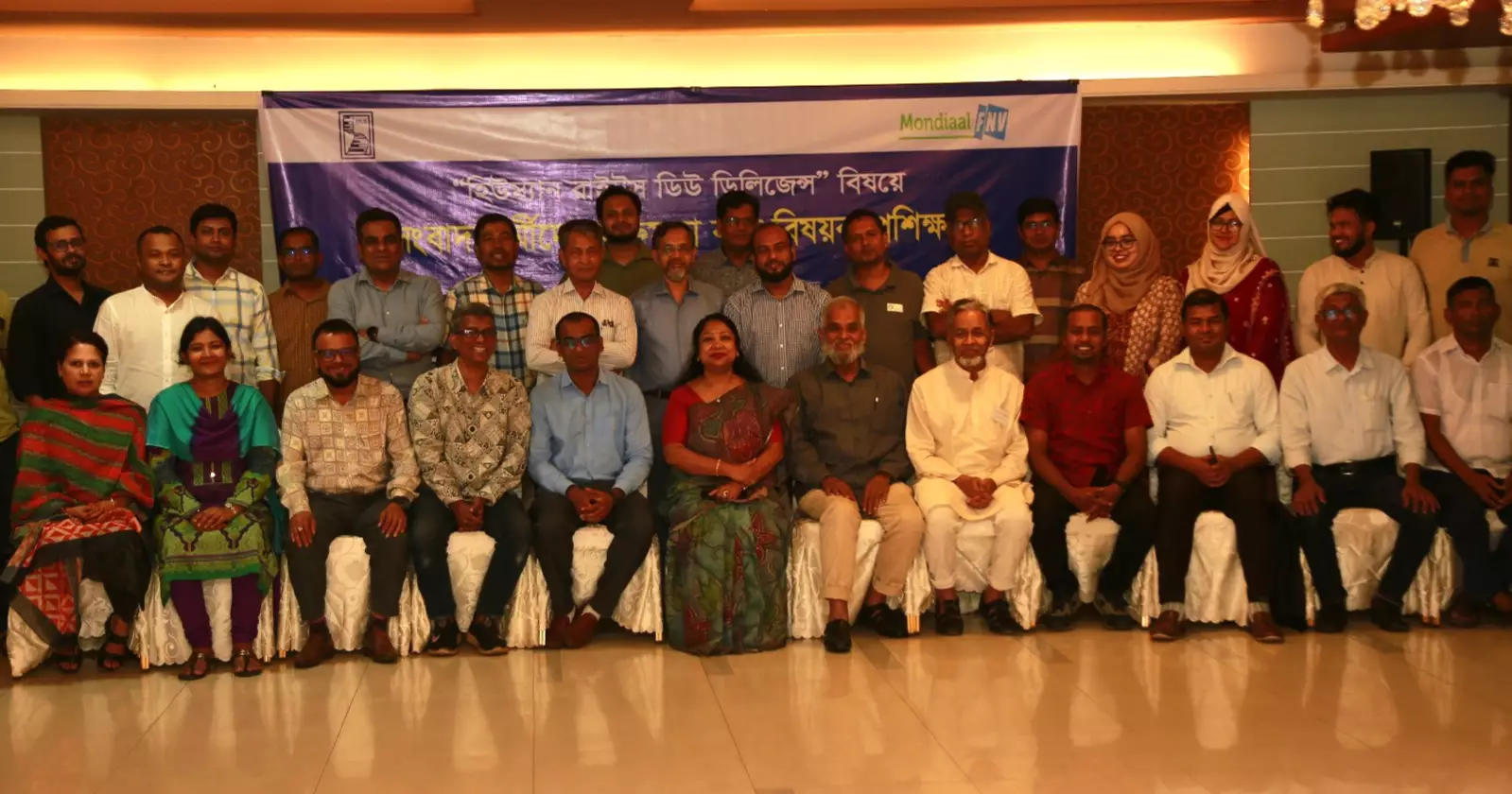
Speakers at a workshop highlighted that the buyers of different brands from the European Union (EU) will be required to pay fair prices to source countries under the new Corporate Sustainability Due Diligence Directive (CSDDD) and other related national and international laws.
They made the remarks at the two-day workshop on "Human Rights and EU Due Diligence in the Garment Sector," which concluded on Sunday at a hotel in Dhaka. The event was jointly organized by the Bangladesh Institute of Labour Studies (BILS) and the Netherlands-based international labor organization Mondiaal FNV.
Speakers at the event opined that while brands often exert excessive control over Bangladeshi suppliers—even scrutinizing minor details like the availability of separate washrooms for transgender workers—they frequently fail to offer fair prices. This practice, they noted, makes it difficult for factory owners to provide even minimum wages to their employees.
The EU Parliament passed the CSDDD in April last year, and it is expected to be strictly enforced by 2029 after being adopted by member states' national parliaments.
Once the law is in effect, EU brands will be held accountable for the production sources of their goods. This means they will be prohibited from importing products from sources with questionable environmental and human rights records.
Speakers emphasized that to avoid a significant drop in exports, Bangladesh's industrial sector must prioritize environmental sustainability and human rights protection.
They pointed out that EU bloc laws and national laws like Germany's Supply Chain Act will hold all parties in the supply chain—from importers to exporters—accountable. Failure to comply will result in goods being barred from entering EU countries.
They (speakers) said that it is impossible to establish workers' rights at the factory level if buyers do not pay fair prices for the garments.
They urged all stakeholders to raise awareness to ensure buyers are compelled to offer fair prices. The workshop also covered detailed discussions on improving the labor environment and human rights.
Among the speakers were Syed Sultan Uddin Ahmed, head of the Labour Reform Commission and BILS Executive Director; Nazma Yasmin, BILS Director; and Md. Shahinur Rahman, consultant for Mondiaal FNV; Md.Aurongajeb Akon, Associate Professor Aurangzeb Akand of Maulana Bhashani Science and Technology University, and BILS Deputy Director Md. Yusuf Al-Mamun.