World-Business

Asian markets slide as Big Tech sell-off drags Wall Street lower
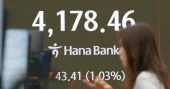
Asian stocks plunged on Wednesday after a sharp sell-off in Big Tech shares pulled Wall Street lower overnight, with Tokyo’s benchmark Nikkei 225 tumbling more than 4%.
By midday, the Nikkei had dropped 4.7% to 49,104.05, weighed down by heavy losses in chip-related stocks. Shares of Tokyo Electron fell 6.1%, while semiconductor testing equipment maker Advantest Corp. slumped 10%.
South Korea’s Kospi also fell sharply, losing 3.7% to 3,977.24 as major tech firms tracked global declines. Samsung Electronics dropped 4.4%, and SK Hynix lost 2.7%, despite its recent gains tied to artificial intelligence collaboration with Nvidia.
Chinese markets saw milder losses, with the Shanghai Composite down 0.3% to 3,946.78 and Hong Kong’s Hang Seng slipping 1.1% to 25,656.90.
The slump followed steep declines in technology shares on Wall Street, where the sector’s outsized weight has amplified market swings. Palantir Technologies fell 7.9% despite better-than-expected earnings, Nvidia dropped 4%, and Microsoft slipped 0.5%.
The S&P 500 fell 1.2% to 6,771.55, the Dow Jones Industrial Average dropped 0.5% to 47,085.24, and the tech-heavy Nasdaq sank 2% to 23,348.64.
Abu Dhabi hosts oil summit as OPEC+ pauses early 2026 output hikes
Investors remain focused on corporate earnings amid a U.S. government shutdown that has halted key economic reports on inflation and jobs. Analysts say the data gap complicates the Federal Reserve’s decision-making on interest rates as inflation remains elevated at 3% while hiring slows.
Outside earnings, Tesla fell 5.1% after Norway’s sovereign wealth fund said it would oppose CEO Elon Musk’s proposed $1 trillion compensation package. Yum Brands jumped 7.3% on reports it may sell its struggling Pizza Hut unit.
Oil prices weakened, with U.S. benchmark crude down 31 cents to $60.25 a barrel and Brent crude slipping 28 cents to $64.16. The dollar eased to 153.33 yen, while the euro edged up to $1.1493.
Source: AP
8 months ago

Abu Dhabi hosts oil summit as OPEC+ pauses early 2026 output hikes
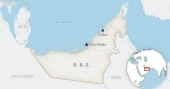
Abu Dhabi hosted a major oil summit Monday, shortly after OPEC+ announced it would halt planned production increases for the first quarter of 2026, citing concerns over oversupply in the market.
The decision follows recent oil sanctions imposed by the United States and the United Kingdom on Russia over the Ukraine war. Targets included Rosneft and Lukoil, whose logo prominently appeared at the Abu Dhabi International Petroleum Exhibition and Conference, a key sponsor of the event.
Despite the war, the UAE has maintained strong ties with Russia and has acted as an intermediary between Kyiv and Moscow in prisoner exchange negotiations.
OPEC+ had met Sunday and agreed to boost production by 137,000 barrels per day starting December but said adjustments planned for January through March would be paused “due to seasonality.” The group includes core OPEC members and allied nations, notably Russia.
Benchmark Brent crude traded around $65 per barrel Monday, down from a post-COVID peak of about $115 after Russia’s 2022 invasion of Ukraine. Prices recently slipped to $60 amid concerns of excessive supply.
“Yes, OPEC+ is blinking, but it’s a calculated move,” said Jorge León, head of geopolitical analysis at Rystad Energy. “Sanctions on Russian producers have added uncertainty to supply forecasts. Pausing production protects prices, signals unity, and buys time to gauge the impact of sanctions on Russian barrels.”
OPEC+ extends output cuts to support oil prices
Meanwhile, the U.S. administration continues to advocate for increased domestic production. Interior Secretary Doug Burgum, former governor of North Dakota and chair of Trump’s National Energy Dominance Council, attended the summit. The average U.S. gasoline price stood at $3.03 per gallon Monday.
The ADIPEC oil conference follows last year’s COP28 climate talks in the UAE, where nearly 200 countries pledged to reduce reliance on fossil fuels. Nevertheless, the UAE plans to raise its oil production capacity to five million barrels per day while expanding clean energy initiatives domestically.
Source: AP
9 months ago

Shein accused of selling childlike sex dolls in France
France’s consumer watchdog has reported fast-fashion giant Shein to authorities for selling “sex dolls with a childlike appearance” on its website.
The Directorate General for Competition, Consumer Affairs and Fraud Control (DGCCRF) said the dolls’ online descriptions and categorisation “strongly suggest content of a child pornography nature.”
Responding to the allegations, Shein told the BBC that “the products in question were immediately removed once we became aware of these serious issues.”
The company added that its team is “investigating how these listings bypassed our screening measures” and is conducting “a comprehensive review to identify and remove any similar items listed by other third-party vendors.”
According to French media, the DGCCRF has referred the matter to French prosecutors and Arcom, the nation’s online and broadcasting regulator.
The report comes just days before Shein is scheduled to open its first permanent physical store anywhere in the world, located in a Parisian department store.
Source: BBC
9 months ago

Tokyo auto show focuses on futuristic mobility as Trump’s tariffs threaten automakers
The Tokyo Mobility Show this year is showcasing not only electric and hydrogen-powered cars but also futuristic forms of personal transport — from robotic chairs to flying vehicles.
Among the highlights is Honda Motor Co.’s Uni-One, a compact, box-shaped robotic chair designed for individual transport by 2035. “It’s all about personal mobility,” said the Tokyo-based automaker known for the Accord sedan.
Toyota Motor Corp. unveiled a prototype of a helicopter-like aircraft equipped with six propellers, developed in partnership with U.S. aviation firm Joby.
These innovations, along with a range of more traditional vehicles, are being displayed at Tokyo Big Sight through November 9. The exhibition opened to the public Thursday after a media preview the previous day.
However, excitement around the event is clouded by U.S. President Donald Trump’s decision to raise auto tariffs to 15% from 2.5%, though the rate was reduced from an earlier 25%. The new tariffs could cost Japanese automakers more than 2 trillion yen ($13 billion) in annual operating profits, according to industry estimates.
Mazda Motor Corp. CEO Masahiro Moro, whose company is among the hardest hit, said Mazda engineers are developing cars that can sense drivers’ emotions and promote sustainability. “We believe the joy of driving has the power to shape the future,” Moro told reporters.
Nissan Motor Corp. presented a prototype of its Sakura electric car featuring a retractable solar roof — dubbed the “Ao-Solar Extender” — that generates electricity when parked. The power can be used for household appliances or as an emergency source during disasters. The concept targets eco-conscious families, Nissan said.
Japan's exports and imports grow in September despite Trump's tariffs
“Japan is at the center of what we do because we are a Japanese company,” said Nissan Chief Ivan Espinosa, who also met President Trump earlier this week during his visit to Japan. Espinosa described the meeting, which included discussions with business leaders and Prime Minister Sanae Takaichi, as “constructive.”
To offset trade imbalances, Nissan and Toyota said they are considering importing models built in the United States back to Japan. Meanwhile, the Japanese government has pledged to buy Ford vehicles and invest $550 billion in the U.S.
Japan exports over a million vehicles to the U.S. each year while selling 4.4 million domestically. Only about 16,000 American cars are sold annually in Japan, a small share of its auto market. Japanese brands, by contrast, account for roughly 40% of vehicles sold in the U.S., many of them made in American factories.
Toyota CEO Koji Sato noted that consumer preferences differ across regions, saying, “We want to be an important part of the American auto industry with a long-term perspective.”
Toyota also displayed a foldable electric bicycle called the Land Hopper, designed to fit inside the upcoming Land Cruiser FJ — the latest version of the company’s iconic off-road vehicle, which debuted in 1951 as the Toyota BJ.
The Land Cruiser, with sales exceeding 12 million units in 190 countries and regions, remains a flagship model. The new FJ version, powered by a 2.7-liter gasoline engine, will go on sale in Japan next year.
Japanese auto exports to the U.S. have recently surged as companies try to get ahead of the tariff hike, which analysts say will begin to bite next year.
“Automakers will look to increase U.S. production where possible and diversify exports to markets like Australia and Canada,” said Darcey Bowling, auto analyst at BMI. “Japan’s vehicle market will likely face challenges due to the elevated U.S. tariffs.”
Source: AP
9 months ago

Wall Street rises as Fed decision nears; Nikkei hits record on Trump’s Asia tour
Wall Street futures edged higher Wednesday as investors awaited corporate earnings reports and the Federal Reserve’s interest rate decision later in the day.
S&P 500 futures rose 0.3%, Dow Jones futures gained 0.2%, and Nasdaq futures climbed 0.5% in premarket trading. All three indexes set record highs in the previous session for a third consecutive day.
Asian markets closed mostly higher, buoyed by U.S. President Donald Trump’s optimistic remarks on relations with China and Japan during his ongoing Asian tour. Tokyo’s Nikkei 225 surged 2.2% to a record 51,307.65, while South Korea’s Kospi jumped 1.8% to 4,081.15. Shanghai’s Composite index advanced 0.7%, trading near decade-high levels ahead of Trump’s expected meeting with Chinese President Xi Jinping.
Tech giant Nvidia extended gains overnight, rising 3.8% to touch $207.80 per share in premarket trading, making it the first company with a market value above $5 trillion. The rally follows CEO Jensen Huang’s announcement of $500 billion in chip orders and Trump’s indication that the company’s Blackwell chips would be discussed with Xi.
Industrial equipment maker Caterpillar shares jumped 4.4% after reporting a 10% revenue increase over the same quarter last year, surpassing Wall Street expectations. Later Wednesday, Alphabet, Meta, Microsoft, and Starbucks are scheduled to report earnings.
Investors widely anticipate the Fed will cut interest rates by 25 basis points due to a slowing U.S. job market. Analysts note the nearly monthlong government shutdown has left policymakers with limited fresh data, prompting a cautious approach.
In Europe, Britain’s FTSE 100 gained 0.7%, Germany’s DAX fell 0.1%, and Paris’s CAC 40 remained flat. In other Asian markets, Taiwan’s Taiex rose 1.2%, and India’s Sensex climbed 0.4%, while Australia’s S&P/ASX 200 fell 1% following higher-than-expected inflation data.
In energy trading, U.S. crude rose 25 cents to $60.40 a barrel, while Brent crude gained 24 cents to $64.07 a barrel.
9 months ago

OpenAI adopts new business model, keeps Microsoft as key partner
OpenAI said Tuesday it has completed a major restructuring of its business to become a public benefit corporation, after attorneys general in Delaware and California confirmed they would not oppose the plan.
The move allows the developer of ChatGPT to more easily generate profits while its nonprofit arm retains overall control. The announcement follows more than a year of negotiations centered on the company’s governance and investor influence.
Chief Executive Sam Altman told reporters that the most likely path for the company now includes a future public listing to meet growing capital demands, although no timeline was announced.
OpenAI also finalized a new partnership agreement with longtime backer Microsoft, which will now hold roughly a 27% stake in the for-profit entity — just ahead of the nonprofit’s stake. Microsoft’s investment, valued at $135 billion, remains a crucial part of OpenAI’s funding and infrastructure strategy.
Delaware Attorney General Kathy Jennings said her office would continue to monitor whether OpenAI maintains its charitable mission and AI safety standards. California Attorney General Rob Bonta delivered a similar assurance, saying officials will “keep a close eye” on the tech firm.
Bret Taylor, chair of OpenAI’s board, said the restructure simplifies the corporate framework and ensures the nonprofit remains in control “with a direct path to major resources before AGI arrives.” AGI — or artificial general intelligence — refers to highly autonomous systems that outperform humans in most economically valuable tasks.
The revised Microsoft agreement keeps the tech giant as a key commercial partner. It grants Microsoft access to OpenAI’s advanced technology until at least 2030, or until AGI is independently verified by an expert panel. Microsoft will also retain product rights through 2032. Analysts at JP Morgan called the deal a “positive development,” noting Microsoft can now count on seven years of guaranteed cooperation.
The restructuring follows OpenAI’s recent expansion plans, including a massive data center project in Texas in partnership with Oracle and SoftBank, and additional facilities across several continents. Altman said these investments bring the company’s long-term financial commitments to roughly $1.4 trillion.
OpenAI’s nonprofit arm — now named the OpenAI Foundation — plans to allocate up to $25 billion to initiatives in healthcare, disease prevention and cybersecurity. Details on the funding timeline were not disclosed.
Despite safeguards ensuring nonprofit oversight, some critics remain unconvinced. Robert Weissman of Public Citizen said the arrangement risks prioritizing commercial interests over public benefit, arguing that nonprofit control “is illusory.”
The restructuring comes nearly a year after Altman’s brief ousting by the nonprofit’s board sparked internal turmoil and a push for governance reforms.
OpenAI continues to face a legal challenge from Tesla and xAI CEO Elon Musk, who claims the organization abandoned its original mission. A federal judge earlier declined to block the restructuring but signaled Musk’s lawsuit could proceed quickly.
Source: AP
9 months ago
Wall Street edges up ahead of Fed rate decision and Trump-Xi meeting
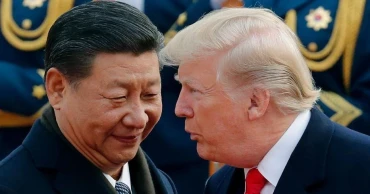
Wall Street posted modest gains on Tuesday as investors awaited the Federal Reserve’s interest rate announcement and a planned meeting between President Donald Trump and Chinese President Xi Jinping later this week.
Futures for the S&P 500 rose less than 0.1%, Dow Jones futures gained 0.3%, and Nasdaq futures were up 0.1% before the opening bell. Investor attention was also on corporate earnings, with Amazon shares climbing slightly following the announcement of 14,000 corporate job cuts aimed at cost reductions and AI investment. UPS surged 12% after reporting strong third-quarter sales and profits, benefiting from cost-cutting measures.
Traders widely expect the Fed to lower the federal funds rate by 0.25 percentage points to support the slowing job market, though officials have cautioned that rising inflation could alter plans. Key U.S. companies, including Alphabet, Meta, Microsoft, Amazon, and Apple, are set to release earnings reports this week.
In Asia, Japan’s Nikkei 225 fell 0.6% after hitting record highs earlier this month following Prime Minister Sanae Takaichi’s economic stimulus and defense pledges. Other Asian markets, including Hong Kong, Shanghai, South Korea, and Australia, also saw minor declines. European markets showed mixed results, with slight losses in France and Germany and a small gain in the U.K.
Crude oil prices fell early Tuesday, with U.S. benchmark crude down 83 cents to $60.49 per barrel and Brent crude at $64.08.
9 months ago
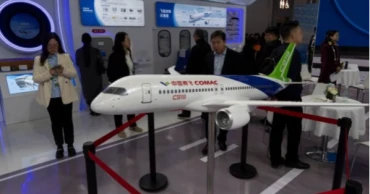
China’s C919 jet encounters setbacks as trade strains cloud aerospace ambitions
China’s long-term effort to challenge the global dominance of Boeing and Airbus with a homegrown commercial jet is facing mounting obstacles, with deliveries of its C919 aircraft expected to fall significantly below targets set for this year.
The C919, a single-aisle jet positioned to compete with Boeing’s 737 and Airbus’ A320, is developed by state-owned manufacturer COMAC. Beijing has held it up as a symbol of technological progress and growing self-reliance, despite the aircraft’s heavy use of Western components.
Ongoing trade tensions with the United States are threatening access to crucial parts needed for COMAC’s production plans, a program that has relied on extensive Chinese government funding.
“COMAC faces substantial risks in the current unpredictable policy climate, as its supply chain remains exposed to export controls and retaliatory measures between Washington and Beijing,” said Max J. Zenglein, Asia-Pacific senior economist at The Conference Board.
Analysts at Bank of America say the C919 program depends on 48 major U.S. suppliers such as GE, Honeywell and Collins Aerospace, along with 26 European and 14 Chinese firms. Trump has signaled potential new export curbs on “critical” software, following China’s tighter restrictions on rare earths.
“Existing choke points are increasingly being used as leverage between governments,” Zenglein noted. “This trend is likely to continue as strategic dependencies become political bargaining chips.”
The C919 completed its first commercial flight in 2023 and is expected to help meet huge domestic demand for new aircraft over the coming decades, with hopes of eventual international expansion across Southeast Asia, Africa and Europe.
According to aviation consultancy Cirium, COMAC delivered 13 C919s last year but only seven so far this year, falling behind plans to boost production and supply 30 jets in 2025. At present, only China’s three largest state-owned carriers — Air China, China Eastern and China Southern — are flying around 20 C919s in total.
Dan Taylor, head of consulting at IBA, said trade friction has “directly affected” delivery timelines. The U.S. suspension of export licenses for the aircraft’s LEAP-1C engines earlier this year, only reinstated in July, disrupted production plans, he added.
Trump vows extra 10% tariff on Canadian imports over Ontario ad dispute
The LEAP-1C engines, jointly built by GE Aerospace of the U.S. and France’s Safran, require U.S. export clearance, making the jet highly sensitive to political shifts.
“Reliance on Western engines and avionics continues to leave the program vulnerable to policy decisions outside COMAC’s control,” Taylor said.
Operational caution has also slowed progress, said Zenglein, noting that quality and safety priorities have contributed to the slower-than-expected production increase. Efforts to replace foreign parts remain complex, and China’s alternative engine, the CJ-1000A, is still undergoing tests, according to IBA.
Interest from foreign airlines including AirAsia has yet to translate into global operations due to the absence of U.S. and European certifications, which analysts say may take years.
For the C919 to become competitive worldwide, it will require strong economics, a reliable global support network and approvals from major safety regulators, said Richard Aboulafia of AeroDynamic Advisory.
China could require 9,570 new commercial aircraft between 2025 and 2044, Airbus forecasts, with single-aisle jets like the C919 making up the bulk of demand. Yet Airbus itself is ramping up its presence in China, adding a second A320 production line in 2026.
Trump halts Canada trade talks after Ontario’s anti-tariff ad
Analysts say breaking the Boeing-Airbus duopoly will take time. The C919 could expand its footprint within China and begin regional exports by the late 2020s, Taylor said. For now, limited certification and export control uncertainties are expected to continue restraining its international ambitions.
Source: AP
9 months ago

Trump vows extra 10% tariff on Canadian imports over Ontario ad dispute
President Donald Trump on Saturday threatened to impose an additional 10% tariff on Canadian imports after an anti-tariff television commercial from Ontario angered him.
The ad, aired during the first two games of the World Series, used a speech by former US President Ronald Reagan to criticize Trump’s trade policies. Trump said the campaign should have been canceled immediately and accused Ontario of spreading misinformation.
“Their advertisement was to be taken down, IMMEDIATELY, but they let it run last night during the World Series, knowing that it was a FRAUD,” Trump wrote on Truth Social while traveling to Malaysia. “Because of their serious misrepresentation of the facts, and hostile act, I am increasing the tariff on Canada by 10% over and above what they are paying now.”
Ontario Premier Doug Ford said the ad would be pulled after the weekend. It remained unclear what specific authority Trump would invoke to implement the new tax, when it would take effect, and which categories of goods it would cover. The White House has yet to comment.
Dominic LeBlanc, Canada’s minister responsible for US trade relations, stressed that negotiations are managed by the federal government, not the provinces. “Progress is best achieved through direct engagement with the U.S. administration,” he said.
Trump halts Canada trade talks after Ontario’s anti-tariff ad
Canada’s economy is already under pressure from US trade restrictions. More than three-quarters of Canadian exports go to the United States, with roughly C$3.6 billion (US$2.7 billion) in goods and services moving across the border daily. Many Canadian products currently face a 35% tariff, while steel and aluminum enter at 50%. Energy shipments are taxed at 10%. Most other trade flows through the U.S.-Canada-Mexico Agreement, which is due for review.
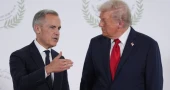
Canadian Prime Minister Mark Carney has been working to reduce tariff tensions but has not yet commented on Trump’s latest threat. Spokespersons for both Carney and Ford also declined immediate comment.
Trump and Carney are expected to attend the Association of Southeast Asian Nations summit in Malaysia. Trump told reporters he has no plans to meet the Canadian leader during the event.
Trump claimed Ontario’s ad distorted Reagan’s positions and suggested it was intended to influence a looming Supreme Court case on the legality of his wide-ranging tariff actions, after lower courts ruled he exceeded his authority.
Source: AP
9 months ago

Trump halts Canada trade talks after Ontario’s anti-tariff ad
President Donald Trump has announced an end to “all trade negotiations” with Canada, citing anger over a television commercial sponsored by the province of Ontario that uses Ronald Reagan’s words to oppose U.S. tariffs. The move escalates tensions with Washington’s closest trading partner.
Trump’s post on his social media platform late Thursday came shortly after Canadian Prime Minister Mark Carney reiterated his intention to boost the country’s exports to markets beyond the United States, saying Trump’s tariff threats were driving the shift. White House officials said the president’s response reflected deep frustration over Canada’s recent trade strategy.
By Friday afternoon, Ontario Premier Doug Ford agreed to pull the ad, saying it will stop airing after the weekend so negotiations can restart. He said the message had already reached “U.S. audiences at the highest levels.”
“Our intention was always to initiate a conversation about the kind of economy that Americans want to build and the impact of tariffs on workers and businesses,” Ford said, adding that the campaign had “achieved our goal.”
Trump argued the ad distorted Reagan’s stance and was aimed at influencing a looming Supreme Court case that could determine the president’s authority to impose sweeping tariffs, a cornerstone of his economic agenda. He has indicated he may personally attend the court arguments.
Oil prices surge as Trump sanctions Russian giants; Wall Street opens mixed
“You know, it’s a crooked ad,” Trump told reporters Friday before leaving for Asia. “They could have pulled it tonight. Well, that’s dirty play — but I can play dirtier than they can, you know.”
The dispute grew after the Reagan Presidential Foundation said the ad “misrepresents” a 1987 radio address on free and fair trade and was used without permission.
Trump claimed online the advertisement was “FAKE” and said, “ALL TRADE NEGOTIATIONS WITH CANADA ARE HEREBY TERMINATED.”
While Reagan routinely warned against tariffs, Trump maintains they are vital to America’s security and economy.
Officials at the White House suggested the reaction was not solely about the ad. “It’s not just about one ad,” said Kevin Hassett, director of the National Economic Council, pointing to Canada’s “lack of flexibility” and “leftover behaviors from the Trudeau folks.”
Carney said Canada remains open to talks to reduce tariffs in key sectors, though he acknowledged American trade policy has “fundamentally changed.” Trump, however, dismissed the possibility of meeting Carney at the ASEAN summit in Malaysia, where both are traveling.
Carney vows to double Canada’s non-U.S. exports, says country ‘can’t rely on one partner’
Ontario invested more than $275,000 to air the Reagan-themed ad across most major U.S. media markets this month. It follows previous trade tensions between Ford and Trump, including retaliatory tariff exchanges that hit Canada’s auto industry hardest. Earlier this month, automaker Stellantis revealed plans to shift a production line from Ontario to Illinois due to the tariff dispute.
Despite the current freeze, more than three-quarters of Canada’s exports still head to the United States, with nearly $2.7 billion in goods and services crossing the border each day.
Source: AP
9 months ago