World-Business
Middle East conflict biggest risk to regional outlook: ADB experts
Economic growth in developing Asia and the Pacific is expected to remain resilient at 5.1 percent in 2026 and 2027, but a prolonged conflict in the Middle East stands as the most significant threat to this outlook, according to senior experts at the Asian Development Bank (ADB).
In a detailed analysis of the regions macroeconomic landscape, ADBs Economic Research and Development Impact Department (ERDI) Director Matteo Lanzafame, along with economists Gabriele Ciminelli and John Beirne, warned that while the region is holding up, it remains highly vulnerable to external shocks.
ADB approves $115.8m loan to upgrade urban services in Narayanganj city
The experts noted that the current growth forecast of 5.1 percent hinges on an early stabilisation of the Middle East conflict.
However, they characterised the projection as subject to extreme uncertainty.
The conflict is currently driving up energy costs and disrupting vital shipping routes.
This is compounded by trade policy uncertainty and the fading frontloading effect seen last year where exporters rushed shipments ahead of anticipated US tariff hikes.
These shocks are hitting a region that is highly dependent on imported oil and deeply integrated into global trade networks, the experts stated.
Despite these headwinds, they highlighted that robust domestic demand and services activity continue to cushion the impact.
Inflation is showing signs of a resurgence in early 2026, following a brief easing last year.
The ADB economists observed that higher energy and food prices are beginning to feed through to consumer costs across the region.
Financial markets are already signaling heightened risk, with rising bond yields pushing up borrowing costs and currencies in energy-dependent economies coming under pressure. Investors are also shifting toward safer assets, evidenced by a surge in regional demand for gold.
They raised alarms over food prices, which began picking up late in 2025.
The Middle East conflict has not only increased transport costs but also threatens to disrupt the supply of fertilizers.
This is a particular concern as it would have disproportionately negative effects on the regions lower-income households, who spend a larger share of their income on food, the economists warned.
To mitigate these mounting pressures, the ADB experts urged governments to adopt disciplined and targeted policies.
They suggested that support should be time-bound and focused on the most vulnerable, rather than broad-based subsidies that strain budgets.
Governments should also implement demand-side measures such as temperature mandates for air-conditioning and encouraging work-from-home schedules.
Protecting investment in renewable energy and infrastructure was cited as critical to reducing long-term exposure to global shocks.
Despite the global backdrop, the experts identified South Asia, particularly India, as the regions growth leader, driven by strong internal consumption.
Additionally, economies specialised in electronics and Artificial Intelligence (AI) products continue to see export success, defying the broader global trade slowdown, the added.
3 months ago
Oil prices jump after US threat to block Iranian ports
Oil prices rose in early market trading Sunday after the U.S. said it would blockade Iranian ports beginning Monday.
The price of U.S. crude oil rose 8% to $104.24 a barrel and Brent crude oil, the international standard, rose 7% to $102.29.
Brent crude has swung dramatically during the Iran war, rising from roughly $70 per barrel before the war in late February to more than $119 at times. On Friday, ahead of the peace talks, Brent for June delivery fell 0.8% to $95.20 per barrel.
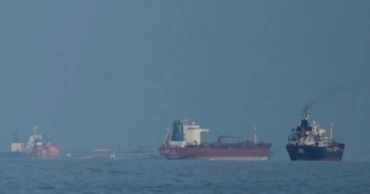
Iran has been effectively controlling the Strait of Hormuz, a key waterway for global oil shipping.
U.S. Central Command said the blockade would be “enforced impartially against vessels of all nations” entering or departing Iranian ports and coastal areas, including all Iranian ports on the Persian Gulf and Gulf of Oman.
It said it would still allow ships traveling between non-Iranian ports to transit the Strait of Hormuz.
Around a fifth of the world’s traded oil typically flows through the Strait of Hormuz every day. Saudi Arabia, Iraq, the United Arab Emirates, Kuwait, and Iran are all major exporters.
Traffic in the strait has been limited even in the days since the ceasefire. Marine trackers say over 40 commercial ships have crossed since the start of the ceasefire.
Claudio Galimberti, chief economist of Rystad Energy, said the blockade will raise prices but might move the needle on talks.
3 months ago

Japfa keen to boost investment in Bangladesh’s agriculture, poultry sectors
Bangladesh has attracted fresh investment interest from Indonesia-based firm Japfa Ltd, particularly in the agriculture and poultry sectors, during a meeting with Commerce Minister Khandakar Abdul Muktadir on Wednesday.
At the meeting held at the ministry, both sides discussed ways to strengthen bilateral trade relations, enhance investment, and promote mutual cooperation for economic development.
“Bangladesh is rapidly advancing as an emerging economy. Thanks to various government policy supports and reform initiatives, the investment climate in the country has reached a highly satisfactory level,” the minister said.
Bangladesh envoy in Mexico pays tribute to late Indonesian ex-VP Sutrisno
Highlighting the open and supportive environment for foreign investors, he urged greater investment in agriculture and poultry sectors. “Such investments will further strengthen these sectors and contribute significantly to the country’s economic growth.”
The minister also noted that the government gives special importance to foreign investment to ensure sustainable economic development and is providing all necessary assistance in this regard.
Japfa Executive Chairman Renaldo Santosa expressed the company’s interest in expanding investment in Bangladesh’s agriculture and poultry sectors.
He praised the country’s growing market, promising agricultural potential, and investor-friendly environment.
The Indonesia-based multinational agribusiness firm has been investing in Bangladesh since 2020, and has already started production activities in the poultry feed sector.
Japfa’s investment operations in Bangladesh are managed under the Bay Group. Globally, Japfa currently generates an annual turnover of around USD 4.7 billion, with a target to reach USD 10 billion by 2030.
3 months ago
Asian shares mostly rise as oil spikes ahead of Trump’s Iran deadline
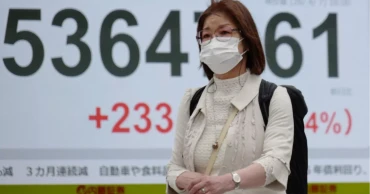
Asian stock markets mostly rose Tuesday amid cautious trading, as oil prices surged ahead of a U.S. deadline for Iran to reopen the Strait of Hormuz or face possible attacks on its infrastructure.
Japan’s Nikkei 225 edged up 0.1% to close at 53,429.56. Australia’s S&P/ASX 200 jumped 1.7% to 8,728.80, while South Korea’s Kospi gained 0.8% to 5,494.78. China’s Shanghai Composite rose 0.3% to 3,890.16. Trading was closed in Hong Kong for a holiday.
On Wall Street, stock indexes also moved higher. The S&P 500 added 0.4%, coming off its first weekly gain in six weeks. The Dow Jones Industrial Average rose 165 points, or 0.4%, and the Nasdaq composite climbed 0.5%.
In energy markets, U.S. crude jumped $2.41 to $114.82 a barrel, while Brent crude rose $1.46 to $111.23 a barrel well above pre-war levels of around $70. Oil prices have been volatile amid uncertainty over the war with Iran and its impact on global oil and gas supplies.
Iran rejected the latest ceasefire proposal Monday, calling instead for a permanent end to the conflict. Analysts at Mizuho Bank in Singapore said President Trump’s repeated ultimatums are part of a growing cycle of escalation. “Hopes for a complete resolution remain slim as countries seek bilateral solutions,” they said.
Meanwhile, Iranian and Omani officials continued working on a plan to manage the strait, through which nearly a fifth of the world’s oil passes.
In bonds, the 10-year U.S. Treasury yield held at 4.33%, above its pre-war level of 3.97%. In currency markets, the dollar edged up to 159.86 yen from 159.62, while the euro fell slightly to $1.1541 from $1.1543.
3 months ago

FBCCI seeks $5bn EDF, sweeping reforms to ease business strain
The Federation of Bangladesh Chambers of Commerce and Industry (FBCCI) has urged Bangladesh Bank (BB) to double the Export Development Fund (EDF) to $5 billion to support exporters amidst ongoing global economic challenges.
The demand was placed at a meeting with BB Governor Mostaqur Rahman, held at the central bank on Monday.
The apex trade body also proposed increasing the "Single Borrower Exposure Limit" from the current 15% to 25% to accommodate the rising costs of doing business.
FBCCI calls for policy continuity, tax reforms to boost investment in FY27 budget
During the discussion, the FBCCI representatives further advocated for keeping interest rates within single digits and relaxing loan default regulations.
In written proposals submitted to the BB chief, the FBCCI highlighted that geopolitical instability and global economic shifts have significantly driven up the prices of industrial raw materials, capital machinery, energy, and transportation.
"The ongoing conflict in the Middle East poses a threat to energy supplies, remittance inflows, and overall economic activity," the proposals stated, noting that international demand for Bangladeshi products has also faced downward pressure.
Key recommendations from the private sector
The FBCCI placed a broad set of coordinated recommendations aimed at stabilising the financial sector and sustaining industrial growth.
It emphasised the need for good governance and structural reforms in the banking sector. It called for effective measures to recover laundered money and urged the central bank to protect the interests of depositors and businesses during bank mergers.
To keep production and trade afloat, the trade body demanded a steady supply of US dollars, a stable exchange rate, and a simplified process for opening Letters of Credit (LCs).
For industries struggling with the current economic climate, the FBCCI suggested extending the loan rescheduling period from the current three months to six months, alongside providing easier loan terms and incentives.
It also emphasised expanding support for SMEs and women entrepreneurs through enhanced banking access, dedicated helpdesks, and collateral-free loans.
To reduce energy import costs, the trade body recommended low-interest loans for renewable energy projects, including solar power.
It proposed the formation of a special committee, headed by a Deputy Governor of Bangladesh Bank, to quickly resolve banking-related issues facing the industrial sector.
The business leaders also urged the government to reduce its borrowing from the banking sector to ensure a healthy flow of credit to the private sector and to maintain incentives for remittance to encourage higher inflows of foreign currency.
3 months ago

Asian stocks slide, oil surges as Iran war pushes US fuel prices past $4
Asian stock markets fell while oil prices surged on Tuesday as the ongoing war involving Iran continued to rattle global markets and drive up energy costs.
South Korea’s benchmark Kospi index dropped sharply by 3.82 percent, losing more than 200 points to stand at 5,075.92 around 01:00 GMT. Japan’s Nikkei 225 also declined 2.24 percent in early trading before recovering slightly, though it remained down 0.73 percent, or 377 points, at 51,507.99.
China’s FTSE China A50 Index edged lower as well, slipping between five and 10 points, or less than 0.07 percent, to hover around 14,570.
Meanwhile, oil prices climbed amid supply concerns linked to the conflict. The US benchmark West Texas Intermediate rose 1.08 percent to $103.99 per barrel, crossing the $100 mark for the first time since the war began. International benchmark Brent Crude jumped 2.23 percent to reach $109.78 per barrel.
Rising crude prices have translated into higher fuel costs in the United States. The average retail gasoline price has exceeded $4 per gallon for the first time in more than three years, according to data cited by Reuters from fuel tracking service GasBuddy.
Since the US-Israel war involving Iran began on February 28, gasoline prices across the US have surged by about $1.06 per gallon, marking a 36 percent increase. The last time prices reached the $4 threshold was in August 2022, following the outbreak of the Russian invasion of Ukraine.
During his 2022 campaign to return to the White House, Donald Trump had pledged to cut energy costs and boost domestic oil and gas production, a promise now facing renewed scrutiny amid the latest price spike.
#From Al Jazeera
4 months ago

Foreign loan disbursements, repayments almost same during first 8 months of fiscal: ERD
Foreign loan disbursements and repayments have remained almost equal during the first eight months of the current 2025-26 fiscal year, highlighting mounting pressure on external debt servicing, according to latest data from the Economic Relations Division (ERD).
Between July and February, the country received foreign loans and grants worth about US$3.05 billion, while repaying nearly US$2.9 billion to various lenders, the ERD reported in its updated statement released on Monday.
Of the repayments, around US$1.95 billion was paid as principal and US$950 million as interest, the report said.
Officials noted that the rising repayment burden reflects the growing maturity of previously received loans, as Bangladesh continues to service larger amounts of external debt.
In the last fiscal year, the country repaid more than US$4 billion in foreign loans.
Meanwhile, commitments for foreign assistance during the July-February period stood at around US$2.43 billion, slightly higher than the US$2.35 billion recorded in the same period of the previous fiscal year.
Disbursements came from multiple development partners, with Russia emerging as the largest provider, disbursing about US$755.1 million.
The World Bank followed with US$636 million, while the Asian Development Bank (ADB) provided US$566.1 million.
China and India each disbursed around US$250 million and US$257.7 million respectively, while Japan contributed nearly US$190 million during the period.
4 months ago
Oil tops $116 as Iran warns of US invasion
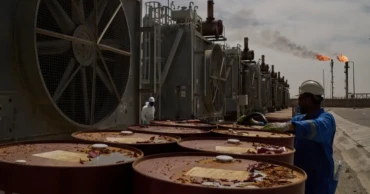
Oil prices surged to their highest level in nearly two weeks on Monday amid escalating tensions in the US-Israel war on Iran.
Brent crude, the global benchmark, jumped more than 3 percent to exceed $116 a barrel, reaching its highest level since March 19, when it briefly touched $119.
The rise followed Iran’s warning that it is prepared for a US ground invasion. The speaker of Iran’s parliament said Tehran was awaiting US troops to “set them on fire” and “punish” their regional allies.
The warning came as the conflict intensified over the weekend. Iranian-backed Houthi forces launched missiles at Israel for the first time in the war, while Israel expanded its invasion of southern Lebanon.
Asian stock markets fell sharply in morning trading, with Japan’s Nikkei 225 and South Korea’s KOSPI both down more than 4 percent as of 1:30 GMT.
Iran’s effective closure of the Strait of Hormuz in response to US-Israeli attacks has disrupted roughly one-fifth of global oil and liquified natural gas (LNG) supplies, sparking the world’s largest energy crisis in decades.
Since the war began, oil prices have climbed nearly 60 percent, pushing fuel costs higher worldwide and prompting many countries to adopt emergency measures to conserve energy. Analysts warn that oil prices are likely to keep rising unless maritime traffic in the strait returns to normal levels.
US President Donald Trump has threatened to “obliterate” Iran’s energy infrastructure if Tehran does not lift its blockade of the waterway by April 6. He extended his initial deadline by 10 days on Thursday and has proposed a 15-point plan to end the conflict, highlighting the possibility of progress in indirect talks mediated by Pakistan.
“I do see a deal in Iran, yeah,” Trump told reporters on Air Force One late Sunday. “Could be soon.”
Tehran, however, rejected Trump’s plan, proposing its own ceasefire terms, including war reparations and recognition of Iran’s control over the strait.
Greg Newman, CEO of Onyx Capital Group, an oil derivatives trading firm, said consumers were only beginning to feel the full impact of the turmoil.
“Physical oil moves around the world in loading cycles, and Europe has taken around three weeks to really start feeling the effects of the oil shortage,” Newman told Al Jazeera. “Brent is starting to reflect the reality, and we think it’s a steady rise from here towards $120 and beyond.”
He added that the scale of the disruption had yet to be fully understood. “No one in the market has ever seen the outages we are now suffering from – physical premiums are the highest ever. There is still a sense that the macro world is not taking this seriously enough, but it is worse than anything that has come before it. The reality will come out in the economic numbers over the coming months.”
While Iran has allowed a limited number of transits by vessels not aligned with the US or Israel, traffic remains far below pre-war levels.
On Saturday, Pakistani Foreign Minister Ishaq Dar said Tehran had permitted 20 Pakistani-flagged vessels to pass the strait, describing it as a “meaningful step toward peace.” Malaysian Prime Minister Anwar Ibrahim also said last week that Iran had allowed Malaysian ships to transit the strait.
According to maritime intelligence firm Windward, seven non-Iranian vessels passed the strait on Thursday, up from five on Wednesday and four on Tuesday. Before the war began on February 28, the strait averaged 120 daily transits.
#From Al Jazeera
4 months ago
Iran war may impact growth, spur inflation in Asia and Pacific: ADB
The conflict in the Middle East (West Asia) could lower economic growth in developing Asia and the Pacific by up to 1.3 percentage points over 2026-2027 and raise inflation by 3.2 percentage points if energy market disruptions last more than a year, according to new research by the Asian Development Bank (ADB).
The conflict affects economies in Asia and the Pacific through higher energy prices, supply chain and trade disruptions, and tighter financial conditions. Tourism and remittances could also be impacted.
ADB to help developing member countries mitigate impacts from Middle East conflict
The ADB brief released on Thursday outlines three risk scenarios indicating that effects on the region’s developing economies will depend largely on the duration of disruptions.
Under a short-lived conflict, energy price pressures would ease relatively quickly. More prolonged disruptions would lead to larger and more persistent impacts on growth and inflation.
Adverse effects on growth will be most severe for economies in developing Southeast Asia and the Pacific, with inflation rising highest in South Asian economies.
The scenarios reflect the high degree of uncertainty around how the conflict and the associated disruptions will evolve, and should be treated with caution.
In addition to higher energy prices, they account for broader supply chain disruptions and a global tightening of financial conditions.
ADB Chief Economist Albert Park said that Prolonged energy disruptions could force economies in developing Asia and the Pacific to navigate a difficult trade-off between weaker growth and higher inflation.
“Governments should focus on containing market stress and protecting the most vulnerable, while adopting policies to improve longer-term resilience.”
The brief presents four key policy responses as follows:
Fistly, Policies should focus on stabilization rather than suppression of price signals. Allowing higher energy prices to pass through, at least in part, can encourage energy conservation, fuel switching, and investment in alternative energy sources.
Broad price controls or generalized subsidies risk distorting incentives, delaying adjustment, and misallocating resources.
Secondly, Fiscal support, where needed, should be targeted and time-bound. Priority should be given to supporting vulnerable households and the most affected industries.
Well-targeted measures can cushion the social impact of higher prices while containing fiscal costs and preserving incentives to adjust to the shock.
Thirdly, Central banks should focus on limiting excessive market volatility while keeping a close watch on inflation expectations.
The priority should be to provide targeted liquidity support to preserve orderly market functioning.
Tightening policy too aggressively risks amplifying growth headwinds and exacerbating financial volatility.
While some tightening may be warranted, anchoring inflation expectations with effective central bank communication will remain key.
Finally, Governments should curb energy demand where feasible. Practical measures include temperature mandates to limit air-conditioning, cuts to non-essential lighting, peak-hour electricity-saving campaigns, and work-from-home or staggered schedules.
Incentivizing public transport use and car-free days in urban areas on public holidays can also help reduce transport fuel use.
4 months ago
Asian stocks decline, oil prices rise amid uncertainty over Iran conflict
Asian share markets slipped on Thursday, while oil prices climbed back near $100 per barrel as hopes for easing tensions in the Iran conflict remained unclear.
U.S. futures dropped by 0.5%.
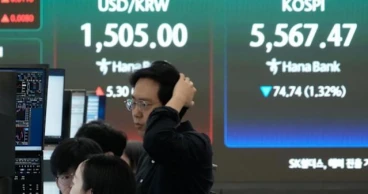
Japan’s Nikkei 225 fell 0.3% to 53,603.65, while South Korea’s Kospi saw a sharper decline of 3.2% to 5,460.46.
In Hong Kong, the Hang Seng index dropped 1.9% to 24,856.43, and China’s Shanghai Composite lost 1.1% to 3,889.08.
Australia’s S&P/ASX 200 slipped slightly by 0.1%, and Taiwan’s Taiex was down 0.3%.
Oil prices increased again on Thursday. Brent crude, the global benchmark, rose 3.3% to $100.41 per barrel after falling below $95 the previous day. U.S. crude also climbed 3.8% to $93.74 per barrel.
The rise in oil prices followed Iran’s rejection of a U.S.-proposed ceasefire plan on Wednesday. The proposal, put forward by the administration of President Donald Trump, included 15 points aimed at easing tensions. Trump also delayed his earlier deadline to take strong action against Iran’s power facilities in an effort to push Tehran to reopen the Strait of Hormuz.
Meanwhile, Iran carried out further attacks on Israel and Gulf Arab nations, while Israel launched airstrikes on Tehran. The U.S. is also preparing to send additional troops to the region.
The Strait of Hormuz — a key route between Iran and Oman through which about one-fifth of the world’s oil supply passes — has remained mostly closed since the conflict began. As a result, oil prices have been volatile, rising roughly 40% over the past four weeks.
On Wednesday, U.S. stock markets ended higher. The S&P 500 rose 0.5% to 6,591.90, the Dow Jones Industrial Average gained 0.7% to 46,429.49, and the Nasdaq composite increased 0.8% to 21,929.83.
Shares of Arm Holdings surged 16.4% in the U.S. after the British company announced plans to produce and sell its own chips, a move expected to boost future earnings.
Meanwhile, shares of Swiss sportswear brand On Holding dropped 11.2% after its CEO Martin Hoffmann announced he would step down. The company has appointed its two co-founders as co-CEOs.
In early Thursday trading, gold and silver prices declined. Gold fell 2.7% to $4,428.80 per ounce, while silver dropped 5.2% to $68.88 per ounce.
The U.S. dollar edged up slightly to 159.49 Japanese yen from 159.47 yen, while the euro remained unchanged at $1.1559.
4 months ago