World-Business
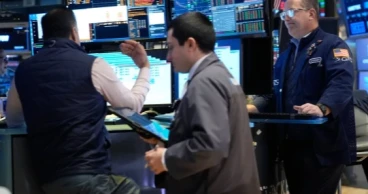
US stocks fall again, global markets steady as oil prices ease
U.S. stock markets moved lower on Friday, heading toward a fourth straight week of losses, although a slight drop in oil prices helped calm markets in other parts of the world.
The S&P 500 fell 0.5% in early trading and was on track for its longest weekly losing streak in a year. The Dow Jones Industrial Average dropped 126 points, or 0.3%, while the Nasdaq Composite declined 0.8%.
Rising bond yields continued to put pressure on U.S. stocks. Higher yields make borrowing more expensive for businesses and consumers, which can slow economic growth and reduce investment demand. Yields have been increasing since the war with Iran began, as investors worry that higher oil and gas prices could push inflation up.
Due to these concerns, traders are now less hopeful that the Federal Reserve will cut interest rates this year. According to market data, some investors are even considering a small chance of a rate hike in 2026 — something that seemed very unlikely before the conflict.
Lower interest rates usually support economic growth and stock prices, and Donald Trump has repeatedly called for cuts. However, reducing rates too quickly could worsen inflation.
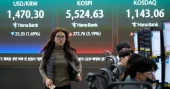
Outside the United States, markets showed more stability after Thursday’s sharp declines. Stock indexes rose slightly in Europe and gained 0.3% in South Korea, although markets in China fell.
The relative calm came as oil prices eased. Brent crude slipped 0.3% to $108.29 per barrel, while U.S. benchmark crude remained nearly unchanged at $95.53.
Oil prices have been highly volatile since the war began, rising from around $70 per barrel. Markets are closely watching how long the conflict will last and its impact on energy supplies, especially in the Strait of Hormuz, a key route for global oil shipments that Iran has restricted.
Among individual companies, Super Micro Computer shares plunged 28.2% after U.S. authorities accused a senior executive and others of illegally exporting advanced chips to China. The company said it is cooperating with investigators and has suspended the employees involved.
On the positive side, FedEx rose 2.8% after reporting stronger-than-expected quarterly profits.
In the bond market, the yield on the 10-year U.S. Treasury climbed to 4.32%, up from 4.25% a day earlier and significantly higher than 3.97% before the war began.
4 months ago

Alibaba targets $100B in AI and cloud revenue over 5 years
China’s technology giant Alibaba Group pledged on Thursday a goal of surpassing $100 billion in revenue from its artificial intelligence and cloud businesses over the next five years, which it said would be powered by the AI demand boom.
The announcement of the ambitious target came as the company posted a 67% drop in profit in the latest quarter, even as growth in its cloud business remained robust.
For the October-December quarter, the company, which shifted its focus to cloud and AI technologies in recent years, reported an overall revenue increase of 2% year-on-year to 284.8 billion yuan ($41.4 billion), lower than analysts’ estimates.
Revenue from its cloud business jumped 36% in the quarter to 43.3 billion yuan ($6.2 billion) from a year ago.
CEO Eddie Wu said during an earnings call on Thursday that Alibaba stands to benefit from the “exponential growth in AI demand.” It has been expanding and upgrading its flagship Qwen AI app and consumer-facing chatbot and also provides cloud computing and storage services to commercial customers.
“(There is) enormous and sustained growth momentum of the AI market,” Wu said.
Profit for the quarter was 16.3 billion yuan ($2.4 billion), down from 48.9 billion yuan the same quarter last year, in part due to growing marketing and sales expenses.
The Hangzhou-based company, which started out in e-commerce, has also seen a price war in the food delivery segment over the past months adding pressure to its profitability.
To help drive profit and amid rising costs and growing demand, the company said on Wednesday it would be increasing prices for some AI services by as much as 34%. It also launched the agentic AI tool Wukong this week, in an expansion of its products for commercial customers.
Alibaba’s AI ambitions was also tested recently following the departure this month of Lin Junyang, head of its AI model division Qwen. Last year, the company pledged investments of at least 380 billion yuan ($53 billion) in three years to advance its cloud computing and AI infrastructure.
Chinese tech companies have been stepping up their competitiveness against U.S. rivals and growing their dominance, especially after AI startup DeepSeek sent shock waves across the industry last year.
4 months ago
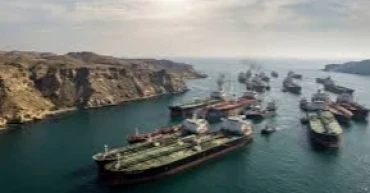
Oil prices jump amid Iran-Qatar tensions; Asian markets decline
Oil prices surged in early Asian trading, with Brent crude rising 4% to $112 (£84.34) per barrel, while US benchmark crude gained 3% to reach $99.27.
The spike followed an attack on Iran’s South Pars gas facility, one of the largest natural gas fields in the world. In response, Iran reportedly struck a major liquefied natural gas export facility in Qatar, causing extensive damage and heightening concerns over global energy supplies.
Despite the latest increase, oil prices remain below earlier highs in the conflict, when crude nearly reached $120 per barrel, though they are still significantly higher than pre-war levels.
Meanwhile, Asian stock markets opened lower on Thursday. South Korea’s Kospi dropped 3%, Japan’s Nikkei 225 fell 2.8%, and Australia’s ASX 200 declined by 1.6%.
With inputs from BBC
4 months ago
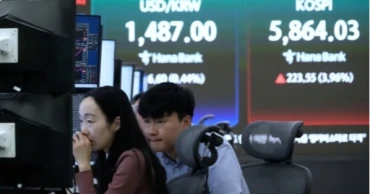
Asian shares rise, oil slips despite Iran attacks
Asian stock markets advanced on Wednesday, led by gains in Japan and South Korea, as oil prices eased slightly despite a series of attacks by Iran on its Gulf neighbors.
U.S. stock futures also rose 0.6% following moderate gains on Wall Street, ahead of the Federal Reserve’s interest rate decision later in the day. Analysts expect the Fed to keep rates unchanged amid concerns that higher oil prices could push inflation up.
Global oil and gas supply worries continue to weigh on markets. Brent crude, the international benchmark, dropped 2% to around $101 per barrel, down from over $106 on Monday. U.S. crude fell 3.6% to $92.78 per barrel.
Iran launched multiple attacks on Gulf countries and Israel on Wednesday after one of its top leaders was killed in an airstrike. The strikes, which included missiles designed to bypass air defenses, reportedly killed two near Tel Aviv. Despite the escalation, markets largely shrugged off the tensions.
In Tokyo, the Nikkei 225 rose 2.9% to 55,239.40 after February exports came in higher than expected. South Korea’s Kospi surged 5% to 5,925.03, boosted by lower oil prices benefiting major importers.
Hong Kong’s Hang Seng climbed 0.8% to 26,076.00, while Shanghai’s Composite Index gained 0.3% to 4,063.77. Australia’s S&P/ASX 200 added 0.3%, Taiwan’s Taiex rose 1.5%, and India’s Sensex advanced 0.9%.
Analysts from ING Bank noted that global oil flows remain limited, even as hopes grow that Iran may allow more vessels through the Strait of Hormuz, a crucial route for nearly a fifth of the world’s crude oil. The strait has been largely closed to ships linked to the U.S., Israel, and their allies.
In U.S. markets on Tuesday, the S&P 500 rose 0.3%, the Dow Jones edged up 0.1%, and the Nasdaq gained 0.5%. Delta Air Lines shares jumped 6.6% after raising its revenue forecast amid strong demand. Uber Technologies rose 4.2%, announcing plans to expand its autonomous vehicle partnership with Nvidia in San Francisco and Los Angeles next year.
In currency trading, the U.S. dollar fell to 158.76 Japanese yen from 159.01 yen, while the euro inched up to $1.1544 from $1.1542.
4 months ago

Inclusion of Bangladesh in US trade probe 'uncomfortable', but not a major challenge: BGMEA President
Mahmud Hasan Khan, President of the Bangladesh Garment Manufacturers and Exporters Association (BGMEA), on Thursday termed the inclusion of Bangladesh in a US investigation into overcapacity and overproduction in the manufacturing sector as "uncomfortable."
Reacting to the announcement by the office of the United States Trade Representative (USTR), the BGMEA president stated that there is "no logical basis" for including Bangladesh in the list of 16 countries targeted for the probe.
The investigation, initiated under Section 301 of the US Trade Act of 1974, aims to determine whether the policies, acts, or production structures of these countries are "unreasonable or discriminatory" and if they burden or restrict US commerce.
"Based on the USTR notice, it appears they will hold hearings to investigate unfair trade practices, labor rights violations, export incentives, and intellectual property rights (IPR) infringements," Mahmud Hasan Khan told reporters.
"If such allegations are proven, they may impose additional tariffs,” he added.
Despite the discomfort of being listed alongside economic giants like China, Japan, and the EU, the BGMEA President noted that he does not foresee a major challenge for the country’s apparel sector.
He noted that labor rights issues are already being addressed and the practice of IPR in local production is limited.
The BGMEA President argued that export incentives in Bangladesh are minimal. While questions might arise regarding agricultural subsidies, he pointed out that the US itself provides significant subsidies to its farmers, whereas Bangladesh primarily subsidizes fertilizers.
"The bulk of our exports to the US is readymade garments. US manufacturers are not producing the types of apparel we export, so we are not in direct competition with their local industry," he added.
The BGMEA chief suggested that the investigation might be an attempt by the US to protect its domestic industries and manage its massive consumer market. However, he urged the Ministry of Commerce to take proactive steps.
"Since Bangladesh has been named in the investigation, the government must take advanced preparations to handle the matter effectively during the hearings," Khan emphasized.
On Wednesday, US Trade Representative Jamieson Greer announced the investigation into 16 countries and entities. Besides Bangladesh, the list includes China, the European Union, India, Vietnam, Indonesia,
Malaysia, Cambodia, Thailand, South Korea, Taiwan, Mexico, Japan, Singapore, Switzerland, and Norway.
END/UNB/AI/ssk
4 months ago
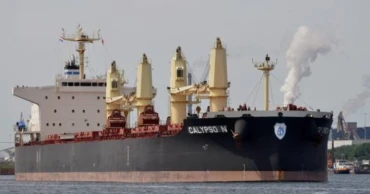
Ship carrying US wheat arrives at Mongla Port
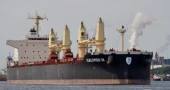
A consignment of 58,457 metric tonnes (MTs) of wheat imported from the United States has arrived at Mongla Port.
The vessel MV Calypso N, carrying the wheat, anchored at the outer anchorage of the country’s second busiest seaport on Wednesday, according to a statement from the Ministry of Food.
Bangladesh imported the wheat from the United States under a government-to-government (G2G) arrangement.
Government approves purchase of 3 LNG cargoes to boost energy security
According to the ministry, all wheat imported under the G2G-01 and G2G-02 agreements has now reached the country.
Under the G2G-01 agreement, Bangladesh received 237,845 metric tonnes of wheat, while 230,039 metric tonnes arrived under the G2G-02 agreement, bringing the total to 467,884 metric tonnes.
Bangladesh’s annual wheat demand is around 70 lakh metric tonnes, while domestic production stands at roughly 10 lakh metric tonnes. The remaining demand is met through imports by both the government and private sector.
The process of testing wheat samples from the vessel has already been completed, and necessary steps have been taken to ensure the quick unloading of the shipment, the statement added.
4 months ago
Government approves purchase of 3 LNG cargoes to boost energy security
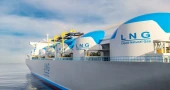
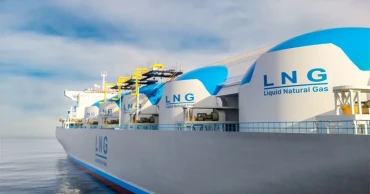
The government on Wednesday approved a proposal for purchasing three LNG cargoes from the international spot market for delivery in early April aiming to ensuring energy security in the country.
The approval came from the 8th meeting of the Cabinet Committee on Government Purchase, 1st such meeting of the new government chaired virtually by Finance Minister Amir Khosru Mahmud Chowdhury.
Gas, oil prices surge, global shares drop amid Middle East tensions
Cabinet Division officials said the Energy and Mineral Resources Division proposed the procurement through the international quotation method.
According to the proposal, Total Energies Gas & Power Ltd., UK, will supply one cargo LNG at US$21.58 per MMBtu, while Posco International Corporation of South Korea will supply two cargoes LNG at US$ 20.76 per MMBtu each.
The estimated costs for the LNG cargoes are Tk 907.84 crore, Tk 873.34 crore and Tk 873.34 crore respectively.
The committee approved LNG procurement proposals to ensure uninterrupted gas supply for power generation and industrial activities in the country.
Officials said the government continues to procure LNG from the spot market to meet growing domestic demand and maintain stability in the national energy supply system.
4 months ago
Asian shares rise as investors watch for signs of Iran war ending
Asian shares rose on Wednesday, though some benchmarks trimmed earlier gains, as investors closely monitored developments in the war with Iran. U.S. stock futures climbed while oil prices showed mixed movements.
Tokyo’s Nikkei 225 added 1.3% to 54,926.50, and South Korea’s Kospi rose 0.6% to 5,562.40, after surging more than 3% earlier. Australia’s S&P/ASX 200 gained 0.6% to 8,743.50. Taiwan’s benchmark index jumped 4.1%, while Bangkok’s SET rose 1.3%. In contrast, Hong Kong’s Hang Seng slipped 0.2% to 25,921.02, and India’s Sensex fell 1.1%.
Oil prices remained well below Monday’s peaks, which had rattled global markets due to fears that the conflict could block the flow of oil and gas. Brent crude dipped slightly to $87.78 per barrel, while U.S.
crude rose to $83.98. Prices had plunged from nearly $120 per barrel after U.S. President Donald Trump suggested the war could end soon, raising hopes of a return to normal energy flows.
Despite optimism, tensions remain high. The U.S. targeted Iranian minelaying vessels, while Iran threatened to block oil exports. Trump warned that any attempt to close the Strait of Hormuz would face a “twenty times harder” response from the United States.
In the U.S., the S&P 500 fell 0.2% to 6,781.48, the Dow dipped slightly, and the Nasdaq edged up. Oracle shares surged 12% in premarket trading after reporting stronger-than-expected earnings and revenue growth.
Analysts say markets often rebound quickly from conflicts if oil prices remain steady. But prolonged high oil prices could strain household budgets and raise business costs, increasing the risk of “stagflation,” where economic growth slows while inflation stays high.
Currency movements were modest, with the dollar rising to 158.08 Japanese yen, and the euro trading at $1.1638.
4 months ago
Asian stocks rebound as oil prices fall back to $90
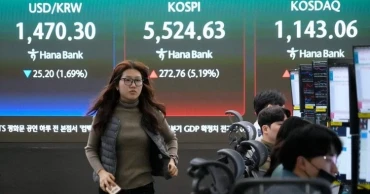
Asian markets bounced back Tuesday after steep losses the previous day, as investors bet the war with Iran might be short-lived.
Tokyo’s Nikkei 225 surged 2.9% to 54,248.39 following revised economic data showing Japan’s economy grew 1.3% annually in the last quarter of 2025, stronger than the initial 0.2% estimate. Analysts said solid business investment helped lift the economy.
“Positive comments from President Trump overnight are giving markets hope that the conflict could ease,” said Neil Newman, managing director at Astris Advisory Japan.
Australia’s S&P/ASX 200 rose 1.1% to 8,692.60, South Korea’s Kospi jumped 5.4% to 5,532.59, Hong Kong’s Hang Seng climbed 2.1% to 25,937.59, and Shanghai’s Composite index gained 0.6% to 4,120.45.
The rebound followed a steep drop in oil prices, which had spiked near $120 per barrel amid Middle East tensions before falling to about $90. Benchmark U.S. crude dropped $5.78 to $88.99 a barrel, while Brent crude slipped $5.79 to $93.17.
In the U.S., markets recovered from early losses. The S&P 500 rose 0.8% to 6,795.99, the Dow Jones added 239 points to 47,740.80, and the Nasdaq gained 1.4% to 22,695.95.
Investors remain wary of prolonged oil price surges, which could strain household budgets and corporate costs, raising fears of global stagflation. Concerns center on the Strait of Hormuz, through which a fifth of the world’s oil passes. President Trump said he was considering “taking it over” if Iran disrupts the flow.
In bonds, the 10-year U.S. Treasury yield fell to 4.10% from 4.15%, while currency markets saw the dollar edge slightly higher against the yen at 157.48.
4 months ago
Gas, oil prices surge, global shares drop amid Middle East tensions
Global gas and oil prices surged while stock markets across the world fell sharply as the Middle East conflict intensified, raising concerns about its duration and economic impact.
In the UK, gas prices hit their highest level in three years on Tuesday after significant gains on Monday, while Brent crude briefly exceeded $85 a barrel, a level last seen in July 2024. Major stock indexes in the US, Europe, and Asia also suffered losses.
Investors are assessing the economic consequences of the Israel and US airstrikes on Iran and Tehran’s retaliatory measures, including potential effects on inflation and interest rates.
Analysts fear that disruption in this critical energy and shipping region could mirror the impact of Russia’s full-scale invasion of Ukraine four years ago, which drove up global energy costs, reports BBC.
The UK’s Office for Budget Responsibility warned in its latest fiscal outlook that the conflict could severely affect both global and UK economies. German Chancellor Friedrich Merz, after meeting with US President Donald Trump at the White House, also expressed concern over possible economic damage, urging a swift end to the hostilities.
By Tuesday’s close, London’s FTSE 100 fell 2.75%, while Germany’s DAX and France’s CAC 40 dropped 3.44% and 3.46% respectively. In the US, the S&P 500 opened sharply lower but ended down 0.9%. In Asia, Japan’s Nikkei fell 3.3%, Hong Kong’s Hang Seng and China’s Shanghai Composite declined, and South Korea’s Kospi fell over 7% following Monday’s holiday closure.
UK gas prices rose above 165p per therm, a level last seen a year after the Ukraine war began, and closed at 138p, over 20% higher than Monday. Prices have doubled since the US and Israel began airstrikes on Iran. The spike followed QatarEnergy halting production after “military attacks” on its facilities, later suspending output of aluminium, methanol, and urea used in fertilizers.
Higher gas prices may increase household energy bills in the UK, though the impact is capped until July. Oil prices rose moderately, as crude can be sourced more flexibly, but higher fuel costs could still push up transport, food, and overall inflation, influencing central bank decisions on interest rates.
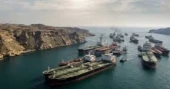
Shipping through the Strait of Hormuz, which carries about 20% of the world’s oil and gas, has largely stopped after attacks on vessels. Ebrahim Jabbari, adviser to Iran’s Islamic Revolutionary Guard Corps chief, warned ships against entering the region. Supertanker freight rates from the Middle East to China hit a record $400,000 per day, nearly double last week’s rate.
Logistics experts say insurance risks and carrier hesitancy have effectively closed the Strait of Hormuz, likely driving global shipping rates higher. UK consumers may face increased fuel prices if crude remains elevated, according to Alasdair Locke, chairman of Motor Fuel Group.
5 months ago