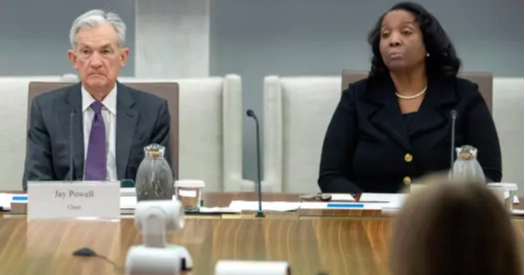
President Donald Trump said late Monday that he is firing Federal Reserve Governor Lisa Cook, in what is seen as a sharp escalation of his efforts to exert greater control over the U.S. central bank.
In a letter posted on his Truth Social platform, Trump cited allegations of mortgage fraud — raised last week by Bill Pulte, a Trump appointee to the Federal Housing Administration — as the reason for dismissing Cook. She has previously said she would not step down.
The move follows Trump’s repeated clashes with Fed Chair Jerome Powell, whom he has accused of mismanaging the institution and resisting his demands to cut interest rates. Powell has insisted the central bank must assess the impact of Trump’s sweeping tariffs on imports, which could push inflation higher.
The episode has renewed debate over the independence of the Federal Reserve, a principle widely supported by economists and investors. The Fed, by raising or lowering interest rates, wields enormous influence over growth, inflation, and jobs. Economists argue that central banks function best when insulated from political pressure, allowing them to take unpopular but necessary steps to contain inflation.
Read: US erconomy remains stable, but Federal Reserve faces uncertainty
That independence was cemented after the painful lessons of the 1970s, when former Fed Chair Arthur Burns bowed to pressure from President Richard Nixon to keep rates low before the 1972 election — a move many blame for runaway inflation. His successor, Paul Volcker, appointed in 1979, raised rates to nearly 20%, triggering a deep recession but ultimately breaking the back of inflation.
Markets are watching Trump’s actions closely. Any attempt to remove Powell could rattle Wall Street, push bond yields higher, and drive up borrowing costs across mortgages, auto loans, and credit cards.
Still, the Fed is not entirely beyond political influence. Presidents appoint board members, subject to Senate approval, and can gradually reshape policy direction. Congress, meanwhile, sets the central bank’s mandate, which since 1977 has required the Fed to pursue both stable prices and maximum employment.
Whether a president can fire a Fed chair mid-term remains legally murky. The Supreme Court has suggested it can only be done “for cause,” typically meaning misconduct or negligence. Any attempt to remove Powell on policy grounds could trigger a legal showdown.
Source: Agency