world-business
Asian shares mixed amid holiday lull, Taiwan tensions; gold hits record levels
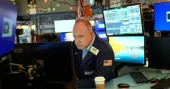
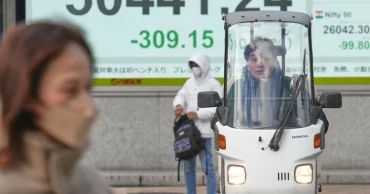
Asian shares showed a mixed performance on Monday in light trading following a muted post-Christmas session on Wall Street, even as tensions escalated over Taiwan. U.S. futures were largely unchanged.
The Chinese military said it dispatched air, naval, and rocket forces to conduct joint exercises near Taiwan, which Beijing claims as its territory, citing concerns over separatist activity and “external interference.” Taiwan, in response, placed its forces on alert and denounced Beijing as “the biggest destroyer of peace.” The drills followed U.S. arms sales to Taiwan and a statement by Japanese Prime Minister Sanae Takaichi that Japan could intervene militarily if China acted against the island. The Chinese military did not specifically reference the United States or Japan in its Monday statement.
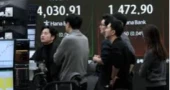
In regional markets, Taiwan’s benchmark index rose 0.8%, Hong Kong’s Hang Seng gained 0.3% to 25,887.33, and the Shanghai Composite added 0.3% to 3,975.92. Tokyo’s Nikkei 225 fell 0.2% to 50,663.90. South Korea’s Kospi jumped 1.9% to 4,207.36, while Australia’s S&P/ASX 200 declined 0.3% to 8,732.70.
Precious metals saw notable movements, with gold dropping 0.4% to $4,535.50 per troy ounce, while silver surged 3% to $79.87 amid supply constraints. Rising demand for safe-haven assets has pushed both metals to record highs this year, bolstered by expectations of U.S. Federal Reserve rate cuts and dollar weakness. Mining stocks, including Freeport-McMoRan, posted solid gains, climbing 2.2% on Friday.
U.S. stock indexes showed little movement after reopening Friday, with the S&P 500 down less than 0.1% at 6,929.94, the Dow Jones Industrial Average falling to 48,710.97, and the Nasdaq dipping 0.1% to 23,593.10.
In commodities, U.S. crude rose 60 cents to $57.34 per barrel, Brent crude gained 62 cents to $60.86. The dollar slipped to 156.28 yen, while the euro remained at $1.1770.
Source: AP
7 months ago
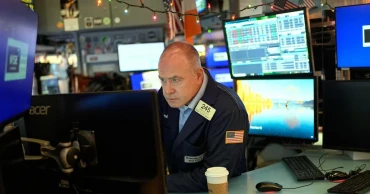
Asian shares mixed as US stocks hit more records
Asian markets showed mixed performance Thursday amid light holiday trading, with many exchanges in the region and worldwide closed for Christmas.
In Tokyo, the Nikkei 225 dipped less than 0.1% to 50,317.43, marking nearly a 30% gain for the year. The dollar weakened slightly to 155.70 yen from 155.94, while the euro held steady at $1.1780. Mainland Chinese markets rose, with the Shanghai Composite up 0.3%, although Hong Kong remained closed. Investors were supported by the People’s Bank of China’s pledge to maintain sufficient liquidity to back financing, growth, and inflation targets. Thailand and Indonesia saw share declines.
In the U.S., the S&P 500 rose 0.3% to 6,932.05 on Wednesday, the Dow Jones added 0.6% to 48,731.16, and the Nasdaq gained 0.2% to 23,613.31. Trading volumes were light due to early closures for Christmas Eve and Thursday’s holiday, with roughly 1.8 billion shares traded on the NYSE, about a third of a typical day. Full trading resumes Friday, although volumes are expected to remain subdued as many investors wrap up positions for the year.
The S&P 500 has climbed over 17% this year, boosted by deregulatory policies and optimism over artificial intelligence benefiting technology firms and broader corporate earnings. Investors are now watching U.S. economic trends and the Federal Reserve’s upcoming rate decisions, widely expected to remain steady in January.
U.S. economic data showed a 4.3% annualized growth in Q3, the fastest in two years, fueled by strong consumer spending despite inflation concerns. Jobless claims fell to 214,000 last week, below forecasts, signaling continued labor market strength.
In corporate news, Dynavax Technologies surged 38.2% after Sanofi announced a $2.2 billion acquisition, while Novo Nordisk gained 1.8% following U.S. approval for a pill version of its weight-loss drug Wegovy. Oil prices closed at $58.35 a barrel for U.S. crude and $61.80 for Brent.
Source: AP
7 months ago
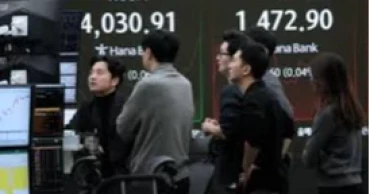
Asian markets mostly rise as S&P 500 hits record high
Asian markets mostly rose Wednesday after the S&P 500 in the U.S. closed at a record high, following a report showing the U.S. economy grew at an unexpectedly strong annual rate of 4.3% in the third quarter.
The initial government estimate for July–September growth indicated persistent inflation, while a separate report showed consumer confidence declined further in December. In comparison, the U.S. economy had expanded at a 3.8% annual pace in the second quarter.
Trading in Asia was light ahead of Christmas, with many global markets set to close Thursday. U.S. markets will close early Wednesday for Christmas Eve and remain closed Thursday.
In Asia, Tokyo’s Nikkei 225 remained flat at 50,411.10, while South Korea’s Kospi slipped 0.1% to 4,113.83. Hong Kong’s Hang Seng gained 0.2% to 25,818.93, and China’s Shanghai Composite rose 0.2% to 3,929.25. Australia’s S&P/ASX 200 fell nearly 0.4% to 8,762.70. Markets in Hong Kong and Australia closed early for Christmas Eve. Taiwan’s Taiex inched up less than 0.1%, and India’s Sensex rose 0.1%.
Gold and silver extended gains after reaching record highs earlier in the week amid geopolitical tensions. Gold rose 0.4% to $4,525.50 per ounce, while silver climbed 1.8%. U.S. futures were slightly lower early Wednesday.
On Tuesday, strong gains in tech stocks pushed the S&P 500 up 0.5% to 6,909.79, even though most stocks fell. The Dow Jones rose 0.2% to 48,442.41, and the Nasdaq gained 0.6% to 23,561.84. Nvidia advanced 3%, and Alphabet added 1.5%. Novo Nordisk surged 7.3% after U.S. regulators approved a daily pill version of its weight-loss drug Wegovy.
The report also showed inflation higher than the Federal Reserve’s target. The Fed’s preferred gauge, the personal consumption expenditures (PCE) index, climbed to a 2.8% annual rate last quarter from 2.1% in the second quarter.
Investors expect the Fed to maintain interest rates at its January meeting amid high inflation, slowing labor markets, and weak retail sales.
Early Wednesday, the dollar fell against the yen to 155.96 from 156.17, after officials suggested possible intervention. The euro slipped to $1.1793 from $1.1796. Oil prices rose slightly, with U.S. crude at $58.45 per barrel and Brent crude at $61.90, as traders monitored supply risks in Venezuela and Russia.
Source: AP
7 months ago
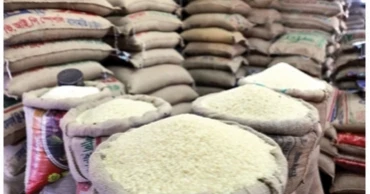
Govt approves import of 1 lakh mt rice from India, Pakistan
The government has approved several proposals including imports of rice, edible oil and lentils to strengthen food security and stabilise prices ahead of the holy month of Ramadan.
The approvals were given at a meeting of the Advisers Council Committee on Government Purchase, on Tuesday at the Cabinet Division Conference Room at the Secretariat with Finance Adviser Dr Salehuddin Ahmed presiding.
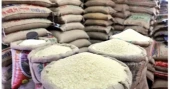
The meeting recommended two proposals from the Ministry of Food to procure a total of 100,000 metric tonnes of rice.
Of this, 50,000 metric tonnes of non-basmati parboiled rice will be imported from India through the international open tender method at an estimated cost of Tk 217.53 crore while another 50,000 metric tonnes of white rice will be imported from Pakistan under a government-to-government arrangement at around Tk 241.52 crore.
Officials said the rice imports would help maintain adequate public food stocks and curb market volatility during Ramadan when demand for essentials rises sharply.
The Directorate General of Food will implement the procurement to ensure timely arrival of consignments and strengthen buffer stocks.
To keep edible oil prices stable, the meeting also approved the procurement of 4.75 crore litres of edible oil.
This includes 1 crore litres of refined rice bran oil from local sources and 3.75 crore litres of soybean oil from international sources through direct purchase methods.
Govt to procure 50,000 mt of non-basmati parboiled rice, 80,000 mt fertiliser
The Trading Corporation of Bangladesh is expected to distribute the oil through subsidised sales across the country.
In addition, the committee approved the procurement of 10,000 metric tonnes of lentils through the national open tender method at an estimated cost of Tk 72.20 crore.
The lentils will be procured in 50-kg bags and distributed through government channels to stabilise the market and support low- and middle-income consumers.
7 months ago

Lula says EU-Mercosur trade pact could be finalized in January
Brazilian President Luiz Inácio Lula da Silva said Saturday he is optimistic that the long-delayed free trade agreement between Mercosur and the European Union could be signed in January, despite mounting opposition from some European countries and protests by farmers across the continent.
European Union leaders had initially planned to finalize the agreement during a visit to Brazil this weekend. However, European Commission President Ursula von der Leyen said Friday that the signing would be postponed by several weeks following a tense EU summit, citing the need to resolve outstanding concerns raised by member states.
Speaking to fellow South American leaders at a Mercosur summit in Foz do Iguacu — near Brazil’s border with Argentina and Paraguay — Lula said European negotiators had previously indicated the deal would be signed, prompting the meeting. He said the delay came after Italian Prime Minister Giorgia Meloni requested additional time.
Von der Leyen must secure the support of at least two-thirds of EU member states to move forward. Italy’s opposition could give France enough backing to block the agreement.
Lula said he spoke with Meloni by phone on Friday and received a letter from EU leaders expressing their intention to conclude the deal in January. He stressed that political determination is essential to complete negotiations that have stretched on for more than 26 years.
“Without leadership and courage, it’s impossible to finalize a negotiation that has lasted so long,” Lula told the summit, adding that Mercosur would continue pursuing partnerships elsewhere if delays persist.
If completed, the agreement would create a free trade zone covering about 780 million people and roughly one-quarter of global GDP, gradually eliminating tariffs on most goods exchanged between the two blocs.
Canada, U.S. to Begin Formal Review of Free Trade Agreement in Mid-January
France has been at the forefront of resistance to the deal involving Mercosur members Brazil, Argentina, Uruguay, Paraguay and Bolivia. French President Emmanuel Macron said this week he could not yet commit to supporting the agreement and noted ongoing talks with leaders from Italy, Poland, Belgium, Austria and Ireland to address farmers’ concerns.
Lula countered that no single leader can derail the pact and expressed hope that the deal would move forward in the interest of Mercosur, multilateral cooperation and economic development.
Source: AP
7 months ago
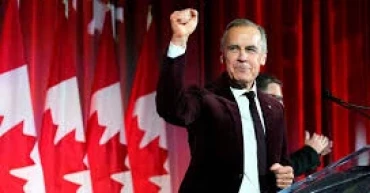
Canada, U.S. to Begin Formal Review of Free Trade Agreement in Mid-January
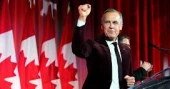
Canada and the United States are set to begin formal talks to review their free trade agreement in mid-January, according to the office of Canadian Prime Minister Mark Carney.
Carney informed provincial leaders that Dominic LeBlanc, Canada’s lead official on U.S. trade relations, “will meet with U.S. counterparts in mid-January to initiate formal discussions,” the Prime Minister’s office said Thursday.
The United States-Mexico-Canada Agreement (USMCA), negotiated by U.S. President Donald Trump during his first term, is scheduled for review in 2026, under a clause allowing potential renegotiation.
Canada, heavily reliant on trade, exports more than 75% of its goods to the United States, although many exports currently benefit from USMCA exemptions. Tensions in trade talks arose in October after Ontario ran an anti-tariff ad in the U.S., prompting Trump to suspend certain discussions.
Carney said Canada and the U.S. were close to agreeing on sectoral tariff relief covering steel, aluminum, autos, and lumber. He noted that U.S. concerns over Canadian dairy, alcohol, and digital services will be part of broader continental trade discussions.
The Prime Minister and provincial leaders plan to meet in Ottawa early next year to further address trade issues.
Source: AP
7 months ago
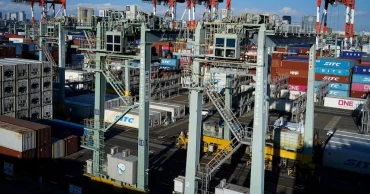
Japan’s November exports grow 6% as shipments to US rebound
Japan recorded a 6% increase in exports in November from a year earlier, buoyed by a recovery in shipments to the United States, which rose for the first time since March after trade-related uncertainty eased following a tariff deal with the Trump administration.
Preliminary figures released Wednesday showed imports edged up 1.3% year-on-year, resulting in a trade surplus of 322.2 billion yen (about $2.1 billion).
Exports to the U.S. jumped nearly 9%, driven by stronger shipments of automobiles, chemicals and cameras, offsetting weaker demand for machinery and iron and steel. On the import side, purchases of U.S. oil almost tripled, while imports of grain and other food items also rose sharply.
Under the tariff agreement with Washington, most Japanese goods face a baseline import duty of 15%, instead of the previously proposed 25%. That helped lift passenger vehicle exports by 8% in volume terms, though their total value increased just 1.5%, suggesting automakers absorbed much of the higher tariff costs rather than passing them on to buyers.
Imports from the U.S. climbed more than 7%, yet Japan still posted a trade surplus with its largest trading partner of 739.8 billion yen ($4.7 billion), an 11% increase from a year earlier.
Luxury car sales slide in China as economic slowdown hurts European automakers
Exports to the European Union surged about 20%, supported by stronger demand for machinery, vehicles and other manufactured products. By contrast, shipments to China slipped 2.4%, reflecting weaker exports of chemicals, machinery and vehicles amid diplomatic strains.
Oxford Economics’ Norihiro Yamaguchi said higher tariffs will likely continue to restrain exports, though he expects Japan’s overseas shipments to strengthen next year, aided by spillover effects from robust U.S. spending on artificial intelligence.
Source: AP
7 months ago
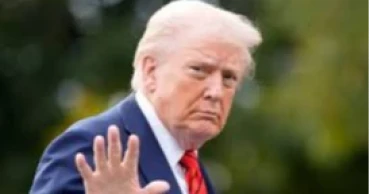
Trump expands travel ban to 20 more countries and Palestinians
The Trump administration announced Tuesday an expansion of U.S. travel restrictions to include 20 additional countries and the Palestinian Authority, doubling the number of nations affected by limits introduced earlier this year.
The updated policy imposes full travel bans on citizens of five new countries — Burkina Faso, Mali, Niger, South Sudan, and Syria — as well as individuals traveling on Palestinian Authority-issued documents. Fifteen other countries face partial restrictions, including Angola, Antigua and Barbuda, Benin, Ivory Coast, Dominica, Gabon, Gambia, Malawi, Mauritania, Nigeria, Senegal, Tanzania, Tonga, Zambia, and Zimbabwe. The rules apply to both visitors and prospective immigrants.
The restrictions do not apply to those who already hold U.S. visas, lawful permanent residents, diplomats, athletes, or individuals whose entry is deemed in the U.S. national interest. The measures are set to take effect on Jan. 1.
The administration cited concerns over corruption, unreliable civil documentation, high rates of visa overstays, refusal of some countries to accept deportees, and instability as reasons for expanding the restrictions. Officials also pointed to immigration enforcement, foreign policy, and national security considerations.
Trump sues BBC for $10 Billion over edited Jan. 6 speech
The move follows the arrest of an Afghan national suspected of shooting two National Guard members over Thanksgiving weekend. Critics argue the expanded ban unfairly targets people based on nationality rather than actual security risks. Advocacy groups also warned that the update removes protections for Afghans eligible for the Special Immigrant Visa, a program for those who assisted U.S. forces.
Some affected nations, including Dominica and Antigua and Barbuda, said they are urgently seeking clarification from U.S. officials regarding the new restrictions. Meanwhile, the administration eased certain restrictions for Turkmenistan, while tightening rules for Laos and Sierra Leone.
The ban on Palestinians builds on earlier measures, now prohibiting Palestinian Authority passport holders from traveling to or emigrating to the United States, citing terrorist activity in the West Bank and Gaza and compromised vetting capabilities due to ongoing conflict.
Source: AP
7 months ago

Global Labor Market Conference in Riyadh partners with King’s Trust International
The Global Labor Market Conference (GLMC) has announced a dynamic partnership with King’s Trust International (KTI), which will join the third edition of GLMC as a Knowledge Partner.
Set to take place in Riyadh on January 26 and 27, the conference will draw on King’s Trust International’s global expertise and insights on youth employment to strengthen its evidence-based agenda and deepen dialogue on the future of work.
As part of the collaboration, King’s Trust International has contributed to the scientific committee shaping GLMC’s program and will host a dedicated Youth Track panel discussion.
Moderated by Will Straw, CEO of King’s Trust International, the session will spotlight the priorities, challenges, and lived experiences of young people, ensuring their voices are central to the global labor market conversations.
Will Straw, Chief Executive Officer of King’s Trust International, said, “We are proud to be a knowledge partner at the Global Labour Market Conference. Addressing the challenges young people face in today’s labour market requires collaboration and shared insight. Platforms like the GLMC play a vital role in fostering these partnerships, and we are honoured to host a panel on an issue that matters deeply to young people around the world.”
Building on the success of last year’s edition and on GLMC’s year-round efforts to drive research, collaboration, and policy innovation, the conference continues to expand its network of global knowledge partners. Under the theme “Future in Progress”, GLMC 2026 will bring together more than 200 speakers, including policymakers, business leaders, labor market experts, and representatives from international organizations, to address emerging trends and the most pressing challenges shaping today’s labor markets.
The event aims to foster forward-looking dialogue, collaborative action, and solutions that support inclusive and resilient labor markets worldwide.
7 months ago
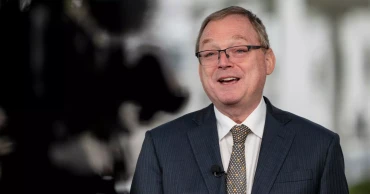
Hassett says Fed would remain independent even if Trump’s views are shared
Kevin Hassett, a top contender for President Donald Trump’s pick for Federal Reserve chair, said Sunday that while he would share the president’s views with Fed officials, the central bank could reject them when setting interest rates.
In an interview on CBS News’ “Face the Nation,” Hassett said he would continue consulting with Trump if appointed, but when asked whether the president’s opinions would carry “equal weighting” with the Fed’s interest-rate committee, he replied, “No, he would have no weight.”
“His opinion matters if it’s good, if it’s based on data,” Hassett said. “If you go to the committee and say, ‘the president made this argument and it’s sound,’ but they reject it, then they’ll vote differently.”
Trump is reportedly finalizing interviews with candidates to replace current Fed Chair Jerome Powell, whose term ends next May. The president has emphasized that he wants a nominee who will sharply reduce the Fed’s key rate from around 3.6% to 1% or lower, a position few economists share. Trump’s public commentary has renewed concerns about the Fed’s political independence, traditionally respected by presidents of both parties.
Luxury car sales slide in China as economic slowdown hurts European automakers
Hassett stressed that the Fed’s independence would remain intact under his leadership. “In the end, it’s a committee that votes,” he said. “I’d be happy to talk to the president every day until both of us are dead because it’s so much fun.”
Trump has also expressed interest in Kevin Warsh, former Fed governor, as a potential replacement for Powell, calling both Warsh and Hassett “great.”
Source: AP
7 months ago