
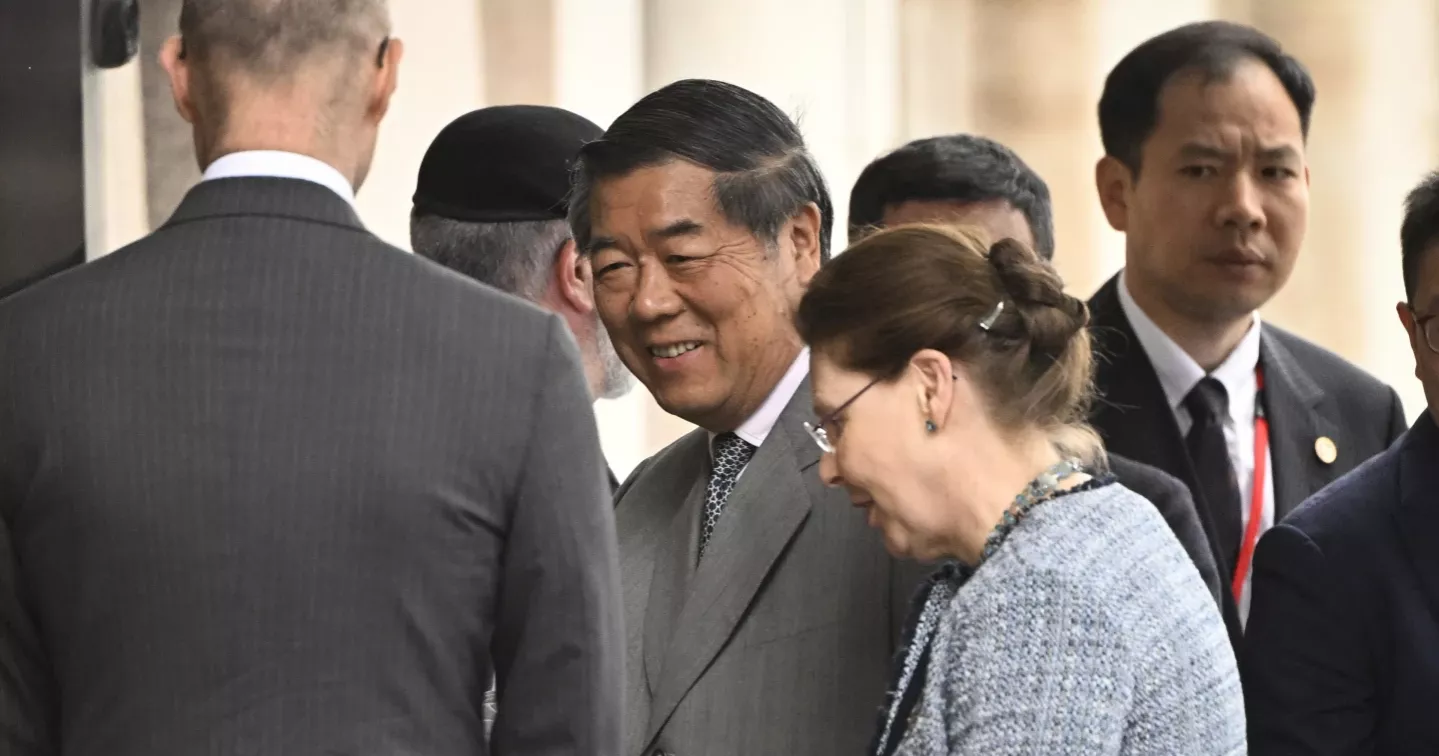
The United States and China have agreed to work on extending a tariff pause set to expire on August 12, following two days of high-level trade negotiations in the Swedish capital, according to Chinese officials. The U.S. delegation acknowledged the topic was discussed but said no final decision has been made.
China’s Vice Premier He Lifeng, who led Beijing’s team, said the discussions were “in-depth, candid, and constructive,” and emphasized the importance of a stable and sustainable U.S.-China trade relationship for global economic growth. While he confirmed an agreement to work toward a 90-day extension of the current tariff pause, he did not specify how it would be implemented.
U.S. Treasury Secretary Scott Bessent described the meetings as “very fulsome,” touching on key U.S. concerns including China’s purchase of Iranian oil, supply of dual-use technology to Russia, and overproduction in key industrial sectors. He stressed the importance of “de-risking” strategic industries such as rare earths, semiconductors, and pharmaceuticals, and reiterated U.S. priorities to restore domestic manufacturing, reduce trade deficits, and secure more favorable purchase agreements for American agricultural and energy exports.
The Stockholm talks, held behind closed doors at the office of Swedish Prime Minister Ulf Kristersson, marked the latest attempt to resolve lingering disputes over tariffs and export controls. The two sides previously met in Geneva and London to address contentious issues, including steep tariffs and critical supply chain restrictions.
FPT, ATEC Forge first global partnership to boost Japan’s auto software innovation
On Monday, Kristersson met Bessent and U.S. Trade Representative Jamieson Greer for breakfast before talks resumed. Both sides said the meetings ended on a constructive note and pledged to maintain open lines of communication on trade and economic issues.
Possibility of Trump-Xi Summit
The talks came amid speculation that President Donald Trump may meet Chinese President Xi Jinping later this year. Trump hinted at the possibility during a press briefing aboard Air Force One, saying he may visit China at Xi’s invitation. However, he clarified via his Truth Social platform that he was not actively seeking a summit.
Although the topic of a Trump-Xi meeting was not formally discussed during the Stockholm negotiations, U.S. officials noted that both presidents support continued engagement between their trade teams.
Greer confirmed that the American delegation would return to Washington to consult with President Trump regarding the potential extension of the August deadline.
Pressure Builds Ahead of Tariff Deadline
The urgency surrounding the talks stems from a looming increase in tariff rates. Currently, the U.S. imposes a 30% tariff on Chinese goods, while China levies a 10% duty on American imports. These rates are significantly lower than the triple-digit tariffs proposed earlier this year during the peak of the trade standoff.
The two sides agreed to a 90-day pause in May, following tense negotiations in Geneva. That pause is set to expire on August 12 unless a new agreement is reached.
China has so far been guarded about its specific goals, while the U.S. has made it clear that it wants to rebalance the trade relationship and secure better terms for its exporters. Analysts say any extension of the tariff pause would be a positive step but warn that longer-term solutions remain complex and politically sensitive.
100 Days to 8th CIIE: Preps Harden as Global Exhibitors Eye Business Potential in China
Wendy Cutler, a former U.S. trade negotiator and now vice president at the Asia Society Policy Institute, cautioned that China is now a more assertive player on the world stage. “Beijing has learned lessons since the first Trump administration and will not buy into a one-sided deal this time around,” she said.
Symbolic Setting, Strategic Stakes
The high-stakes talks drew significant attention in Stockholm. Police cordoned off the waterfront near the prime minister’s office, where American and Chinese flags flew side by side. Crowds of onlookers and media gathered outside the venue, underscoring the global significance of the negotiations.
Both Bessent and He Lifeng expressed optimism that the dialogue in Stockholm could pave the way for further progress. “We agreed to stay in close contact and communicate with each other in a timely manner,” He said.
Source: Agency