Asia
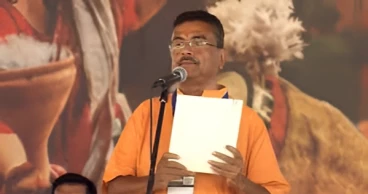
Suvendu Adhikari takes oath as BJP’s first Chief Minister of West Bengal
Suvendu Adhikari on Saturday took oath as the Chief Minister of West Bengal after the Bharatiya Janata Party (BJP) secured victory in the state assembly election, marking its first-ever win in the eastern state’s turbulent electoral history that has seen shifts from Communist rule to the 15-year tenure of Mamata Banerjee.
Adhikari, who once served as a close aide to Banerjee during her tenure as Chief Minister while leading the All India Trinamool Congress government, now occupies the same top post he once worked under her leadership.
Bengal Assembly dissolved after Mamata Banerjee refuses to resign
His political journey is widely seen as one of the most dramatic transformations in West Bengal politics, rising from a key Trinamool leader and aide to Banerjee to a central figure in the BJP’s campaign and a prominent leader in constituencies such as Nandigram and Bhabanipur.
The oath-taking ceremony marked a significant political development, with Prime Minister Narendra Modi and Union Home Minister Amit Shah in attendance, underscoring the importance of the BJP’s electoral victory in the state.
Adhikari’s new council of ministers includes several prominent leaders, among them Dilip Ghosh, Agnimitra Paul, Nishit Pramanik, Kshudiram Tudu and Ashok Kirtania, all of whom took oath during the ceremony.
Source: NDTV
2 months ago
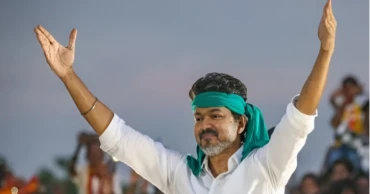
Vijay secures 118 MLAs, set to take oath as Tamil Nadu CM tomorrow
Actor-turned-politician Vijay has informed Tamil Nadu Governor R.N. Ravi Arlekar that he now has the support of 118 MLAs, with his swearing-in ceremony as chief minister expected to be held tomorrow at 11:00 am, according to sources.
Sources said last-minute and hectic negotiations by Vijay with the Viduthalai Chiruthaigal Katchi (VCK), Amma Makkal Munnetra Kazhagam (AMMK) and an Indian Union Muslim League (IUML) MLA to secure their backing for the Tamilaga Vettri Kazhagam (TVK) appear to have succeeded, helping the party reach the majority mark of 118.
Bengal Assembly dissolved after Mamata Banerjee refuses to resign
The actor-politician, who met Governor Arlekar on Friday evening for his third round of talks on government formation, is expected to be sworn in as the next chief minister of Tamil Nadu on Saturday.
On Friday evening, after four days of uncertainty, slogans of “TVK, TVK” were heard outside Vijay’s residence in Chennai as indications emerged that he had secured the required support to form the government.
Vijay’s TVK achieved a sweeping victory in last month’s assembly election, winning 108 of the 234 seats in its debut, breaking the 62-year dominance of Dravidian parties Dravida Munnetra Kazhagam (DMK) and All India Anna Dravida Munnetra Kazhagam (AIADMK) in Tamil Nadu politics.
However, the post-poll celebrations were short-lived after Governor Arlekar reportedly made it clear that he would not invite Vijay to form the government without confirmed majority support.
Despite two meetings held on Wednesday and Thursday, the Governor maintained his stance, telling Vijay that he could not allow formation of a government with 113 MLAs when the majority mark stands at 118, and insisted on written letters of support from elected MLAs.
Source: NDTV
2 months ago
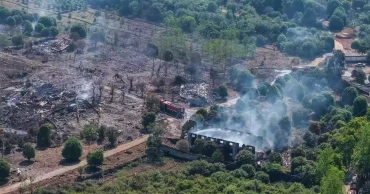
Death toll rises to 37 in China fireworks plant explosion
The death toll from a massive explosion at a fireworks factory in central China has climbed to 37, state media reported Friday, as search and investigation efforts continue.
Authorities said one person remains missing following the blast, according to the official Xinhua News Agency.
The explosion occurred on Monday at a fireworks plant in Changsha, the capital of Hunan province. Officials said investigations are underway to determine the cause, while all fireworks production in the surrounding area has been suspended as a precaution.
Earlier reports said more than 60 people were injured in the incident.
State-run China Daily reported that the facility was operated by Huasheng Fireworks Manufacturing and Display Co., located in Liuyang, a county-level city under Changsha administration known as one of China’s main fireworks production hubs.
Liuyang has a centuries-old tradition of fireworks manufacturing. The Guinness World Records notes that the earliest documented firecracker is linked to Li Tian, a monk believed to have lived near Liuyang during the Tang dynasty between 618 and 907 CE.
China has seen similar deadly incidents in recent months. In February, separate explosions at fireworks shops around the Lunar New Year period left multiple people dead.
2 months ago
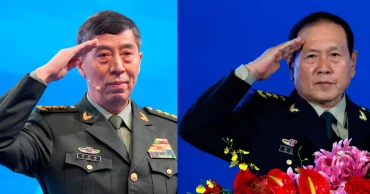
2 former Chinese ministers get suspended death penalties for corruption
A Chinese military court gave suspended death sentences Thursday to two former defense ministers who were accused of bribery, according to the official Xinhua News Agency.
The court said Wei Fenghe was guilty of accepting bribes and sentenced to death with a two-year reprieve. It said Li Shangfu was guilty of accepting and offering bribes, and handed him the same sentence.
Suspended death sentences are often commuted to life in prison in China.
The sentences are the latest in Chinese President Xi Jinping’s campaign of purging senior officials. Xi started an anti-corruption drive more than a decade ago and his drive has continued unabated, culminating in the removal of China’s highest ranking general and military leadership in January. China’s powerful Central Military Commission, which in years past had 11 members, now has just one member aside from Xi himself.
While the drive targets corruption, Xi has also used anti-corruption as a way to consolidate political loyalty and control among the political elite.
It is unclear whether either men had policy or political disagreements with Xi.
Wei served as defense minister from 2018 until 2023. Li succeeded him but served for just months before disappearing from public view. He was removed from office in October 2023.
Li spent most of his career as a specialist in the missile and procurement branches of China's People's Liberation Army, and had faced travel and financial sanctions from the U.S. over the purchase of Russian military hardware.
The Communist Party expelled both men from its ranks in 2024, sealing their fate.
Li's replacement, Dong Jun, continues to serve as defense minister. However, experts note that he was not appointed to the once powerful Central Military Commission, which oversees the military and is a standard appointment for someone in that role.
2 months ago
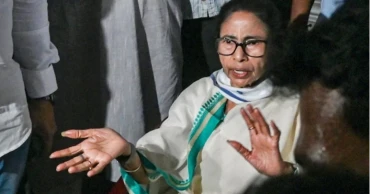
Bengal Assembly dissolved after Mamata Banerjee refuses to resign
West Bengal Governor RN Ravi has dissolved the state legislative assembly after Chief Minister Mamata Banerjee refused to resign following her party’s defeat in the recent assembly election.
The term of the assembly expired at 12am on Thursday. Later in the evening, Raj Bhavan released a letter issued on Wednesday announcing the dissolution order “for general information”.
The one-line communication stated: “In exercise of the power conferred on me by sub-clause (b) of Clause (2) of Article 174 of the Constitution of India, I hereby dissolve the Legislative Assembly of West Bengal with effect from 07th of May 2026.”
Mamata Banerjee refuses to resign; alleges irregularities
Under Article 172 of the Indian Constitution, a state assembly automatically dissolves after completion of its five-year term, while the outgoing Council of Ministers may continue in a caretaker role until a new government is sworn in.
However, the situation in West Bengal has triggered controversy after Banerjee declared she would not resign despite the election outcome. The move has raised questions over whether she should continue even in a caretaker capacity, with leaders of the [Bharatiya Janata Party (BJP)](https://www.bjp.org?utm_source=chatgpt.com) demanding her immediate dismissal.
Banerjee’s refusal to resign, described as unprecedented in India’s electoral history, has also created confusion regarding her constitutional status.
According to constitutional provisions, the chief minister can technically be dismissed until the Election Commission completes certification of the election results. Once certification is issued, a chief minister cannot continue in office except in a caretaker role.
The BJP, which secured a sweeping mandate in the recently concluded West Bengal assembly election, is expected to swear in its new cabinet on Saturday. Under normal circumstances, the caretaker government would have remained in charge until then.
On Tuesday evening, a day after her party’s heavy defeat in the polls, Banerjee claimed she had not actually lost the election and alleged that the BJP’s mandate was the result of “loot”.
“I have not lost, so I will not go to Raj Bhavan. I will not tender resignation,” she told reporters at a press conference.
Source: NDTV
2 months ago
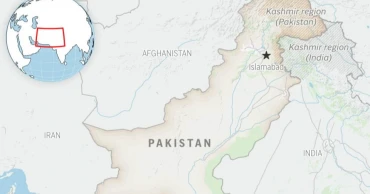
Pakistan warns of strong response to any attack on anniversary of clash with India
Pakistan on Thursday warned of a strong response to any future aggression as it marked the first anniversary of last year’s four-day military conflict with neighbouring India that pushed the two nuclear-armed rivals close to war before a US-brokered ceasefire ended the fighting.
In a statement, Pakistan’s military said any “hostile design” against the country would be met with “greater strength, precision and resolve” than during the May 2025 confrontation, which Islamabad named “Marka-e-Haq” or “Battle of Truth.”
The conflict erupted after gunmen attacked tourists in Indian-administered Kashmir, killing 26 people, most of them Hindu visitors. India accused Pakistan-backed militants of carrying out the attack, an allegation Islamabad denied while demanding an independent investigation.
On May 7 last year, India launched strikes inside Pakistan, prompting retaliatory attacks from Pakistan involving drones, missiles and artillery shelling. The clashes left dozens dead on both sides before a ceasefire was reached on May 10 through US mediation.
Pakistan had claimed during the conflict that it shot down at least seven Indian military aircraft, including a French-made Rafale fighter jet. India acknowledged losses but did not disclose details.
Donald Trump has repeatedly claimed credit for helping prevent a wider war between the two neighbours.
India and Pakistan have long maintained tense relations and have fought two of their three wars over the disputed Himalayan region of Kashmir, which both countries claim in full.
2 months ago
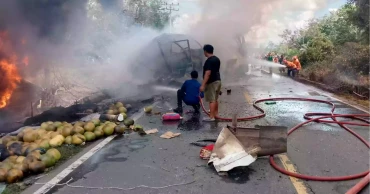
Bus-tanker collision in Indonesia kills at least 16
At least 16 people were killed and four others injured after a passenger bus collided head-on with a fuel tanker truck on Indonesia’s Sumatra island on Wednesday, officials said.
The accident took place around midday on the Trans-Sumatra Highway in North Musi Rawas regency of South Sumatra province.
According to local disaster management official Mugono, the intercity bus carrying at least 20 passengers was travelling from Lubuklinggau in South Sumatra to Jambi city when it crashed into a tanker truck coming from the opposite direction.
Initial findings suggested the bus may have produced sparks shortly before the collision, prompting the driver to move toward the right side of the road in an apparent attempt to avoid danger. However, the tanker truck was approaching at high speed, leaving little room to avoid the crash.
“The forceful impact triggered a fire that engulfed both vehicles, leaving many victims trapped inside,” Mugono said.
Among the dead were the bus driver, 13 passengers, and the tanker truck’s driver and assistant. Officials said all of them were burned to death after the vehicles caught fire.
Four passengers from the bus survived and were taken to a nearby health facility. Three suffered serious burn injuries, while another sustained minor injuries.
Authorities said they are still verifying the exact number of passengers and victims as the passenger manifest remains incomplete.
Images and video footage released by the National Search and Rescue Agency showed firefighters trying to control the blaze as thick black smoke and flames rose from the wreckage.
The remains of both vehicles were badly damaged, with twisted metal scattered across the highway.
Rescue workers, disaster response teams and traffic police carried out operations to recover victims and remove debris from the road. Several victims were trapped inside the burned vehicles, making rescue efforts more difficult and causing traffic disruption along the highway.
North Musi Rawas traffic police chief Muhammad Karim said 16 body bags had been sent to Siti Aisyah Hospital in Lubuk Linggau for identification.
Karim said police forensic teams have so far identified five victims, including the bus driver, two bus crew members, the tanker driver and one passenger.
“The bodies are severely burned, which has complicated the identification process,” Karim said.
He added that the remains would later be transported to Bhayangkara Police Hospital in Palembang, the provincial capital, for autopsies.
Karim later revised earlier preliminary findings, saying investigators now believe the bus entered the opposite lane while attempting to avoid a pothole, leading to the head-on collision and fire.
Road accidents are frequent in Indonesia due to inadequate road infrastructure and weak safety standards.
Last week, at least 15 women were killed near Jakarta after a long-distance train crashed into a commuter train that had stopped near a station following a taxi breakdown on the tracks.
2 months ago
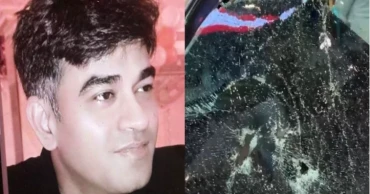
Suvendu Adhikari’s aide shot dead near Kolkata
The personal assistant of senior BJP leader Suvendu Adhikari was shot dead in West Bengal’s Madhyamgram area near Kolkata, days after the state assembly election results.
The victim, identified as Chandranath Rath, was travelling in a car when unidentified attackers allegedly followed the vehicle and opened fire after it slowed down in North 24 Parganas district.
According to reports, four rounds were fired and Rath was hit by three bullets. Visuals from the scene showed bullet marks and a shattered front-side window of the vehicle.
Rath had worked closely with Adhikari for several years and was known to handle the BJP leader’s political coordination and organisational activities. He was considered part of Adhikari’s close circle.
Adhikari rushed to the hospital in Madhyamgram where police kept Rath’s body after the attack.
The driver of the vehicle, identified as Buddhadeb, was also injured and taken to hospital for treatment, sources said.
Adhikari was not in the car during the attack, his brother Dibyendu Adhikari told Indian media. He demanded a probe by the Central Bureau of Investigation and alleged involvement of the ruling All India Trinamool Congress.
BJP leader Nikhil Prasun described the incident as part of a broader culture of political violence in the state.
“This incident is symptomatic of the culture of violence prevalent all these years, cultivated by the Trinamool Congress. He has been brutally murdered. This should be thoroughly investigated. There is a deeper conspiracy behind the killing,” he told media.
Speaking outside the hospital, Adhikari termed the incident a “cold-blooded murder” and claimed the attackers had carried out reconnaissance before the shooting.
“The incident is heart-wrenching; we condemn the incident,” Adhikari said.
“The way the attack was executed clearly suggests that the assailants had done a recce beforehand,” he alleged.
Another BJP leader, Devdas Mondal, accused the Trinamool Congress of targeting an “innocent man.”
“We will identify the accused and bring them to justice,” he told media.
The All India Trinamool Congress condemned the killing in a post on X and alleged that “BJP-backed miscreants” had been involved in post-election violence in recent days.
The party’s candidate Rathin Ghosh recently won the Madhyamgram seat by 2,399 votes after a close contest with the BJP.
The incident came amid growing political tension in West Bengal following the election. The BJP has alleged that Trinamool workers posing as BJP supporters were trying to trigger violence in different areas.
Videos circulating on social media showed scattered incidents of vandalism and damage to public property.
Ajay Kumar Nand said police had arrested at least 80 people in connection with violence-related incidents. Of them, 65 were taken into custody in specific cases, while 15 others were detained as a preventive measure.
Adhikari, often referred to as a “giant killer” after defeating Mamata Banerjee in the Bhabanipur constituency by more than 15,000 votes, is considered one of the leading contenders for the post of chief minister.
#From NDTV
2 months ago
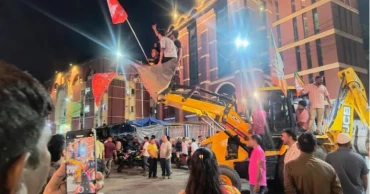
Tension in Kolkata as bulldozer vandalism reported after BJP's victory
Tension gripped Kolkata’s busy New Market area on Tuesday evening after a bulldozer was reportedly used in an act of vandalism following the BJP’s victory in the West Bengal elections.
According to reports, a group allegedly targeted a Trinamool Congress party office near Hogg Market, also known as New Market, prompting panic among traders and forcing many shop owners to shut early.
Police said a case has been filed over the incident, and four people have been arrested in connection with the vandalism.
The Trinamool Congress strongly condemned the incident, describing it as an act of “brazen hooliganism and gundagardi”, reports NDTV.
In a statement, the party alleged that BJP supporters went on a rampage in the New Market area, damaging shops and vandalising its party office. It also shared video footage showing a crowd waving BJP flags while a bulldozer demolished a structure.
Trinamool's Rajya Sabha MP Derek O'Brien alleged the bulldozer was brought in to demolish meat shops. "In central Kolkata, near New Market. With police permission. As part of victory celebrations, a bulldozer was brought in to demolish meat shops. CAPF standing around," he said.
The state BJP's chief, Samik Bhattacharya, has asserted that violence in the name of the party won't be tolerated.
The Election Commission said it has sought the deployment of central forces in the area.
2 months ago
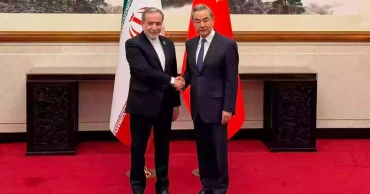
China calls for ‘comprehensive ceasefire’ in Iran war during talks with Tehran
China's foreign minister Wang Yi has called for an immediate and comprehensive ceasefire in the ongoing Iran conflict, expressing deep concern over the war that has continued for more than two months.
He made the remarks on Wednesday after holding talks in Beijing with Iranian Foreign Minister Abbas Araghchi, who is visiting China for the first time since the conflict with the United States and Israel began on February 28.
“We believe that a comprehensive ceasefire is urgently needed, that a resumption of hostilities is not acceptable, and that it is particularly important to remain committed to dialogue and negotiations,” Wang said.
He added that the prolonged conflict has caused significant suffering to the Iranian people and had serious implications for regional and global stability, noting that China is “deeply distressed” by the situation.
China’s position could provide fresh momentum to stalled diplomatic efforts aimed at ending the war between Iran and the United States. The remarks came after Donald Trump said he was pausing a US initiative to escort stranded commercial vessels through the Strait of Hormuz, in hopes of facilitating a broader agreement.
Iran’s effective restriction of the strategic waterway has disrupted global supplies of oil, gas and other commodities, pushing up fuel prices and placing economic pressure on many countries, including China.
Washington has urged Beijing to use its close economic and political ties with Tehran to press Iran to reopen the strait. US Secretary of State Marco Rubio expressed hope that China would reinforce calls for Iran to ease restrictions on the route.
Chinese Foreign Ministry spokesperson Lin Jian said all parties should act with restraint and resolve differences through dialogue, adding that Beijing will continue to support peace efforts.
Araghchi’s visit comes ahead of a planned visit by President Trump to Beijing on May 14–15 for talks with Chinese President Xi Jinping, marking his first trip to China in his second term.
2 months ago