
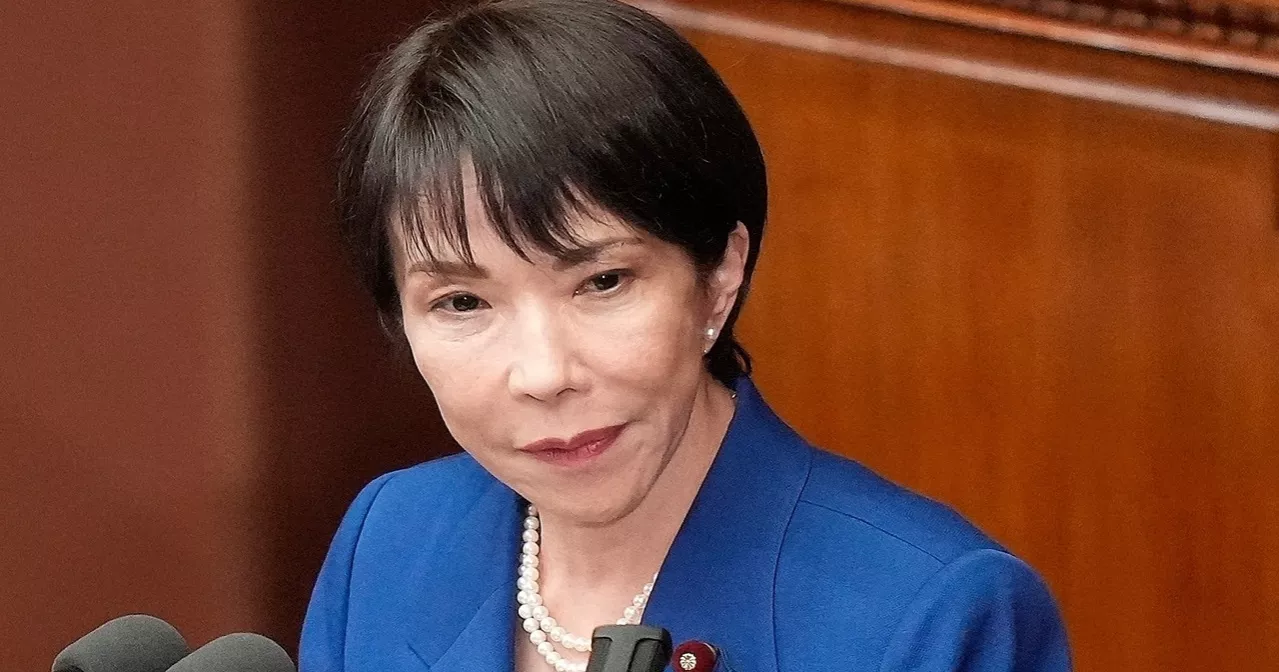
Japan’s new Prime Minister Sanae Takaichi on Friday vowed to accelerate the country’s military buildup and boost defense spending, citing growing security threats from China, North Korea and Russia.
Delivering her first policy speech in parliament since taking office Tuesday, Takaichi said her government will meet its target of raising defense spending to 2% of gross domestic product by March — two years ahead of schedule. She also promised to revise Japan’s national security strategy by the end of 2026, earlier than planned, to reflect global instability caused by Russia’s invasion of Ukraine and conflicts in the Middle East.
“The free, open and stable international order that we were accustomed to is being violently shaken,” Takaichi said. “In the region around Japan, military activities by our neighbors are causing grave concerns. Japan must proactively build up its defense capabilities.”
Takaichi’s remarks come just days before U.S. President Donald Trump’s scheduled visit to Tokyo for an Oct. 27–29 summit, where Washington is expected to press Tokyo for further defense spending and additional purchases of U.S. weapons. She said she would discuss strengthening the Japan-U.S. alliance and fostering a relationship of trust with Trump.
While stressing the need for a “constructive and stable relationship” with China, Takaichi acknowledged ongoing security concerns. Analysts say her conservative stance — including past visits to Tokyo’s controversial Yasukuni Shrine — could strain relations with Beijing.
The updated security strategy may expand Japan’s offensive military roles, loosen arms export rules, and significantly raise defense expenditure, though Takaichi did not explain how these measures would be financed.
At home, she faces challenges such as inflation, stagnant wages, and low public confidence. Her minority government, supported by a new alliance between the ruling Liberal Democratic Party and the right-wing Japan Innovation Party, will need opposition backing to pass major legislation.
Takaichi also pledged to address Japan’s labor shortage by allowing more foreign workers under strict compliance rules, saying the policy aims to maintain order, not promote xenophobia.