Asia
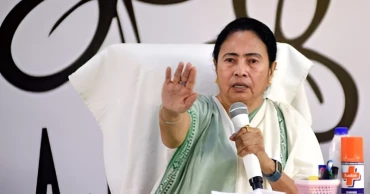
Mamata Banerjee refuses to resign; alleges irregularities
A day after a major defeat in the West Bengal Assembly elections, Chief Minister Mamata Banerjee announced that she would not resign, insisting that her party had not actually lost the mandate.
She alleged that the Election Commission of India engaged in “nasty games” targeting her party during the electoral process, reports NDTV.
The results mark a historic shift in the state’s political landscape, with the Bharatiya Janata Party (BJP) poised to form its first-ever government in West Bengal on May 9. The party secured 207 out of 294 seats, while Banerjee’s Trinamool Congress (TMC) won only 80 seats, ending its long-standing dominance in the state.
Vote counting begins in key Indian state elections, spotlight on West Bengal showdown
In another setback, Banerjee also lost her traditional stronghold in Bhabanipur to her former close aide Suvendu Adhikari, who is now a senior leader of the BJP and served as Leader of the Opposition in the outgoing assembly.
Banerjee, who has been Chief Minister since 2011, alleged large-scale “seat manipulation” and irregularities in the election process.
Indian Prime Minister Narendra Modi welcomed the outcome, stating that West Bengal had been “freed from fear” and would now move towards development and progress.
This election was the first held after the controversial deletion of around 9 million voters in West Bengal under the Special Intensive Revision (SIR) of electoral rolls.
Get smarter responses, upload files and images, and more.
2 months ago
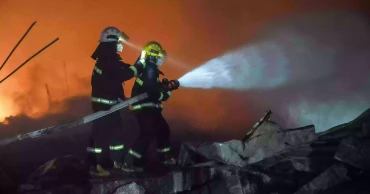
Explosion at Fireworks Factory in China Kills 26, Injures 61
At least 26 people were killed and 61 others injured in an explosion at a fireworks factory in central China, state media reported on Tuesday.
The blast occurred on Monday afternoon at a facility in Changsha, the capital of Hunan province, according to Xinhua News Agency. The factory was operated by Huasheng Fireworks Manufacturing and Display Co. in Liuyang, a county-level city under Changsha known as a major hub for fireworks production, China Daily reported.
Footage aired by state broadcaster CCTV showed thick white smoke still rising from parts of the site on Tuesday, with several structures either collapsed or severely damaged.
Authorities deployed nearly 500 rescuers to the scene and evacuated residents from nearby risk zones due to concerns over two black powder storage facilities close to the blast site, Xinhua said.
An investigation into the cause of the explosion is underway, and police have detained the person in charge of the company.
Chinese President Xi Jinping called for “all-out efforts” to locate missing persons and treat the injured. He also urged a swift investigation and strict accountability, while directing authorities to strengthen safety management and conduct risk assessments in key industries.
Rescue teams took precautionary measures, including spraying water and humidifying the area to reduce hazards during operations. Three robots were also deployed to assist in search and rescue efforts.
Liuyang has a long-standing tradition in fireworks manufacturing. According to Guinness World Records, the origins of fireworks can be traced back to Li Tian, a monk from the Tang dynasty (618–907 C.E.), who is credited with creating early firecrackers using gunpowder packed in bamboo to produce explosive sounds.
Earlier this year, China reported two separate deadly explosions at fireworks shops during the Lunar New Year period.
2 months ago

West Bengal polls: Suvendu defeats Mamata in Bhabanipur
West Bengal Chief Minister and Trinamool Congress Supremo Mamata Banerjee suffered a high-profile defeat in the Bhabanipur Assembly constituency, losing to Suvendu Adhikari of the Bharatiya Janata Party (BJP) by 15,114 votes.
The TMC supremo had built a commanding early lead, but it steadily narrowed as counting progressed. By the end of the seventh round, Mamata was ahead by over 17,000 votes, polling 32,822 against Adhikari’s 15,451. However, the gap began shrinking thereafter and eventually she lost to Suvendu.
The BJP has registered a historic win in West Bengal as it appears all set to bag over 200 seats in the state. Notably, this is the second time when Adhikari has defeated Banerjee in Assembly polls.
During the 2021 polls, Banerjee suffered a humiliating defeat against Adhikari by close to 2,000 votes from Nandigram.
Voting for the 2026 Assembly elections in West Bengal was held across two phases on April 23 and April 29.
Mamata had sent message to polling agents
Mamata has alleged that the BJP and the Election Commission were “stealing” the election from her party.
Earlier, Banerjee also sent a message to her polling agents, urging them not to leave counting centres and to remain focused on the ongoing trends.
"Do not lose hearts, we will win after sundown," she said.
"We are ahead by more than 100 seats, which is not being reported. Everything is being reported wrong. The Election Commission is working entirely as per its own will, and central forces are also with them. The police are also working with the central forces," Mamata Banerjee alleged.
She also alleged that counting has been halted at many places as a tactic to benefit the BJP.
"Counting agents and candidates should not leave the counting centre. This is the BJP's plan, I have been saying this since yesterday that they will be shown ahead first. They have stopped counting at many places. Such machines have been found in Kalyani, where there is no match; atrocities are being committed against TMC from all sides through central forces," she said.
2 months ago
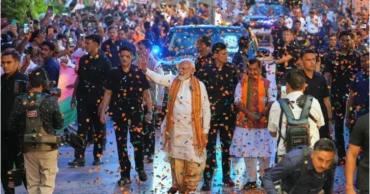
Modi's BJP takes control of West Bengal in key state election
Indian Prime Minister Narendra Modi's ruling Hindu nationalist party on Monday wrested control of the state of West Bengal, an opposition stronghold, in a key election.
The Election Commission of India released partial results showing the Bharatiya Janata Party won at least 124 seats in the 294-member West Bengal assembly, and was leading in 83 others. Final results are expected Monday evening.
It would be a significant breakthrough for Modi's party, which had tried for years to dislodge the All India Trinamool Congress government led by Chief Minister Mamata Banerjee. The BJP has never governed West Bengal, a politically influential state, where Banerjee — one of Modi's most prominent critics — has held power since 2011.
BJP leads in West Bengal, opposition faces major setback
Opposition parties have sharply criticized the polls in West Bengal after the Election Commission removed millions of voters from electoral rolls.
Three other states also took part in the latest election.
The South Asian country of more than 1.4 billion people has 28 states and eight federal territories. Staggered state elections are held at different times across India, with a few state polls scheduled almost every year.
India's opposition faces a setback
The outcome in West Bengal is expected to boost Modi's standing and strengthen his position midway through his third term in office. The 2024 national election forced his ruling party to rely on regional allies to form a government. He is expected to run for a record fourth term in 2029.
Addressing supporters at the BJP headquarters in New Delhi, Modi said the results pointed to the party's widening appeal in a state where it had historically struggled to gain ground.
"A new chapter has been added to Bengal's destiny," Modi told a cheering crowd.
India's opposition has struggled to mount a unified and sustained challenge to the BJP's dominance nationwide.
Banerjee had emerged as one of Modi's most prominent national rivals, particularly after positioning herself as a key leader to unite regional parties against the BJP. Her defeat is likely to weaken her leverage within an opposition bloc already divided by regional power struggles.
Film star-turned-politician scores breakthrough win
In the southern state of Tamil Nadu, popular movie star Joseph Vijay, who launched the Tamilaga Vettri Kazhagam party only two years ago, ousted the ruling DMK party. Tamil Nadu, one of India's most developed states, has a history of electing movie stars to the top office.
In Kerala, another southern state, the Indian National Congress-led opposition defeated the ruling communist government, ending leftist rule in one of its last remaining strongholds.
Modi's party also returned to power in the northeastern state of Assam for a third consecutive term.
2 months ago

Don’t lose hope, stay at counting centres: Mamata tells TMC workers amid BJP surge
Trinamool Congress (TMC) Chief Mamata Banerjee has urged party candidates and counting agents to remain at counting centres, even as early trends suggested a strong lead for the BJP in West Bengal.In a video message to party workers, she tried to keep morale steady and reminded them that the counting process was still in its initial stages. She asked them not to feel discouraged or give up.
She also specifically requested that TMC candidates and agents continue staying at the counting venues instead of leaving. Reassuring supporters, she said:
"I appeal to everyone that neither TMC candidates nor counting agents should abandon counting centres...We are still ahead in 170 seats, but I request everyone not to lose hope,"
She further encouraged party workers to stay optimistic, saying they should not “lose hope” and suggesting that the final outcome would only become clear after the later stages of counting.
2 months ago
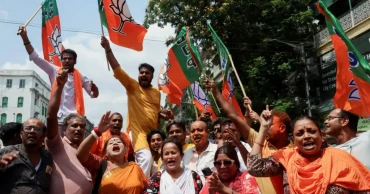
Early trends show BJP edging ahead in high-stakes Bengal polls
Midday trends from West Bengal suggest a strong early lead for the Bharatiya Janata Party, intensifying pressure on Chief Minister Mamata Banerjee and her Trinamool Congress in a crucial state election.
Although leads are shifting across counting rounds, the BJP has established a noticeable edge in several major constituencies.
In the high-profile Bhabanipur seat, where Banerjee is contesting against BJP’s Suvendu Adhikari, the race remains closely fought.
Similarly, constituencies like Nandigram and other key seats are witnessing intense contests. However, the BJP appears to be extending its influence beyond its traditional strongholds.
The party is making notable gains in north Bengal and the tribal-dominated Jangalmahal region, areas where it has gradually strengthened its base in recent years.
While the TMC is still holding onto parts of Kolkata and nearby urban regions, the current trajectory—if maintained—could signal the BJP’s biggest electoral breakthrough in Bengal and pose the toughest challenge yet to Banerjee’s leadership since she assumed office in 2011.
Source:BBC
2 months ago
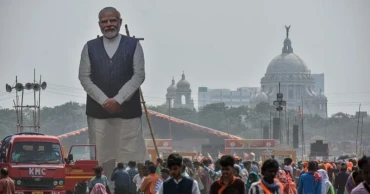
Election Commission trends show BJP ahead in West Bengal, Assam
Early indications show Indian Prime Minister Narendra Modi’s BJP leading in Assam and West Bengal, with its alliance also on course to form the government again in Puducherry.
In West Bengal, sitting Chief Minister Mamata Banerjee appears to be heading toward an unexpected loss after three consecutive terms in office.
Here is a state-wise summary of the trends:
West Bengal: The BJP is leading in more than 140 seats, while the Trinamool Congress (TMC) is ahead in 73 constituencies. The state has 294 assembly seats, with 148 required for a majority. Tamil Nadu: Vijay’s TVK is leading in about 109 seats. The AIADMK is ahead in nearly 63 seats, while the ruling DMK is leading in around 39 constituencies. Tamil Nadu has 234 seats, and 118 are needed to form the government. Assam: The BJP is ahead by a large margin with over 79 seats, while the Congress is leading in around 24 seats. The state has 126 assembly seats, with 64 needed for a majority. Kerala: The Congress-led alliance is leading in over 80 seats, while the CPI(M)-led ruling coalition is ahead in about 46 constituencies. Kerala has 140 seats, and 71 are needed to form the government. Puducherry: The BJP-led alliance is leading in 11 seats, while the Congress-led alliance is ahead in seven. The Union Territory has 33 seats, including three nominated members, with 17 needed for a majority. At the BJP headquarters in Kolkata, celebrations have already started as early trends suggest a possible win in West Bengal. Party workers are seen distributing sweets, and slogans of “Jai Shri Ram” are being raised, reports BBC.
However, senior leaders are also urging caution, saying it is still too early to celebrate. Despite this, they remain confident about defeating the TMC and Chief Minister Mamata Banerjee.
West Bengal has long been a challenging state for the BJP. The party emerged as a strong competitor in the 2021 assembly elections but was defeated by the TMC, which secured a two-thirds majority. This time, the BJP has focused its campaign on development, law and order, and identity politics, arguing that the state’s progress requires the same party to be in power both at the state and national levels.
2 months ago

China pressure blamed as Zambia cancels rights summit over Taiwan issue
Organisers of a global human rights conference have cancelled the event in Zambia just days before it was set to begin, alleging pressure from China to bar Taiwanese activists.
New York-based advocacy group Access Now, which hosts the annual RightsCon summit, said Friday it decided to call off the gathering after the Zambian government initially announced a postponement.
According to Access Now, Zambian officials indicated that China had raised concerns about the participation of Taiwanese civil society members who planned to attend the event in person. The group said it refused any conditions that would exclude participants from Taiwan.
“We believe foreign interference is the reason RightsCon 2026 will not take place in Zambia,” Access Now said in a statement.
It added that informal messages from multiple sources suggested the government wanted organisers to limit certain topics and block some groups, including Taiwanese participants, from joining both physically and online in order to lift the postponement.
Earlier, Zambian authorities said the conference was delayed to review its themes and ensure they matched the country’s “national values, policy priorities and broader public interest.”
Zambia maintains close political and economic relations with China, particularly through Chinese investments in its mining sector.
RightsCon focuses on human rights in the digital age, covering issues such as internet censorship, surveillance and cyberwarfare. More than 2,600 people were expected to attend in Zambia, with another 1,100 joining online from over 150 countries, organisers said. Last year’s summit was held in Taiwan.
Taiwan’s Digital Affairs Minister Lin Yi-jing said the cancellation reflected China’s discomfort with values such as freedom, democracy and the rule of law.
Human Rights Watch called on Zambian authorities to clarify the reasons behind their decision.
The development comes shortly after Taiwan accused Beijing of blocking a planned visit by its President Lai Ching-te to Eswatini on April 22.
Taiwan said the trip was cancelled after Madagascar, Mauritius and Seychelles, under Chinese pressure, denied overflight permission for Lai’s aircraft. China’s Foreign Ministry welcomed the move, saying it was in line with the “one-China principle.”
China considers self-ruled Taiwan as a breakaway province and opposes any formal ties between Taipei and countries it maintains diplomatic relations with. Beijing holds significant influence across Africa.
In a surprise update on Saturday, Lai said he had arrived in Eswatini after the earlier trip was called off, adding that Taiwan “will never be deterred by external pressures.”
3 months ago
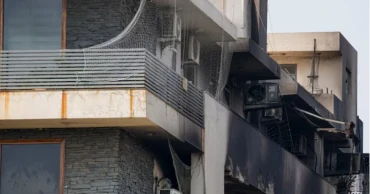
Locked terrace door traps residents in deadly Delhi building fire
A locked terrace door and lack of emergency exits trapped residents inside a residential building in Delhi, leaving at least nine people dead in a devastating fire early Sunday.
The blaze broke out around 3:30am at a building in Vivek Vihar when most residents were asleep, making escape difficult as flames spread quickly.
Residents said iron grills on one side of the building and a locked staircase leading to the roof left them with no way out. The building, with a basement and four floors, had only one staircase and no emergency exit, which slowed evacuation efforts.
Each floor had two flats, one at the front and one at the back. As the fire spread from the rear, people living there could not jump out because of the iron grills. Reaching the front side was also difficult as the flames had already spread there.
Some residents tried to move through smoke-filled corridors to reach the terrace, but found the door locked, leaving them trapped inside.
Many victims died from suffocation as thick smoke and heat filled the building.
The fire also spread to a nearby building, reportedly due to little or no gap between the two structures.
Witnesses described scenes of panic, with people and children crying out for help from inside their homes. Eyewitnesses said two children even attempted to jump from the front side of the building to escape the fire.
Source: NDTV
3 months ago
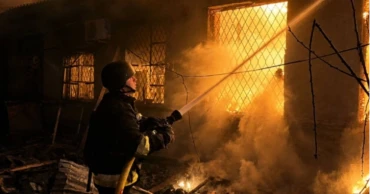
Russian drone kills 2 in Kherson minibus strike
A Russian drone strike on a minibus in the southern Ukrainian city of Kherson killed two people and injured seven others, local officials said Saturday, as civilian areas continue to come under attack in Moscow’s full-scale invasion.
Regional head Oleksandr Prokudin, said another Russian strike later hit a second minibus in Kherson, injuring the driver. He added that the earlier attack wounded seven people in total.
Israeli airstrikes kill 7 in southern Lebanon despite ceasefire
Ukrainian President Volodymyr Zelenskyy, said “rather unusual” activity was observed Friday along Ukraine’s northern border with Belarus. In a Telegram post Saturday, he said Ukraine was closely monitoring the situation and would respond if it escalates, though he gave no further details.
Belarus, a close ally of Russia, has previously allowed its territory to be used for Russian troop movements into Ukraine and hosts some of Moscow’s tactical nuclear weapons.
In Odesa on the Black Sea coast, Russian strikes damaged port infrastructure, with no casualties reported.
Ukraine has faced continuous air assaults since Russia’s full-scale invasion more than four years ago. Despite U.S.-brokered talks, no ceasefire has been reached, and recent global attention has shifted due to the Iran conflict.
Russia also claimed control of Myropillia in Ukraine’s Sumy region, a claim not independently verified. Ukraine did not comment.
In Russia’s Krasnodar region, a fire at an oil terminal in Tuapse after a Ukrainian strike was extinguished Saturday. Ukrainian drone attacks on the facility have occurred multiple times in recent weeks.
3 months ago