Asia

Wife of South Korea's ex-President Yoon sentenced to 7 years for corruption
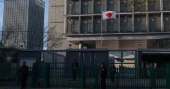
A Seoul court on Friday sentenced Kim Keon-hee, wife of former South Korean President Yoon Suk-yeol, to seven years in prison after finding her guilty in a series of corruption cases, including selling government posts in exchange for luxury gifts.
The Seoul Central District Court said Kim accepted expensive items that were beyond the reach of ordinary citizens. Independent counsel Min Joong-ki had sought a seven-and-a-half-year prison term, alleging she traded public appointments for high-value jewellery and luxury goods. Her legal team is expected to appeal the verdict.
Prosecutors said Kim received a necklace, brooch and earrings from a businessman between March and May 2022 in return for appointing his eldest son-in-law to a government position. She was also accused of accepting a gold turtle from a former education commission chief in April 2022, a wristwatch from a robot dog entrepreneur in September 2022 for business favours, a designer handbag from a pastor between June and September 2022, and a painting from a former prosecutor in February 2023 linked to a nomination request.
Indicted while in detention in August 2025, Kim became the first wife of a former South Korean president to stand trial in custody. She also faces separate charges related to alleged political interference involving the People Power Party in 2023.
1 month ago
China targets clean, low-carbon new energy system by 2030
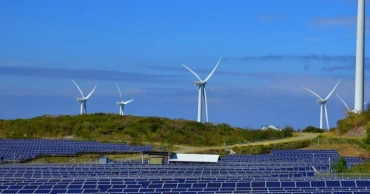
China aims to basically establish a clean, low-carbon, secure and efficient new energy system by 2030, according to a plan recently issued by the National Development and Reform Commission and the National Energy Administration.
The plan, which covers the 15th Five-Year Plan period (2026-2030), sets out targets for strengthening energy security, advancing the green transition, boosting technological self-reliance and improving market mechanisms, among others.
By 2030, China's total energy production capacity will reach 5.8 billion tonnes of standard coal equivalent. At the same time, the power system's capacity for complementary support, security and resilience will see comprehensive improvements, according to the plan.
The plan also says that coal and oil consumption should peak, non-fossil energy should account for 25 percent of total energy consumption, and wind and solar power should make up more than 50 percent of the country's total installed power generation capacity, becoming the mainstay of installed capacity.
Non-fossil energy is also expected to contribute 50 percent of total power generation by 2030, becoming the main source of electricity, the plan says.
China will accelerate the construction of a new energy infrastructure system that is strong and resilient, green and low-carbon, integrated, intelligent and efficient. A new power system is also expected to be basically established by 2030.
The plan aims to make key technologies and equipment in the energy industrial chain largely self-reliant and controllable, while positioning China at the forefront of global energy technology innovation.
It also calls for faster improvement of market and pricing mechanisms suited to the new energy system, with a unified national electricity market system to be basically established.
The plan also stresses optimization of fossil energy production bases, better alignment between energy development and energy-consuming industries, and continued expansion of diversified energy import channels.
China has set the dual carbon goals of peaking carbon dioxide emissions before 2030 and achieving carbon neutrality before 2060.
The country has built the world's largest and fastest-growing renewable energy system, providing stronger support for its green and low-carbon transition.
1 month ago
Powerful earthquake shakes northern Japan, no tsunami threat reported
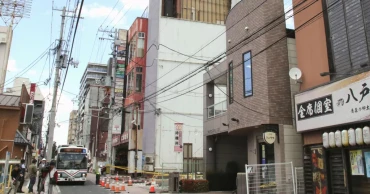
A strong earthquake struck off the northern coast of Japan on Thursday morning, but authorities said there was no tsunami threat.
The Japan Meteorological Agency said the earthquake measured 7.2 in magnitude, upgrading an initial estimate of 6.9. The quake occurred off the eastern coast of Iwate Prefecture at a depth of about 50 kilometers. The United States Geological Survey recorded the quake at magnitude 6.9.
The tremor struck during the morning rush hour in northeastern Japan and was also felt lightly in Tokyo.
Chief Cabinet Secretary Minoru Kihara said there were no immediate reports of injuries or significant damage.
Prime Minister Sanae Takaichi said the government's emergency response team was gathering information and preparing for possible relief operations if needed. She also urged residents in affected areas to remain alert for aftershocks.
Tomoko Nagane, principal of a primary school in the town of Hashikami, told NHK that she was driving when the earthquake alert sounded and experienced moderate shaking. Although children at the school were safe, some were frightened and crying. Classes were canceled for the day and all students were sent home safely, she said.
Reports from journalists in several affected cities, including Sendai and Morioka, indicated that shaking lasted for a couple of minutes, but no damage was immediately visible. Television footage showed people continuing their daily routines.
East Japan Railway Company said some bullet train services and local rail lines in the region were temporarily suspended while safety inspections were carried out.
Kihara said no abnormalities had been reported at nuclear facilities, including the Fukushima Daiichi Nuclear Power Plant, which was heavily damaged in the 2011 earthquake and tsunami, or at a spent-fuel reprocessing facility in Aomori.
Japan is one of the world's most earthquake-prone countries due to its location along the Pacific Ring of Fire, a region known for frequent seismic activity.
1 month ago

Gautam Lahiri elected President of newly formed Federation of Press Clubs
Senior Indian journalist and former President of the Press Club of India, Gautam Lahiri, has been elected President of the newly established Federation of Press Clubs (FPC), a national umbrella body representing democratically managed press clubs across India.
The Federation was recently formed as a non-partisan apex organisation to provide a unified national platform for journalists and press clubs across the country.
The inaugural meeting of the FPC governing council was held at the Press Club of India on June 22, according to a media release.
The initiative aims to strengthen collaboration among press clubs nationwide and amplify the collective voice of media professionals through a representative and independent institutional framework.
Eight prominent press clubs have joined as founding members of the Federation: the Press Club of India, Mumbai Press Club, Press Club Kolkata, Press Club Hyderabad, Chandigarh Press Club, State Press Club of Madhya Pradesh, Gauhati Press Club, and Agartala Press Club.
The FPC will be managed by a 10-member governing council comprising: Gautam Lahiri (President), Snehasis Sur (Vice-President), Samar Khadas (Vice-President), Vijay Reddy (Vice-President), Saurabh Duggal (Secretary General), Sangeets Barooah Pisharoty (Assistant Secretary General), Neeraj Thakur (Treasurer), Praveen Khariwal (Executive Member), Pranab Sarkar (Executive Member) and Kagen Kalita (Executive Member).
1 month ago
China detains two Japanese nationals over alleged smuggling of banned items
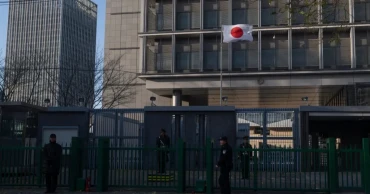
China has detained two Japanese citizens on suspicion of smuggling prohibited items, Japanese and Chinese officials confirmed on Wednesday, in a case reportedly linked to rare earth materials.
Japan's Chief Cabinet Secretary Minoru Kihara said Chinese customs authorities informed Japanese consular offices in Shenyang and Dalian that one Japanese national was detained on May 18 and another a week later in connection with the same case.
Kihara said both individuals were in good health but declined to provide further details, citing privacy concerns and the ongoing investigation.
In Beijing, Chinese Foreign Ministry spokesperson Guo Jiakun confirmed that two Japanese citizens had been detained for violating Chinese laws, but did not elaborate on the allegations.
Guo urged Japanese citizens and companies operating in China to comply with Chinese laws and regulations.
Japan's Kyodo News agency reported that the two detainees are employees of a major Japanese machinery manufacturer, with one of them working at the company's Chinese subsidiary. According to the report, the case may involve an attempt to take materials related to rare earths out of China, an act that could be deemed illegal under Chinese regulations.
The detentions come five months after Beijing imposed export restrictions on dual-use goods to Japan that could have military applications.
Although Chinese authorities have said the export controls do not affect commercial products, trade data indicate that China's exports of rare-earth magnets have declined since the restrictions were introduced.
Relations between China and Japan have been under strain in recent months.
Tensions escalated after Japanese Prime Minister Sanae Takaichi suggested late last year that Chinese military action against Taiwan could justify a Japanese military response. Previous Japanese governments had maintained a policy of strategic ambiguity regarding Taiwan, which Beijing considers part of its territory.
Another source of friction has been the detention of a Japanese man on espionage charges. The man, who had been held in China since March 2023, was sentenced last year to three and a half years in prison.
1 month ago
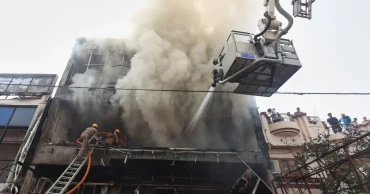
14 killed, mostly students, as fire engulfs building in northern India
At least 14 people, mostly students, were killed after a fire broke out at a commercial building in Lucknow, the capital of India’s northern Uttar Pradesh state, officials said on Monday.
The blaze erupted in the Aliganj area of the city at a building that housed a pet shop and veterinary clinic on the lower floors, while a study centre and an animation studio operated on the upper floors.
Massive fire ravages Dominican Republic resort, forcing evacuation of nearly 1,700 tourists
Uttar Pradesh Deputy Chief Minister Brajesh Pathak said 14 bodies had been recovered from the site. Officials said at least 10 people were rescued and admitted to hospitals for treatment.
The cause of the fire was not immediately known.
Videos shared on social media showed people escaping through broken windows. One video appeared to show a man falling from an upper floor while attempting to flee the flames. Local media reported that he survived and was receiving treatment at a hospital.
Officials said firefighters had to break through the rear wall of the building to enter as heavy smoke obstructed rescue efforts. Exhaust fans were used to clear the smoke while emergency teams searched rooms and washrooms for possible survivors.
Mohammad Asin, an employee of the animation studio, said workers had just returned from lunch when they noticed the fire.
“At first we thought it was a small fire. By the time we tried to leave, smoke had filled the rooms and passageways,” he said.
1 month ago
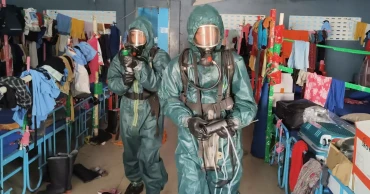
7 killed, 67 hospitalized after ammonia gas leak at seafood unit in Tamil Nadu
At least seven people were killed and 67 others were hospitalized on Sunday after an ammonia gas leak at a seafood processing unit in the southern Indian state of Tamil Nadu, officials said.
According to officials, the leak originated from the seafood processing facility and spread across the premises. Workers at the plant complained of breathing difficulties, while some suffered bleeding from the mouth and nose.
5 killed in Assam aircraft crash in India
The affected workers were rushed to nearby private hospitals for treatment, but seven of them, all women, later died.
Police, disaster management, fire and emergency services, and health officials were immediately deployed to the site to conduct rescue operations.
A 30-member team equipped with gas detection devices and other specialised rescue equipment has been mobilised to contain and fix the leak.
1 month ago

India’s Cockroach Party demands education minister’s resignation
Supporters of India’s rapidly growing Cockroach Janta Party (CJP) staged a noisy protest near Parliament in New Delhi on Saturday, banging steel plates with spoons and demanding the resignation of Education Minister Dharmendra Pradhan over alleged examination irregularities and repeated question paper leaks.
Hundreds of students and young supporters joined the demonstration, increasing pressure on Prime Minister Narendra Modi’s government while seeking broader public support.
‘Cockroach Janta Party’ gets nod for Jantar Mantar protest demanding Education Minister’s resignation
Authorities deployed heavy security around the protest site, while police monitored the gathering using cameras and drones.
Protesters carried placards and beat metal plates, a tactic widely seen as a satire of Modi’s 2020 appeal for Indians to bang utensils from balconies and rooftops in support of frontline health workers during the COVID-19 pandemic.
CJP founder Abhijeet Dipke, a political communications strategist and student at Boston University, had urged supporters through social media to bring plates and spoons to the rally. Addressing the crowd, he described Pradhan as a “virus” that needed to be removed and said the movement was open to dialogue if the minister resigned.
Supporter Deepak Kumar warned that the protests would continue unless action was taken.
The latest demonstration follows the leak of a nationwide medical entrance examination paper through Telegram last month. Authorities postponed the test, temporarily banned Telegram in India and launched an investigation. The examination is now scheduled for Sunday.
The movement emerged in May after Supreme Court Judge Surya Kant’s remarks comparing some unemployed youths to “cockroaches” sparked outrage. Supporters adopted the term as a symbol of resilience, helping the group attract more than 22 million Instagram followers.
Since then, the movement has broadened its focus to unemployment, rising living costs and government accountability, using humour, memes and online campaigns to amplify its message.
1 month ago
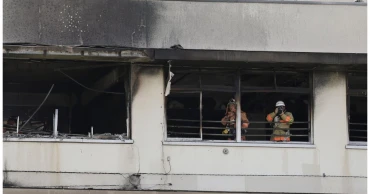
Tokyo School Fire: Around 300 evacuated or rescued
A fire broke out at an elementary school in downtown Tokyo Friday, but all of about 300 students and teachers were evacuated or rescued, officials said.
The Tokyo Fire Department said the fire at the Takinogawa No. 3 Elementary School broke out near a music room on the top floor of the four-story building late morning Friday.
Firefighters rescued one teacher and several schoolchildren out of the building, with non-life-threatening injuries, the department said.
Television footage showed black smoke billowing out of windows on the fourth floor, as firefighters combated the fire at the scene. Dozens of fire engines were deployed.
All others inside the building when the fire broke out had evacuated to a nearby park on their own and no one was left behind, officials said.
The cause of the fire is still under investigation.
1 month ago

5 killed in Assam aircraft crash in India
Five Indian Air Force (IAF) personnel were killed after an AN-32 transport aircraft crashed during a routine training mission in the northeastern Indian state of Assam on Saturday, officials said.
The aircraft went down near Jorhat in Assam, the Indian Air Force said in a statement posted on social media platform X.
Visuals from the crash site showed debris scattered across a field following the accident.
The IAF expressed condolences to the bereaved families and said it stood in solidarity with them during this difficult time.
Authorities have not yet disclosed the cause of the crash, and further details are awaited.
The incident comes months after two Indian Air Force pilots were killed in March when a Sukhoi Su-30MKI fighter jet crashed during a routine training sortie in Assam.
1 month ago