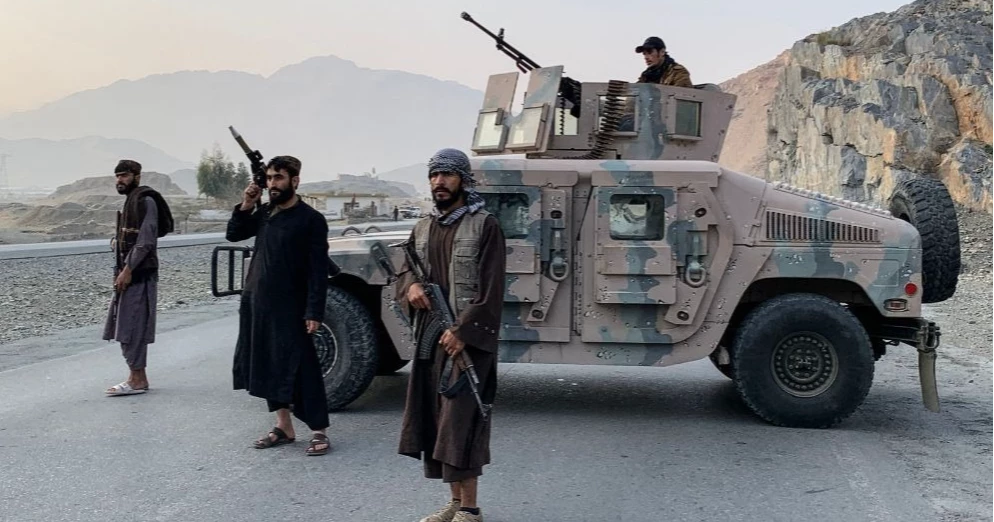
Pakistan has carried out airstrikes on Afghanistan’s capital, Kabul, and other cities, marking a sharp escalation of hostilities along the two countries’ shared border.
Pakistan’s Defence Minister Khawaja Asif declared on Friday that Islamabad’s patience with the Taliban authorities had ended, describing the situation as “open war.”
The strikes followed Afghan Taliban claims of “large-scale offensive operations” against Pakistani forces along the Durand Line, which separates the two countries, reports Al Jazeera.
Pakistani officials said Afghan forces attacked border military posts, prompting Pakistan to hit Taliban targets in Kabul, Paktia, and Kandahar provinces. The attacks reportedly destroyed brigade bases, ammunition depots, and multiple checkpoints. Gunfire and shelling were also reported near the Torkham border crossing.
Casualty reports differ sharply. Pakistan’s Prime Minister spokesperson Mosharraf Zaidi claimed 133 Taliban fighters were killed, over 200 wounded, and 27 Taliban posts destroyed. Pakistani media said two Pakistani soldiers died. The Taliban, however, reported only eight fighters killed and 11 wounded, while Afghanistan claimed its forces killed 55 Pakistani soldiers and captured military posts. Independent verification of these figures was not available.
The violence reflects ongoing tensions since the Taliban returned to power in 2021. Afghanistan does not formally recognize the Durand Line, arguing it was a colonial imposition that split Pashtun areas. Pakistan accuses the Taliban of sheltering armed groups like the Pakistan Taliban (TTP), responsible for attacks in Khyber Pakhtunkhwa and Balochistan provinces.
Analysts say the Afghan Taliban has avoided cracking down on the TTP due to ideological ties and fear of defections to the Islamic State Khorasan Province, raising the risk of further escalation.
Global reactions have been critical. India condemned Pakistan’s strikes, highlighting civilian casualties during Ramadan. UN Secretary-General Antonio Guterres urged both sides to respect international law.
Iran called for resolving differences through dialogue and neighborly principles, while Russia also urged an immediate halt to cross-border attacks and offered mediation.
Experts warn that Afghanistan, lacking a strong air force and conventional military, remains vulnerable. The conflict is likely to continue along the border, with Pakistan retaining the upper hand due to superior military capabilities.
Both nations are expected to continue artillery exchanges and targeted strikes, raising fears of prolonged instability in the region.