Asia
7.8 magnitude earthquake rocks southern Philippines
A magnitude 7.8 earthquake centered at sea shook part of the southern Philippines early Monday, causing damage in a key coastal city, knocking down power and setting off 1-meter (3-foot) tsunami waves along nearby coasts, officials said.
President Ferdinand Marcos Jr. asked people to immediately go to higher ground in Philippine areas vulnerable to a tsunami, and Indonesian and Malaysian authorities also issued warnings to their nearby coastal areas.
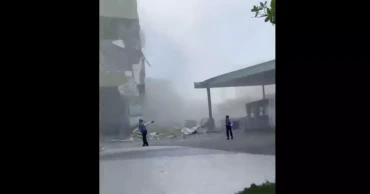
There were no immediate reports of casualties, and it was not clear if people were trapped or injured in the collapse of at least one small building in General Santos, a tuna-processing city of more than 700,000 people that is also a commercial hub in the south.
The strongest earthquake to hit the Philippines this year was was centered at sea about 13 kilometers (8 miles) southwest of General Santos and was caused by movement in the Cotabato Trench at a depth of 10 kilometers (6.2 miles), according to the Philippine Institute of Volcanology and Seismology. It struck at 7:37 a.m., the institute's director, Teresito Bacolcol said.
“It's a major earthquake and we're expecting damages and we've already some damaged buildings based on videos we've seen,” Bacolcol told The Associated Press.
DZRH radio station in Manila reported that the small commercial building where its provincial branch was located partly collapsed and staffers dashed to the ground floor without injuries.
It wasn’t clear if other people were trapped in the rubble of the four-story office building due to the quake, which struck before office hours.
Debris also fell from other buildings, hitting tricycle taxis parked below.
The Pacific Tsunami Warning Center said tsunami waves up to 3 meters (10 feet) were possible on some coasts of the Philippines. Waves up to 1 meter (3 feet) were possible on some coasts of Indonesia and Malaysia.
Bacolcol said 1-meter (3-foot) waves were monitored in the provinces of Sultan Kudarat and Sarangani by land-based tsunami watch stations. Smaller waves were monitored in at least one other province, he said.
“Please heed the tsunami warning. Move to higher ground now. Do not wait. Your life is more important than anything left behind,” Marcos told people in quake-hit provinces.
“The national government is moving and we will not leave Mindanao behind,” Marcos said and added that disaster-response agencies were on standby to respond.
Malaysia’s Meteorological Department issued a tsunami warning for Sabah state on Borneo island. Sabah is just a boat ride away from southern Philippines. An 83-centimeter (2.7-feet) tsunami was measured by a gauge off Indonesia's Sulawesi island.
Smaller sea changes were possible in Taiwan, Japan, Papua New Guinea and several island nations and territories in the western Pacific. An advisory for Guam was lifted about two hours after the quake and there was no threat to Hawaii, the PTWC said.
Aftershocks up to 6.5 magnitude followed, the U.S. Geological Survey said. It measured the original quake at 55 kilometers (34 miles) deep. Variations in measurements by different agencies are common in the immediate aftermath of an earthquake.
The Philippines, one of the world’s most disaster-prone countries, is often hit by earthquakes and volcanic eruptions due to its location on the Pacific “Ring of Fire,” an arc of seismic faults around the ocean. The archipelago is also lashed by about 20 typhoons and tropical storms each year.
1 month ago

Farm fire in south China leaves 5 dead
A fire at a pig breeding farm killed five people in Liuzhou City, south China's Guangxi Zhuang Autonomous Region, firefighters said Monday.
The blaze broke out at 5:20 p.m. on Sunday and has been extinguished, according to local firefighting and rescue authorities. An investigation into the cause of fire is underway
1 month ago
Xi visits North Korea as Kim seeks stronger ties with China
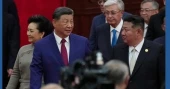
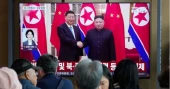
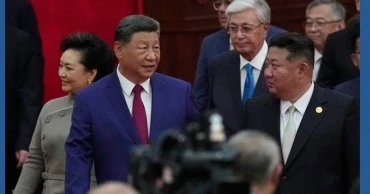
Chinese President Xi Jinping is set to visit North Korea for the first time in nearly seven years, in a trip that is expected to highlight North Korean leader Kim Jong Un’s increasingly active foreign policy and his efforts to strengthen ties with traditional allies.
The visit comes as North Korea seeks to balance its growing relationship with Russia while renewing closer cooperation with China, its biggest economic partner and longtime ally. It will be the first meeting between Xi and Kim since the North Korean leader visited Beijing in September 2025 for events marking the anniversary of the end of World War II.
Kim looking for economic support
Analysts say Kim is likely seeking stronger economic cooperation with China after spending recent years deepening ties with Russia, including sending troops and military supplies to support Moscow's war in Ukraine.
While North Korea is believed to be receiving military assistance and other benefits from Russia, experts say Kim needs greater economic support from China if he hopes to improve living standards at home.
According to analysts, discussions could include restarting Chinese tourism to North Korea, opening a long-completed bridge over the Yalu River that has never been used, and exploring joint economic projects in border areas shared by North Korea, China and Russia.
Observers also note that Kim may see closer ties with China as useful if he eventually decides to reopen diplomacy with the United States. His previous talks with US President Donald Trump collapsed in 2019 over disagreements on sanctions and North Korea's nuclear programme.
North Korea has so far rejected Trump's recent offers to resume talks, insisting that Washington first abandon its demand for denuclearisation as a condition for negotiations.
China aims to restore influence
For China, the visit offers an opportunity to strengthen its influence over a traditional ally that has recently moved closer to Russia.
Experts say Beijing is likely concerned about the growing relationship between Kim and Russian President Vladimir Putin and may seek to rebalance North Korea's foreign relations through economic incentives and food assistance.
Xi's trip is also significant because it marks his first overseas visit of 2026. Analysts say the visit sends a message that China intends to remain a key player in shaping security issues on the Korean Peninsula.
Recent developments also suggest China may be taking a more pragmatic approach toward North Korea's nuclear ambitions. During a visit to Pyongyang in April, Chinese Foreign Minister Wang Yi met
Kim, and observers noted that official statements did not mention denuclearisation, a term China has traditionally used when discussing North Korea.
Some analysts believe this could indicate that Beijing is increasingly accepting the reality of North Korea's nuclear status while focusing on maintaining stability and countering US influence in the region.
A warmer relationship, but limits remain
Experts expect Kim to give Xi a grand welcome during the visit, reflecting the importance of relations between the two countries.
However, they also say North Korea's leader is now more confident on the international stage and may be less willing to follow China's wishes than in the past.
While the visit is expected to strengthen political ties and economic cooperation, analysts believe North Korea will continue pursuing an independent foreign policy aimed at balancing relations with both China and Russia while protecting its own interests.
1 month ago
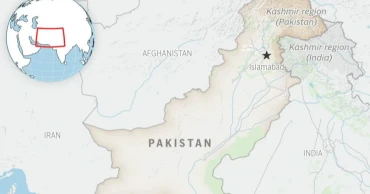
Dozens arrested ahead of protest by banned group in Pakistan-administered Kashmir
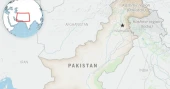
Police in Pakistan-administered Kashmir arrested dozens of supporters of a banned organization on Saturday ahead of a planned protest march, according to officials and witnesses.
The arrests followed the regional government's decision on Friday to outlaw the Joint Awami Action Committee (JAAC), citing concerns over public order and security.
The ban comes after weeks of tensions between the group and authorities over a 38-point list of demands, including subsidized wheat and electricity, as well as broader political and economic rights.
Officials said that 36 of the demands had already been accepted last year following negotiations involving JAAC representatives, regional authorities and Pakistan’s federal government.
Faisal Mumtaz Rathore, the prime minister of Pakistan-administered Kashmir, said the government remains open to dialogue with JAAC leaders regarding the two remaining unresolved issues.
However, JAAC has refused to withdraw its planned protest march scheduled for Tuesday, insisting that all of its demands must be met.
According to Rathore, one of the unresolved issues relates to 12 seats reserved for Kashmiri refugees in the region’s legislative assembly.
Security has been tightened across Pakistan-administered Kashmir ahead of the planned demonstrations.
The Himalayan region of Kashmir is divided between Pakistan and India, with both countries claiming it in full. Since independence from British rule in 1947, the two nuclear-armed neighbours have fought two of their three wars over the disputed territory.
The latest tensions come a year after deadly clashes between JAAC supporters and security forces that left several people dead, including police personnel.
On Saturday, JAAC alleged that two of its members were injured when police opened fire during an operation. Police rejected the claim, saying officers came under fire from armed individuals who allegedly ignored orders to stop their vehicle during an overnight encounter.
1 month ago
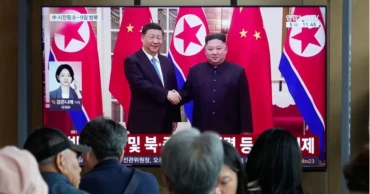
Xi Jinping to visit North Korea for first time since 2019
Chinese President Xi Jinping will pay a state visit to North Korea from Monday to Tuesday, marking his first trip to the country since June 2019, Chinese and North Korean state media announced on Friday.
The visit comes as China seeks to strengthen ties with its nuclear-armed neighbor amid Pyongyang’s growing cooperation with Russia, including military support for Moscow’s war in Ukraine. Analysts say Beijing aims to reaffirm its influence over North Korea and protect its strategic interests in Northeast Asia.
US journalist pleads guilty to acting as an illegal agent for China
Chinese Foreign Ministry spokeswoman Mao Ning said the visit would promote bilateral relations and contribute to regional peace and stability, noting that cooperation between the two countries has continued to develop steadily.
The announcement follows North Korea’s unveiling of a new facility believed to be a uranium enrichment plant. During a visit to the site, North Korean leader Kim Jong Un pledged to expand the country’s nuclear forces “at an exponential rate.”
Experts believe the disclosure was intended to reinforce North Korea’s status as a nuclear weapons state ahead of Xi’s arrival. Analysts will closely watch whether China reiterates calls for denuclearization during the visit.
The trip also follows Xi’s recent meetings in Beijing with U.S. President Donald Trump and Russian President Vladimir Putin.
1 month ago

Complaint lodged against Mamata Banerjee over Bangladesh killing remarks
A complaint has been filed against former West Bengal Chief Minister Mamata Banerjee, alleging that her recent public remarks critical of constitutional institutions and “linking the Union government to a political killing in Bangladesh” were “prejudicial to the nation’s sovereignty and public order”.
The complaint was filed on Wednesday by advocate Rinki Chatterjee Singh of the Jalpaiguri Circuit Bench of the Calcutta High Court at the Cyber Crime Police Station in Siliguri, West Bengal, an official said.
Rinki Singh said that the former West Bengal Chief Minister had, through “various public speeches, political platforms and media interactions”, allegedly made “provocative and inflammatory statements” against Constitutional institutions, including the Election Commission and the armed forces deployed during the recently-held Assembly elections, reports PTI.
In her complaint, the advocate also claimed that Mamata Banerjee had “publicly questioned the integrity, neutrality and credibility” of such institutions, thereby “attempting to create public distrust and disaffection against the State machinery”.
“Such allegations were allegedly made openly before the public and media with the apparent intention of lowering the image and credibility of the Union government before the international community and creating hostility between two sovereign nations,” the advocate said in the complaint.
Rinki Singh also referred to a Trinamool event held at Rani Rashmoni Sarani in Kolkata on June 2, and claimed that Ms. Banerjee had stated that “she was privy to confidential discussions with the Ministry of Home Affairs (MHA) and had linked the Government of India and the Union Home Minister to a political killing in neighbouring Bangladesh”.
The complainant contended that the statements were made for “achieving political mileage and personal political advantage”, and prima facie amounted to “acts prejudicial to the sovereignty, integrity and international standing of India”.
Advocte Singh said the remarks were capable of “inciting public disorder, communal unrest and disharmony among different groups”, and could adversely affect diplomatic relations between India and Bangladesh.
The Trinamool Congress is yet to respond to the allegations in the complaint.
1 month ago
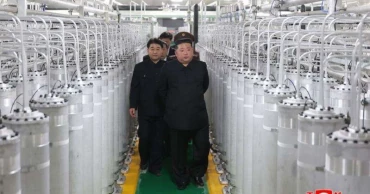
North Korea unveils new nuclear fuel facility, vows rapid expansion of arsenal
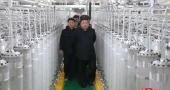
North Korea has revealed a new facility believed to be used for producing nuclear bomb fuel, with leader Kim Jong Un announcing plans to expand the country’s nuclear capabilities “at an exponential rate.”
The development signals Pyongyang’s continued push to strengthen its nuclear programme, despite ongoing international sanctions and calls for denuclearisation.
According to North Korea’s state media Korean Central News Agency (KCNA), Kim visited the site on Wednesday and reviewed what officials described as an “ambitious future plan” to significantly boost nuclear forces.
Experts believe the newly disclosed site is a uranium enrichment plant, although its exact location was not revealed. South Korea’s military also assessed it as such and said it is working closely with the United States to monitor North Korean nuclear activity.
KCNA released images showing Kim walking through what appeared to be a centrifuge hall lined with metal pipes and equipment. Another photo showed him in a meeting room with officials, with a blurred diagram of a cone-shaped object placed on a table.
This is the third time North Korea has publicly shown a uranium enrichment facility, after similar disclosures in 2010 and 2024. Analysts say the country is believed to operate multiple such sites, including at its Yongbyon nuclear complex.
During the visit, Kim said rising tensions with what he called “the most ferocious enemies,” widely understood as the United States and South Korea, have made it necessary to expand nuclear deterrence both in scale and capability.
He also claimed that North Korea’s production of nuclear materials has more than doubled in the past five years, a statement that cannot be independently verified.
Pyongyang has long insisted it must be recognised as a nuclear weapons state and has shown little interest in returning to denuclearisation talks unless sanctions are lifted.
The United States has repeatedly called for dialogue, with President Donald Trump expressing willingness to restart negotiations. However, North Korea has demanded recognition of its nuclear status as a precondition for talks.
Since the collapse of nuclear diplomacy in 2019, Kim has overseen a series of weapons tests while pledging to rapidly expand the country’s arsenal. Experts estimate North Korea may now possess more than 100 nuclear warheads, though exact figures remain uncertain.
Questions also remain over whether the country has fully mastered the technology needed for long-range nuclear missiles, including warhead re-entry and multiple warhead deployment systems.
North Korea last conducted a nuclear test in September 2017.
1 month ago
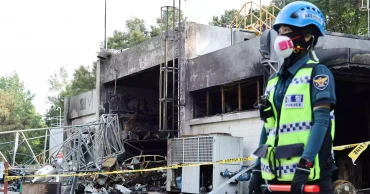
Five killed in blast at South Korean defense company
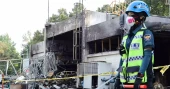
At least five people were killed and two others injured after an explosion followed by a fire broke out at a defense company facility in South Korea on Monday.
The incident occurred at a worksite operated by Hanwha Aerospace in the city of Daejeon, one of the company’s key facilities involved in the development of large-scale propellants and surface-to-surface weapons systems.
Authorities said the cause of the explosion was not immediately known and an investigation was underway.
Emergency official Yoon Seong-su said the site is designated as a government security facility.
Medical official Kim Ju-yeon said one of the two injured victims was in critical condition. The identities of those killed had not yet been confirmed.
Hanwha Aerospace is a major South Korean defense manufacturer, and the Daejeon facility plays a significant role in the country’s weapons development programs.
2 months ago
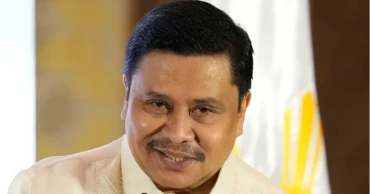
Philippine Senator to Surrender After Plunder Charge
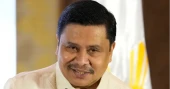
Philippine Senator Jinggoy Estrada said he would surrender to authorities after the anti-graft court Sandiganbayan ordered his arrest on a non-bailable plunder charge linked to alleged kickbacks from flood-control projects.
The court had earlier issued a bailable graft warrant against Estrada on Friday. He surrendered, posted bail and was released while denying any wrongdoing.
Estrada, 63, is accused of receiving more than 570 million pesos ($9.3 million) in kickbacks, based largely on allegations by a former government public works engineer. He has strongly rejected the claims.
Before leaving the Senate, Estrada suggested the cases against him were politically motivated due to his alignment with former President Rodrigo Duterte and Vice President Sara Duterte, a rival of President Ferdinand Marcos Jr.. “I will not yield to threats. I will not be intimidated,” he said.
The senator, a former actor and son of former President Joseph Estrada, has previously faced corruption-related detention.
The case adds to legal troubles in the Senate. Senator Ronald dela Rosa remains in hiding after the International Criminal Court issued a warrant accusing him of crimes against humanity linked to the anti-drug campaign under Duterte.
Duterte, arrested last year and transferred to the Netherlands, is set to face trial in November over alleged crimes against humanity. Both Duterte and dela Rosa deny wrongdoing.
2 months ago
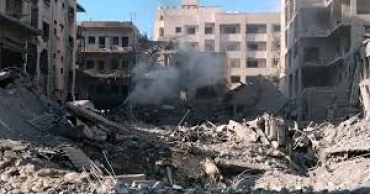
Death toll rises to 5 in explosion at South Korean aerospace plant
The death toll from an explosion at a South Korean aerospace manufacturing plant has risen to five, according to media reports citing fire authorities on Monday.
The blast occurred at a Hanwha Aerospace facility in Daejeon, located about 150 kilometres south of Seoul. Emergency services received the first report of the explosion at 10:59 a.m. local time (0159 GMT).
Fire authorities confirmed that five people were killed and two others injured in the accident at the plant operated by Hanwha Aerospace, South Korea’s leading aerospace and defence company.
Authorities said around 30 emergency calls were received from residents reporting a loud explosion and smoke rising from the site.
A level-1 emergency response was issued at approximately 11:17 a.m. local time, and firefighters brought the blaze under control by 11:49 a.m.
The plant has a history of similar incidents, having experienced rocket propellant explosions in 2018 and 2019 that left a total of eight people dead or injured.
Police and fire officials believe the latest explosion occurred on the first floor of the facility for reasons that remain unclear. An investigation is underway to determine the exact cause of the accident.
2 months ago