
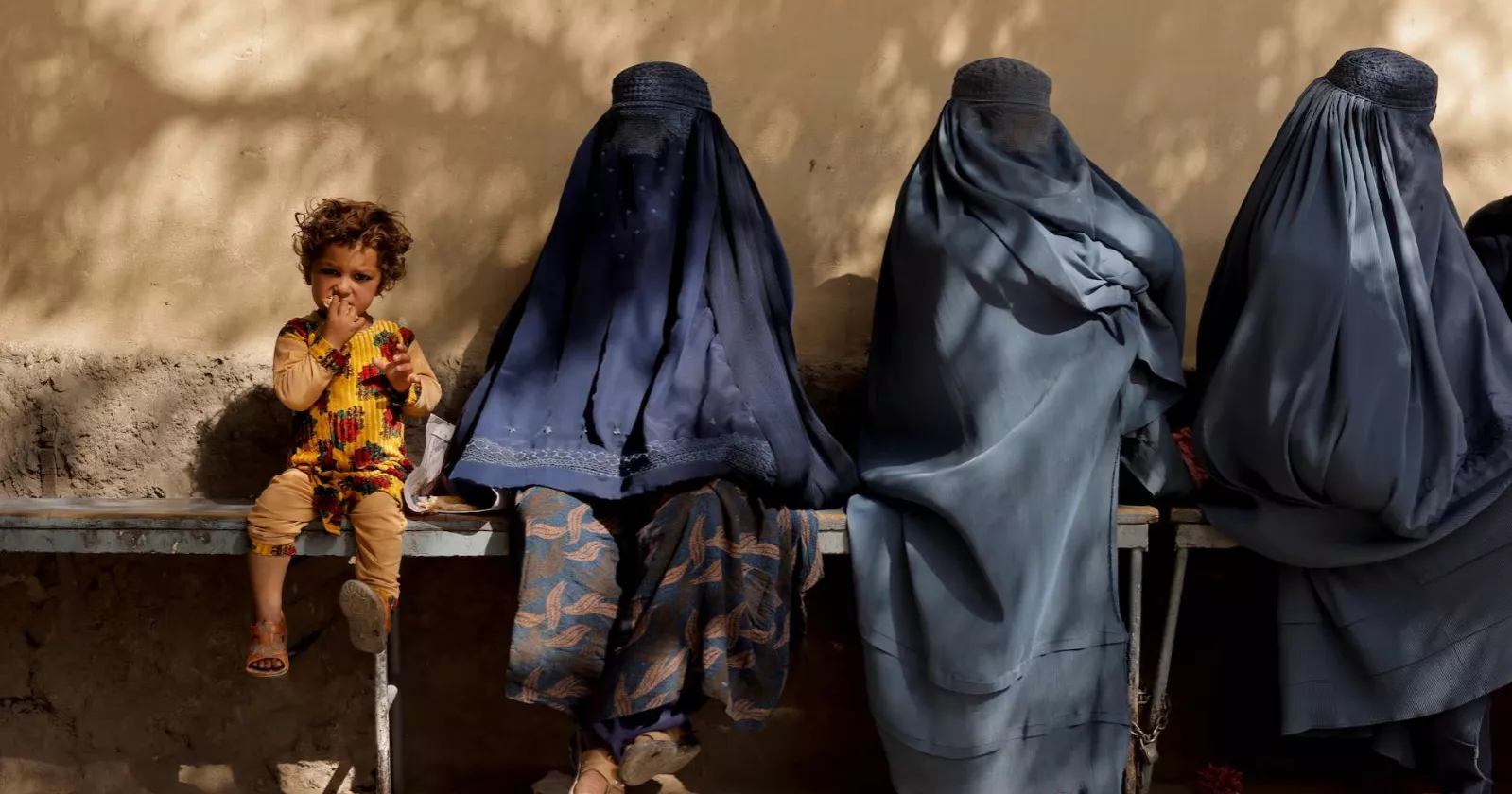
The Taliban authorities in Afghanistan have reportedly ordered female patients, caregivers, and staff to wear a burka — a full-body Islamic veil — to enter public health facilities in the western city of Herat, medical charity Médecins Sans Frontières (MSF) said. The restriction came into effect on November 5.
“These restrictions further impede women’s lives and limit access to healthcare,” Sarah Chateau, MSF’s programme manager in Afghanistan, told the BBC. She said even women requiring urgent medical care were affected. MSF, which supports paediatric services at Herat Regional Hospital, reported a 28 percent drop in admissions of patients with urgent conditions during the first few days of enforcement.
MSF said Taliban personnel stationed at facility entrances were preventing women without burkas from entering. A burka is a one-piece veil covering the entire body and face, leaving only a mesh screen for vision.
A Taliban spokesperson denied MSF’s claims, saying the report was “totally false” and that their vice and virtue ministry generally advocates wearing a hijab, not the full burka. The official, Saif-ul-Islam Khyber, added that hijab interpretation varies across Afghanistan and most practices are consistent with Sharia law.
Activists, however, alleged that Taliban guards have been enforcing the burka dress code in hospitals, schools, and government offices over the past week. Social media reports show some women protesting by burning burkas, though the BBC has not independently verified the footage.
During their first rule in the 1990s, the Taliban strictly enforced the burka. Since returning to power in August 2021, they have imposed multiple restrictions on women, including barring them from most workplaces, universities, and secondary schools. The UN has repeatedly urged the Taliban to end what it describes as “gender apartheid.”
Last week, the UN suspended operations at the Islam Qala border crossing with Iran in Herat province, citing restrictions on Afghan women staff. The crossing has been a key route for hundreds of thousands of Afghans returning from Iran in the past year.
With inputs from BBC